Style
Bakhshaish
Every piece in this style, across all of our collections. Narrow them down by size and price.
- Under 6 x 9
- Runners
- 6 x 9
- 8 x 10
- 9 x 12
- 10 x 14
- 12 x 15
- Over 12 x 15
Origin ▼
Style ▼
Material ▼
Width
Length
To connect with a specialist, click here
Stories from the Bakhshaish Archive
Essays, artist dialogues, and provenance notes drawn from Rug & Kilim’s editorial desk.

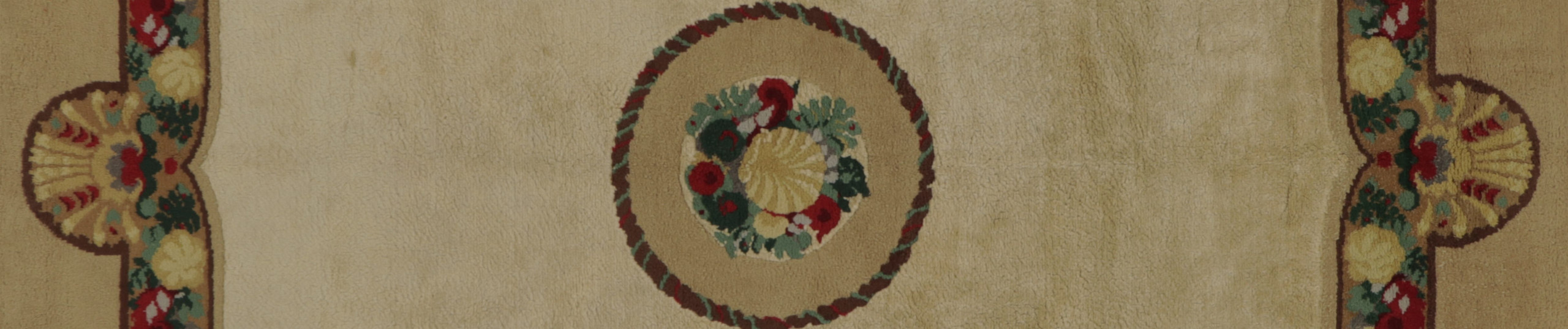
Inside the Colorist’s Mind: Commissioning a Rug to a Palette
There is a figure in the making of a great custom rug whom the finished object never names and the client rarely meets, and yet whose judgment determines whether the whole enterprise sings or falls flat. Not the designer who draws the pattern. Not the weaver who ties the knots. The colorist: the eye that decides, among a near-infinite field of possibility, exactly which blues, which greens, which single warm note of coral will live together in a room for the next fifty years. If the pattern is the core of a rug, color is its music, and the colorist is the composer. Most people have never considered that such a person exists. The ones who have commissioned a rug properly never forget them.
Read the Feature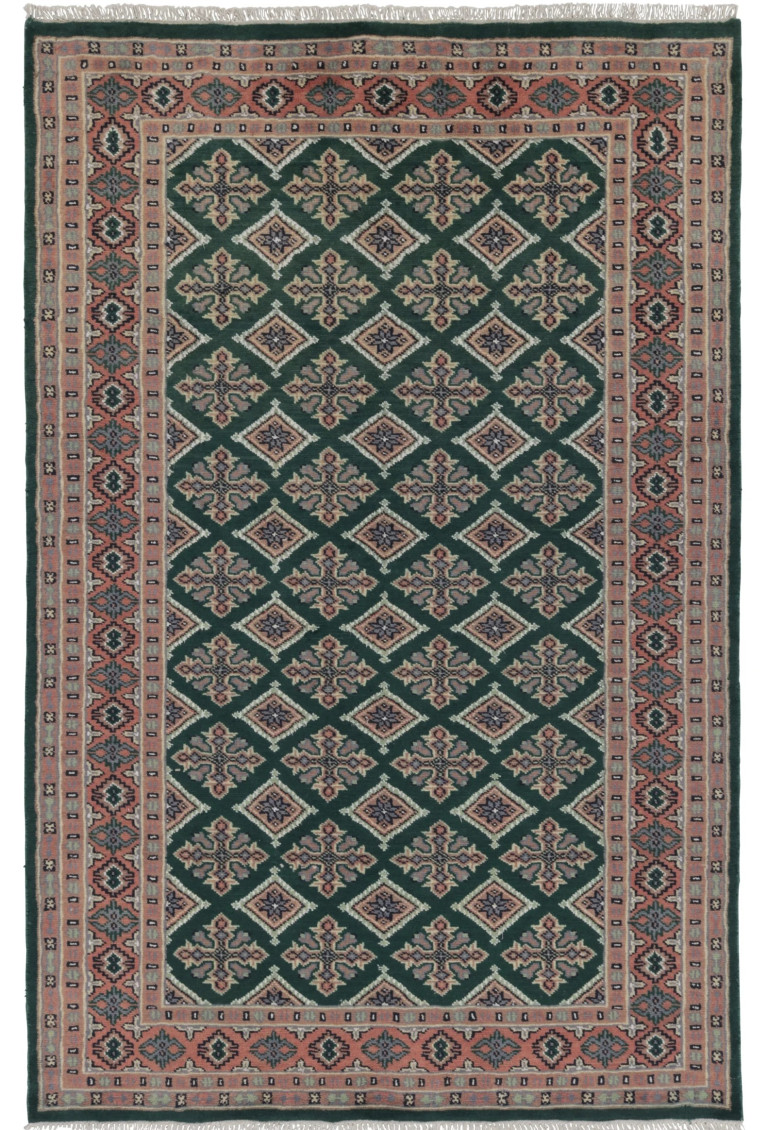
Bokhara Rugs: Traditional Weaving and Global Influence
Among the most recognizable and influential traditions in the history of oriental carpets, Bokhara rugs represent a remarkable fusion of tribal heritage, geometric precision, and centuries-old weaving expertise. Known worldwide for their iconic repeating motifs, deep colors, and refined craftsmanship, Bokhara rugs have become enduring symbols of Central Asian textile artistry. Although the name “Bokhara” is commonly associated with the historic city of Bukhara in present-day Uzbekistan, many rugs classified as Bokhara originate from Turkmen weaving communities across regions including Turkmenistan, Afghanistan, and surrounding areas. The name reflects the historical trade routes through which these carpets traveled and became known internationally.
Read the Feature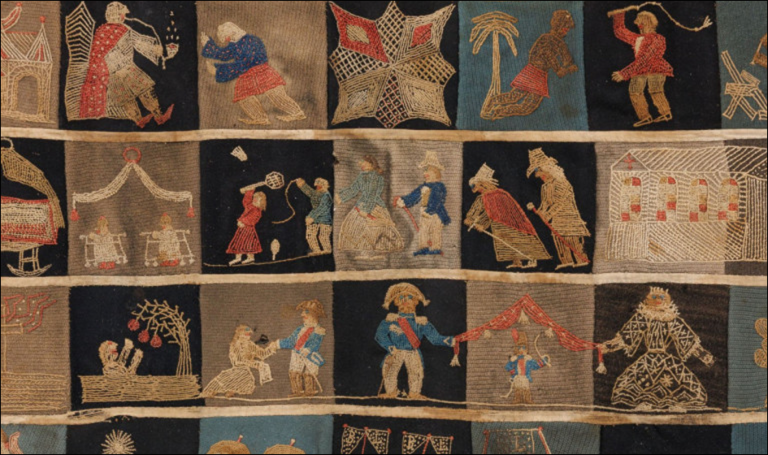
Tapestry of the Week: François Damiens, 475 Panels, and the Whole of a World in Pater Noster Embroidery of Arras
Some objects you appraise. This one you simply stand before, for a long time, and let it undo your sense of what a single human being can do. Hand-worked in wool and natural silk in Arras, France, in 1826, and signed four times over by its maker, the Pater Noster embroidery of François Damiens is composed of four hundred and seventy-five individual pictorial panels, each one a tiny woven scene, arranged in a vast grid that reads, from across a room, like the pixelated memory of an entire world. Biblical narratives. Processions. The labours of the seasons. Animals, trees, houses, saints, ordinary people doing ordinary things. Four hundred and seventy-five times, one small square at a time, a man sat down and embroidered a fragment of everything he knew.
Read the Feature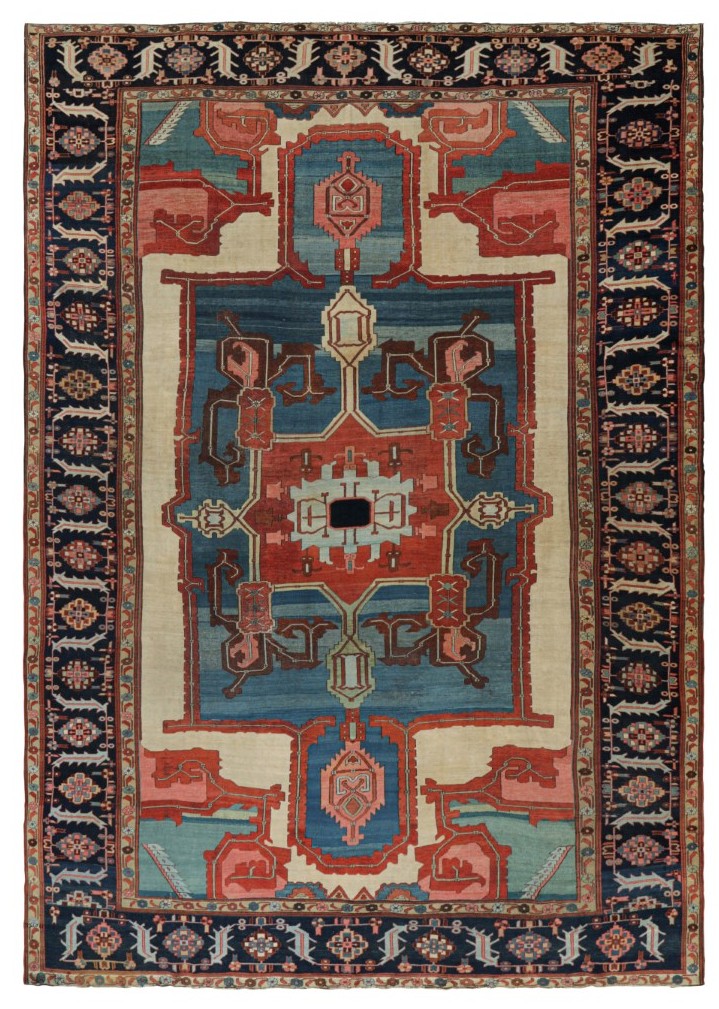
The Complete Guide to Bakhshaish Rugs and Northwest Persian Carpet Traditions
Among the most celebrated village weaving traditions of Persia, Bakhshaish rugs occupy a position of exceptional distinction. Revered by collectors, scholars, architects, and interior designers alike, these carpets embody a rare balance between artistic spontaneity and structural sophistication. Their bold geometry, monumental drawing, and deeply expressive compositions have secured Bakhshaish rugs a place among the most influential carpets in the history of decorative arts. Originating in the village of Bakhshaish in Iran's East Azerbaijan Province, these rugs emerged from a weaving tradition that transformed regional motifs into works of extraordinary artistic power. While often associated with neighboring Heriz carpets, Bakhshaish rugs possess a distinctive character all their own. Their designs are frequently larger in scale, more abstract in execution, and more experimental in composition, qualities that have made them particularly admired within the world of collectible antique rugs.
Read the Feature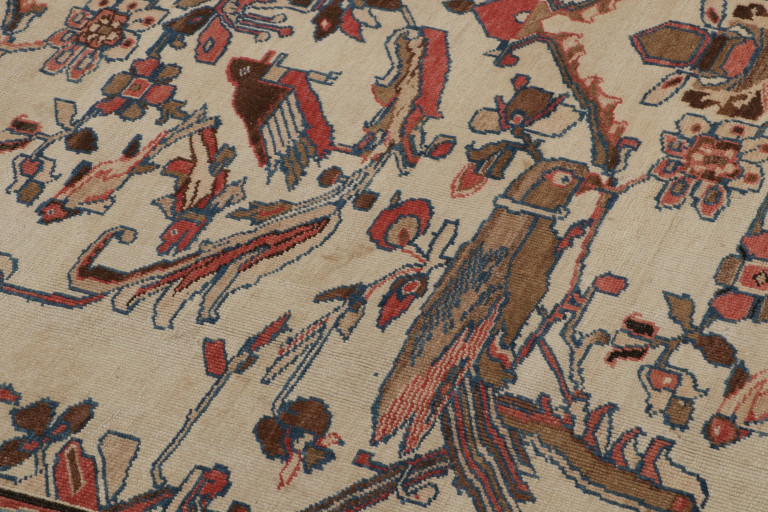
Antique Bakshaish Rugs: A Profile on Generational Heirlooms
At prestigious auction houses like Sotheby's and Christie's, exceptional Bakshaish rugs have been known to sell for six, even seven-figure sums. The 2019 sale of a particularly fine example for $1.5 million at a New York auction sent ripples through the collectibles' market, cementing the Bakshaish's status as a blue-chip investment. Bakshaish rug tradition dates back to the 1830s, a period of renaissance in Persian rug weaving. Unlike the formal, court-commissioned carpets of urban workshops, Bakshaish rugs emerged from a robust village weaving tradition. The remote location of Bakshaish, far from the influence of city ateliers, allowed for a unique fusion of ancestral designs and individual expression.
Read the Feature
A Glossary of Handmade Rugs and Kilims: Understanding Terms, Types and Techniques Past and Present
Referring to the art style characterized by using shape and color withdrawn from traditional repetition or realism. Abstract rugs — sometimes referred to as art rugs — capture an expressive nature that reads as a very modern style, though many abstract rugs draw inspiration from works of the same art style in the mid-century. One of the more widely known mid-century lineages of this style is abstract expressionism, named for the literal "expressionists" of the 1950s. Some of the most notable names behind this style include Jackson Pollock and Mark Rothko. Referring to a lineage of nomadic Persian rugs (sometimes referred to as “Avsar” in the alternate spelling). Afshar rugs hail from the eponymous tribe in the region of Northeastern Iran.
Read the Feature