
Style
Lori
Every piece in this style, across all of our collections. Narrow them down by size and price.
- Under 6 x 9
- Runners
- 6 x 9
- 8 x 10
- 9 x 12
- 10 x 14
- 12 x 15
- Over 12 x 15
Origin ▼
Style ▼
Material ▼
Width
Length
To connect with a specialist, click here
Stories from the Lori Archive
Essays, artist dialogues, and provenance notes drawn from Rug & Kilim’s editorial desk.
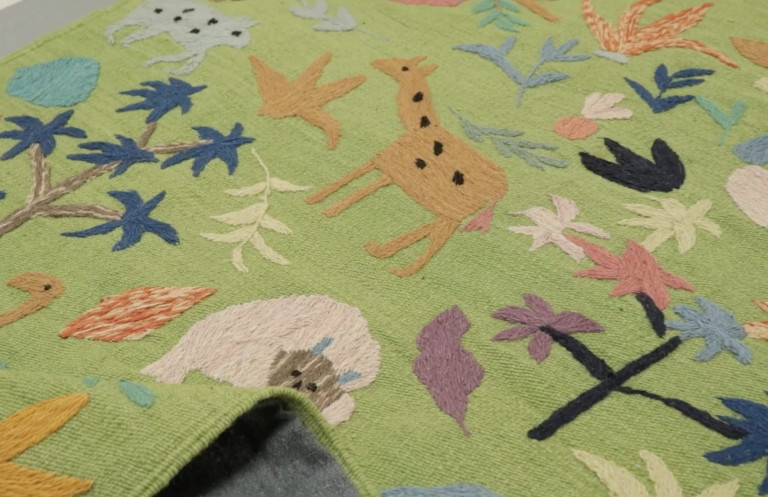
The Long Life of a Green: On Celery, Color of the Year, and the Four Centuries of Weaving That Anticipated It
Every year, the color world makes its pronouncement, and every year the design world turns to see what it has been given. For 2027, Sherwin-Williams has named Celery; a light, airy, herbal green with a yellow undertone, chosen, in the company's words, for a moment that prizes wellness, balance, and connection. It is a soft color with a quiet glow and a faint edge; it pairs, its makers note, with white for something breezy, with cranberry red for something playful, with brown for something elevated. It is, by any measure, a beautiful and intelligent choice. It is also a color the great weavers of the world have understood for four hundred years.
Read the Feature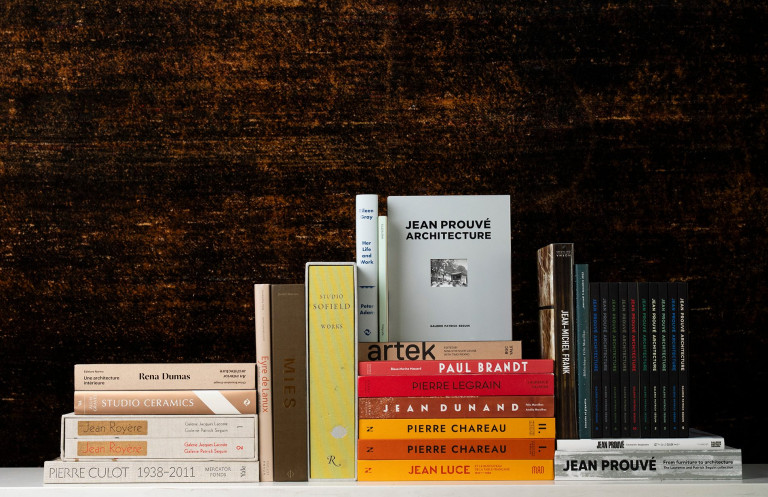
Every Great Collector Owns a Library: On Books, Rugs, and the Knowledge That Connects Them
There has always been a quiet kinship between the rug and the book. Both are objects one lives with rather than merely owns. Both reward the patient return, disclosing more on the tenth encounter than the first. Both are, at their finest, repositories of a civilization's memory; the one held in language, the other in wool. It should surprise no one that the greatest collectors of carpets have almost always been, in the same breath, collectors of the books that explain them. J. Paul Getty kept a scholar's library beside his objects. The Rothschilds, whose carpets now rest in Doha and whose names still move a saleroom, understood a collection as a thing to be studied as much as displayed. To acquire seriously has always meant to read seriously.
Read the Feature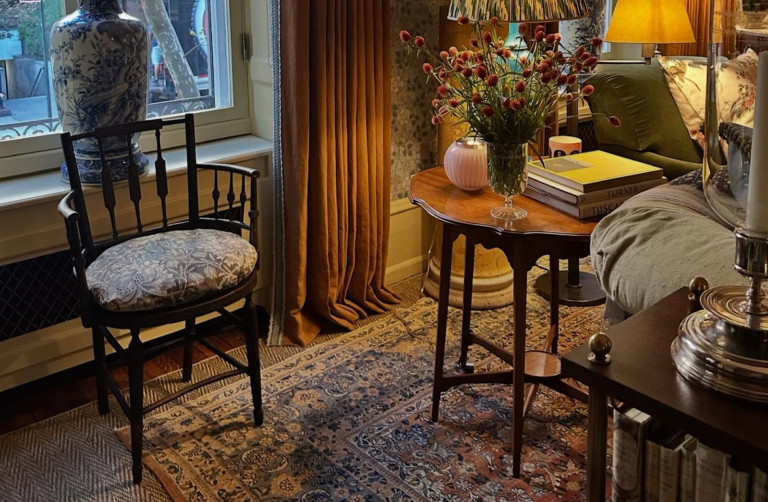
How U.S.–Iran Tensions Are Reshaping the World of Fine Rugs: From Safavid Courts to Sanction Regimes
There is a room in the Metropolitan Museum of Art in New York where a sixteenth-century Persian carpet stops people mid-stride. Because something in the object itself; its scale, its silence, the particular authority of a thing that has already outlasted three empires makes the ordinary pace of a museum visit feel suddenly inappropriate. The Emperor's Carpet, as it is known, was commissioned in Safavid Iran, passed to Peter the Great of Russia, gifted to the Habsburg Emperor Leopold I in 1698, held by the Austrian Imperial House until 1921, acquired by the Met in 1941, and displayed publicly only twice in the following sixty years because its condition was too fragile to risk. It has survived more political systems than any collector alive today will ever witness. It knows something about geopolitics that no sanctions framework, no bilateral negotiation, no executive order has yet managed to articulate.
Read the Feature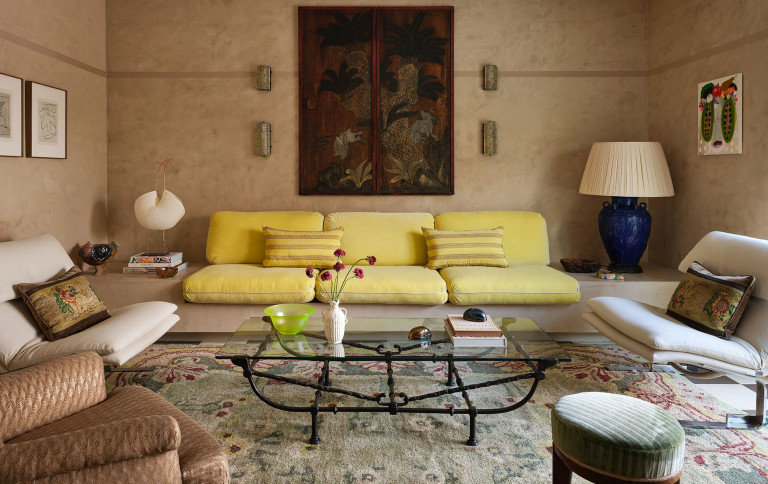
The Future of High-End Interior Design in the Age of Global Tariffs: Rugs, Trade Routes, and Regulation
As seen in Galerie Magazine, the 2026 Kips Bay Decorator Show House Palm Beach features a rare and exceptional curation from the antique rugs in Rug & Kilim’s European Collection. Read More >> Design, at its highest level, has always preferred to appear untouched by politics. A room in the Hamptons. An apartment overlooking Central Park. A villa along the French Riviera. These spaces present themselves as resolved worlds; self-contained, insulated from the volatility of markets, policy, and power. And yet, over the past year, something unusual occurred. Tariffs, as abstract instruments of economic policy, began to leave visible traces within interiors. Not dramatically, not theatrically, but with the quiet persistence of something structural. Lead times shifted. sourcing recalibrated. Materials reconsidered. Conversations that were once aesthetic became quietly strategic.
Read the Feature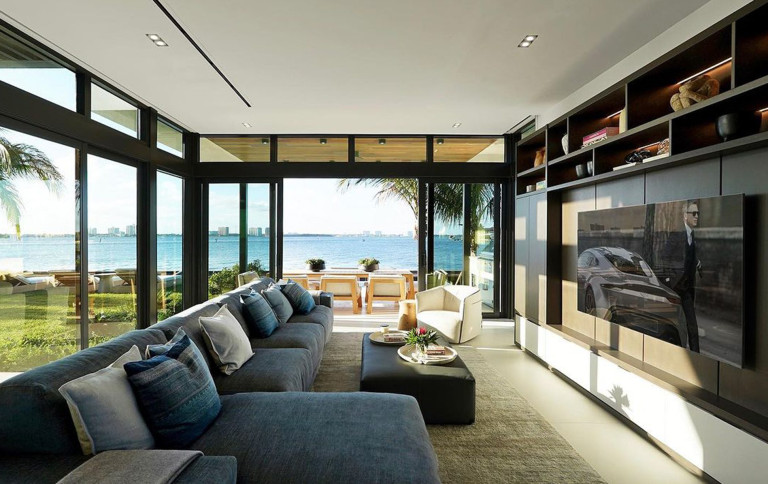
Luxury Coastal Rugs: Styling High-End Interiors from the Hamptons to the French Riviera
The Problem with “Effortless” The most convincing coastal interiors in the world share a peculiar quality: they appear inevitable. Rooms in the Hamptons, along the French Riviera, in Malibu or Mallorca seem to arrive fully formed; light moving freely, materials perfectly resolved, nothing excessive, nothing missing. The effect is so seamless that it risks being misunderstood as ease. Coastal design, at its highest level, is one of the most demanding exercises in interior architecture. It allows for no distraction, no indulgence, and very little forgiveness. When a room is reduced to light, proportion, and material, every decision becomes visible.
Read the Feature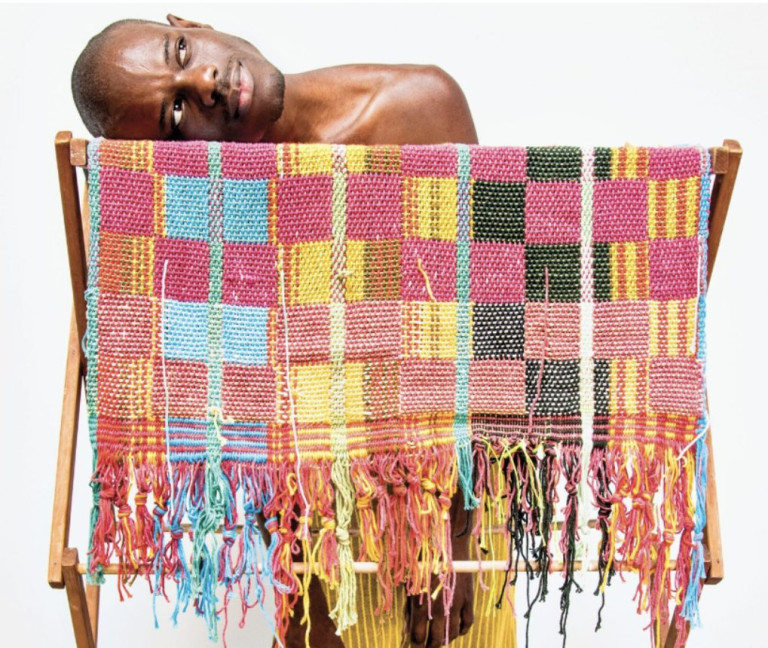
Contemporary Tapestries Exploring Politics and Modern Conflicts in Light of Diedrick Brackens and Erin M Riley’s Work
Anni Albers, often regarded as the godmother of textile arts, emphasized the enduring significance of threads as early transmitters of meaning, akin to cave paintings. In her influential 1965 work, "On Weaving," Albers paid homage to her "great teachers"—the weavers of ancient Peru. Tapestry, characterized by intricate pictorial designs achieved through warp-and-weft weaving or embroidery, has retained its basic principles for millennia, even with the advent of power machinery in the late 18th century. Contemporary artists engaging in the meticulous craft of weaving in the digital age find themselves in a rich dialogue with historical figures like Albers and ancient global traditions. In contemporary times, fiber artists are finding growing audiences and institutions willing to showcase their work. These artists utilize tapestry to delve into political themes, confront the harsh realities of modern conflict, and explore questions of identity and sexuality. The enduring craft of tapestry continues to evolve as a powerful medium for artistic expression and social commentary in the 21st century.
Read the Feature