
Navajo Rugs: History, Art, Design & the Legacy of Diné Weaving
September 30, 2026
The Complete Guide to Oushak Rugs: History, Aesthetic Language, and Contemporary Design Use
October 5, 2026
Every year, the color world makes its pronouncement, and every year the design world turns to see what it has been given. For 2027, Sherwin-Williams has named Celery; a light, airy, herbal green with a yellow undertone, chosen, in the company’s words, for a moment that prizes wellness, balance, and connection. It is a soft color with a quiet glow and a faint edge; it pairs, its makers note, with white for something breezy, with cranberry red for something playful, with brown for something elevated. It is, by any measure, a beautiful and intelligent choice.
It is also a color the great weavers of the world have understood for four hundred years.
This is the quiet truth beneath every color-of-the-year announcement, and it is worth stating plainly: the finest colors are never invented. They are rediscovered. A pigment that feels fresh in a paint deck this season has almost always lived a long and distinguished life already, in a Safavid garden carpet, an Aubusson flatweave, a Scandinavian rölakan, a Chinese Deco field. The paint company names the moment. The carpet named the color centuries ago, and has been quietly keeping it alive ever since.
Where celery green comes from
To understand why this particular green endures, one has to understand where such greens come from, and here the story becomes genuinely interesting. For most of the history of weaving, there was no single green dye. Green had to be built, layered from two separate dye baths: first a yellow, drawn from weld or from the leaves and flowers of indigenous plants, and then over it a blue, drawn from indigo. The soft, herbal, yellow-leaning greens, the celery tones, the sages, the gentle olives, were the product of a weaver’s judgment in balancing those two baths, and no two hands balanced them quite alike.
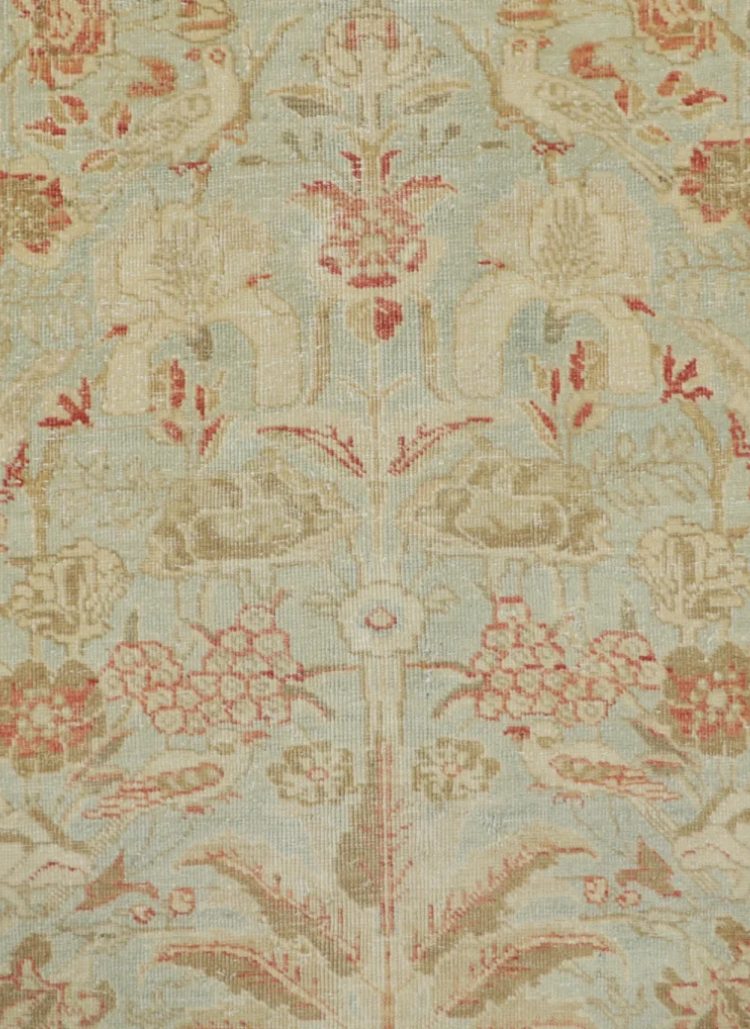
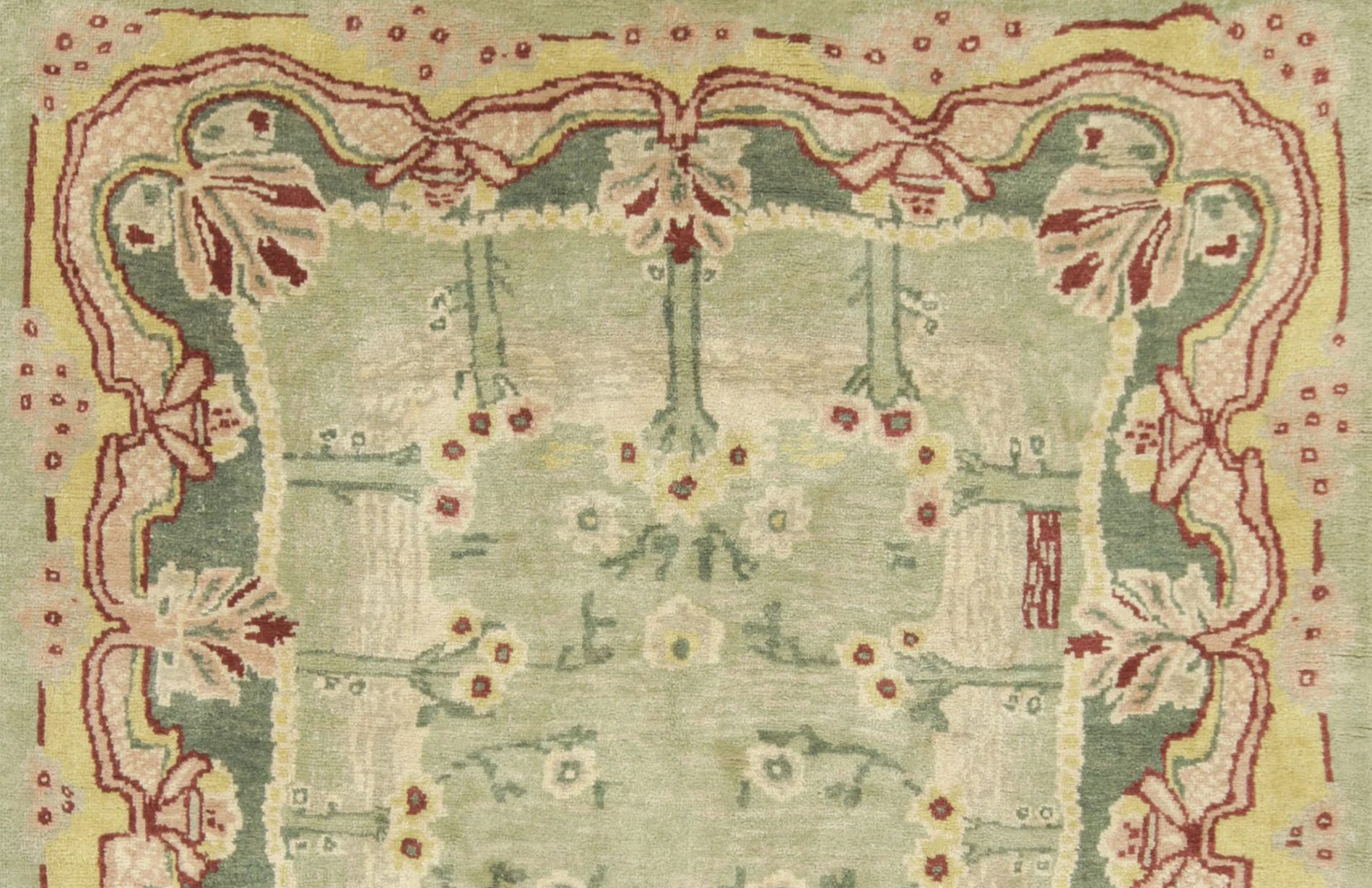
This is why the greens of antique carpets possess a quality no paint can fully reproduce. They are not flat. They shift and breathe across a field, deepening where the dye pooled, lightening where it thinned, softening further as the yellow component gently fades with the decades, for yellow dyes are the most fugitive, and a green that began as grass will mellow, over a century, into precisely the soft celery the color forecasters have now discovered. Time itself is the final colorist. The very hue Sherwin-Williams has named for 2027 is, in the world of the antique rug, often the signature of age, the beautiful, inevitable result of a great green growing quieter with the years.
The green that runs through the history of the room
Celery and its herbal cousins have anchored the most considered interiors across every tradition worth knowing.
In the Persian carpet, green carried a meaning beyond the decorative, it was the color of paradise, of the garden, of the sacred, and the great classical weavings deployed it with reverence, the soft yellow-greens of foliage and vine winding through fields of madder red and indigo blue. In the French tradition, the Aubusson and Savonnerie ateliers favored exactly these gentle, faded greens, the celadons and sages that gave the eighteenth-century salon its particular air of cultivated calm, and that designers from Madeleine Castaing onward would return to for the specific serenity only a soft green provides. Castaing, whose own palette became one of the most influential in the history of French decoration, understood that a muted green was the most livable of all colors, restful without being dull, present without demanding attention.
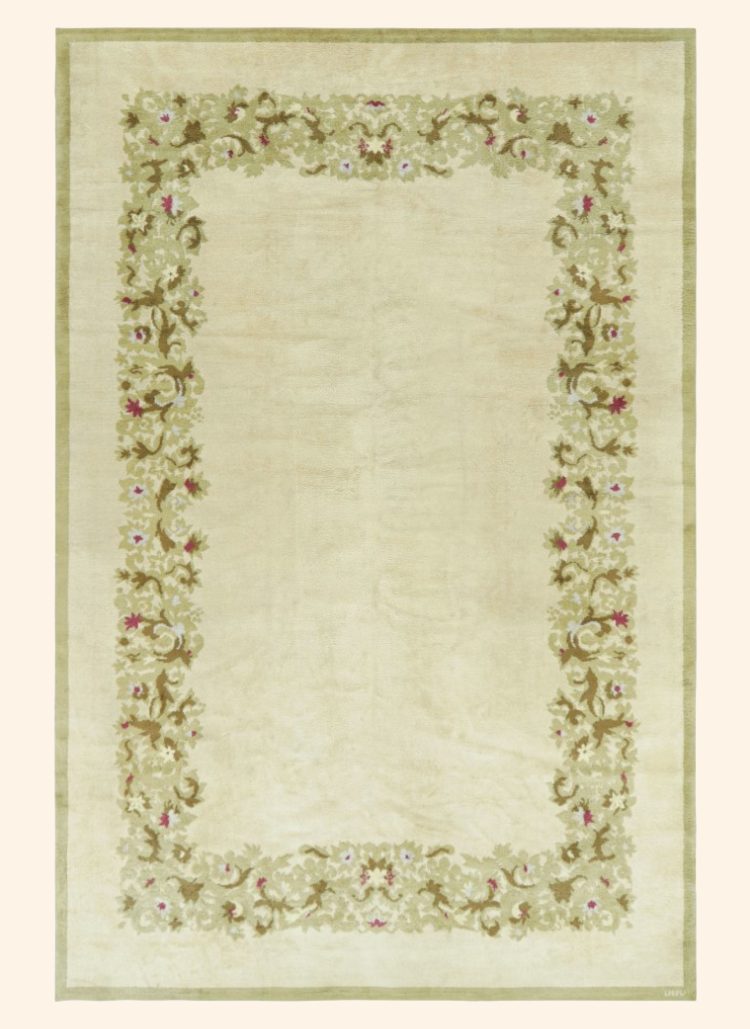
The Scandinavian weavers understood this too. The rölakan flatweaves of Märta Måås-Fjetterström and her Båstad atelier drew their palettes directly from the northern landscape, the sage of lichen, the soft green of birch in early spring, producing exactly the herbal, yellow-leaning tones that read, a century later, as thoroughly contemporary. And in the Chinese Deco rug, celadon green, named for the porcelain glaze it echoes, became one of the category’s defining colors, floating across open grounds with the same airy freshness the color forecasters now prize.
Even the fine-art world confirms the instinct. The soft greens of Matisse’s interiors, the sage grounds against which he set his odalisques and his patterned textiles; the herbal tones threaded through Bonnard’s domestic scenes, the painters who understood color best reached, again and again, for exactly this register. Celery green is not a trend. It is one of the permanent colors of civilized life, and the artists knew it long before the marketers did.
How to live with it, the way the weavers intended
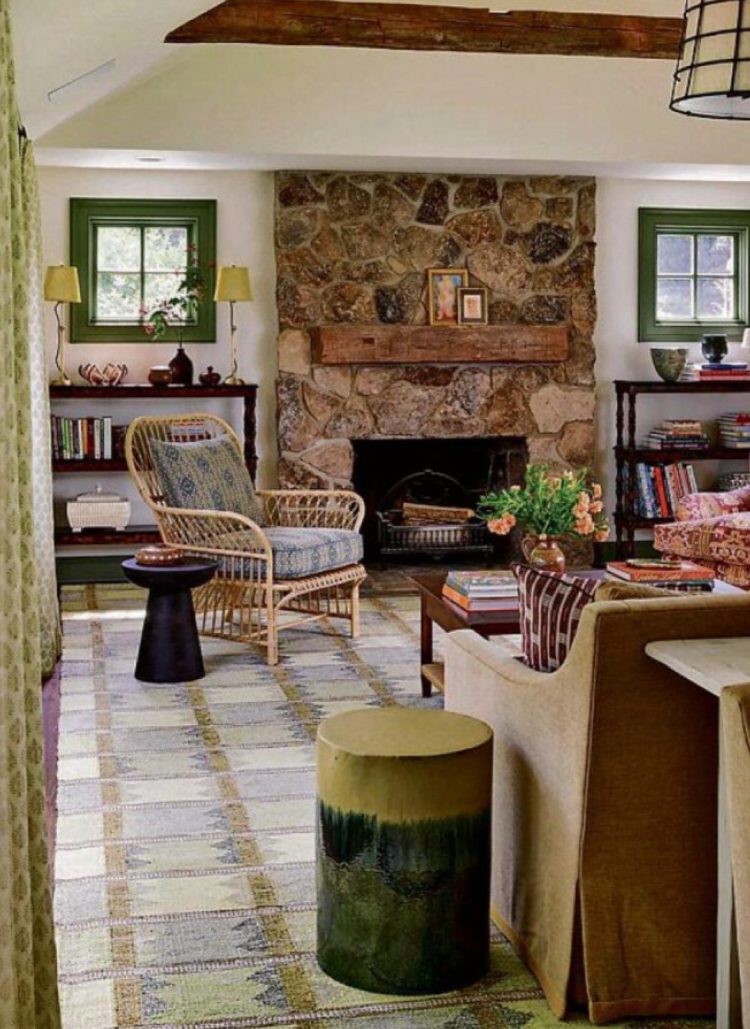
The pairings Sherwin-Williams suggests for Celery are, tellingly, the pairings the great carpets have always made. Celery with white and soft neutrals, the breezy, airy combination, is the palette of the Scandinavian flatweave and the faded Oushak, where a gentle green rests against ivory and warm sand. Celery with cranberry or a deep red, the playful pairing, is nothing other than the classical Persian relationship of green and madder, the oldest and most harmonious color partnership in the history of weaving. And celery with brown, the elevated combination, is the palette of the antique tribal rug, where herbal greens sit against the natural browns of undyed wool.
For the designer building a room around the color of the year, the lesson is simple and it is liberating: the most sophisticated way to use celery green is not to paint a wall and stop there, but to ground the room in a rug that has already been living with that green for decades, a soft Oushak, a sage-fielded Scandinavian flatweave, a celadon Chinese Deco piece, an antique Persian whose greens have mellowed into exactly the tone the moment calls for. The wall provides the color. The rug provides the depth, the age, the movement, and the proof that this green was never a passing fashion at all.
The color was always here
There is something quietly reassuring in a color-of-the-year announcement that turns out to name a color four centuries old. It reminds us that the truest colors are not manufactured to a season but discovered, again and again, by each generation that comes to understand what the generation before it knew.
Celery green feels fresh in 2027 because it has always felt fresh, because a soft, herbal green has been soothing rooms and grounding palettes and mellowing beautifully in the wool of great carpets since long before anyone thought to give it a name and a number.
The paint deck is new. The color is not. And the finest way to bring it home is to bring home the object that has been keeping it alive all along.