
Rooms of Power: Rugs, Art, and the Architecture of Global Interiors
April 15, 2026
How the World’s Most Serious Art Spaces Are Rewriting the Rules of the Floor and the Contemporary Home
April 29, 2026
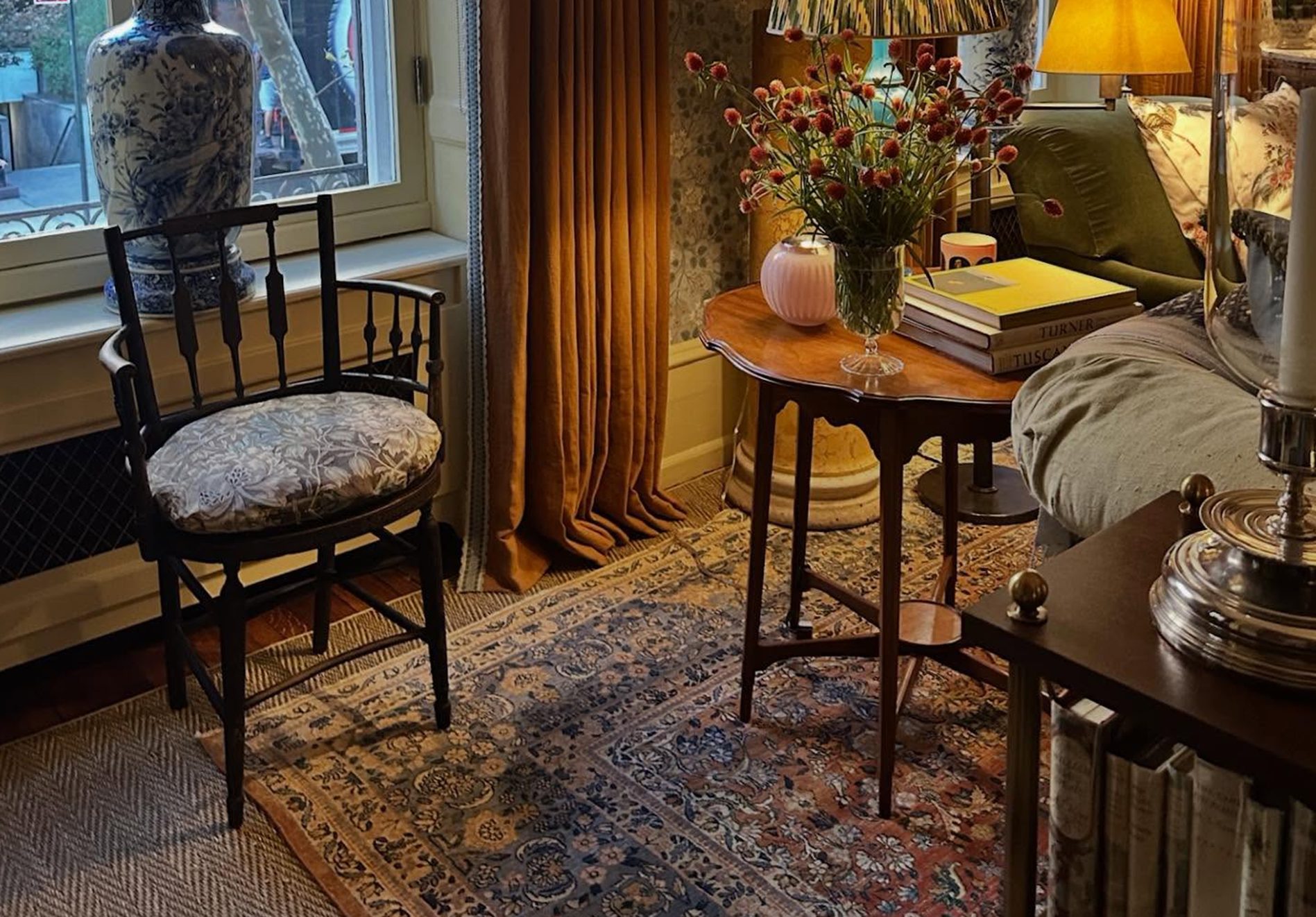
Rug & Kilim x Ben Pentreath Studio
There is a room in the Metropolitan Museum of Art in New York where a sixteenth-century Persian carpet stops people mid-stride. Because something in the object itself; its scale, its silence, the particular authority of a thing that has already outlasted three empires makes the ordinary pace of a museum visit feel suddenly inappropriate. The Emperor’s Carpet, as it is known, was commissioned in Safavid Iran, passed to Peter the Great of Russia, gifted to the Habsburg Emperor Leopold I in 1698, held by the Austrian Imperial House until 1921, acquired by the Met in 1941, and displayed publicly only twice in the following sixty years because its condition was too fragile to risk. It has survived more political systems than any collector alive today will ever witness. It knows something about geopolitics that no sanctions framework, no bilateral negotiation, no executive order has yet managed to articulate.
To speak of rugs within the context of geopolitics is not to indulge metaphor but to return them to their original condition. Carpets, particularly those of Persia, were never conceived as mere furnishings. They were courtly instruments, diplomatic gifts, portable architectures of power. The present tensions between the United States and Iran expressed through sanctions, financial restrictions, and periodic military escalation must therefore be understood not simply as political events, but as interruptions in one of the oldest continuous luxury trades in human history. What is at stake is not supply alone. It is authorship, lineage, and the authority of origin.
Persia — From Safavid Courts to Modern Sanctions
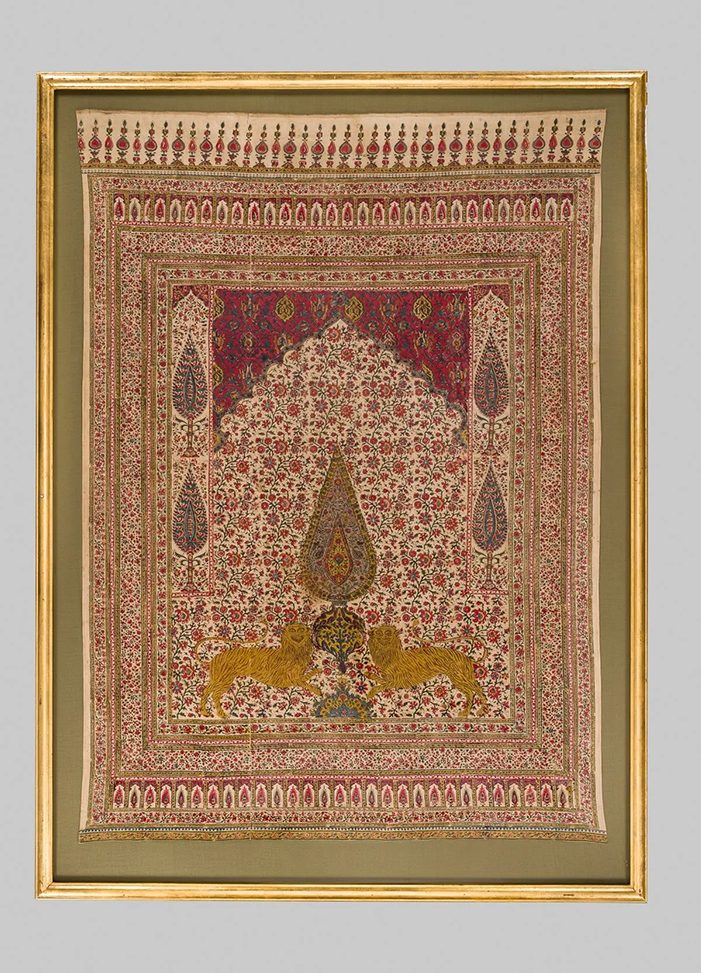
Fragments of this legacy now reside in institutions such as the Louvre Museum, the The Metropolitan Museum of Art, and the Victoria and Albert Museum, where carpets are not displayed as textiles, but as civilizational documents. Modern sanctions regimes disrupt this continuity at its most delicate point: circulation. A Persian carpet today may still be woven with technical brilliance, but its inability to move freely across markets fractures the historical relationship between maker, patron, and collector.
The Economics of Restriction
What sanctions do to such a trade is not simply economic disruption. They introduce a temporal distortion that the market has never before encountered at this scale or duration. Transactions once measured in months now extend across years, mediated by intermediaries, legal frameworks, and shifting policy interpretations. The carpet continues to be woven but its inability to move freely across markets fractures the historical relationship between maker, patron, and collector that has sustained this trade for five centuries.
Three consequences now define the current moment for any practitioner who engages seriously with the design field.
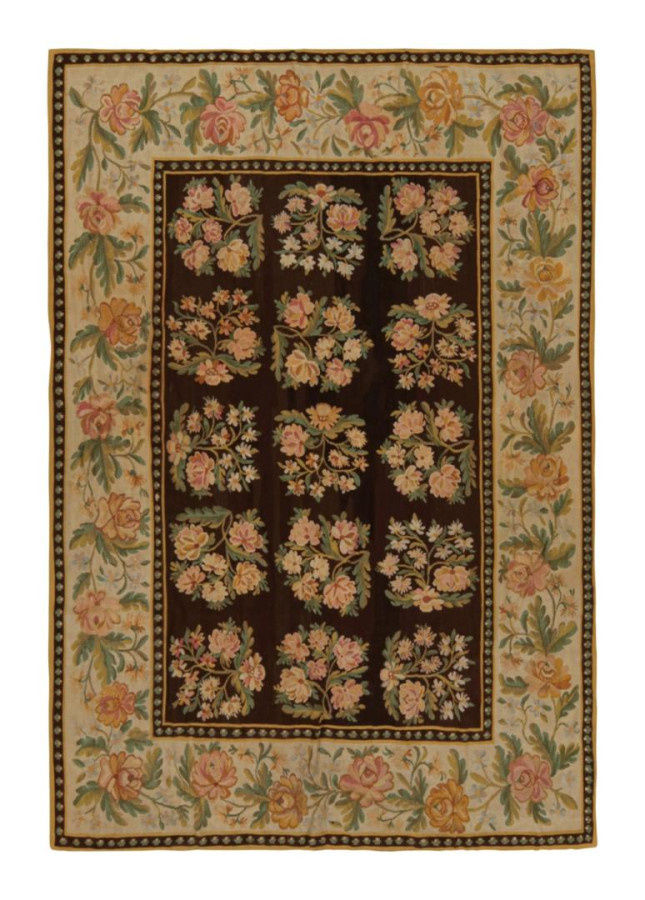
Antique Persian carpets — Safavid, Qajar, and early twentieth-century workshop pieces have assumed an authority that transcends condition or age alone. Their value is now partly determined by their position as legally and historically accessible objects: they can be acquired, transported, and placed without legal ambiguity, in ways that contemporary Iranian production, however accomplished, cannot. The antique market has been recast as the primary site of legitimate access.
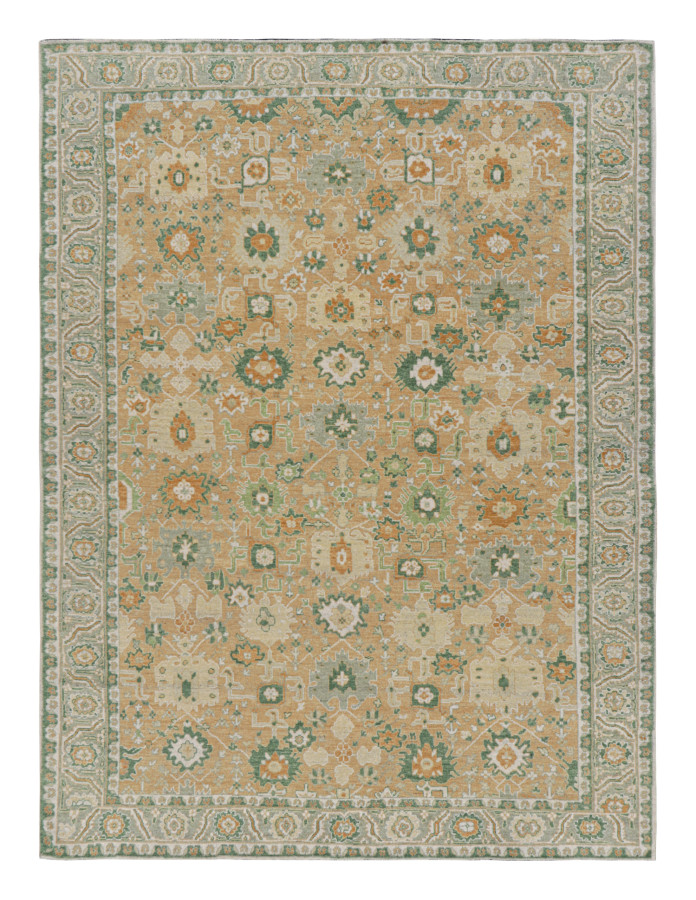
Production has consequently displaced. Weaving centres in India, Turkey, and Afghanistan have expanded often producing work that references Persian design vocabularies with considerable skill. Yet even at their most accomplished, these remain interpretations rather than origins. The distinction is structural. A Jaipur atelier working from a Kashan cartoon produces a knowingly derived object. The knowing derivation is itself part of what the object is.
And auction houses like Christie’s, Sotheby’s, and the specialist houses that operate between them have become something they were not previously required to be: arbiters of geopolitical legitimacy. Provenance must now satisfy both aesthetic scrutiny and legal compliance. A carpet’s biography matters not only for scholarship but for the question of whether it can change hands at all. The auction record confirms this revaluation. At Christie’s, a Safavid silk and metal-thread Polonaise carpet from Isfahan, dating to the first quarter of the seventeenth century, set a world record price for a Polonaise carpet at auction, while the carpet section of that sale achieved nearly £9 million — the second highest result for this field in Christie’s history.
A New Currency for an Ancient Trade: Cryptocurrency
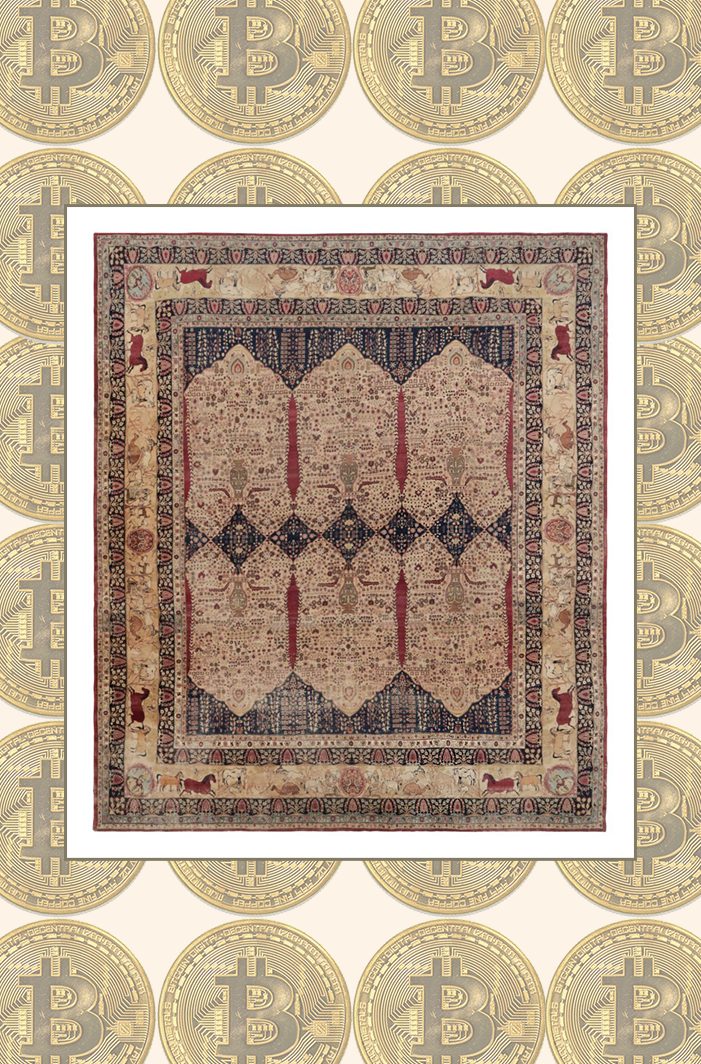
Within this reconfigured market, a development has emerged that would have been unthinkable a decade ago and is now, quietly, rewriting the terms of access to the finest objects in the field. Rug & Kilim is pioneering the acceptance of cryptocurrency, most notably Bitcoin as payment for its collection. This is a precise response to where serious wealth now lives.
The global cryptocurrency market has crossed three trillion dollars in combined capitalization, a figure that surpasses the GDP of the United Kingdom or France, and exceeds the market value of every company on earth save two. Within that wealth sits a collector profile that the traditional luxury market has been slow to recognize: financially sophisticated, globally mobile, privacy-conscious, and holding assets that most luxury vendors cannot accommodate. The result, until now, has been a structural mismatch between desire and access.
The argument for accepting cryptocurrency is financial and, for the collector, genuinely consequential. A holder of Bitcoin who wishes to acquire an antique Safavid carpet does not need to liquidate their digital holdings, trigger a taxable event, and re-enter the market with diminished capital. They can exchange directly one rare asset for another, preserving both wealth and the integrity of their portfolio. It is the same logic that has governed serious collecting for centuries, applied to a new class of asset.
The precedent within the broader art world is now established. Sotheby’s accepted cryptocurrency for a work that sold for over a million dollars. Justin Sun, the cryptocurrency entrepreneur, paid 6.2 million dollars in digital currency for Maurizio Cattelan’s Comedian in 2024. Cartier and Rolex have moved in the same direction. What Rug & Kilim has done is bring this fluency to the one category of object that, arguably, most deserves it: the antique rug, which has always been a store of value, a portable treasury, and a hedge against the instability of the political world around it.
The Safavid weaver could not have imagined Bitcoin. But he understood, with complete clarity, that the object he was making would outlast the currency of his era. He was right then.
Rug & Kilim
War and Weave — The Textile as Witness
The notion that conflict imprints itself onto textiles is not theoretical. Afghan war rugs woven with Kalashnikovs, helicopters, and cartographic distortions offer a direct visual archive of late 20th-century conflict.
While Persian weaving has historically resisted such explicit narration, the current geopolitical climate produces a more subtle transformation: palettes shift toward accessible dyes under economic constraint; workshop scales contract or decentralize; and, patterns simplify, not stylistically, but logistically The result is not a new iconography, but a quiet erosion of complexity, a condition that only the trained eye fully perceives.
Design at the Highest Level
For the contemporary designer operating within elite residential and institutional contexts, the U.S.–Iran dynamic has introduced a new discipline: geopolitical literacy as a design skill.
To specify a Persian carpet today is to navigate legal permissibility, provenance verification and client sensitivity to political context As a result, design strategies have evolved: increased reliance on pre-sanction Persian inventories; deeper engagement with Caucasian, Anatolian, and Central Asian textiles; and commissioning of museum-grade reinterpretations through Indian ateliers
Yet within this adaptation lies a persistent truth: authentic Persian works retain an irreplaceable intellectual and aesthetic authority. They are not simply better made. They are historically situated in ways that cannot be replicated.
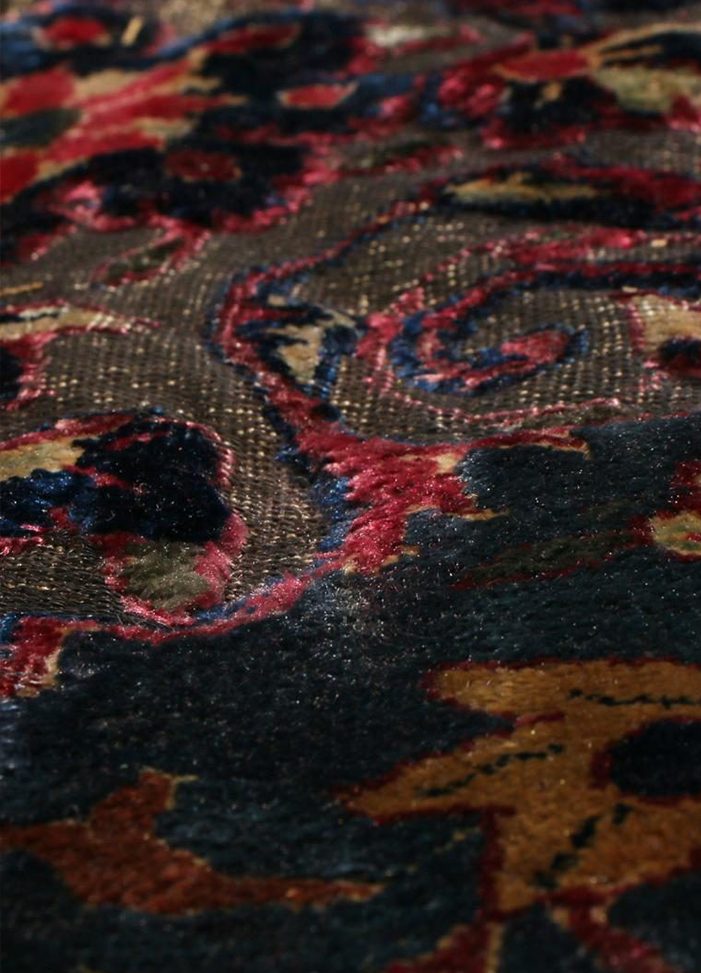
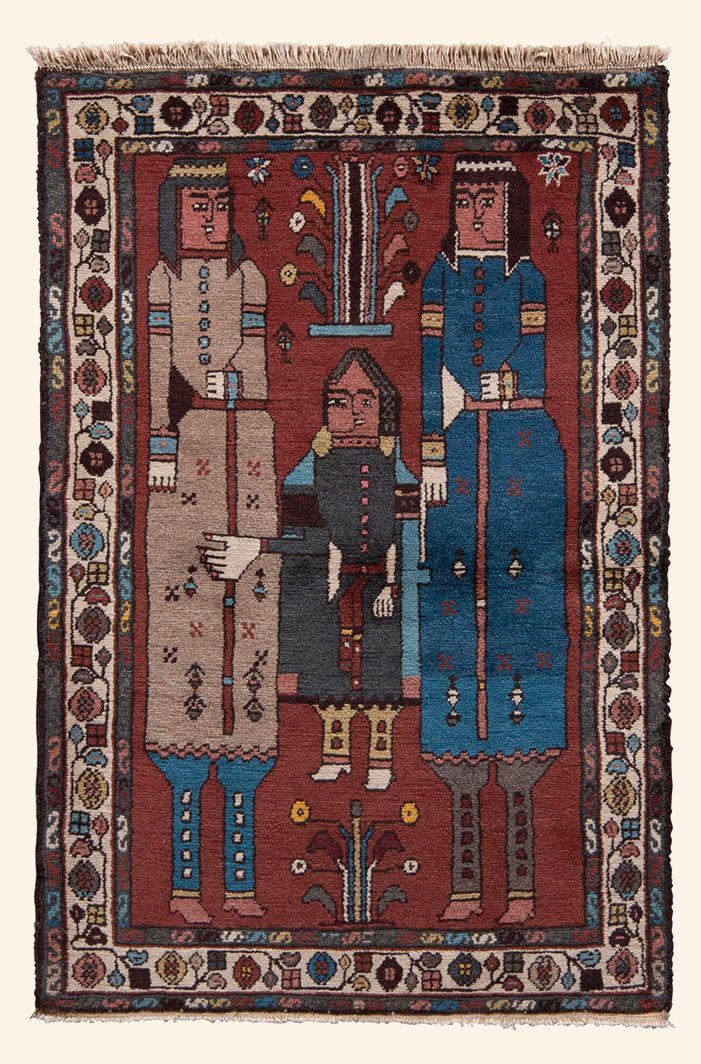
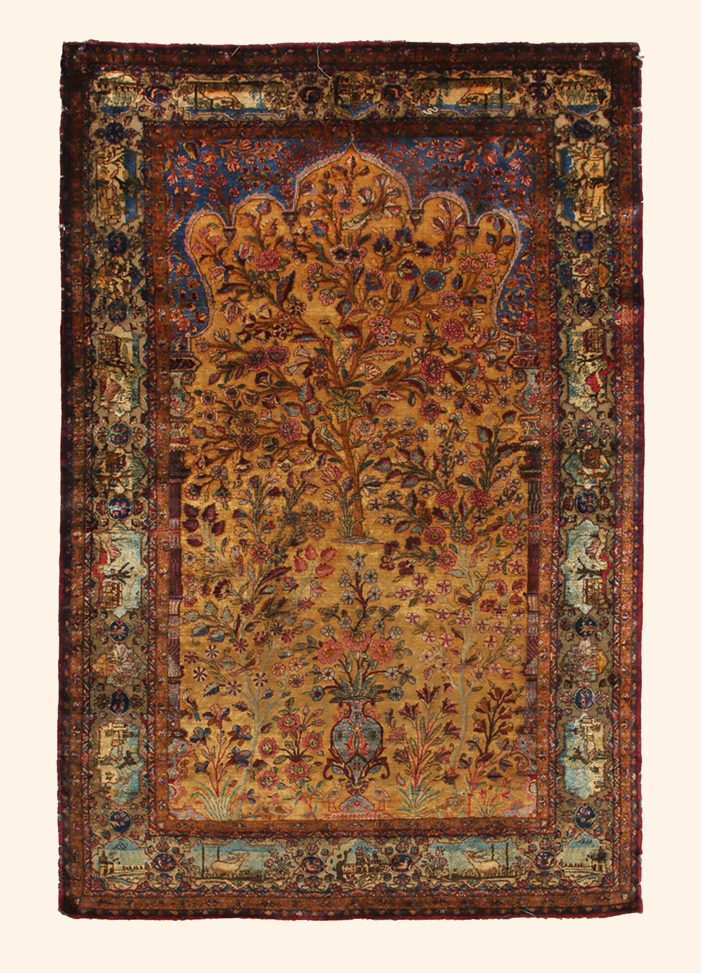
Metallic Thread, Natural Silk, Originating from Persia in 1910.. Details >>
Museums and the Politics of Preservation
As private circulation narrows, museums assume a heightened role as custodians of textile continuity. Institutions such as the Museum of Islamic Art in Doha and the Textile Museum in Washington operate within a delicate equilibrium, preserving objects that contemporary policy often prevents from re-entering any market at all. They reveal an essential contradiction at the centre of this moment: the most celebrated Persian carpets are globally accessible in museum galleries, while becoming progressively inaccessible to private acquisition. The objects circulate culturally while being removed from commercial life; a condition that has no real precedent in the history of the trade.
Interiors as Political Space
At the highest level, interiors are never neutral. They reflect systems of access, knowledge, and power.
To place a Persian carpet within a contemporary interior whether beneath a neoclassical console, within a modernist glass pavilion, or alongside minimalist architecture recalling Tadao Ando is to stage a dialogue between permanence and volatility. craftsmanship and policy, and, history and its interruption
Within this shifting geopolitical landscape, the role of Rug & Kilim is custodial. At Rug & Kilim, Persian carpets are not approached as inventory, but as documents of continuity, situated within a lineage that precedes and will outlast present disruptions between the United States and Iran.
Our Persian rugs spanning classical, village, and workshop traditions are assembled with a discipline that mirrors institutional practice. Each piece is considered through the triad that has long governed serious collecting: provenance, structure, and historical intelligibility. The objective is not accumulation, but placement within a larger narrative of textile history.
The carpet knows more than the room it enters. It has already outlasted several political systems, survived the collapse of the empires that produced it, and arrived in the present with its formal intelligence intact. The sanctions will evolve. Markets will adjust. Policies will shift in directions that no analyst can reliably predict. In 2017, nearly $100 million worth of Persian carpets were exported to the United States alone after international sanctions tied to the nuclear agreement were briefly lifted; a figure that demonstrates both the scale of latent demand and the speed with which geopolitical circumstance can alter the map.
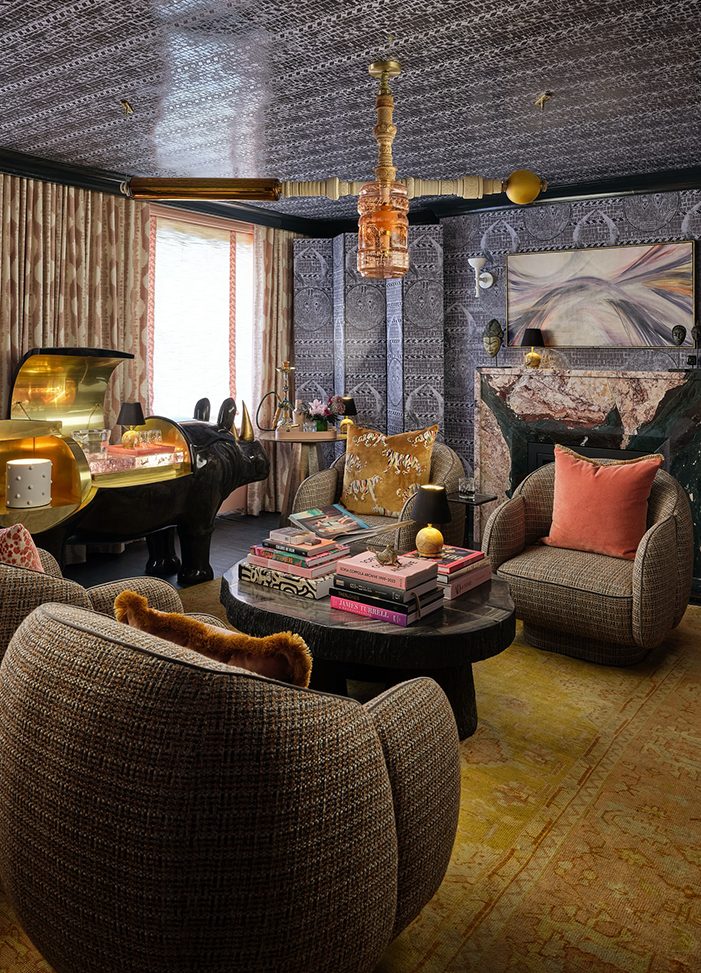
Rug & Kilim x Andrea Schumacher Interiors
The Future of Textile Geopolitics
The trajectory of the rug and textile market suggests neither collapse nor simple recovery, but reconfiguration. We observe a gradual decentralization of production, an intensification of scholarship around provenance, and a growing preference for objects with documented historical legitimacy
In this sense, geopolitics does not diminish the field but filters it, privileging knowledge, access, and discernment. The tensions between the United States and Iran will evolve, as all geopolitical relationships do. Policies will shift. Markets will adjust. What remains constant is the role of the carpet as one of the most sophisticated expressions of human continuity, an object that absorbs disruption without surrendering its essence.
In the end, the most consequential question is not how geopolitics changes rugs. It is how rugs, through their persistence, discipline, and silence outlast geopolitics itself.