
The Future of High-End Interior Design in the Age of Global Tariffs: Rugs, Trade Routes, and Regulation
April 13, 2026
How U.S.–Iran Tensions Are Reshaping the World of Fine Rugs: From Safavid Courts to Sanction Regimes
April 28, 2026
Rug & Kilim x RAISONNÉ
Art, Architecture, Literature, and the Placement of Rare Works Across the World’s Most Refined Interiors
Before There Was Interior Design, There Was Placement
Long before interiors were styled, they were composed through objects that carried worlds within them.
A Mughal carpet was not simply placed beneath a court; it defined the court. A Savonnerie was not an accessory to Versailles; it was an extension of its order. A Chinese Art Deco rug did not decorate early modernist apartments; it translated an entire cultural vocabulary into a new architectural language.
What we now call “interior design” is, at its highest level, a continuation of this lineage: the understanding that certain objects, particularly rugs are not passive. They carry with them histories of empire, trade, philosophy, and labor. They are, in essence, compressed geographies.
To place such a piece within a room is to make a decision not only about aesthetics, but about alignment between architecture, art, and the intellectual weight of the object itself. And yet, in contemporary practice, this understanding is often diluted. Rugs are selected for palette, for pattern, for convenience. Rarely are they considered as they once were: as foundational acts of placement.
This editorial returns to that older intelligence.
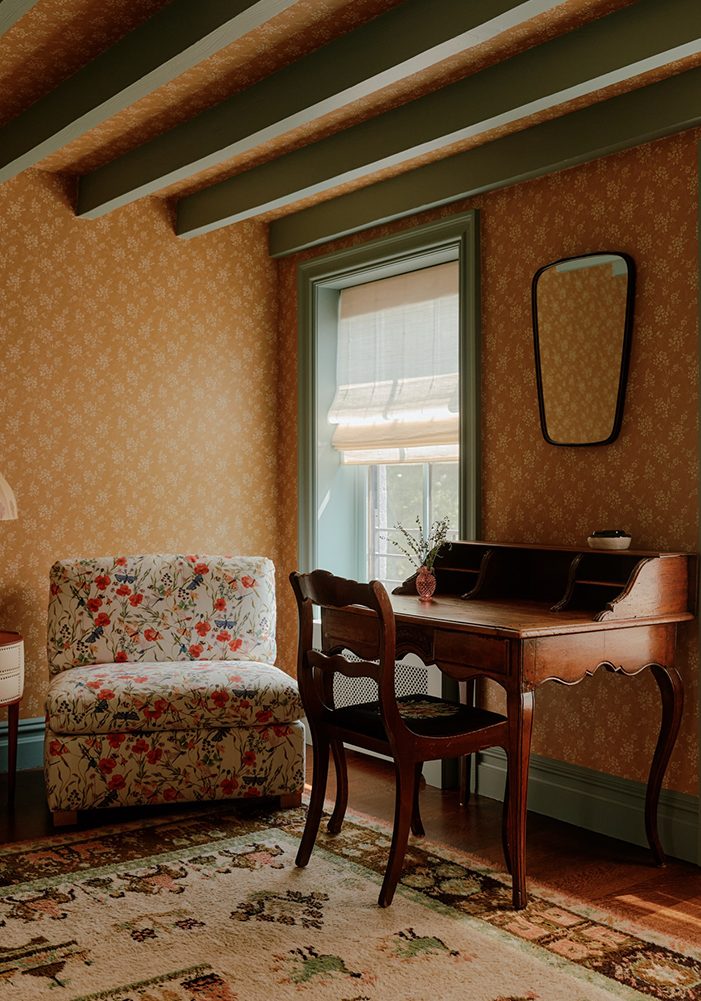
Rug & Kilim x Bespoke Only
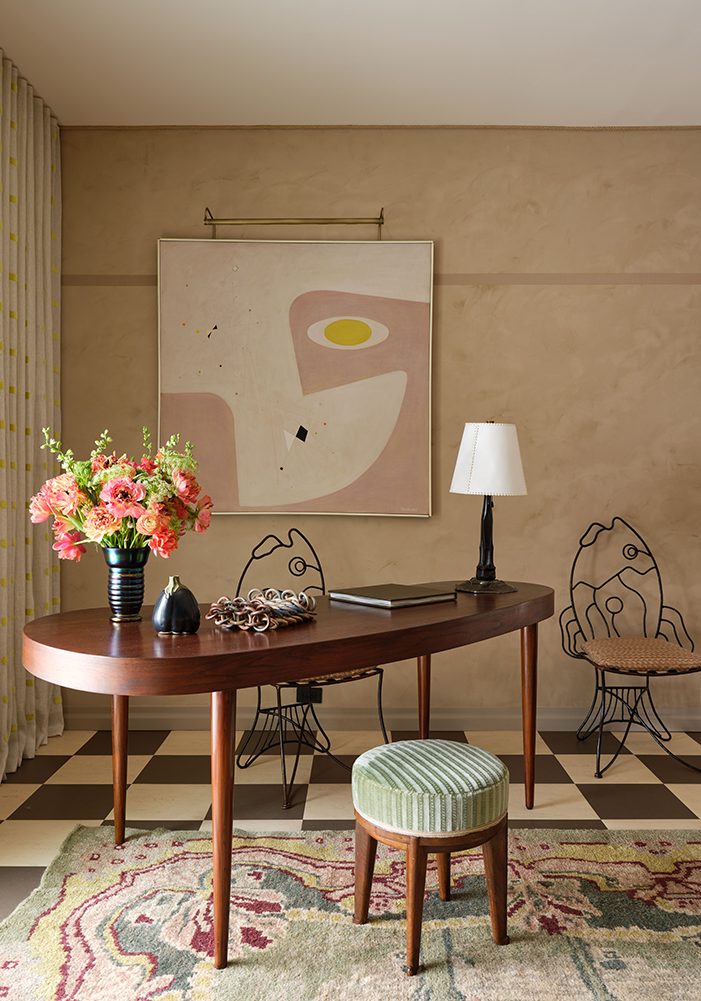
Rug & Kilim x Pappas Miron Design
Europe — Rooms as Cultural Constructs
European interiors remain, perhaps more than any others, governed by memory. Their rooms are not merely functional; they are named traditions, each carrying centuries of expectation.
The salon, for instance, is not a living room. It is a space born of Enlightenment culture, a room for discourse, where philosophy, art, and politics once intersected. To place a rug here is to understand that it must hold its own among works of intellectual and aesthetic consequence.
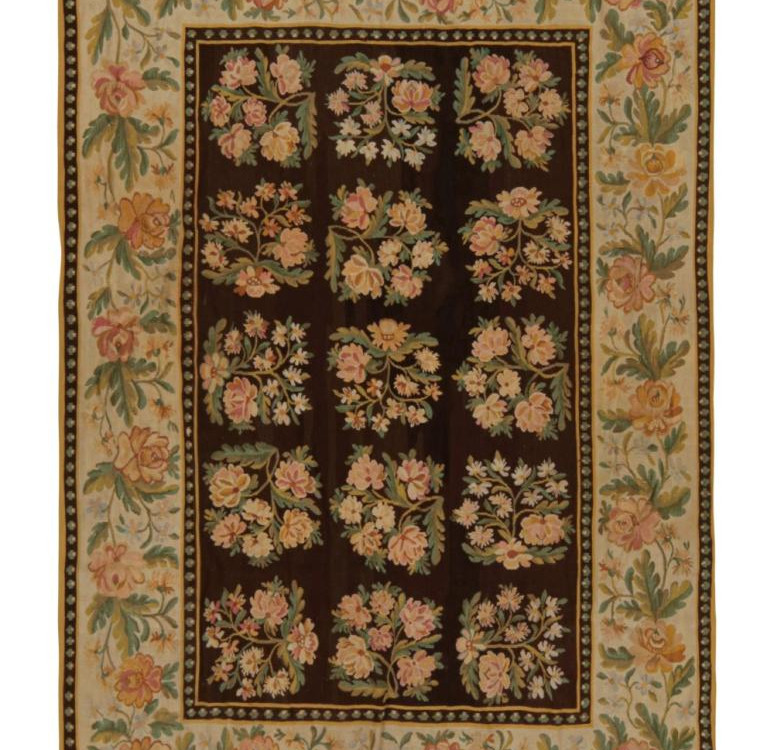
A Savonnerie carpet, with its origins in the royal manufactories of France, does precisely this. Its structure; ordered, symmetrical, composed—mirrors the architectural clarity of the rooms it inhabits. It does not compete with gilded moldings or panelled walls; it completes them. Beneath such a carpet, furniture becomes measured, conversation becomes anchored, and the room assumes a certain inevitability.
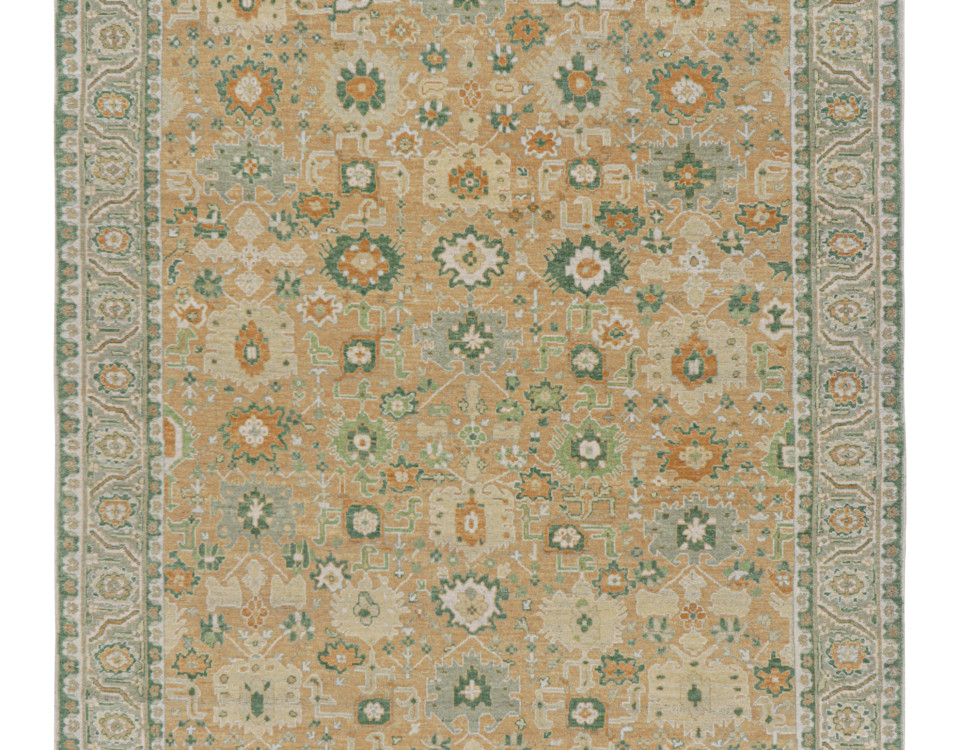
Alternatively, a Persian Isfahan or Tabriz, where the logic is different. These are rugs that invite inspection, their intricacy revealing itself slowly, much like the still lifes of Giorgio Morandi or the layered interiors of Édouard Vuillard. They are not declarative in the European courtly sense—they are absorptive, drawing the eye inward.
In the salle à manger, the demands shift. This is a room of repetition, of ritual, of weight. Chairs move, tables settle, light changes from day to evening. Here, a rug must endure. Art Deco carpets, particularly those influenced by early 20th-century Parisian modernism, offer a compelling solution. Their geometry aligns with the linear discipline of dining tables, while their palettes—often restrained, occasionally bold, echo the transition from classical to modern interiors.
Bedrooms, or chambres principales, require yet another recalibration. If the salon is outward-facing, the bedroom is inward. Here, the success of a rug lies in its ability to reduce the room’s volume. Scandinavian flatweaves, with their quiet geometry and material honesty, achieve this with remarkable clarity. One might draw a parallel to the architecture of Alvar Aalto, where warmth emerges not from ornament, but from proportion and material.
The United States
American interiors, unburdened by centuries of rigid typology, operate on a different principle: possibility.
In a Manhattan apartment overlooking Central Park, or a glass-walled residence in Malibu, the living room is often less a room than a field of space. The rug, in such contexts, must perform a structural function; it must organize without enclosing.
Here, Abstract rugs find their most natural alignment. Their painterly compositions echo the work of Mark Rothko or Helen Frankenthaler, where color is not contained but allowed to expand. These rugs do not sit within the room; they extend it.
At the same time, there is a distinctly American appetite for juxtaposition. A large-scale Persian carpet, placed within a rigorously modern interior, introduces a tension between history and contemporaneity. It is a dialogue that defines much of high-end American design; the ability to hold contradiction without resolving it entirely.
In bedrooms and private spaces, the American instinct often turns toward ease. Here, Suzani-inspired works and softened Coastal palettes introduce a humanizing element; pattern that breathes, color that recedes, surfaces that invite rather than impress.
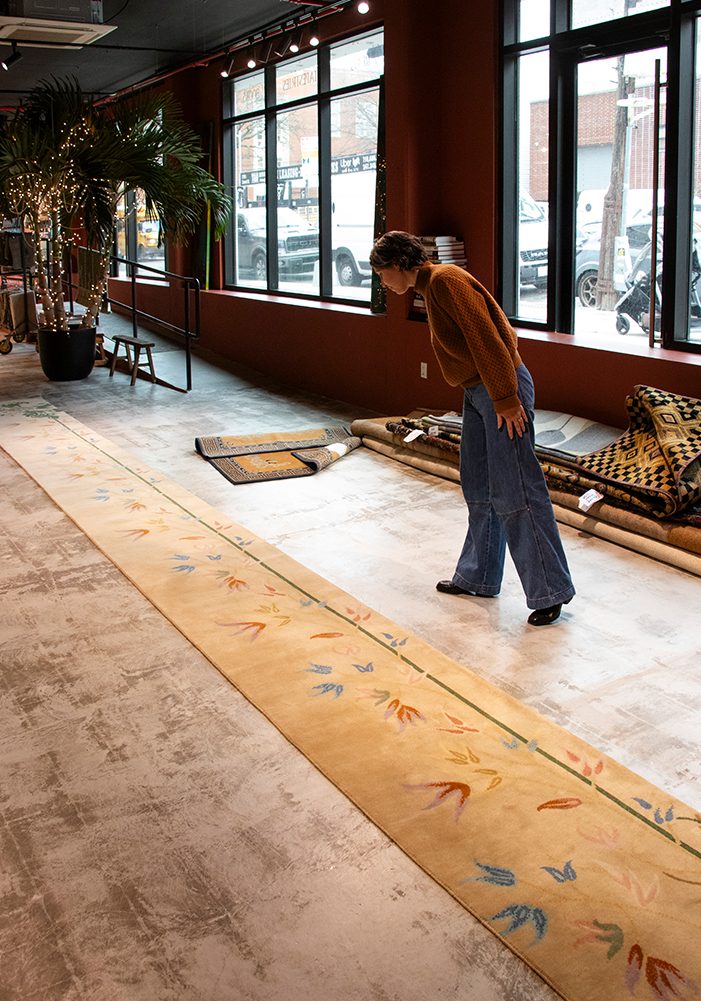
Rug & Kilim Showroom
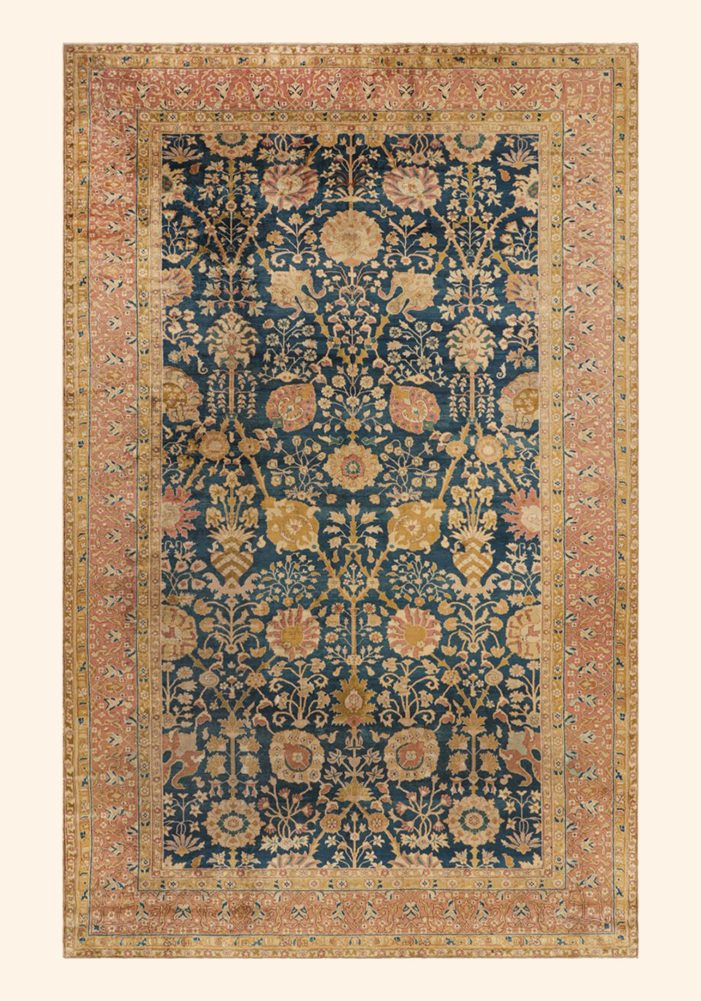
The Middle East — Where the Rug Is Architecture
In the Middle East, the relationship between rug and room is fundamentally different.
The majlis is not simply a space for gathering—it is a cultural institution, a room where hospitality, hierarchy, and identity converge. Within this context, the rug is not an accessory. It is the primary architectural surface.
A Mughal carpet, with its refined vegetal motifs and historical associations with imperial courts, operates here with profound resonance. Its patterns are neither purely decorative nor purely symbolic; they exist within a lineage of design that merges Persian, Indian, and Central Asian influences.
Similarly, a Tiger motif rug introduces a layer of symbolic authority. Historically associated with power and protection, its placement within a majlis is not incidental—it is intentional, a quiet assertion of presence.
These are not choices made lightly. In such interiors, the rug determines:
how the room is entered
how seating is arranged
how space is understood
It is, quite literally, the ground upon which the room exists.
Asia — Space as Philosophy
Across much of Asia, particularly in Japan and parts of China, interiors are guided less by accumulation and more by philosophy. Space is not something to be filled, but something to be preserved.
Within this framework, rugs must operate with restraint. A Chinese Art Deco carpet, with its open field and controlled geometry, aligns seamlessly with this approach. Its design does not overwhelm the architecture; it clarifies it.
The influence of Tadao Ando is instructive here. His work demonstrates that space gains meaning through light, proportion, and material—not through excess. In such interiors, a rug must be almost imperceptible. Its success lies in its ability to support without announcing.
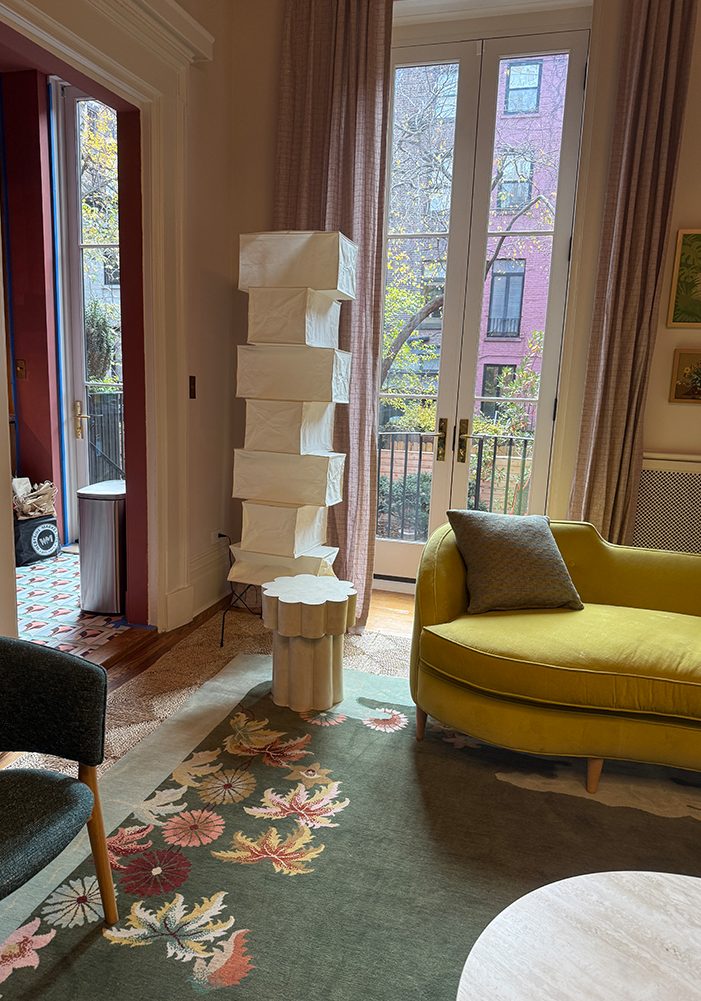
Rug & Kilim’s Chinese Art Deco
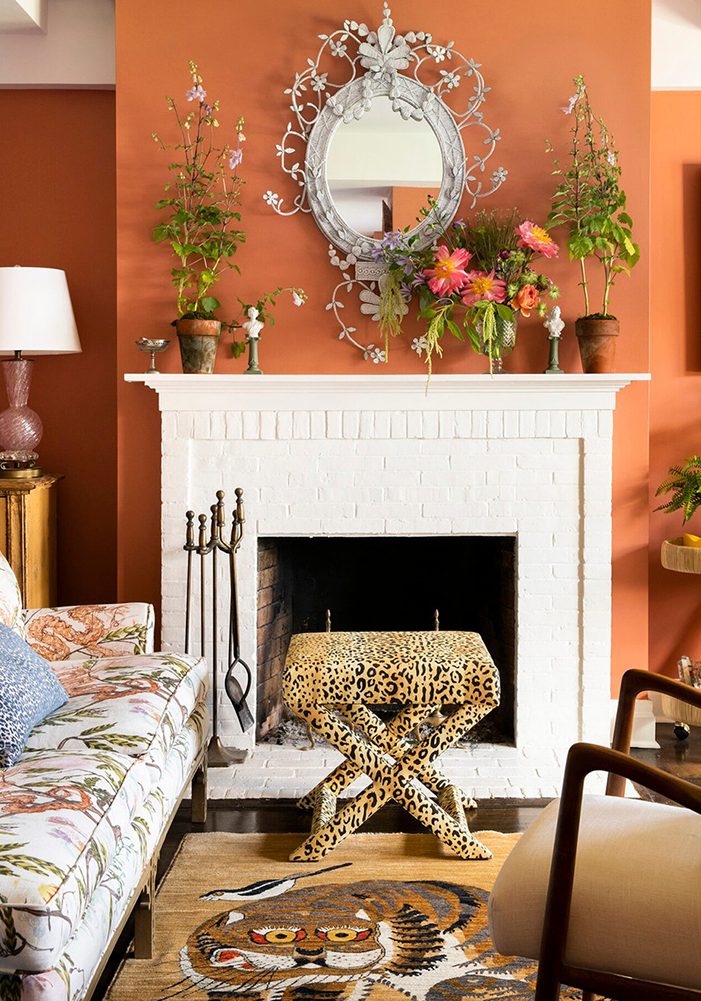
Rug & Kilim x Mally Skok Design
On Rarity — Tigers, Suzani, and the Question of Meaning
To speak of rare rugs—Tigers, Suzani, early Persians, exceptional Deco works; is to speak of objects that resist simplification.
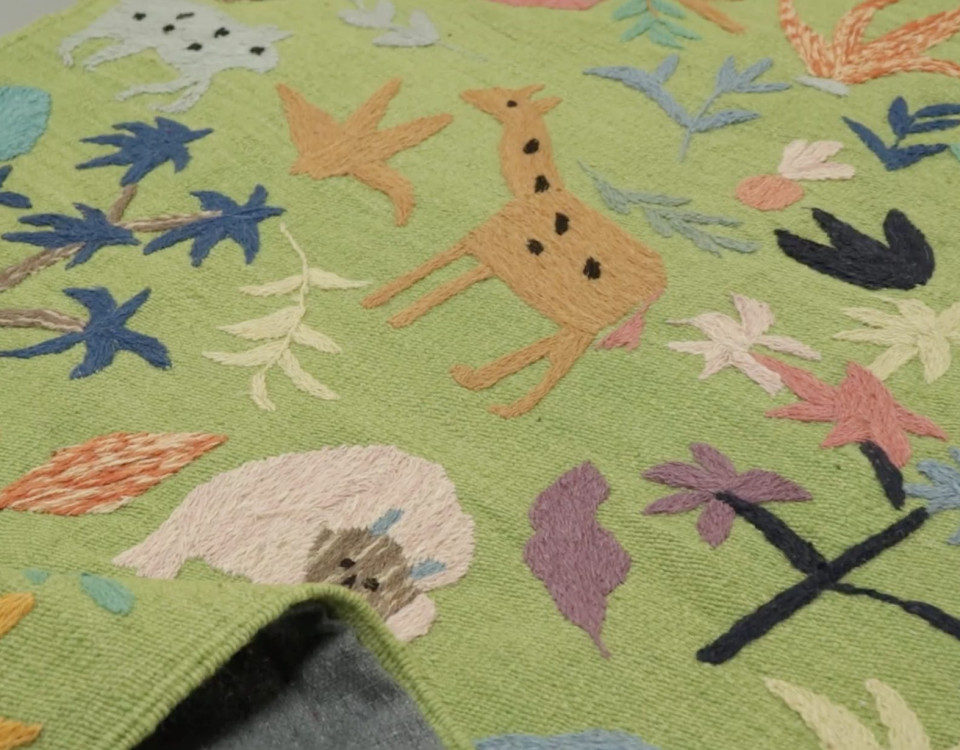
A Suzani, with its embroidered origins, carries within it a domestic history; one of making, of time, of repetition. When translated into a rug, it introduces rhythm rather than structure.
A Tiger rug, by contrast, is assertive. Its symbolism is immediate, its presence undeniable. It demands space, and more importantly, it demands context. These are not interchangeable objects. Each carries a specific cultural and visual language. To place them without understanding is to diminish them.
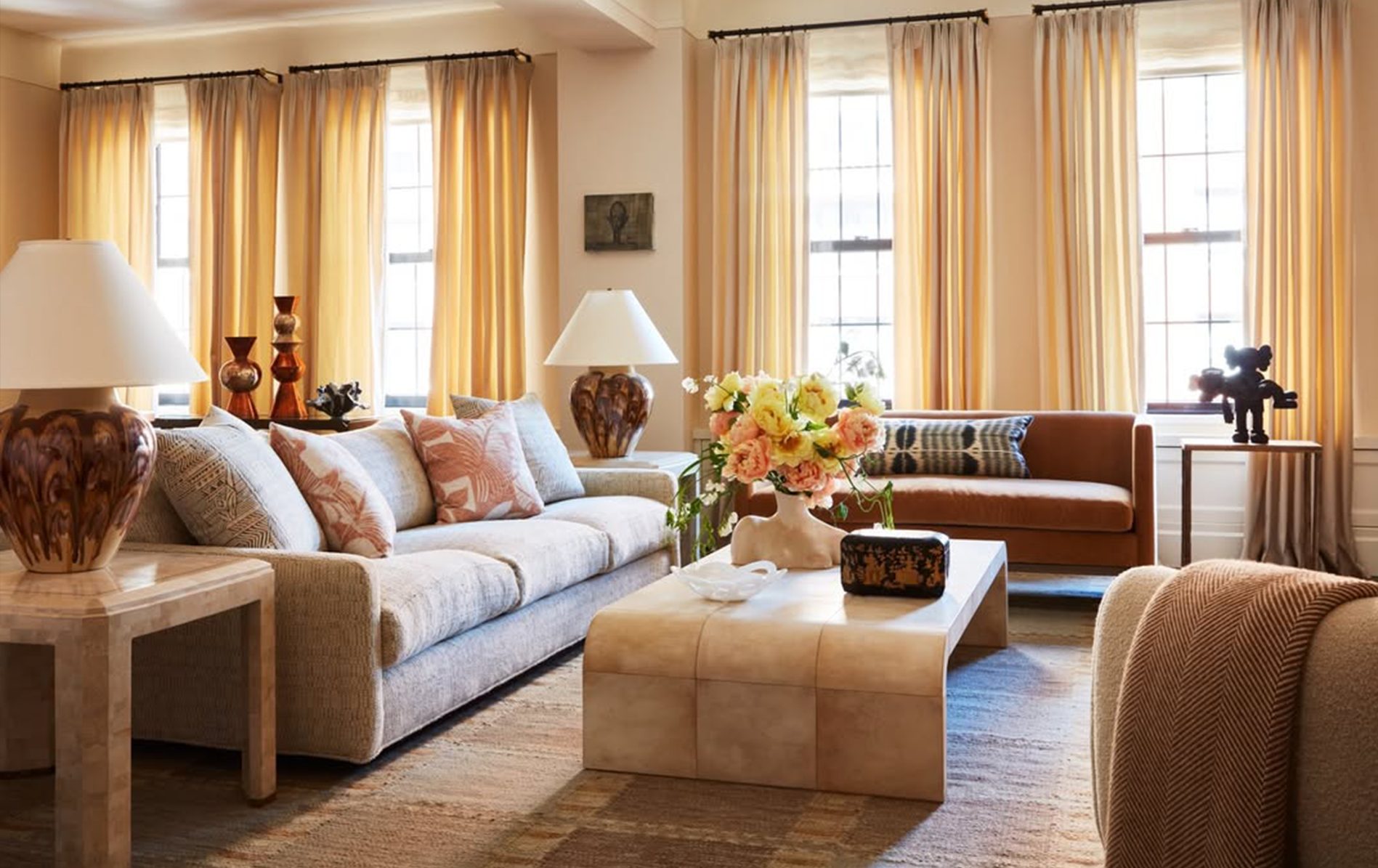
Rug & Kilim x Josh Greene Design
The Room as an Act of Understanding
At the highest level, interiors are not defined by what they contain, but by how deeply they are understood.
A rug, particularly one of rarity or significance is not a finishing touch. It is an intellectual decision, one that reflects an awareness of history, material, and place.
Across Europe, America, the Middle East, and Asia, the most refined spaces share a common quality. They are not crowded. They are not excessive. They are, instead, precise. They understand that beauty is not achieved through accumulation, but through alignment.
And in that alignment, the rug assumes its rightful position—not as decoration, but as foundation.
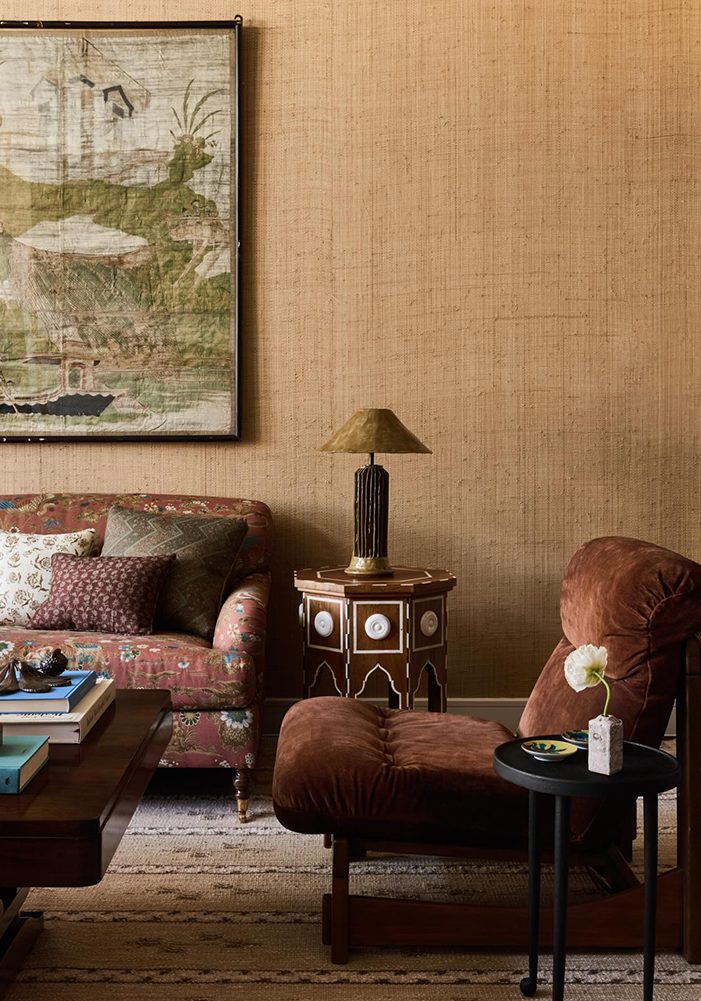
Rug & Kilim x Daf & Co.
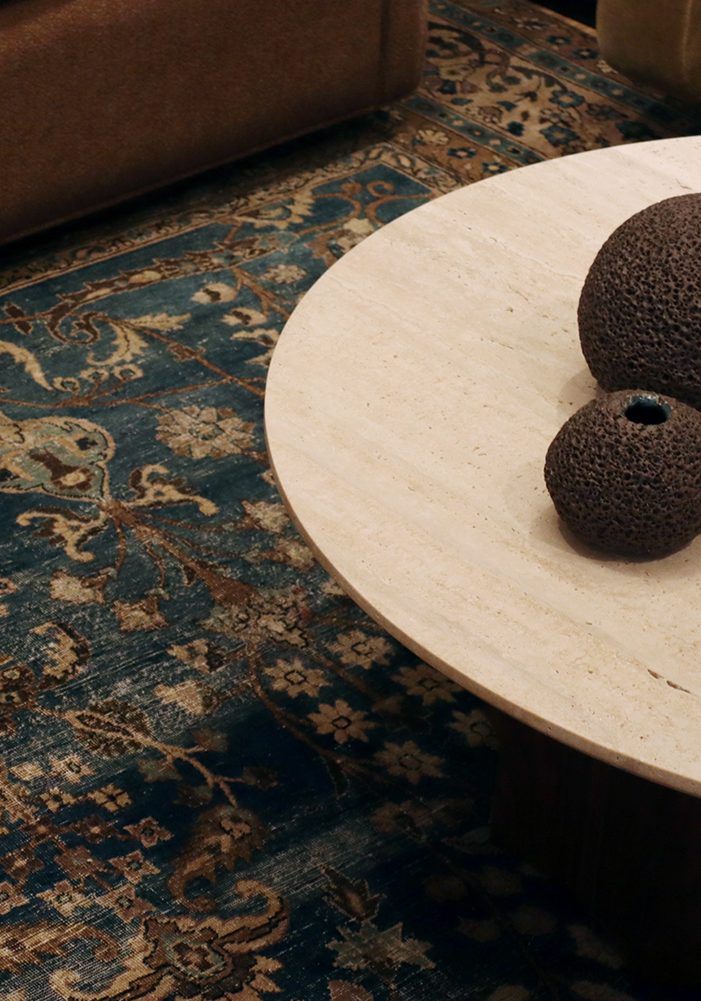
Rug & Kilim x Lawson Fenning
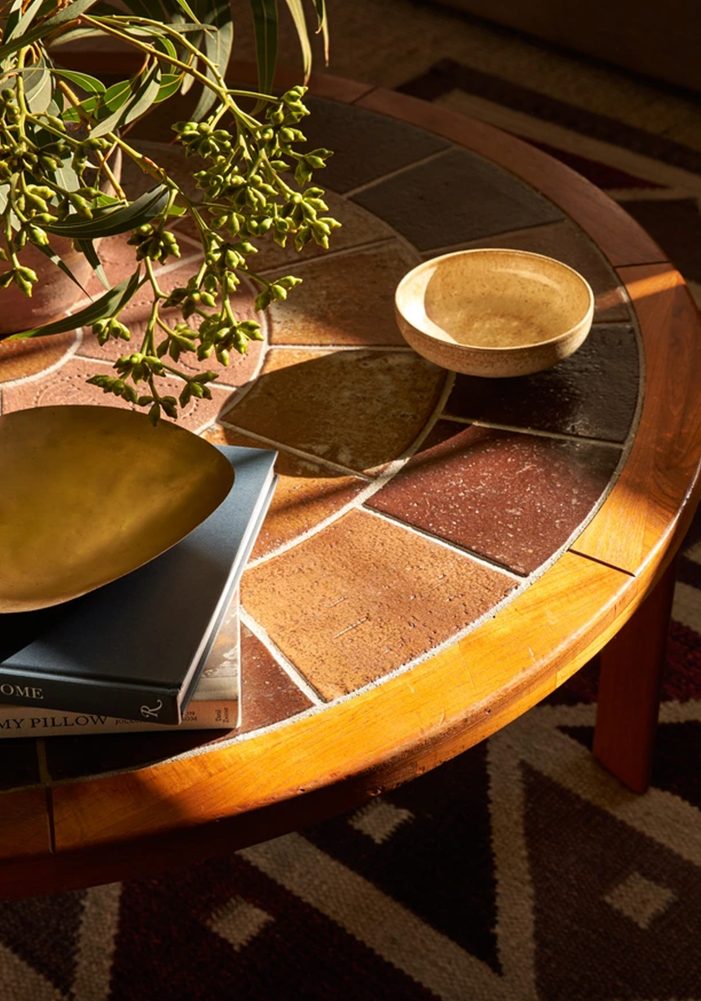
Rug & Kilim x Eloise Studio
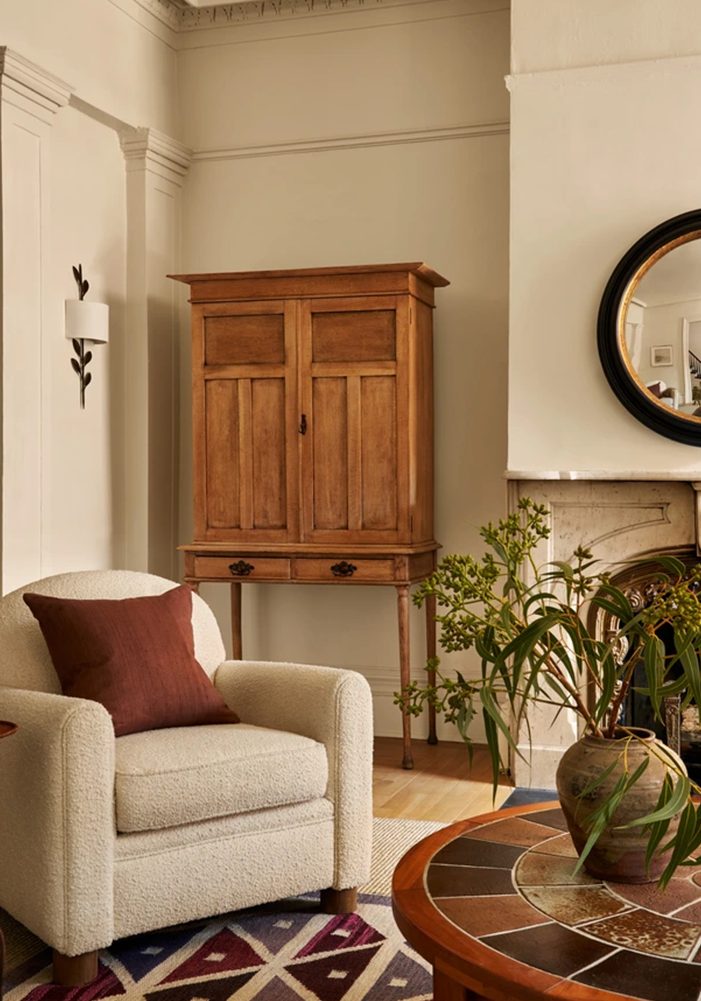
Rug & Kilim x Eloise Studio