
The Evolution of Swedish Modernist Design through Exhibitions
August 13, 2024
Rug & Kilim’s Burano Collection: Centuries of Styles, Woven Anew
August 26, 2024
Pictorial rugs with animals are extremely collectible, as few remain today and each is a one-of-a-kind treasure.
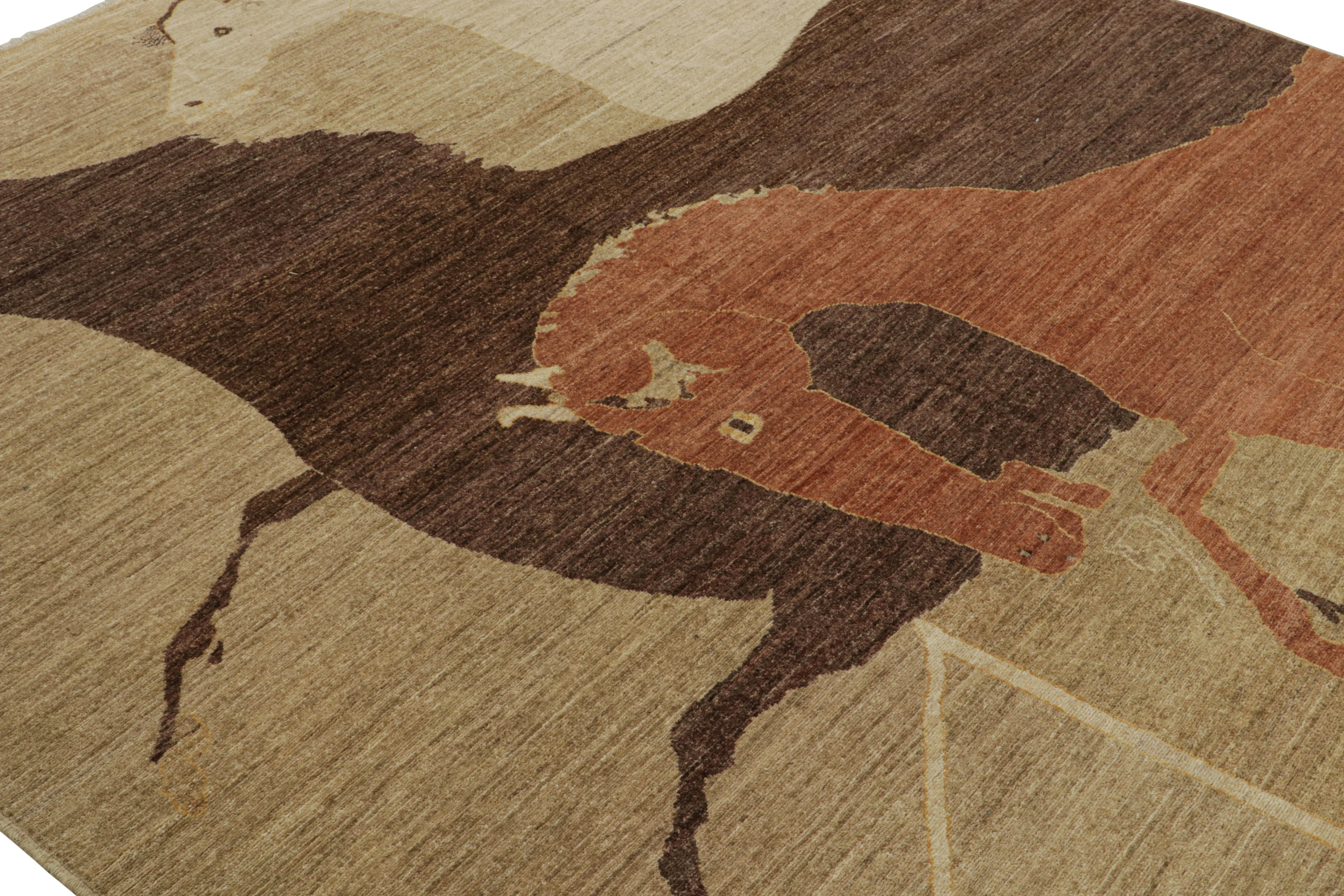
This Persian-style design depicting horses in a gallop is inspired by Gabbeh tribal rugs and similar, rare forms of Persian folk art. Its pictorials depict triplets of running horses in beige and brown, orange and pink tones on a beige field. Keen eyes will further admire the striae of yarns that achieves an abrashed, textural look in the field and pattern colorway.
Persian Style Rug In Beige With Brown and Orange Horse Pictorials
Horses have been an integral part of human history, dating back to around 3,500 BCE when they were first domesticated in the Eurasian Steppes and Kazakhstan. However, evidence such as the cave paintings in Lascaux, France, dating to 17,000 BPE, suggests that humans and horses may have had a close relationship even earlier. Iconic depictions like the Uffington White Horse from the late Bronze Age highlight the enduring fascination with horses throughout time.
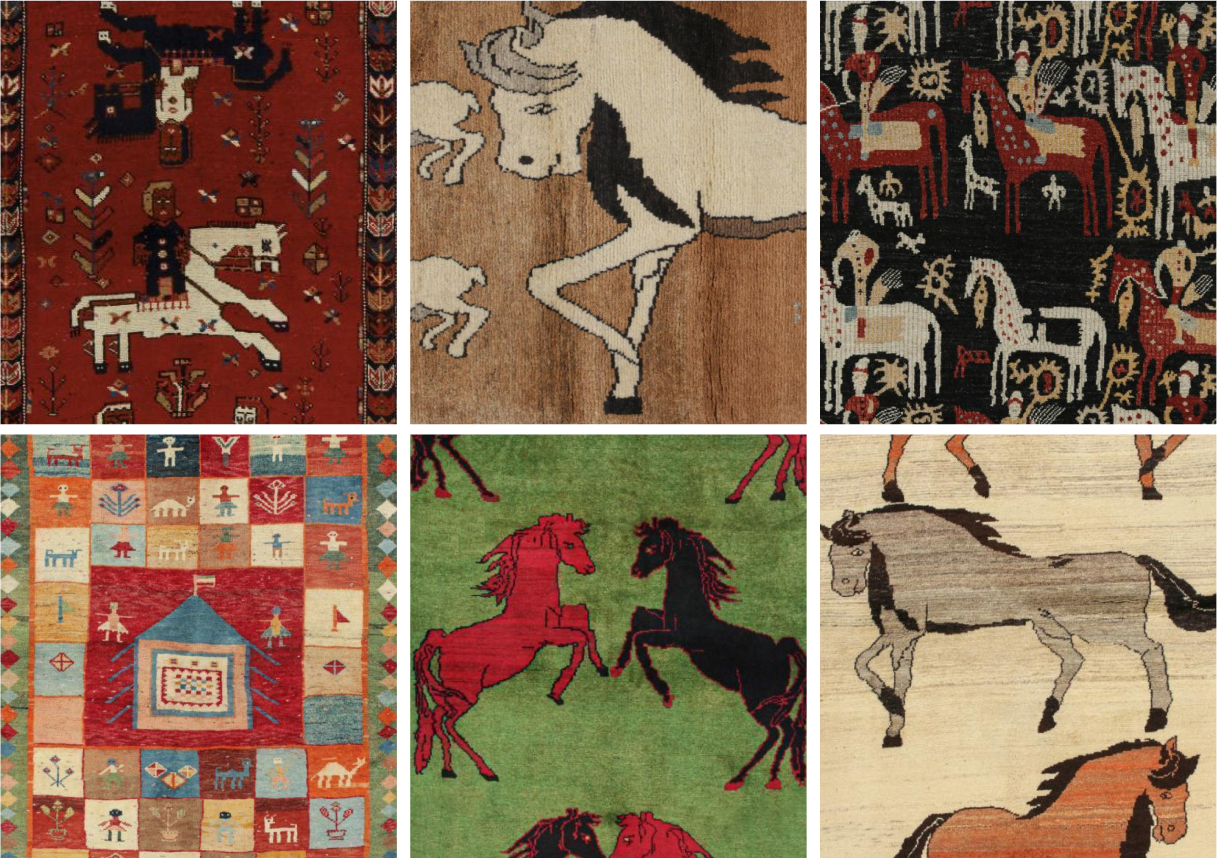
Vintage Persian rugs are collectible pieces of primitivist folk art with the old-world charm nomadic Persian rugs exemplify.
These magnificent creatures have served various roles in our societies, from transportation to companionship, leading to their portrayal in art and craftsmanship. Horses were not just functional; their dressing, including blankets and saddlebags, was a significant aspect reflecting the care and attention given to them. Skilled craftsmanship was employed to create elaborate and beautiful adornments for horses, highlighting their focal point of importance and the bond between humans and these majestic animals.
Horses have long been a prominent motif in Persian carpets, tracing back to ancient examples like the Pazyryk carpet, one of the oldest surviving piled carpets. It was not until the Safavid era that this tradition was revived, with Safavid rulers encouraging the creation of carpets featuring royal horses, hunters, and sportsmen on horseback. Polo, a game that originated as a military exercise, became a popular subject depicted in carpets and miniature paintings during this time, showcasing the cultural significance of horses in Persian society and living spaces.
The Ardabil Carpet stands as a paragon of horse representation. This 16th-century masterpiece, housed in London’s Victoria and Albert Museum, features intricate horse motifs woven into its elaborate design, showcasing the pinnacle of Safavid dynasty craftsmanship. Fascinatingly, this carpet contains a hidden message – a woven inscription that includes the date of completion and the name of the designer, Maqsud Kashani, offering a rare glimpse into the rug’s provenance.
Another notable example is the Wagner Garden Carpet, a 17th-century Kerman rug depicting horses amid a paradisiacal landscape, exemplifying the Persian garden tradition in textile form.
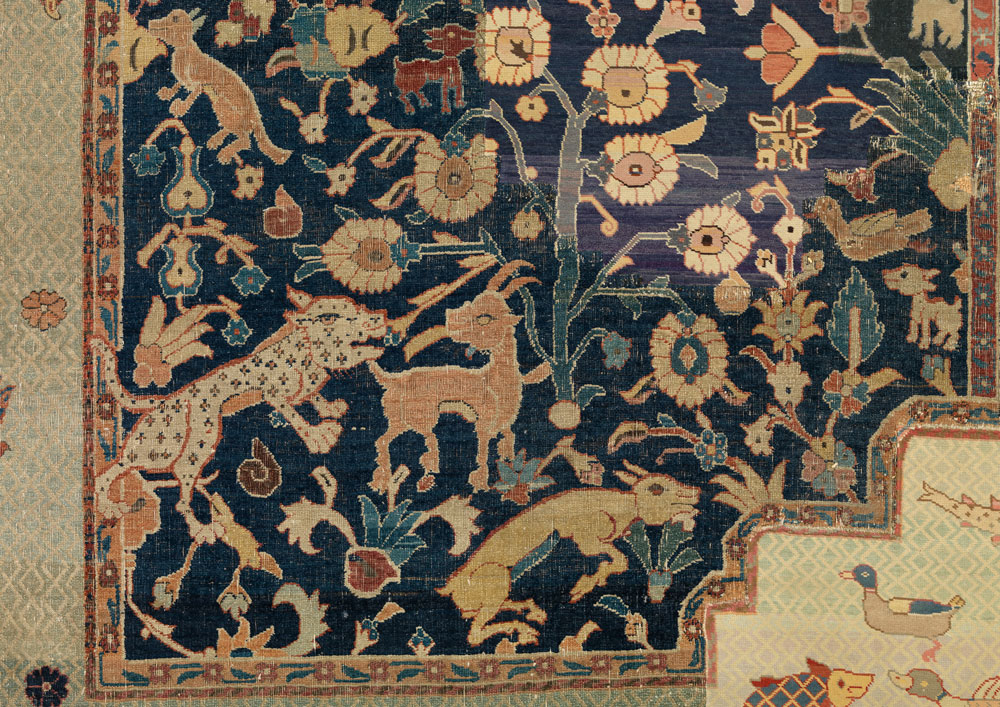
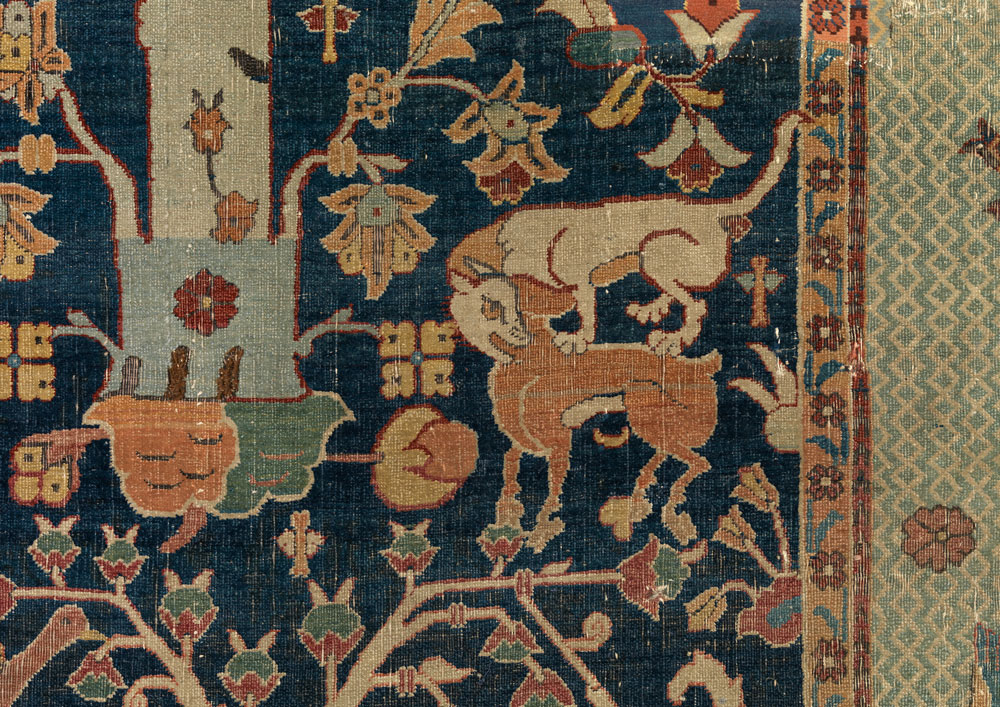
Central Asian tribes have their own rich history of horse representation in area rugs. The horse-and-rider motifs of Turkmen carpets, particularly those of the Yomut tribe, are instantly recognizable for their bold, geometric stylization. These handmade rugs, often featuring repeated patterns of mounted horsemen, reflect the nomadic heritage of their creators and their deep connection to horsemanship.
In the Caucasus region, we find the striking Karabagh horse rugs. These 19th-century hand-knotted rugs, originating from what is now Azerbaijan, often depict horses in vivid vegetable dyes against contrasting backgrounds. The “Eagle Kazak” rugs, while not exclusively focused on horses, frequently incorporate equine imagery alongside eagles and other symbols, creating a powerful visual narrative. A little-known fact is that some of these beautiful rugs were commissioned by Russian nobility, blending local weaving traditions with European tastes and resulting in unique, hybrid designs.
Moving northward, we encounter the unique tradition of Swedish rollakans. These flat-woven antique rugs, particularly those from the Skåne region, often feature stylized horses as part of their folk art-inspired designs. The horses in these textiles are typically rendered in a charming, naive style, reflecting the rural traditions of southern Sweden. Many of these designs have pagan roots, with the horse motifs originally representing Norse gods like Odin, who was often depicted on his eight-legged steed, Sleipnir.
Tribal rugs from various cultures also offer fascinating interpretations of early 20th century horse imagery in high quality wool pile. Navajo weavings from the American Southwest sometimes incorporate horse motifs, blending native art with imagery adopted after the Spanish introduction of horses to the region. In North Africa, Berber rugs may feature abstracted horse forms, often imbued with protective symbolism.
A particularly renowned example of tribal quality rugs is the “Three Horses” Kazak, a late 19th-century piece that has achieved near-legendary status among collectors. What makes this rug especially intriguing is the debate surrounding its symbolism – some scholars argue that the three horses represent different stages of life, while others see them as a representation of the three states of the soul in shamanic beliefs.
About the Pazyryk Carpet –
The Pazyryk Carpet stands as a testament to ancient craftsmanship and storytelling, dating back to the 5th Century B.C. Discovered in the tomb of a Scythian prince in the Pazyryk Valley of Siberia by Russian archaeologist Sergei Rudenko in the late 1940s, this ancient treasure has captivated historians and art enthusiasts alike. While its exact origin remains a mystery, experts believe it may have been part of the Achaemenid Empire.
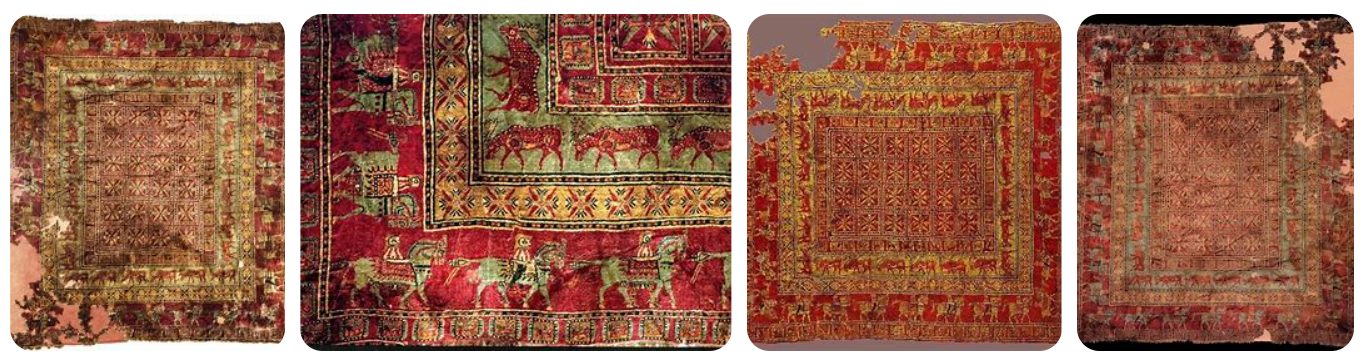
What makes the Pazyryk Carpet truly remarkable is not just its age, but the level of sophistication displayed in its construction. Unlike other carpets from the same era, which typically featured more primitive designs, this carpet showcases intricate images of griffins, deer, and horseback riders, offering a glimpse into the rich culture and lifestyle of the Scythian people.
The origin of the Pazyryk Rug remains a subject of debate among scholars, with various theories suggesting Turkish, Armenian, Persian, Siberian, or other Eastern origins. While Persia and Armenia are considered the most likely sources, the nomadic Pazyryks themselves are deemed less probable due to the rug’s sophisticated design.
Situated in the Pazyryk Valley along crucial trade routes linking China, Iran, and Russia, the area’s cultural diversity is reflected in artifacts like the Indian silk tunic found on a mummy nearby. Despite the uncertainty surrounding its origin, the Pazyryk Rug is universally admired for its intricate design and historical significance. It serves as a testament to the rich tradition of Oriental and Persian rug weaving.
Today, the production of oriental rugs featuring common styles of horses continue, primarily in Isfahan, Iran. These carpets, known for their intricate detail, are often woven with silk to achieve the desired level of finesse. Additionally, horse blankets and saddlebags are still crafted, although they are primarily made for personal use by horse owners, reflecting a continuation of the longstanding tradition of horse-related craftsmanship in the region.
Rug & Kilim’s Caucasian Rug in Black with Horseback Rider Pictorials
1950s Hand-Knotted Mid-Century Pictorial Rug Green Red Vintage Horsemen Pattern 23507
1950s Vintage Tribal rug in Beige-Brown Pictorials, Blue & Green Patterns
Vintage Persian Rug in Green with Black and Red Horse Pictorials by Rug & Kilim
Vintage Persian rug in Beige with Horse Pictorials by Rug & Kilim
1950s Vintage Persian Tribal Rug in Brown with Horse Pictorials by Rug & Kilim