

The New Luxury Is Something You Can Feel: Texture in the Modern High-End Interior
September 11, 2026
Time, Labor and the Lasting Value of the Handmade Rug
September 18, 2026
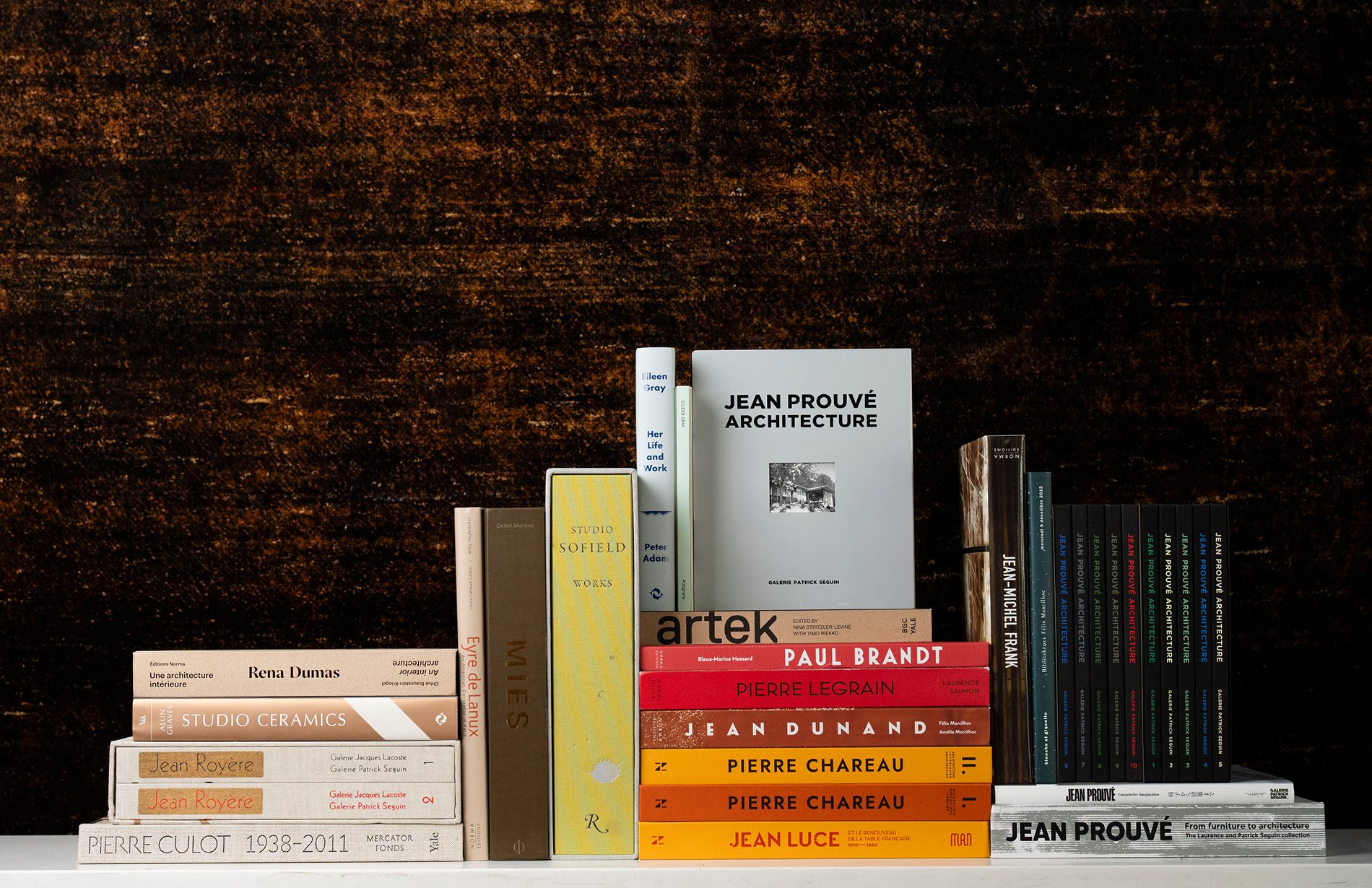
There has always been a quiet kinship between the rug and the book. Both are objects one lives with rather than merely owns. Both reward the patient return, disclosing more on the tenth encounter than the first. Both are, at their finest, repositories of a civilization’s memory; the one held in language, the other in wool. It should surprise no one that the greatest collectors of carpets have almost always been, in the same breath, collectors of the books that explain them. J. Paul Getty kept a scholar’s library beside his objects. The Rothschilds, whose carpets now rest in Doha and whose names still move a saleroom, understood a collection as a thing to be studied as much as displayed. To acquire seriously has always meant to read seriously.
It is in this spirit that Rug & Kilim has come to collect in books as well as weavings. Volumes, our bookstore, is not a departure from what this house has always been. It is the natural completion of it.
For more than four decades, the study of the object has been inseparable from the acquisition of it here. One cannot curate at the level this house demands without a library, and ours, housed within the Long Island City gallery, among the ample natural light and the largest decorative inventory in the country, has long been a working instrument rather than an ornament on a shelf. The textile scholar consults it. The designer draws from it before a commission. The colorist returns to it to trace a palette to its source. A house that treats the rug as a civilizational document must also keep the documents that decode it, and so the library was never optional. It was foundational, in the most literal sense: the ground on which the expertise stands.
What Volumes does is open that instinct to the world. The titles we gather are the ones the serious eye requires, the standard references that fill the crucial gaps in rug and textile literature, the monographs on individual traditions, the sumptuously illustrated studies of collections most will never see in person. Susan Day’s history of Art Deco and modernist carpets. The great Thames & Hudson and Rizzoli volumes that have shaped how a generation understands the field. Some of these books are invaluable precisely because the pieces they record are exceedingly rare, the book becoming, in such cases, the only surviving access to an object the world has otherwise lost sight of. To hold such a volume is to hold a kind of provenance in paper.
There is a deeper argument here, and it is worth stating plainly. The design world has drifted, in recent years, toward the image, the quick reference, the scrolling feed, the picture severed from the knowledge that gives it meaning. A house that believes in the object must resist this drift. The book is the natural enemy of the superficial. It insists on context, on lineage, on the difference between recognizing a pattern and understanding it. Walter Benjamin, unpacking his own library, wrote that ownership is the most intimate relationship one can have to objects, not that they come alive in the owner, but that the owner lives in them. He was writing about books. He might as easily have been writing about carpets. The point is the same: to truly possess a thing is to know it.
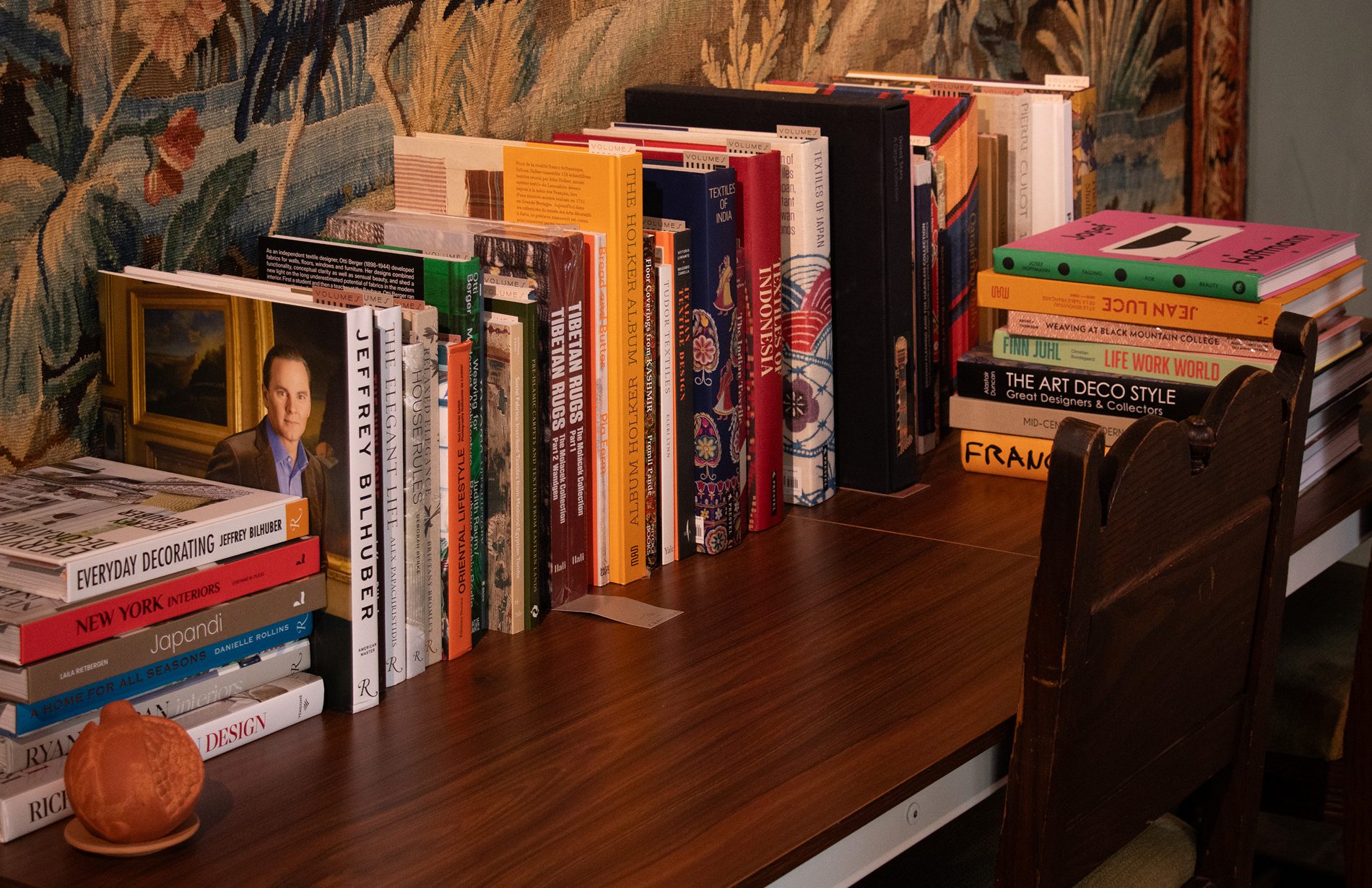
Volumes Bookstore. View Location >>
This is what we mean when we call ourselves an institution rather than an atelier. An institution keeps a library. An institution believes that the thing and the knowledge of the thing belong together, that the floor and the shelf are two halves of a single discipline. When a designer sources a rug from us, they acquire the object. When they read the volume beside it, they acquire the authority to place it well, the fluency to set a Bauhaus flatweave against a mid-century interior and know precisely why the conversation works, or to understand what a Safavid citation is doing in a nineteenth-century Heriz before they ever specify it for a client.
The finest rooms in the world are never assembled by people who merely liked what they saw. They are assembled by people who knew what they were looking at. The library is how one comes to know. It is why the great houses of the trade have always kept one close, and why the greatest interiors have always belonged to the well-read.
The rug will always be the heart of this house. But the book is its memory, and memory is what separates a collection from an accumulation. We are proud, at last, to offer both, the object and the knowledge of it, the floor and the shelf, kept together as they were always meant to be.