Style
Mongolian
Every piece in this style, across all of our collections. Narrow them down by size and price.
- Under 6 x 9
- Runners
- 6 x 9
- 8 x 10
- 9 x 12
- 10 x 14
- 12 x 15
- Over 12 x 15
Origin ▼
Style ▼
Material ▼
Width
Length
To connect with a specialist, click here
Stories from the Mongolian Archive
Essays, artist dialogues, and provenance notes drawn from Rug & Kilim’s editorial desk.
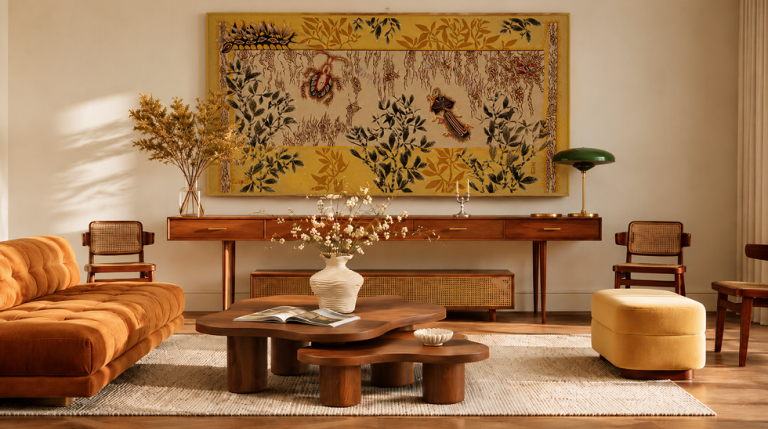
Signatures, Editions, and the Bolduc on Modern and Rare Tapestries: The Mark of the Masters and Artists
There is a particular pleasure, known to every serious collector, in turning an object over. The front of a great tapestry or carpet is what seduces; the back, and the edges, are what tell the truth. And on the finest modern tapestries, that truth is written in a specific and often misunderstood language, a language of signatures, edition numbers, and a small woven label the French call the bolduc. To read it fluently is to hold the difference between a decorative object and a documented work of art. It is the same literacy that governs the print room and the rare book library, where a collector learns to read a plate mark, a watermark, a colophon. The modern tapestry, elevated to the status of fine art by Jean Lurçat and his circle in the mid-twentieth century, borrowed the apparatus of the fine art edition precisely because it wished to be understood as fine art. To understand the apparatus is to understand the ambition.
Read the Feature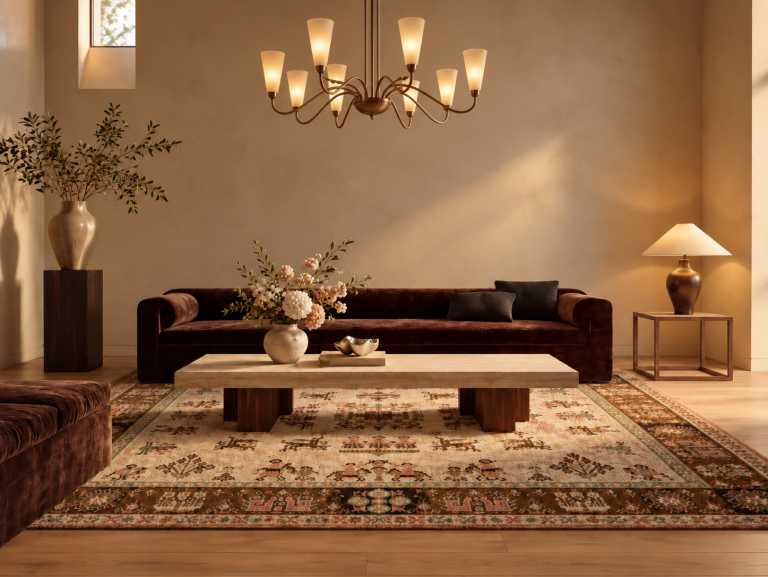
A Guide to Axminster Rugs: History, Craftsmanship, and British Design Heritage
Among the most influential carpet traditions to emerge from Europe, Axminster rugs occupy a distinguished position within the history of decorative arts, architecture, and interior design. Renowned for their exceptional craftsmanship, technical innovation, and artistic sophistication, Axminster carpets represent one of Britain's most important contributions to the global history of textile design. Originating in the historic market town of Axminster in Devon, England, these carpets became synonymous with luxury, refinement, and excellence from the eighteenth century onward. Their influence extended far beyond Britain, shaping carpet production, interior decoration, and architectural furnishing throughout Europe, North America, and the wider world.
Read the Feature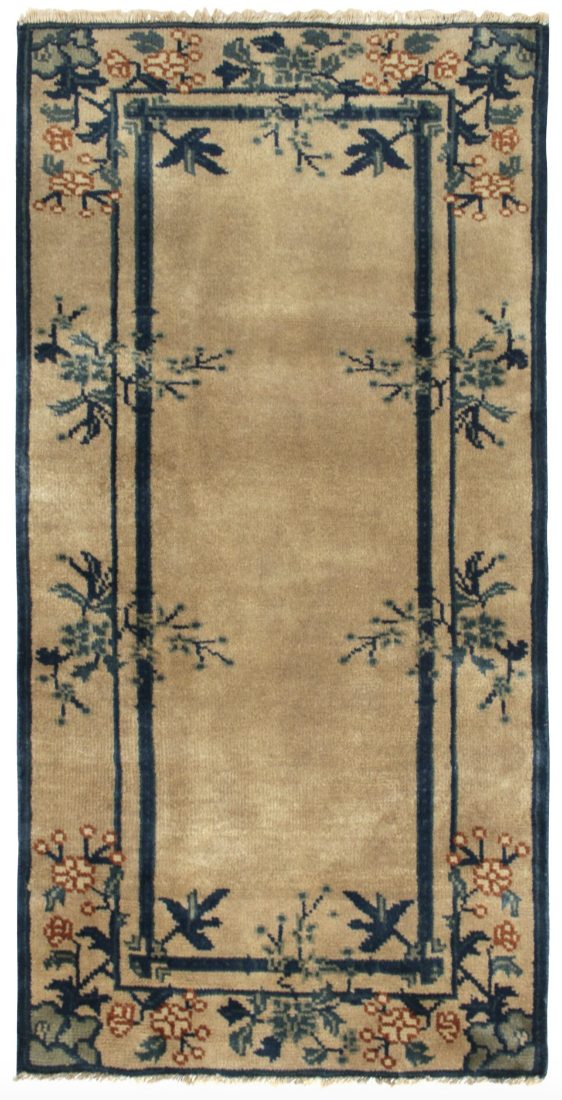
A Guide to Chinese Art Deco
Featured above is a vintage ode to Chinese Deco styles of the 1920s exemplifying classic frames in royal blue atop a luxurious beige-brown backdrop comfortably supporting the florals in aegean blue, teal & yellow-brown tones. The light and dark spots only complement the healthy wool pile of this hand-knotted vision, making it an exemplary piece in Oriental style. The exhibition "China Through the Looking Glass," showcased at the Metropolitan Museum of Art in 2015, provides a captivating exploration of the profound influence of Chinese aesthetics on contemporary Western fashion. The exhibition ingeniously juxtaposes traditional Chinese costumes, carpets, paintings, porcelain, and other artistic treasures with the creations of modern high-end fashion. This amalgamation of Chinese cultural artifacts and over 140 examples of haute couture and avant-garde ready-to-wear fashion unveils the enduring impact of Chinese art and culture on the imaginative landscape of Western fashion. Renowned designers like Cristobal Balenciaga, Paul Poiret, Roberto Cavalli, Vivienne Westwood, and Yves Saint Laurent contribute to this dialogue, creating a visually rich tapestry that bridges the historical and the contemporary in the realm of fashion.
Read the Feature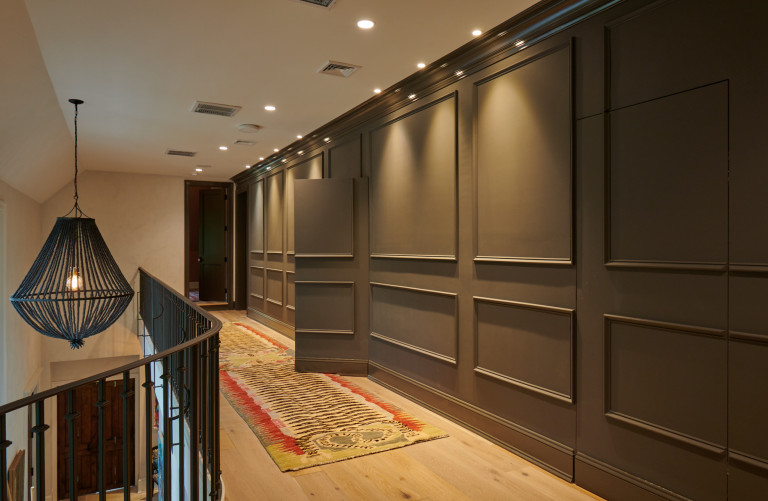
A Brief History of Tiger Rugs: The Art and Design of an Iconic Class of Animal Pictorials
Above, custom runner by Rug & Kilim inspired by Tibetan Tiger rugs adorns an upstairs hallway in the work of Cordaro Design. 2022, as the first year of the tiger rug renaissance, was no less than a metamorphosis in the world of fashion, art and design. Art went beyond the obvious — it became a manifesto; a modern language of design that transcends boundaries and celebrates the essence of wild. 2022 as the Chinese year of the Tiger, witnessed the design and fashion industry embracing tigers as the spirit animal and design muse. "Tomorrow’s Tigers" — a global commitment initiated by the World Wide Fund of Nature to double the numbers of tigers around the world — was the featured project ‘Art For Your World’ which helps tackle the climate crisis through the medium of art. It was a major fundraising event observed by twelve acclaimed contemporary designers who introduced new interpretations of tiger rugs, as inspired from predecessors and the wild tiger, and exhibited at Sotheby's London.
Read the Feature
A Glossary of Handmade Rugs and Kilims: Understanding Terms, Types and Techniques Past and Present
Referring to the art style characterized by using shape and color withdrawn from traditional repetition or realism. Abstract rugs — sometimes referred to as art rugs — capture an expressive nature that reads as a very modern style, though many abstract rugs draw inspiration from works of the same art style in the mid-century. One of the more widely known mid-century lineages of this style is abstract expressionism, named for the literal "expressionists" of the 1950s. Some of the most notable names behind this style include Jackson Pollock and Mark Rothko. Referring to a lineage of nomadic Persian rugs (sometimes referred to as “Avsar” in the alternate spelling). Afshar rugs hail from the eponymous tribe in the region of Northeastern Iran.
Read the Feature
An Abbreviated Guide To Antique and Vintage Rugs
Antique rugs have been in Josh’s resume since he began in the industry almost 40 years ago when he was already recognized for one of the largest oriental rug collections in the United States. Each piece in the internationally recognized volume was hand picked for rarity, and of course aesthetic and beauty, now complementing one of the widest varieties of Persian rug and Turkish rug collections with the utmost attention to individuality and care. Because of Josh’s position in the wholesale rug industry he’s been responsible for promoting a number of collections throughout history, from breathtaking signature Tabriz, Sultanabad, Kerman Lavar, Agra, and Oushak classics to the more unsung jewels of the luxury industry.
Read the Feature