

Rug & Kilim Returns from China: Photos and Reflections on the North East Asia Youth Camp on Sustainable Development
October 2, 2023
A Brief Look at Outdoor Scandinavian Rugs: Custom Swedish Rugs and Flatweaves for Exterior Design
November 16, 2023
Above, custom runner by Rug & Kilim inspired by Tibetan Tiger rugs adorns an upstairs hallway in the work of Cordaro Design.
 2022, as the first year of the tiger rug renaissance, was no less than a metamorphosis in the world of fashion, art and design.
Art went beyond the obvious — it became a manifesto; a modern language of design that transcends boundaries and celebrates the essence of wild. 2022 as the Chinese year of the Tiger, witnessed the design and fashion industry embracing tigers as the spirit animal and design muse. “Tomorrow’s Tigers” — a global commitment initiated by the World Wide Fund of Nature [WWF] to double the numbers of tigers around the world — was the featured project ‘Art For Your World’ which helps tackle the climate crisis through the medium of art. It was a major fundraising event observed by twelve acclaimed contemporary designers who introduced new interpretations of tiger rugs, as inspired from predecessors and the wild tiger, and exhibited at Sotheby’s London.
Representations of Tigers Throughout History
Design, just like Tiger stripes, is a form of visual poetry. Tigers have an ancient significance in Asian geography. Tigers, as symbols of courage and power, their representations on rugs were often displayed in imperial courts as emblems of authority, symbolic of ruler’s dominance over man and nature. Tiger images were often incorporated in Chinese elite households owing to their ability of warding off evil spirits.
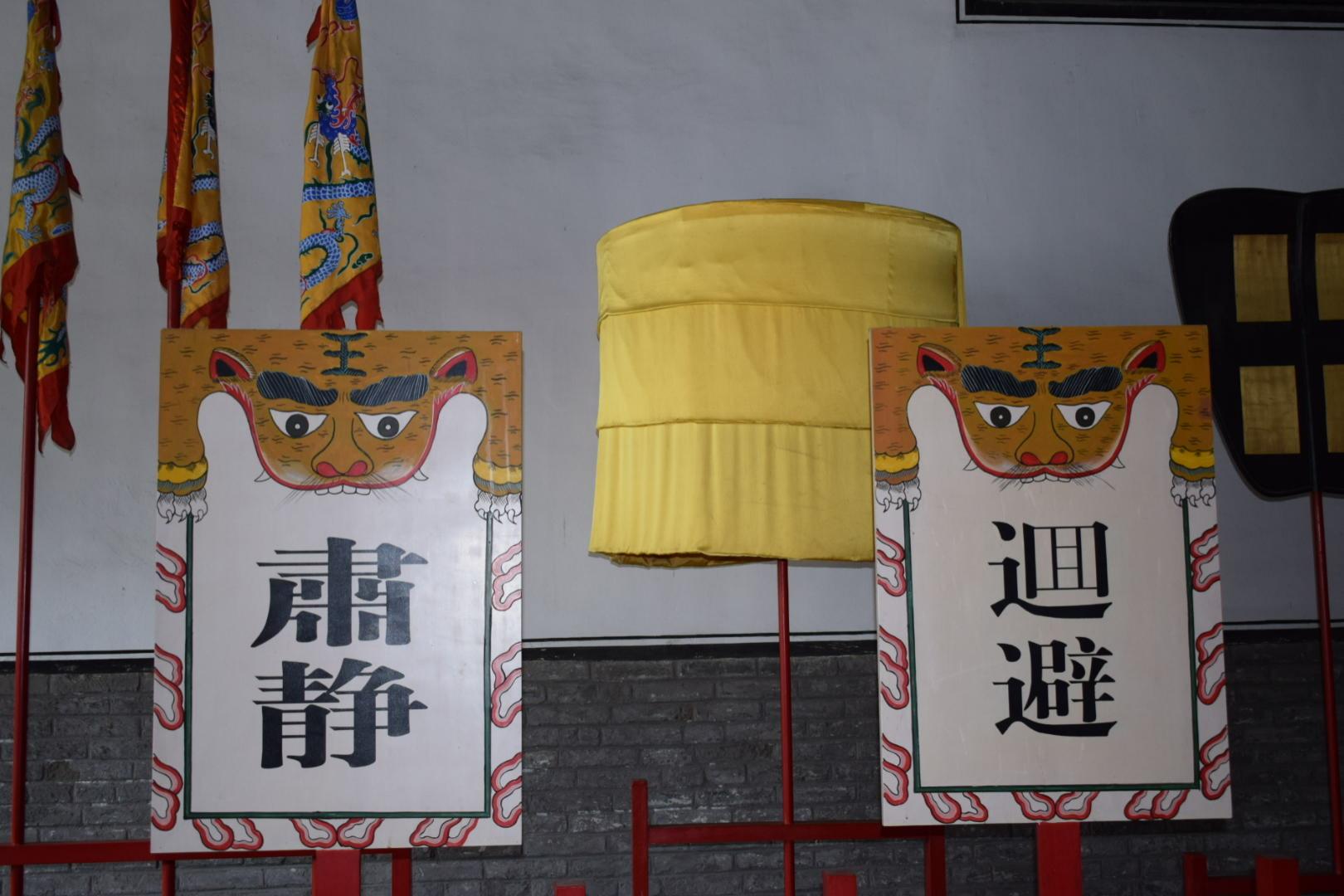
Fig: Images of tigers painted on frames in the Mencius Mansion — built in 1037 A.D. in Jining, Shandong (China), where it stands today.
In Tibet, tigers were auspicious animals in Tibetan Buddhism, symbolizing fearlessness and protection. Depicted alongside Buddhist deities, the tiger motifs were believed to protect the monks in the monasteries. As an evolution of narrative, it’s those majestic tigers now who need protection from humans.
Tiger rugs have a deep cultural connection in Asian folklore and culture, especially India, where the tiger is the national animal and represents strength and power. Tiger rugs or tiger striped rugs have always been inherent in various civilizations and have symbolized majorly similar sensibilities with minor interpretations in each culture.
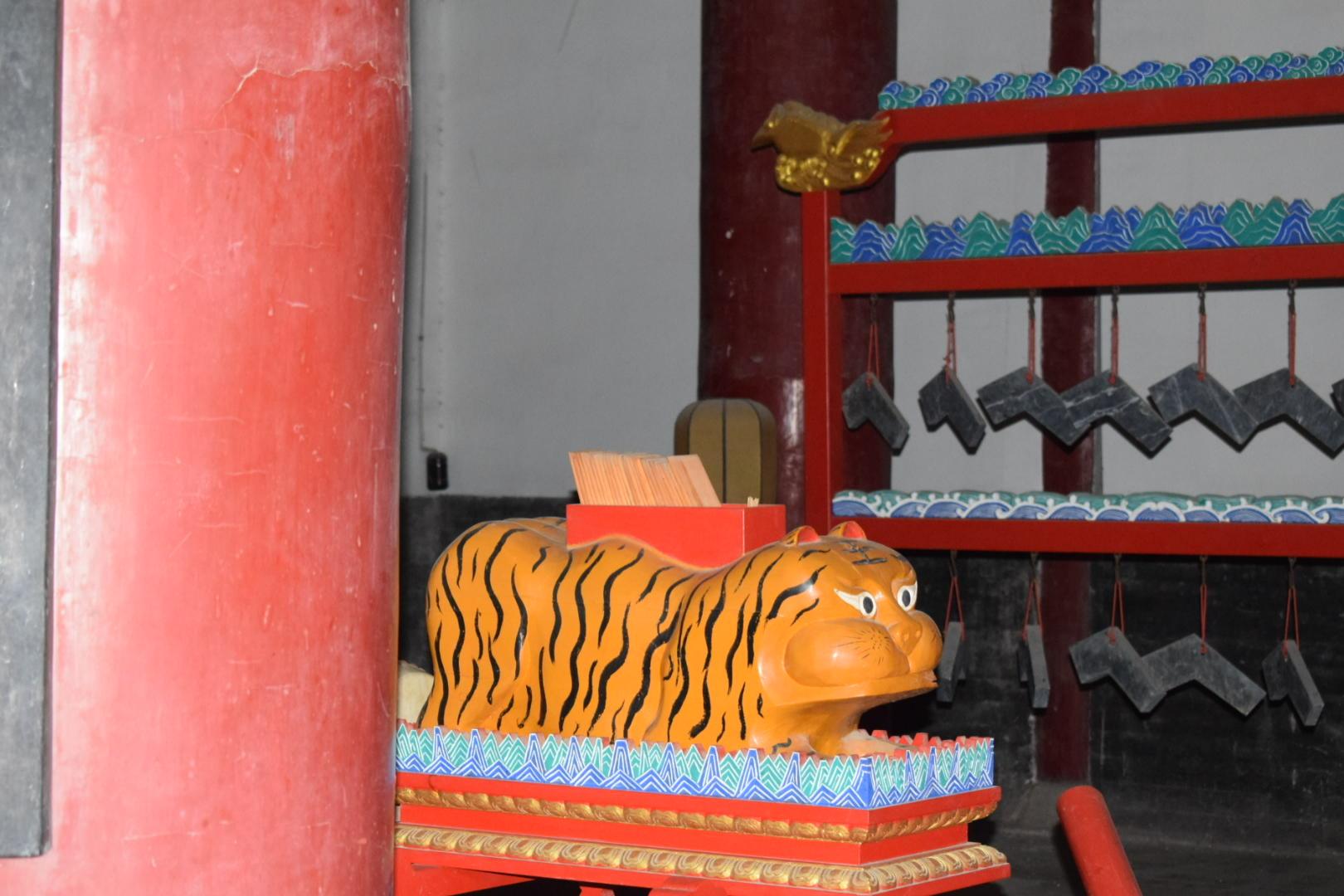
Fig: A traditional Chinese tiger sculpture next to the main hall of the Confucius Mansion — where the Temple of Confucius in Qufu, Shandong has stood since it was built in 478 B.C.
The Legacy of Antique Tibetan Tiger Rugs
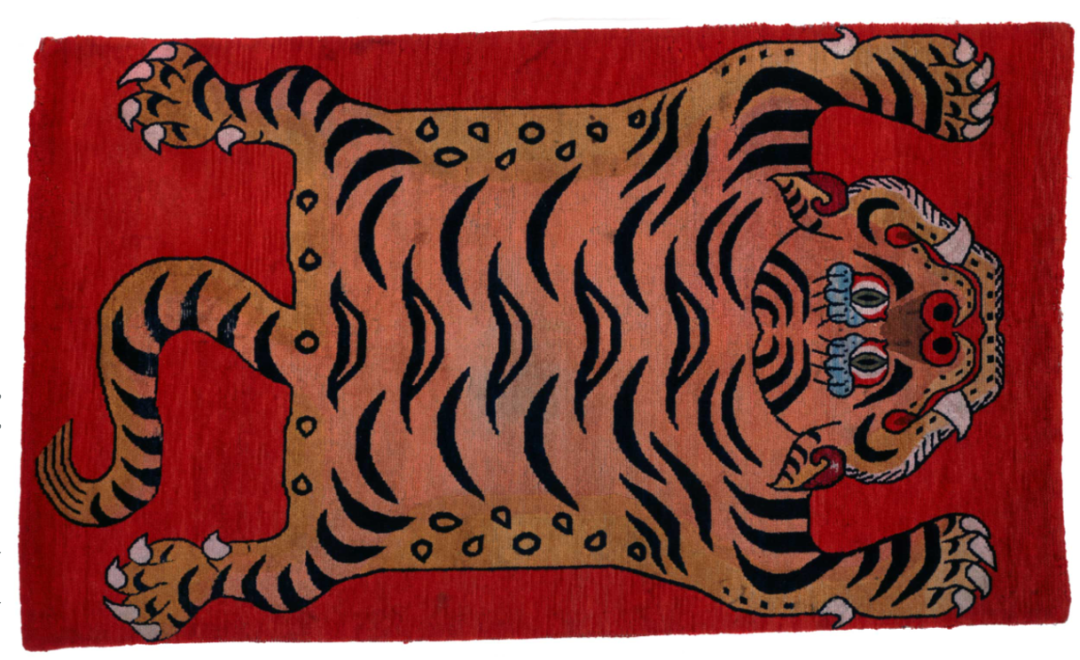
Fig: This antique Tibetan Tiger rug acquired by the Newark Museum in 1976 features a bold, almost cartoon-like design, featuring the rich wool pile and vibrant colors characteristic of traditional Tibetan craftsmanship.
The first antique Tibetan Tiger Rug in wool and cotton graced the western world when it was purchased by Charles W. Engelhard Bequest — a collection of the Newark Museum in New Jersey in 1976. According to the museum, these ‘Flayed Tiger Skin Rugs’ were utilized by Tibetan lamas as sitting mats, symbolizing the taming of the ego-centered mind in Buddhist philosophy. It is believed that these rugs replaced actual tiger skins once used in Tibet.
A significant milestone in the exploration of these rugs arrived in 1988, in the form of a seminal work titled ‘The Tiger Rugs of Tibet’, edited by Mimi Lipton and enriched by a cohort of carpet and rug experts. This illustrated volume unravels the enigmatic history behind Tibetan Tiger Rugs which were exclusively owned by the privileged elite, serving both as comfortable sitting platforms and protective covers for their belongings during journeys. With likely fewer than 200 antique Tibetan tiger rugs in existence, their diversity and creativity lives on, in the form of contemporary designs and form.
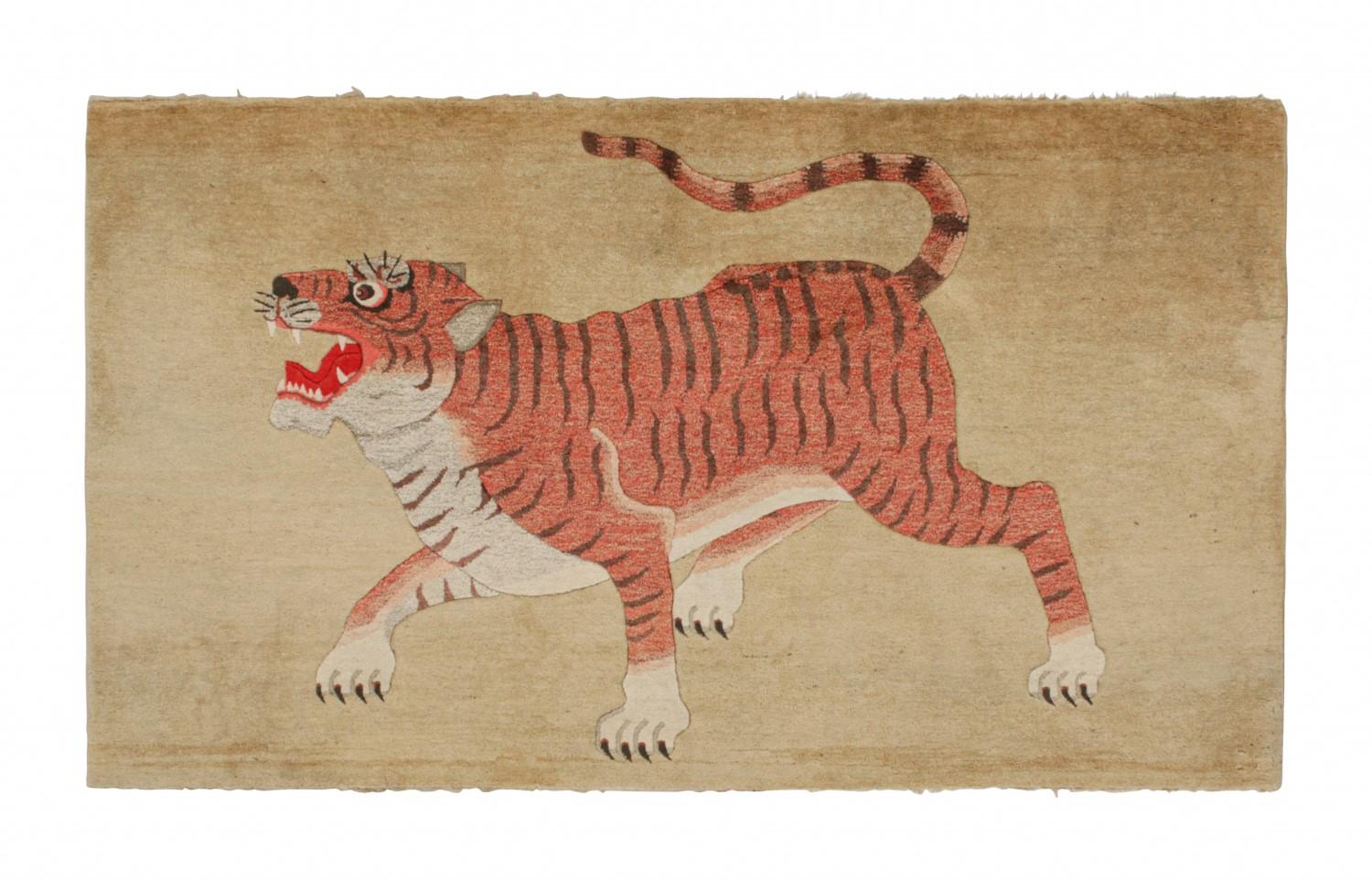
Fig: SKU 28000 from our antique pictorial rugs — a German Tiger runner believed to originate circa 1920 — is among the rare few European takes on the style known today.
The “Tomorrow’s Tigers” movement — which started as a responsibility of the global community — eventually became the new vogue that enveloped all luxury fashion labels beyond tiger rugs. From ‘GUCCI’s Tigers’ campaign, featuring tiger motifs all over their collections and celebrating their endangered nature, to Balenciaga, Burberry, Prada, Louis Vuitton, Stella McCartney and Fendi, all launching limited editions honoring tigers as the royal species they are.
Where design and fashion meet, creativity knows no bounds. In the global effort to conserve tigers, we contribute by raising awareness about tigers through our Tiger Rug line. We would love to start the conversation and know your thoughts on the design and fashion industry’s contribution to saving these species in danger.
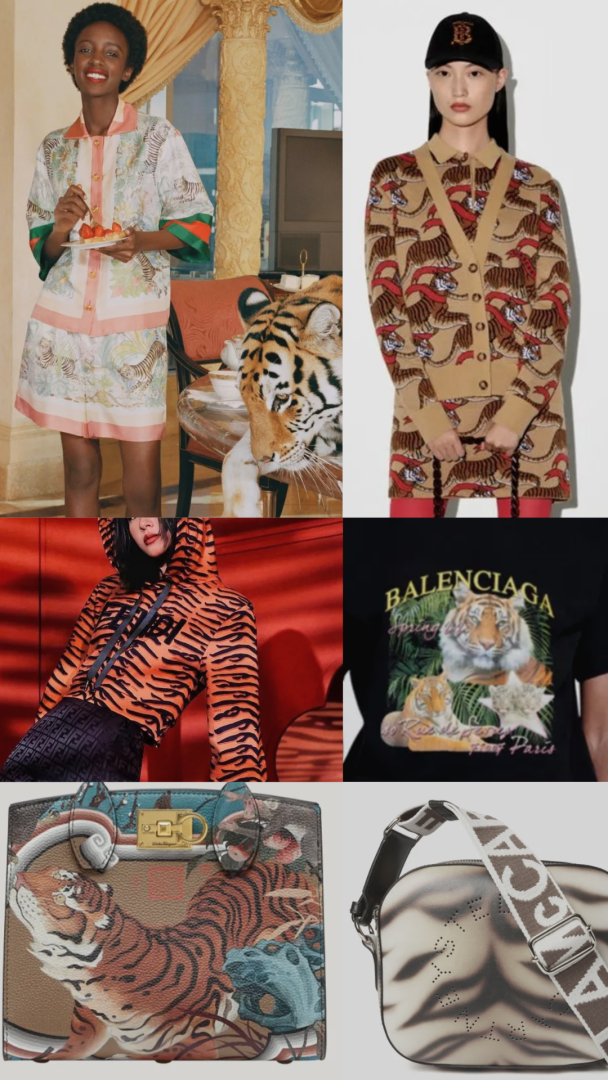
Fig: Limited editions of Tiger-themed collections launched by luxury brands in lieu of the Chinese Year of the Tiger 2022.
To glimpse the conversation initiated by artists, designers and luxury fashion brands, have a look at some of the masterpieces created for “Tomorrow’s Tigers” that inspire us.
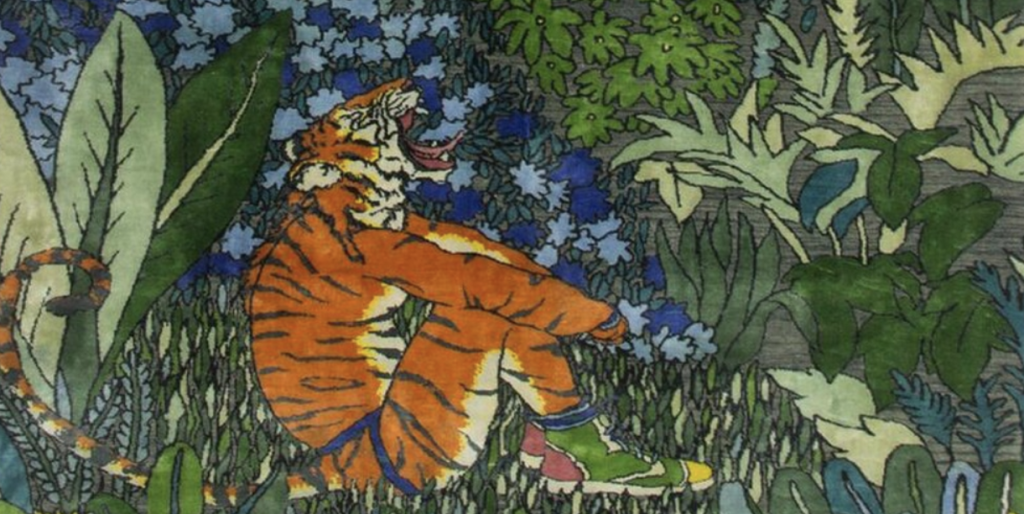
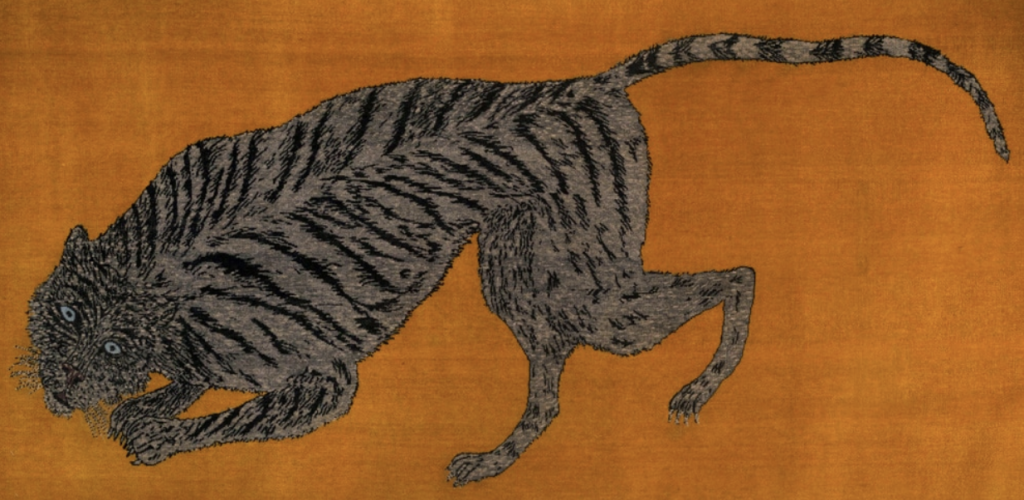
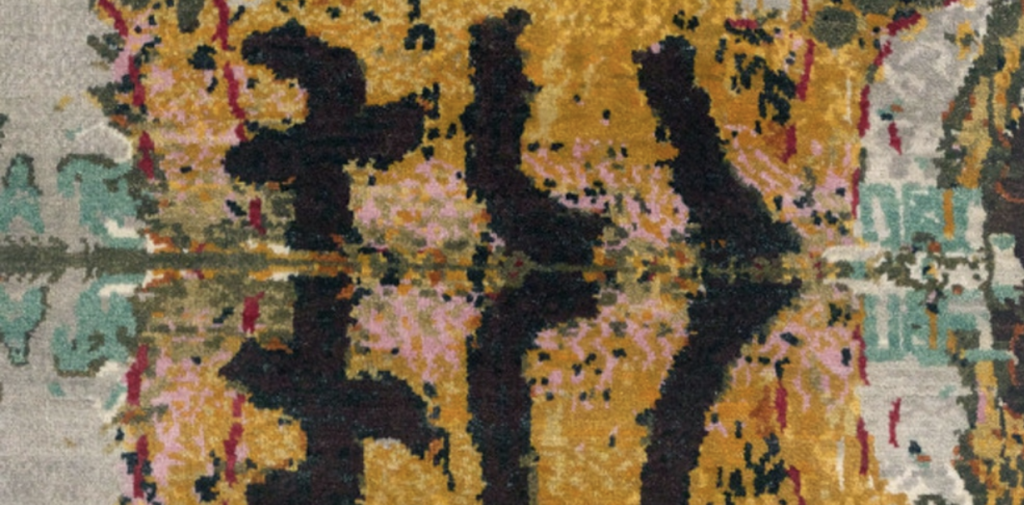
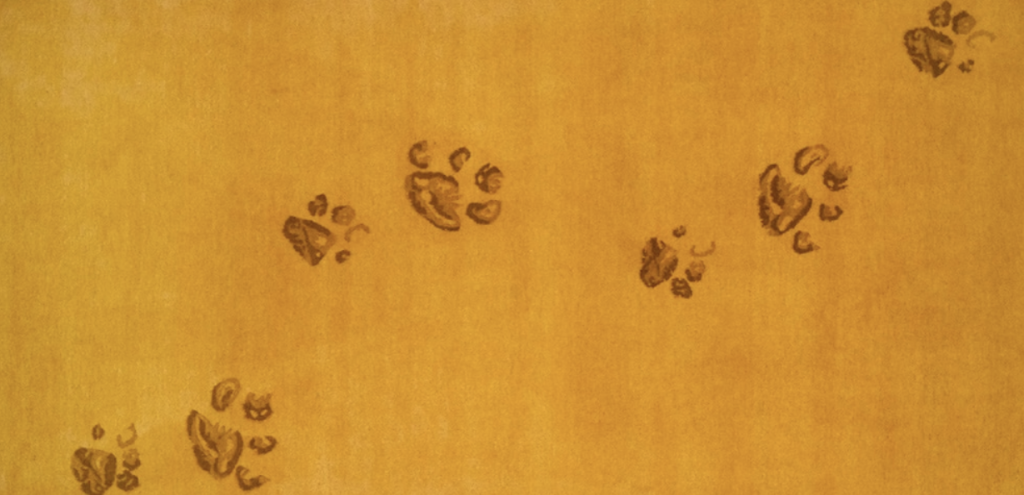
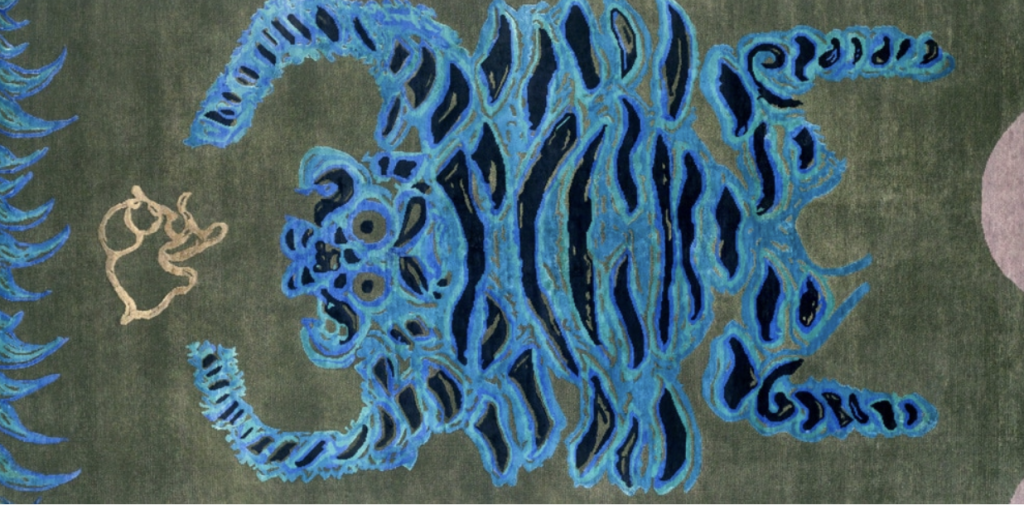
Rug & Kilim’s Tiger Rug Collection
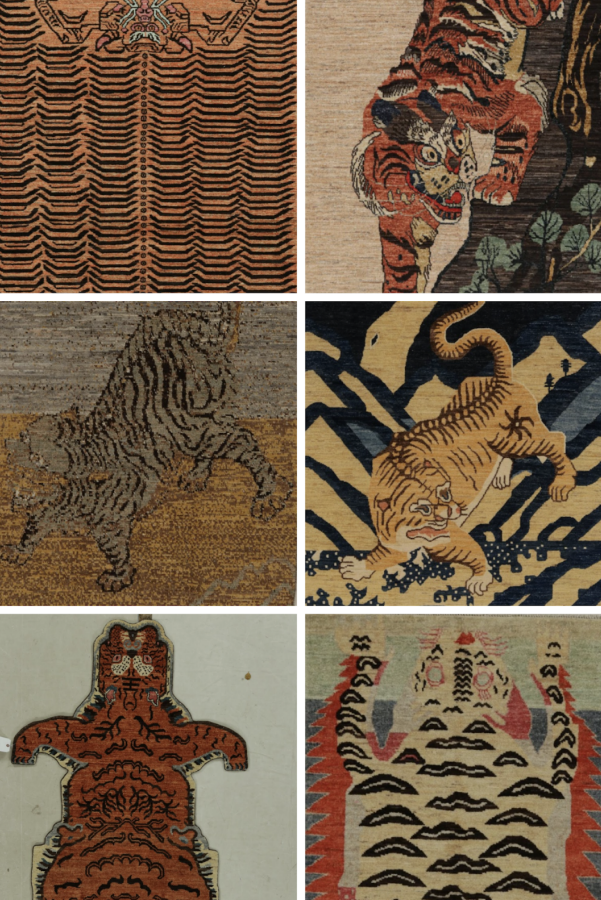
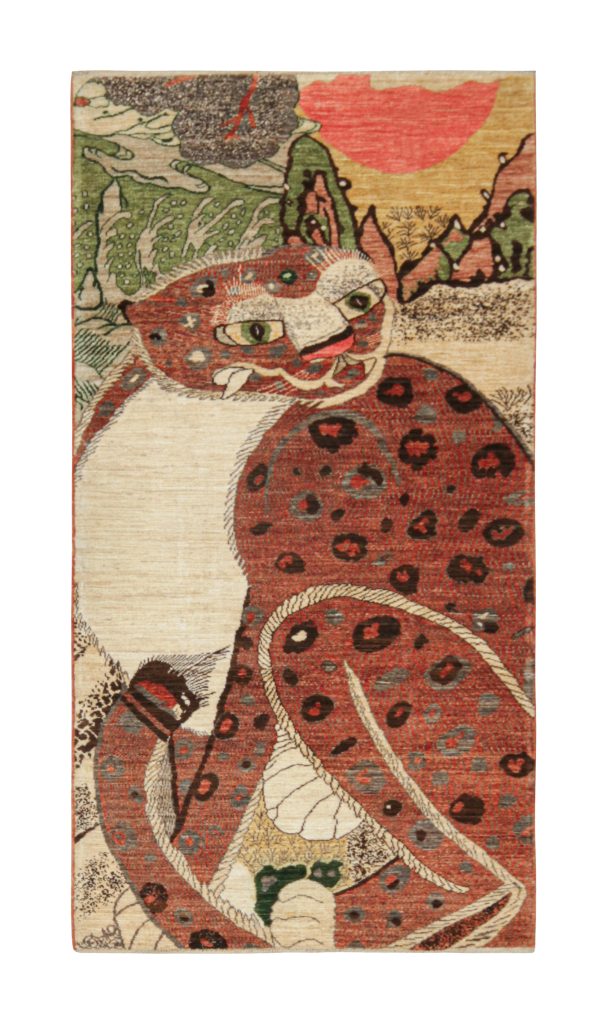
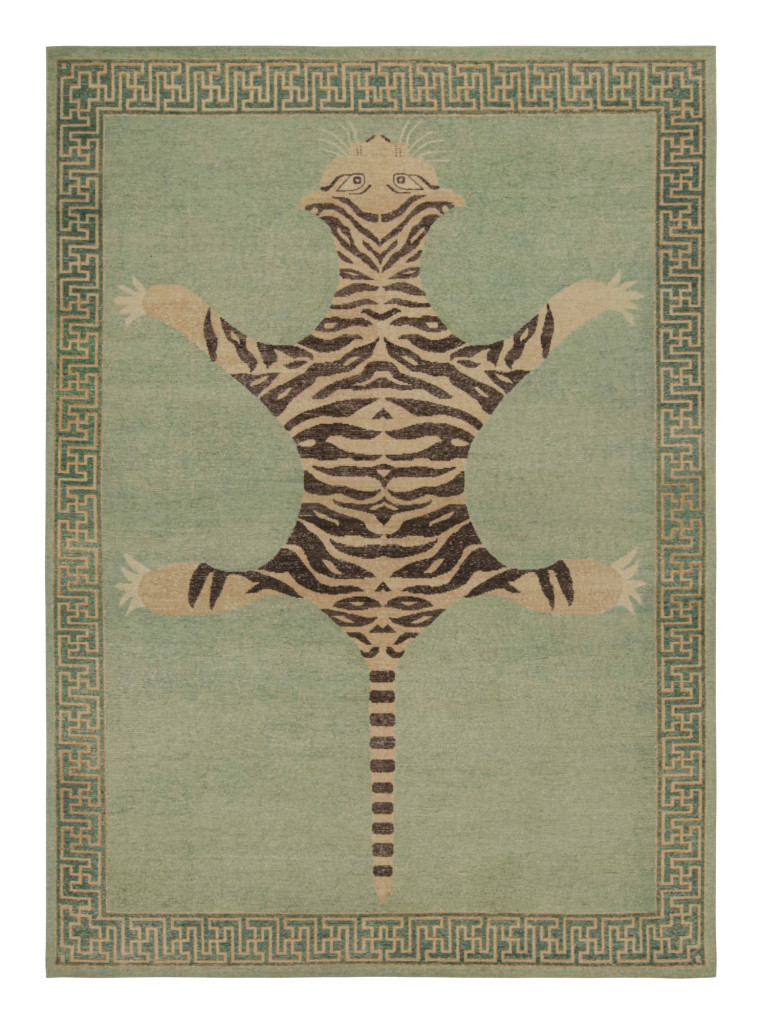
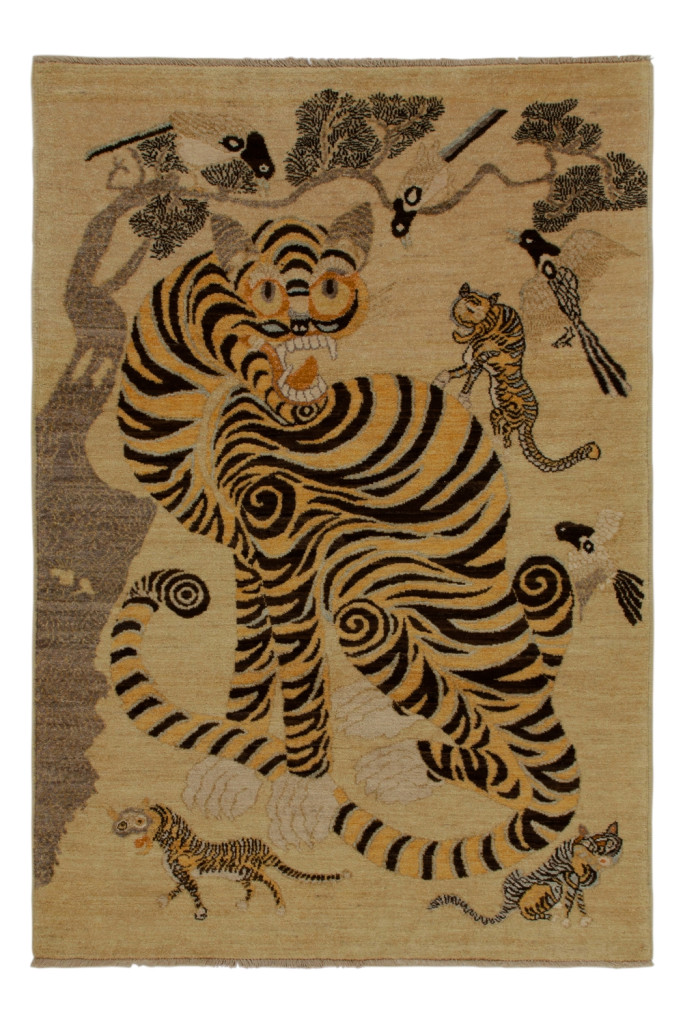
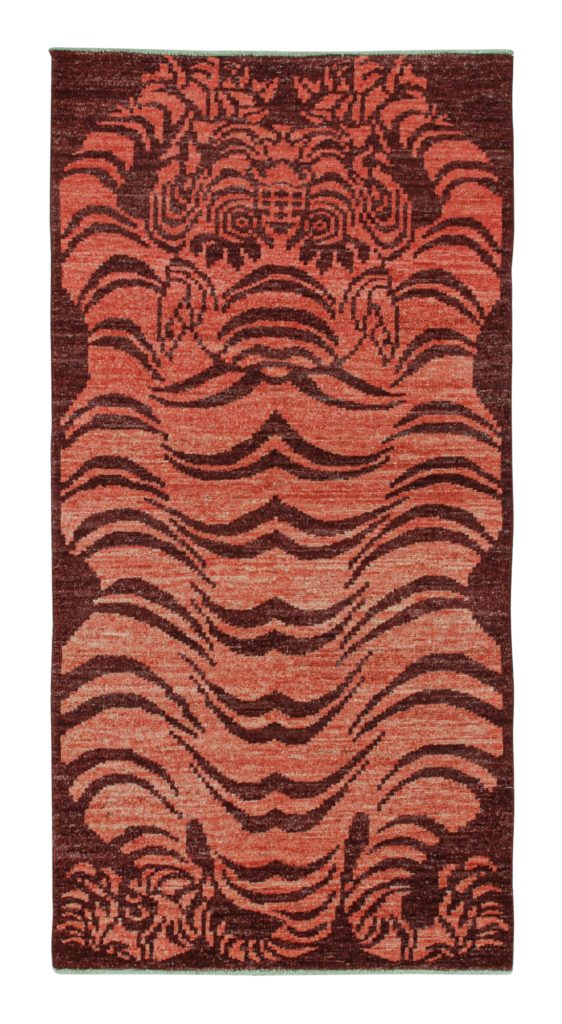
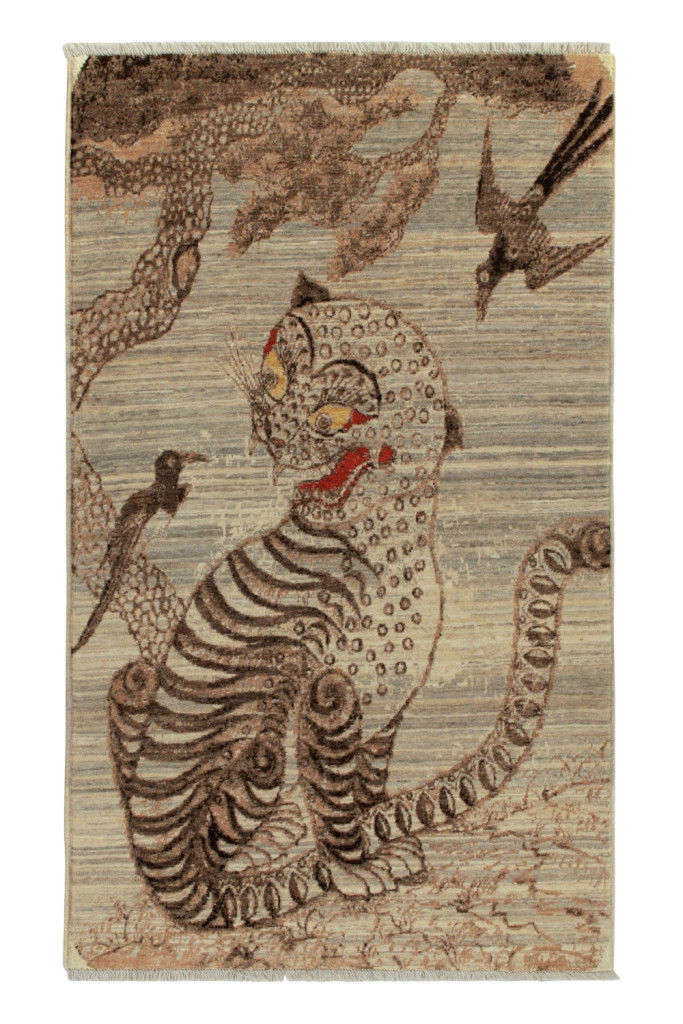
Fig: These images represent the diverse interpretations that our Rug & Kilim’s Tiger rugs feature, ranging from illustrations inspired from Mongolian, Tibetan, Korean, Peking and Chinese tigers, in various sizes and shapes including irregular-shaped rugs.
On the lines of honoring history for its unique designs and art that it has bestowed upon us, we launched our esteemed Tiger Rug Line in 2021, which was displayed in the Trends feature in COVER 66. Though this collection came to us early, it wasn’t only to prepare for the ‘Year of the Tiger’, but was also our 40th anniversary collection—one meant to celebrate our history with history in kind. Our Principal, Jahanshah Nazmiyal, has always been passionate about animal rugs and how distinct they are to every culture, but above them all, tiger skin
rugs and tiger pictorial rugs have always touched his heart deeply for their unique connection to every culture’s history.
This collection, a harmonious convergence of heritage and innovation, pays homage to the timeless tiger motifs, and has been inspired by several artworks including, but not limited to Chinese painting, Indian miniatures, Persian tribal weaving, and the classic Tibetan tiger rug tradition. It caters to the contemporary market’s preferences while paying sincere homage to the rich global weaving traditions.
“What immortal hand or eye, /
Could frame thy fearful symmetry?”
This couplet by William Blake in “The Tygers” is one of the most celebrated slant rhymes of the 18th century, reflecting upon the awe surrounding the creation of these majestic species of tigers. These lines express wonder at the creation of such a powerful creature and the extraordinary force that designed this majestic being with such precision and balance. In celebration of these divine creatures, we reveal some of our favorite tiger rugs from our Tiger Rug line of the Modern Classics collection.
Rug & Kilim’s commitment to preserving these time-honored motifs is manifested through a diverse array of yarns of highest quality. We create modern pieces using a subtle technique meant to recreate a vintage striae in an inventive modern fashion — a movement within the movement that further contributes to the depth and presence these bold pieces are meant to inspire.
-
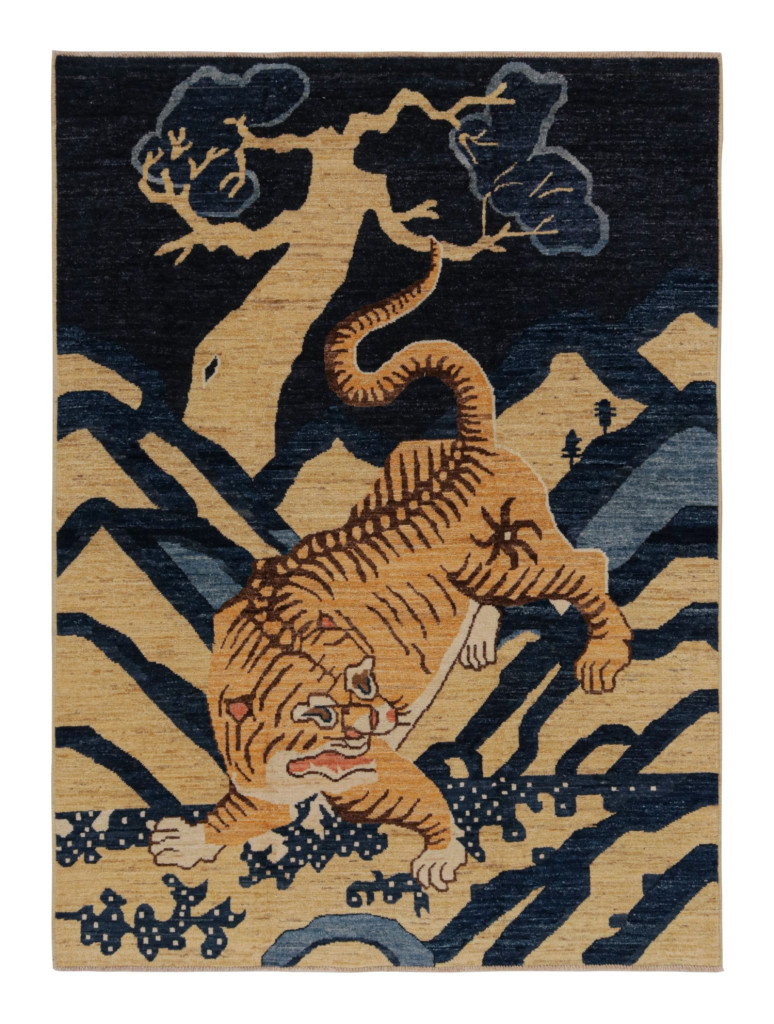
- 29375
-
- 27310
-
- 29645
-
- 25311
-
- 26750
-
- 25298
Another intention is to create a diverse collection that captures both the well-known and lesser-known styles of tiger illustrations throughout history. Our inspiration includes not only rugs, but also paintings, tapestries, folding screens and other folk art throughout Asian history. Our designs recapture tiger depictions of Chinese, Japanese, Mongolian, Indian, Korean and even Persian tribal provenance. The goal is to honor the style and the cultures that made such historic works, and so we continue to explore archives and even encourage our clients colleagues to send us patterns as the collection grows.
We also welcome readers to reach out with their questions about tiger rugs, share their favorite styles and explore some favorites from the rest of the collection.
Frequently Asked Questions
1.) What is the meaning of tiger rugs?
Tiger representations in rugs throughout history have symbolized power, strength and fearlessness. As a symbol of prestige, tiger rugs were a symbol of wealth for the nobility and elite.
2.) What is the history of tiger rugs?
In China, tiger rugs gained popularity during the Qing Dynasty and were considered valuable possessions, symbolizing power and wealth. They were often found in imperial palaces and aristocratic homes. These rugs were originally woven as practical items and Tibetan elites used them as sitting mats and covers, and these antique rugs often featured intricate tiger motifs, reflecting the animal’s revered status.
3.) What is the meaning behind Tibetan tiger rugs?
For centuries, tiger rugs held a special place among the Tibetan elite, serving as both sitting mats and protective covers. They were also considered auspicious in Tibetan Buddhism, with their images placed next to deities.