
The Total Art: Vienna’s Century, From the Gold Frieze to the Contemporary Era
August 28, 2026
How The Objects Around Us Define Us: An Interior As A Self-Portrait
September 6, 2026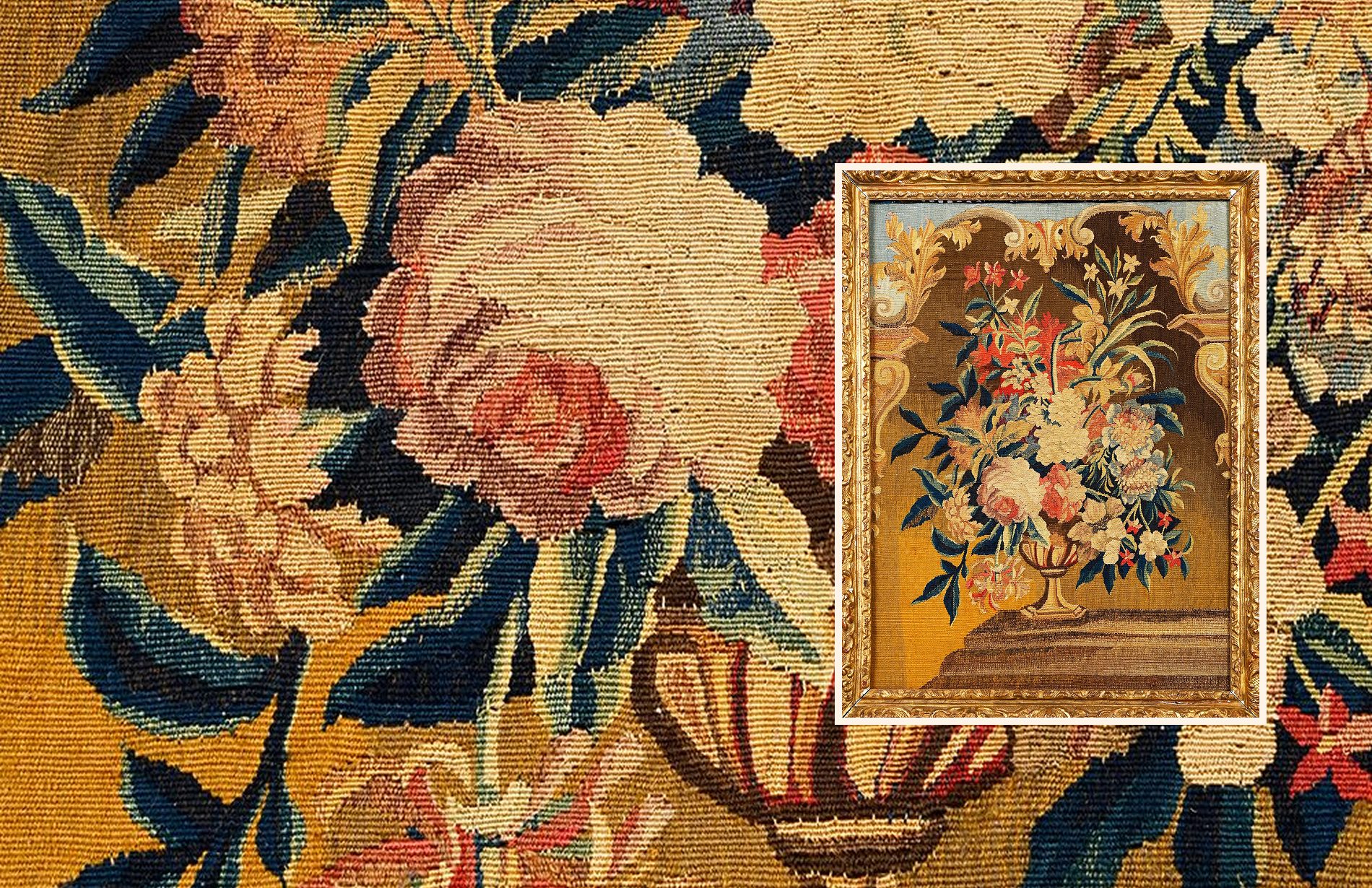
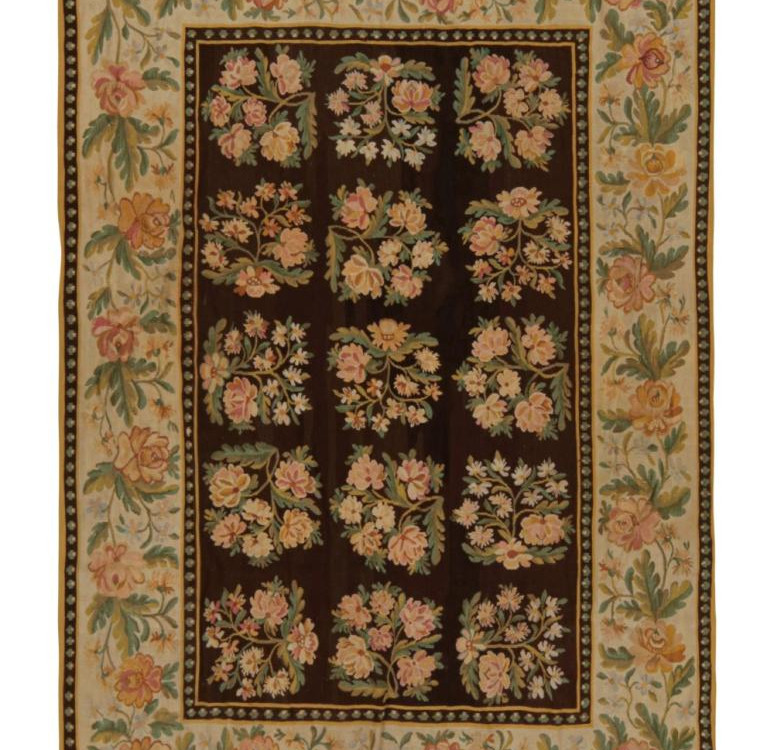
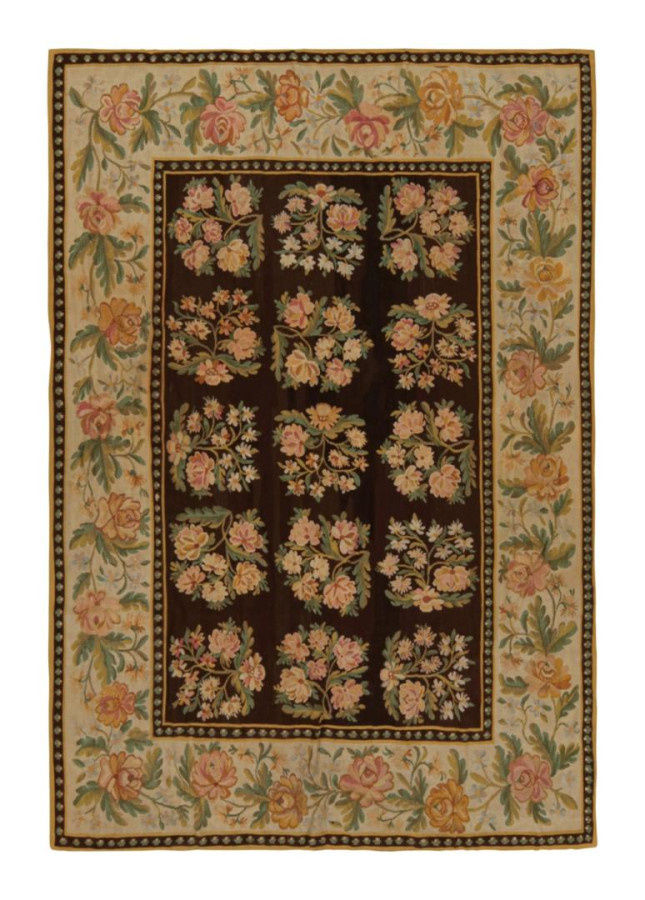
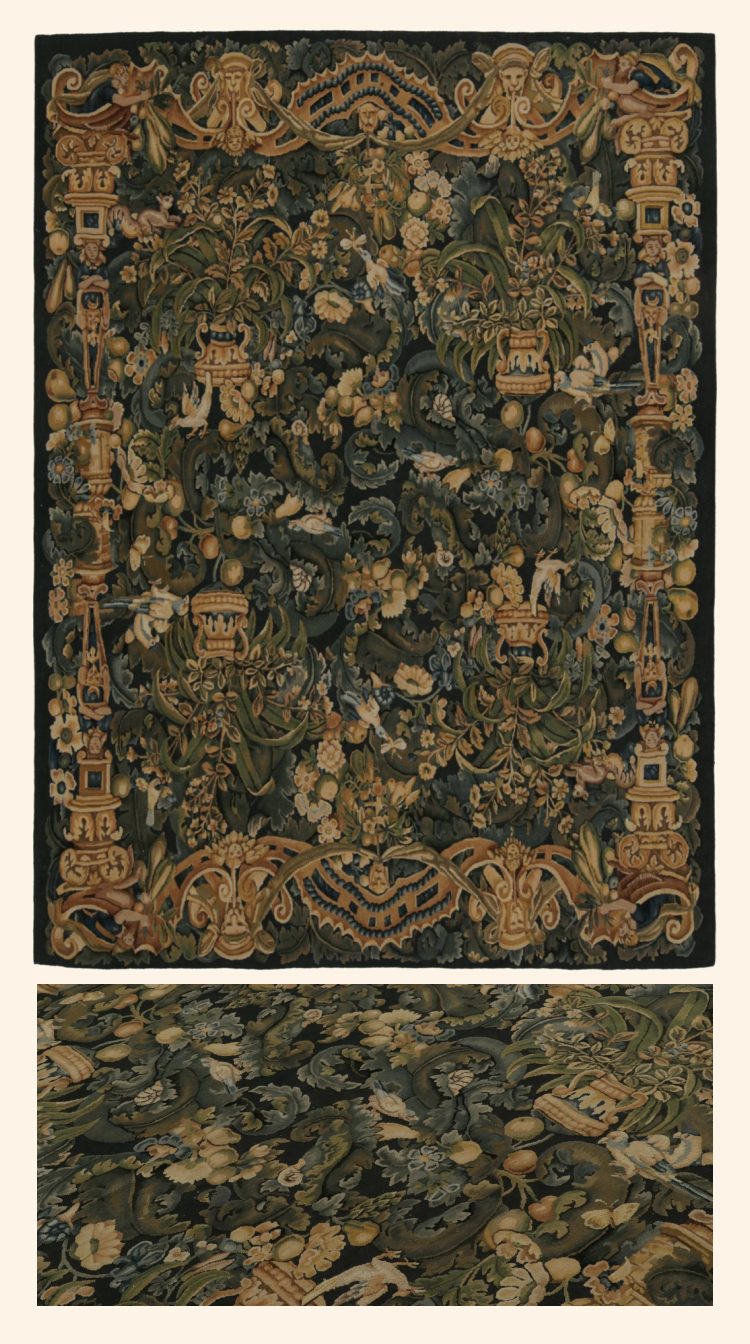
We had a tapestry acquisition unfolding itself in the studio a while ago. Josh and the team just stood there, silently admiring the way the light caught the threads. This was the Antique French Beauvais Tapestry (SKU 36829). It was handwoven in wool, with natural silk accents, circa 1700. When you look at something like that, you do not just see fabric. What you see is the garden of wool and dreams. The precise interlacing of the wefts gives a picture of a gigantic floral vase placed atop an architectural entablature. The botanical imagery is absolutely mesmerizing. There is so much wealth and mystery to it all.
There is nothing arbitrary about a woven flower; it is a direct result of the tensioned loom work. It reflects the tale of whoever handled the warp and what they might have dreamed of when they closed their eyes. Right now, we are following three very specific botanical dreams from their rugged journeys across the trading routes, straight to our showroom at Rug and Kilim.
The Tulip: From Court Sweeps to Oushak Geometry
There was an intense obsession with tulips in the Ottoman courts. The finest silk was used by master weavers who were weaving these huge vertical looms. The drooping nature of petals and organic stem lines that appear rather melancholy in their elegance have been captured through the art of weaving. This same fluid line can be seen in the classic Persian court carpets that are available in our collection at Rug and Kilim. Please see the weft interlacing technique of our Antique Persian Mohtasham Kashan (SKU 28204).
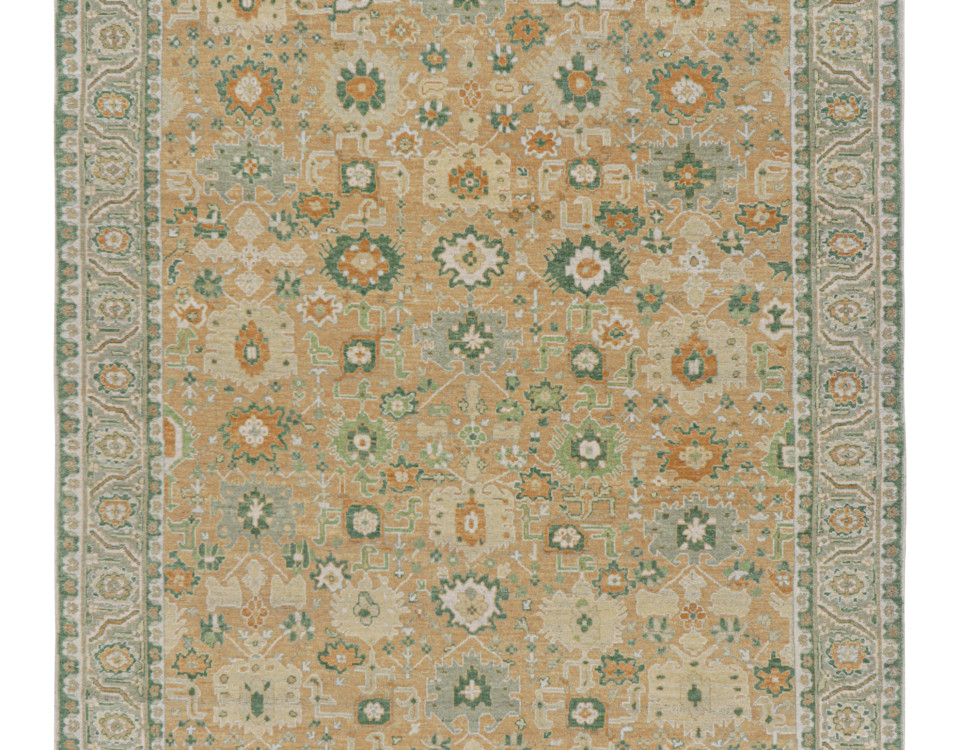
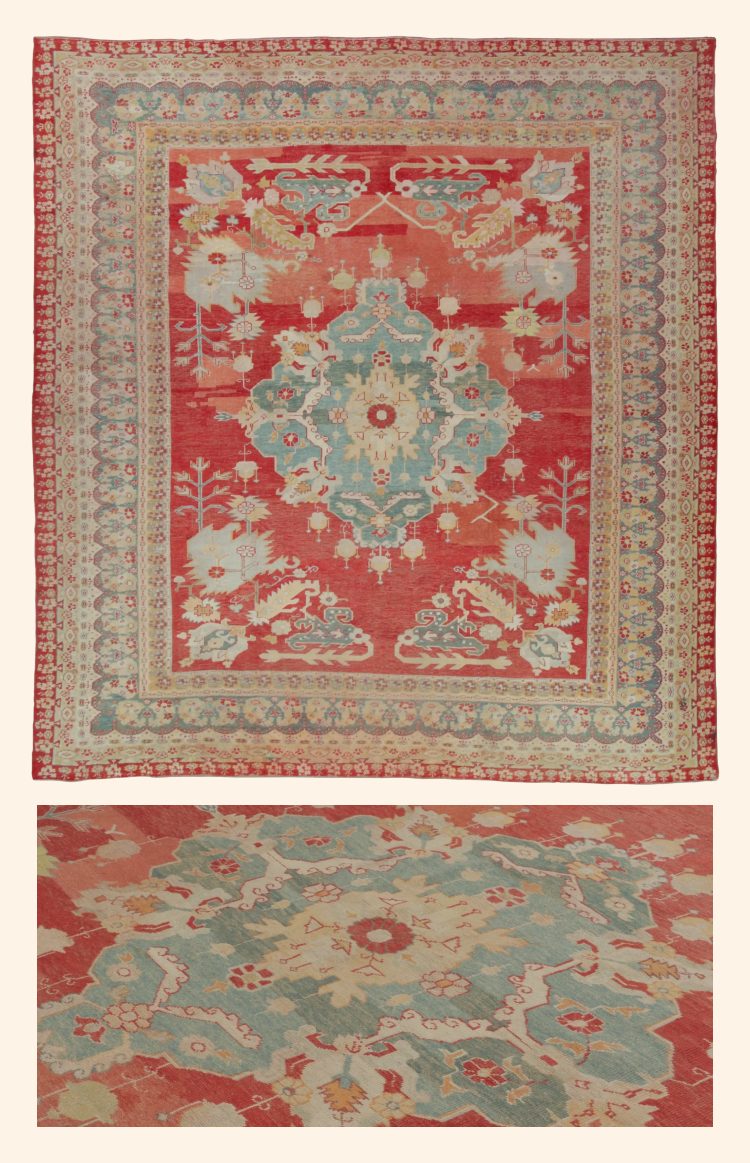
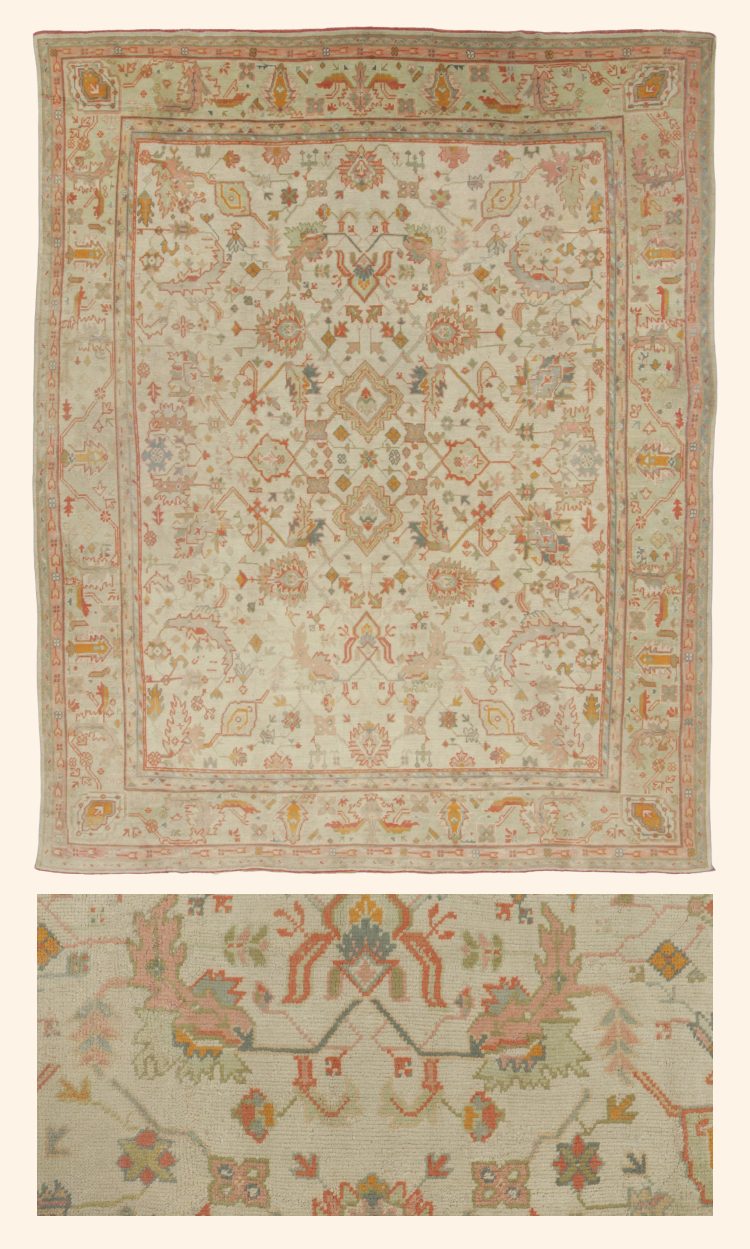
But observe the transformation when the tulip finds itself in the provinces. Nomadic village weavers used thick hand-spun wool warps. Making smooth curves at those tensions was technically impossible. Thus the tulip evolves. It becomes very stylized. The flower is transformed into a rigid polygon. It is a memory of a tulip that became geometry. We always observe this kind of transformation in our large Oushak collection from the late 19th century. Loose geometric tulips of the Antique Turkish Oushak rugs (SKU 36663) sharply contrast with the tightly curved designs of city weavings. They appear more wild, free. Have you ever tried to compare the two?
The Carnation: Serrated Edges and Slit-Weave Architecture
You can always distinguish the woven carnation by the fact that it looks jagged in a fan-like manner. In traditional Persian and Ottoman rugs, the jaggedness of the carnation is as subtle as a whisper. The weaver used the weft interlacing to achieve such subtle shading. In our Antique Tabriz Tapestry (SKU 37011), we have this grace of carnation. They just float on the field.
Meet the flat weave. When it comes to using the carnation in tribal carpets, weavers use the technique of the slit weave kilim. This brings a change in the entire process of designing. The jaggedness of the carnation perfectly fits the diagonal stepping on the warp-faced loom. The loom turns into a powerful tool for design. Now, the flower becomes an architectural motif rather than a garden one. We often highlight it when customers look at our Vintage Turkish Kilim (SKU 37445).
The Pomegranate: From Hand-Knotting to Punch Cards
The pomegranate traveled the farthest distance. This pattern’s movement we trace from the curvilinear Persian carpets, where it represented fertility in its unadulterated, bursting state. The hand-knotted seeds had roundness, depth, and dimension to them. It’s hard not to feel this substantial, organic weight in our Antique Persian Kashan (SKU 12639). The pomegranates are key to the entire border scheme.
But then the motif entered Europe. The Industrial Revolution came around and changed the course of fiber arts forever. The Jacquard loom made pomegranates into a digital design. The punched cards determined how exactly each warp thread would be lifted. The organic breath of the living fruit was reduced to an endless, repetitive grid.
Is there any way we can recapture that feeling? We need to find an answer within the larger tapestry world of today. Dovecot Studios and the Australian Tapestry Workshop walk this tightrope every single day. They strike a perfect balance between the old method of hand tension and contemporary design. The worldwide dialogue is crucial to our custom capabilities at Rug and Kilim.
Our custom workshops combine both worlds. Our European Tudor Flatweave (SKU 11847) is one such example of how we bring both together by mimicking the natural heaviness of the ancient pomegranate.
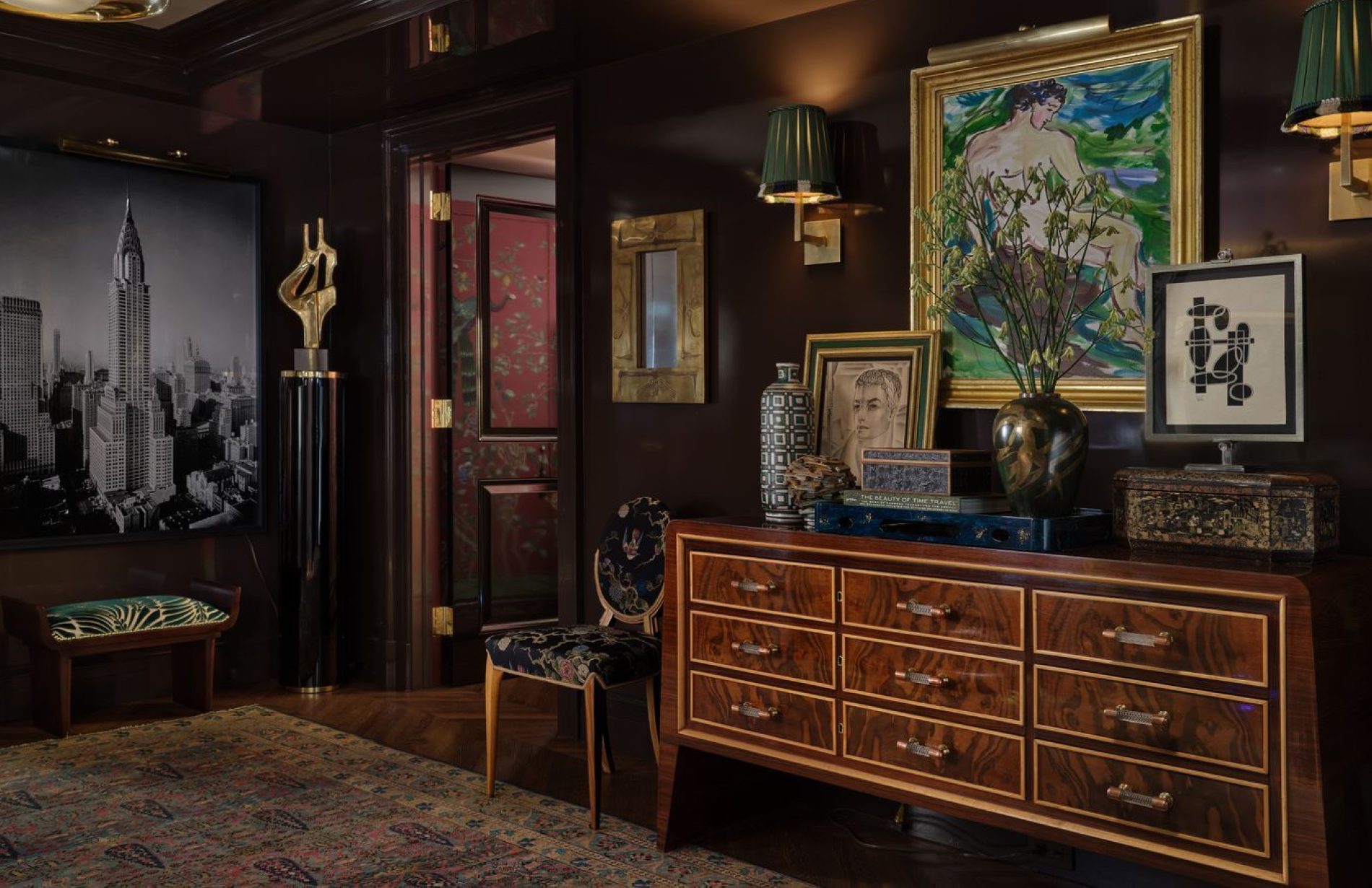
As seen in Architectural Digest, the entryway of a West Village apartment designed by Erik Gensler features a turn-of-the-century Kerman Lavar rug from Rug & Kilim’s antique Persian collection. Read More >>
The Living Garden: Where the Loom Takes Us Next
Every single loom leaves a unique structural mark upon the flora that it weaves. Each time Josh and I unroll another piece in the showroom – whether it is an ethereal silk antique or a rugged, woolen village fragment – we are not merely documenting our inventory. We are interpreting the precise tension of the weaver’s hands from decades past. The garden is in perpetual motion; it just responds to the warp.
At Rug & Kilim, our collections are much more than just the three aforementioned botanical routes. Our collections feature thousands of such weaving chronicles – from fine, curvilinear court carpets to nomadic warp-faced flatweaves. However, our connection with the loom extends well beyond mere preservation.
Should you be in need of converting your visual gardens into tangible pieces, our custom services are geared towards doing exactly that. We skillfully walk the line between historic knotting methods and modern vision to create each custom piece as organic and structurally sound as any antiques.
The garden continues to grow, and the loom remains threaded. Browse through our larger archives on the web, come to our showroom to experience the interweaving of the weft by yourself, or contact us so that you can start pulling your own threads.