Style
Open Field
Every piece in this style, across all of our collections. Narrow them down by size and price.
- Under 6 x 9
- Runners
- 6 x 9
- 8 x 10
- 9 x 12
- 10 x 14
- 12 x 15
- Over 12 x 15
Origin ▼
Style ▼
Material ▼
Width
Length
To connect with a specialist, click here
Stories from the Open Field Archive
Essays, artist dialogues, and provenance notes drawn from Rug & Kilim’s editorial desk.
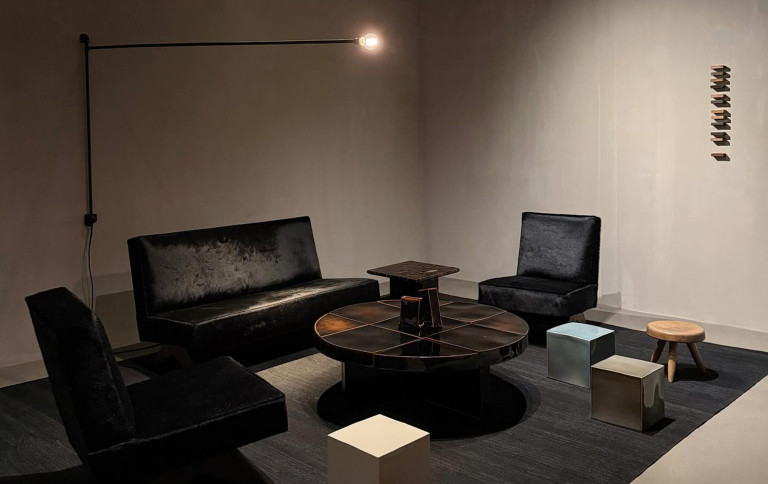
Rooms of Power: Rugs, Art, and the Architecture of Global Interiors
Before There Was Interior Design, There Was Placement Long before interiors were styled, they were composed through objects that carried worlds within them. A Mughal carpet was not simply placed beneath a court; it defined the court. A Savonnerie was not an accessory to Versailles; it was an extension of its order. A Chinese Art Deco rug did not decorate early modernist apartments; it translated an entire cultural vocabulary into a new architectural language. What we now call “interior design” is, at its highest level, a continuation of this lineage: the understanding that certain objects, particularly rugs are not passive. They carry with them histories of empire, trade, philosophy, and labor. They are, in essence, compressed geographies.
Read the Feature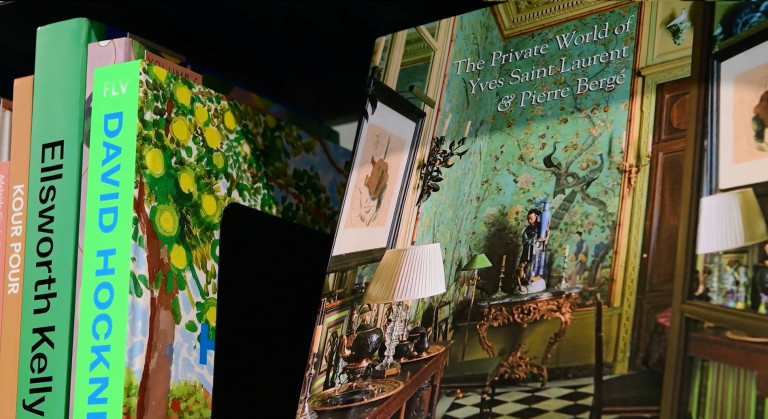
Rugs, Books, and the Fine Art of Living with Intention: Rug & Kilim’s Dialogue with Art and Literature
A great house is measured not only by what lies underfoot, but by what rests within reach. At Rug & Kilim, The Royal Collection and Volumes are not parallel endeavors—they are twin expressions of the same language: that art, design, and intellect belong in continuous dialogue. Both are products of patronage, atelier discipline, and an unwavering belief that beauty must be structured. A serious interior does not begin with furniture. It begins with a position. For centuries, the rug has been the most intellectually charged plane in a room—the only surface that holds architecture, painting, mythology, and diplomacy in a single field. Likewise, the book is not décor; it is declaration. It reveals the mind that inhabits the space.
Read the Feature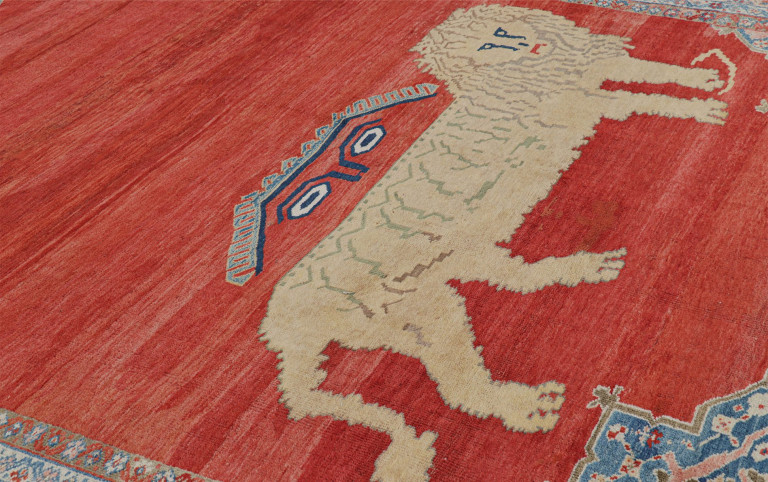
Rug of the Week V: A 1920s Lion Mahal Rug and Persia’s Folk-Imperial Dialogue
Not all rugs whisper beauty. Some confront, some provoke, and some stand strong of their age. This 1920–30 Persian Mahal lion carpet belongs emphatically to the latter. Its scale alone commands attention, but it is its audacity of imagery—two lions poised across a crimson ground, punctuated by talismanic eyes—that distinguishes it from its peers. What could have been another workshop carpet for export markets instead asserts itself as an emblem of power, politics, and folk poetics. It is not only a rug to be admired, but one to be read. The Provenance: Mahal as a Crossroads Mahal rugs occupy a fascinating place in Persian weaving history. Located in northwestern Iran, the Mahal region became particularly significant during the late 19th and early 20th centuries as European demand reshaped Persian textile production. Western markets craved large-scale carpets for townhouses and institutions, and Mahal—situated near Sultanabad, a major weaving hub—supplied. These rugs often combined refined city-border designs with the looser, more organic hand of village weavers.
Read the Feature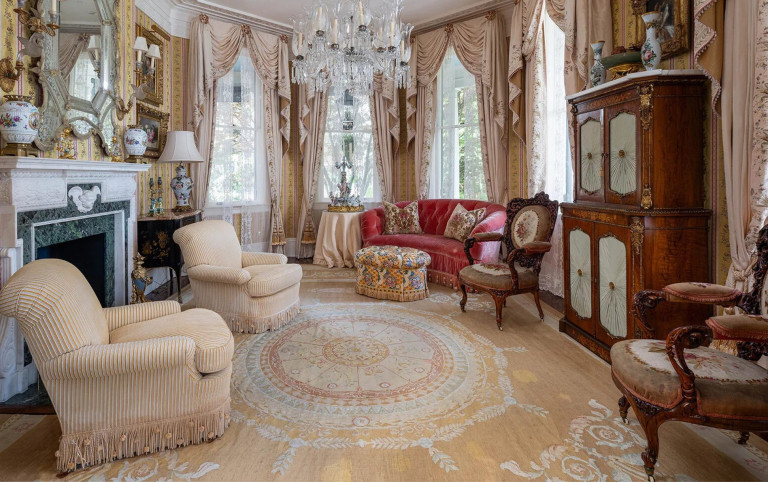
How Rugs Frame and Define the Modern Open Interior: Defining Spaces From Palace Halls to Loft Living
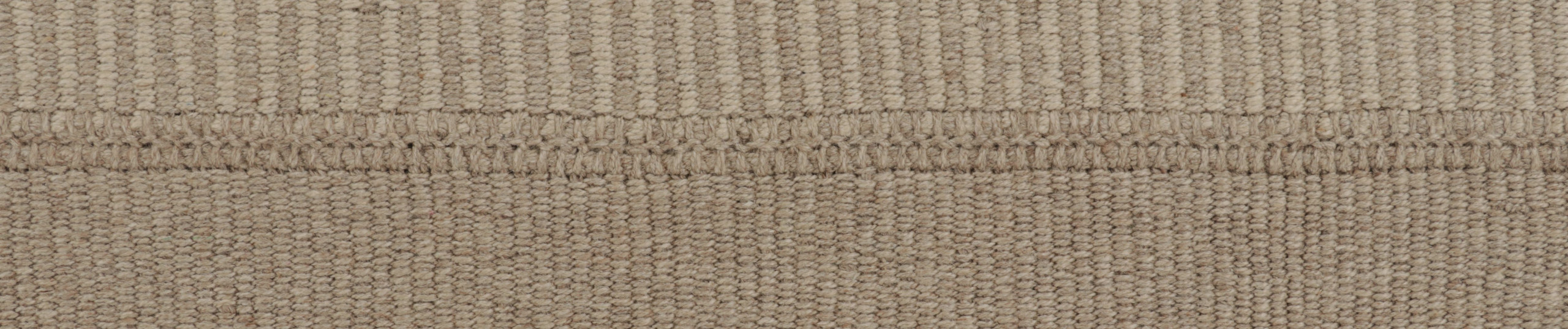
The open-concept space is the modern equivalent of the grand hall and the ceremonial courtyard—a place where boundaries dissolve, yet zones must still be understood. In open-concept interiors—those vast, uninterrupted expanses where living, dining, and work areas coalesce—rugs operate as more than mere surface coverings. They translate the architectural intent of a room into lived experience, delineating invisible borders through proportion, motif, and material. They are architectural anchors, narrative devices, and cultural emissaries. A well-chosen rug brings not only visual cohesion but also historic depth, artisanal integrity, and tactile luxury to a space that might otherwise feel adrift. The placement of a rug in such environments is an act of both design precision and curatorial decision-making—akin to hanging a masterwork in a gallery.
Read the Feature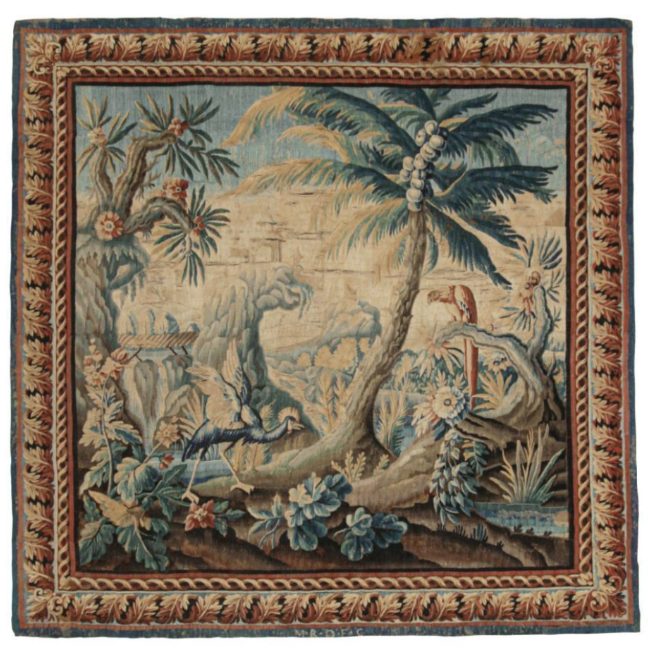
A Brief Guide to Aubusson Tapestries
The exceptional craftsmanship and art of weaving Aubusson tapestry received international recognition when it was added to the list of Intangible Cultural Heritage of Humanity by UNESCO in 2009. In response to this prestigious recognition, the project for the Cité internationale de la tapisserie et de l'art tissé, translated as the International House of Tapestry and Woven Art, was initiated in 2010. This endeavor aimed to establish a dedicated institution that would serve as a cultural center, celebrating the art of tapestry and woven art, particularly the Aubusson tradition. The Cité internationale de la tapisserie et de l'art tissé serves as a testament to the enduring legacy of Aubusson tapestry and its cultural importance. It provides a space for exhibitions, education, and the preservation of the rich heritage associated with this exceptional craft. Through such initiatives, the art of Aubusson tapestry continues to be valued and promoted on a global scale.
Read the FeatureA Brief Guide to Open Field Rugs
Nina Gilden celebrates an antique open field rug in style. GIF by Nina Gilden. One gorgeous rug can inspire a whole new way to use the space it joins. In that same spirit, one can further inspire us to find a new appreciation for a style. This month, Rug & Kilim fell for one of the most unique antique French Deco rugs even Josh Nazmiyal has ever seen. Sales & eCommerce's Nina Gilden fell quite literally, as you can see in her September team pick. It's a rare emphasis of green for its provenance (and much to our delight, with how much the market loves green right now). It's in pristine condition for its period, too, and that's always uncommon for Art Deco rugs of this lush quality.
Read the Feature