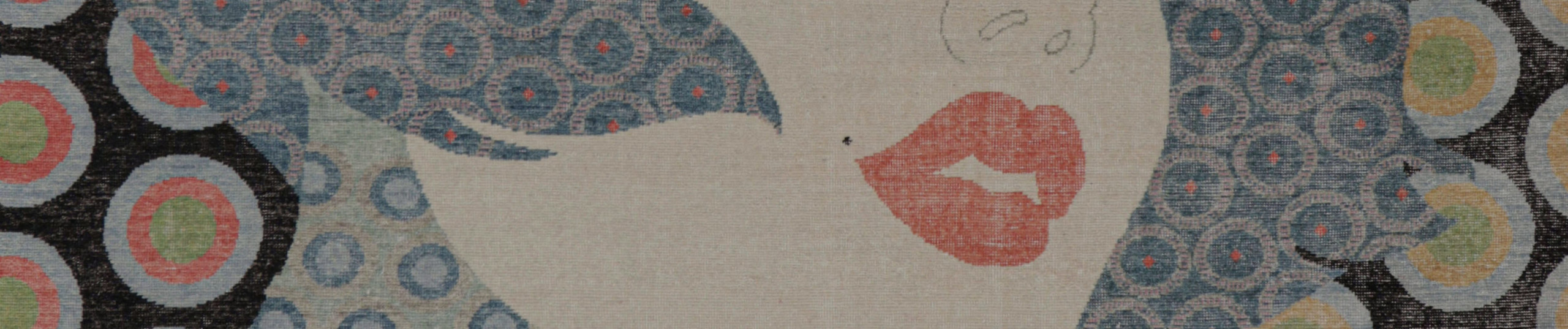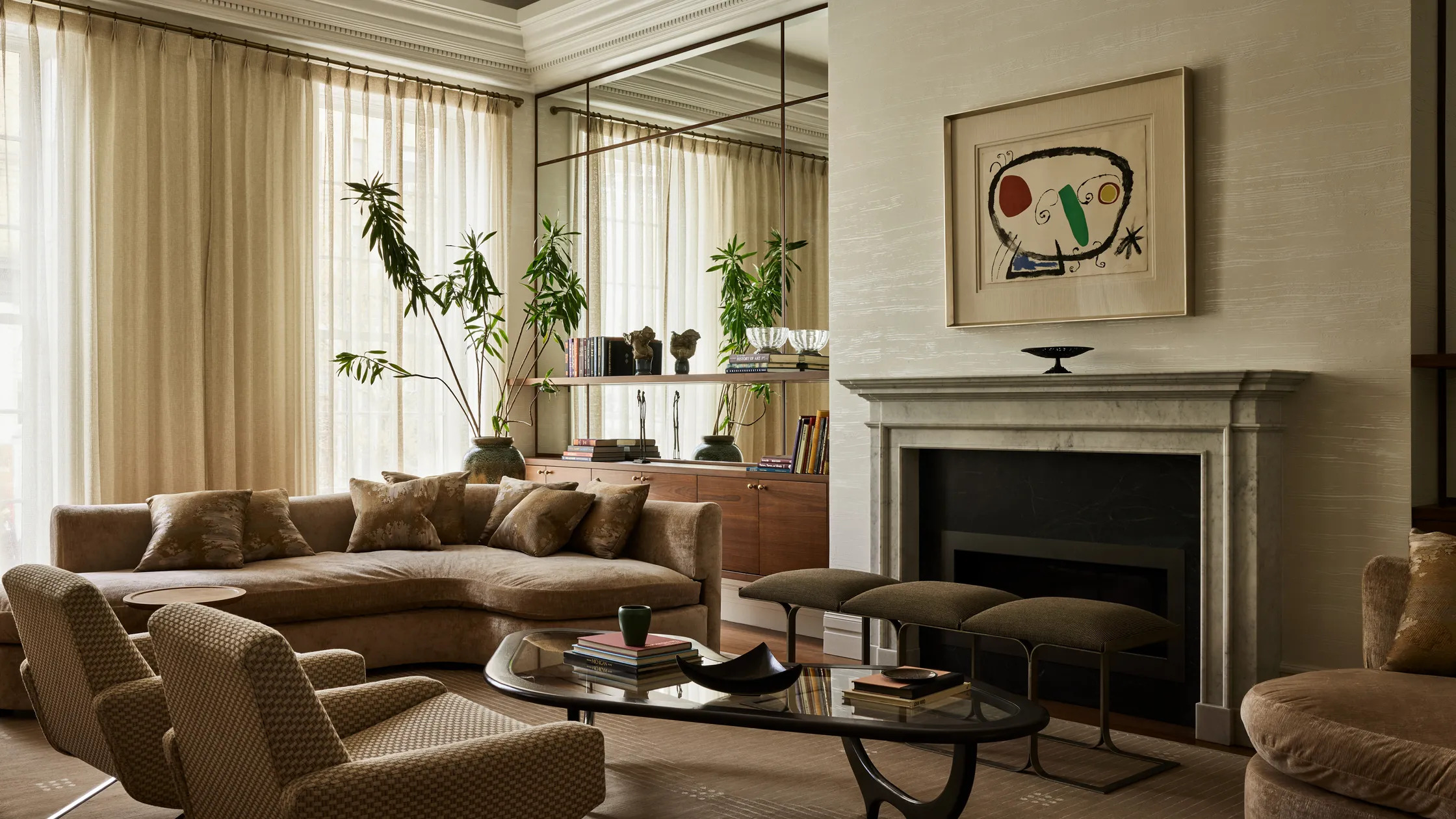
We see custom design as a dialogue between tradition and innovation—an opportunity to create something truly personal. Learn more about our custom process.
To connect with a specialist, click here
Stories from the Woven Archive
Essays, artist dialogues, and provenance notes drawn from Rug & Kilim’s editorial desk.

Inside the Colorist’s Mind: Commissioning a Rug to a Palette
There is a figure in the making of a great custom rug whom the finished object never names and the client rarely meets, and yet whose judgment determines whether the whole enterprise sings or falls flat. Not the designer who draws the pattern. Not the weaver who ties the knots. The colorist: the eye that decides, among a near-infinite field of possibility, exactly which blues, which greens, which single warm note of coral will live together in a room for the next fifty years. If the pattern is the core of a rug, color is its music, and the colorist is the composer. Most people have never considered that such a person exists. The ones who have commissioned a rug properly never forget them.
Read the Feature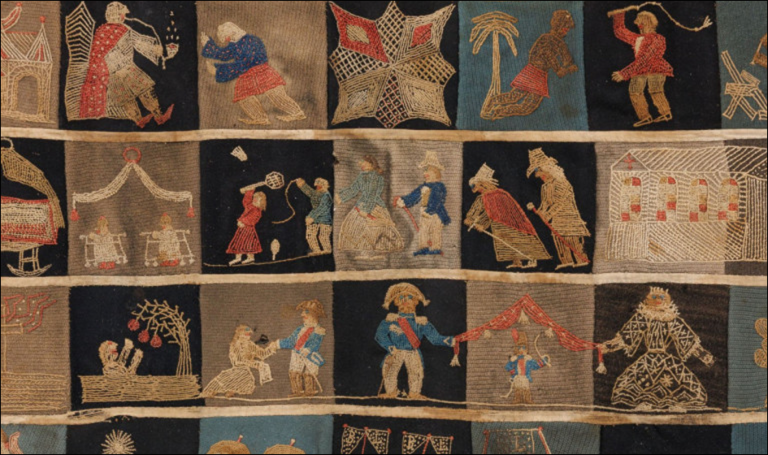
Tapestry of the Week: François Damiens, 475 Panels, and the Whole of a World in Pater Noster Embroidery of Arras
Some objects you appraise. This one you simply stand before, for a long time, and let it undo your sense of what a single human being can do. Hand-worked in wool and natural silk in Arras, France, in 1826, and signed four times over by its maker, the Pater Noster embroidery of François Damiens is composed of four hundred and seventy-five individual pictorial panels, each one a tiny woven scene, arranged in a vast grid that reads, from across a room, like the pixelated memory of an entire world. Biblical narratives. Processions. The labours of the seasons. Animals, trees, houses, saints, ordinary people doing ordinary things. Four hundred and seventy-five times, one small square at a time, a man sat down and embroidered a fragment of everything he knew.
Read the Feature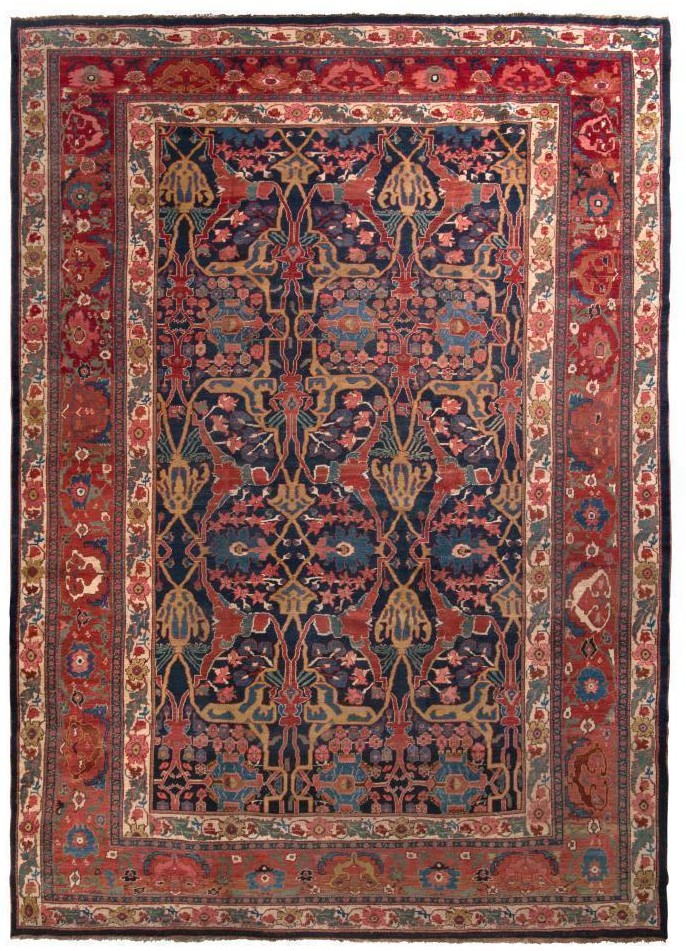
Bidjar Rugs: Persian Weaving Mastery and Historic Design
Among the most respected traditions of Persian carpet weaving, Bidjar rugs represent an extraordinary combination of strength, artistry, and technical mastery. Often referred to as the “Iron Rugs of Persia” because of their exceptional durability and dense construction, Bidjar carpets have earned a distinguished reputation among collectors, designers, and institutions worldwide. Originating from the town of Bidjar in western Iran’s Kurdistan region, these rugs reflect centuries of Kurdish weaving traditions combined with the broader artistic heritage of Persian carpet design. Their remarkable craftsmanship, sophisticated patterns, and rich color palettes have made them some of the most desirable examples of antique Persian carpets.
Read the Feature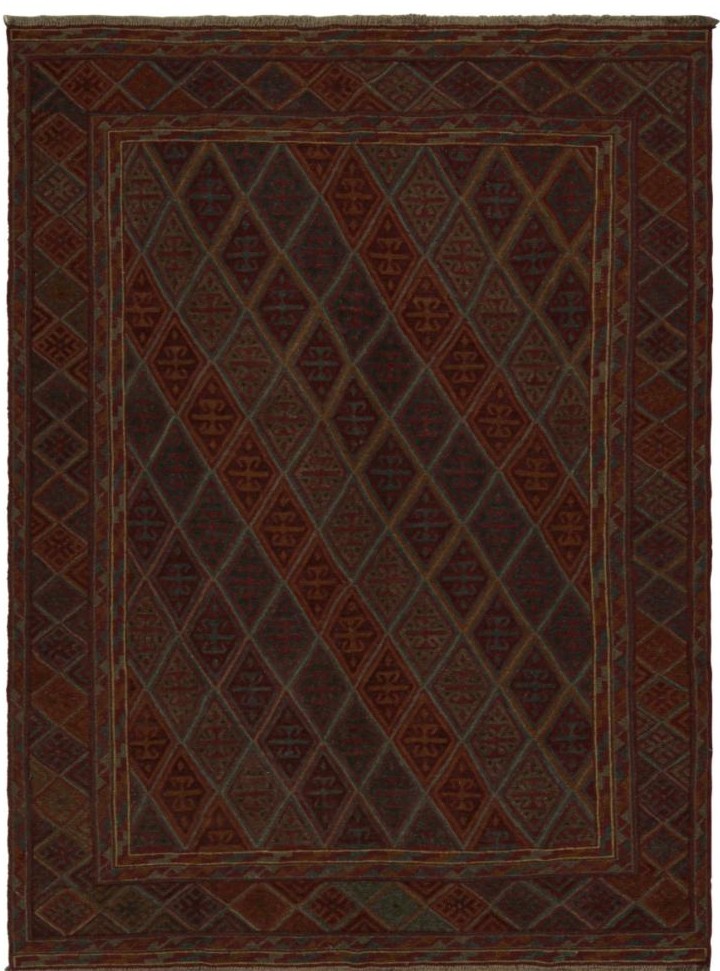
Baluch Rugs: Tribal Heritage and Handmade Textile Art
Among the great tribal weaving traditions of the Middle East and Central Asia, Baluch rugs occupy a distinctive position defined by nomadic craftsmanship, symbolic design, and remarkable artistic individuality. Woven by Baluch tribal communities spread across present-day Iran, Afghanistan, and Pakistan, these carpets represent one of the most compelling expressions of tribal textile culture. Unlike court carpets produced for royal patronage or urban workshops serving commercial markets, Baluch rugs emerged from deeply rooted tribal traditions. They were woven for everyday life, spiritual practice, ceremonial use, and domestic environments. As a result, they retain a powerful sense of authenticity that continues to resonate with collectors, designers, and institutions around the world.
Read the Feature
Rug & Kilim’s Burano Collection: Centuries of Styles, Woven Anew
Each Burano rug is a legacy in the making—destined to be the antiques of the next generation. Above, a custom tiger rug design from Rug & Kilim’s Burano Collection underscores the library of a country house and cottage in Sussex, England—designed by Studio Hollond. This particular rug adapts the tiger-skin pictorial to a new large scale in blue, rust orange and black tones, playing with a rich area and playful bookcase in chartreuse tones. At the intersection of historical reverence and contemporary innovation lies Rug & Kilim's Burano Collection—a nod to the timeless design reimagined for the modern connoisseur. This exceptional line of handmade masterpieces represents a paradigm shift in the realm of luxury floor coverings, offering a fusion of antique aesthetics and modern craftsmanship.
Read the Feature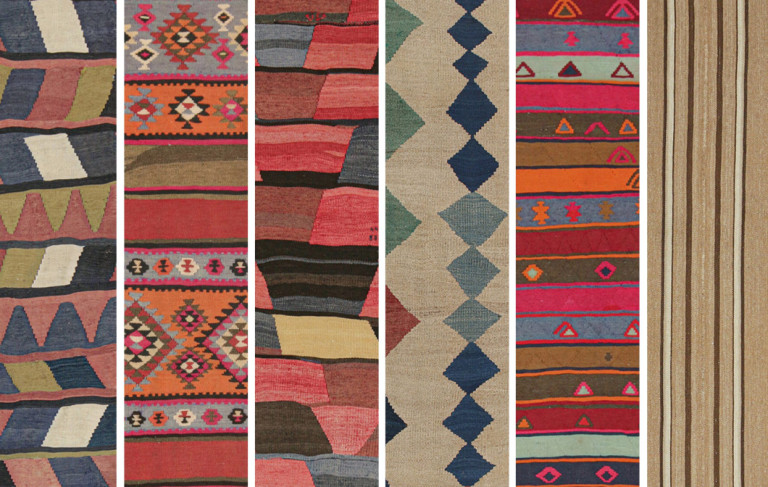
A Guide to History, Significance and Different Styles of Handwoven Kilim Rugs
…et ibi fiunt soriani et tapeti pulchriores de mundo et pulchrioris coloris. “…and here they make the most beautiful silks and carpets in the world, and with the most beautiful colors.” Marco Polo about the beauty of kilim weaving documented in the 13th century, Travels of Marco Polo Derived from the Turkish word "kilim," these pileless rugs embody rich traditions spanning regions from Turkey (Anatolia and Thrace) to North Africa, the Balkans, the Caucasus, Iran, Afghanistan, Pakistan, Central Asia, and China. Kilims (also spelled kelim, gelim, or killim) hold a unique place in the world of textiles, distinguished by their flat weaving techniques.
Read the Feature