

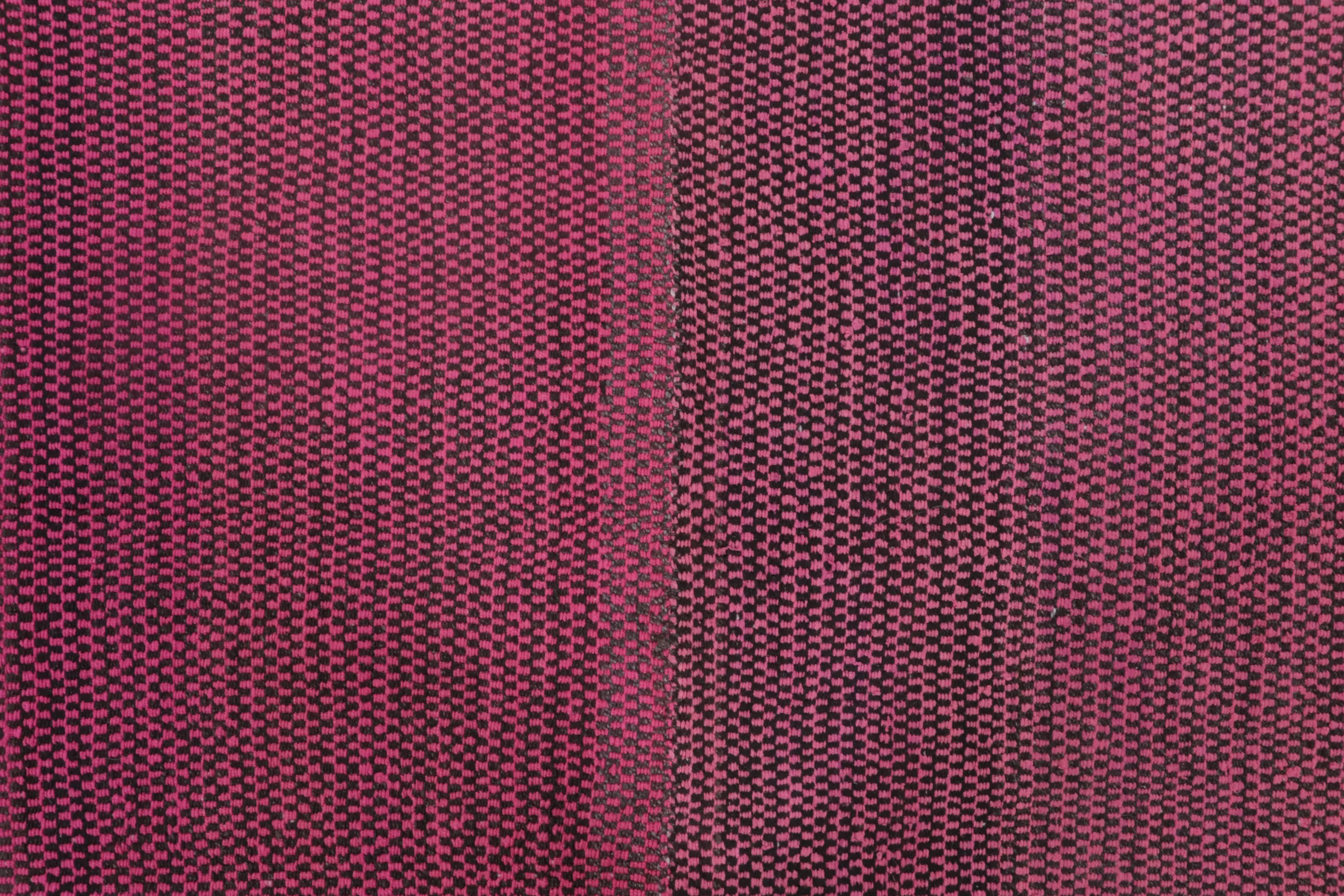
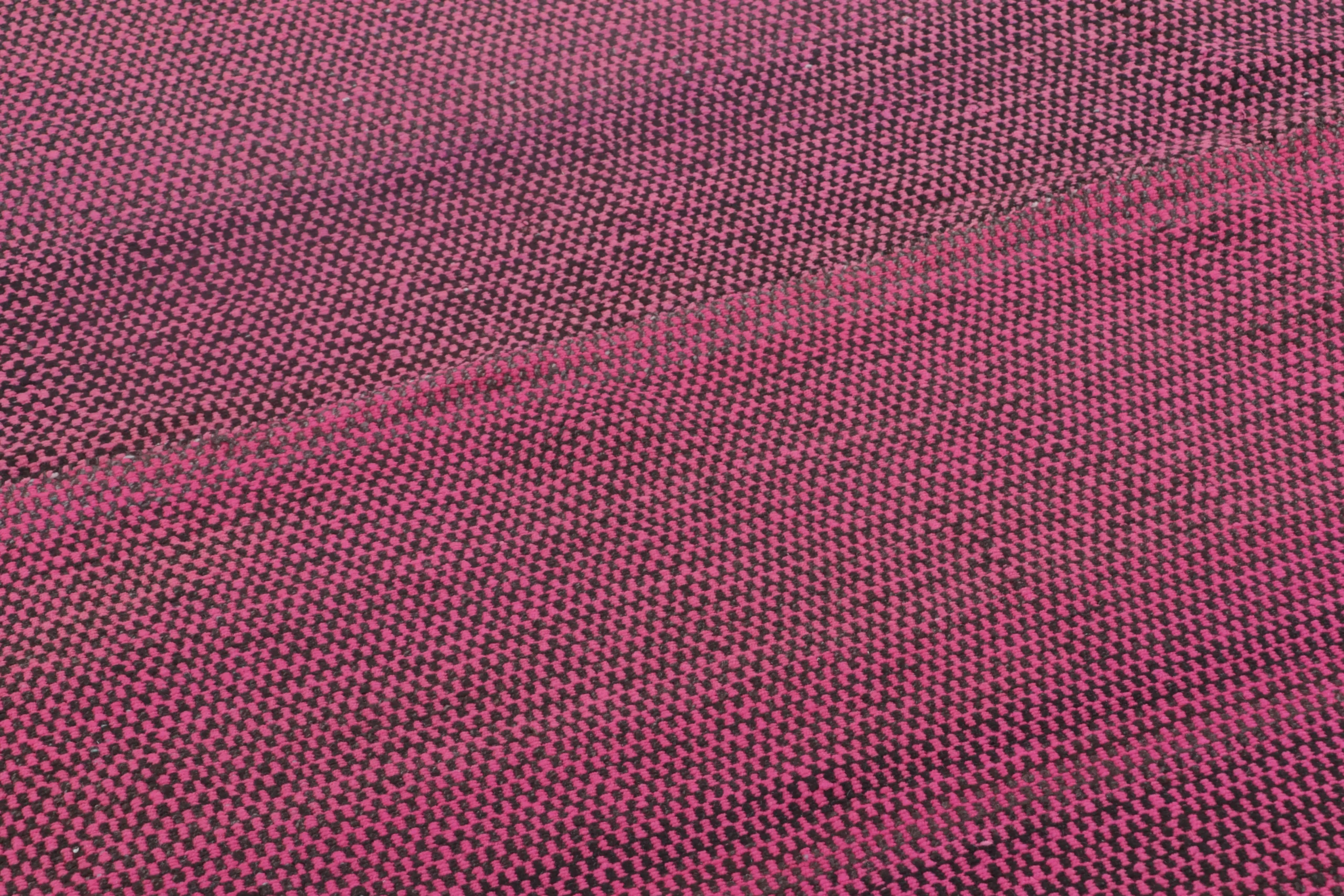
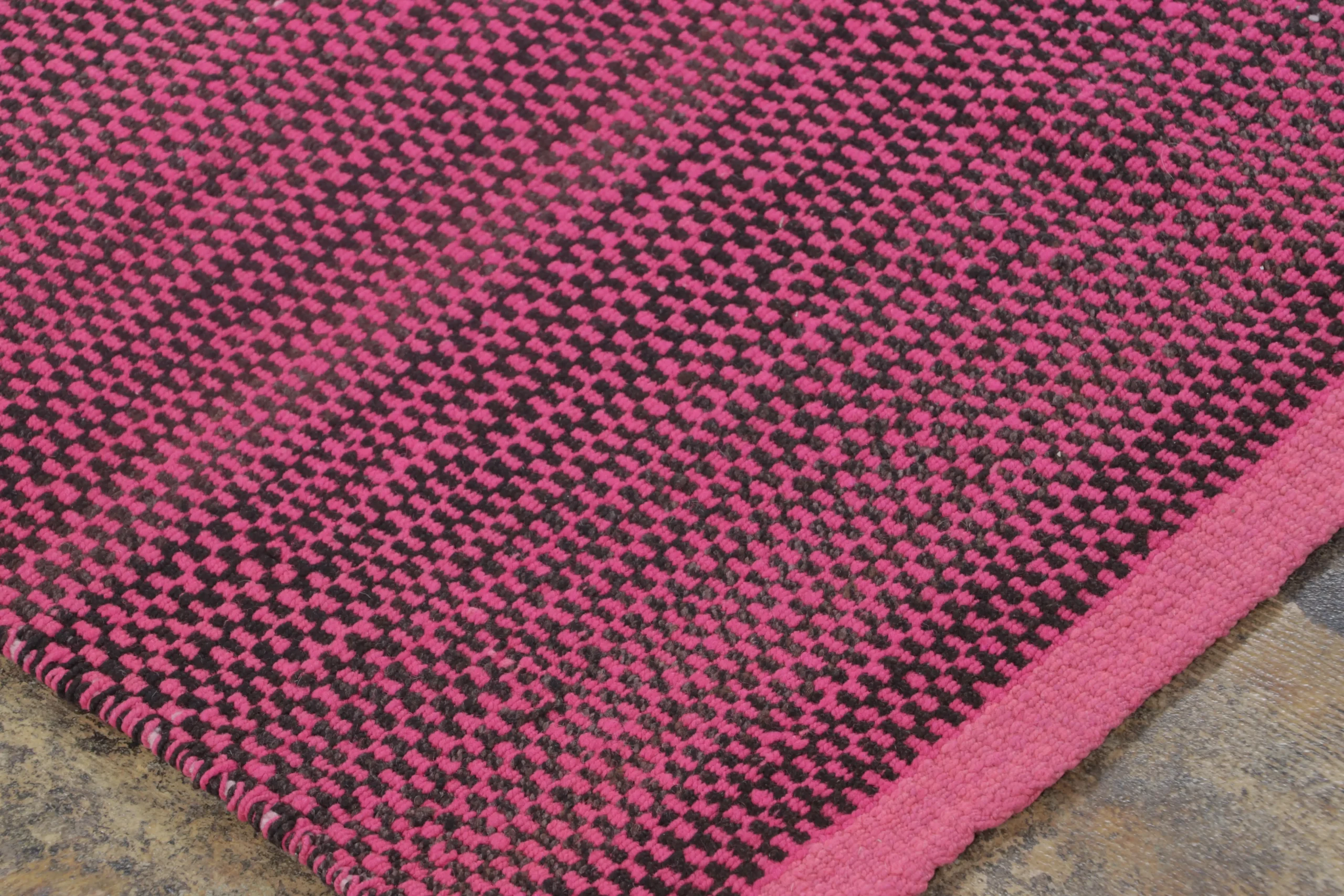
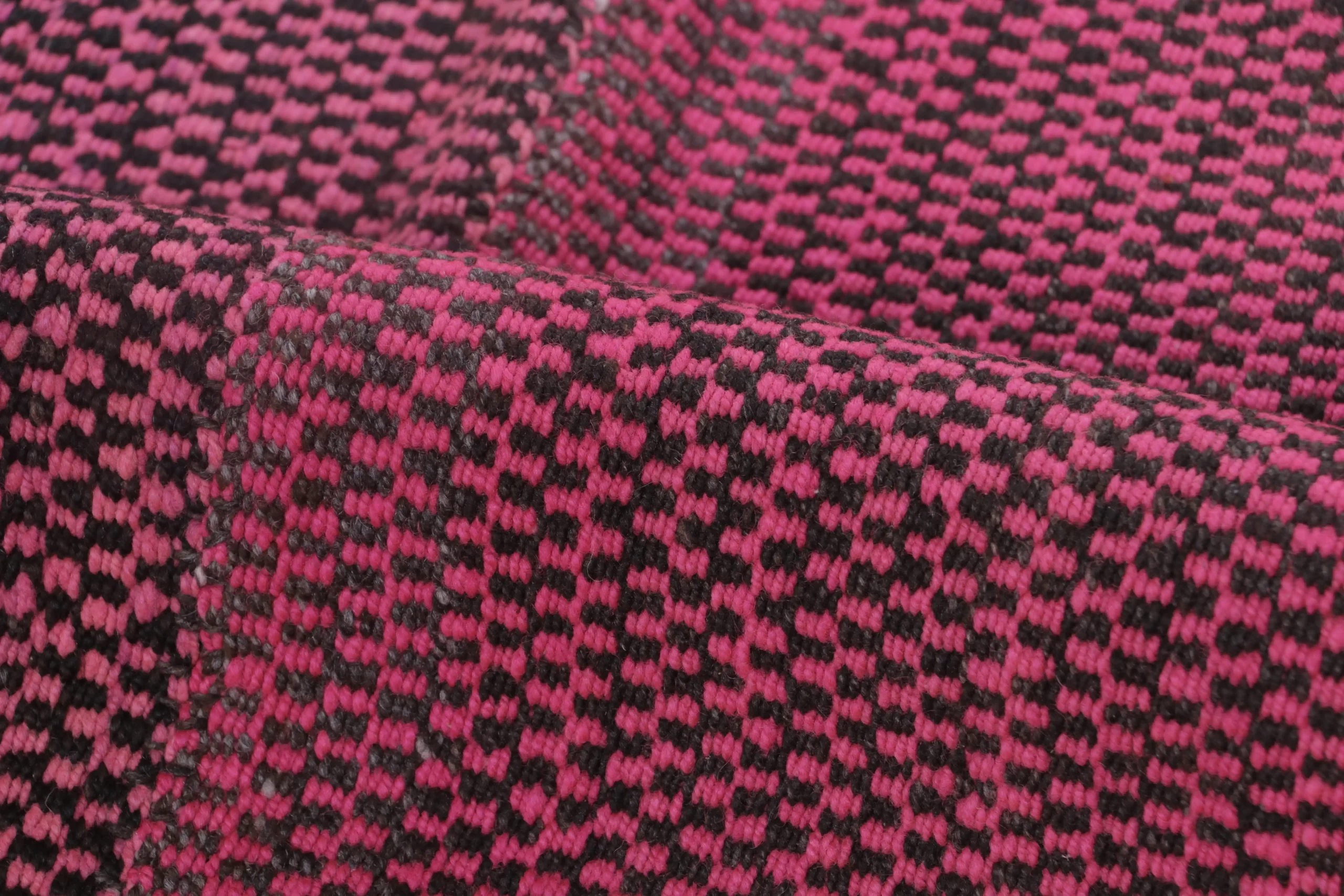
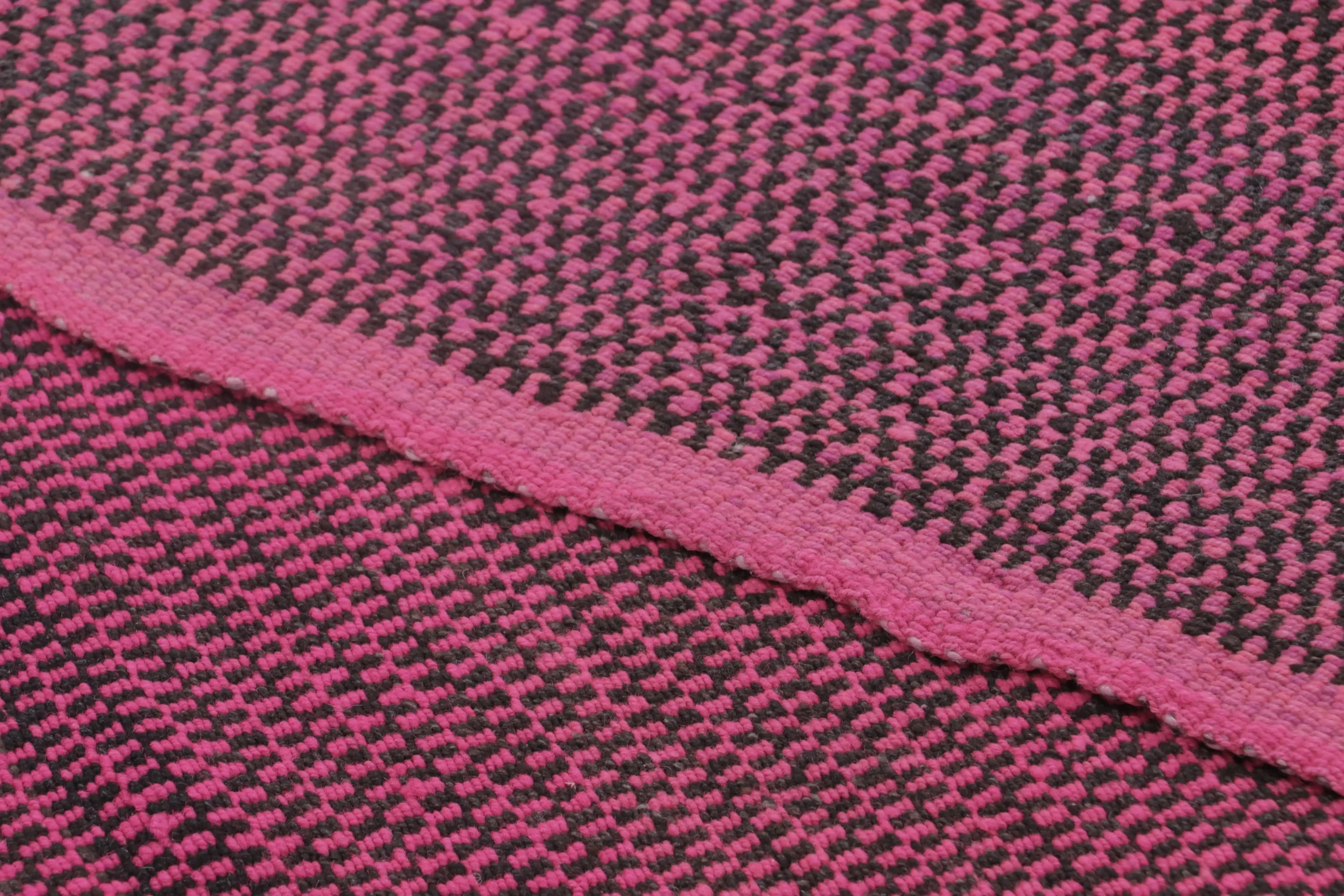
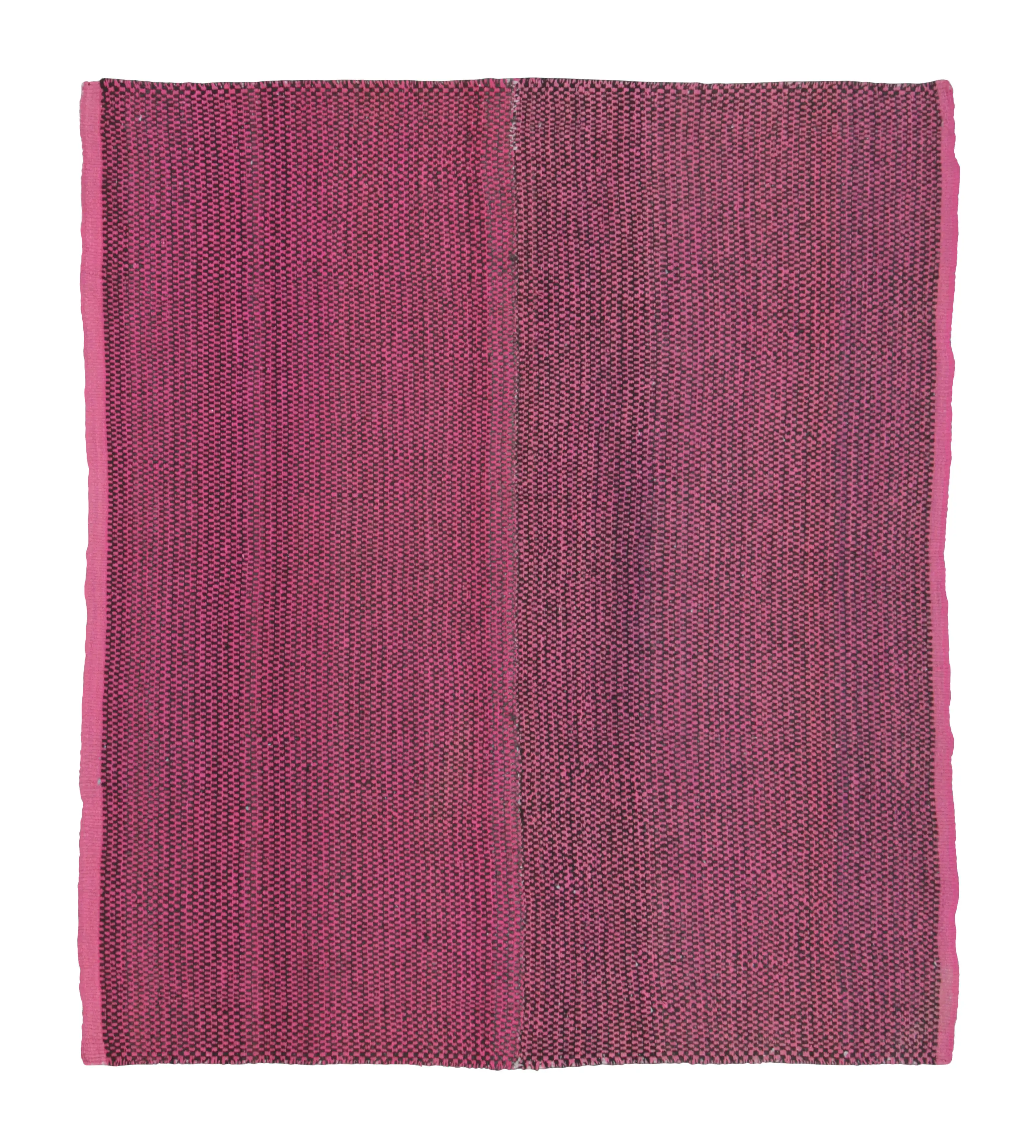
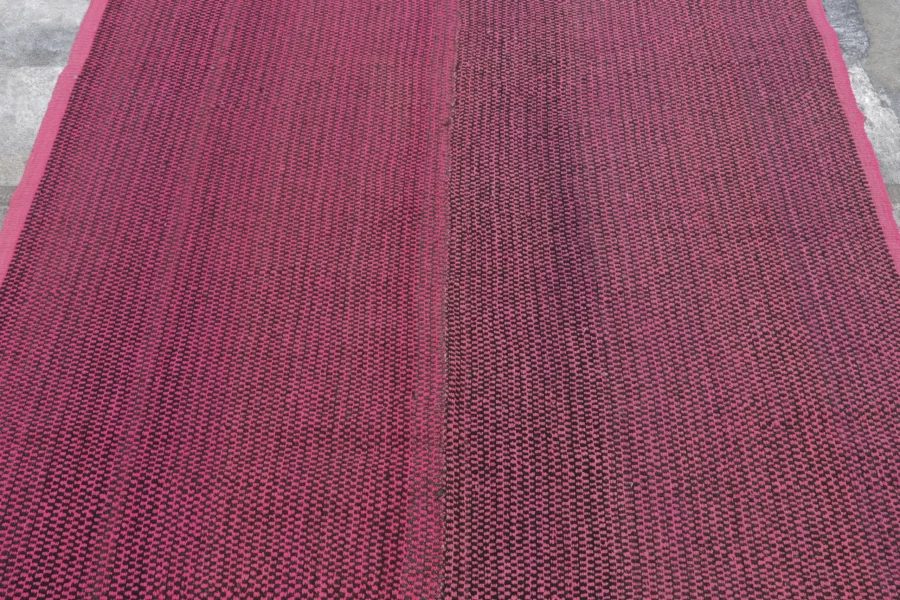
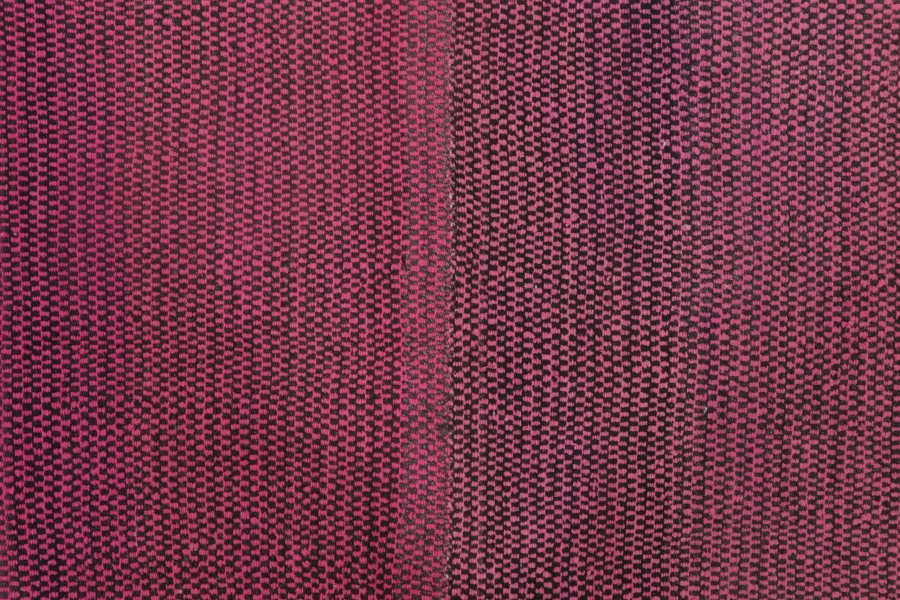
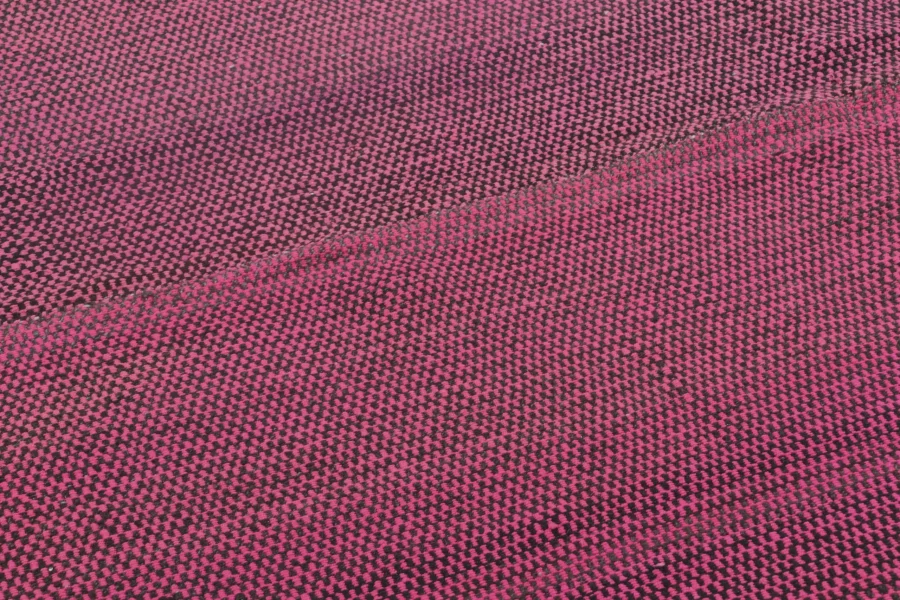
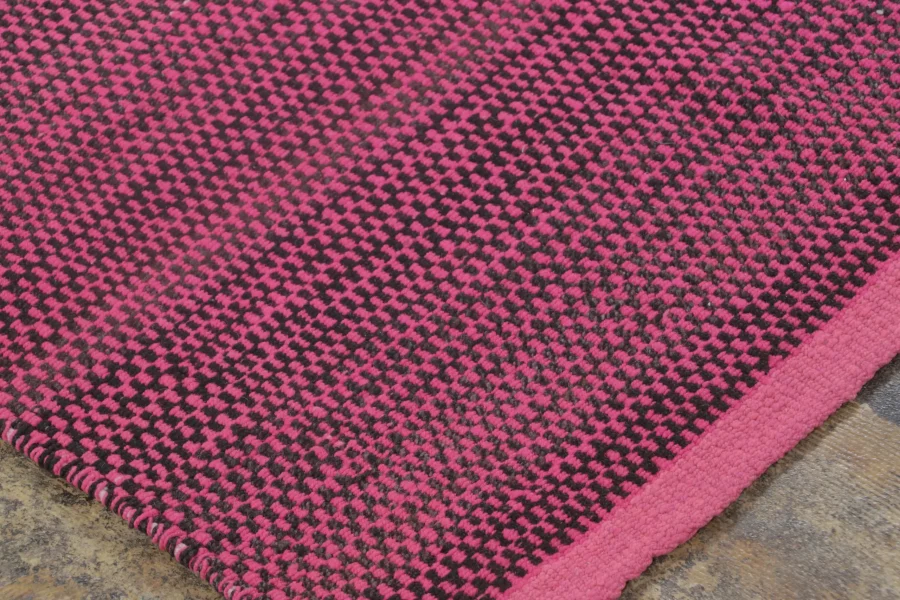
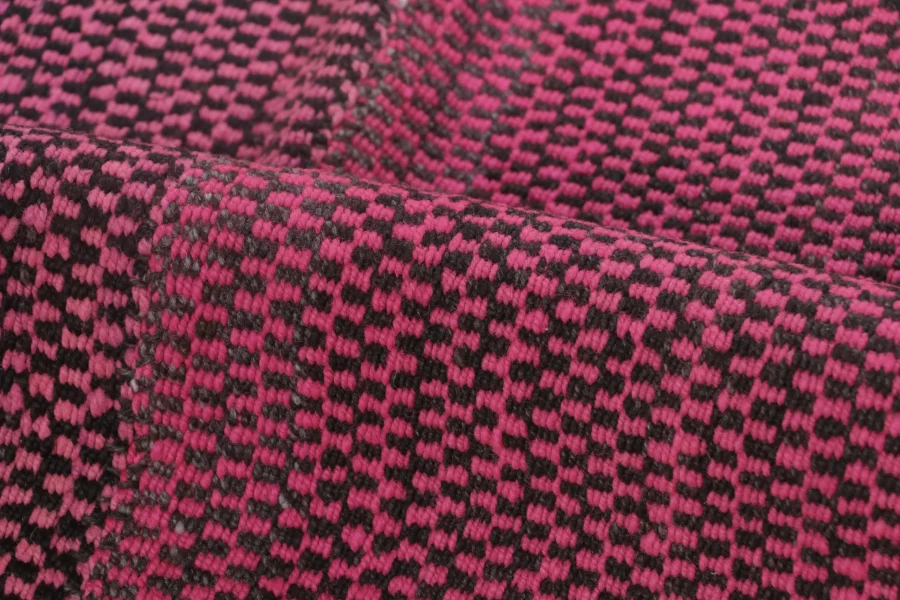
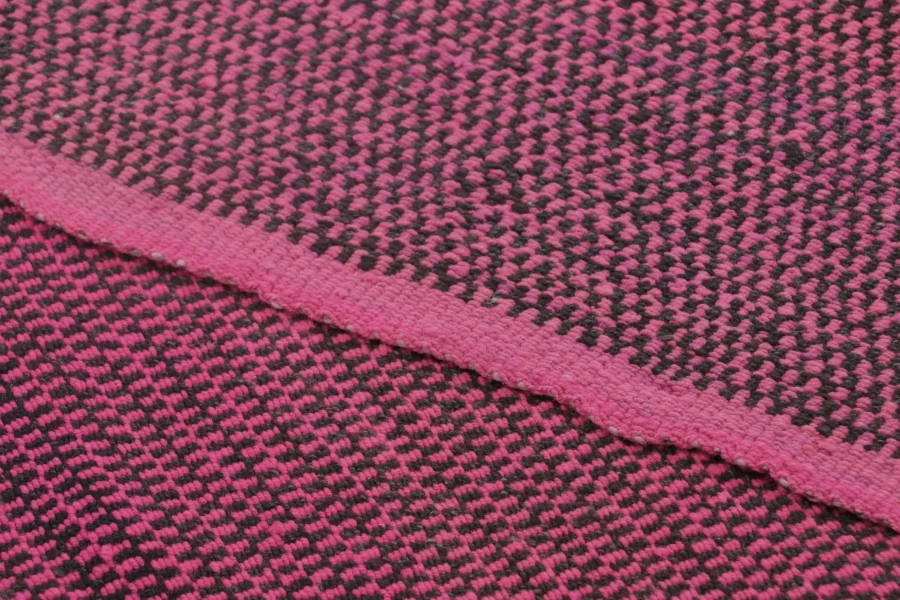
Wool
Spain, c. 1950-1960
5'1" X 5'6" (1.55 m x 1.68 m)
Available: Shipping As Soon As Tomorrow
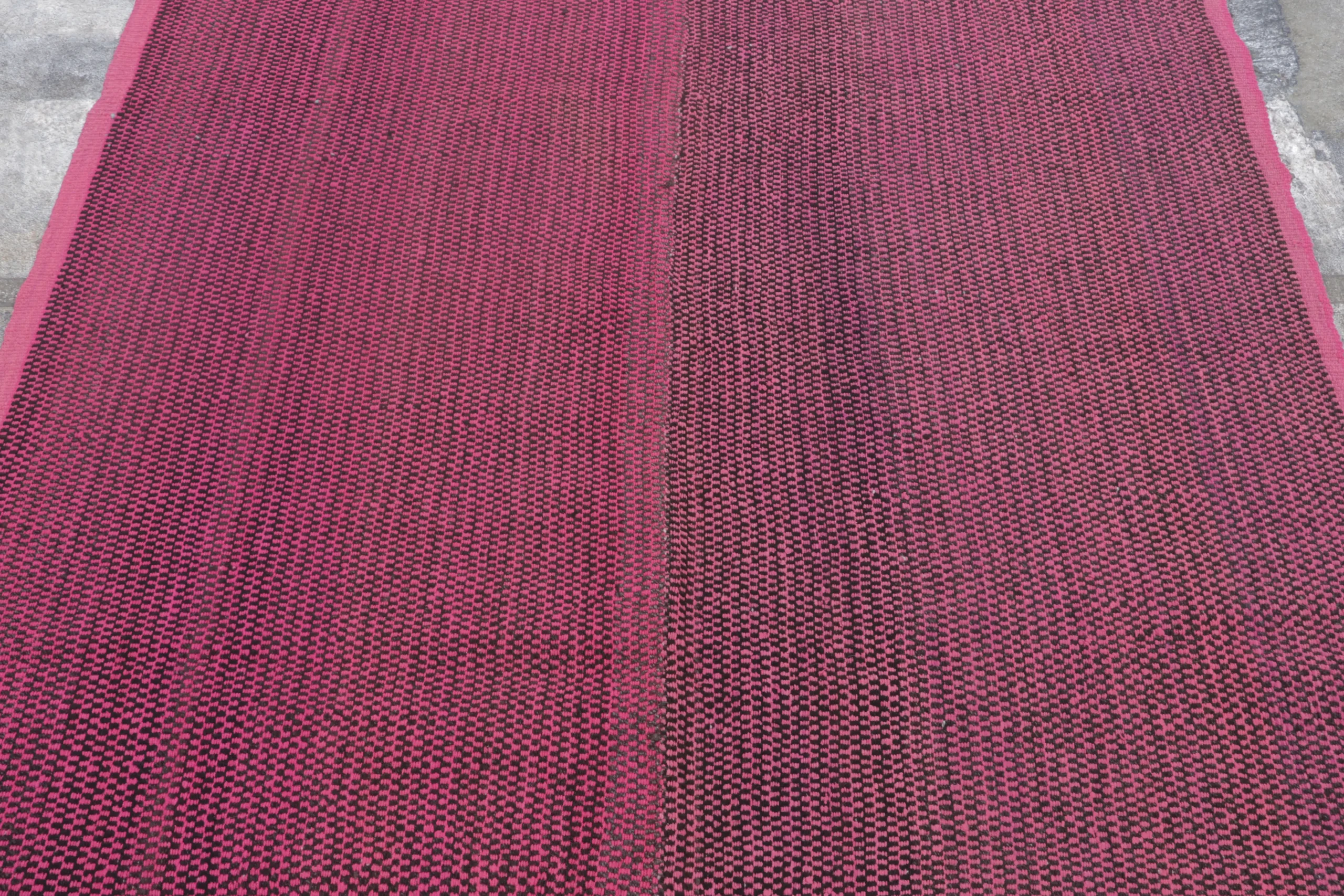
Vintage Frazada Kilim in Pink and Black Geometric Striped Pattern - Rug & Kilim
"Josh has been able to dredge up some of the rarest and most beautiful carpets for our nerdy and stringent requirements. And we have had a grand time together assembling collections for clients."
— Ralph Harvard, Ralph Harvard Inc.
A standard since our inception upheld across every acquisition,
transaction, and delivery.
45+ Year Old Institution
More than four decades of expertise and stewardship, under the leadership of our Principal, Jahanshah "Josh" Nazmiyal.
Favorable Return Policy
Our return policy is 48 hours upon receipt allowing you to confirm the purchase in your space with confidence.
Product Warranty
Each rug is hand selected or produced through the most reputable sources under the direct supervision of our Principal.
Trusted Global Delivery
Reliable worldwide delivery handled with care, precision and constant communication.
Exceptional Support
Attentive, knowledgeable guidance before and after purchase from our dedicated team of specialists.
Long Term Care
We stand behind every piece we place and remain a resource to our clients for the lifetime of their collection.
- Measurements: 5'1" x 5'6" ( 1.55 m x 1.68 m )
- Categories: Kilim & Flat Weave, Vintage
- Classification: Geometric, Kilim/Flat Weave
- Material: Wool
- Origin: Spain
- SKU: 36865

Specifications:
Stories from the Kilim & Flat Weave Collection
Essays, artist dialogues, and provenance notes drawn from Rug & Kilim’s editorial desk.
Bokhara Rugs: Traditional Weaving and Global Influence
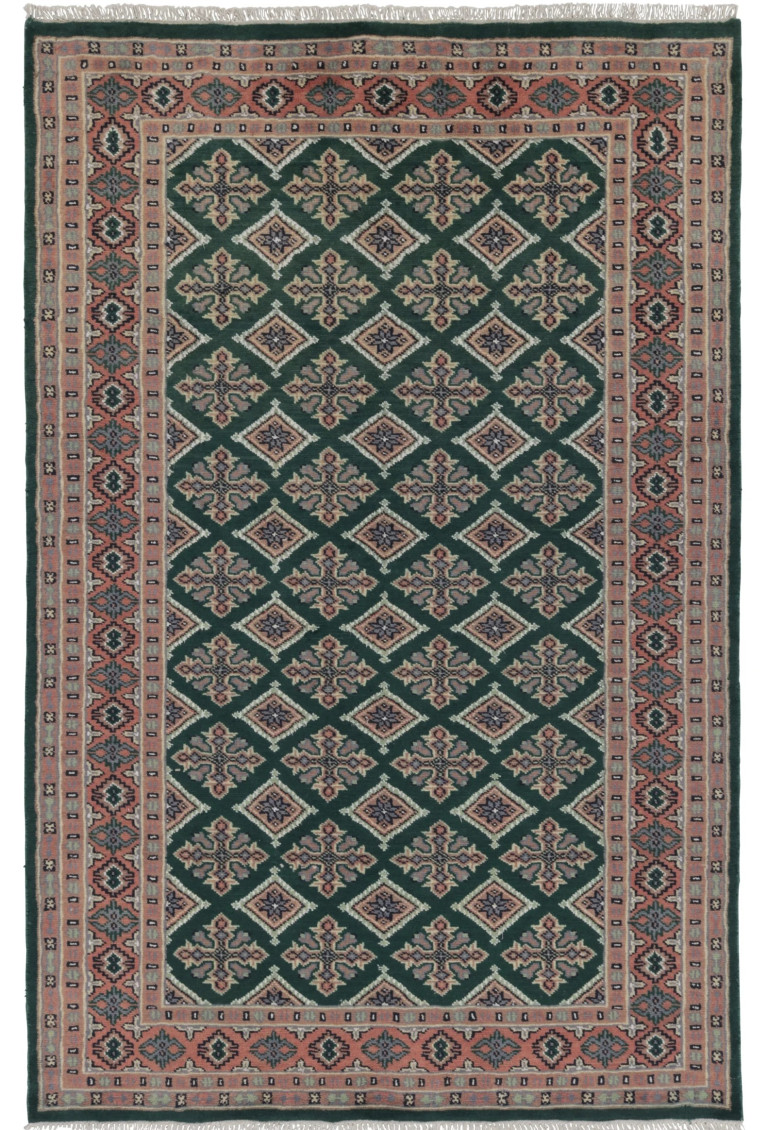
Among the most recognizable and influential traditions in the history of oriental carpets, Bokhara rugs represent a remarkable fusion of tribal heritage, geometric precision, and centuries-old weaving expertise. Known worldwide for their iconic repeating motifs, deep colors, and refined craftsmanship, Bokhara rugs have become enduring symbols of Central Asian textile artistry. Although the name “Bokhara” is commonly associated with the historic city of Bukhara in present-day Uzbekistan, many rugs classified as Bokhara originate from Turkmen weaving communities across regions including Turkmenistan, Afghanistan, and surrounding areas. The name reflects the historical trade routes through which these carpets traveled and became known internationally.
Read the Feature
The House the European Stuycks Kept: Madrid’s Royal Loom, Goya’s Cartoons, and the Spanish Carpet
There is a building in Madrid, a short walk from the Atocha station, where the same craft has been practiced without interruption for more than three hundred years. Its brick and its Neo-Mudéjar arches were raised in the nineteenth century, but the work carried on inside them belongs to a lineage older still, to 1720, when Philip V, having lost the Flemish tapestry workshops of the Spanish Netherlands to the Peace of Utrecht, resolved that Spain would simply make its own. He summoned a family of Flemish weavers, the Vandergotens, to Madrid, and founded the Real Fábrica de Tapices de Santa Bárbara. Three centuries later, in the presence of the King and Queen of Spain, the factory marked its tercentenary as one of the last places on earth where royal weaving continues by the hand, exactly as it always has.
Read the Feature
The Layered Home: 5 Ways to Rethink Floor Rugs and Wall Tapestries
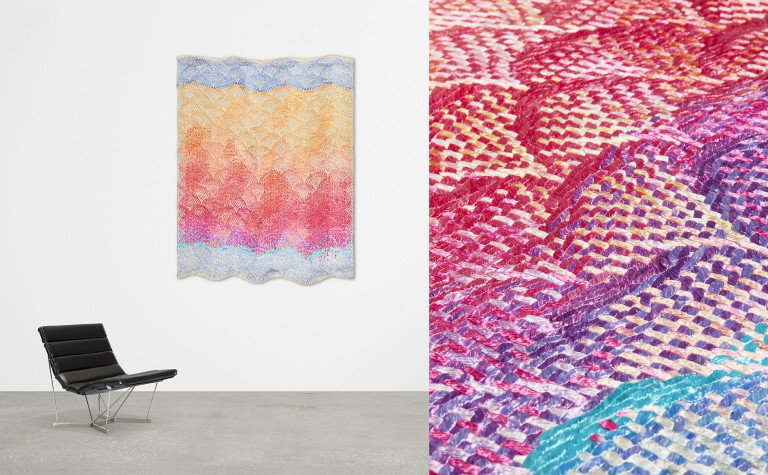
The real spatial dimension does not get painted, it gets woven. Begin with hanging a piece such as Signed Vintage Lia Cook Tapestry slightly off-center on one of your main walls. Its intricate Jacquard weave and the friction created between its rayon and linen fibers will require a lot of breathing room, immediately establishing a gravitational pull of the whole room. But to balance this vertical tension, the ground beneath your feet needs to become much more rigorous. With the use of a rigorously beaten warp-faced plane such as cotton Indian Dhurrie or Antique Swedish Röllakan's interlocking tapestry weave, you create a flat but structurally resistant base. A ground made from a rigidly woven material needs to be challenged. The last textural transition will come from placing a Vintage Frazada Kilim with heavy weft interlace across your warp-faced plane. The act of overlapping your heavy weft on a rigorously
Read the Feature
The Role of European and Persian Rugs in Royal Palaces and Historic Estates
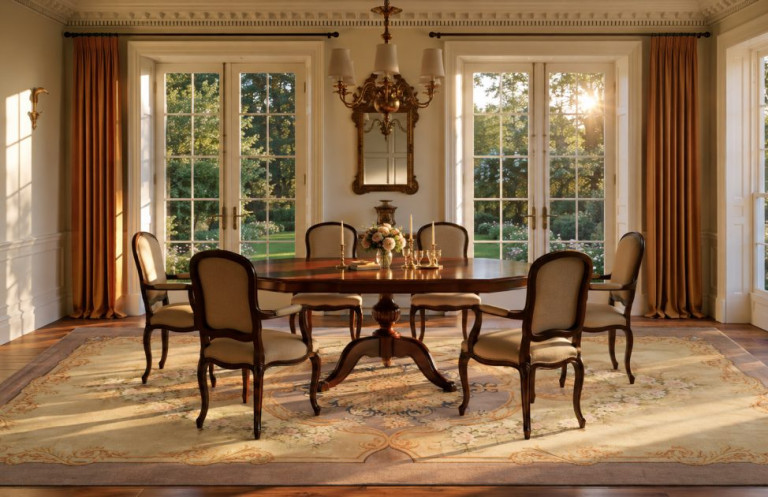
To walk upon a fine Persian and European Rug is to tread upon centuries of tradition, craftsmanship, and power. As we reflect on our decades curating what many regard as the world's preeminent collection of European and Persian rugs, we are reminded that these extraordinary textiles are far more than mere floor coverings—they are narratives of civilization. Persian rugs entered European courts as potent diplomatic currency long before they adorned their floors. When Shah Abbas I sent his magnificent silk and metal-thread carpets to Venice's Doge's Palace in the 16th century, he dispatched not merely gifts but ambassadors of Persian cultural supremacy.
Read the Feature
European Rug Medallions: Symbols of Art, Power, and Prestige
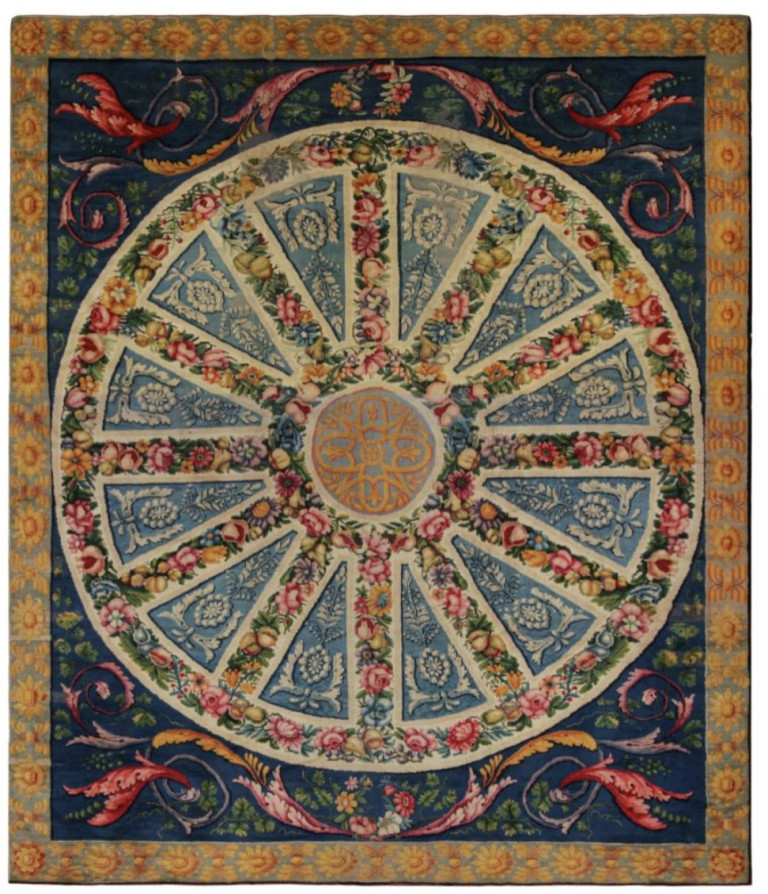
Few design elements are as grand in sensibility and presence in European textile art quite like the medallion. More than a decorative addition, the medallion is a visual and conceptual anchor, a motif that echoes across mediums—from the ceilings of Renaissance palaces to the manuscripts of medieval scriptoriums. It appears in the gilded stuccoes of Baroque cathedrals, in the frescoed vaults of Rome, and in the symmetrical tapestries of Flemish masters. Within European rug design, the medallion serves as a bridge between the woven and the built environment; an ornate emblem of high art. To understand the European medallion is to explore its dialogue with architecture, painting, and decorative arts. The arabesques of Savonnerie carpets mirror the aesthetics of Peter Paul Rubens painting; the laurel-framed insignias in English Axminster rugs recall the neoclassical symmetry of a Robert Adam ceiling.
Read the Feature
A Glossary of Handmade Rugs and Kilims: Understanding Terms, Types and Techniques Past and Present
Referring to the art style characterized by using shape and color withdrawn from traditional repetition or realism. Abstract rugs — sometimes referred to as art rugs — capture an expressive nature that reads as a very modern style, though many abstract rugs draw inspiration from works of the same art style in the mid-century. One of the more widely known mid-century lineages of this style is abstract expressionism, named for the literal "expressionists" of the 1950s. Some of the most notable names behind this style include Jackson Pollock and Mark Rothko. Referring to a lineage of nomadic Persian rugs (sometimes referred to as “Avsar” in the alternate spelling). Afshar rugs hail from the eponymous tribe in the region of Northeastern Iran.
Read the Feature


R&K Image Studio
NEWThe R&K Image Studio is a new visual workspace designed to present the Rug & Kilim collection with clarity, restraint, and precision — in your space or any space you imagine.
This tool allows you to view, refine, and prepare imagery drawn directly from the pieces in our archive. They can be visualized cleanly, isolated thoughtfully, and adjusted for presentations, proposals, and private viewings, without altering the integrity of the original work.
Kilim & Flat Weave
Wool
Spain, c. 1950-1960
5'1" X 5'6" (1.55 m x 1.68 m)
$3,200
Available: Shipping as Soon as Tomorrow
Vintage Frazada Kilim in Pink and Black Geometric Striped Pattern - Rug & Kilim
"Josh has been able to dredge up some of the rarest and most beautiful carpets for our nerdy and stringent requirements. And we have had a grand time together assembling collections for clients."
— Ralph Harvard, Ralph Harvard Inc.
- Measurements: 5'1" x 5'6" ( 1.55 m x 1.68 m )
- Categories: Kilim & Flat Weave, Vintage
- Classification: Geometric, Kilim/Flat Weave
- Material: Wool
- Origin: Spain
- SKU: 36865

