
Of Royal Culture and Inheritance: The Silk Heriz Triclinium Carpet of 1868, Perhaps the Finest Surviving Example in the World
May 29, 2026
Rug & Kilim’s Tapestry Artists’ Series: In Dialogue with Elizabeth Chester
June 8, 2026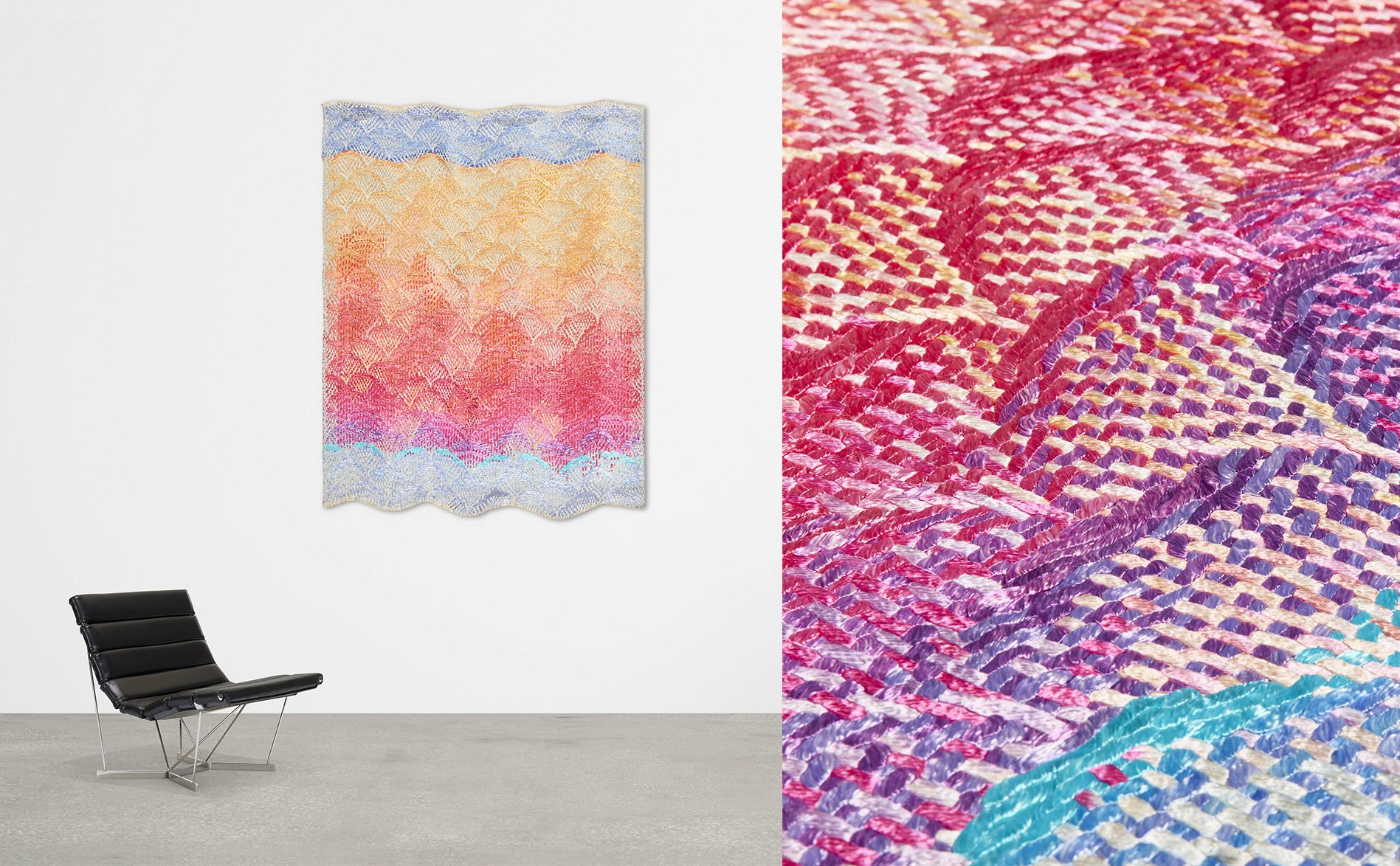
The real spatial dimension does not get painted, it gets woven. Begin with hanging a piece such as Signed Vintage Lia Cook Tapestry slightly off-center on one of your main walls. Its intricate Jacquard weave and the friction created between its rayon and linen fibers will require a lot of breathing room, immediately establishing a gravitational pull of the whole room.
But to balance this vertical tension, the ground beneath your feet needs to become much more rigorous. With the use of a rigorously beaten warp-faced plane such as cotton Indian Dhurrie or Antique Swedish Röllakan’s interlocking tapestry weave, you create a flat but structurally resistant base. A ground made from a rigidly woven material needs to be challenged. The last textural transition will come from placing a Vintage Frazada Kilim with heavy weft interlace across your warp-faced plane. The act of overlapping your heavy weft on a rigorously
If you step into Danielle Bernstein’s Tribeca loft you’ll see how layering has evolved beyond just two dimensions. The floor, anchored by thick, custom-made rugs with lots of texture, provides a solid foundation that’s very tactile. This weighty base does something important, it lets you take textiles to new and exciting places, putting them on surfaces you might not have thought of before.
When we think of a rug, we often see it as just something to put under a coffee table. But what if we looked at it differently? A beautiful kilim doesn’t have to be stuck under a sofa or hidden behind glass. Some homes really stand out when they use textiles in a big way, not just as something in the background. Take this one carriage house on the Upper East Side, for example, that was designed by a studio called Husband Wife. They chose some special handmade rugs from Nepal, with really intricate patterns, and used them in some surprising ways. They didn’t just put them on the main floors, but also used them to add some extra style to other parts of the house, like the inside of a custom storage cabinet. It’s like they th ought of the rugs as a kind of architecture, not just something to cover the floor. They layered these beautiful silk and wool rugs in all sorts of unexpected places, which really added to the overall look and feel of the house.
If you look at old pictures of big estates from the Gilded Age or inside a traditional Caucasian yurt from the 19th century, you’ll notice something. The walls and floors aren’t bare and boring. Instead, they’re covered in lots of layers of textiles, all overlapping each other. This wasn’t just a style choice, it was based on a deep understanding of how textiles work. The people who made these spaces, from European royalty to nomadic tribes, knew that a room without layers can feel cold and empty, both in terms of how it looks and how it feels. They knew that the way threads intersect, the warp and weft, is what gives a space its warmth and character. So, when we’re designing a room, we should think about how we can add these layers, how we can use textiles to create a space that feels rich and inviting, not just an empty shell.
At Rug & Kilim, we treat textiles as a triad of art, fashion, and architecture. We covered this extensively in our journal piece, The Rug & Kilim Triad: Art, Fashion, Architecture. We often see designers struggling with a big problem – the empty space on the walls. They’ve found an amazing antique Persian rug for the floor, but the walls are still bare, making the room feel incomplete. To fill this gap between the floor and the ceiling, you need more than just colors that match. You need to understand how different textures, weights, and lighting work together.
We’re taking a fresh look at how we use textiles, and we’re getting our ideas from our own projects, the titles of our unique books, and the work of some of the best design firms out there. Our goal is to turn the way we layer textiles into something really creative and expressive. By doing this, we can make textile layering a whole new kind of art that’s full of energy and personality.
Liberating the Kilim: Beyond the Floor and Wall
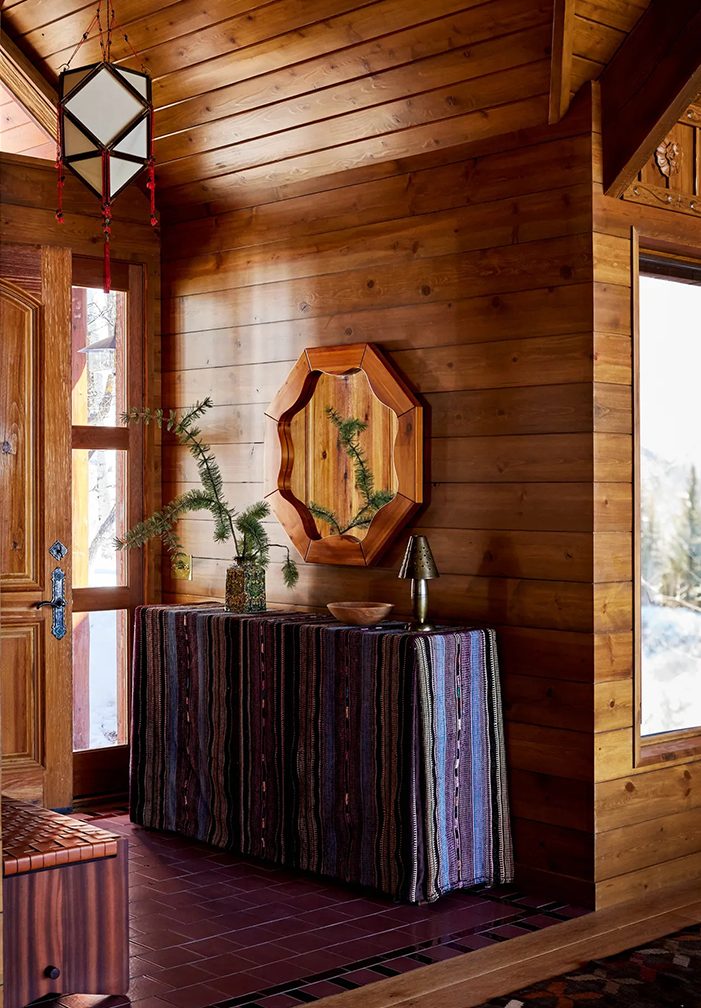
Why should textiles only go around the edges of a room? These days, designers are using flatweaves in a totally new way – they’re like flexible tools to create amazing spaces. Look at what Reath Design did in an entryway in Aspen. Instead of putting a rug on the floor, they took this incredible vintage Persian Shahsavan flatweave with a bold geometric pattern from their collection and casually threw it over a wooden console table by the door.
When you drape intricately woven vintage fabrics over dining tables, stone pedestals, or sleek consoles, it completely transforms the room’s ambiance. This simple act creates a striking, unexpected contrast between the hard, clean lines of the architecture and the raw, organic texture of the fibers. It’s a powerful reminder that a truly layered and visually interesting home is one where textiles are allowed to claim every available surface, not just the floor. By looking beyond the floor and embracing the idea that textiles can define any plane in a room, you can add depth, warmth, and personality to your space. Whether it’s a vintage rug, a handmade throw, or a beautifully crafted wall hanging, textiles have the power to completely rewrite the rules of a room’s gravity, drawing the eye upward and creating a sense of visual tension that’s both captivating and beautiful.
Rug & Kilim x Reath Design
Rug & Kilim x Pappas Miron Design
Managing the Void: The Floor-to-Wall Dialogue
Our founder, Jahanshah Nazmiyal, constantly evaluates the emotional temperature of a room. A rug must hold space. It must anchor emotion. We never look at a floor piece in isolation from the vertical plane.
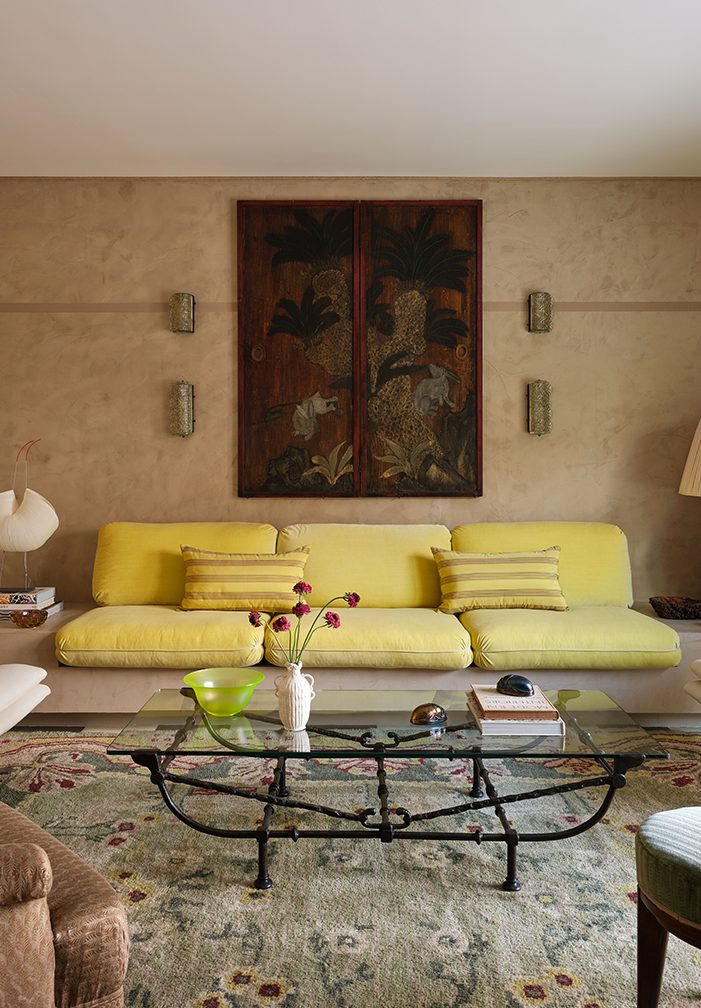
The “Citron Salon” at the Kips Bay Decorator Show House, designed by Pappas Miron Design, is a great example of how to balance a room with a bold, eye-catching piece. They started with a stunning, early 20th-century Arts and Crafts Savonnerie rug from the Rug & Kilim European Collection, which immediately grabs your attention. The rug’s dense knotting and rich colors give it a lot of visual weight, so the designers didn’t want to leave the walls plain and boring. Instead, they covered them in a beautiful, burnished lime plaster in a warm, taupe color. The plaster has a waxed finish that reflects light and changes throughout the day, creating a lovely backdrop for the rest of the room. The designers also used layered, tactile citron velvets to add depth and texture to the space. What’s really interesting is how the heavy, compressed rug on the floor interacts with the fabrics and walls above it. It shows that when you have a major piece like that, you need to think carefully about how the rest of the room will respond to it. If you want to learn more about this kind of spatial balance, you can check out our journal piece, “Rooms of Power: Rugs, Art, and the Architecture of Global Interiors.“
The Weight of Light: Pile vs. Flatweave
The way light falls on things in a room can totally change how it feels. It’s all about playing with the direction and source of light, and how it hits the different textures and surfaces. This can really bring a room to life, especially as the light moves and changes throughout the day animating the space. Think about mixing up the textures of the things in your room, like the furniture and rugs. For example, wool can soak up the light and make a space feel softer, while silk can reflect it and make things feel more fancy. And then there’s hemp, which can kind of tie the room together and make it feel more solid.
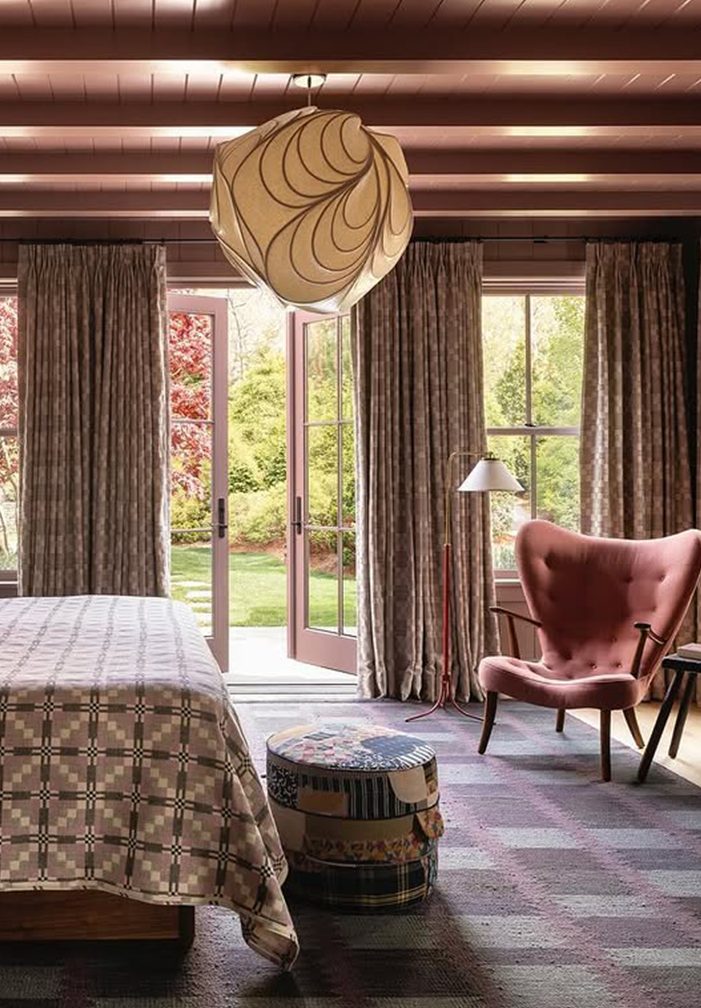
When you put a thick, plush Moroccan rug or a custom-made Scandinavian carpet on the floor, it absorbs a lot of light, making the room feel darker. To fix this, you need to add some reflection to the walls. One way to do this is by hanging a beautiful, shiny silk tapestry or a finely woven Swedish Deco flatweave above eye level. The subtle shine of the wall piece catches your eye and draws it upwards, keeping the room feeling lively and stopping it from feeling heavy and sunk into the floor. This way, the room stays visually interesting and doesn’t get overwhelmed by the dark colors of the rug.
Rug & Kilim x Heidi Caillier Design
Rug & Kilim x Elmo Studios
Gravity and the Loom: The Physics of Hanging
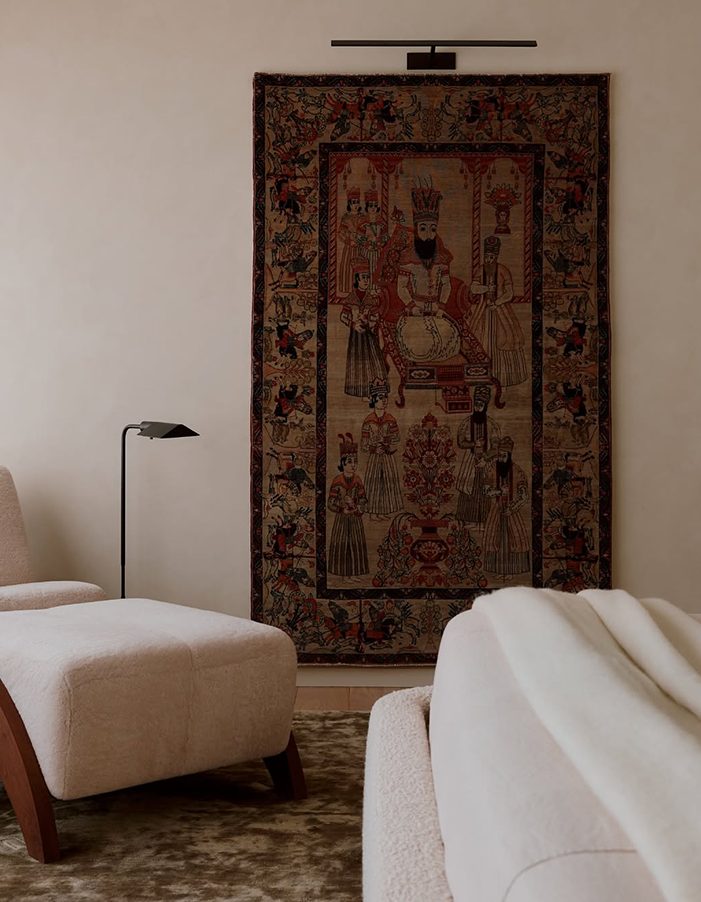
Wall-mounted pieces face an entirely different physical reality than floor carpets. Floor rugs are built to be compressed underfoot while the wall tapestries are built to drape.
Hanging a heavy rug on a wall can cause big problems if it’s not supported properly. The weight of the rug will pull on the knots, which can lead to serious distortion over time. That’s why some types of rugs, like those with weft-interlacing or warp-faced flatweaves, are better suited for hanging on walls. For example, an old Bessarabian kilim or a vintage Afghan tribal flatweave can look great on a wall and keep its shape well. In fact, many mid-century Afghan kilims are chosen by designers specifically for wall-hanging projects because they are so good at resisting gravity. You can see this in our editorial “Bessarabian Rugs and Kilims: A European Textile Tradition,” which features a vintage Bessarabian kilim as a “graphic punctuation” against a calm, white background. While these rugs are often used on floors, they can also add a nice touch to walls, with their “crisp drawing and balanced negative space” giving a painterly quality. This is a great way to use a rug to add some visual interest to a room, and it’s a technique that designers often use to create a unique look.
Breaking the Grid with Contemporary Fiber Art
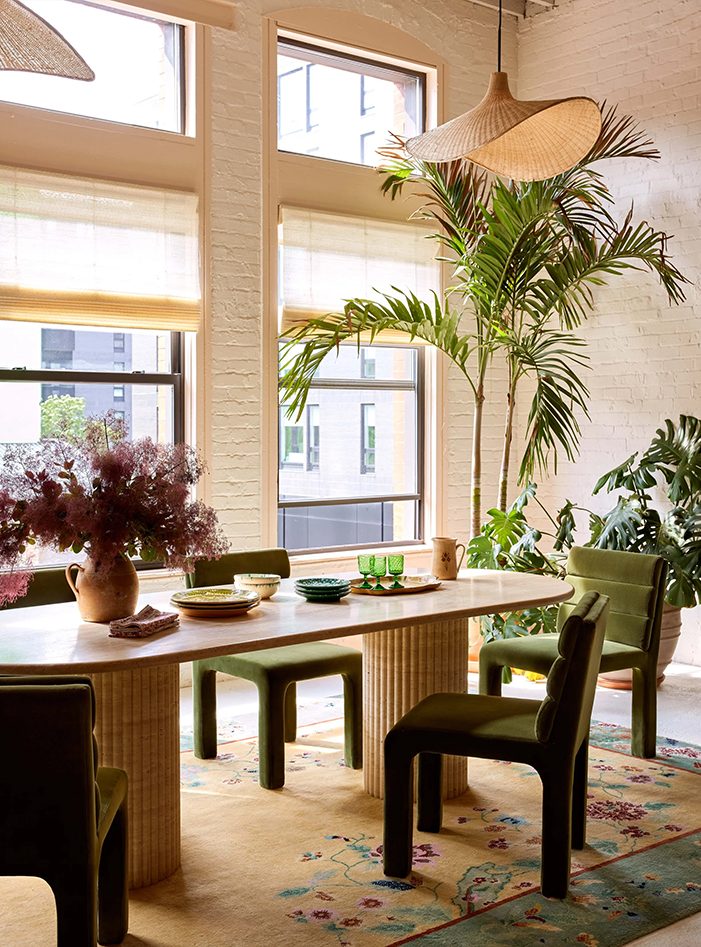
A home with lots of layers also needs some space to breathe. If you have a heavy, old rug like an Oushak or a bright Chinese Art Deco piece on the floor, the walls should be able to relax a bit. Trying to match everything exactly can actually make a room look worse, not better. It’s better to have a mix of things that work well together, rather than everything being the same. This way, you can create a space that feels cozy and interesting, with each piece having its own special character.
When it comes to modern fiber art, artists like Jeni Ross and Joanne Soroka really stand out. Soroka’s use of texture is amazing – it’s like she’s capturing light in her tapestries, and they seem to float on the wall. Ross, on the other hand, brings a really organic, sculptural feel to her weaving. It’s interesting to think about how these pieces can work together with other elements in a room. For example, Relate Jeni Ross’s tightly woven, weft-faced pieces, such as Odyssey, to a densely packed, low pile hand-knotted rug to give her rhythmic color blocks the necessary structural weight without interfering with her rhythms. With Joanne Soroka’s textural tapestries, especially those that have to do with migratory birds, there is a possibility for greater directness regarding technique; setting up a flat weave rug on the floor literally reproduces her weaving techniques based on weft interlacing. In order to avoid having this spatial conversation become too mathematical, one must completely avoid warp-faced Jacquards and use an undyed ryijy rug instead.
Your eye is drawn back and forth between the rigid, mathematical patterns on the floor and the fluid, organic shapes on the wall. This contrast between old and new, rigid and fluid, can add a lot of depth and interest to a space. If you want to learn more about how historical geometric patterns are influencing modern design, check out our previous article on period piece rugs and kilims – it’s got some really interesting insights into the way that traditional designs are being reinterpreted in contemporary spaces.
Rug & Kilim x Anne McDonald Design
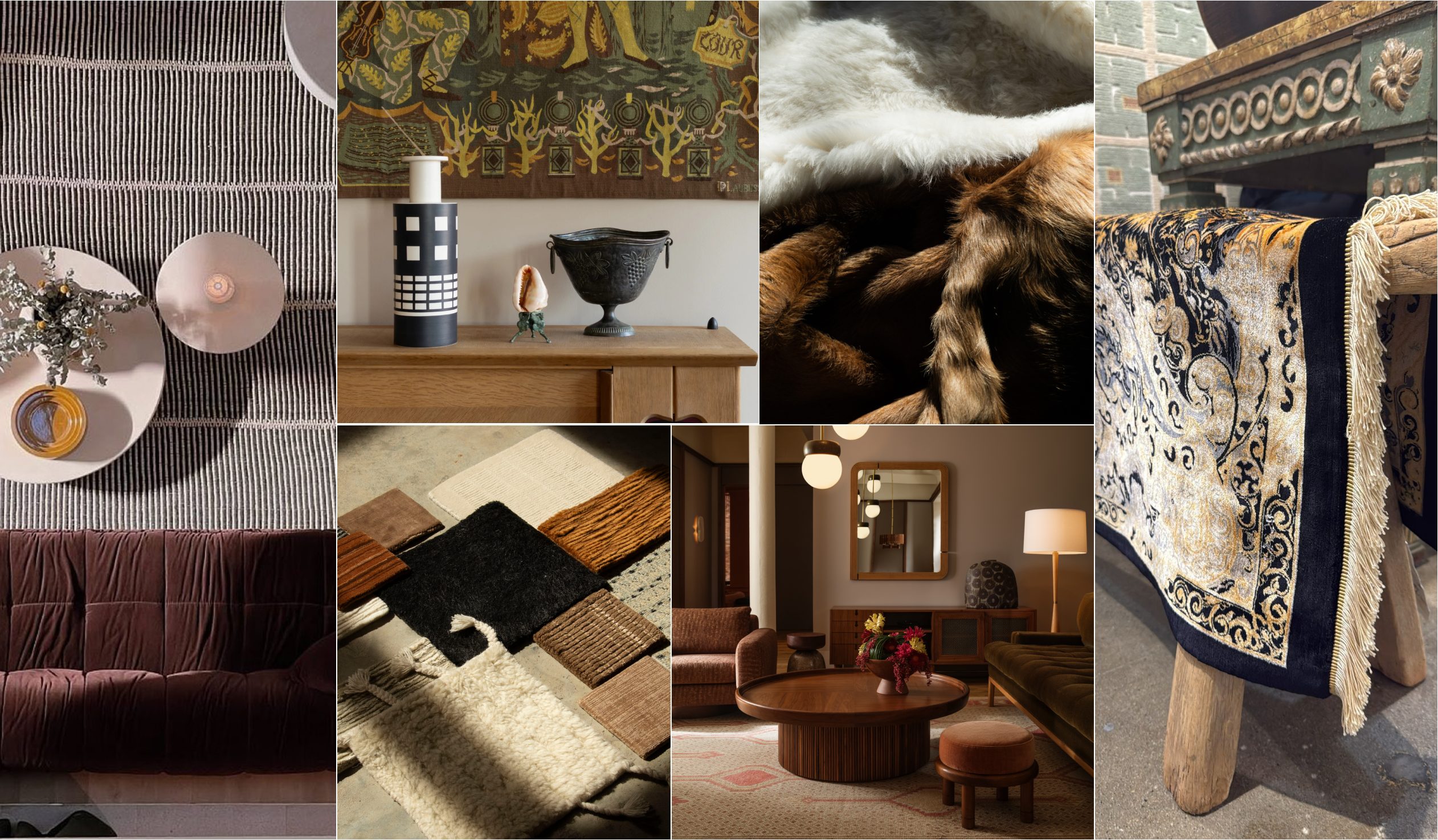
Curating Your Own Archive
A room is an ecosystem. Floor and wall textiles must speak to one another. They share the same roots in the warp and weft, but they have distinct jobs.
Don’t worry about mixing old and new things together. You can put a vintage rug with big, geometric shapes in the same room as a quiet, natural fiber wall hanging. The old ways of making things can connect to the new. We want you to try out different combinations and see what happens. Notice how a carpet feels solid and strong, but a tapestry feels soft and flowy. The floor is like a big piece of paper where you can create, but the walls are waiting for their own story to be told. You can use all sorts of things to decorate your walls, like old rugs, tapestries, or even natural fiber hangings. The key is to have fun and experiment with different pairings to find what works best for you.
Check out the amazing interiors designed by Jacques Grange. The floor is like a strong, abstract base that sets the tone for the whole room. Our Modern collection, with its geometric shapes and bold colors, goes really well with his intricate designs on the walls. In these rooms, a rug isn’t just something that adds a bit of decoration – it’s a piece of art in its own right.
Forget about plain walls, a room really comes alive when the walls and the floor work together. And it’s not just about putting a rug under the dining table, sometimes you need to think outside the box and let the rug take center stage, even if it means going against the usual rules and having it float in the middle of the room, defying gravity and adding some visual interest to the space.
To really get into the details of how to style these pieces, you should check out the Volumes bookstore. We have a huge selection of books on styling and decorating including practical guides like Everyday Decorating and rich historical resources like Josef Hoffmann 1870-1956 that can help you understand how everything fits together. Why not bring in your floor plans and any ideas you have, like that antique you’ve been obsessing over, and we can start creating your perfect room together.
By Sana for Rug & Kilim, Tapestry Specialist
Edited by Bhavna for Rug & Kilim, Editor