

Color, Craft, and the New Language of Joyful Luxury in Rug & Textile Design: The Dopamine Décor Trend
December 16, 2025
Tuareg Textiles and Design: History, Tribal Craft, and Contemporary Influence
February 11, 2026
Rug & Kilim’s Modern Classics
In the most serious interiors, rugs are never decorative. They are structural, ideological, and curatorial. They anchor space, discipline movement, and quietly declare the intellectual posture of a room. At Rug & Kilim, this understanding has long been implicit. What has evolved—deliberately and over decades—is a working philosophy that treats rugs through a triadic lens: art, fashion, and architecture. Not as metaphors, but as functional disciplines that together explain how a rug operates in space.
To understand a rug properly, one must understand how these three worlds intersect.
Art: Composition, Gesture, and Intent
Every rug begins as an act of composition. Whether a 16th-century Savonnerie, a mid-century Aubusson tapestry, or a contemporary Rug & Kilim abstract, the logic is painterly before it is practical. Line, mass, tension, negative space—these are artistic decisions.
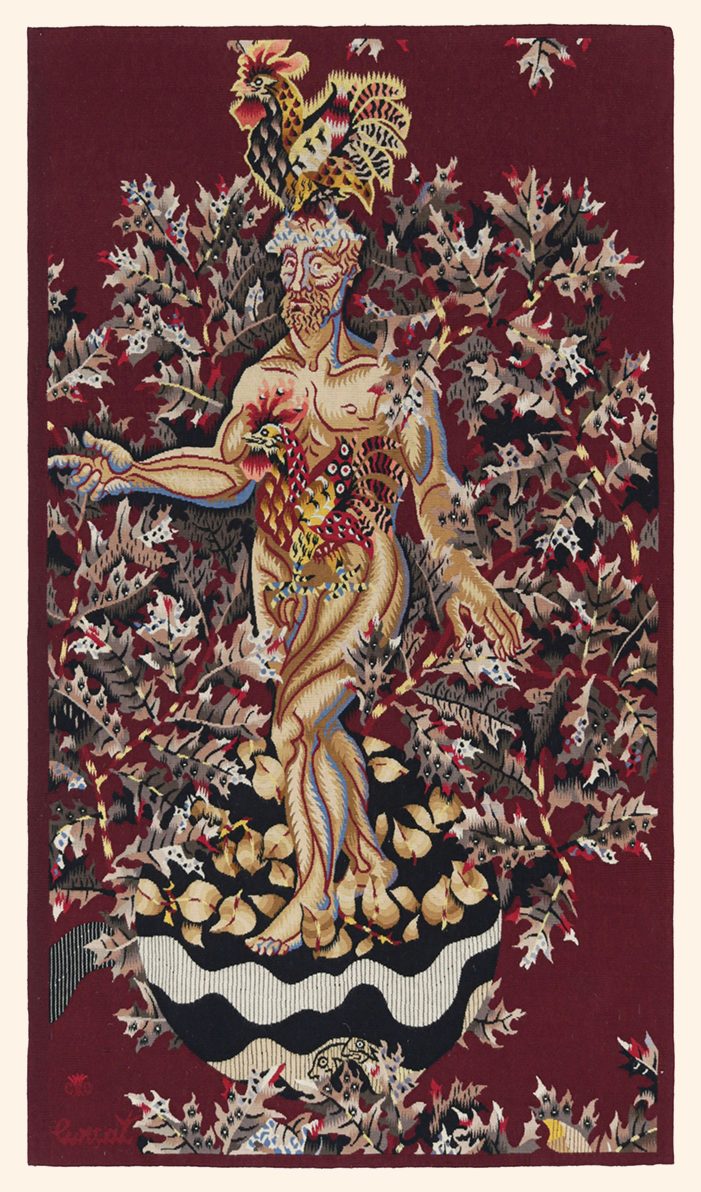
Like the house’s collection of artist-designed works: Jean Lurçat’s tapestries, Mandaroux’s figurative Aubussons, Zeki Müren’s modernist abstractions, René Perrot’s graphic compositions, or contemporary collaborations such as El Gato Chimney’s Atomic Age–inflected designs. These are not rugs that merely occupy floors; they assert visual authority. They behave as murals underfoot, demanding spatial deference rather than accommodation.
Even within traditional provenances—Bakshaish, Heriz, Mahal—the same principle applies. The most enduring examples are not those with the densest ornament, but those with clarity of drawing and confidence of scale. Art, in this sense, is not about decoration. It is about intent.
Designers who work fluently with art understand this instinctively. They specify rugs not to “match,” but to counterbalance, punctuate, or slow down a space. A rug becomes the quietest, and often the most consequential, artwork in the room.
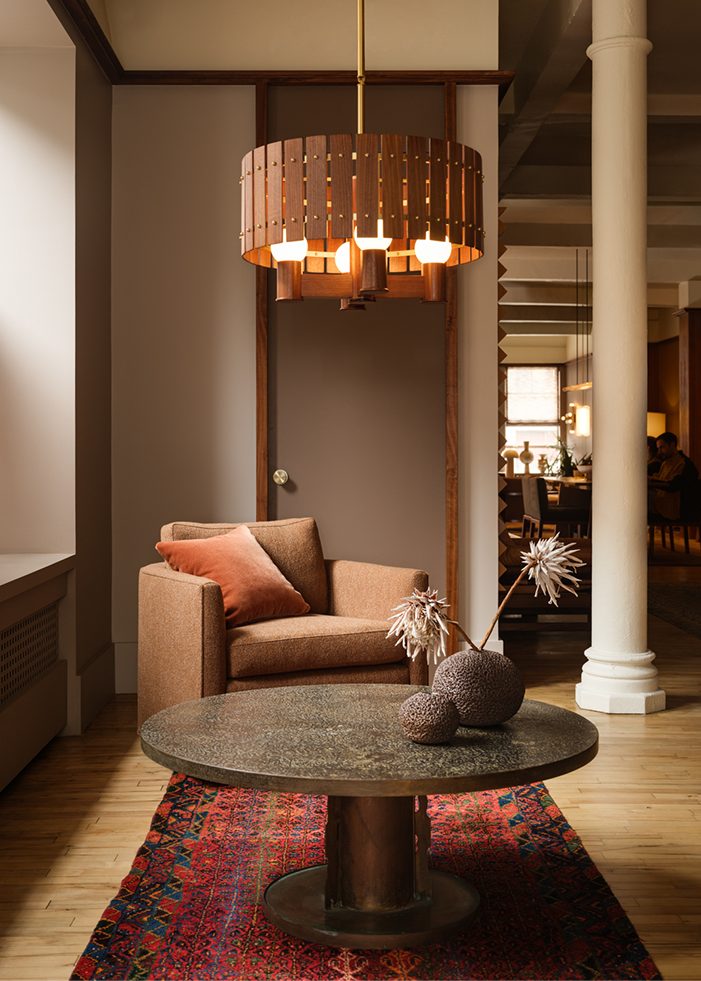
Rug & Kilim x Lawson Fenning
Fashion: Proportion, Texture, and Cultural Timing
If art governs composition, fashion governs how a rug moves through time. Fashion is often misunderstood as trend; in reality, it is the study of proportion, surface, and cultural temperature.
Rug & Kilim’s modern and contemporary collections operate strongly within this register. Textural abstractions, ombré fields, deliberately restrained palettes, and experimental pile heights reflect an understanding borrowed directly from couture: material matters as much as silhouette. A rug, like a garment, must drape correctly within its environment.
In recent years, designers have shifted away from cool minimalism toward warmer, more tactile interiors—browns, oxbloods, umbers, pinks, and honeyed neutrals. Rug & Kilim’s collections have mirrored this evolution not by chasing palettes, but by anticipating material appetite. Wool is treated for softness and depth. Color is layered, not applied. Texture is intentional, not incidental.
This is also where cultural literacy enters. Chinese Art Deco rugs produced for the French market in the 1920s–30s are exemplary: hybrid objects that speak fluently in multiple aesthetic languages. They are fashionable not because they are old, but because they were cosmopolitan at birth. Designers today return to these pieces precisely because they understand hybridity as sophistication, not confusion.
Architecture: Scale, Grounding, and Spatial Authority
Architecture is where rugs ultimately prove themselves. No object reveals the intelligence—or weakness—of an interior faster than a rug incorrectly scaled.
At Rug & Kilim, architectural thinking governs acquisition and design. Oversized Aubussons, palace-scale Savonneries, expansive Dhurries, and monumental Heriz carpets exist not as indulgences, but as spatial tools. Large rooms require rugs that can hold ground without fragmenting space. Small rooms require rugs that create visual expansion through disciplined restraint.
Designers working in New York townhouses, California compounds, Palm Beach residences, and Aspen retreats understand this intimately. The rug is often the only surface that touches every major architectural element simultaneously. It mediates between furniture, circulation, and structure.
This is why Rug & Kilim’s most successful pieces—antique or modern—share a common trait: architectural legibility. You can read where they begin and end. You understand how furniture will sit upon them. They clarify space rather than decorate it.
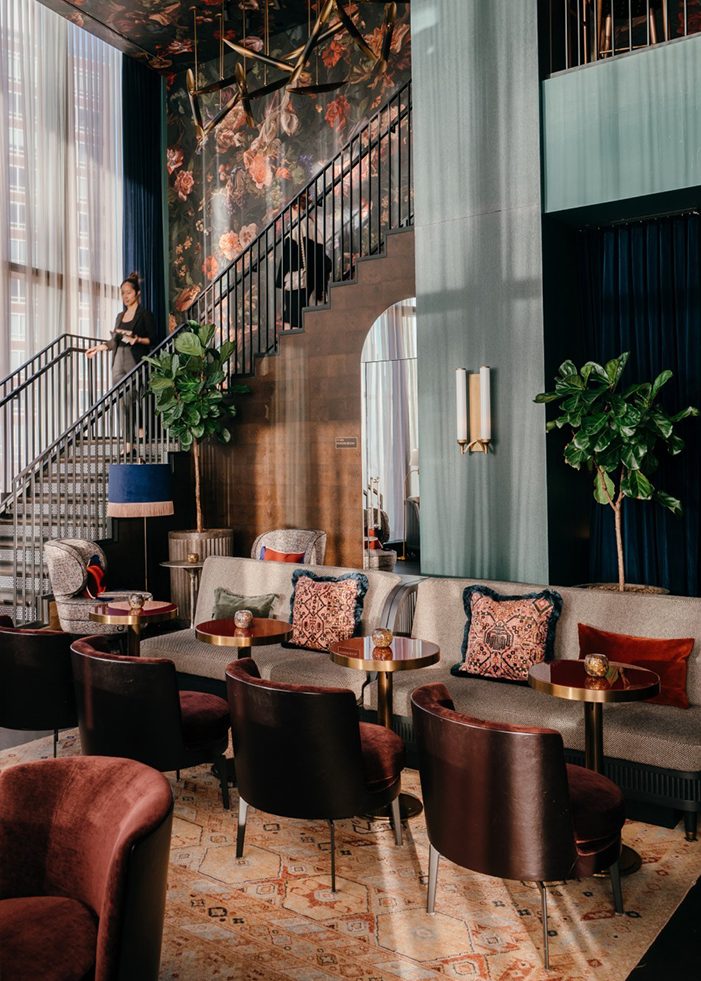
Rug & Kilim x Raffles (Boston)
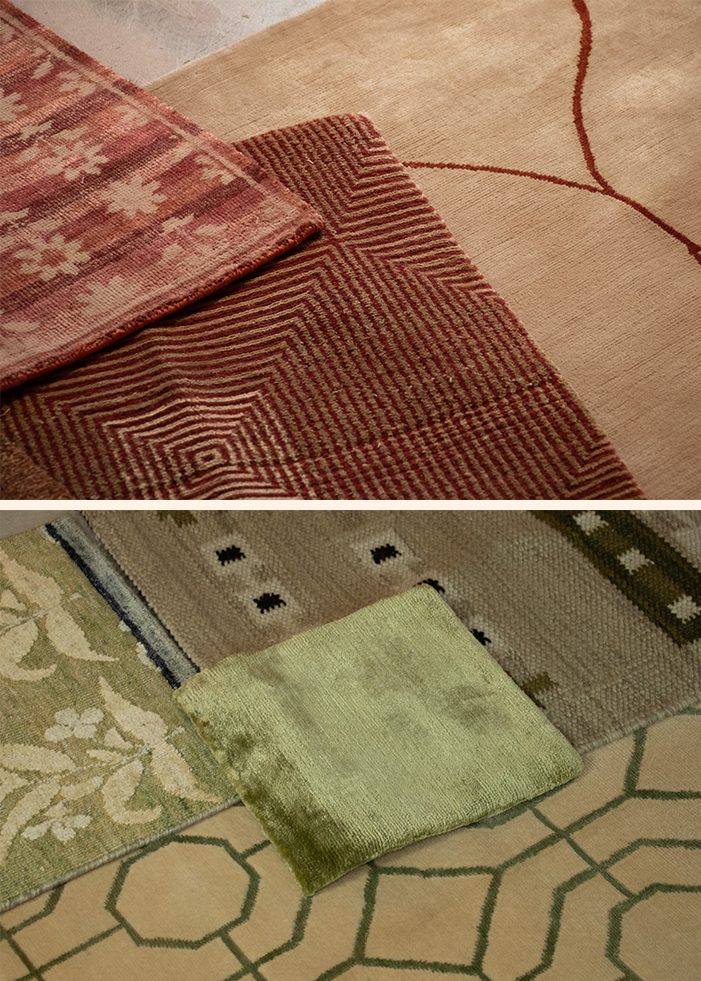
The Anatomy of a Rug
When art, fashion, and architecture align, a rug achieves coherence. Its anatomy becomes legible:
Field as spatial ground
Border as architectural frame
Motif as narrative or rhythm
Texture as tactile experience
Scale as authority
This anatomy explains why two rugs with similar colors can behave entirely differently in a room. One will disappear. The other will organize space.
Designers who work repeatedly with Rug & Kilim understand this as practice. The house functions less as a showroom than as a design intelligence resource—one that speaks fluently across periods, styles, and spatial demands.
Why This Matters Now
In an era of visual saturation and accelerated consumption, rugs remain among the last design objects that demand patience, literacy, and commitment. They are not quick decisions. Nor should they be.
The Rug & Kilim Triad is a method—one refined through decades of handling objects that have already survived centuries. It explains why Rug & Kilim’s collections resist easy categorization. They are not unified by style, but by judgment.
And judgment, as every serious designer knows, is the rarest luxury of all.
Check our new store Volumes by Bookstore >>