
Abaca Rugs: The Sustainable Design Choice For High-End Interiors in 2025
January 27, 2025
How Are Tapestries Redefining Modern Spaces in 2025?
February 10, 2025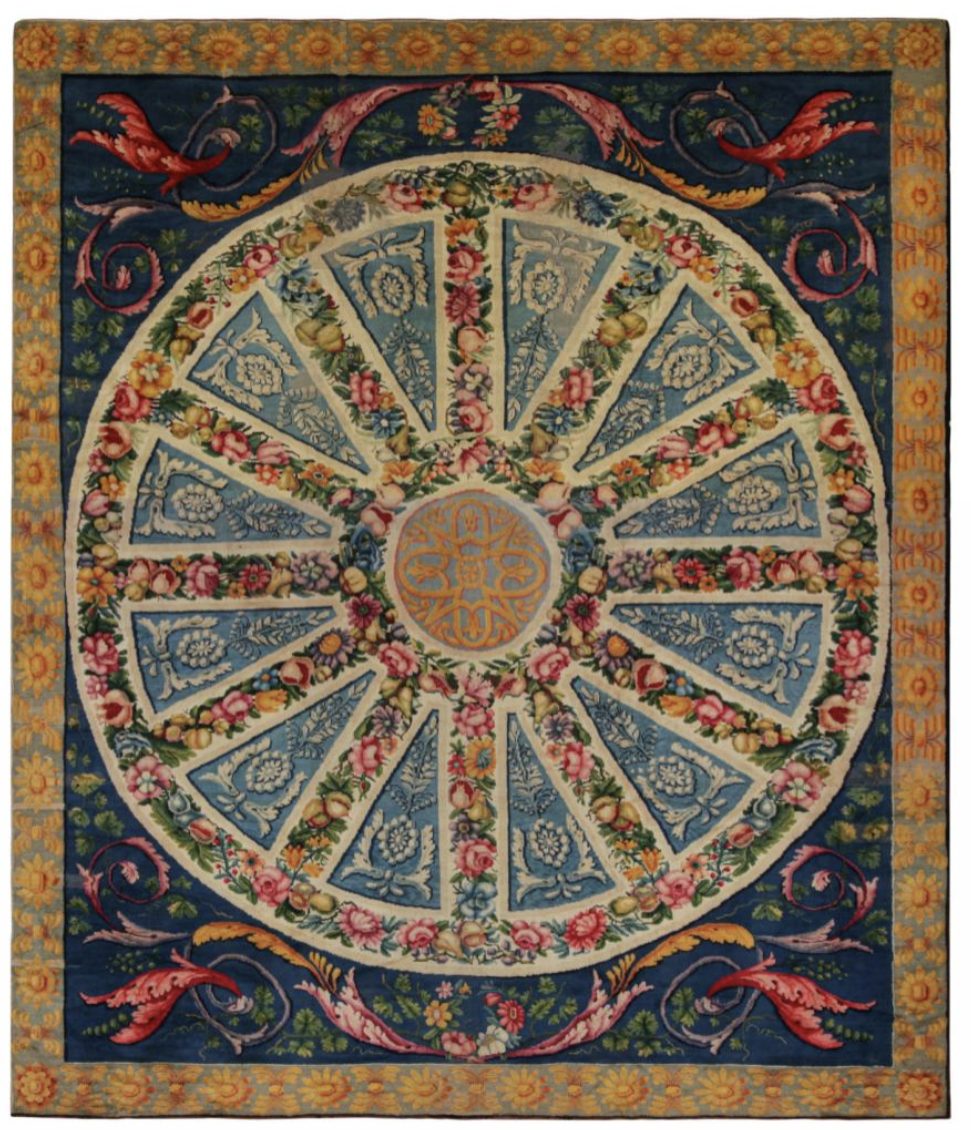
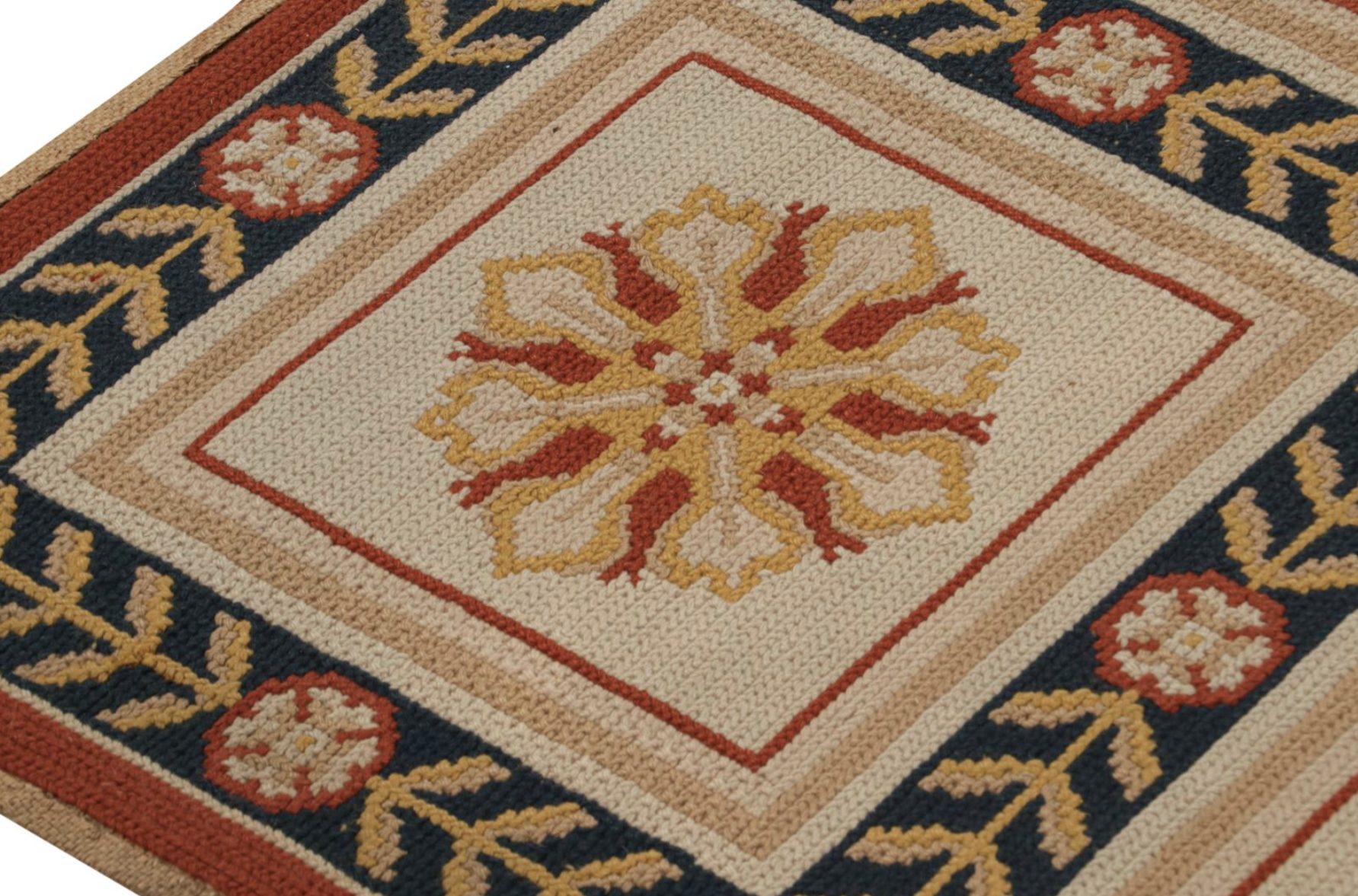
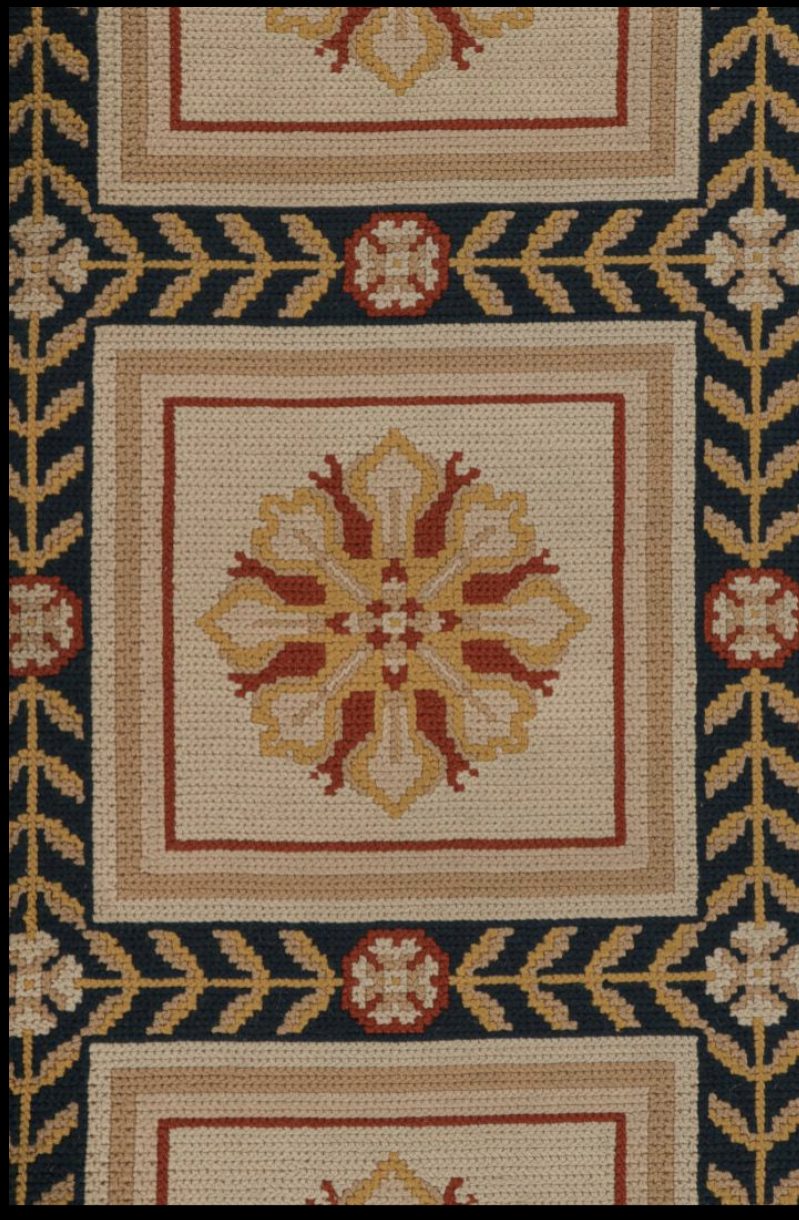
Few design elements are as grand in sensibility and presence in European textile art quite like the medallion. More than a decorative addition, the medallion is a visual and conceptual anchor, a motif that echoes across mediums—from the ceilings of Renaissance palaces to the manuscripts of medieval scriptoriums. It appears in the gilded stuccoes of Baroque cathedrals, in the frescoed vaults of Rome, and in the symmetrical tapestries of Flemish masters.
Within European rug design, the medallion serves as a bridge between the woven and the built environment; an ornate emblem of high art.
To understand the European medallion is to explore its dialogue with architecture, painting, and decorative arts. The arabesques of Savonnerie carpets mirror the aesthetics of Peter Paul Rubens painting; the laurel-framed insignias in English Axminster rugs recall the neoclassical symmetry of a Robert Adam ceiling.
Across centuries, European rug designers borrowed liberally from frescoes, stucco work, and book illustrations, translating these elements into textiles.
Origins and Influences of European Rug Medallions
European rug design does not emerge in isolation. Unlike the allover patterns of Oriental carpets, European rugs—especially those from France, England, and Spain—were deeply tied to architectural ornamentation and the decorative arts.
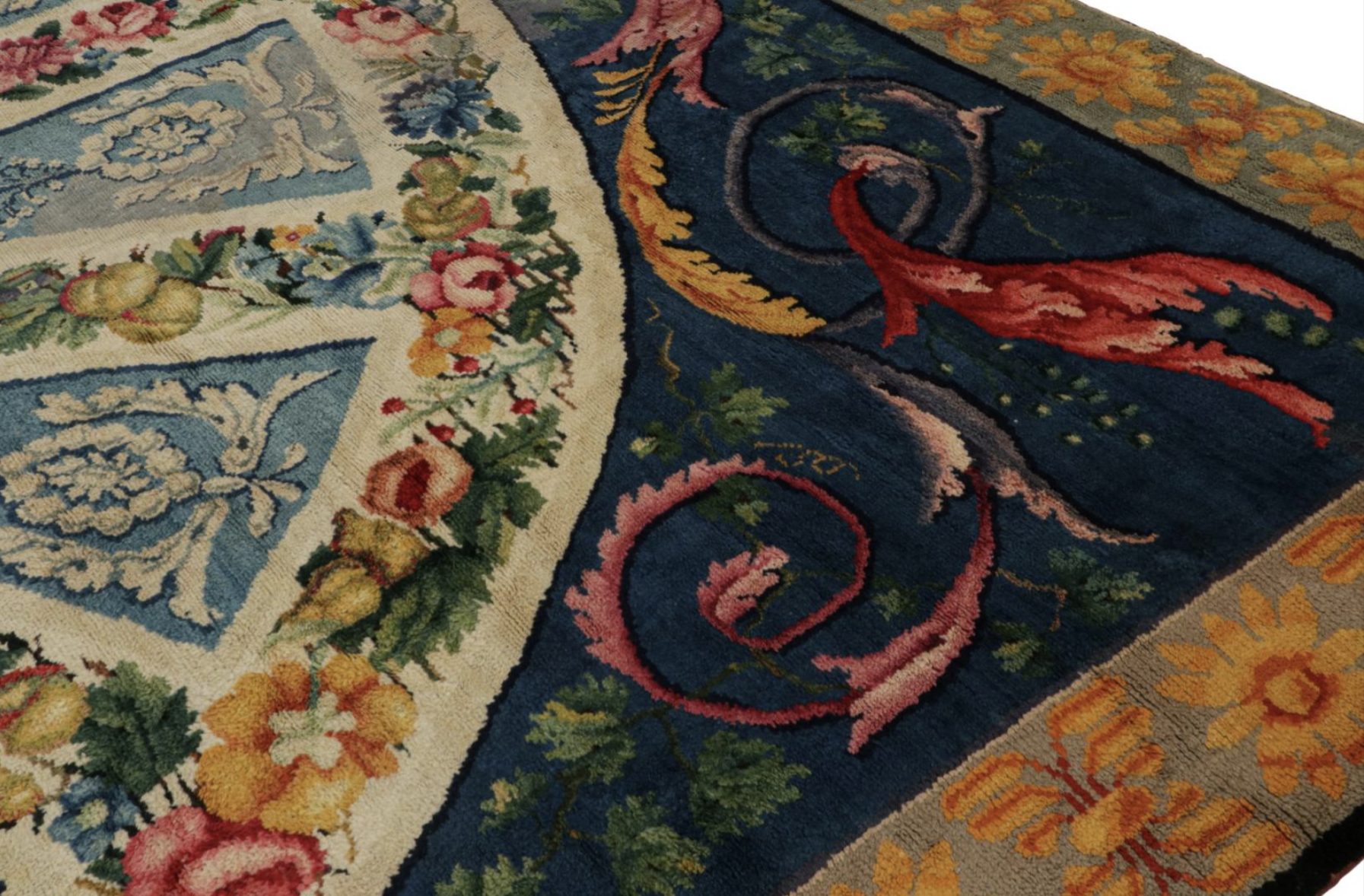
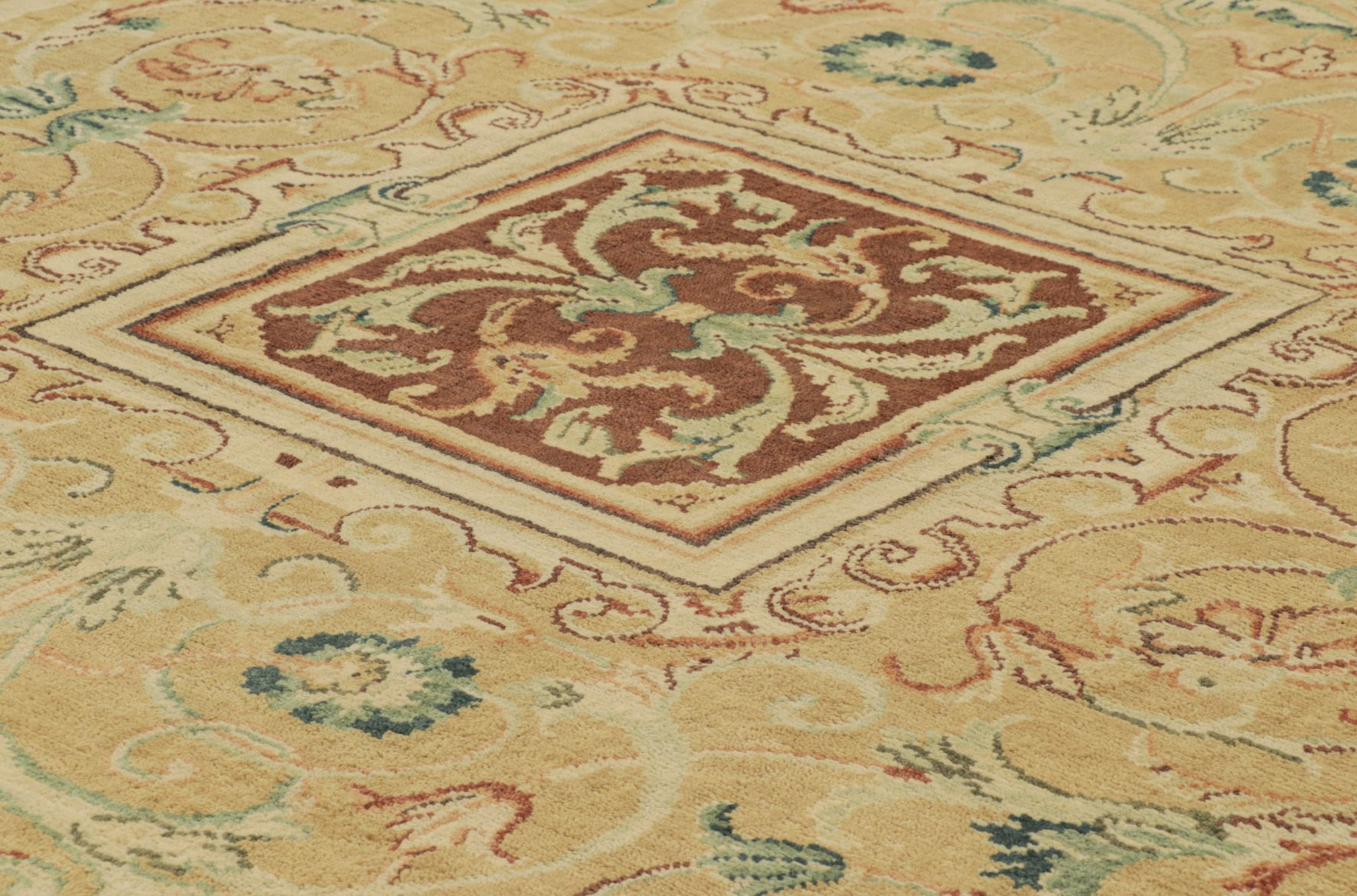
The central medallion, often enclosed within a framework of cartouches and scrolling foliage, finds its parallel in coffered ceilings, stucco reliefs, and even book frontispieces.
The 17th-century Flemish weavers, deeply engaged with the Baroque ethos, integrated elaborate medallions reminiscent of painted ceilings, transforming textiles into spatial illusions.
The Gobelins Manufactory, under the direction of Charles Le Brun, produced carpets that mirrored the grandiosity of Versailles, where gilded cartouches and laurels framed celestial visions on both ceilings and floors.
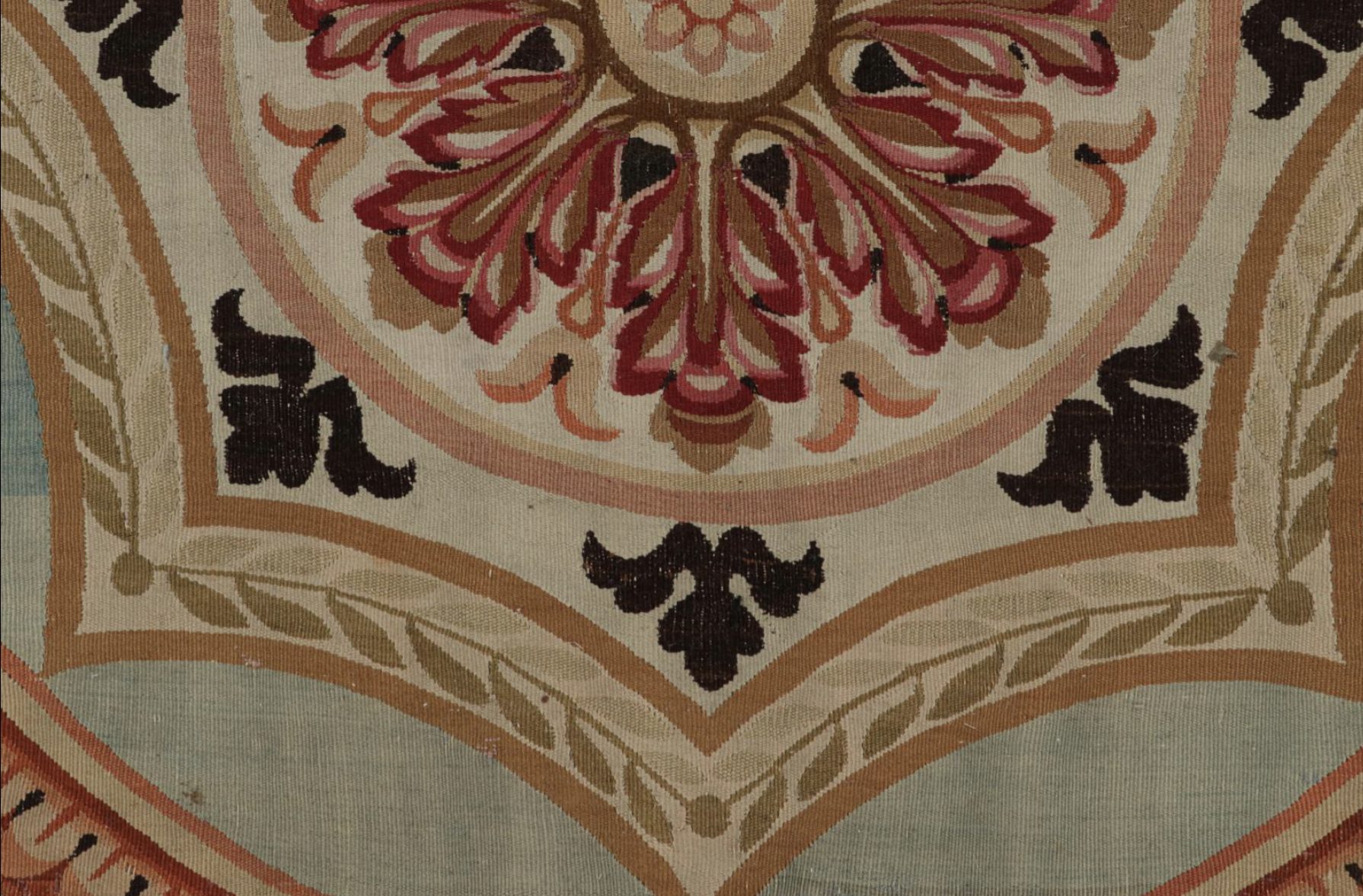
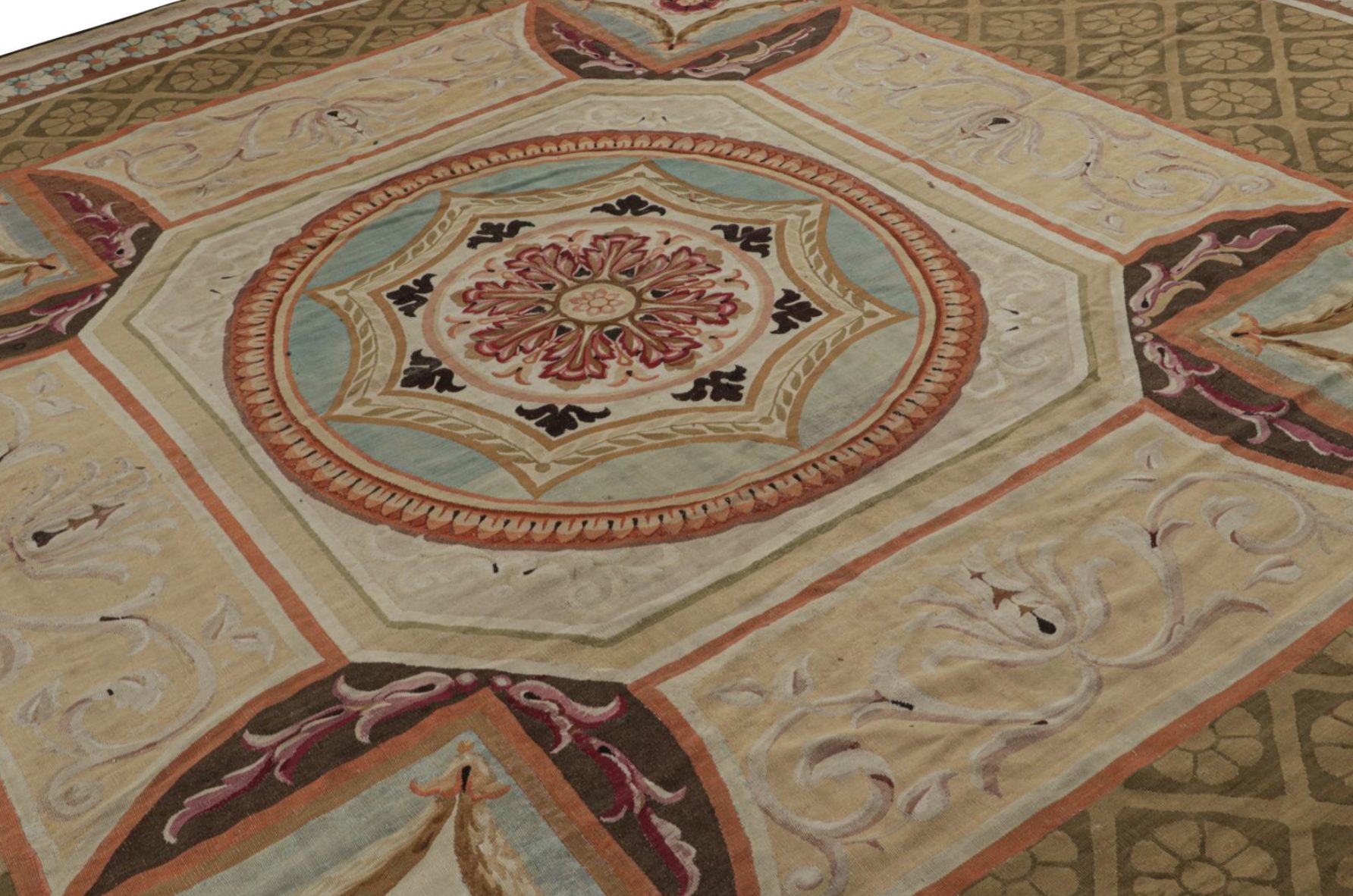
Aubusson rugs, too, drew from the same visual inspirations, favoring architectural formality over the fluidity seen in Persian influences.
Different Styles: Cartouches, Laurels, and Vines
A defining characteristic of European medallions is the use of framing devices—cartouches, laurels, and scrolling vines.
Each of these elements carries a lineage traceable to the broader history of art and ornamentation.
Cartouches: These scrolling, shield-like frames originated in Renaissance painting and were heavily utilized in manuscripts and architectural engravings. They served as a means of containing crests, dedications, or symbolic imagery—functions they carried into woven textiles.
Rugs from Savonnerie and Brussels often incorporate cartouches to emphasize heraldic emblems or narrative scenes, echoing their use in stucco friezes and printed books.
Laurel Wreaths: Classical antiquity’s symbol of triumph, the laurel wreath, found renewed life in the Neoclassical period. Woven rugs from the late 18th century, especially those commissioned by European courts, frequently employ laurel motifs as framing devices, evoking imperial grandeur akin to Jacques-Louis David’s Napoleonic portraits. In textiles, these wreaths become interlocking borders or focal embellishments, reinforcing a sense of regality and order.
Scrolling Vines: A motif as ancient as textile weaving itself, scrolling vines in European carpets often take on a more sculptural, gilded quality, particularly in Rococo designs. Inspired by botanical studies and the curvilinear forms of Baroque metalwork, these vines introduce movement and dynamism into an otherwise rigid framework.
The influence of ornamental prints by Jean Bérain and the grotesque arabesques of Renaissance frescoes can be seen in the sinuous, interlacing forms of European rug borders.
European Rug Medallions as Markers of Power and Taste
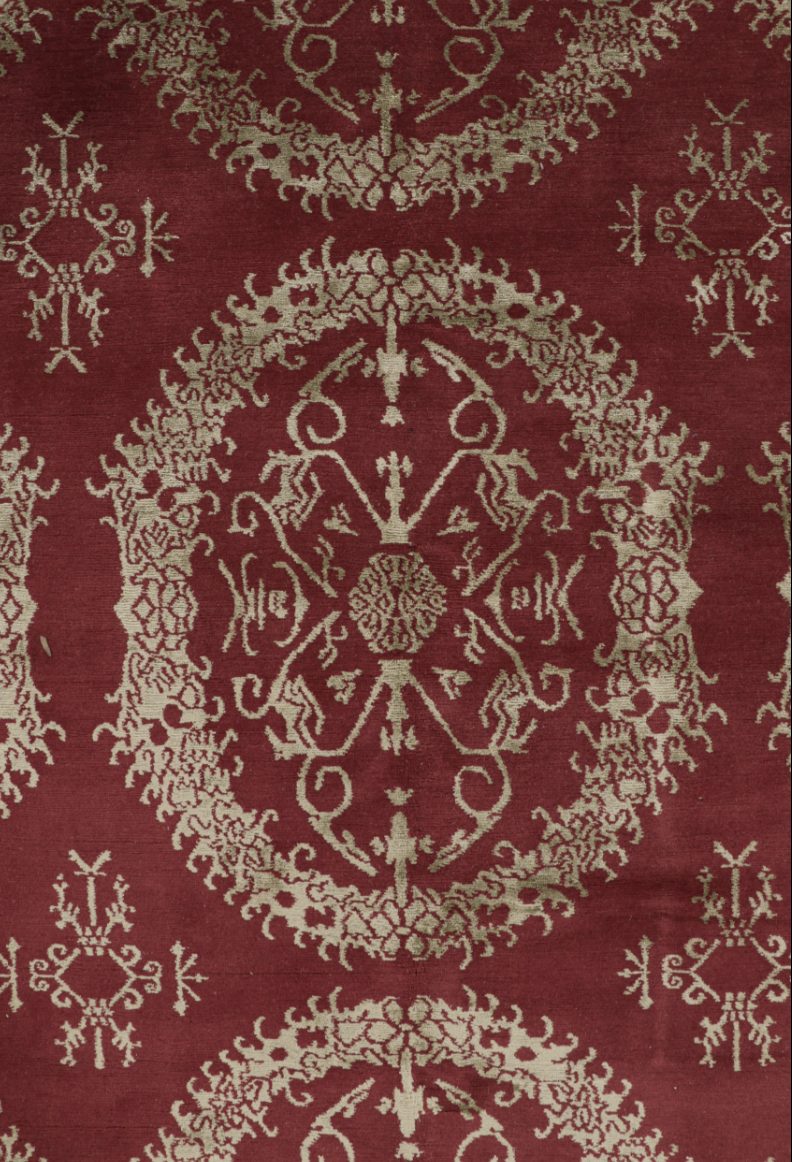
The presence of a medallion in a European rug is not incidental. It reflects a connoisseurship shaped by the prevailing art and political climates. The Sun King’s Savonnerie commissions, for example, were emblematic of absolutist power, their medallions often featuring sunbursts—a direct reference to Louis XIV’s personal insignia.
Similarly, English Axminster carpets of the late 18th century, produced under the patronage of aristocrats, exhibited medallions echoing Palladian ceilings and the symmetrical elegance of Robert Adam’s interiors.
Medallions also held practical functions. They structured the composition of large-scale carpets, providing a visual anchor in expansive interiors. This is evident in grand halls where tapestries and rugs worked in tandem to create a cohesive decorative scheme.
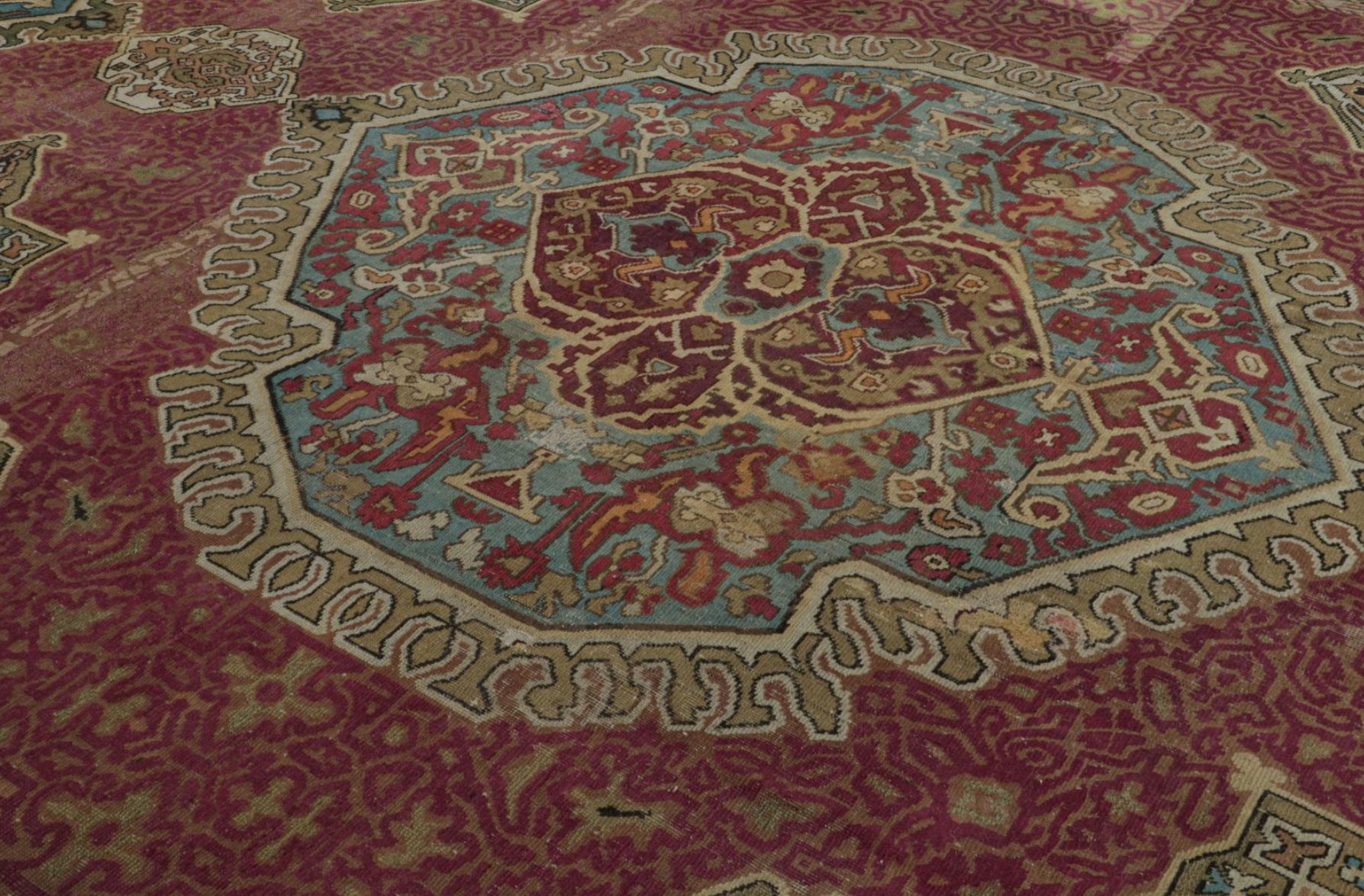
Even in the ecclesiastical settings of Spain’s Alcaraz carpets, medallions reinforced a sense of sacred geometry, resonating with the geometric complexities of Islamic art while adhering to Christian iconography.
The Evolution and Revival of European Medallion Design
As European aesthetics shifted from Baroque to Neoclassical restraint, so too did the treatment of the medallion. The 19th century saw a decline in traditional European weaving centers, but the influence of their designs persisted. The Arts and Crafts movement, with figures such as William Morris, sought to reintroduce handwoven integrity into European textiles, though with a departure from formalized medallions.
Instead, Morris and his contemporaries favored repeating patterns that echoed medieval traditions over the hierarchical structure of a single dominant motif.
By the early 20th century, the European medallion had transformed yet again, finding itself reinterpreted in Art Deco rugs that reduced ornamentation to its geometric essence.
Today, contemporary designers revisit these historical motifs, distilling them into abstracted forms that pay homage to their classical predecessors.
Whether in a 17th-century Savonnerie masterpiece or a modernist reinterpretation, the medallion endures—not as a relic of the past, but as a continued dialogue between textile art and the broader decorative arts.
It is a motif that bridges disciplines, borrowing from architecture, painting, and even literature.
More than mere decoration, the medallion is a narrative form—an emblem of its era, its patron, and its place within the evolving European design.