
A Profile on Erté known as the “Father of Art Deco”
April 5, 2024
A Brief Guide to Aubusson Tapestries
April 8, 2024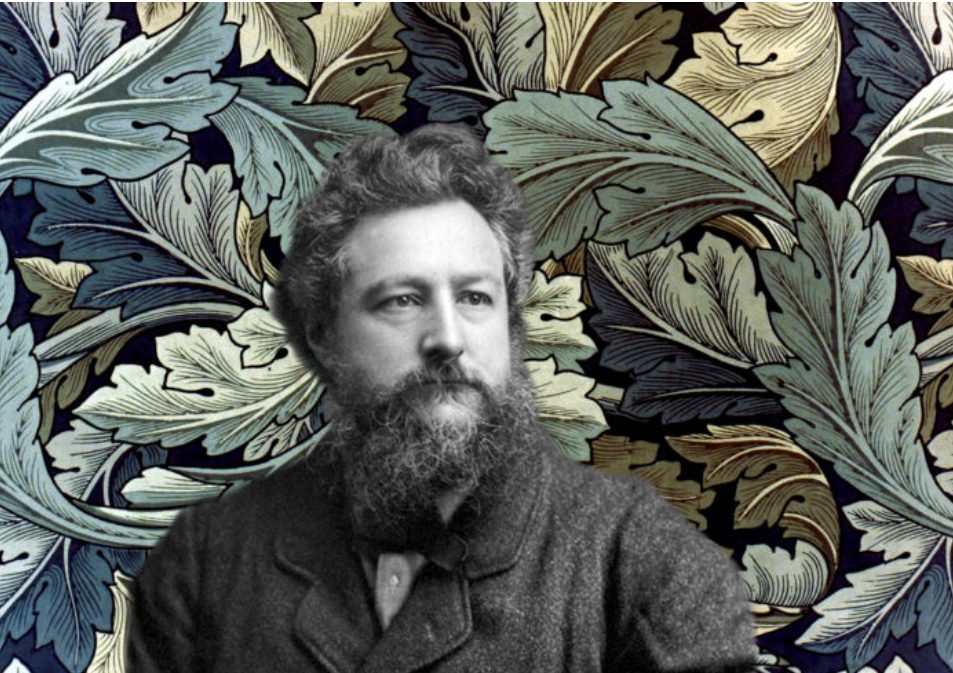
Image: Grapheine
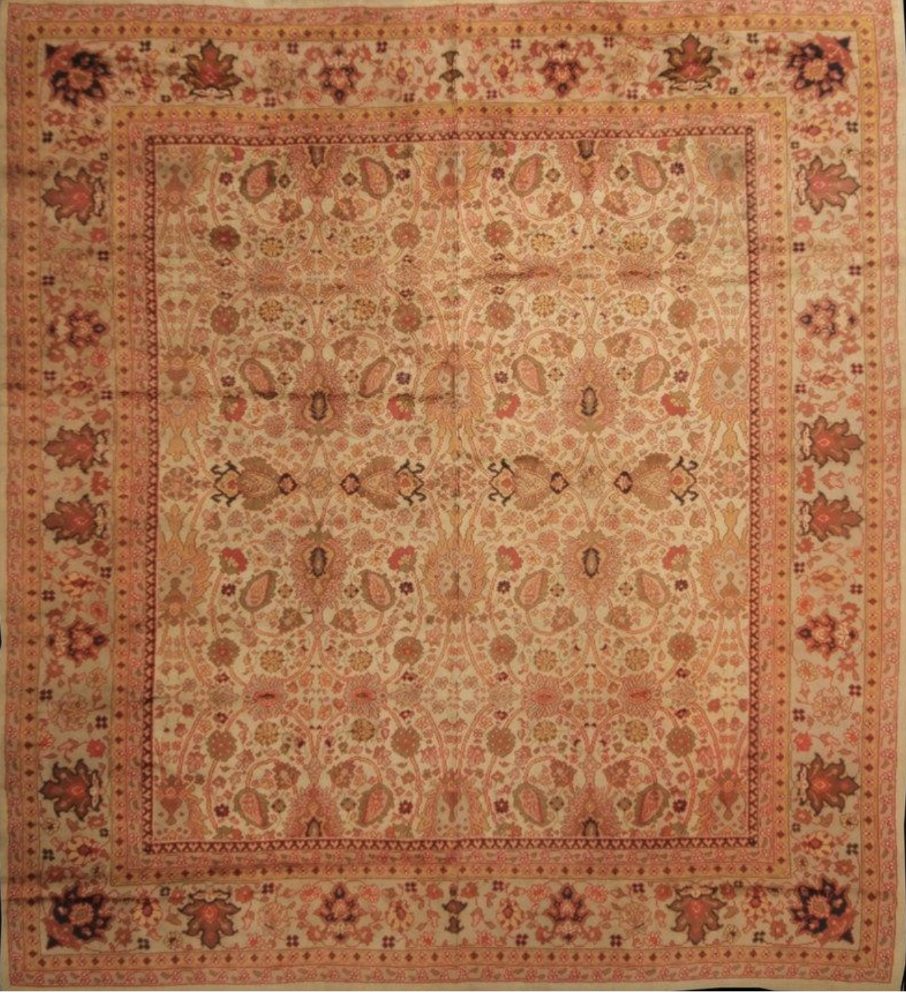
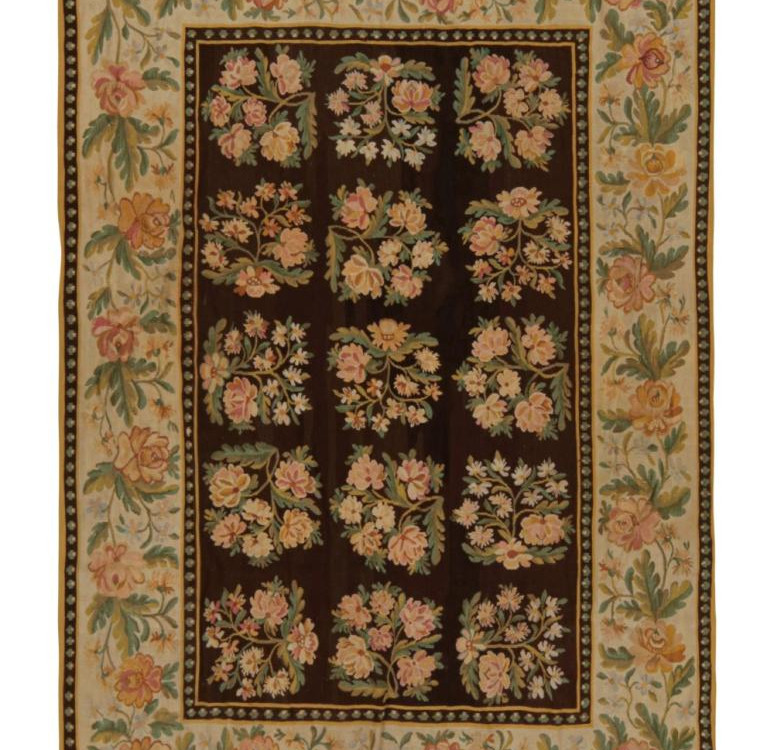
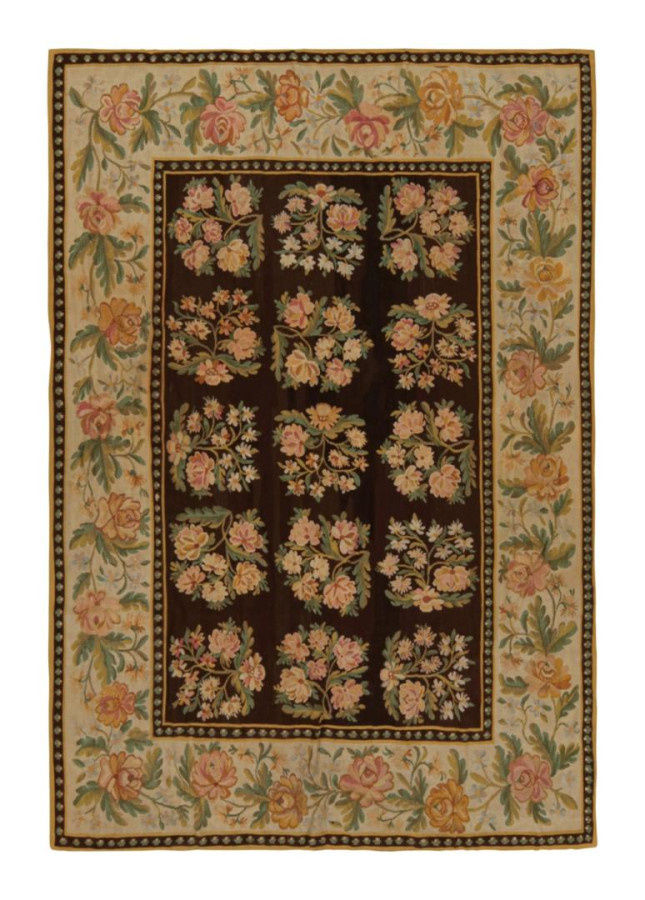
Above is our rare Antique Arts & Crafts William Morris Beige Brown And Pink Wool Floral Rug, SKU 12413, reflecting Morris’s unique design aesthetic known for their distinctive stylized natural forms, exquisite symmetry, and vibrant colors. Rooted in a deep appreciation for the beauty of the natural world, his patterns draw inspiration from a rich array of flora, including thistles, ginkgo leaves, willow trees, and various flowers. The intricate designs reflect Morris’s commitment to celebrating the inherent elegance found in the organic shapes and symmetries present in nature.
Referring to tapestries as “the noblest of weaving arts”, he was a central figure in the Arts and Crafts Movement, and his tapestries played a significant role in promoting the ideals of the movement.
Victoria and Albert Museum
William Morris, a multifaceted individual known for his artistic, literary, and social endeavors, made a lasting impact on the Arts and Crafts Movement and the decorative arts. Born in 1834, Morris established the ‘Oxford and Cambridge Magazine’ in 1856, where he articulated his ideas on craftsmanship and the decorative arts. A key figure in the Pre-Raphaelite Brotherhood and the Arts and Crafts Movement, Morris co-founded the design firm Morris & Co in 1861 with Dante Gabriel Rossetti and Edward Burne-Jones. Renowned for his textile and wallpaper designs inspired by nature, Morris prioritized traditional hand-crafting methods over modern techniques. Rejecting roller printing in favor of woodblock printing, he meticulously designed and cut blocks himself. Morris delved into perfecting traditional dye methods at the Staffordshire Dye Works, focusing on wool, silk, and cotton. From 1877 to 1878, he immersed himself in the intricacies of double-woven furnishing fabrics, consistently aiming for textiles of the highest quality using traditional techniques.
morrisandco
morrisandco
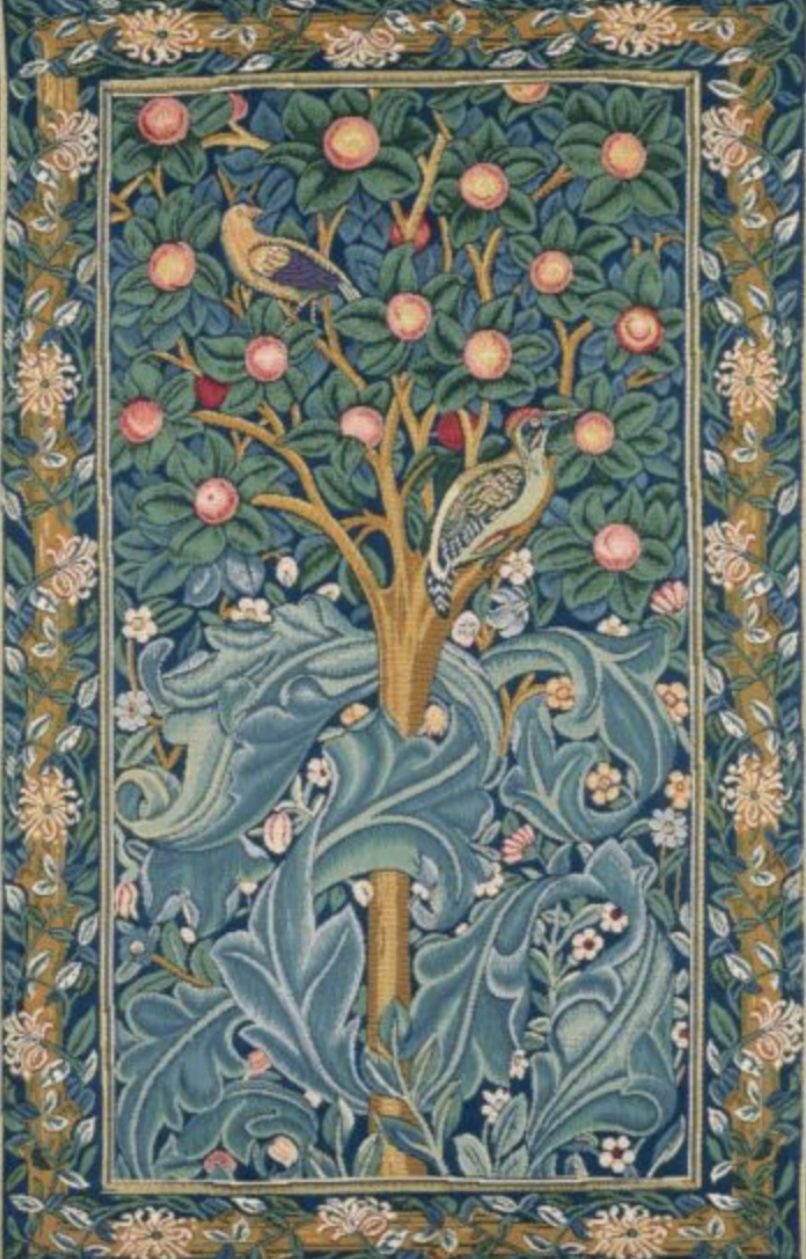
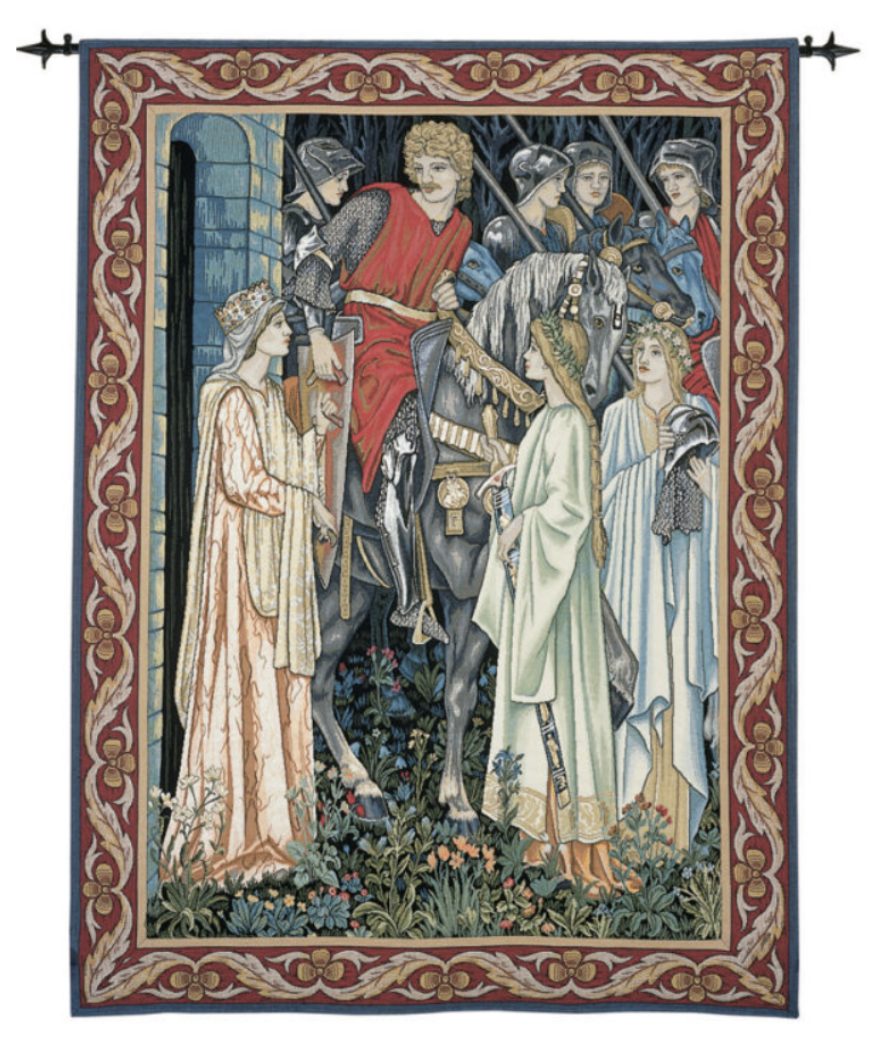
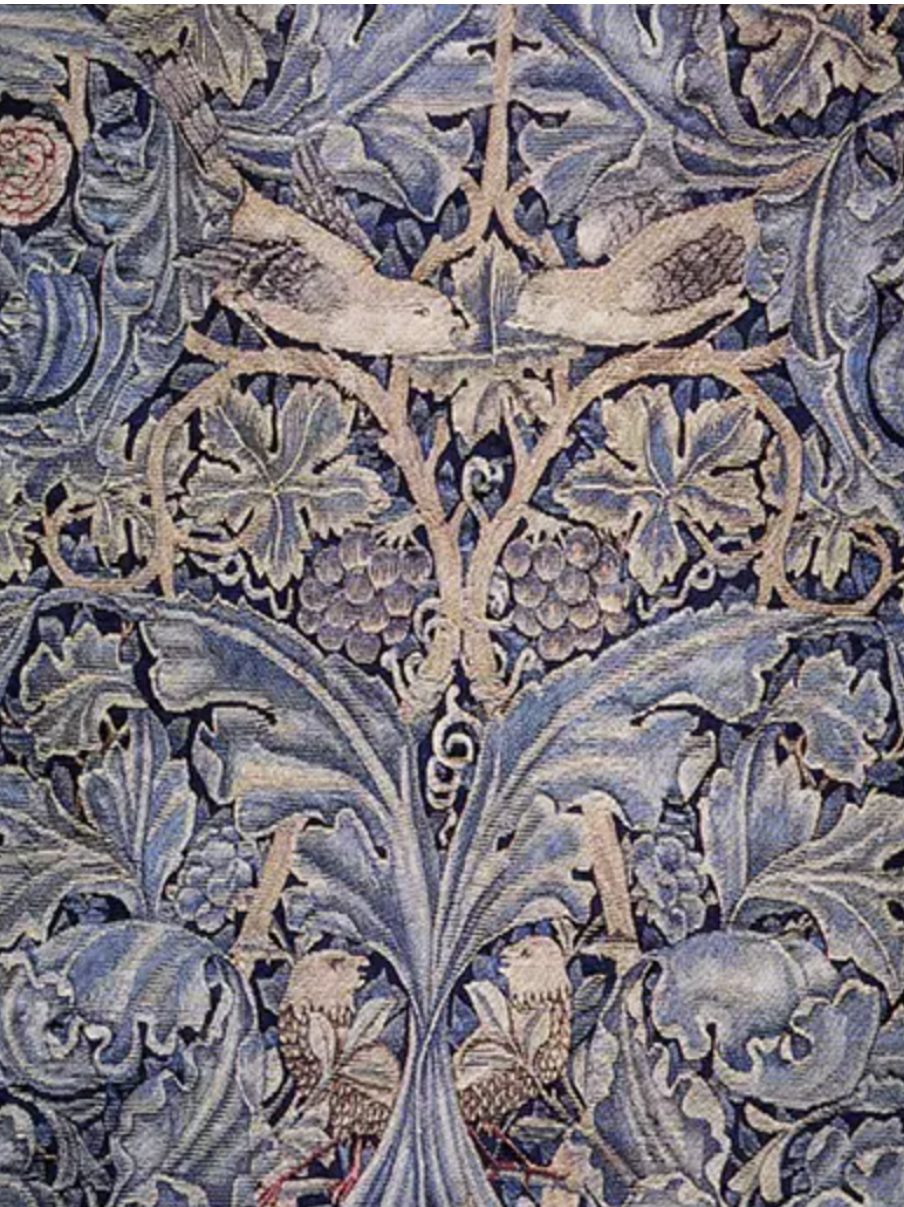
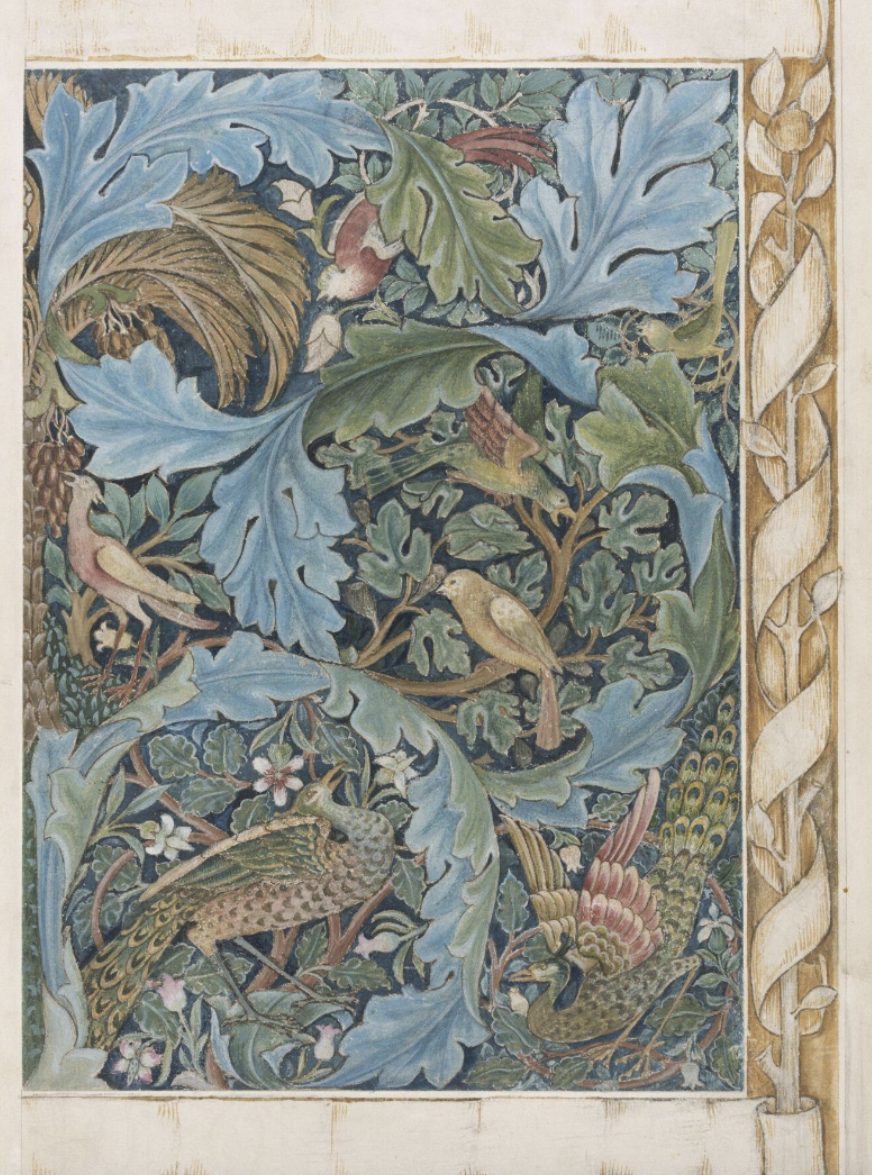
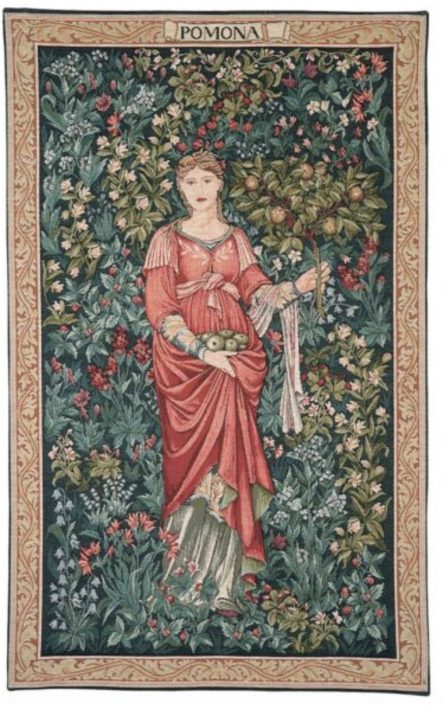
Morris, recognizing tapestry as the “noblest of the weaving arts” fulfilled his aspiration with Morris & Co’s inaugural tapestry in 1879 – the Acanthus and Vine tapestry, fondly dubbed ‘The Cabbage and Vine.’ Inspired by Flemish verdure tapestries from the 16th and 17th centuries, Morris spent over five hundred hours on a vertical loom using a cotton warp and wool and silk yarns. Self-taught in medieval weaving techniques from a 14th-century French manual, Morris created the iconic The Woodpecker Tapestry six years later, standing at 10 feet by 5 feet. This, along with The Tree of Life Tapestry, featuring Morris’s verse and imagery, became highly popular. Morris collaborated closely with Edward Burne-Jones, their synergy evident in designs like Flora and Pomona, now exhibited at the Whitworth Art Gallery, Manchester. The Forest Tapestry, commissioned for a London residence, showcased swirling acanthus leaves and animal figures. Another notable collaboration produced the ‘Quest for the Holy Grail’ series, designed by Burne-Jones, Dearle, and Morris, depicting the legendary Arthurian tale. Commissioned by William Knox D’Arcy, these tapestries were woven at the Merton Abbey workshop.
morrisandco
morrisandco
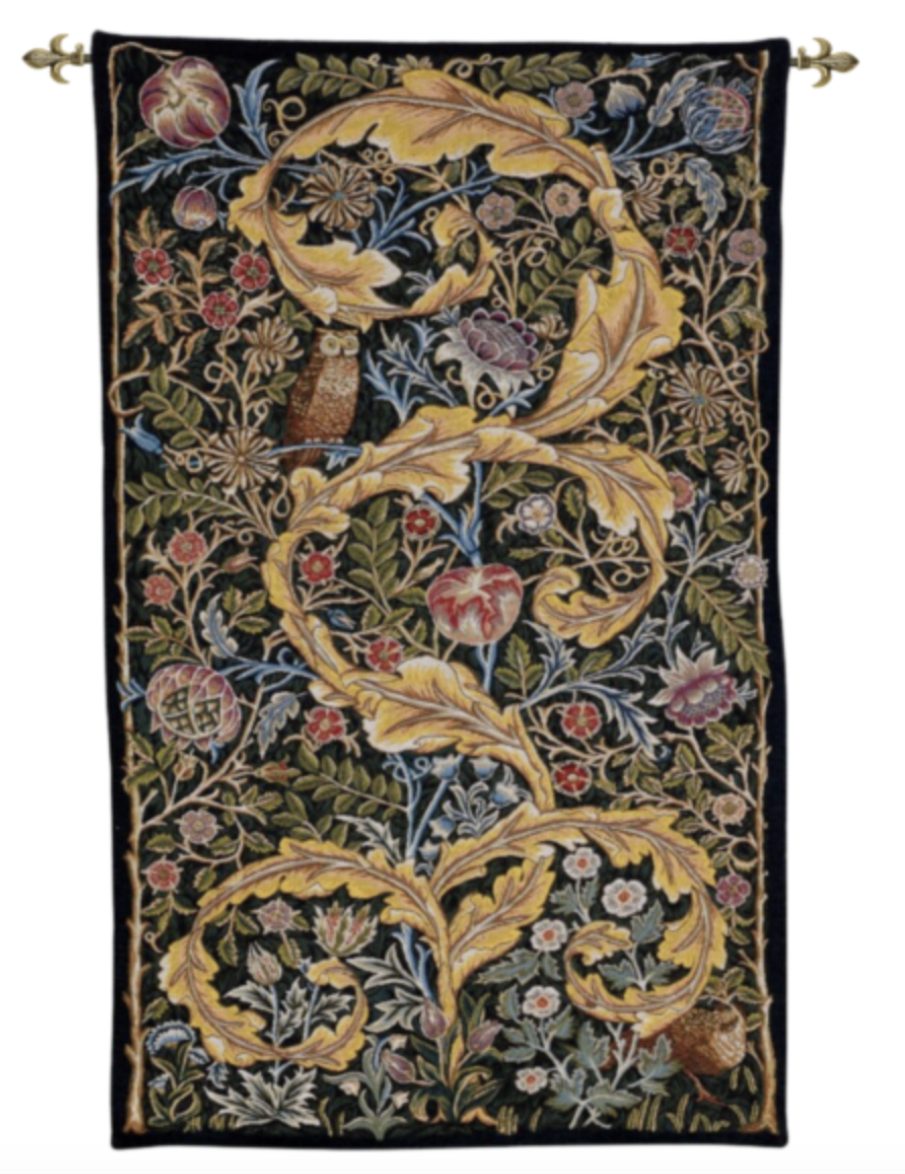
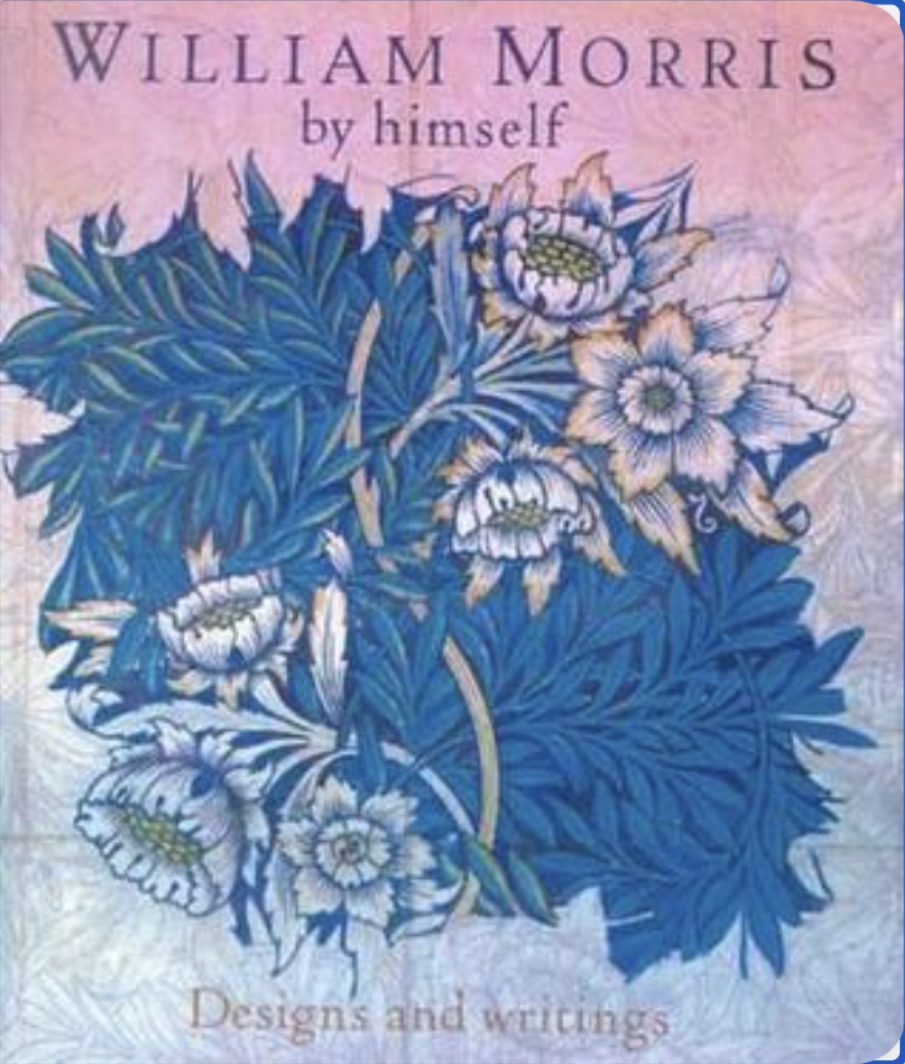
Morris’s tapestries were characterized by intricate patterns, medieval-inspired designs, and a commitment to quality craftsmanship. The firm, Morris & Co., employed skilled weavers, dyers, and designers to create a wide range of textiles, including carpets, upholstery, and wall hangings. The designs often drew inspiration from nature, mythology, and medieval literature. The Morris & Co. tapestries were highly sought after for interior decoration during the late 19th and early 20th centuries. The firm’s influence extended beyond textiles to other aspects of interior design, contributing to the overall aesthetic of the Arts and Crafts Movement. William Morris is the most influential British designer of the last 100 years and this collection titled “William Morris by himself” combines Morris’s writings with his famous designs for wallpaper, fabrics, tapestries, embroideries, carpets, books and stained glass.
morrisandco
morrisandco
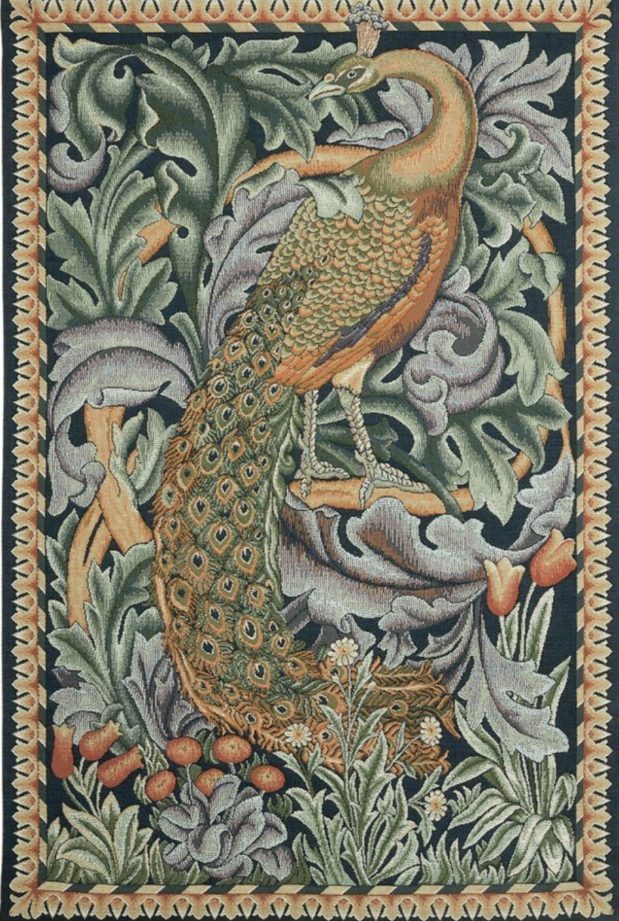
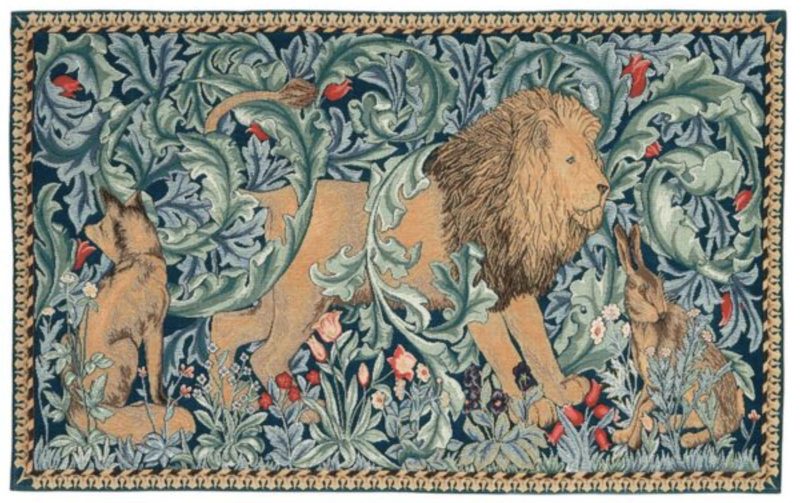
The intricate design featuring a peacock, showcased in The Forest Tapestry, exemplifies the collaborative genius of William Morris and his associates. Philip Webb contributed the peacock design based on delightful drawings, seamlessly integrated by Morris into a background of swirling acanthus leaves reminiscent of his earlier work, Vine and Acanthus (1879). The foreground details were masterfully added by J. H. Dearle. William Morris, renowned for his decorative arts designs and commitment to crafts, particularly tapestry-weaving, championed Medievalism and revived craftsmanship methods. Advocating for the use of vegetable dyes, Morris created a distinctive palette. Woven around 1887 by Morris and Company at the Merton Abbey Workshops in Surrey, this design was exhibited at the 1890 Arts and Crafts Exhibition.
morrisandco
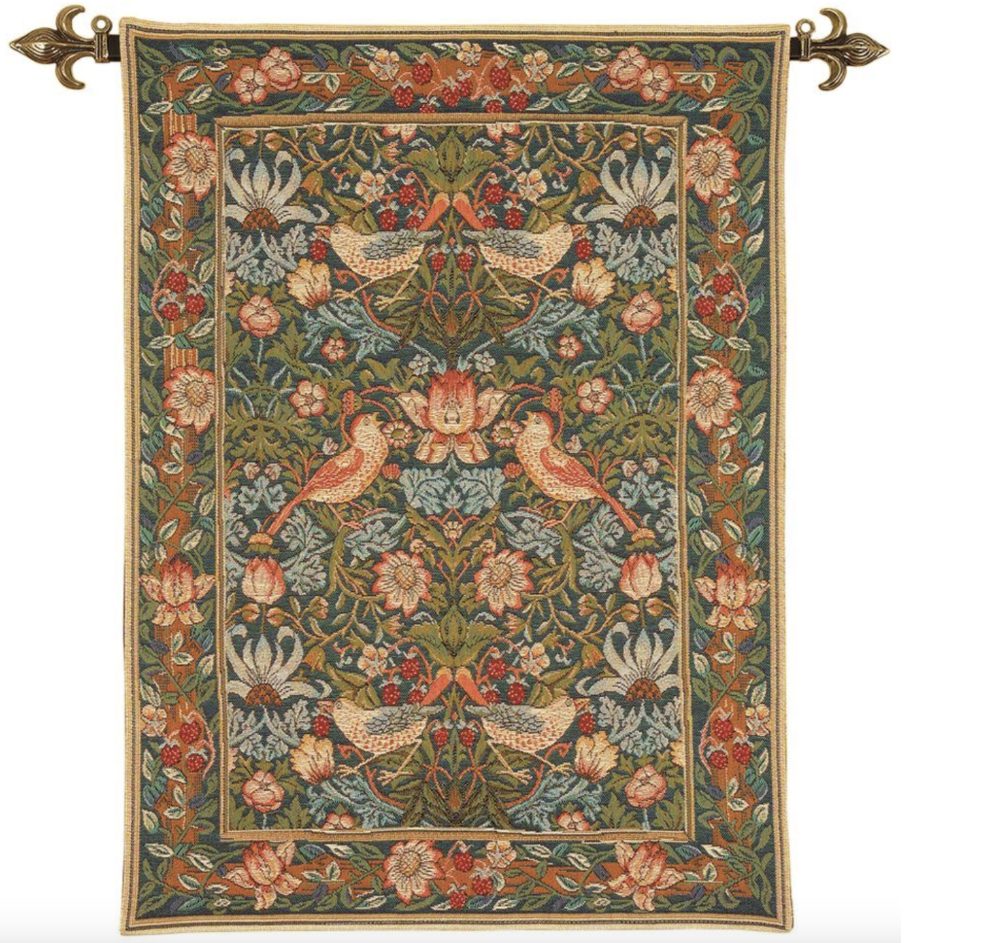
Crafted by Morris & Co at Merton Abbey, Surrey, in 1883, this exquisite tapestry design again reflects the collaborative artistry of William Morris and Philip Webb, who likely contributed to the intricate depiction of birds. Woven on a jacquard loom by skilled artisans, this tapestry not only embodies the timeless tradition of tapestry manufacturing but also serves as a testament to Morris’s commitment to preserving and revitalizing centuries-old craftsmanship for future generations.
morrisandco
“The Forest Tapestry” stands as one of William Morris’s exemplary collaborative works, showcasing his adept coordination of diverse talents within his artistic circle. Philip Webb contributed the designs for the animals, drawn from a delightful series of sketches, which Morris seamlessly integrated into a backdrop of swirling acanthus leaves reminiscent of his earlier tapestry, “Vine and Acanthus” (1879). The meticulous foreground details were then added by J. H. Dearle, highlighting the synergy and artistic harmony achieved by Morris and his associates in crafting this masterful tapestry.
morrisandco
The central figure, named Pomona, is portrayed within a blooming field, cradling a small branch and gathering a lap full of apples within her tunic. Woven around 1890, the original tapestry measures 310 x 200cm (102 x 66), and its vibrant depiction of Pomona symbolizes the seasonal abundance and natural beauty associated with autumn.
morrisandco
View Rug & Kilim’s Tapestry collection here – https://rugandkilim.com/shop/?s=tapestry