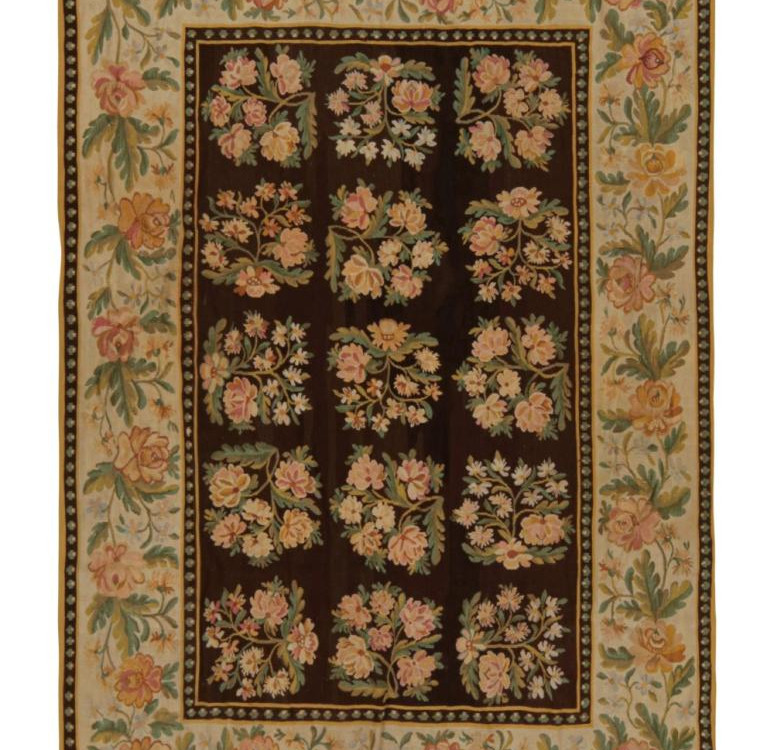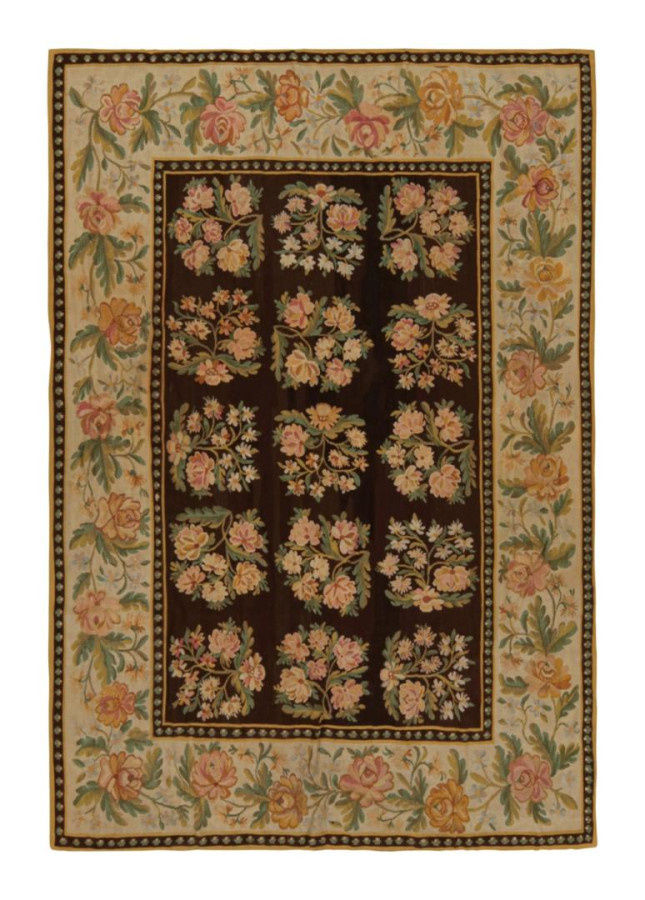

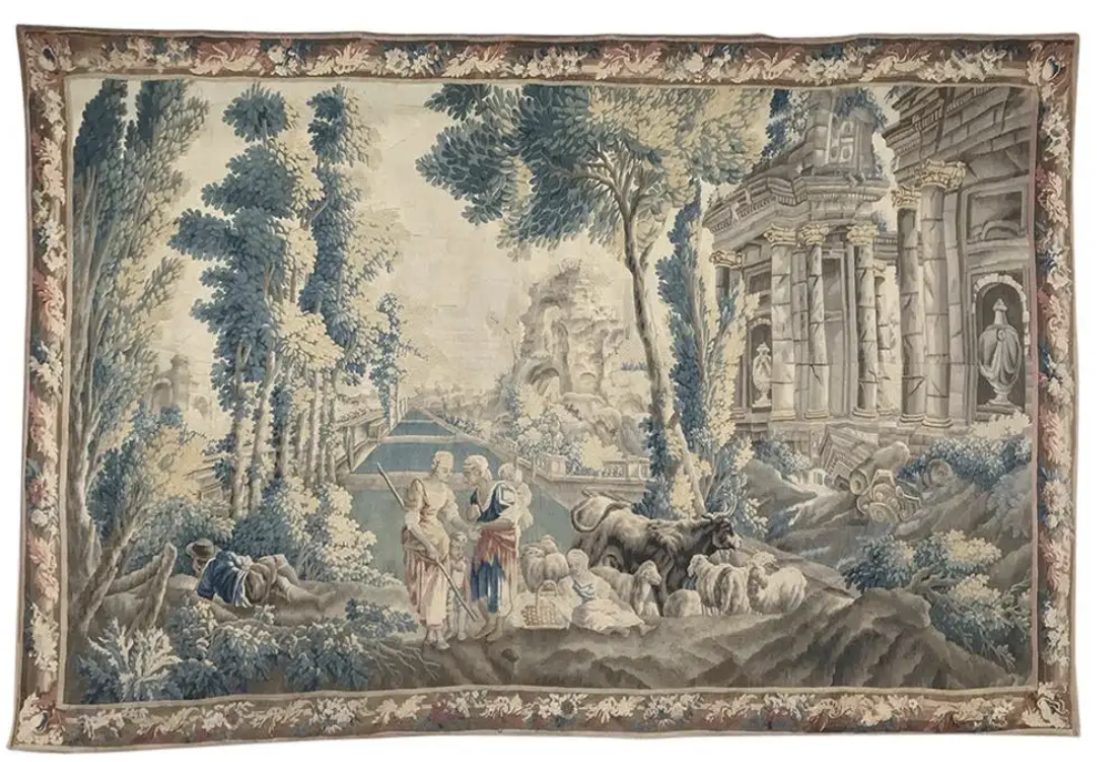
A Profile on Oudenaarde Tapestries
May 8, 2024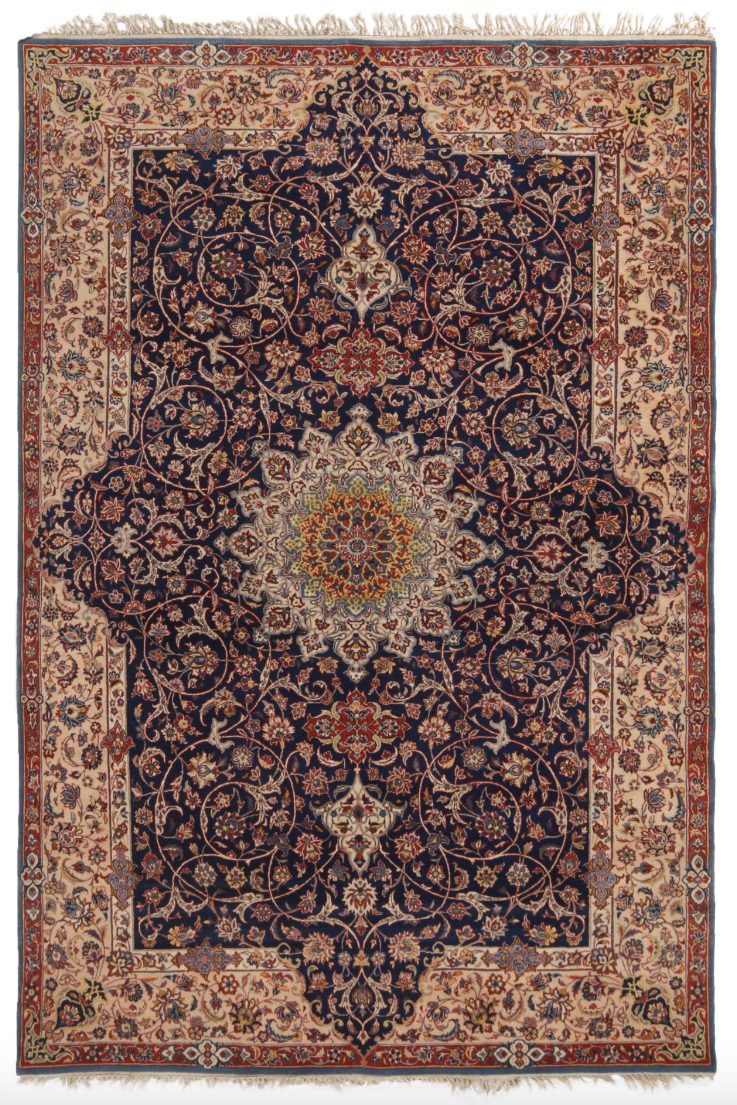
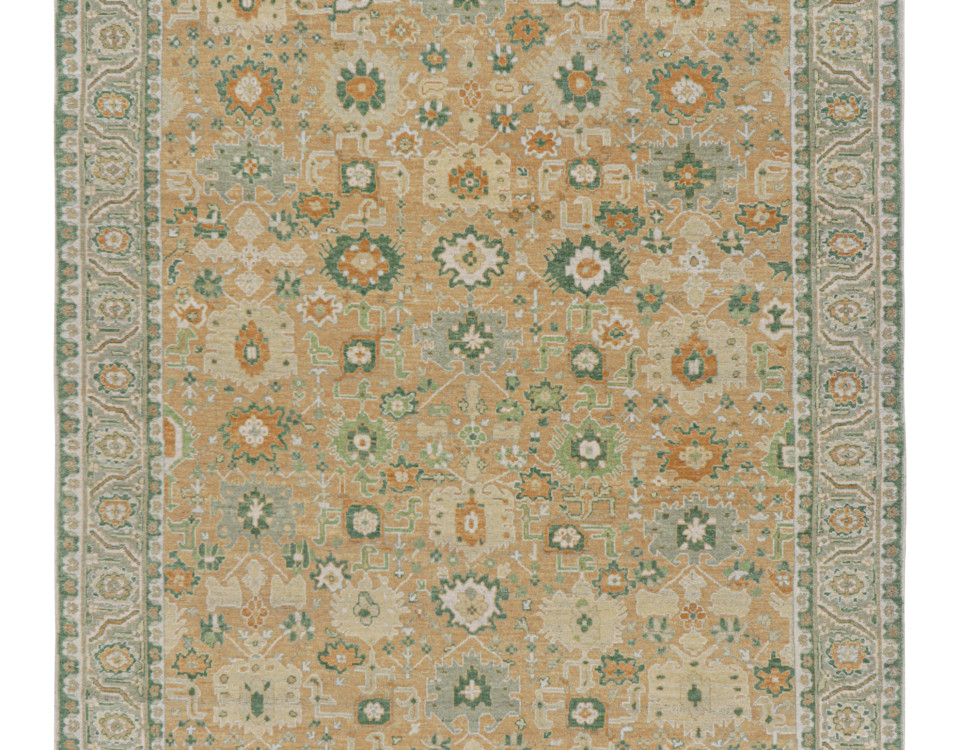
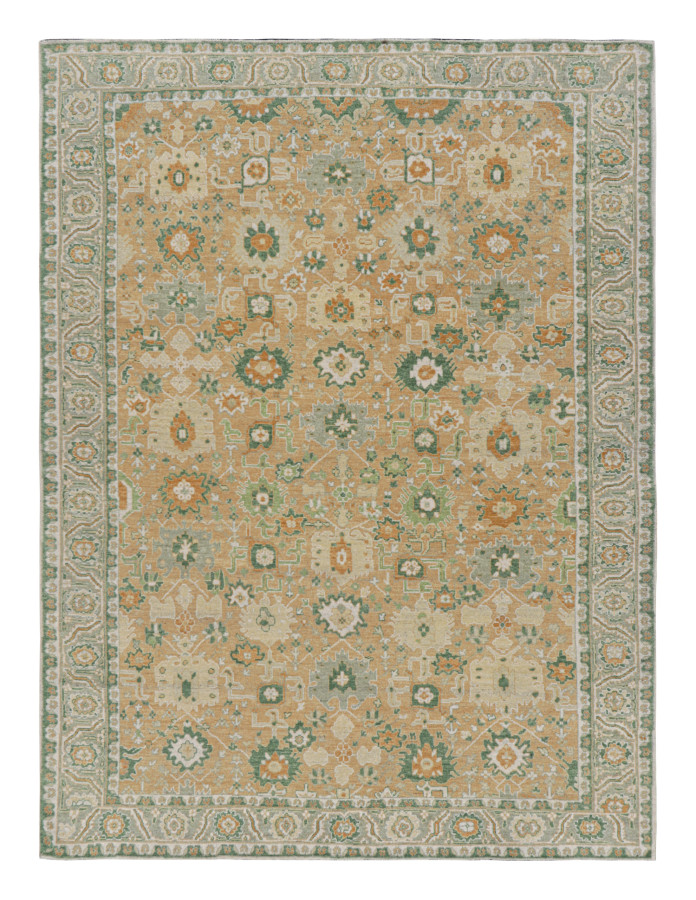
A Guide to Antique Isfahan Rugs
May 8, 2024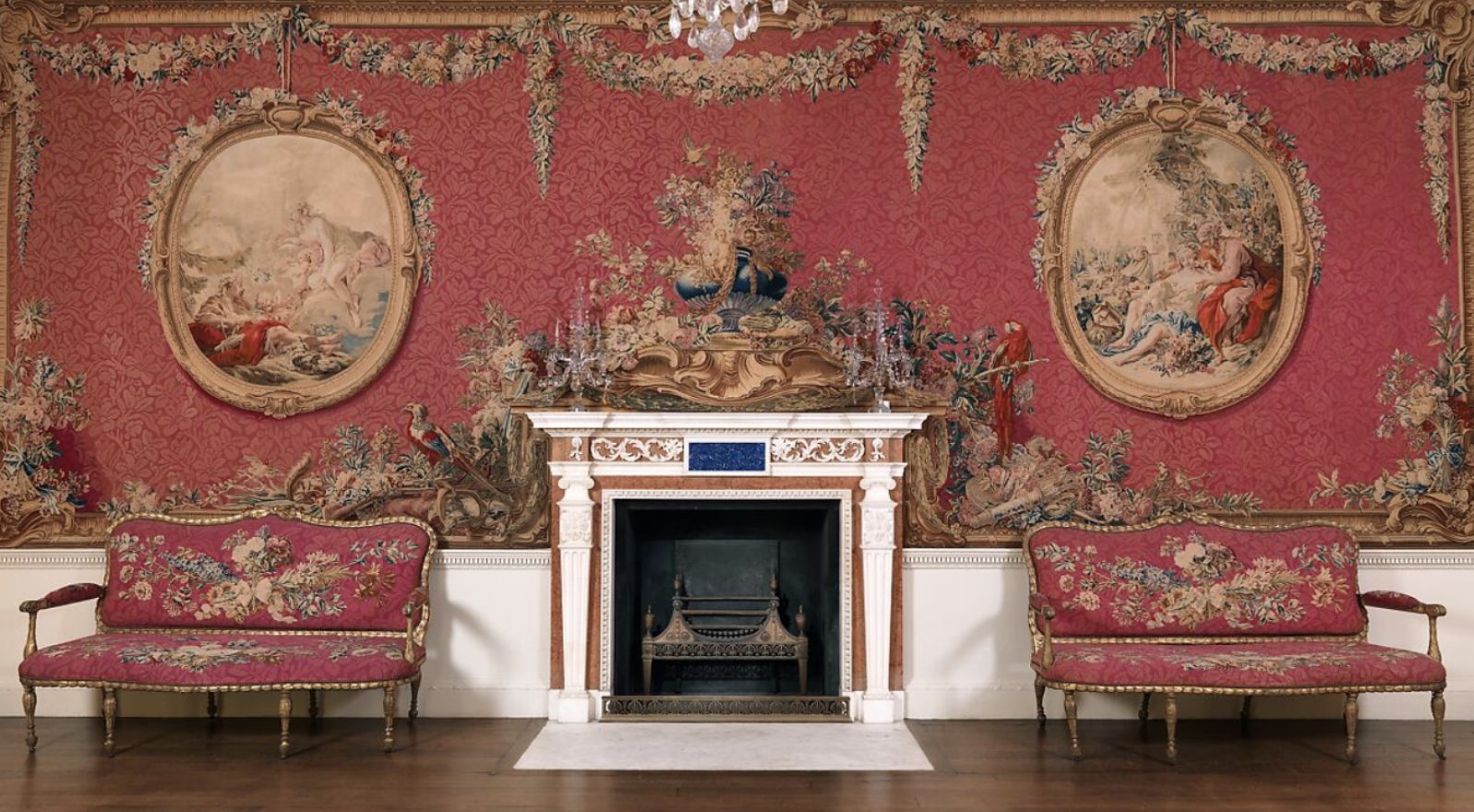
The room, designed in 1763, showcases Robert Adam’s dynamic early style with ornamental wheel molding and garlanded trophies. In the same year, the sixth earl of Coventry commissioned tapestry hangings from Jacques Neilson’s workshop at the Royal Gobelins Manufactory in Paris. These tapestries depict scenes from classical myths symbolizing the elements, featuring medallions based on designs by François Boucher. Additionally, the gilded frames of the seat furniture were crafted in London by cabinetmakers John Mayhew and William Ince in 1769, while the tapestry covers were executed at the Gobelins factory, creating a harmonious and luxurious interior ensemble.
François Boucher’s influence on the Rococo style and its spread across Europe is unparalleled among artists of his time. His extensive work in various mediums and genres, coupled with his skill in marketing and providing designs for decorative arts like porcelain and tapestry, solidified his reputation as one of the most prolific artists of the era. Boucher’s signature painterly surface and use of a vibrant palette, particularly blues and pinks, perfectly suited the Rococo aesthetic and adorned many interiors of the period. However, as the Rococo style fell out of favor, Boucher faced criticism, notably from Denis Diderot, who remarked on his ability to create everything except truth, highlighting the debate over Boucher’s artistic merits.
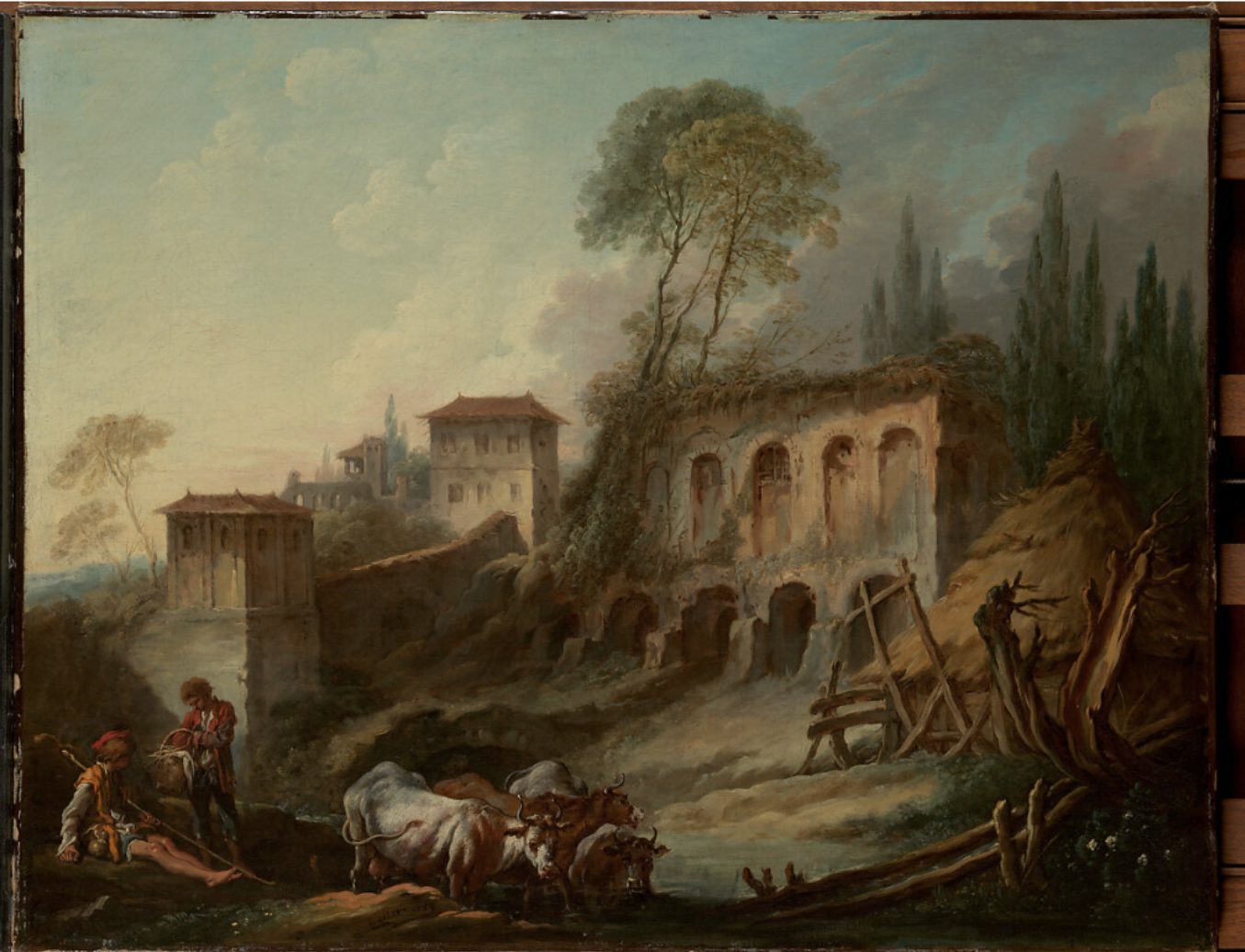
Boucher was a renowned artist of the 18th century, known for his elegant and sensual paintings depicting classical themes, allegories, and pastoral scenes. His work, characterized by its idyllic charm and decorative flair, played a significant role in defining the French Rococo style. Boucher’s association with his patron Madame de Pompadour further solidified his reputation as a leading figure of his time, with his name becoming synonymous with the artistic taste of the era. Boucher also played a mentorship role, imparting his knowledge to artists such as Jacques Guay, Martin Ferdinand Quadal, and Jacques-Louis David, contributing to the development of artistic talent in his milieu. His collaboration with Guay in creating engraved drawings further demonstrates his multifaceted talent and influence in the art world of his time.
François Boucher’s art was influenced by renowned artists like Peter Paul Rubens and Antoine Watteau. While his early works celebrated nature’s tranquility, his style evolved to portray scenes with a distinct eroticism, especially in mythological settings that were passionately intimate rather than grandly epic. Examples include his paintings like The Enjoyable Lesson and An Autumn Pastoral, which depicted flirtatious interactions in pastoral settings. His close friendship with Charles-Simon Favart inspired characters in these paintings, later recreated as figurines by the Sèvres Porcelain Manufactory. Marquise de Pompadour, a key figure in Rococo art, admired Boucher’s work, and his portraits contributed significantly to her public image. Boucher’s talent extended to genre scenes, where he depicted familial intimacy in works like The Breakfast, using his own family as models. However, his provocative Odalisque portraits, particularly the dark-haired version, drew criticism from art critics like Denis Diderot, who accused him of sensationalism. Despite controversies, Boucher’s private commissions for affluent patrons cemented his reputation as a master of Rococo art, although he faced increasing criticism towards the end of his career.
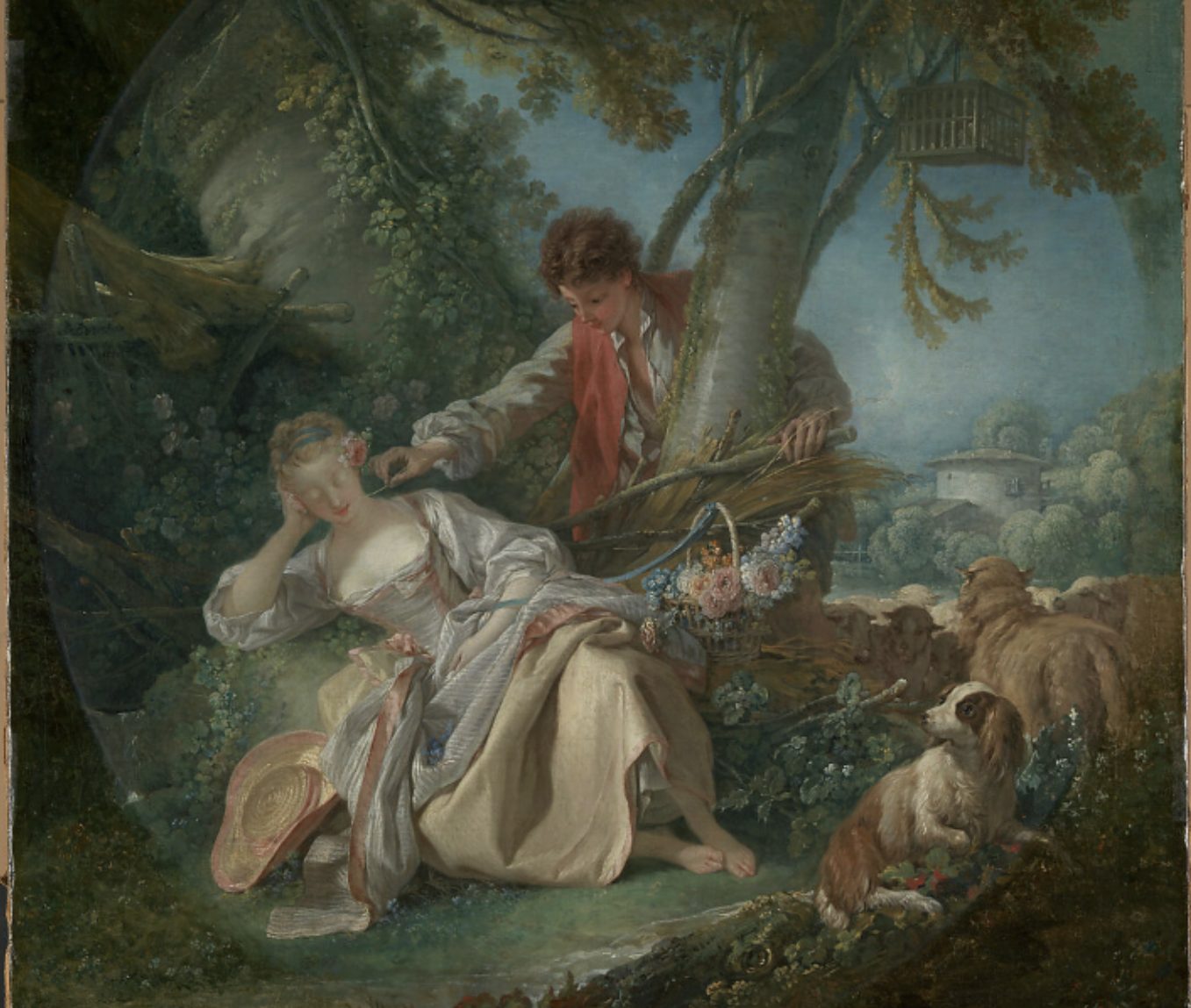
In addition to his painting, Boucher was highly involved in various artistic endeavors, including theater costume and set design. His style in comic operas closely mirrored his painting style, particularly in works by Charles Simon Favart. Boucher also delved into tapestry design, creating successful series like the “Italian festivals” and the story of Cupid and Psyche for the Beauvais tapestry workshops. Over two decades, he contributed to six series of tapestries, showcasing his versatility in design. Boucher’s talents extended to court festivities, opera productions, and royal châteaux like Versailles, Fontainebleau, and Choisy, where his designs adorned various settings. His work was widely reproduced through engravings, porcelain, and biscuit-ware at prestigious factories like Vincennes and Sèvres, solidifying his reputation as a versatile and influential artist. His collaboration with the Gobelins continued until 1765, demonstrating his enduring impact on the artistic landscape of his time.
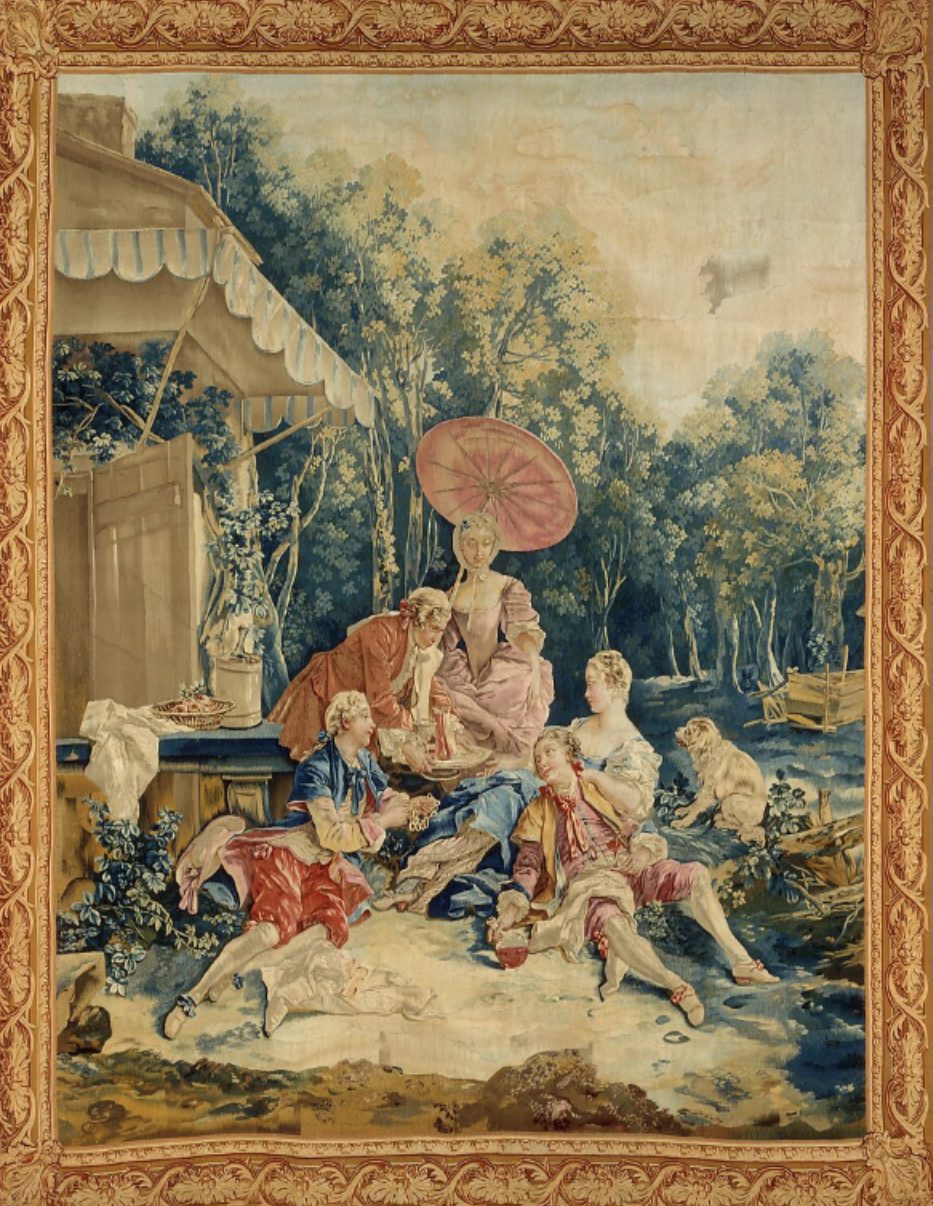
His talent extended to tapestry design with the Beauvais manufactory producing successful series based on his designs, such as the Fêtes Italiennes series. In 1755, he became the head of the royal tapestry manufactory at Gobelins, where he continued to collaborate on successful tapestry series, including those produced for Croome Court. Boucher’s ability to harmonize diverse sources into a unified aesthetic was remarkable, yet this very skill became a point of criticism as Neoclassicism rose in prominence, marking the decline of the Rococo style in the late eighteenth century.
Boucher’s impact on the decorative arts during the Rococo period was immense and far-reaching, both in France and across Europe. While he personally etched a relatively small number of plates, around three dozen, his paintings and drawings were widely reproduced by printmakers, resulting in approximately 1,500 prints after Boucher’s work. The porcelain manufactories at Vincennes and Sèvres were particularly active in replicating his designs, creating figurines and decorative pieces featuring his gallant shepherds and shepherdesses. Boucher also ventured into adapting Chinese figures to suit Rococo tastes, contributing to the popularity of chinoiserie.
François Boucher’s artistic trajectory evolved as he produced more independent sketches for commercial purposes. One notable example is “The Adoration of the Shepherds” at the Metropolitan Museum of Art, initially thought to be a preparatory sketch for Madame de Pompadour’s private altarpiece “La lumière du monde” around 1750. However, recent scholarship indicates that it was created independently at least a decade later. Towards the end of his career, Boucher shifted towards using brown chalk, a medium he used in a fabricated manner to achieve specific artistic effects. This shift in mediums and techniques reflected his continuous exploration and experimentation in his artistry.
View Rug & Kilim’s rich collection of tapestries here – https://rugandkilim.com/shop/?s=tapestry