
A Guide to Art Needlework of the Arts and Crafts Movement
May 8, 2024
A Profile on François Boucher – Master of Rococo Art and 18th Century Decorative Arts
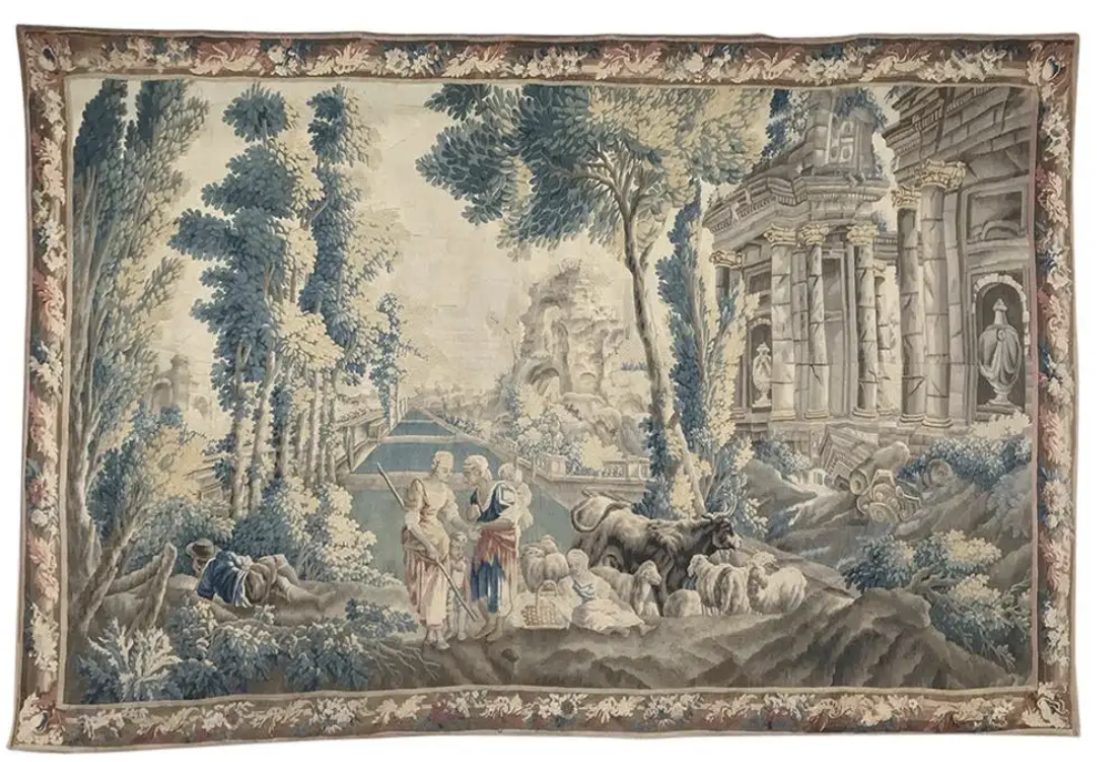
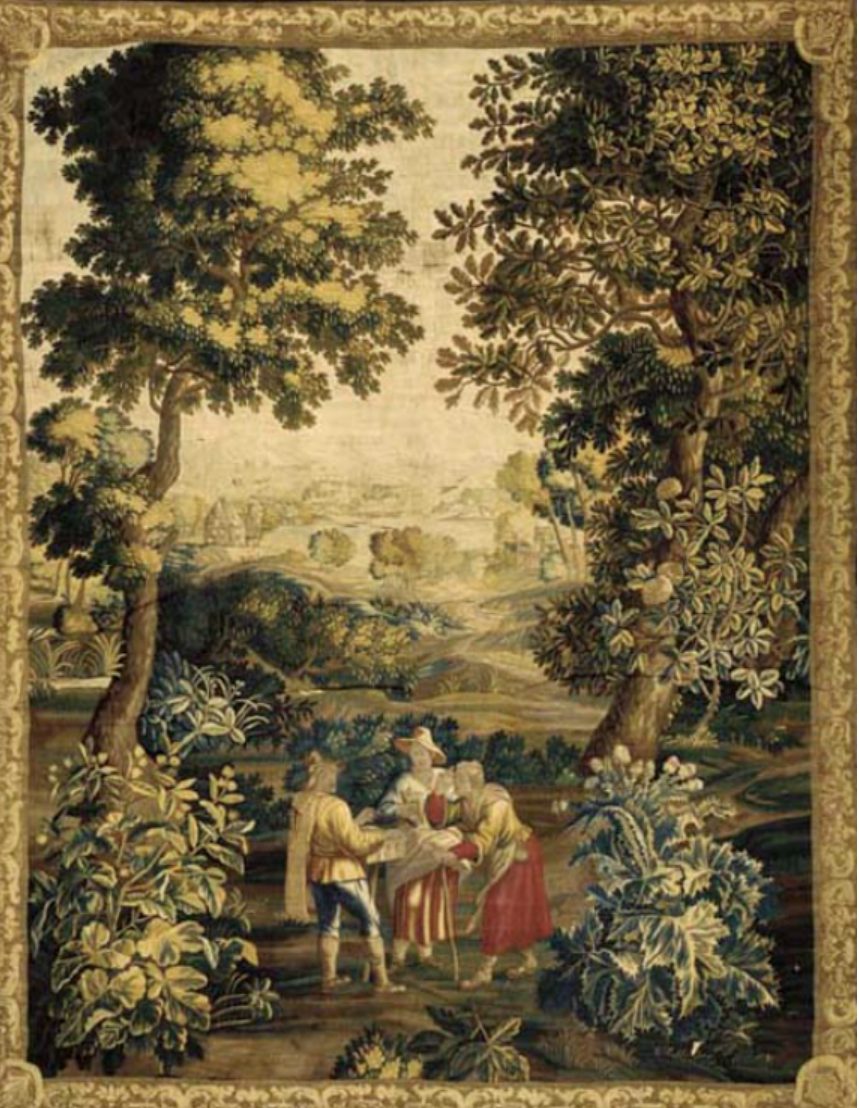
May 8, 2024The Grand 17th-century Oudenaarde tapestry is a masterpiece that showcases the exceptional craftsmanship of the Flemish masters. Tapestries from this region were highly sought after worldwide, coveted by royalty, nobility, and other esteemed individuals to adorn their palaces and fortresses, adding both elegance and warmth to their grandeur. This particular tapestry, with its meticulously preserved intricate borders, portrays a scene of a formal garden in ruins, graced by commoners enjoying the summer sun alongside a diverse array of livestock.
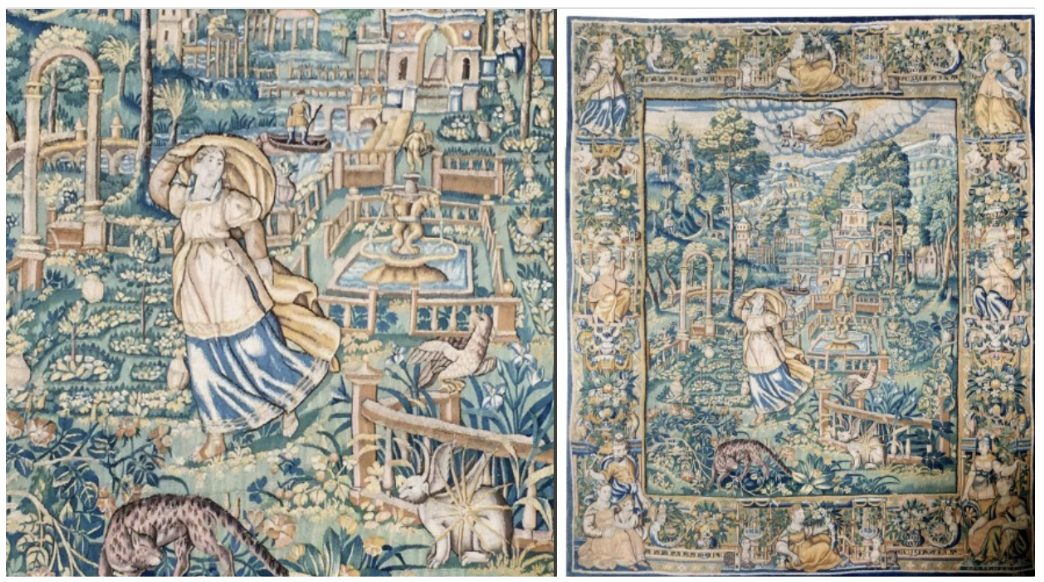
In Europe, from the 15th century onward, notable tapestry centers such as Ghent, Bruges, and Oudenaarde emerged, producing pieces of exceptional skill that set new trends influencing the continent. The inspiration for these masterpieces often stemmed from biblical narratives, mythological tales, and the works of ancient Latin poets. In this tapestry below, a central theme unfolds—a young woman strolling in an architecturally rich garden, accompanied by a flourishing fountain and a menagerie of animals, creating a paradise-like scene.
Several elements hint at mythological influences. In a celestial scene, two peacocks draw a chariot bearing a figure reminiscent of the goddess Hera, consort of Zeus. In the tapestry’s center, an eagle gazes intently at the lady, symbolizing Zeus himself. The border features sphinxes, mythical creatures from ancient lore, enhancing the tapestry’s mythical ambiance. Lastly, a winged hare amidst lush greenery nods to Germanic legends, adding yet another layer of mythic allure to the artwork.
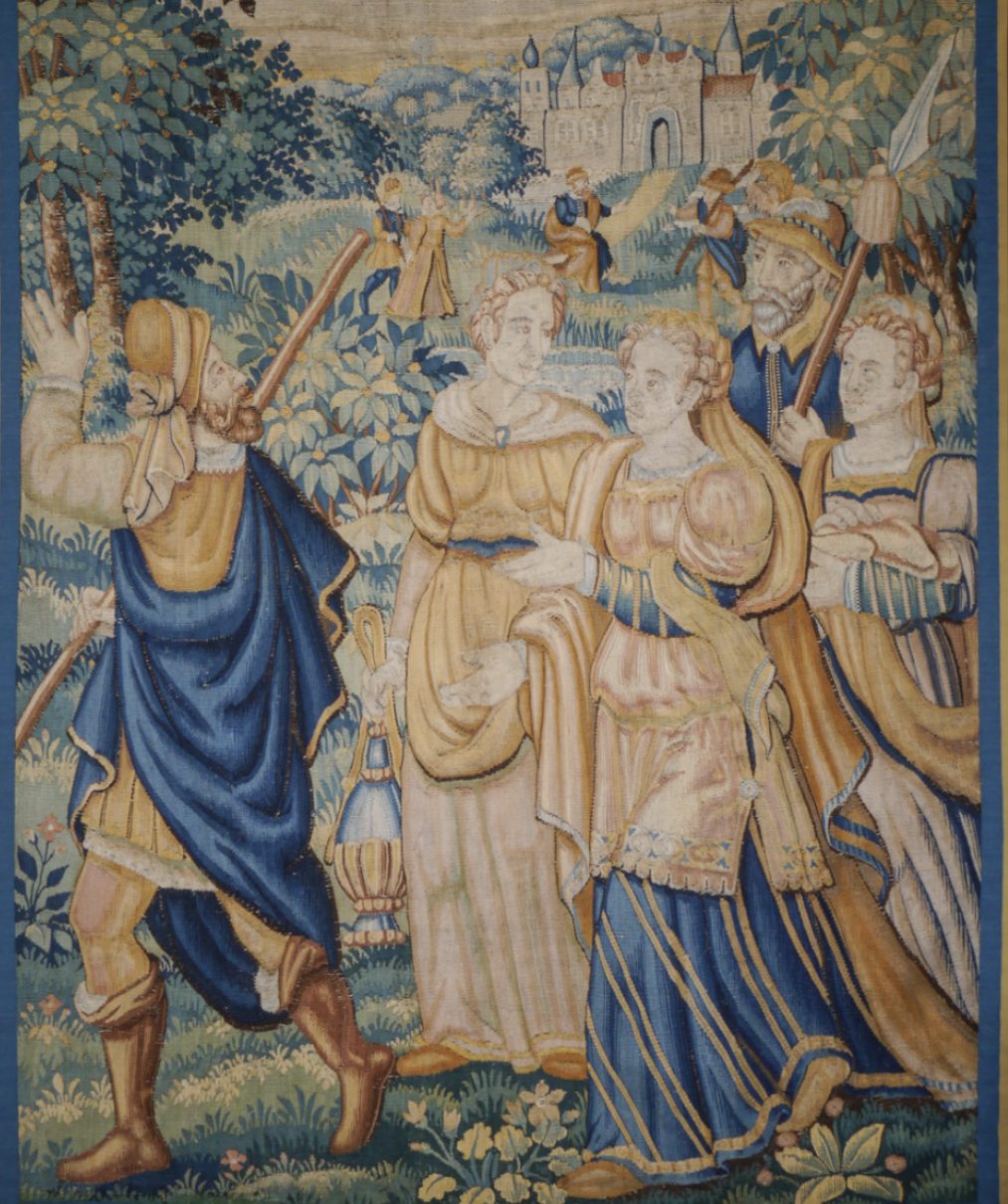
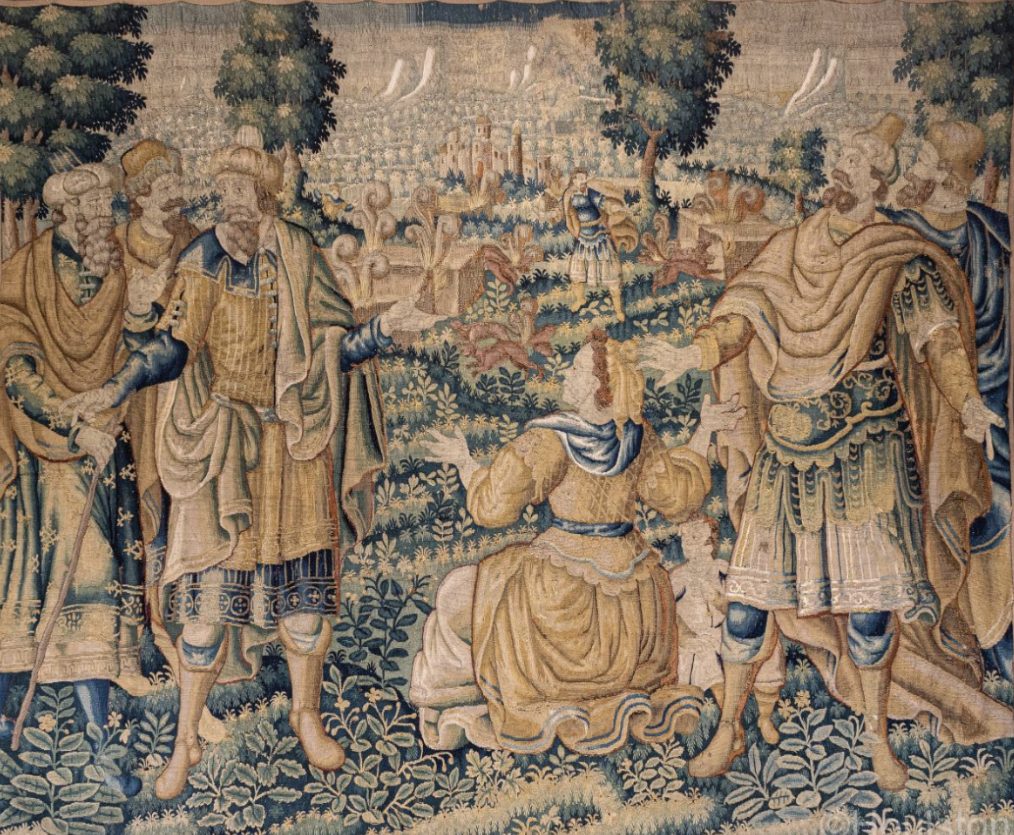
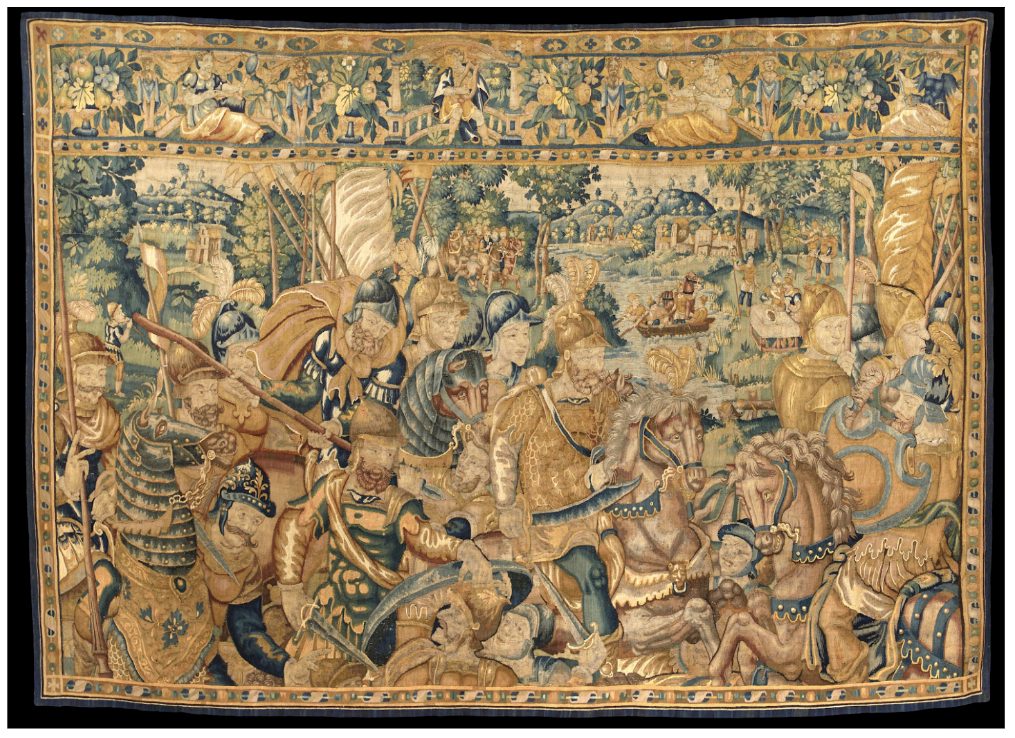
This tapestry from Oudenaarde in Flanders likely belongs to a series dedicated to depicting the life of Alexander the Great, a popular subject during the tapestry’s time. In the central right portion, we see Alexander engaged in single combat with another mounted warrior, possibly Spithridates, a noble or military-aristocratic figure of significance. Above them, a boat crosses a stream, possibly symbolizing the river Granikos where a battle against the Persian Asia Minor satrapy was fought in 332 BC, commanded by Spithridates at Sardis.
A notable detail is the presence of two figures behind Alexander, positioned squarely in the composition. The first figure, a woman, might represent Margaret of Parma, Charles V’s illegitimate daughter and a native of Oudenaarde. The second figure, a young man, could be her half-brother, Philip II d’Asburgo, the future King of Spain. These figures, seemingly out of place in a military scene, add a layer of intrigue and historical context to the tapestry’s narrative.
During the European Renaissance, tapestry production primarily occurred in Germany and France until the early 1500s. However, the Flemish towns of Enghien, Oudenaarde, and Brussels emerged as dominant centers for tapestry and textile production during this period. These towns housed large and well-organized workshops that could produce tapestries on a massive scale to cater to an international clientele. Wealthy patrons often commissioned custom-made tapestry sets that featured their coats of arms, adding a personalized touch to the artworks. For those with more limited resources, existing designs that were less elaborate were also available, making tapestries accessible to a broader range of patrons across different social classes.
During the Renaissance, tapestries were crafted using a technique involving two sets of threads woven on a vertical loom. The first set, known as the “warp,” ran parallel to the length of the tapestry, while the second set, called the “weft,” ran parallel to its width. The warp threads were tightly stretched on the loom, providing a foundation for the tapestry. Weavers then passed the weft threads back and forth through the warp to create the woven design of the tapestry. To create the design, weavers utilized a full-size drawing called a “cartoon.” This drawing was divided into strips and inserted sideways beneath the warp, allowing the weaver to see it by opening the threads. Since the weaver worked from the back of the tapestry, the final image on the front appeared as a mirror image of the original drawing.
The production and quality of tapestries were regulated by the Flemish guild system, which operated similarly to modern trade unions. Weavers were required to use designs from local painters for the images depicted on tapestries. Workshop owners managed and trained numerous workers, each specializing in specific tasks, contributing to the efficiency of tapestry production. This efficient industry made tapestries popular among the wealthy and the expanding middle class. Antwerp emerged as a significant marketing center for Flemish textiles, alongside its reputation for furniture and painting production, contributing to the widespread appreciation and demand for these intricate tapestries.
View Rug & Kilim’s rich collection of tapestries here – https://rugandkilim.com/shop/?s=tapestry