
A Profile on François Boucher – Master of Rococo Art and 18th Century Decorative Arts
May 8, 2024
A Profile on Alphonse Mucha – The Father of Art Nouveau and Pioneer of Art Deco
May 15, 2024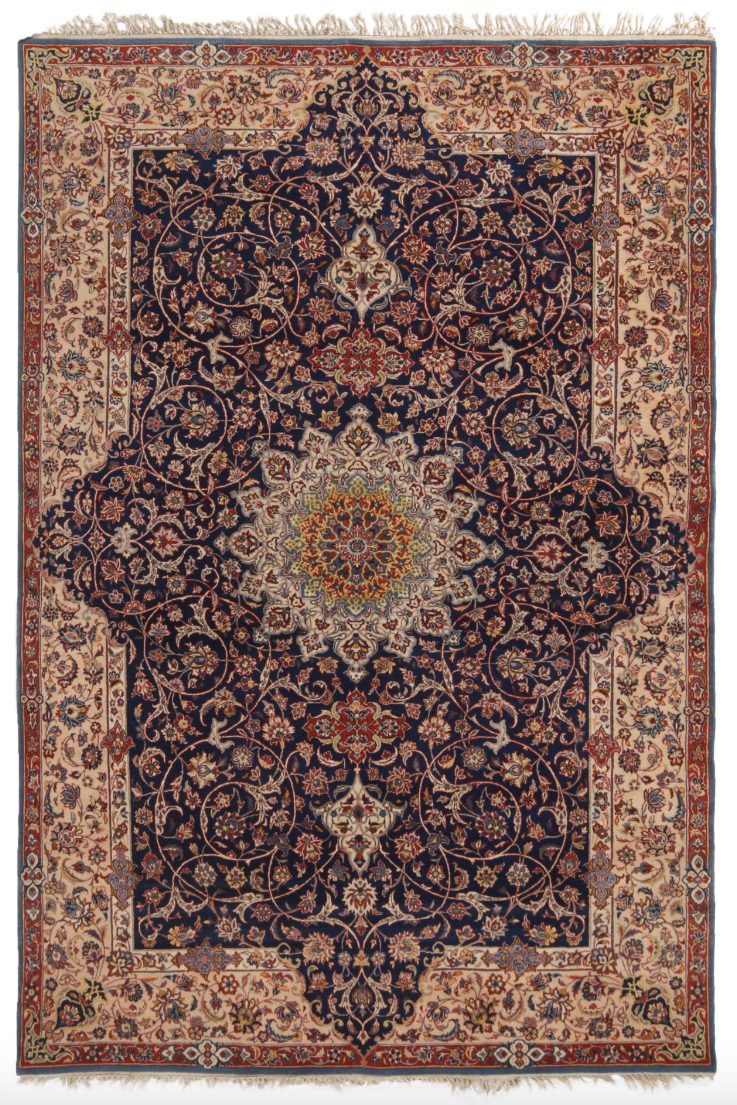
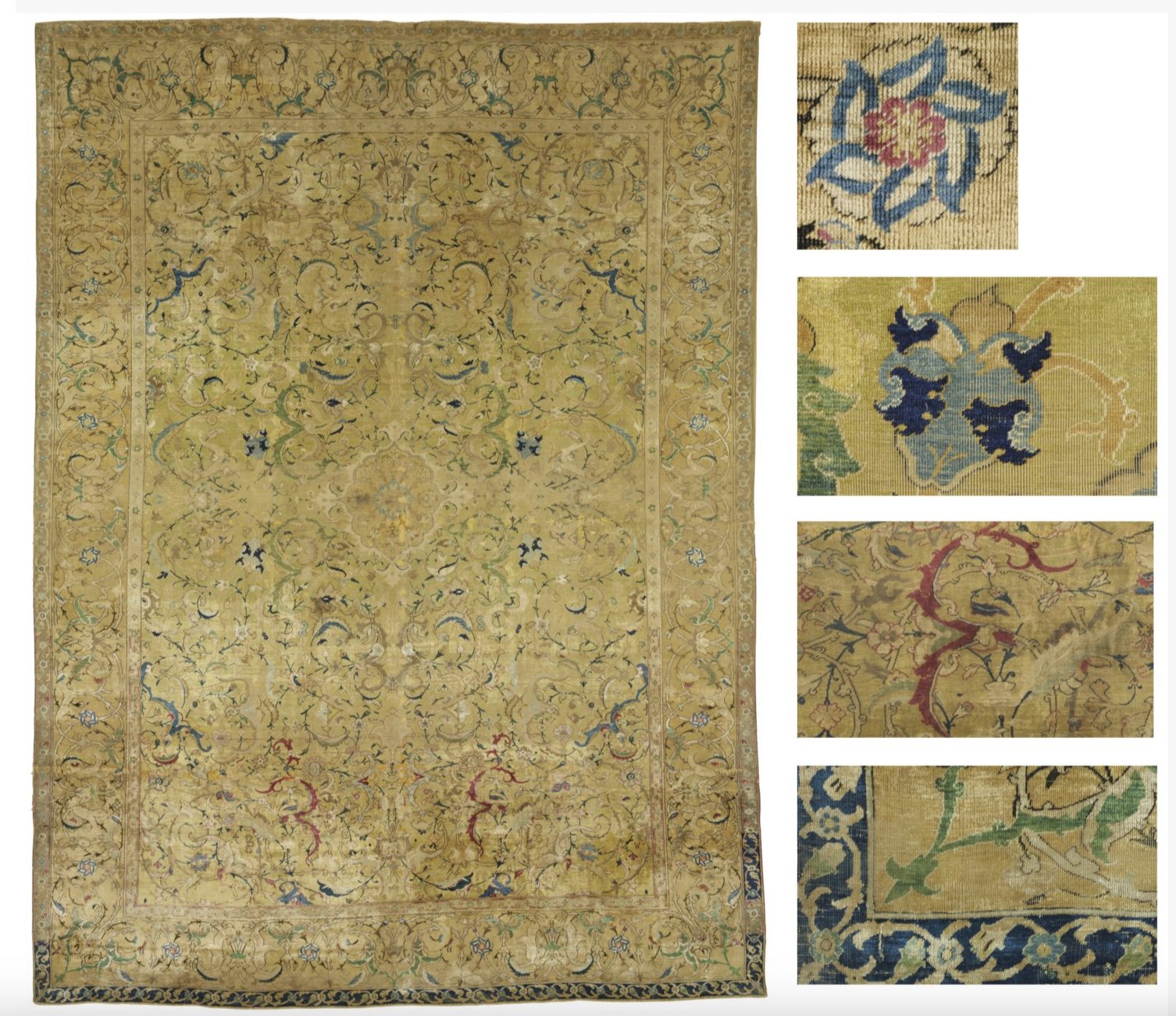
This silk Isfahan rug, from the collection of Christie’s, circa 1600, epitomizes the pinnacle of Safavid artistry during the reign of Shah Abbas (1587 – 1629), showcasing exceptional beauty, intricate design, and masterful construction. Renowned scholars Arthur Upham Pope and Phyllis Ackerman, in their seminal work “A Survey of Persian Art” from 1930, highlighted this rug’s significance by praising its refinement, imagination, technique, and captivating color palette. Described as a masterpiece of Safavid art, its rarity, exquisite detailing, and monochromatic variation establish it as one of the most elegant and compelling rugs from the Shah Abbas period.
Isfahan, also known as Esfahan, served as the capital of Persia from 1598 to 1722 and stands today as a UNESCO World Heritage site renowned for its rich Islamic architecture from the Safavid period of the 16th century. It was during this time that Isfahan’s rug weaving industry experienced a significant boom. The reign of Shah Abbas I (1587-1629) saw a rapid increase in Persia’s cultural arts output to cater to the demand from affluent western regions and their discerning clientele eager to acquire exotic goods.
The weavers of Isfahan in the 16th century drew inspiration from various art forms such as calligraphy, bookbinding, and mosaic work. This period witnessed the introduction of distinct curvilinear patterns, delicate floral motifs, and refined classical designs like arabesques, scrolls, vines, vases, and hunting scenes into Persian carpet designs, reflecting the artistic sophistication and cultural richness of the era. Isfahan’s legacy in crafting high knot density antique carpets continued into the late 19th and 20th centuries, preserving the original inspiration for refinement and attention to detail. These rugs, made with the finest materials such as silk, lamb’s wool and vibrant natural dyes, are highly sought-after as collectible and investment-grade pieces.
Apart from their value as investments, Isfahan rugs are also prized for their decorative qualities. They feature soft pastel tones, ivory backgrounds that are richly adorned with elegant and delicate design motifs. The close pile cutting and tightly knotted foundation result in a thin yet durable construction, showcasing clear and resolute carpet patterns that enhance any space with their timeless beauty and craftsmanship. Isfahan rugs exhibit a variety of material combinations, including wool on cotton, silk and wool blends on cotton, silk and wool blends on silk, and luxurious silk on silk.
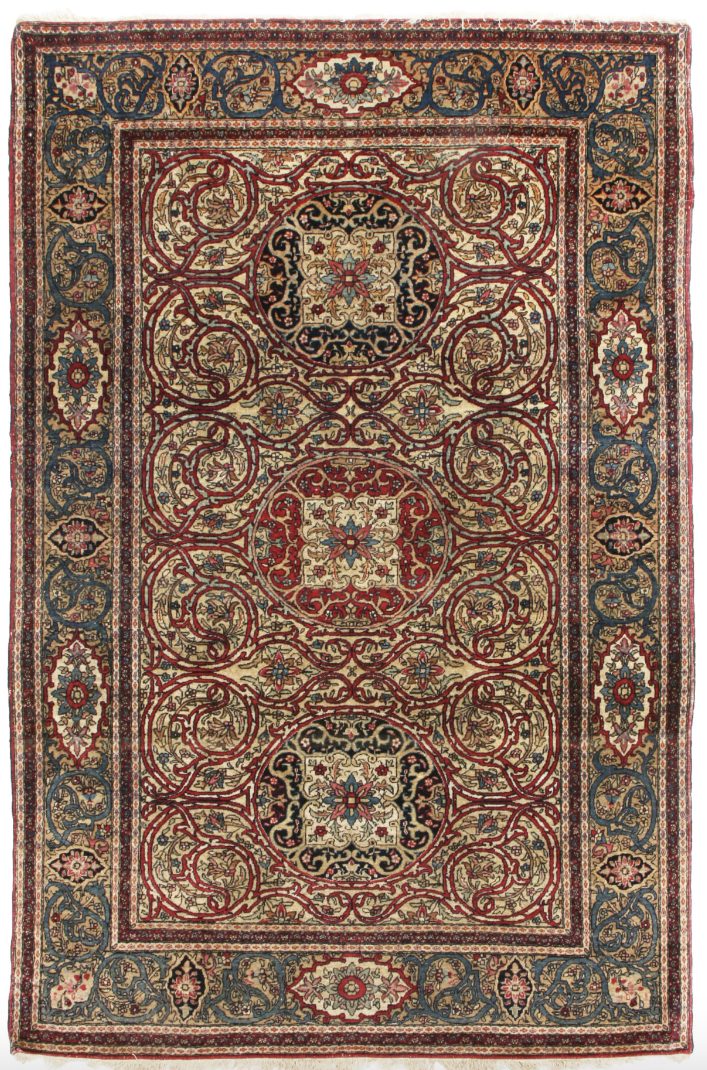
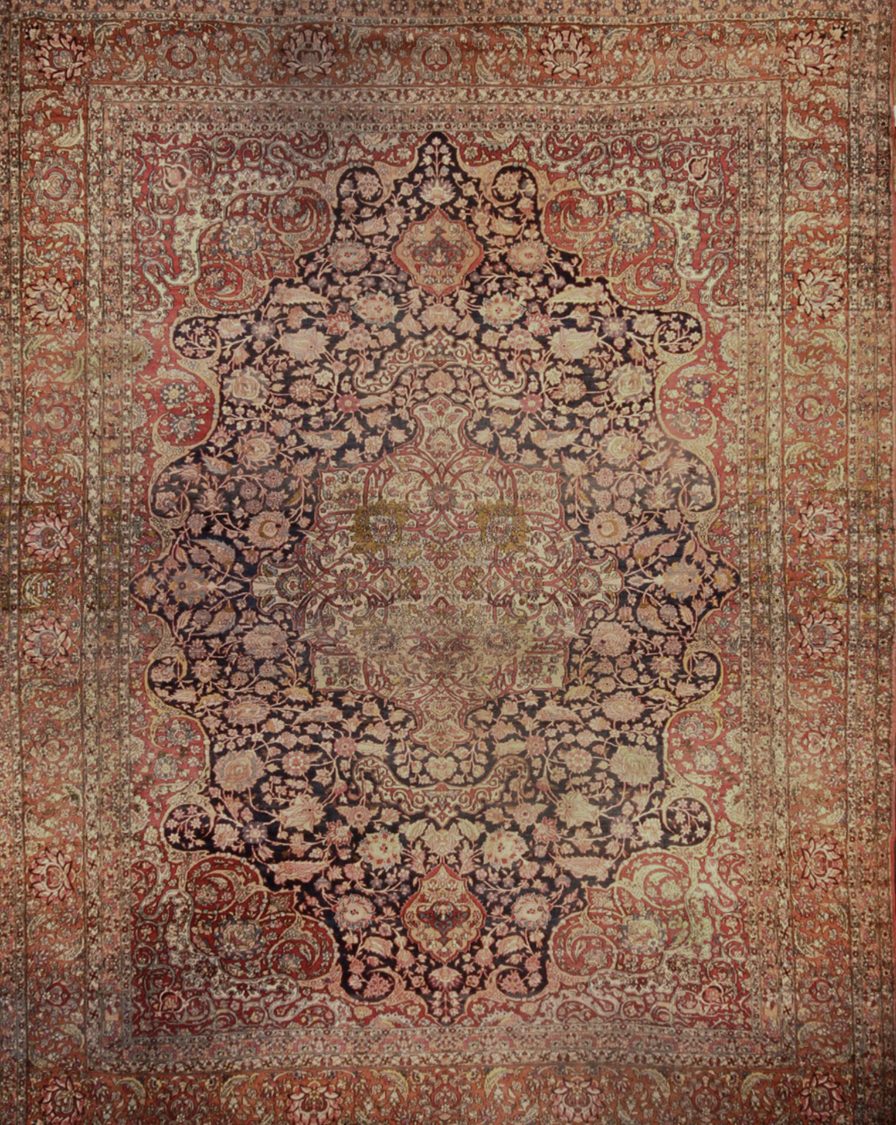
While there’s a common misconception that Isfahan rugs are exclusively made of wool or silk, some antique Isfahan rugs also feature cotton on cotton. However, the most prevalent blend found in antique Isfahan rugs is a combination of wool and silk on a pure silk base. Isfahan carpet weavers are renowned for their use of exceptional quality “kork” lamb’s wool for the pile, which contributes to the rugs’ luxurious texture and durability. The pile is meticulously clipped low, resulting in a dense yet thin rug that is highly sought after for its elegant appearance. One of the distinguishing features of Isfahan rugs is their use of silk in the weave for accent details. This adds a touch of refinement and luminosity to the intricate patterns and designs found in Isfahan carpets.
Moreover, Isfahan rugs stand out for their exceptional knot density, which far exceeds that of tribal and other regional rugs. While many rugs start at a minimum of 120 knots per square inch (kpsi), Isfahan rugs boast an average knot density ranging from 500 to 700 kpsi. The finest Isfahan rugs can achieve an astonishing density of up to 25,000 kpsi, showcasing the meticulous craftsmanship and attention to detail that define these exquisite carpets.
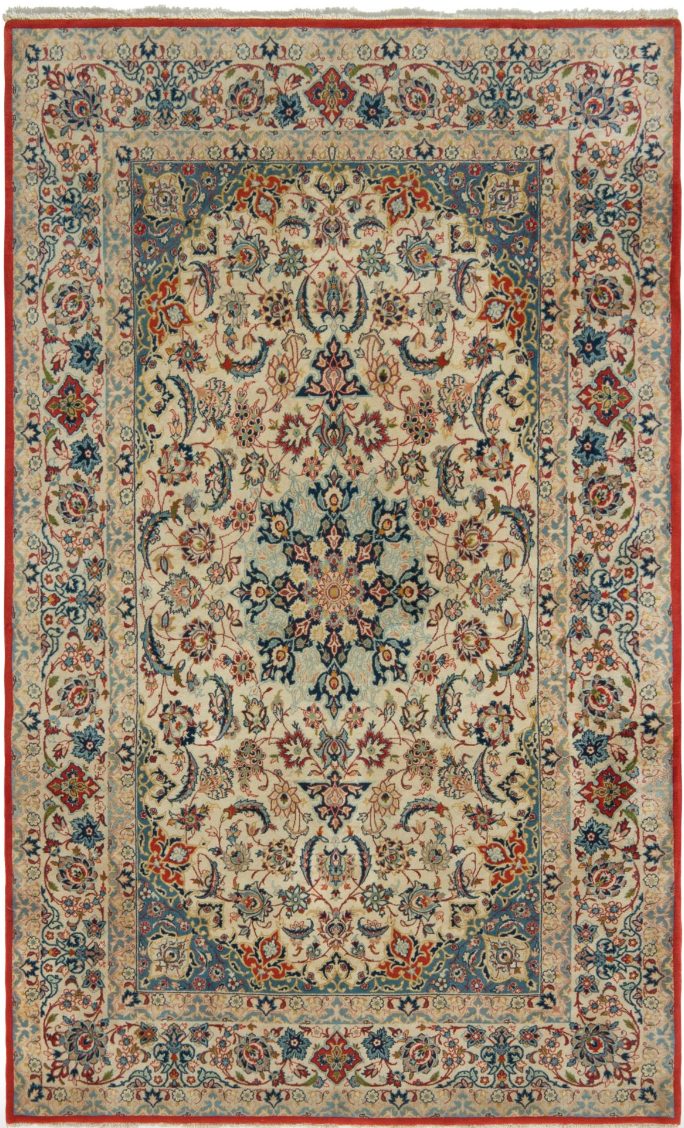
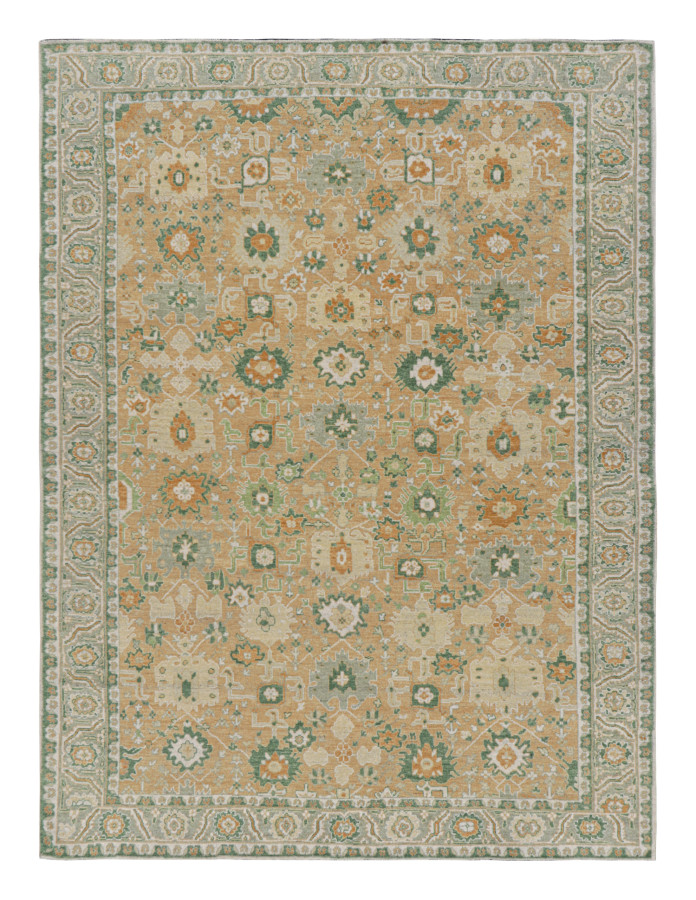
Historically, Isfahan rugs were initially crafted for Polish rulers during the Safavid era, leading to their designation as Polonies rugs. These rugs gained popularity among European dignitaries due to their exquisite beauty and colors that appealed to European tastes, including rose, bright green, turquoise, yellow, and orange hues. In terms of patterns, Isfahan rugs from the Safavid period often feature floral motifs with intricate curvilinear designs rather than geometric patterns. Many new motifs were introduced during this era, with weavers naming them after various Safavid rulers. Some well-known Isfahani designs include the Khatei design, Shaykh Safi design, and Shah Abbasi design, which continue to be incorporated into Isfahan rugs crafted today.
View Rug & Kilim’s collection of Isfahan Rugs here – https://rugandkilim.com/shop/?s=isfahan