
A Guide to Mohair – The “Diamond Natural Fibre” for Rugs
April 3, 2024
A Profile on Vibeke Klint and her 20th-Century Danish Modern Designs
April 4, 2024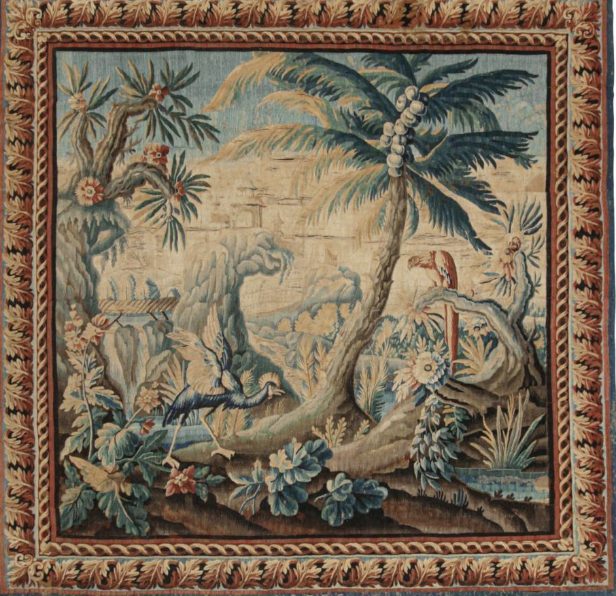
Above is our Antique French Aubusson Tapestry featuring Chinoiserie-style pictorials, handwoven in wool circa 1660-1670. This 17-century Aubusson enjoys a bold depiction of Chinoiserie style pictorials in brown, gold & beige. Keen eyes will admire birds and trees of magnificent detail and unusual style. Connoisseurs will note the latter as an extremely collectible feature—like few R&K Principal Josh Nazmiyal knows of its kind.
Chinoiserie, a term that emerged in the mid-18th century, reflects the European fascination with the exotic luxury items flowing in from East Asia, including porcelain, silk, and lacquerware. During the Rococo period, designers sought to imitate and adapt oriental motifs and ornaments, creating a fantasy world inspired by Chinese, Japanese, and Indian influences. The term “Chinoiserie” encompasses a variety of frequently occurring motifs. In 18th-century Britain, China was perceived as a mysterious and distant place, inspiring designers to create objects with fantastical landscapes, pavilions, pagoda roofs, mythical creatures like dragons, and figures dressed in Chinese attire. Chinoiserie blended reality and imagination, capturing the allure of the East in a whimsical and exotic manner.
In late medieval Europe, tapestry held a distinguished status as the grandest and most opulent medium for two-dimensional figurative images. Despite the rapid ascendance of painting, tapestry retained its preeminence in the eyes of many Renaissance patrons until at least the close of the 16th century, if not beyond. This European tradition continued to evolve, mirroring broader shifts in artistic styles until the era of the French Revolution and Napoleonic Wars. While experiencing a temporary decline, tapestry underwent a revival on a smaller scale in the 19th century. Tapestries primarily featuring landscapes and animals were categorized as verdure subjects, and this genre faced challenges, especially in color preservation, as the greens in tapestries were susceptible to fading or transforming into blues.
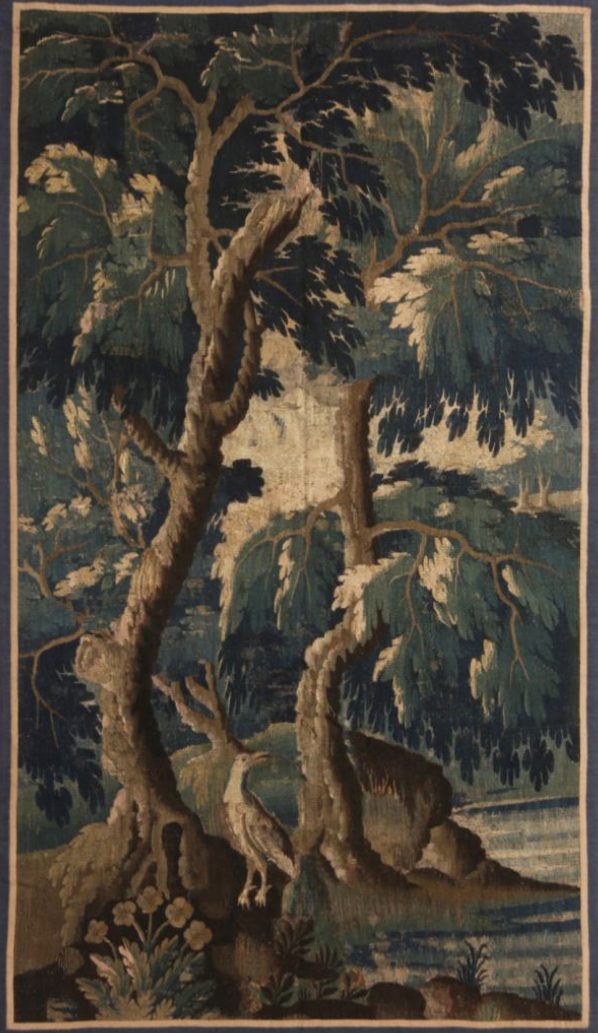
Indeed, landscapes, particularly in the form of “verdure” tapestries, have served as a source of renewal for the soul, offering a sense of calm and providing an opportunity to appreciate the beauty of nature. In the 17th century, the popularity of verdure tapestries soared, featuring scenes of lush foliage, forests, and mountains. What distinguished these tapestries was their emphasis on the intricacies of foliage and leaves, setting them apart in the woven arts of Europe. Over time, these nature-themed tapestries evolved to include a variety of elements such as castles, decorative items, and depictions of daily life.
Verdure tapestry is a type of tapestry adorned with a design inspired by plant forms. The exact origin of the first verdure tapestries is uncertain, but by the 16th century, these tapestries, featuring formal designs derived from foliage, gained immense popularity. In the latter half of the 17th century, landscapes became incorporated into their designs. Renowned tapestry factories, including Aubusson and Lille in France, specialized in producing verdures, particularly smaller pieces used for upholstery and pillow covers. These tapestries showcase intricate depictions of lush foliage and nature-inspired scenes, adding a touch of greenery to interior spaces.
Below are some of Rug & Kilim’s favourite tapestries based on the Verdure style –
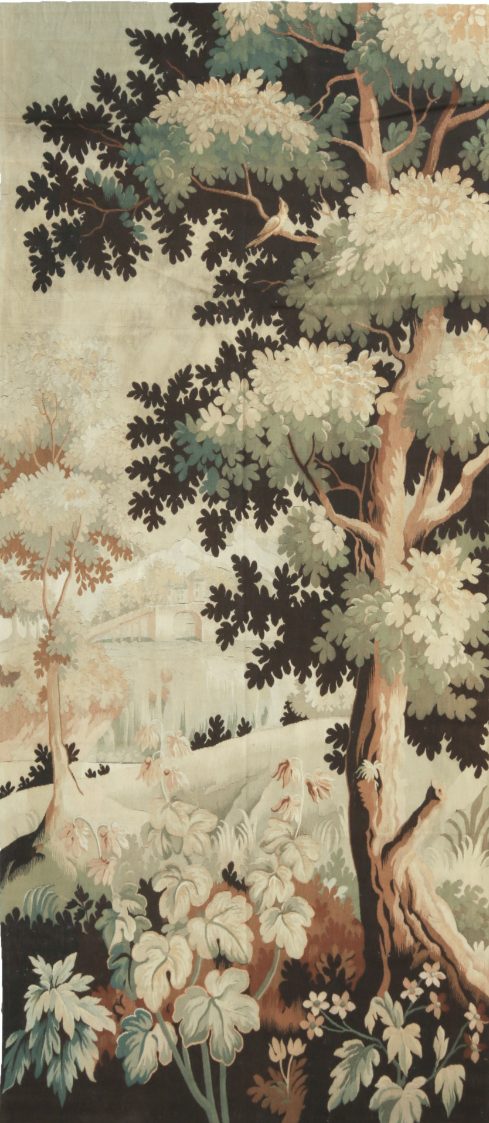
Originating from France between 1900-1910, this traditional antique French tapestry is handmade with a fine wool body, depicting a uniquely stylized, borderless forest scene beside a river. Enjoying a more advanced take on the hyper-realistic scenes among aubussons of this era, the contrast between the two distinct trees in the field foreground and background is created by a masterful use of rich and forgiving colourways respectively, employing dominant oak brown, green, and black hues against the cream and beige hues gently transitioning into the backdrop to create this engaging portrait.
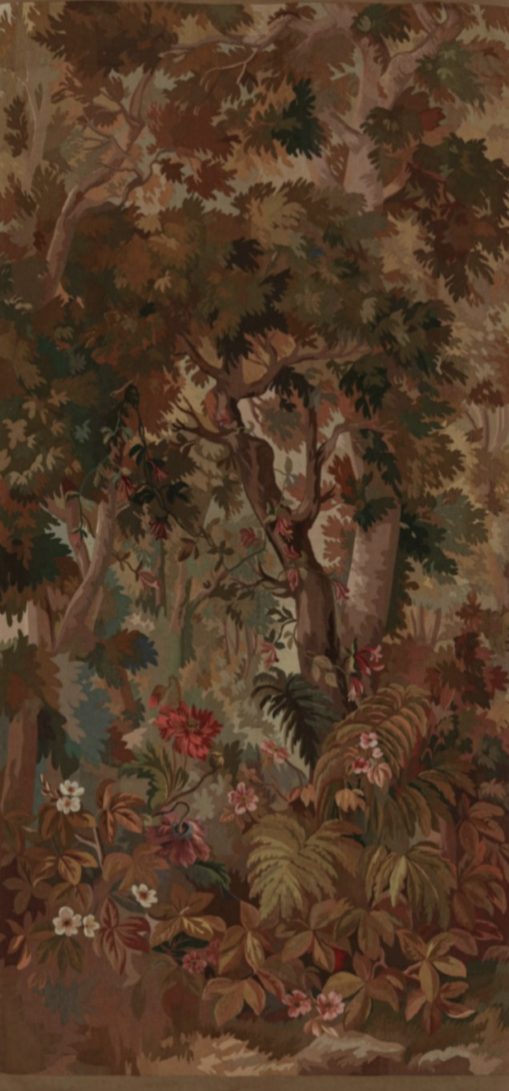
Handwoven in wool, this 5×10 rug from the European Collection by Rug & Kilim is inspired by antique Aubusson flatweaves. Its design favors rich browns and dark greens in a vivid pictorial drawing of a forest and its florals. Connoisseurs will admire the painterly realism in this contemporary approach to the titular French tapestry weave style. Its intricate detail, variety of colors and subtle variations all create a remarkably immersive setting, teeming with life and elegant, graphic presence.
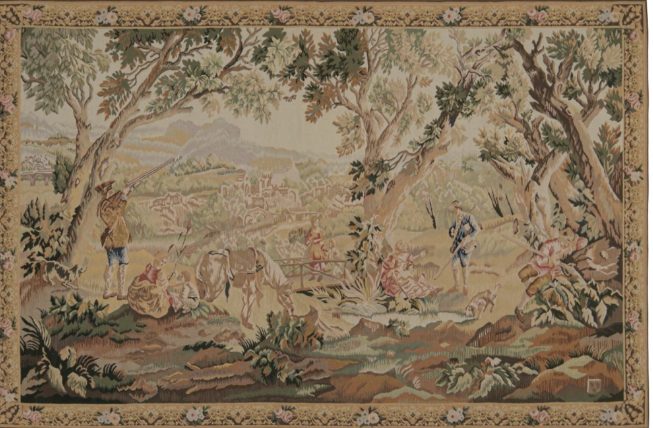
Inspired by antique European tapestries, this unique piece depicts a vivid illustration of hunters and other travelers surrounded by an idyllic scene from nature— a horse, hunting dog, trees and the horizon preview the edge of a provincial town like many French tapestries of the Aubusson workshops. This piece in beige/brown, green and pink is an homage to some of the most elegant works of history, handwoven in wool with a fine detail honoring the style in the highest quality through our atelier loom.
View some more of our rare tapestry curations here – https://rugandkilim.com/shop/?s=tapestry