Style
Impressionism
Every piece in this style, across all of our collections. Narrow them down by size and price.
- Under 6 x 9
- Runners
- 6 x 9
- 8 x 10
- 9 x 12
- 10 x 14
- 12 x 15
- Over 12 x 15
Origin ▼
Style ▼
Material ▼
Width
Length
To connect with a specialist, click here
Stories from the Impressionism Archive
Essays, artist dialogues, and provenance notes drawn from Rug & Kilim’s editorial desk.
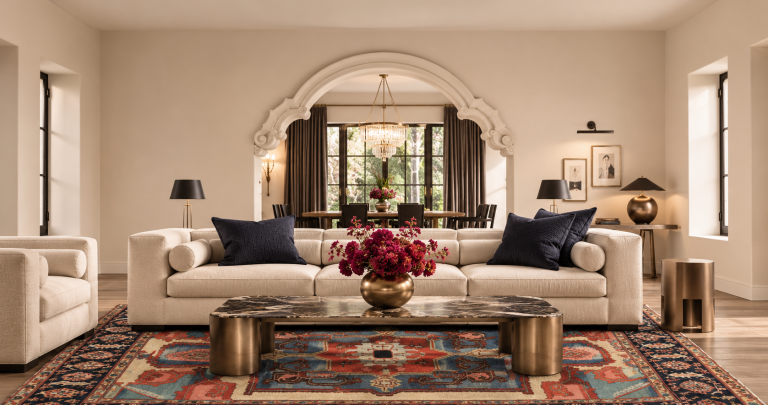
The Complete Guide to Bakhshaish Rugs and Northwest Persian Carpet Traditions
Among the most celebrated village weaving traditions of Persia, Bakhshaish rugs occupy a position of exceptional distinction. Revered by collectors, scholars, architects, and interior designers alike, these carpets embody a rare balance between artistic spontaneity and structural sophistication. Their bold geometry, monumental drawing, and deeply expressive compositions have secured Bakhshaish rugs a place among the most influential carpets in the history of decorative arts. Originating in the village of Bakhshaish in Iran's East Azerbaijan Province, these rugs emerged from a weaving tradition that transformed regional motifs into works of extraordinary artistic power. While often associated with neighboring Heriz carpets, Bakhshaish rugs possess a distinctive character all their own. Their designs are frequently larger in scale, more abstract in execution, and more experimental in composition, qualities that have made them particularly admired within the world of collectible antique rugs.
Read the Feature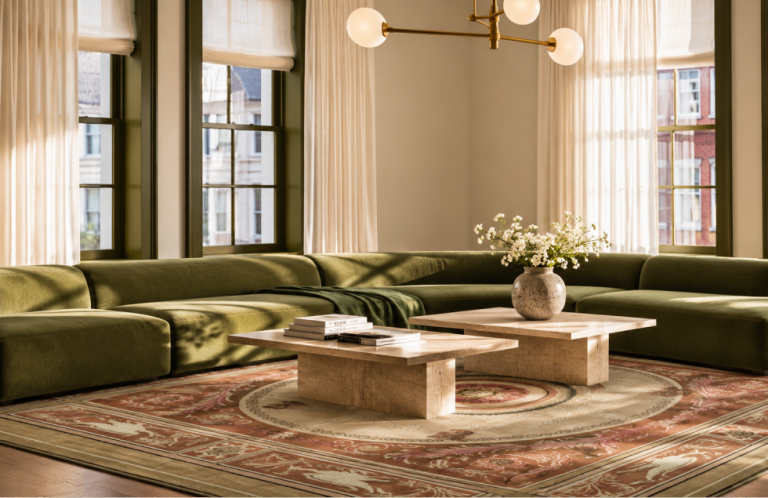
Rug of the Week: The Neoclassical 19th Century Oversized Savonnerie as a French Masterpiece
Every civilization that has reached a certain confidence has wanted to put its worldview on the floor. The Persians wove paradise gardens; the Chinese, the cosmos in miniature. France, under the Sun King, wove order itself. The Savonnerie, the royal carpet manufactory brought to its height under Louis XIV, the symmetry of the formal garden, the architecture of Versailles, the neoclassical grammar of acanthus and rosette and laurel that announced a culture certain of its own supremacy. A Savonnerie is a political philosophy you can stand on. All of which makes the four small creatures hidden in this particular example so delightfully subversive.
Read the Feature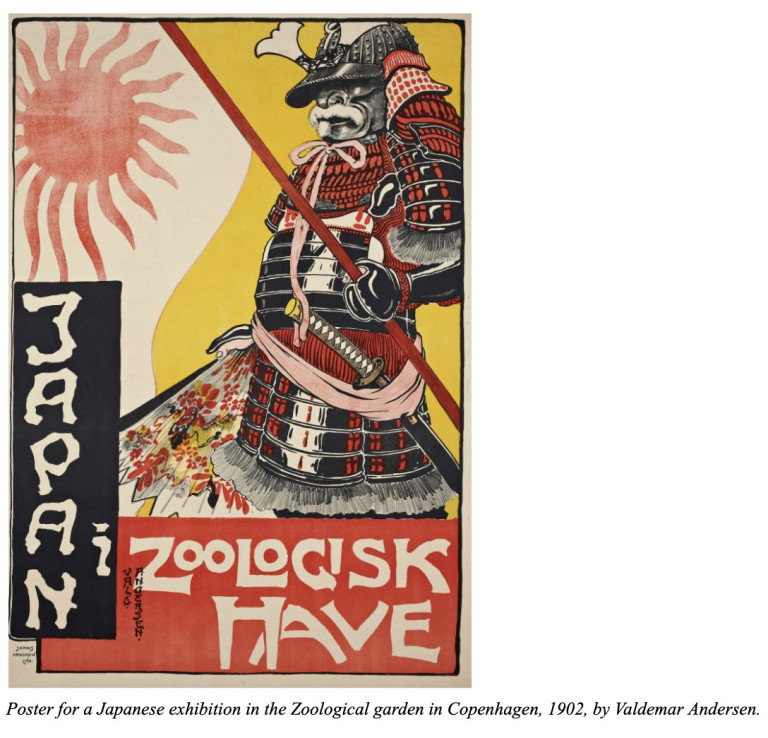
Japandi Style: The East-Meets-West Design as a Fusion of Scandinavian and Japanese Sensibilities
The term "Japandi" is a fusion of Japanese and Scandinavian design sensibilities. This unique multicultural style emerged when Danish designers began venturing to Japan, marking the opening of Japan's closed-border policies after 220 years. It was during this period that their designs began to absorb the allure and mystique of this new, intriguing oriental aesthetic. Denmark and Japan have shared a longstanding and dynamic relationship, encompassing both trade and cultural exchanges. According to Nicolina Olsen-Rule of Design Museum Denmark in Copenhagen, this enduring connection dates back approximately 150 years. This historical interaction between the two nations has undoubtedly contributed to the mutual appreciation and influence observed in design, particularly in the emergence of styles like Japandi, which blends elements from both Scandinavian and Japanese aesthetics. Early manifestations of this design fusion as ‘Less is More’ can be observed in various forms, including ceramic craftsmanship, architectural elements, and Danish furniture.
Read the Feature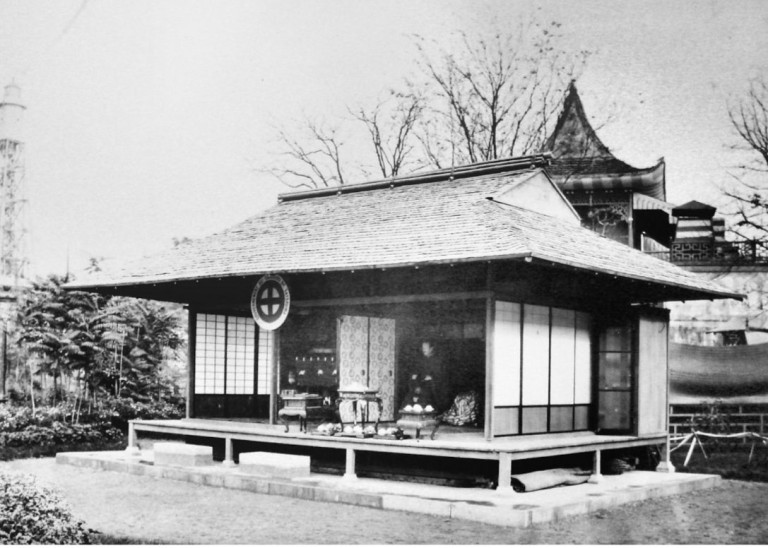
A Guide to Japonisme Design Movement
Japonisme, a term coined to capture the profound fascination with Japanese art, unfolded in the West during the 19th century after Japan reopened its ports to Western trade in 1854 following over two centuries of closure. This reopening led to a surge of Japanese art and crafts into Western society, leaving an indelible mark on art and design. The distinctive features of Japanese art, characterized by flat planes, bold colors, and dramatic stylization, served as a profound inspiration across various artistic movements, including Impressionism, Art Nouveau, and the Aesthetic Movement. Artists like Paul Ranson, Claude Monet, and Edgar Degas were notably influenced.
Read the Feature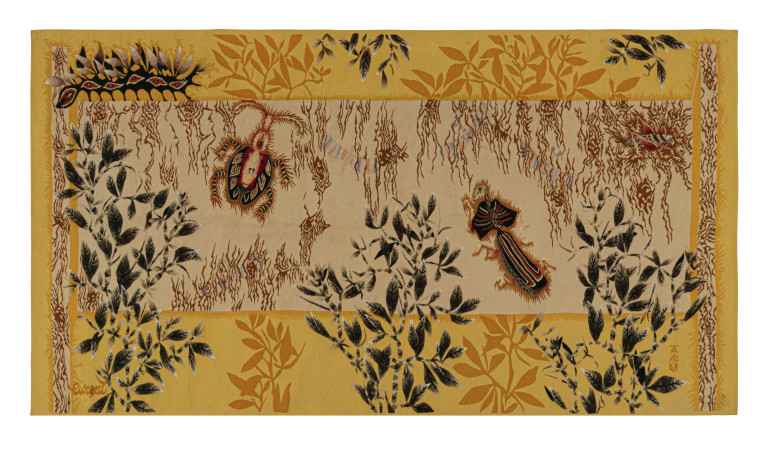
A Guide to Jean Lurçat: Pioneer of the Mid-20th Century Tapestry Renaissance
The inauguration of The State Hermitage Museum’s exhibition titled "Nineteenth-and Twentieth-Century Tapestries in the Hermitage Collection” marked a significant milestone in art history. It unveiled, for the first time, a collection of tapestries with a distinct emphasis on the masterpieces crafted by French artists. The showcased tapestries were not mere artifacts, but vibrant expressions of European tapestry weaving, spanning Historicism, the Art Nouveau, and Modernism. One major tapestry exhibited was Jean Lurçat’s “Blaze of Fire” honoring his innovative designs and use of narrative elements transformed tapestry weaving from a decorative craft into a serious art form that could convey emotion and depth of thought. Rug & Kilim curates masterpieces of culture with the utmost quality of craft and graphic personality like so few in existence. Above is one such masterpiece that we have collected — a signed Lurcat vintage Aubusson tapestry, handwoven circa 1940-1950. The design features gold border and beige field, both of which underscore insect pictorials and florals, leafage and botanicals in brown, rust and amber tones. Collectors will note signatures both on the lower left face of the piece and on the underside panel (initials I.I.).
Read the Feature
A GUIDE TO HANDMADE CUSTOM RUGS
The decision to create a custom rug comes at the end of a handful of journeys. Some luxury rug connoisseurs find themselves exhausted in limitations when browsing stock, whereas some interior designers find the perfect pattern unlike anything else on the market with the hope of seeing it realized in flooring. Just the same as the decision to create a bespoke rug can anywhere between the end of your rope and the beginning of an exciting, challenging project, the possibilities invoked when making something perfectly expressive — when you’ve found the right team — are every bit as vast. If one thing is shared by the new and adept alike in the handmade custom rug process, it's that there’s a fair amount to learn before settling on the right firm or atelier like ourselves. Many of the guidelines aren’t so universal as believed, including but not limited to pricing as a barrier, limited access to samples for those in need, non-communicative large firms neither illuminating nor offering the step-by-step process teams like ours does — and more often than not the rush of the opportunity fades to the feeling of a cumbersome, unrewarding process.
Read the Feature