
Style
Kurdish
Every piece in this style, across all of our collections. Narrow them down by size and price.
- Under 6 x 9
- Runners
- 6 x 9
- 8 x 10
- 9 x 12
- 10 x 14
- 12 x 15
- Over 12 x 15
Origin ▼
Style ▼
Material ▼
Width
Length
To connect with a specialist, click here
Stories from the Kurdish Archive
Essays, artist dialogues, and provenance notes drawn from Rug & Kilim’s editorial desk.
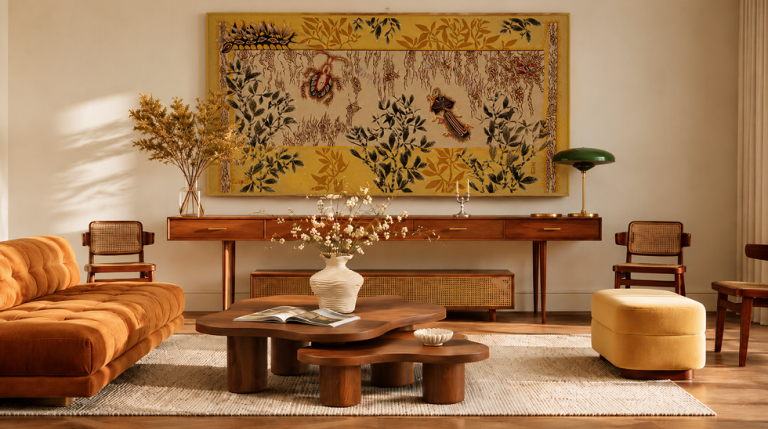
Signatures, Editions, and the Bolduc on Modern and Rare Tapestries: The Mark of the Masters and Artists
There is a particular pleasure, known to every serious collector, in turning an object over. The front of a great tapestry or carpet is what seduces; the back, and the edges, are what tell the truth. And on the finest modern tapestries, that truth is written in a specific and often misunderstood language, a language of signatures, edition numbers, and a small woven label the French call the bolduc. To read it fluently is to hold the difference between a decorative object and a documented work of art. It is the same literacy that governs the print room and the rare book library, where a collector learns to read a plate mark, a watermark, a colophon. The modern tapestry, elevated to the status of fine art by Jean Lurçat and his circle in the mid-twentieth century, borrowed the apparatus of the fine art edition precisely because it wished to be understood as fine art. To understand the apparatus is to understand the ambition.
Read the Feature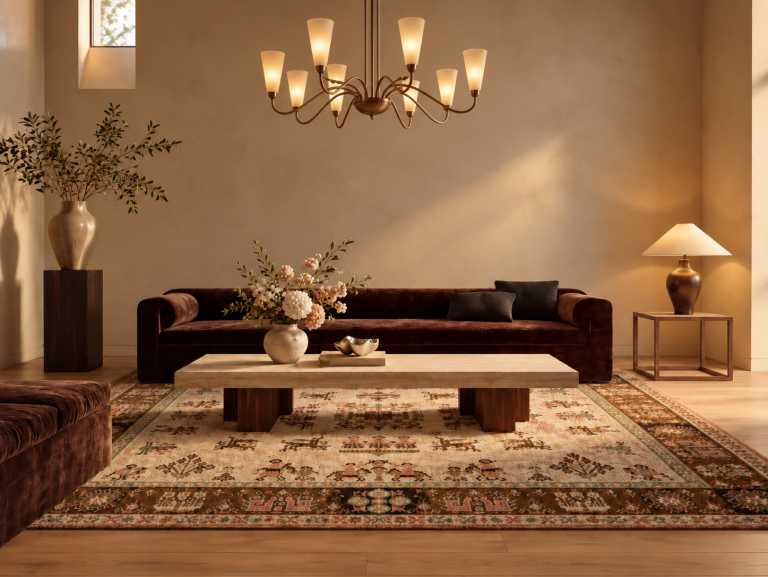
A Guide to Axminster Rugs: History, Craftsmanship, and British Design Heritage
Among the most influential carpet traditions to emerge from Europe, Axminster rugs occupy a distinguished position within the history of decorative arts, architecture, and interior design. Renowned for their exceptional craftsmanship, technical innovation, and artistic sophistication, Axminster carpets represent one of Britain's most important contributions to the global history of textile design. Originating in the historic market town of Axminster in Devon, England, these carpets became synonymous with luxury, refinement, and excellence from the eighteenth century onward. Their influence extended far beyond Britain, shaping carpet production, interior decoration, and architectural furnishing throughout Europe, North America, and the wider world.
Read the Feature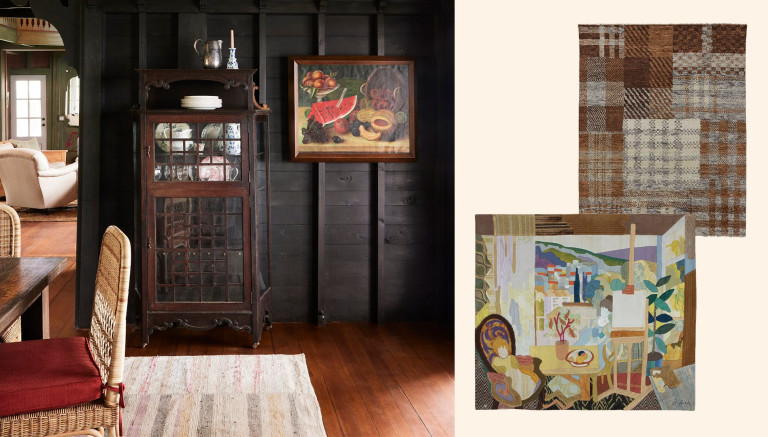
How the World’s Most Serious Art Spaces Are Rewriting the Rules of the Floor and the Contemporary Home
There is a room at Hauser & Wirth Somerset; the gallery that occupies a converted farmhouse in the English countryside, where Pipilotti Rist installations have shared walls with Phyllida Barlow sculptures and where the building itself feels like an argument against the idea that serious art requires a white cube to be taken seriously, where a single large antique textile lies on the stone floor beneath work of radical contemporary ambition. It does not announce itself. It simply holds the room together with the authority of an object that has been doing exactly this, in exactly this way, for several centuries longer than the art above it has existed. The artists whose work hangs on those walls have spent their careers thinking about surface, material, and the relationship between an object and the space it occupies. The carpet understood all of this before any of them picked up a brush.
Read the Feature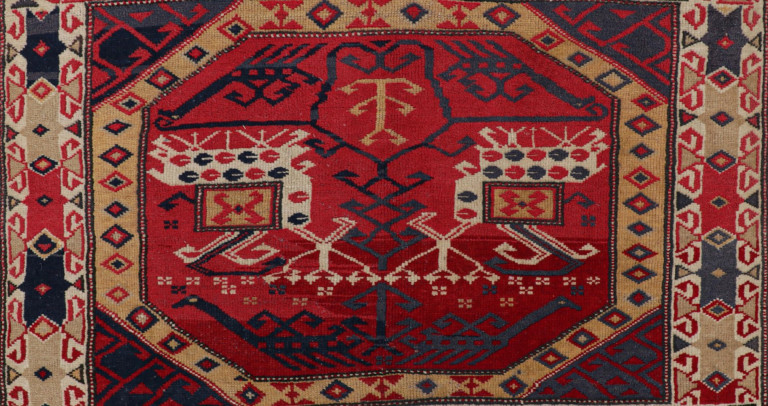
What Are Anatolian Rugs and Kilims? History, Craft, and Significance for Modern Interiors
Hand-knotted in wool, circa 1920-1930, this 3x3 antique Anatolian square rug is a very special piece from Rug & Kilim. Details >> There are few objects in the history of design as quietly eloquent and as insistently enduring as the Anatolian rug or kilim. At once functional textile and living palimpsest, each piece unfolds like a topography—layered with memory, ritual, and geometry—charting the invisible cartographies of empire, migration, and ancestral inheritance. These woven forms are not merely the byproducts of artisanal labor but are instead radical testaments to the entwinement of the spiritual and the material, the domestic and the diplomatic, the feminine and the geopolitical.
Read the Feature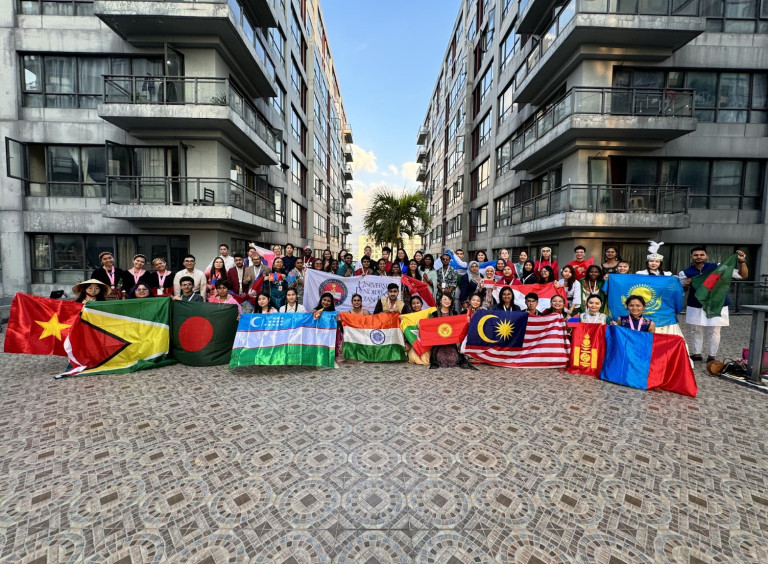
Rug & Kilim Abroad: Convergence of Art and Sustainability at the Universal Youth Leadership Summit, Philippines
"Insecurities: Tracing Displacement and Shelter," an exhibition at the Museum of Modern Art, delves into the architecture of forced displacement, shedding light on the global refugee crisis. Curated to showcase the perspectives of architects, designers, and artists, the exhibit offers a multifaceted exploration of the complex challenges faced by displaced populations worldwide. As part of the broader "Citizens and Borders" initiative, which utilizes the museum's permanent collection to delve into themes of territories, migration, and borders, this exhibition serves as a poignant reminder of the urgent need for empathy, understanding, and innovative solutions in addressing displacement and shelter issues on a global scale. However, while artists may use displaced communities as subjects for their art, it's important to recognize the resilience and creativity of these communities themselves.
Read the Feature
A Glossary of Handmade Rugs and Kilims: Understanding Terms, Types and Techniques Past and Present
Referring to the art style characterized by using shape and color withdrawn from traditional repetition or realism. Abstract rugs — sometimes referred to as art rugs — capture an expressive nature that reads as a very modern style, though many abstract rugs draw inspiration from works of the same art style in the mid-century. One of the more widely known mid-century lineages of this style is abstract expressionism, named for the literal "expressionists" of the 1950s. Some of the most notable names behind this style include Jackson Pollock and Mark Rothko. Referring to a lineage of nomadic Persian rugs (sometimes referred to as “Avsar” in the alternate spelling). Afshar rugs hail from the eponymous tribe in the region of Northeastern Iran.
Read the Feature