Style
Natural Fiber
Every piece in this style, across all of our collections. Narrow them down by size and price.
- Under 6 x 9
- Runners
- 6 x 9
- 8 x 10
- 9 x 12
- 10 x 14
- 12 x 15
- Over 12 x 15
Origin ▼
Style ▼
Material ▼
Width
Length
To connect with a specialist, click here
Stories from the Natural Fiber Archive
Essays, artist dialogues, and provenance notes drawn from Rug & Kilim’s editorial desk.
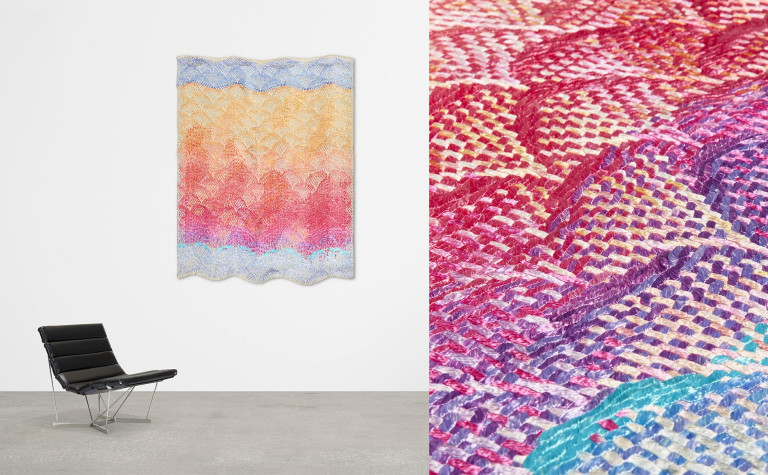
The Layered Home: 5 Ways to Rethink Floor Rugs and Wall Tapestries
The real spatial dimension does not get painted, it gets woven. Begin with hanging a piece such as Signed Vintage Lia Cook Tapestry slightly off-center on one of your main walls. Its intricate Jacquard weave and the friction created between its rayon and linen fibers will require a lot of breathing room, immediately establishing a gravitational pull of the whole room. But to balance this vertical tension, the ground beneath your feet needs to become much more rigorous. With the use of a rigorously beaten warp-faced plane such as cotton Indian Dhurrie or Antique Swedish Röllakan's interlocking tapestry weave, you create a flat but structurally resistant base. A ground made from a rigidly woven material needs to be challenged. The last textural transition will come from placing a Vintage Frazada Kilim with heavy weft interlace across your warp-faced plane. The act of overlapping your heavy weft on a rigorously
Read the Feature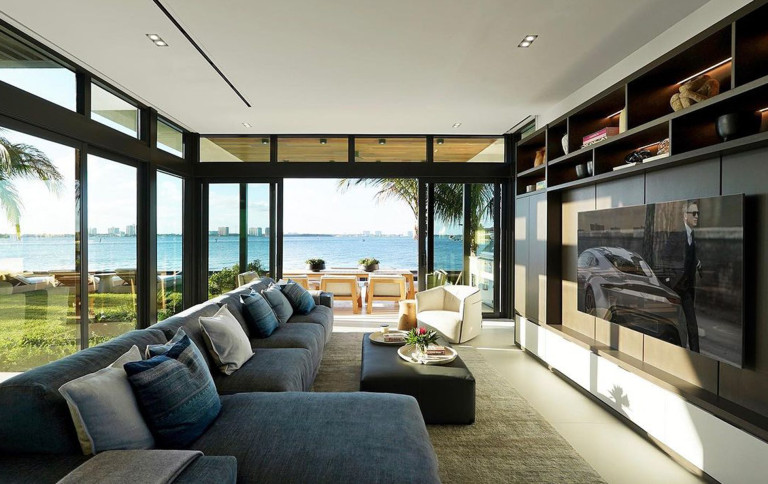
Luxury Coastal Rugs: Styling High-End Interiors from the Hamptons to the French Riviera
The Problem with “Effortless” The most convincing coastal interiors in the world share a peculiar quality: they appear inevitable. Rooms in the Hamptons, along the French Riviera, in Malibu or Mallorca seem to arrive fully formed; light moving freely, materials perfectly resolved, nothing excessive, nothing missing. The effect is so seamless that it risks being misunderstood as ease. Coastal design, at its highest level, is one of the most demanding exercises in interior architecture. It allows for no distraction, no indulgence, and very little forgiveness. When a room is reduced to light, proportion, and material, every decision becomes visible.
Read the Feature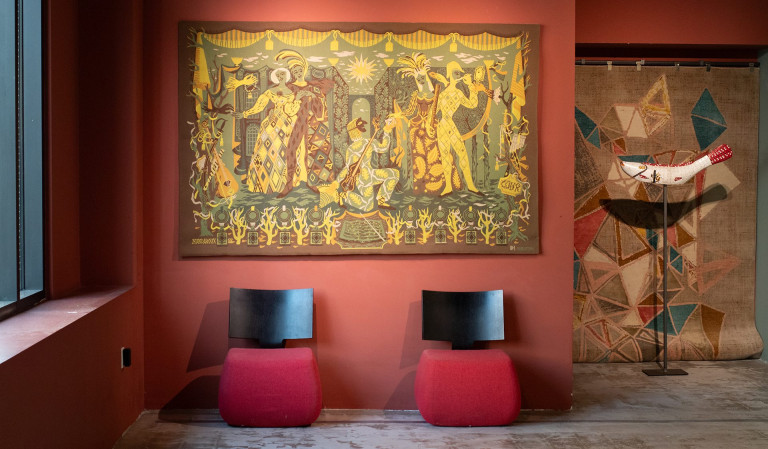
Modern Tapestries: A Confluence of Art, Provenance, and Contemporary Design
When studying connoisseurship and collectible design, modern tapestries are no longer relegated to static wall adornments of a bygone aristocracy. They are now insurgent and ideological—a confluence of art, fiber, and spatial intelligence. To speak of tapestry in the 21st century is to enter a discourse where Bauhaus minimalism meets postcolonial craft revival, where Brutalist architecture softens under the chromatic tension of Jean Lurçat’s legacy, and where Joan Miró’s biomorphic abstractions find sanctuary not in gilded salons but in concrete lofts and glass-clad penthouses. Modern tapestries, by virtue of their scale, tactility, and historical depth, are reasserting themselves as vital instruments of interior language—objects that operate simultaneously as art, texture, insulation, and ideology. They offer not just decoration, but dimensional poetics—distilled cultural narratives woven into the very warp and weft of contemporary space-making.
Read the Feature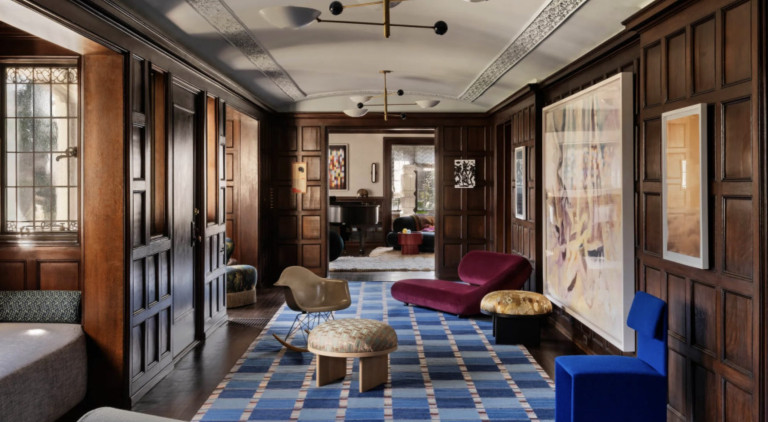
The Essential Guide to Scandinavian Rugs for Contemporary Living
The moment a truly exceptional Scandinavian rug enters an open-concept space, something remarkable happens—the vast emptiness transforms into a whole. These textiles aren't merely decorative afterthoughts; they possess power to orchestrate how we experience architecture. The true Scandinavian rug doesn't announce itself—it whispers. Yet in that whisper lies a design language as complex and nuanced as any Rothko canvas. The Scandinavian approach to rug-making stands apart in its sublime balance of restraint and expression. While Persian carpets might declare their presence with elaborate narratives and Moroccan rugs impress with exuberant patterns, the Swedish textile speaks through understated authority—a visual whisper that somehow manages to command the entire room.
Read the Feature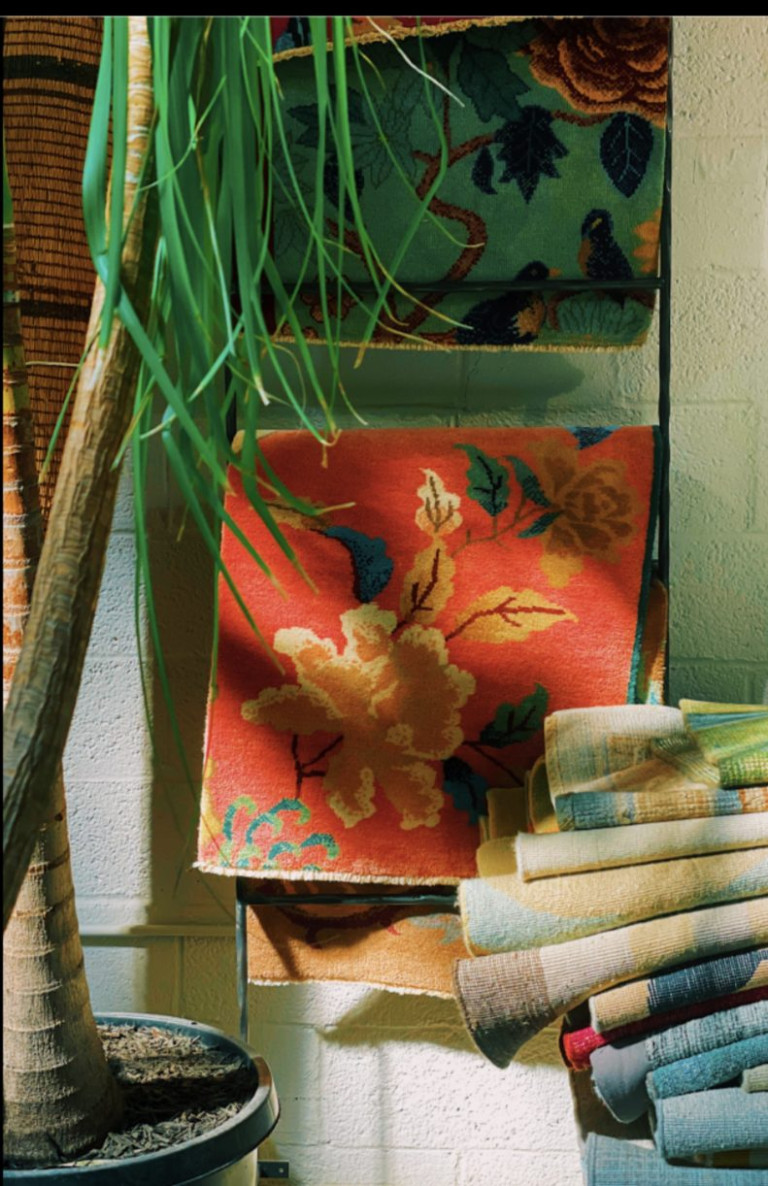
Cotton Material in Rugs: The Renaissance of Natural Fiber Floor Coverings
Cotton rugs emerge from a myriad of cultural traditions, particularly notable in the Indian subcontinent's dhurrie tradition and American colonial craft practices. Unlike their Persian or Turkish counterparts, which emphasized pile construction in wool and silk, cotton rugs developed alongside modernist principles of form following function. This alignment with modernism wasn't coincidental – cotton's natural properties lent themselves to geometric patterns and clean lines that would later become hallmarks of 20th-century design. Cotton's journey in floor coverings traces back to ancient civilizations, but its prominence in modern rug making emerged significantly during the Industrial Revolution.
Read the Feature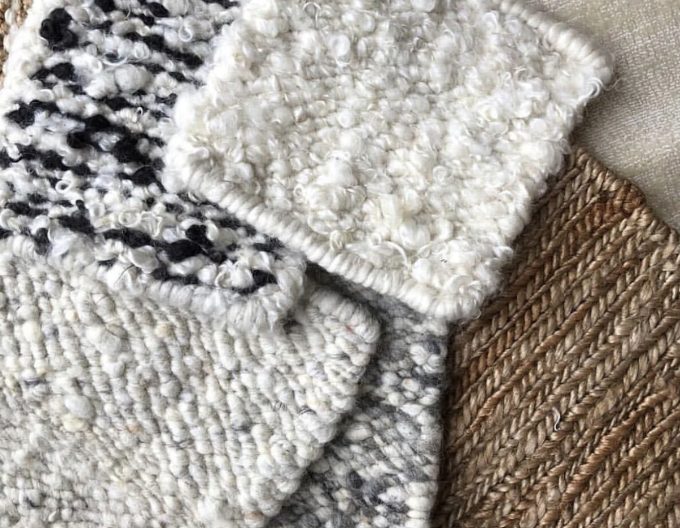
A Guide to Mohair – The “Diamond Natural Fibre” for Rugs
Mohair rugs, derived from the wool of Angora goats traditionally raised in the highlands of Turkey, particularly around Ankara, give rise to mohair wool known for its distinctive qualities. However, modern production has expanded to include regions like South Africa and Tibet, contributing to the availability of top-notch mohair. Mohair wool stands out due to its unique composition—fine, robust, and naturally elastic threads with a glossy finish. Additionally, mohair yarn possesses excellent antibacterial properties and acts as an efficient thermal insulator. Below is our custom flat weave in white, handwoven in highest-quality mohair, SKU 25985. Keen eyes may admire a looping technique in this flat weave design, and admire its meticulous, luxurious look. One of our finest textural works, with a sophisticated take on the plain that sits beautifully in any space.
Read the Feature