Style
Over Dye
Every piece in this style, across all of our collections. Narrow them down by size and price.
- Under 6 x 9
- Runners
- 6 x 9
- 8 x 10
- 9 x 12
- 10 x 14
- 12 x 15
- Over 12 x 15
Origin ▼
Style ▼
Material ▼
Width
Length
To connect with a specialist, click here
Stories from the Over Dye Archive
Essays, artist dialogues, and provenance notes drawn from Rug & Kilim’s editorial desk.
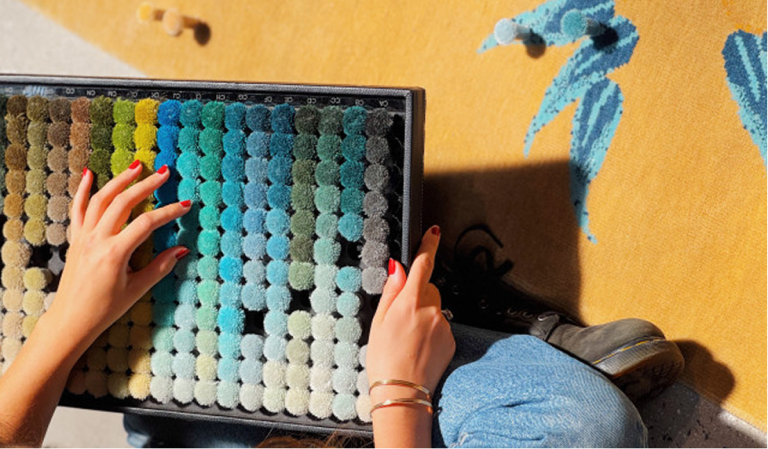
Inside the Colorist’s Mind: Commissioning a Rug to a Palette
There is a figure in the making of a great custom rug whom the finished object never names and the client rarely meets, and yet whose judgment determines whether the whole enterprise sings or falls flat. Not the designer who draws the pattern. Not the weaver who ties the knots. The colorist: the eye that decides, among a near-infinite field of possibility, exactly which blues, which greens, which single warm note of coral will live together in a room for the next fifty years. If the pattern is the core of a rug, color is its music, and the colorist is the composer. Most people have never considered that such a person exists. The ones who have commissioned a rug properly never forget them.
Read the Feature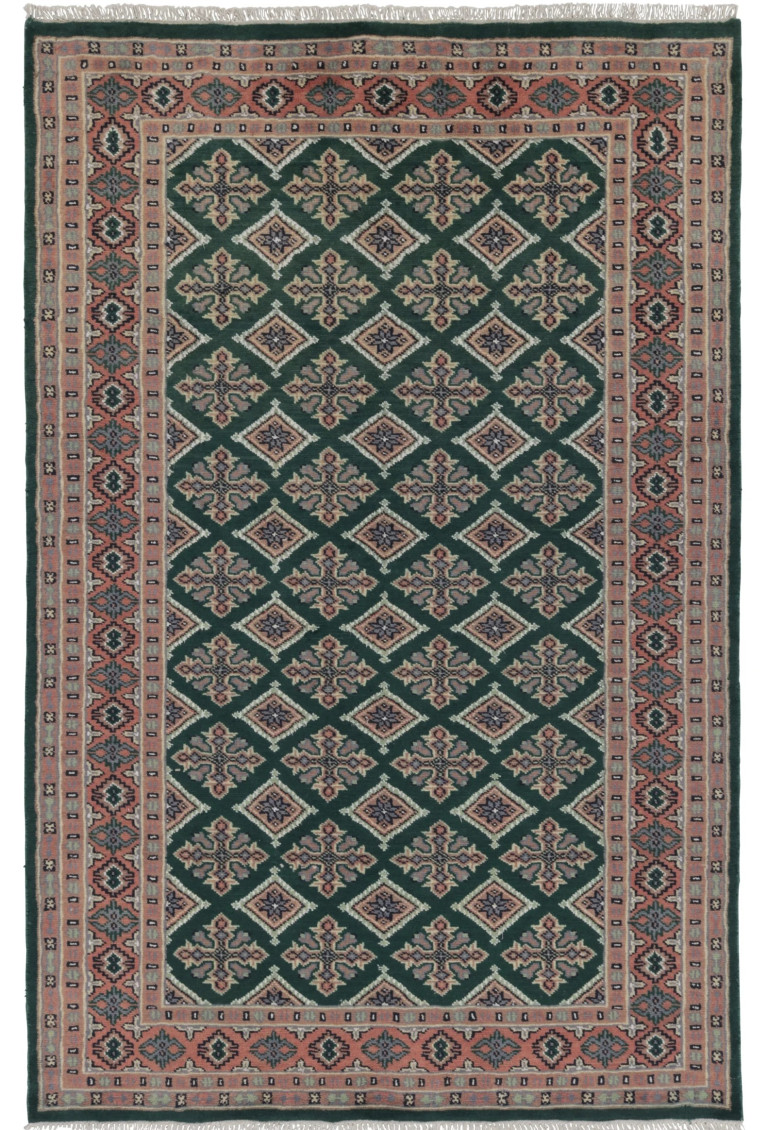
Bokhara Rugs: Traditional Weaving and Global Influence
Among the most recognizable and influential traditions in the history of oriental carpets, Bokhara rugs represent a remarkable fusion of tribal heritage, geometric precision, and centuries-old weaving expertise. Known worldwide for their iconic repeating motifs, deep colors, and refined craftsmanship, Bokhara rugs have become enduring symbols of Central Asian textile artistry. Although the name “Bokhara” is commonly associated with the historic city of Bukhara in present-day Uzbekistan, many rugs classified as Bokhara originate from Turkmen weaving communities across regions including Turkmenistan, Afghanistan, and surrounding areas. The name reflects the historical trade routes through which these carpets traveled and became known internationally.
Read the Feature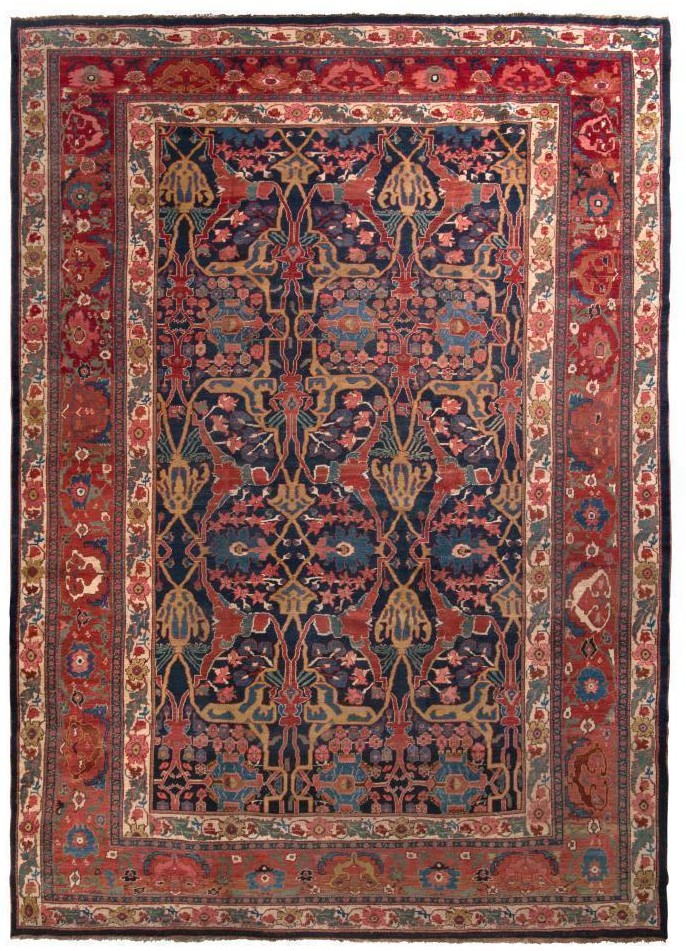
Bidjar Rugs: Persian Weaving Mastery and Historic Design
Among the most respected traditions of Persian carpet weaving, Bidjar rugs represent an extraordinary combination of strength, artistry, and technical mastery. Often referred to as the “Iron Rugs of Persia” because of their exceptional durability and dense construction, Bidjar carpets have earned a distinguished reputation among collectors, designers, and institutions worldwide. Originating from the town of Bidjar in western Iran’s Kurdistan region, these rugs reflect centuries of Kurdish weaving traditions combined with the broader artistic heritage of Persian carpet design. Their remarkable craftsmanship, sophisticated patterns, and rich color palettes have made them some of the most desirable examples of antique Persian carpets.
Read the Feature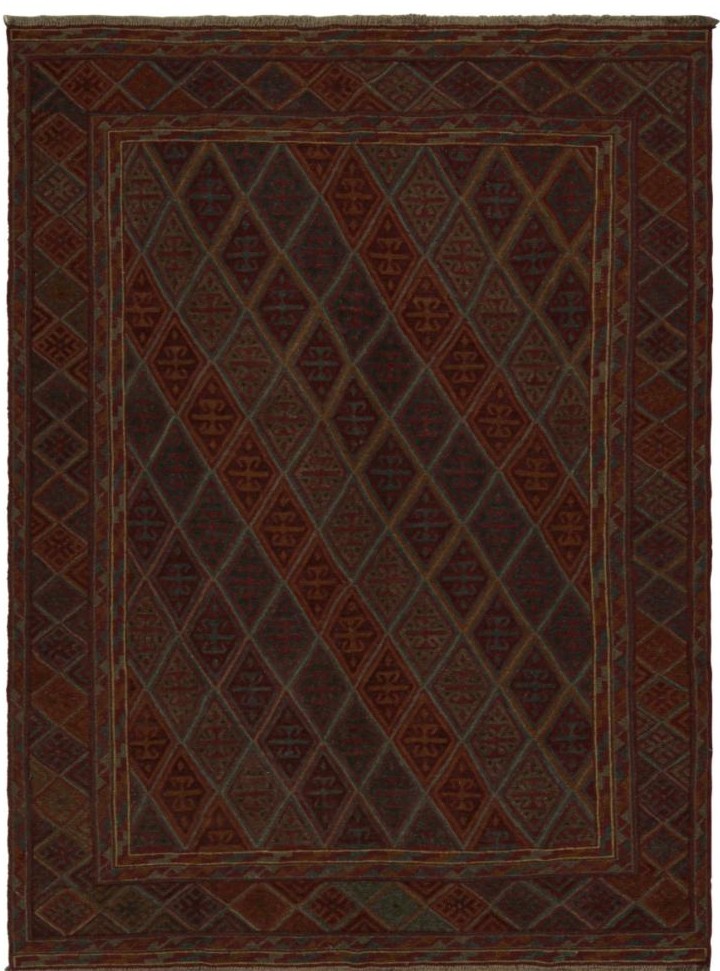
Baluch Rugs: Tribal Heritage and Handmade Textile Art
Among the great tribal weaving traditions of the Middle East and Central Asia, Baluch rugs occupy a distinctive position defined by nomadic craftsmanship, symbolic design, and remarkable artistic individuality. Woven by Baluch tribal communities spread across present-day Iran, Afghanistan, and Pakistan, these carpets represent one of the most compelling expressions of tribal textile culture. Unlike court carpets produced for royal patronage or urban workshops serving commercial markets, Baluch rugs emerged from deeply rooted tribal traditions. They were woven for everyday life, spiritual practice, ceremonial use, and domestic environments. As a result, they retain a powerful sense of authenticity that continues to resonate with collectors, designers, and institutions around the world.
Read the Feature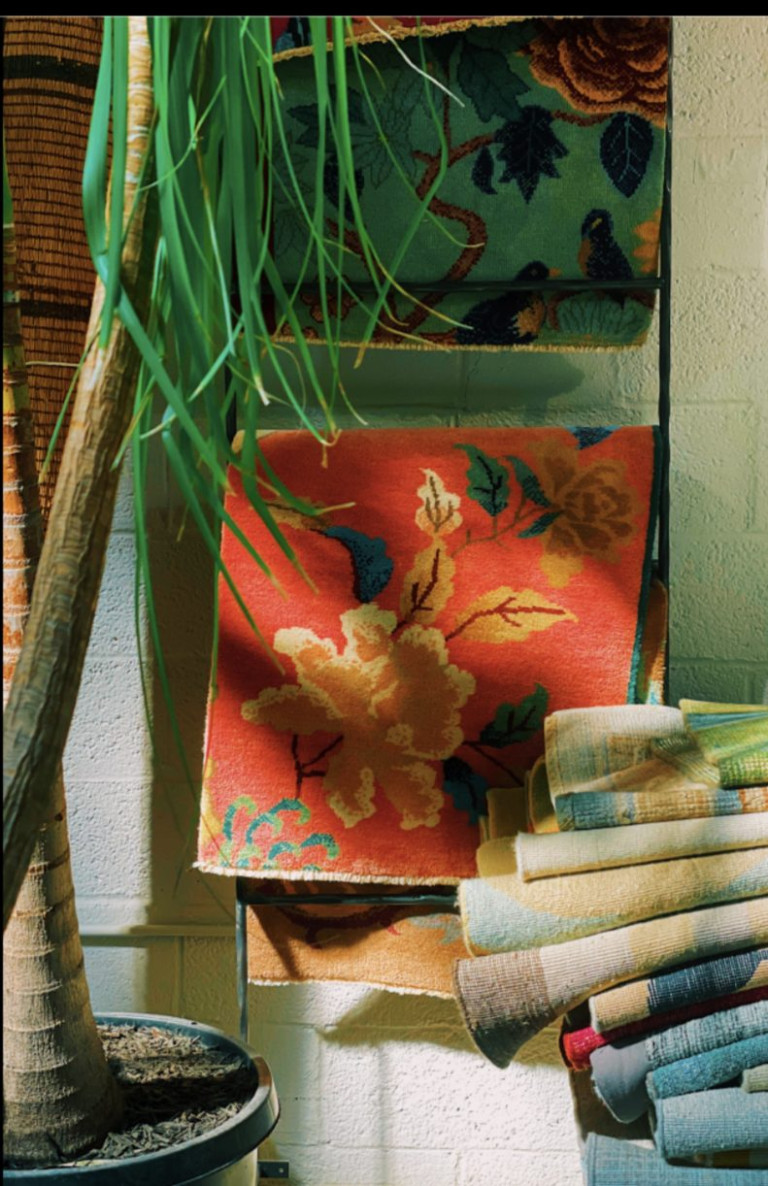
Cotton Material in Rugs: The Renaissance of Natural Fiber Floor Coverings
Cotton rugs emerge from a myriad of cultural traditions, particularly notable in the Indian subcontinent's dhurrie tradition and American colonial craft practices. Unlike their Persian or Turkish counterparts, which emphasized pile construction in wool and silk, cotton rugs developed alongside modernist principles of form following function. This alignment with modernism wasn't coincidental – cotton's natural properties lent themselves to geometric patterns and clean lines that would later become hallmarks of 20th-century design. Cotton's journey in floor coverings traces back to ancient civilizations, but its prominence in modern rug making emerged significantly during the Industrial Revolution.
Read the Feature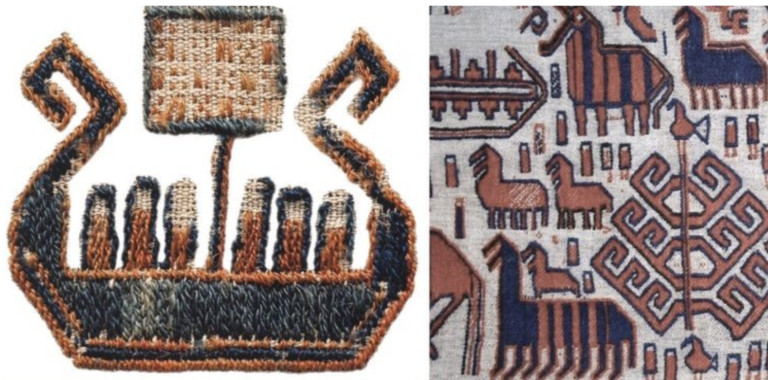
An Overview of the Överhogdal Tapestry: Europe’s Oldest Preserved Textiles
Some of the most remarkable cultural treasures in Europe are the Överhogdal textiles, dating back to the end of the Viking Age, specifically 1040-1170 AD. These textiles represent the oldest preserved interior fabrics in our time. The collection comprises five parts, four of which are crafted using a looping technique, while the fifth employs a double weave. Rich in diverse motifs, the tapestry features animals, people, Viking ships, buildings, and trees. The discovery of the tapestry is credited to artist Paul Jonze, who found it in 1910 in a store-shed adjacent to Överhogdal church. Jonze vividly describes his find, noting that the tapestry was not neatly rolled or hung but lay crumpled on the floor amid dusty remnants of interior decorations and various items accumulated over the years in similar storage spaces, such as old birch timber, wingless angels, and other assorted artifacts. The exact duration it had spent in the wood store-shed remained undetermined.
Read the Feature