Style
Tibetan
Every piece in this style, across all of our collections. Narrow them down by size and price.
- Under 6 x 9
- Runners
- 6 x 9
- 8 x 10
- 9 x 12
- 10 x 14
- 12 x 15
- Over 12 x 15
Origin ▼
Style ▼
Material ▼
Width
Length
To connect with a specialist, click here
Stories from the Tibetan Archive
Essays, artist dialogues, and provenance notes drawn from Rug & Kilim’s editorial desk.
What Makes Tibetan Wool the Gold Standard for Custom Rugs
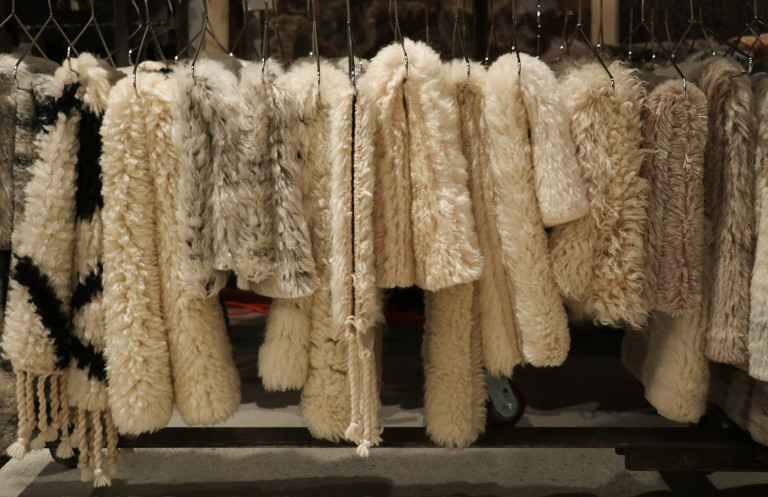
Every great rug begins long before the loom. It begins on the animal, in the place, in the particular conditions that made the fiber what it is. And among all the wools that have ever been spun into a carpet, few can rival the wool of the Tibetan highlands, a material whose superiority is not a matter of marketing but of altitude, climate, and the unhurried logic of the natural world. The sheep of the Tibetan plateau live at elevations that would defeat most living things, thin air, brutal cold, a growing season measured against a sky closer than it has any right to be. Nature's answer to that severity is the fleece. To survive the plateau, the animal must grow a wool of exceptional density and, crucially, of exceptional lanolin content; the natural oil that coats each fiber, repels water, resists soil, and lends the finished yarn a luster and resilience that lowland wools cannot approach. What is hardship for the animal is a gift to the weaver.
Read the Feature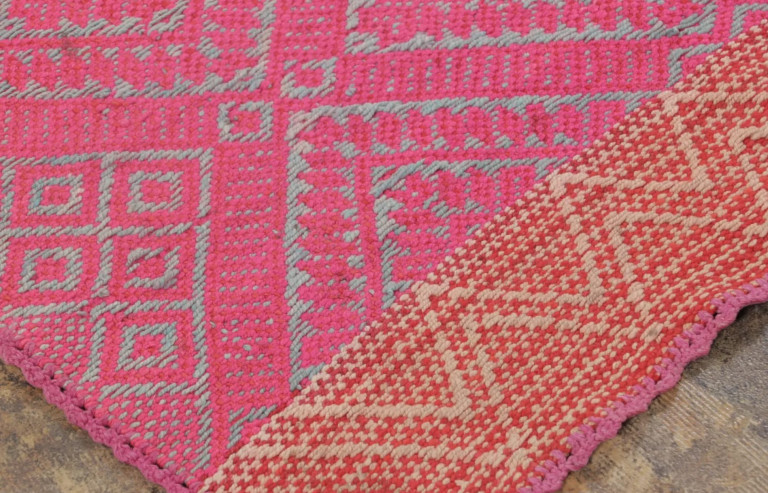
Vintage Andean Frazada Kilim and the Three Thousand Years of Living Memory Held in Its Weave
The most sophisticated rooms in America are being furnished, increasingly, with an object its makers never intended to sell. The Andean frazada, a handwoven kilim produced for centuries in the high villages of Peru and Bolivia for one reason only, to survive the cold, has become one of the most quietly coveted textiles in contemporary design. Collectors who could specify anything are choosing these. The reason has nothing to do with trend, and everything to do with what a frazada actually is. To understand a frazada, you must first understand the altitude. Above four thousand meters in the Andes, higher than any peak in the contiguous United States, in air so thin that newcomers move slowly and sleep poorly for days, the cold is not a season. It is a constant. It arrives every night, regardless of the calendar, and it has arrived every night for as long as people have lived in these mountains. The frazada was the answer to that cold: a thick, dense, hand-woven wool blanket, made not for sale, not for export, not for the floors of distant apartments, but for survival. For warmth. For the bed of a family that would not otherwise make it through the dark.
Read the Feature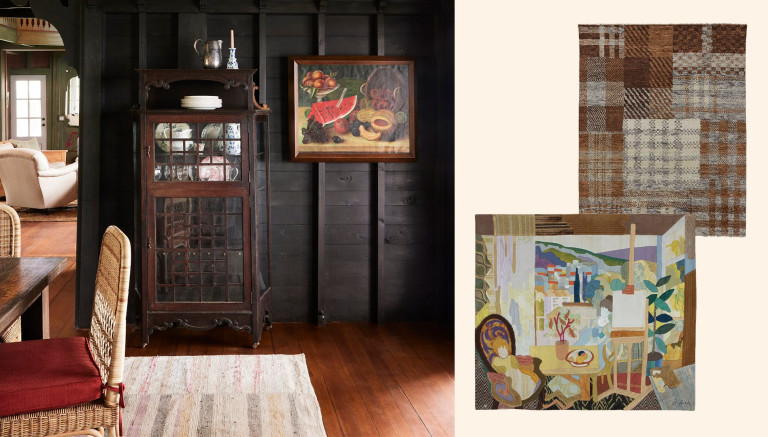
How the World’s Most Serious Art Spaces Are Rewriting the Rules of the Floor and the Contemporary Home
There is a room at Hauser & Wirth Somerset; the gallery that occupies a converted farmhouse in the English countryside, where Pipilotti Rist installations have shared walls with Phyllida Barlow sculptures and where the building itself feels like an argument against the idea that serious art requires a white cube to be taken seriously, where a single large antique textile lies on the stone floor beneath work of radical contemporary ambition. It does not announce itself. It simply holds the room together with the authority of an object that has been doing exactly this, in exactly this way, for several centuries longer than the art above it has existed. The artists whose work hangs on those walls have spent their careers thinking about surface, material, and the relationship between an object and the space it occupies. The carpet understood all of this before any of them picked up a brush.
Read the Feature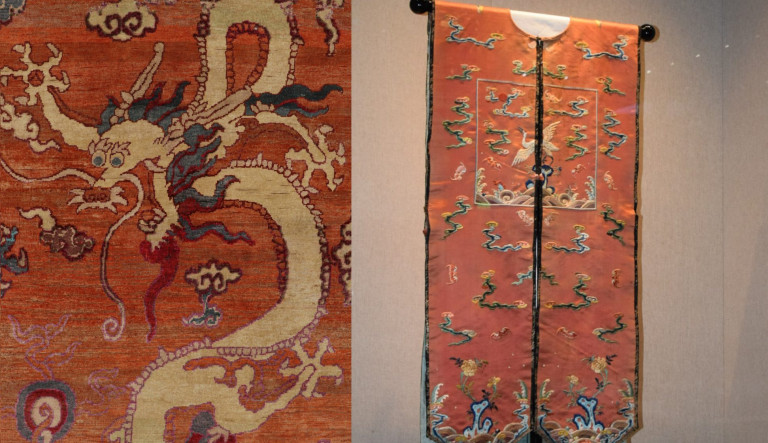
A Guide to History and Significance of Chinese and Tibetan Dragon Pictorial Rugs
Dragon, as the perfect representation of cyclical nature of life, where from every end, a new beginning emerges, is also a perfect marriage of Chinese spiritual heritage and art. Our special dragon rugs’ line is a commemoration of the spirit of the Chinese dragon, wherein each rug complements the other in the collection and reflects continuity of age-old designs and transformations in our modern touch to these pictorial rugs. At the same time, dragons, or Chinese traditional designs at large, also represent a commitment to regenerative and cyclical nature of life—thus birthing the modern concept of sustainability.
Read the Feature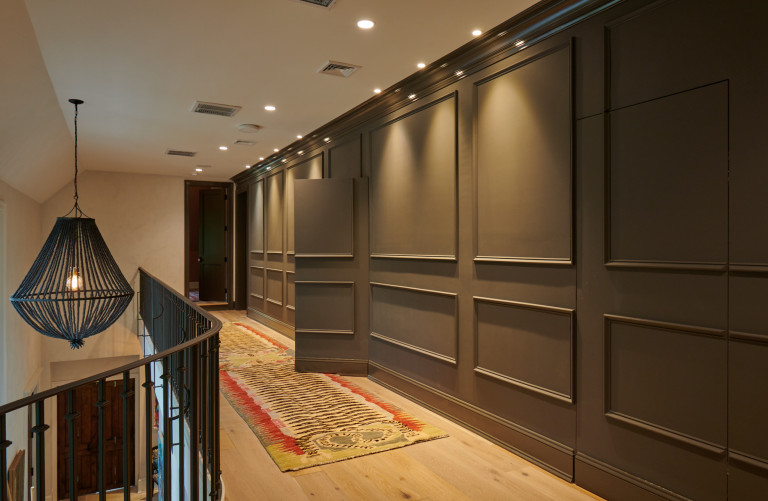
A Brief History of Tiger Rugs: The Art and Design of an Iconic Class of Animal Pictorials
Above, custom runner by Rug & Kilim inspired by Tibetan Tiger rugs adorns an upstairs hallway in the work of Cordaro Design. 2022, as the first year of the tiger rug renaissance, was no less than a metamorphosis in the world of fashion, art and design. Art went beyond the obvious — it became a manifesto; a modern language of design that transcends boundaries and celebrates the essence of wild. 2022 as the Chinese year of the Tiger, witnessed the design and fashion industry embracing tigers as the spirit animal and design muse. "Tomorrow’s Tigers" — a global commitment initiated by the World Wide Fund of Nature to double the numbers of tigers around the world — was the featured project ‘Art For Your World’ which helps tackle the climate crisis through the medium of art. It was a major fundraising event observed by twelve acclaimed contemporary designers who introduced new interpretations of tiger rugs, as inspired from predecessors and the wild tiger, and exhibited at Sotheby's London.
Read the Feature
A Glossary of Handmade Rugs and Kilims: Understanding Terms, Types and Techniques Past and Present
Referring to the art style characterized by using shape and color withdrawn from traditional repetition or realism. Abstract rugs — sometimes referred to as art rugs — capture an expressive nature that reads as a very modern style, though many abstract rugs draw inspiration from works of the same art style in the mid-century. One of the more widely known mid-century lineages of this style is abstract expressionism, named for the literal "expressionists" of the 1950s. Some of the most notable names behind this style include Jackson Pollock and Mark Rothko. Referring to a lineage of nomadic Persian rugs (sometimes referred to as “Avsar” in the alternate spelling). Afshar rugs hail from the eponymous tribe in the region of Northeastern Iran.
Read the Feature