
France
9'6" X 9'6" (2.90 m x 2.90 m)
Out of Stock (Inquire for Custom)
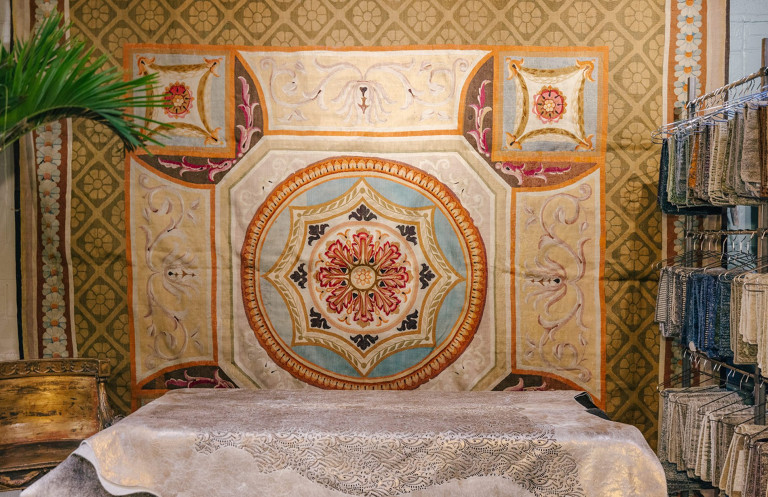
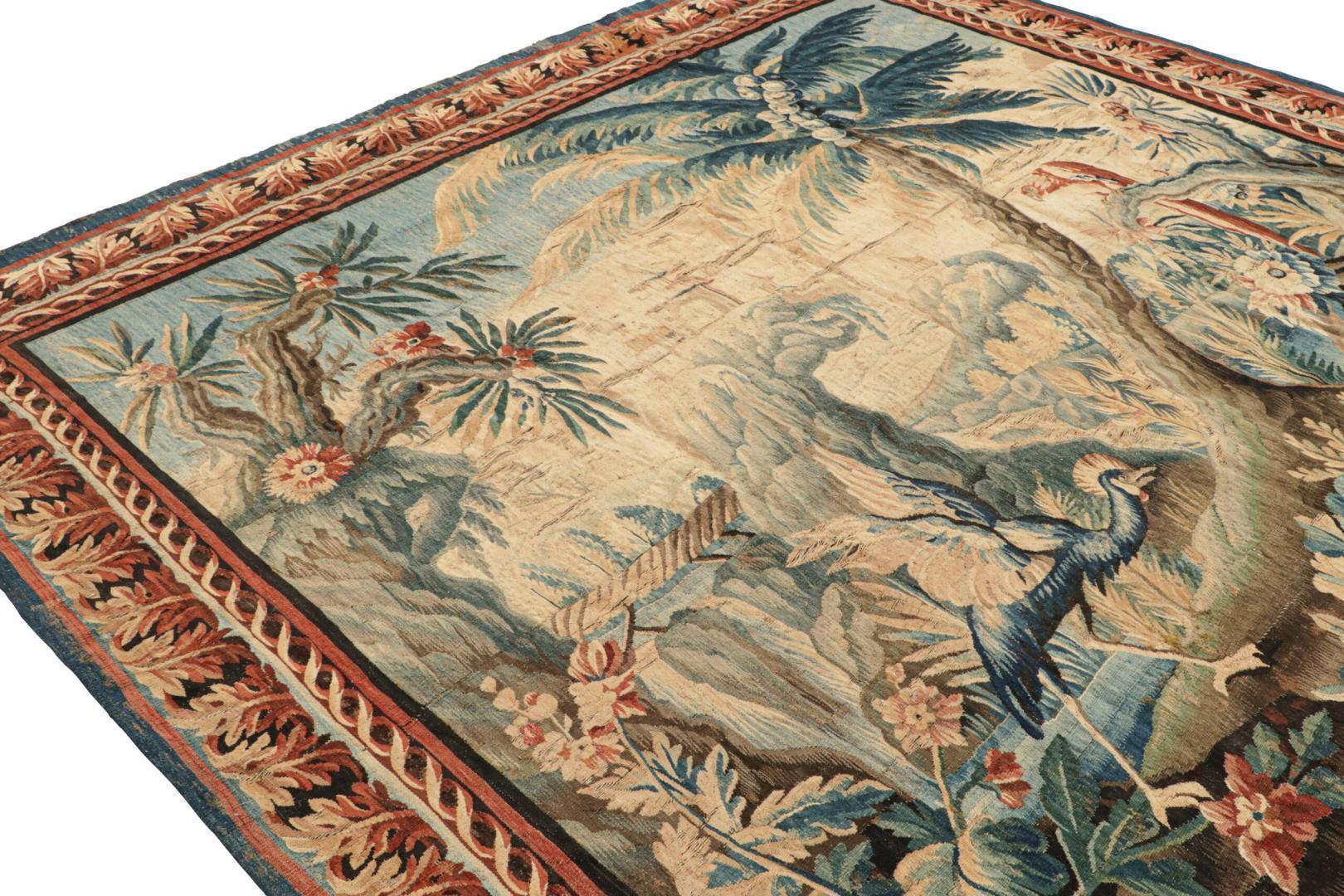
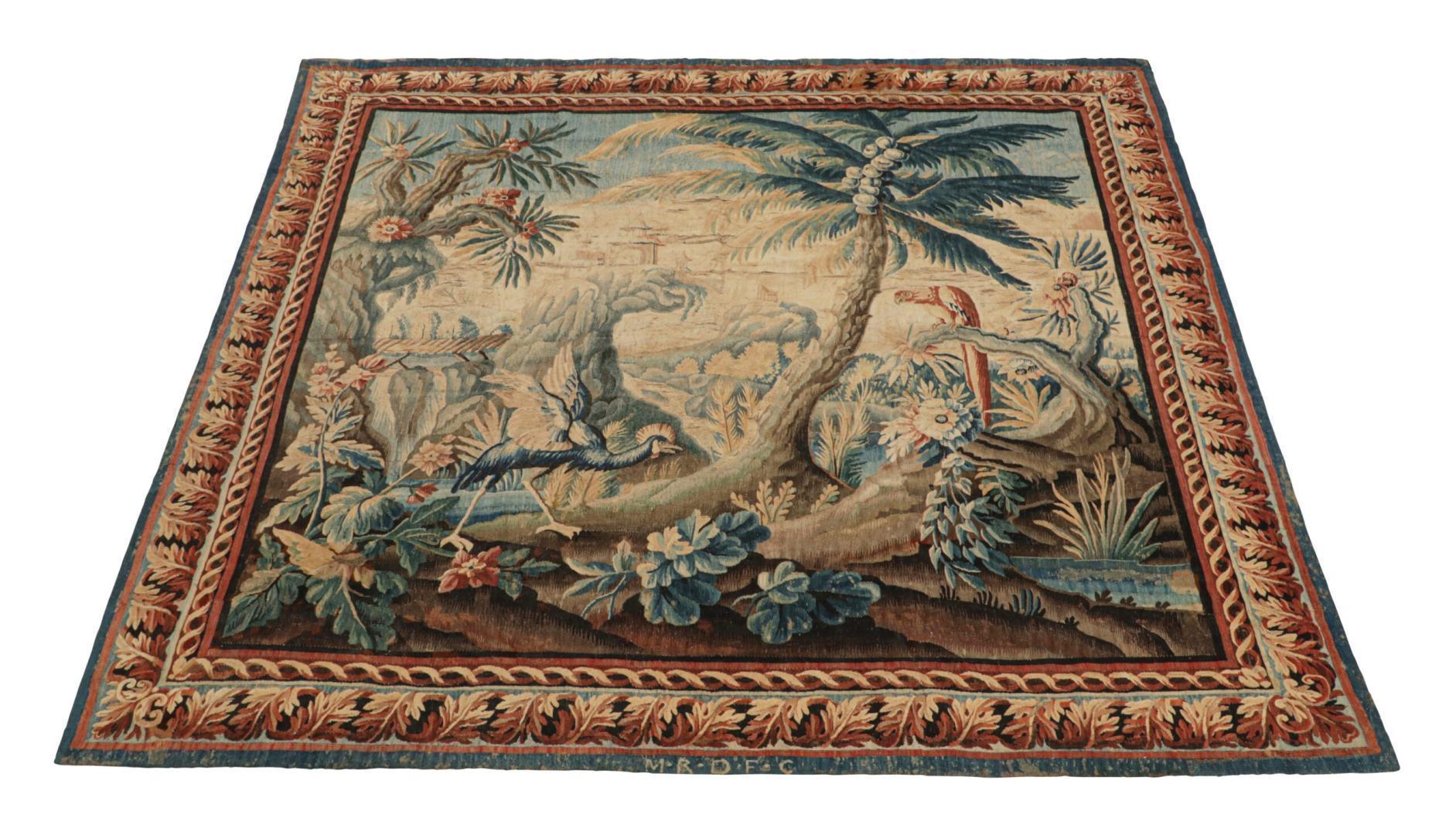
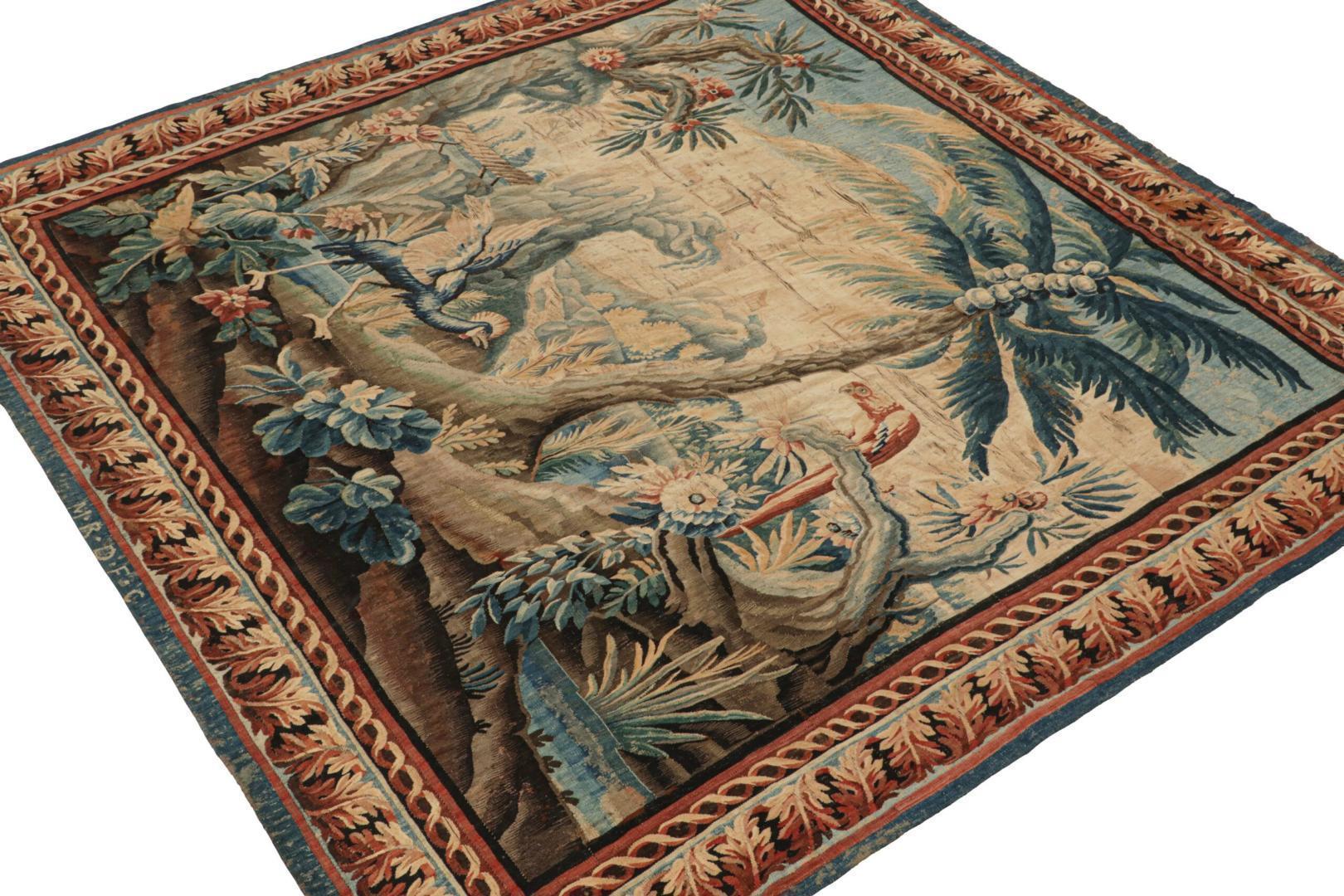
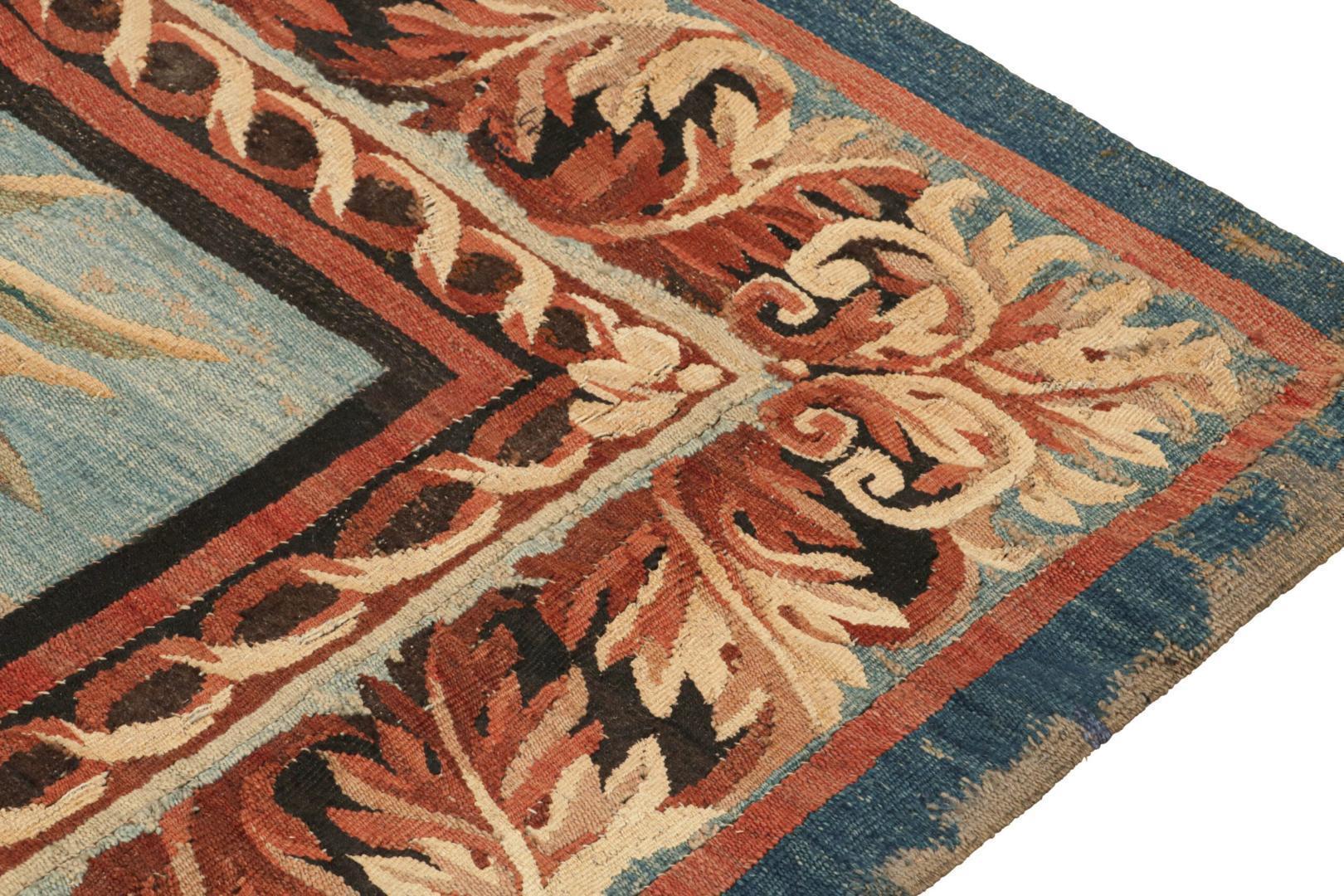
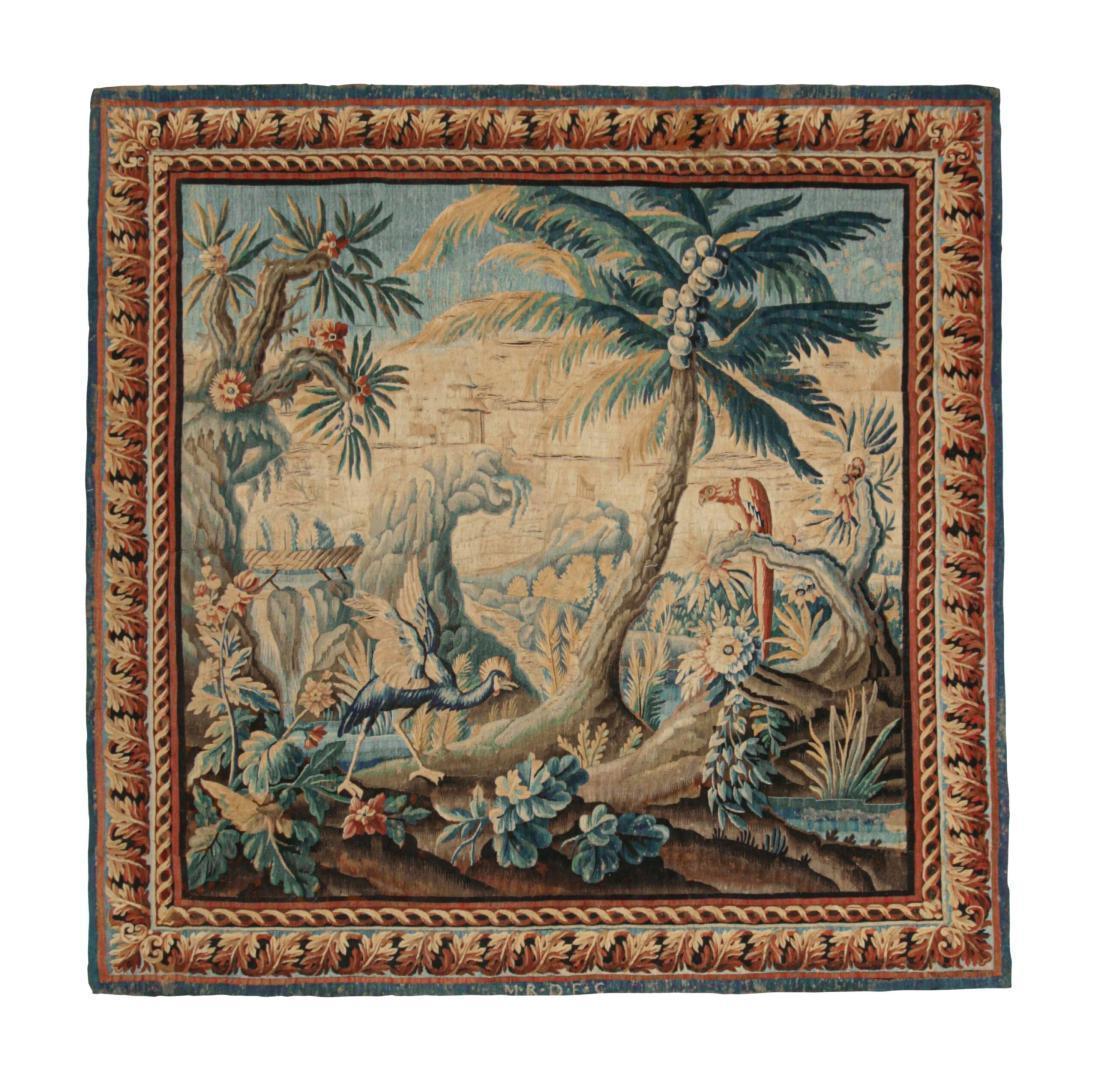
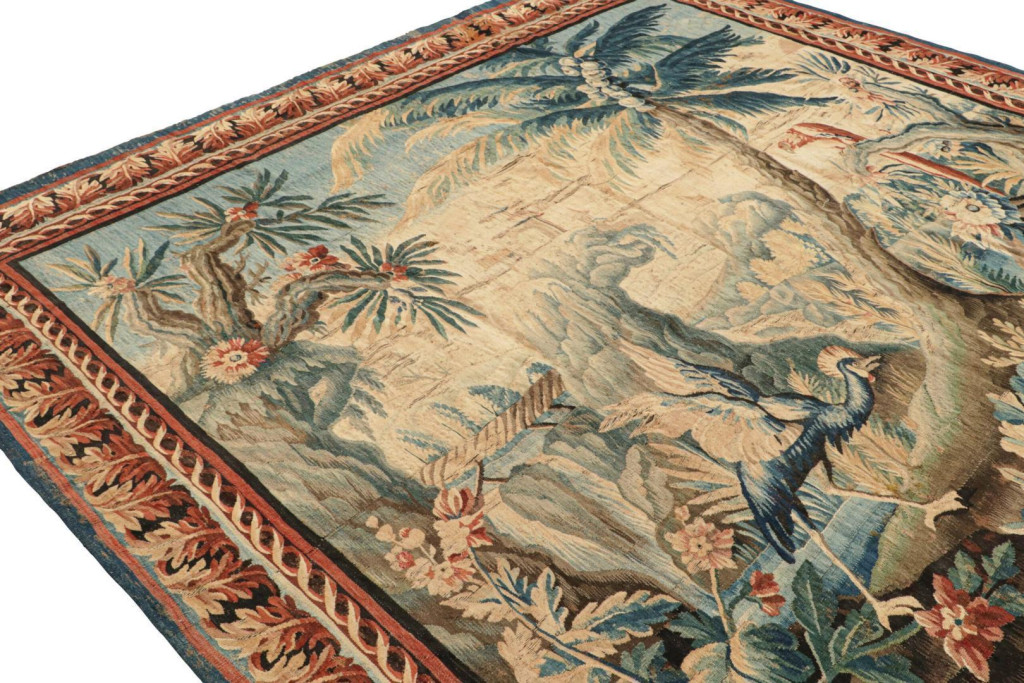
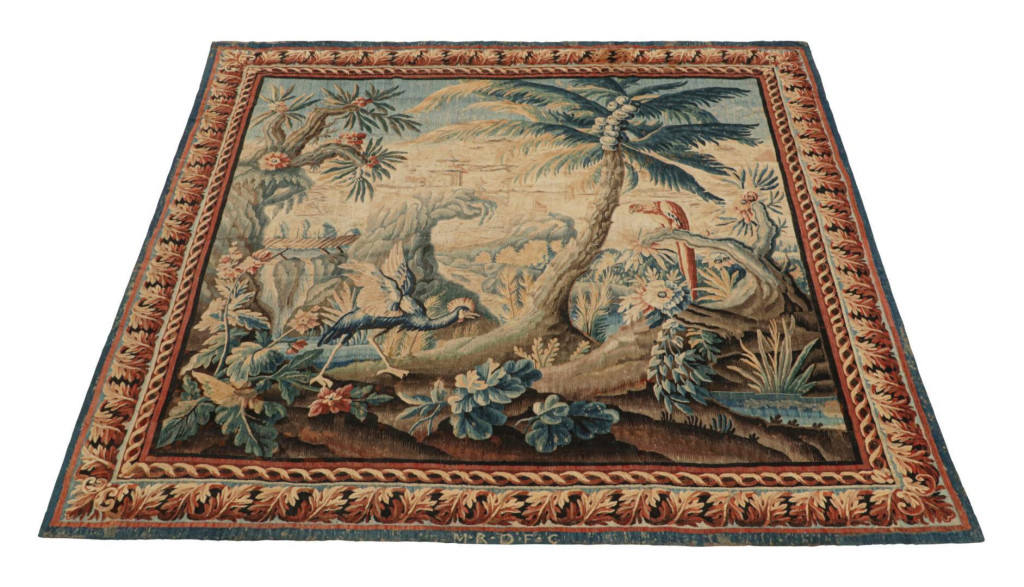
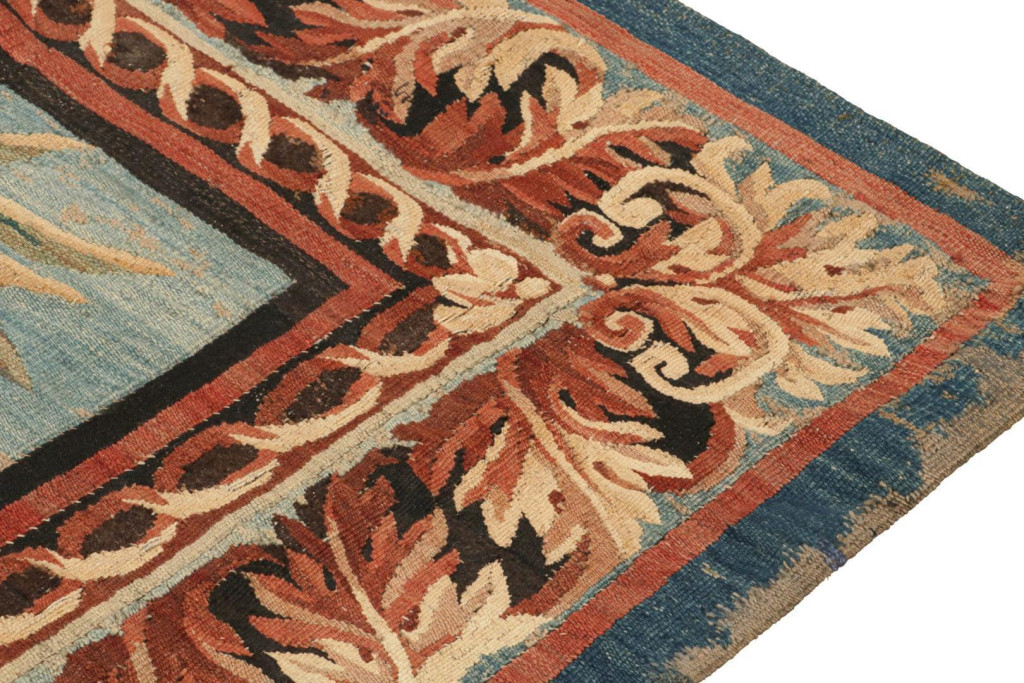
Antique French Aubusson Tapestry in Beige and Blue Chinoiserie-Style Pictorial
"Josh and his team have supported my interior design work, as well as my personal projects, for over 20 years. Their inimitable combination of creativity, personal attention, professionalism and joie de vivre are irresistible."
— Claire Fleming Peters, Fleming Peters
A standard since our inception upheld across every acquisition,
transaction, and delivery.
45+ Year Old Institution
More than four decades of expertise and stewardship, under the leadership of our Principal, Jahanshah "Josh" Nazmiyal.
Favorable Return Policy
Our return policy is 48 hours upon receipt allowing you to confirm the purchase in your space with confidence.
Product Warranty
Each rug is hand selected or produced through the most reputable sources under the direct supervision of our Principal.
Trusted Global Delivery
Reliable worldwide delivery handled with care, precision and constant communication.
Exceptional Support
Attentive, knowledgeable guidance before and after purchase from our dedicated team of specialists.
Long Term Care
We stand behind every piece we place and remain a resource to our clients for the lifetime of their collection.
- Measurements: 9'6" x 9'6" ( 2.90 m x 2.90 m )
- Categories: Default
- Classification: Aubusson, Circle/Oval/Square, Distressed, European, Kilim/Flat Weave, Pictorial, Tapestry/Textile/Wall Hanging
- Origin: France
- SKU: 25490

Specifications:
Stories from the Default Collection
Essays, artist dialogues, and provenance notes drawn from Rug & Kilim’s editorial desk.
Provenance, Structure, Intelligibility: The Three Pillars of Serious Collecting
Anyone can acquire a rug. To collect one, to bring it into a serious collection with the confidence that it belongs there, requires a discipline, and that discipline rests on three questions. Across four decades of building one of the most significant archives in the country, this house has come to evaluate every object through the same three. They are the difference between buying and collecting, and they are worth setting down plainly, because they apply as readily to a Safavid fragment as to a signed Aubusson, and because they are the same three questions, at bottom, that a curator at the Metropolitan or a specialist at Christie's brings to any object of consequence.
Read the Feature
Savonnerie, Aubusson, Gobelins: The Three Ateliers That Defined What Europe Believed a Rug Could Be
In the final years of the sixteenth century, the treasury of France was hemorrhaging. Not to war alone though there had been enough of that but to the East. French silver was flowing steadily toward Persia and the Levant in exchange for knotted-pile carpets, objects of such refinement and such authority that no European workshop had yet produced anything capable of competing with them. Henri IV, who had survived the Wars of Religion and the bankruptcy of a kingdom to sit on the French throne, was not a man inclined to accept a problem he could solve. He installed Pierre Dupont — weaver, entrepreneur, and the most technically accomplished carpet-maker in France in the galleries of the Louvre itself, in workshops beneath the palace's own roof, with a single instruction: make something that does not require us to send money to Persia.
Read the Feature
Rugs, Tapestries, and the Return of Sacred Interiors: The Fifth Wall of Heirloom Textiles
Enter a collector’s Renaissance salon, where gilded light grazes the shoulder of a Ghirlandaio Madonna and the stillness of a sculpted torso speaks in the silence. Amid this elegance, the floor carries more than weight—it carries narrative. Here lies not just a rug, but a woven fresco, steeped in geometry, texture, and time. It hums like a Savonnerie carpet, blooms like an Aubusson tapestry, and speaks with the visual rhythm of a Raphael altarpiece. At Rug & Kilim, we do not view rugs as mere furnishings. We position them as portable chapels of artistry, loom-born canvases that deserve their place among the highest expressions of fine art. Like the tapestries that once graced European castles and cathedrals, heirloom rugs were once sacred commissions—symbolic, status-laden, and spiritually charged. The time has come to restore their dignity, and to elevate them from décor to design doctrine.
Read the Feature
A Brief Guide to Aubusson Tapestries
The exceptional craftsmanship and art of weaving Aubusson tapestry received international recognition when it was added to the list of Intangible Cultural Heritage of Humanity by UNESCO in 2009. In response to this prestigious recognition, the project for the Cité internationale de la tapisserie et de l'art tissé, translated as the International House of Tapestry and Woven Art, was initiated in 2010. This endeavor aimed to establish a dedicated institution that would serve as a cultural center, celebrating the art of tapestry and woven art, particularly the Aubusson tradition. The Cité internationale de la tapisserie et de l'art tissé serves as a testament to the enduring legacy of Aubusson tapestry and its cultural importance. It provides a space for exhibitions, education, and the preservation of the rich heritage associated with this exceptional craft. Through such initiatives, the art of Aubusson tapestry continues to be valued and promoted on a global scale.
Read the Feature
A Brief Introduction to Verdure Style of European Tapestries
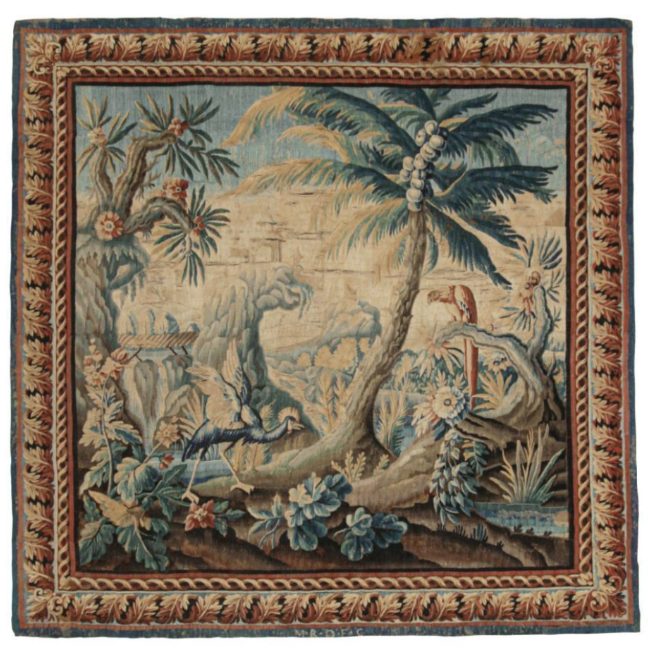
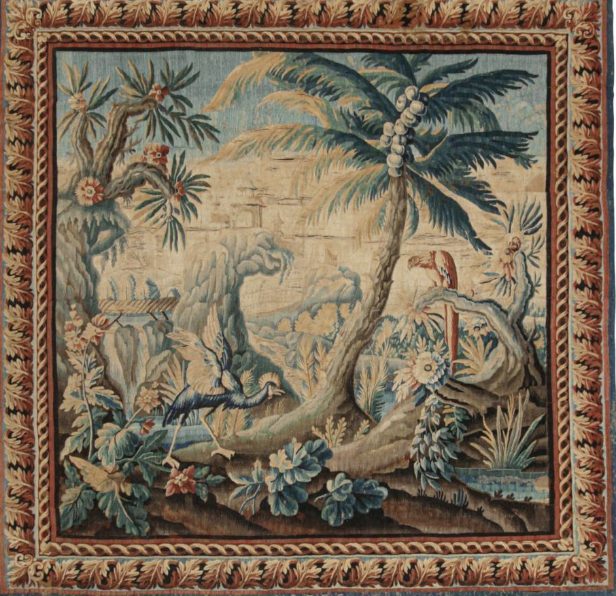
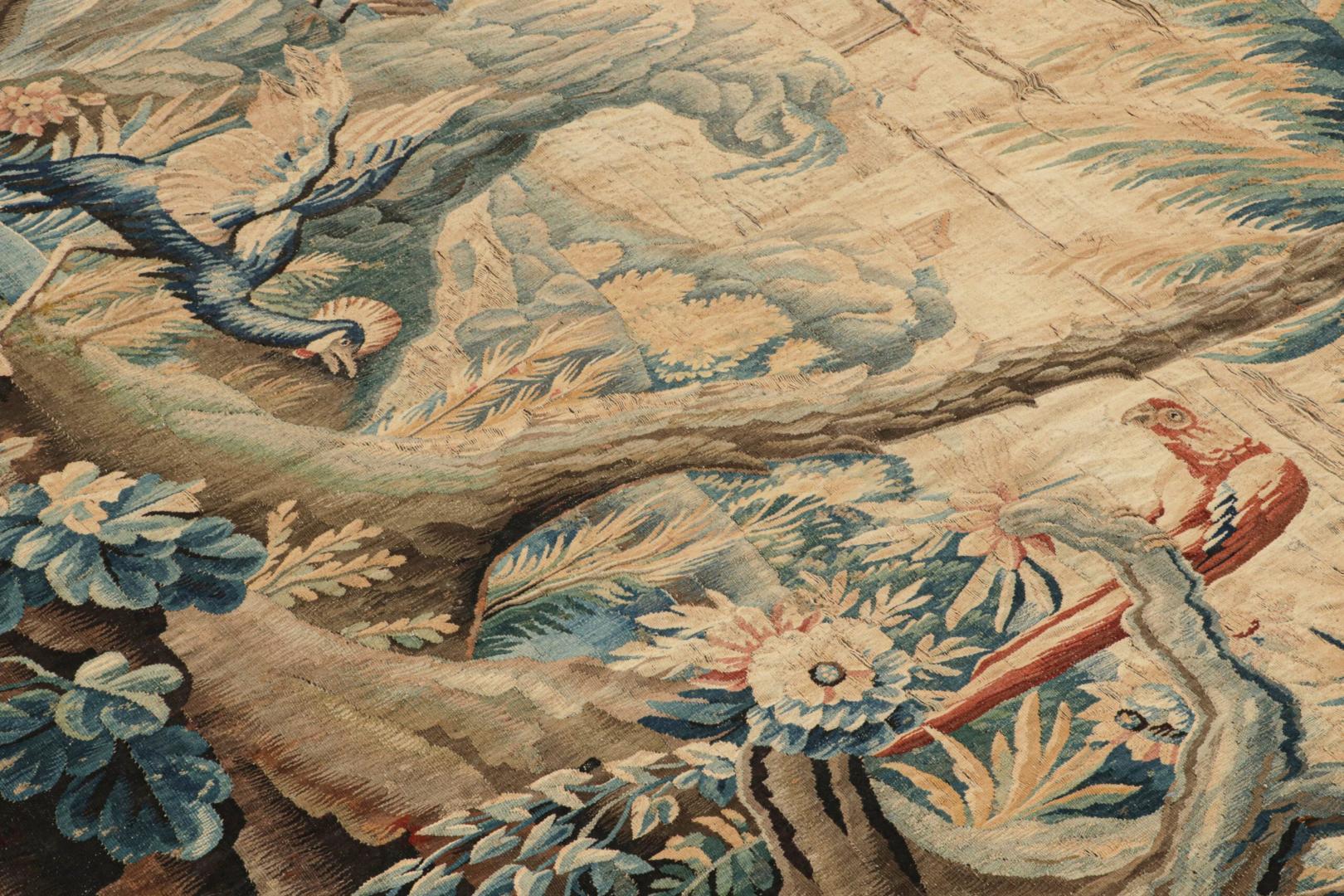
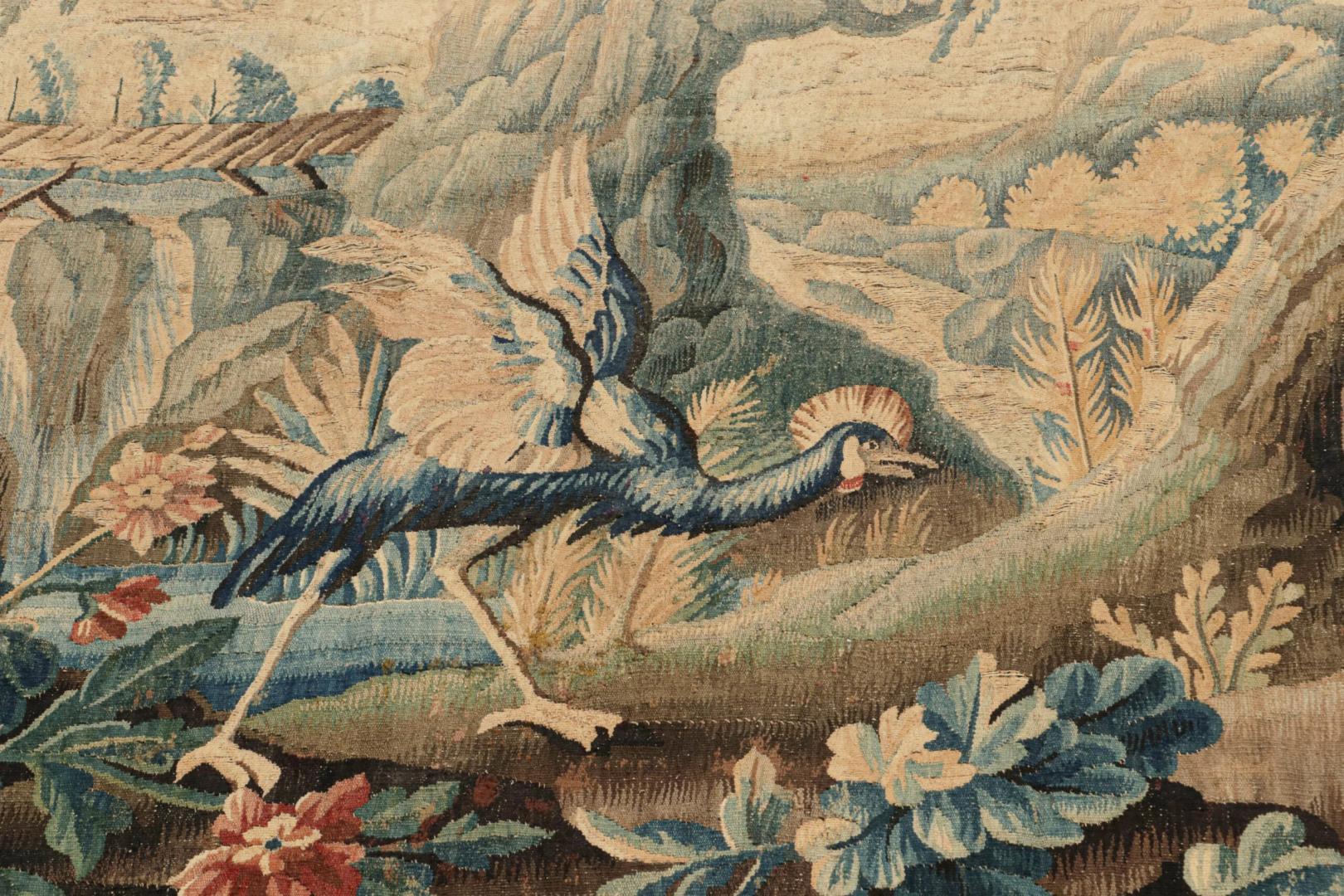
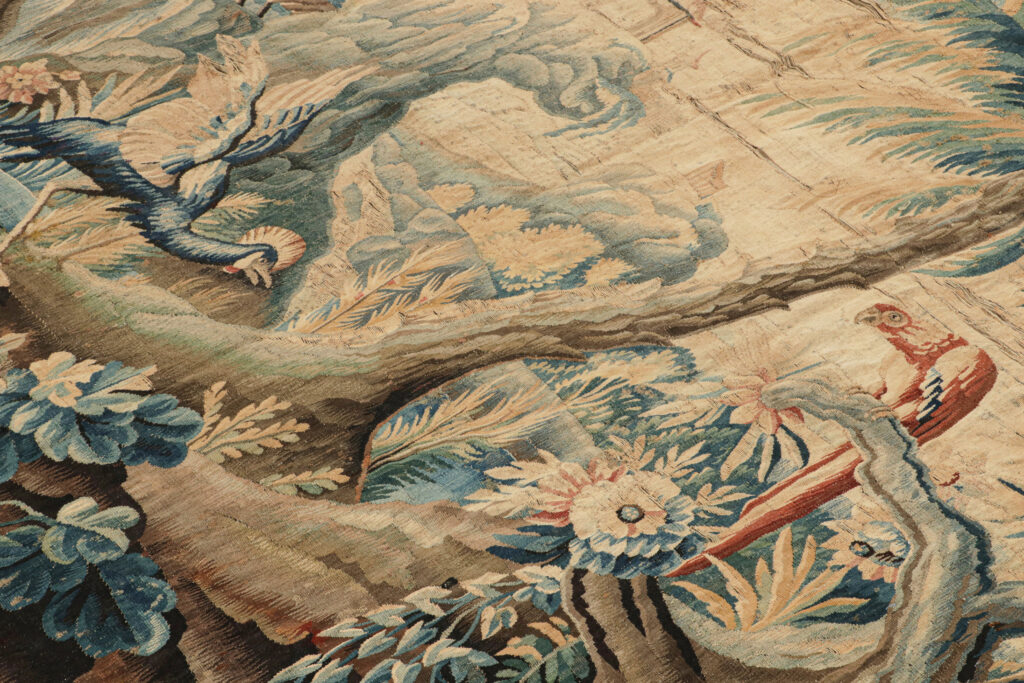
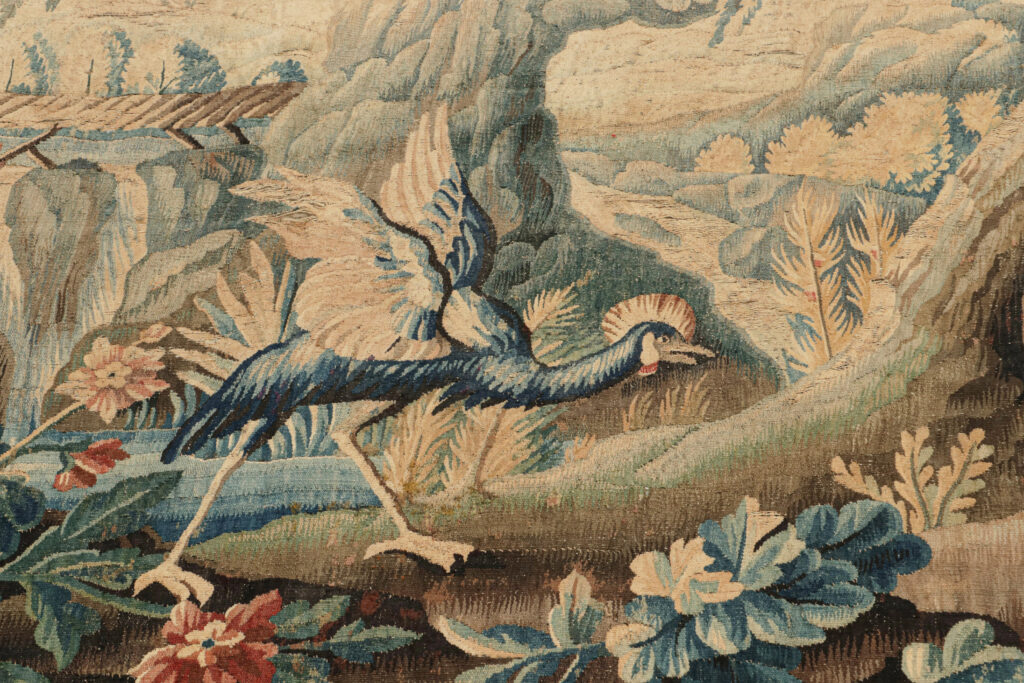
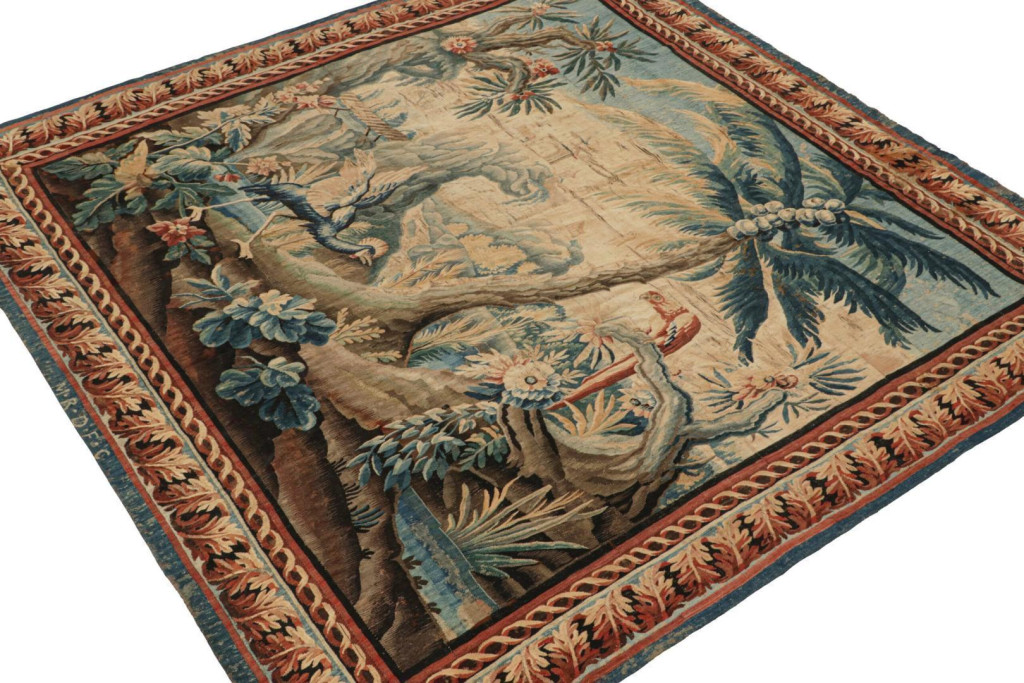
Above is our Antique French Aubusson Tapestry featuring Chinoiserie-style pictorials, handwoven in wool circa 1660-1670. This 17-century Aubusson enjoys a bold depiction of Chinoiserie style pictorials in brown, gold & beige. Keen eyes will admire birds and trees of magnificent detail and unusual style. Connoisseurs will note the latter as an extremely collectible feature—like few R&K Principal Josh Nazmiyal knows of its kind. Chinoiserie, a term that emerged in the mid-18th century, reflects the European fascination with the exotic luxury items flowing in from East Asia, including porcelain, silk, and lacquerware. During the Rococo period, designers sought to imitate and adapt oriental motifs and ornaments, creating a fantasy world inspired by Chinese, Japanese, and Indian influences. The term "Chinoiserie" encompasses a variety of frequently occurring motifs. In 18th-century Britain, China was perceived as a mysterious and distant place, inspiring designers to create objects with fantastical landscapes, pavilions, pagoda roofs, mythical creatures like dragons, and figures dressed in Chinese attire. Chinoiserie blended reality and imagination, capturing the allure of the East in a whimsical and exotic manner.
Read the Feature
Frida Hansen as a Bridge between Norwegian and European tapestry
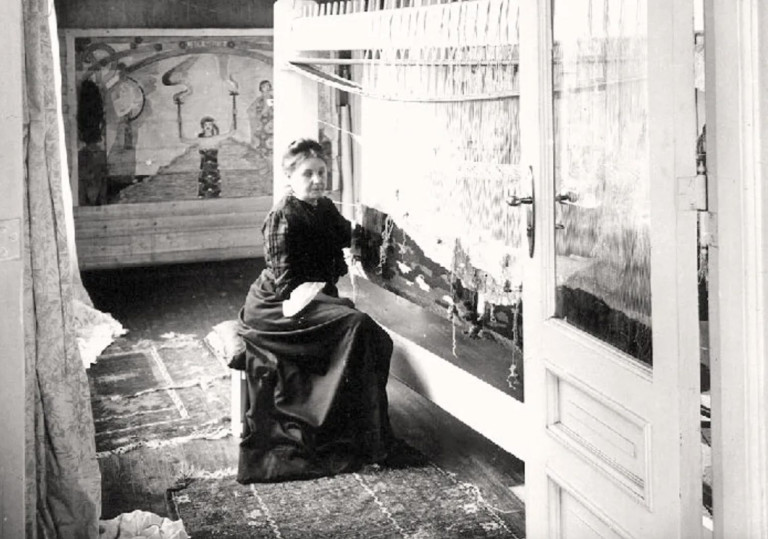
“I would take up the old Norwegian weaving, renew it, make it available, and also make it a means of employment. And so began my life’s work, which has fulfilled my mind, my artistic desires, and my life.” –Quote from Frida Hansen family papers, as reported in Anniken Thue’s biography, Frida Hansen: En europeer i norsk tekstilkunst (Frida Hansen: A European in Norwegian Textile Art) Universitsforlaget, 1986. Frida Hansen (1855-1931) was a Norwegian textile artist renowned for her work in the Art Nouveau style. Regarded as a bridge between Norwegian and European tapestry, Hansen's weaving designs are considered among the finest in recent European textile art. Museums such as the National Museum – Museum of Applied Art in Oslo, Drammen Museum, Stavanger Art Museum, and the Nordic Museum in Stockholm house her works. The rediscovery of "Southward (Sørover)" is a celebration of Hansen's mastery of the Art Nouveau style and her contributions to Norwegian tapestry traditions. This piece, centered on a theme of Norse mythology, showcases her skill in combining intricate patterns with areas of clear, vibrant colors—a nod to historical Norwegian tapestries. Notably, Hansen created 31 large pictorial flat-weave tapestries in her lifetime, producing at least one very large tapestry annually from the late 1890s to around 1910.
Read the Feature


R&K Image Studio
NEWThe R&K Image Studio is a new visual workspace designed to present the Rug & Kilim collection with clarity, restraint, and precision — in your space or any space you imagine.
This tool allows you to view, refine, and prepare imagery drawn directly from the pieces in our archive. They can be visualized cleanly, isolated thoughtfully, and adjusted for presentations, proposals, and private viewings, without altering the integrity of the original work.
Default
France
9'6" X 9'6" (2.90 m x 2.90 m)
Out of Stock (Inquire for Custom)
Antique French Aubusson Tapestry in Beige and Blue Chinoiserie-Style Pictorial
"It's rare to find a rug company that offers unique antiques, curated with a historical eye. And the best quality customization for anything you might need. All while being treated like family - love those guys."
— Andre Mellone, Studio Mellone
- Measurements: 9'6" x 9'6" ( 2.90 m x 2.90 m )
- Categories: Default
- Classification: Aubusson, Circle/Oval/Square, Distressed, European, Kilim/Flat Weave, Pictorial, Tapestry/Textile/Wall Hanging
- Origin: France
- SKU: 25490