
The Modern Kilim Renaissance: Styling Rez Kilims in Contemporary Interiors
June 13, 2025
1920s on the Diagonal: Art Deco Rugs Complementing Tamara De Lempicka & Erté
June 17, 2025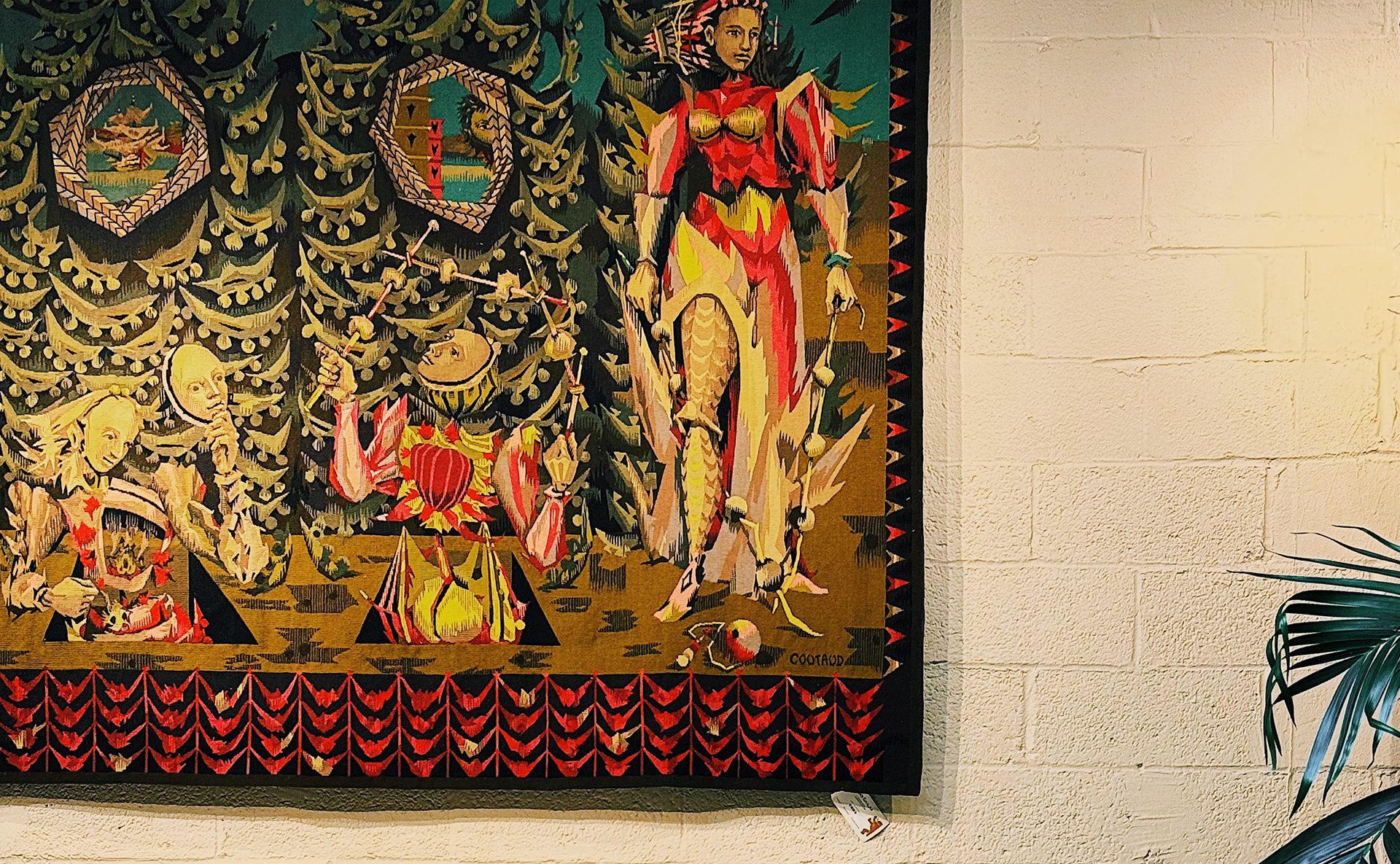
Enter a collector’s Renaissance salon, where gilded light grazes the shoulder of a Ghirlandaio Madonna and the stillness of a sculpted torso speaks in the silence. Amid this elegance, the floor carries more than weight—it carries narrative. Here lies not just a rug, but a woven fresco, steeped in geometry, texture, and time. It hums like a Savonnerie carpet, blooms like an Aubusson tapestry, and speaks with the visual rhythm of a Raphael altarpiece.
At Rug & Kilim, we do not view rugs as mere furnishings. We position them as portable chapels of artistry, loom-born canvases that deserve their place among the highest expressions of fine art. Like the tapestries that once graced European castles and cathedrals, heirloom rugs were once sacred commissions—symbolic, status-laden, and spiritually charged. The time has come to restore their dignity, and to elevate them from décor to design doctrine.
The Art of Textile Patronage
In the great courts of France, Italy, and the Low Countries, woven textiles were far more than ornament—they were power made visible. The Flemish Verdure tapestries, alive with flora and pastoral serenity, brought the divine harmony of nature into the palace. Aubusson and Beauvais ateliers in France rendered myth, history, and allegory into wool and silk, their works commissioned by kings and collectors alike to convey erudition and cultural supremacy.
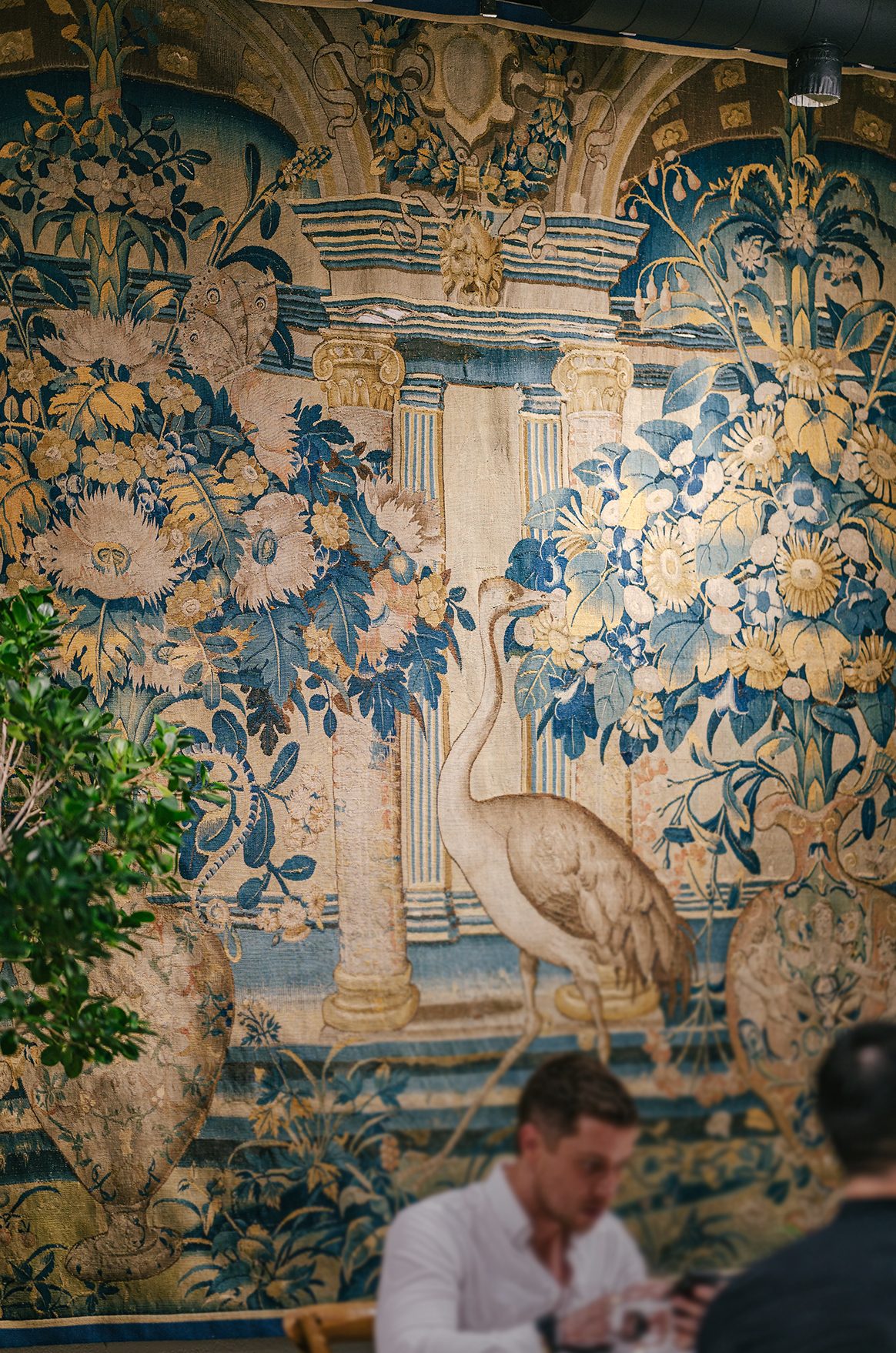
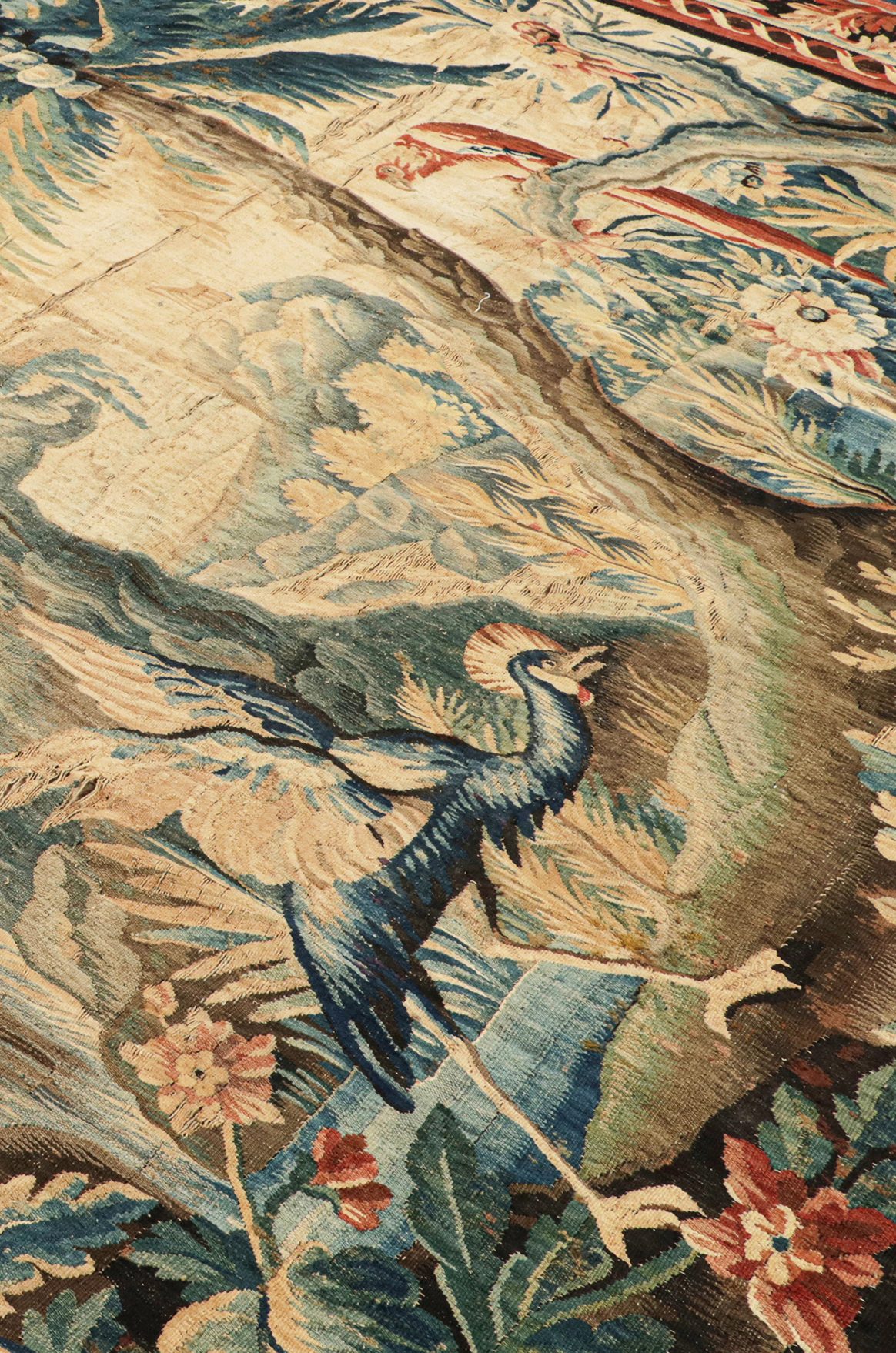
Have a look at this Flemish Verdure tapestry from the late 17th Century as a rare and special new curation from Rug & Kilim—featuring a particularly popular aesthetic with lush foliage and depicting a naturalistic “garden” scene. The tapestry is executed in a particularly celebrated Flemish style of the 17th century, characterized by its intricate detail, naturalistic rendering of flora and fauna, and use of perspective.
These tapestries were not afterthoughts—they were central to the room’s composition, often the first visual cue of a patron’s worldview.
And beneath them, Savonnerie carpets, handwoven at the behest of Louis XIV himself, covered marble floors like heavenly grounds—swirling with acanthus, arabesques, and imperial emblems. Their bold palettes and intricate medallions bore the same gravitas as a royal portrait or ceiling fresco.
To walk upon these textiles was to walk through civilization itself.
Divine Geometry and Chiaroscuro
The great Renaissance artists were obsessed with proportion, light, and spiritual symbolism. Raphael’s perfect symmetry, Michelangelo’s dramatic volume, Leonardo’s sfumato — all embodied the divine aspiration of form. In parallel, antique rugs and tapestries exhibit these very principles.
The central medallion of a Persian Kashan or Ottoman Ushak functions much like the oculus in a dome — a cosmological anchor. The geometric field of a Swedish flatweave (Röllakan) echoes Bauhaus before Bauhaus: balanced, tactile minimalism rooted in folk cosmology. The layered motifs in a Heriz or Bidjar possess an architectonic clarity — reminiscent of Palladian facades and Renaissance floor plans governed by the golden ratio.
Rugs speak in threads of divine geometry. Like the woven walls of the Flemish courts, their borders and fields become frameworks of narrative, where flora, fauna, and celestial forms coexist. Their color gradients — natural, mineral, and time-washed — achieve a kind of loom-born chiaroscuro, sculpting space with light and pigment.
Tapestries of Memory and Living Archives
In the same way that a Verdure tapestry records the botanical ideals of its era, so too does a tribal kilim hold the genealogies of its makers. These are not merely designs — they are woven manuscripts, storytelling devices passed across generations, encoding myth, migration, ritual, and survival.
Yet unlike wall-hung tapestries, the rug lives underfoot—its meaning deepened by use, by proximity to the body, by the very act of walking. The floor becomes gallery. The home becomes temple.
The act of weaving—like painting a ceiling or chiseling marble—requires breath, rhythm, and vision. Most rugs, like the best tapestries, were made not by single authors but by collective, often female hands.
They are democratic artworks that invite intimacy and conversation across centuries.
The Renaissance of Revival and Sacred Reimagination
At Rug & Kilim, we stand on the shoulders of this heritage—not to imitate it, but to revive it with reverence and evolution. Our heirloom collections echo the spirit of Aubusson florals, Swedish geometrics, and Eastern medallions with a modern sensibility rooted in meticulous craftsmanship.
One such masterpiece from the 17th century with a bold depiction of Chinoiserie style, is this antique Aubusson as a new addition to the most collectible European curations by Rug & Kilim.
We treat every rug not as product, but provenance. Our studio is a laboratory of dyeing, weaving, and cultural excavation, where antique fragments inspire new designs. Like the curators of the Cluny Museum or the Louvre’s tapestry wing, we view our practice as preservation through interpretation—a new Renaissance of textile art.
Each Rug & Kilim piece is a sacred object for the floor, speaking to history while inviting contemporary space into dialogue. We believe that a rug can—and should—sit alongside a Brancusi, a Vermeer, or a Ming vase without apology.
The Collector’s Eye Reawakened
Today’s collector has the chance to be what the Medici were to Florence—curators of culture, patrons of the poetic. A room does not begin with the walls. It begins beneath the feet. And to collect a rug with intention is to create an architecture of story.
Imagine a Verdure-inspired flatweave beneath a Max Ernst. A Savonnerie revival grounding a minimalist Italian interior. A Kilim composition juxtaposed with Brutalist sculpture. These are not contradictions. They are continuities—proof that textile, when treated as art, transcends time and genre.
In our bespoke collaborations with interior designers, collectors, and curators, we have witnessed the rug’s power to transform a room’s philosophy. No longer an accessory, it becomes the first stroke of genius—a field from which architecture, light, and life rise.
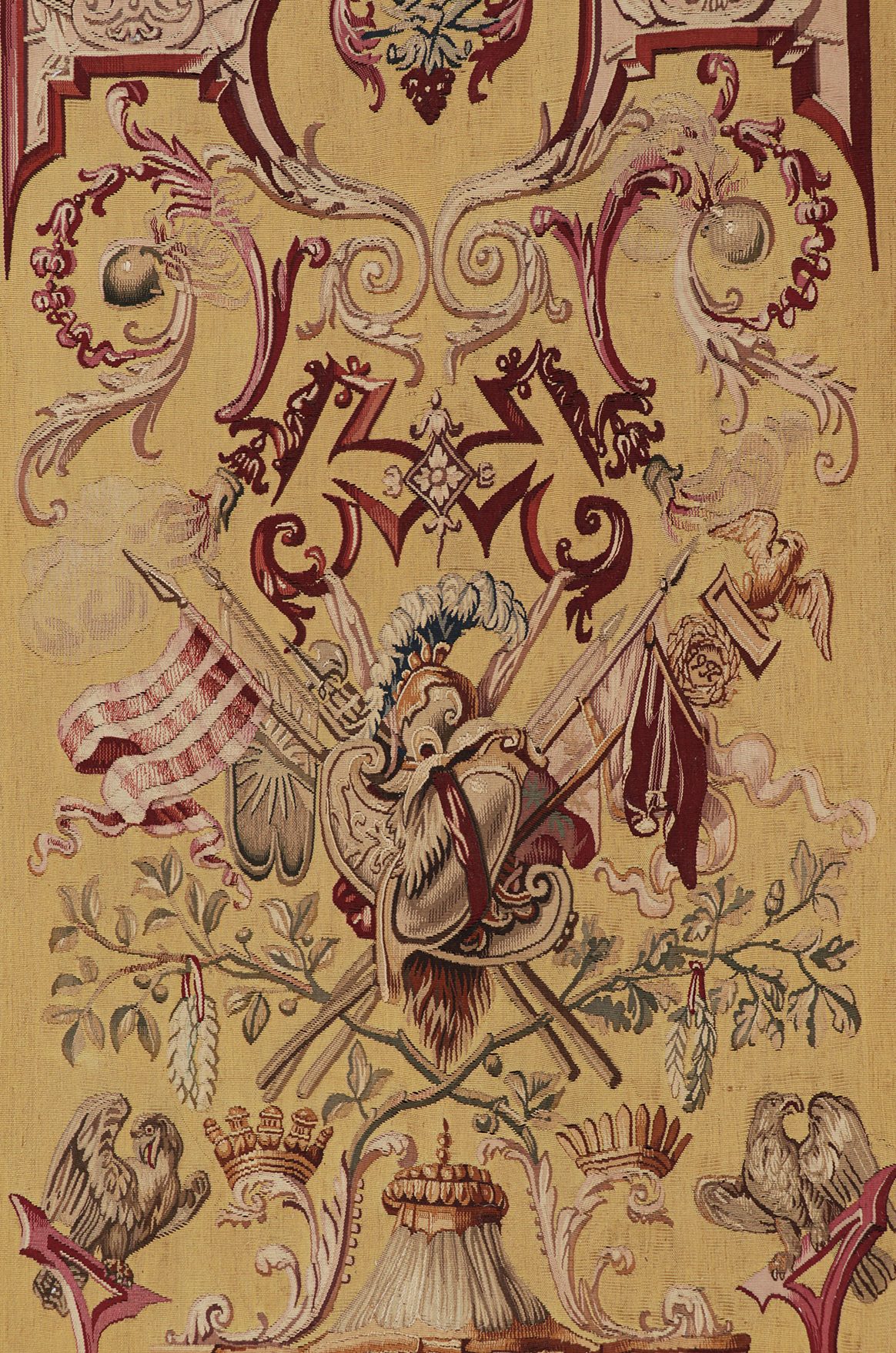
From the early 18th Century is a rare and special new curation from Rug & Kilim—”Mois Grotesques” by Claude Audran le Jeune, is one such textile with the power to transform a room’s philosophy. The panel employing a classically-inspired grotesque format demonstrates characteristic early 18th century French Régence aesthetic with its refined balance between architectural framework and decorative elements.
From Versailles to Modern Minimalism
Throughout history, the finest interiors have never been merely decorated—they’ve been choreographed. In palatial salons and aristocratic drawing rooms, rugs and tapestries were never afterthoughts. They were central characters in the spatial narrative, anchoring identity, power, and taste beneath the feet of kings and muses alike.
Consider the Galerie des Glaces at Versailles: the grandeur of the gilded mirrors is matched only by the opulence of Savonnerie carpets woven to honor Louis XIV himself. In the salons of the Medici palazzos, handwoven tapestries from Flanders and Persian rugs once framed frescos by Botticelli—textiles acting as movable frescoes, unbound from walls yet equally monumental in meaning.
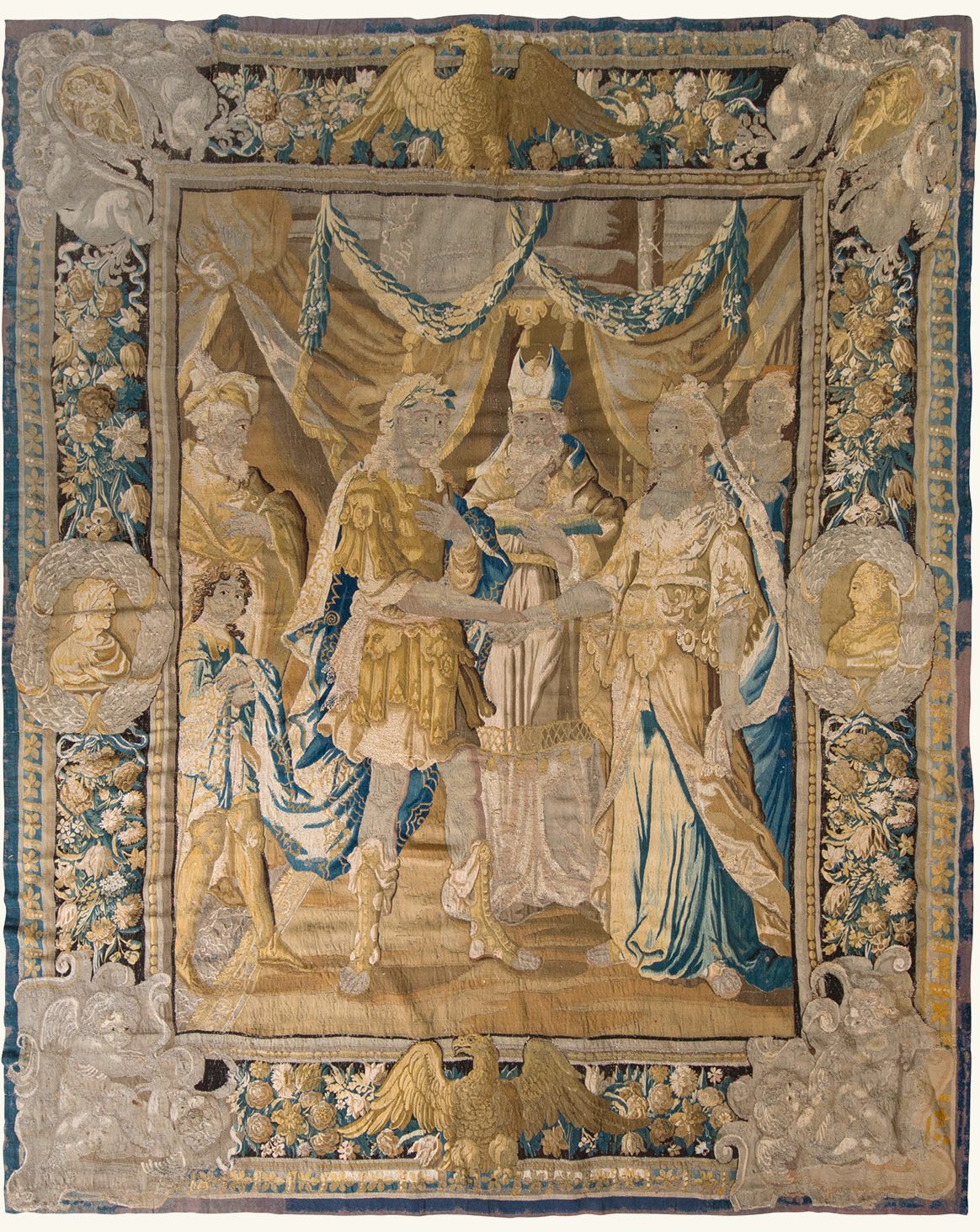
A modern interpretation of this antique interpretation of European art is this tapestry as a masterpiece in its own right, with a true connoisseur’s level of detail, intention, and regal beauty. It beautifully hosts several depictions of eagles, Greco-Roman cartouches, Cherub angels, and floral patterns, depicting the wedding of King David of Israel and Abigail of Nabal, as told in the Old Testament.
Scandinavian Rollakan
In Émile-Jacques Ruhlmann’s Art Deco interiors, Aubusson carpets were modernized into abstract geometry, echoing the bronze and lacquer around them. Meanwhile, Swedish Grace in the early 20th century softened neoclassicism with pastoral kilims, pairing harmony with humility in a distinctly Nordic voice.
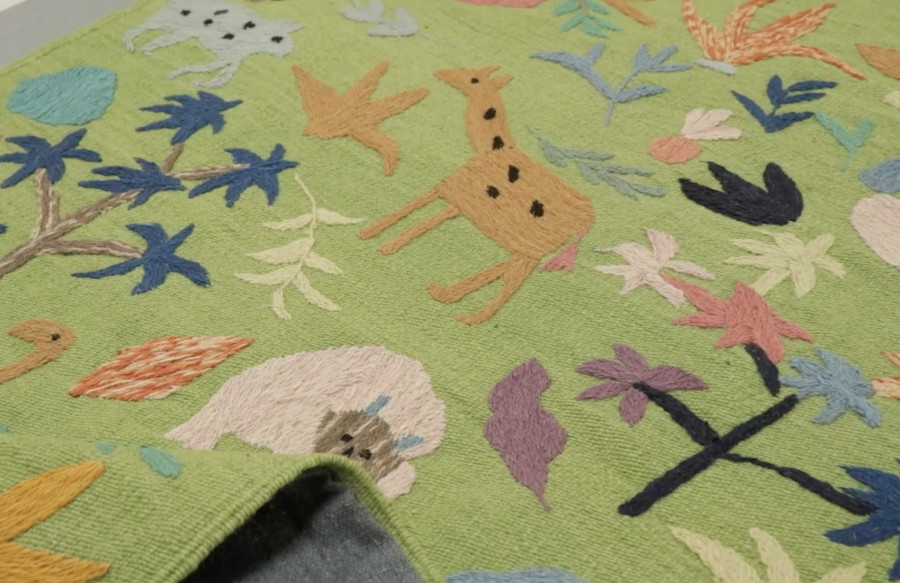
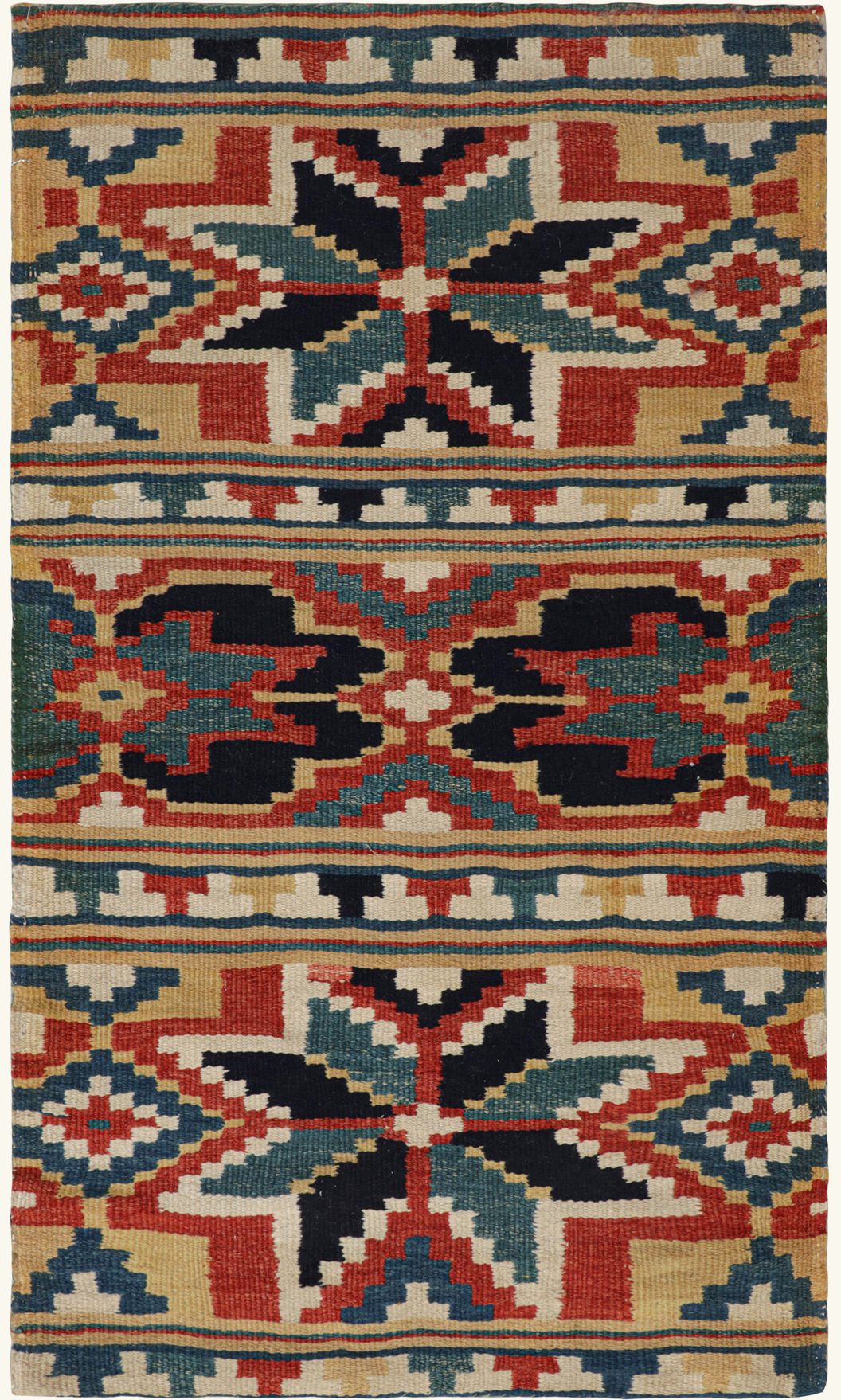
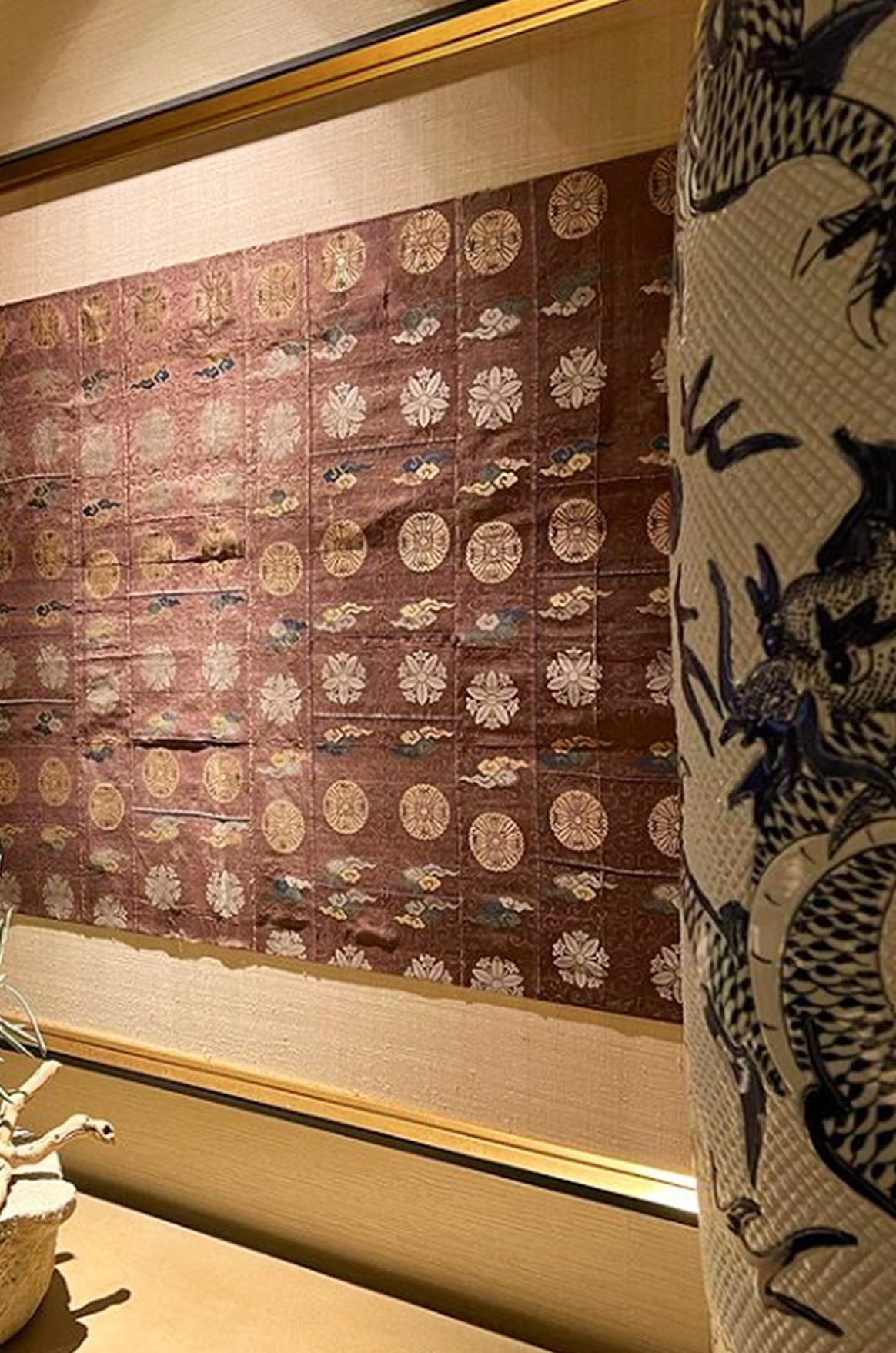
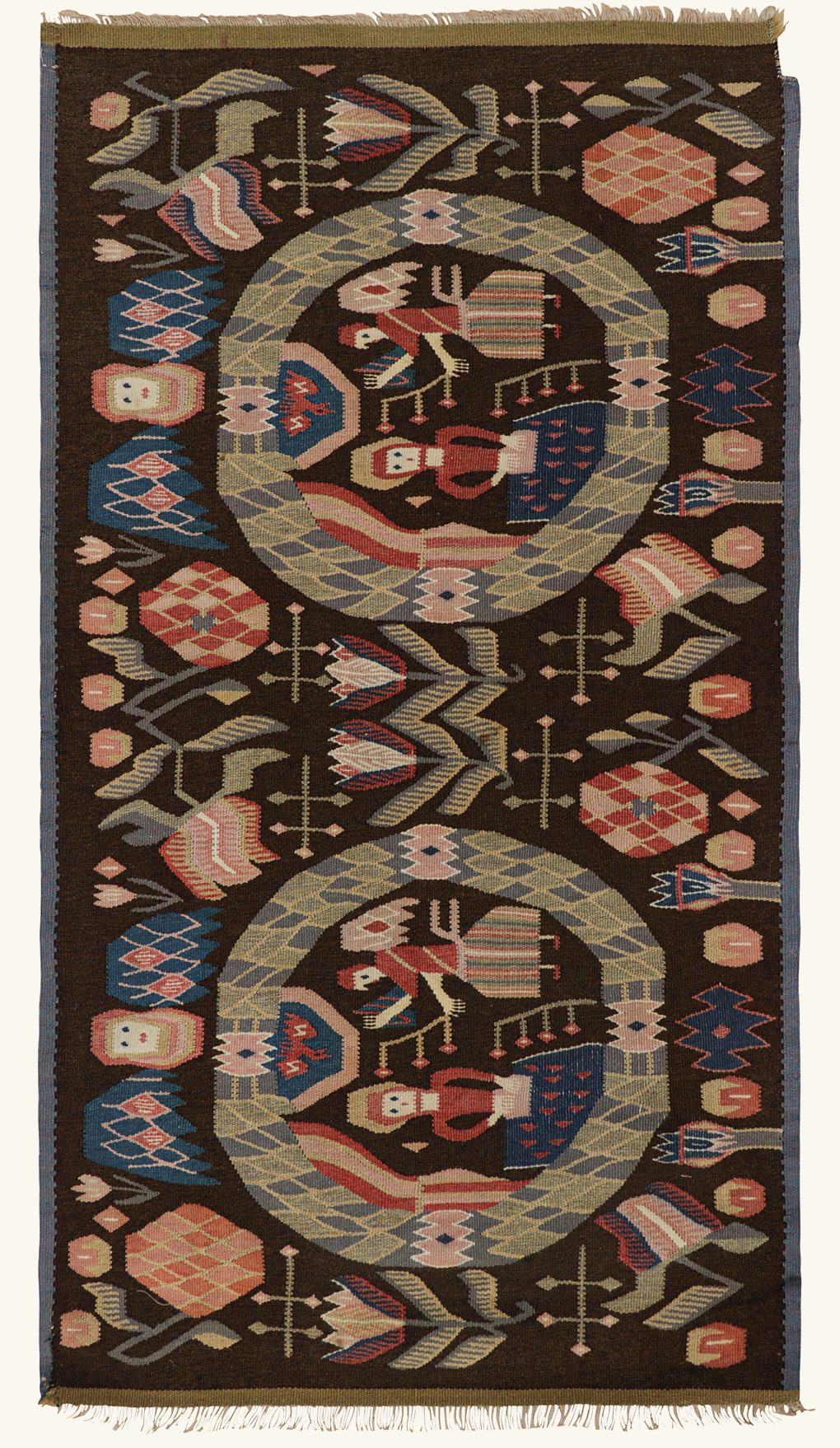
Here is one such exemplary textile from the Scandinavian Rollakan and Flamskvav weaving traditions, a rich piece of folk art capturing the daily lives of weavers that would play a huge role in the Scandinavian renaissance soon to come.
These historic spaces whisper lessons to today’s tastemakers.
In modern interiors—where marble and microcement reign—an antique rug or tapestry revival brings warmth and gravitas. A Flemish verdure adds a lyrical softness to sharp silhouettes. A Swedish flatweave, precise in its minimalist beauty, finds kinship with Japanese wabi-sabi. The golden ochres and deep indigos of 18th-century European tapestry revive monochrome palettes with soul and memory.
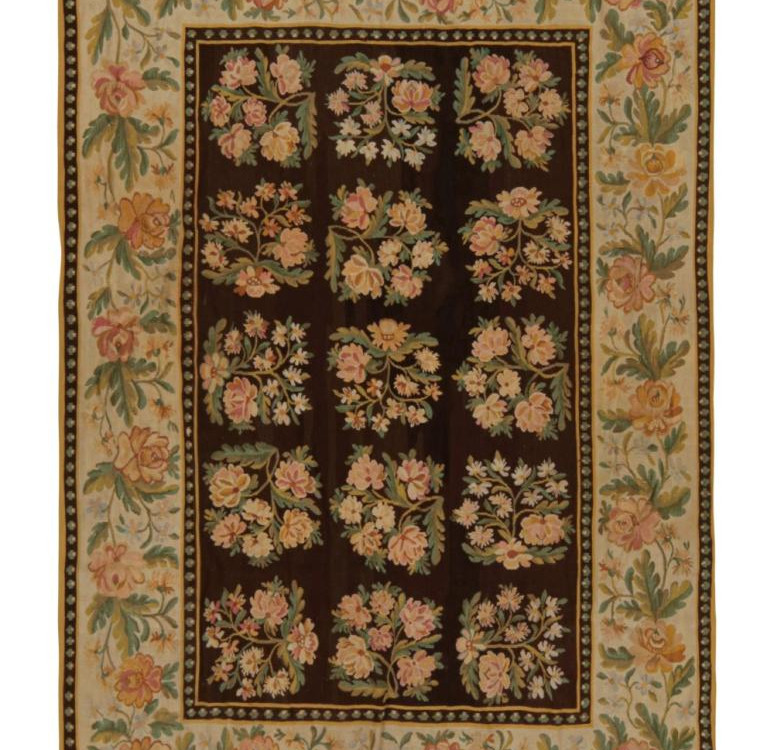
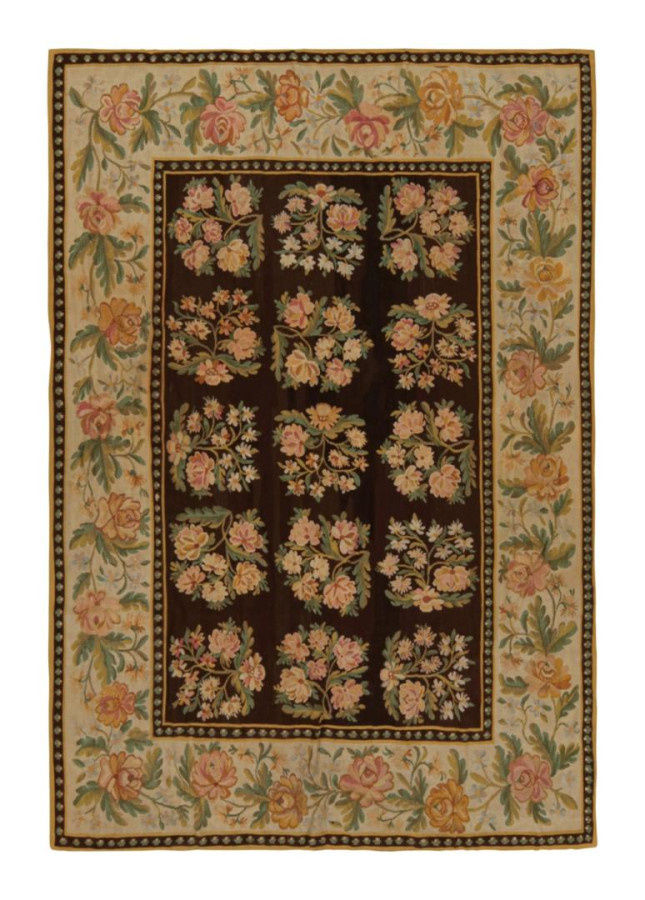
Styling these pieces today is less about placement and more about presence. Let the rug claim the room. Hang a tapestry behind a contemporary sofa like a Rothko. Float a Bessarabian floral beneath a Lucite table. Style a hallway with a narrow Anatolian runner that turns the corridor into a procession of patina and poetry.
What emerges is a language of design that transcends time. The old and new no longer compete—they consecrate each other. And in doing so, we return to what the great salons of history always knew: that a rug is not simply an object underfoot, but a foundation of identity, a soft yet powerful statement of culture, continuity, and curatorial grace.
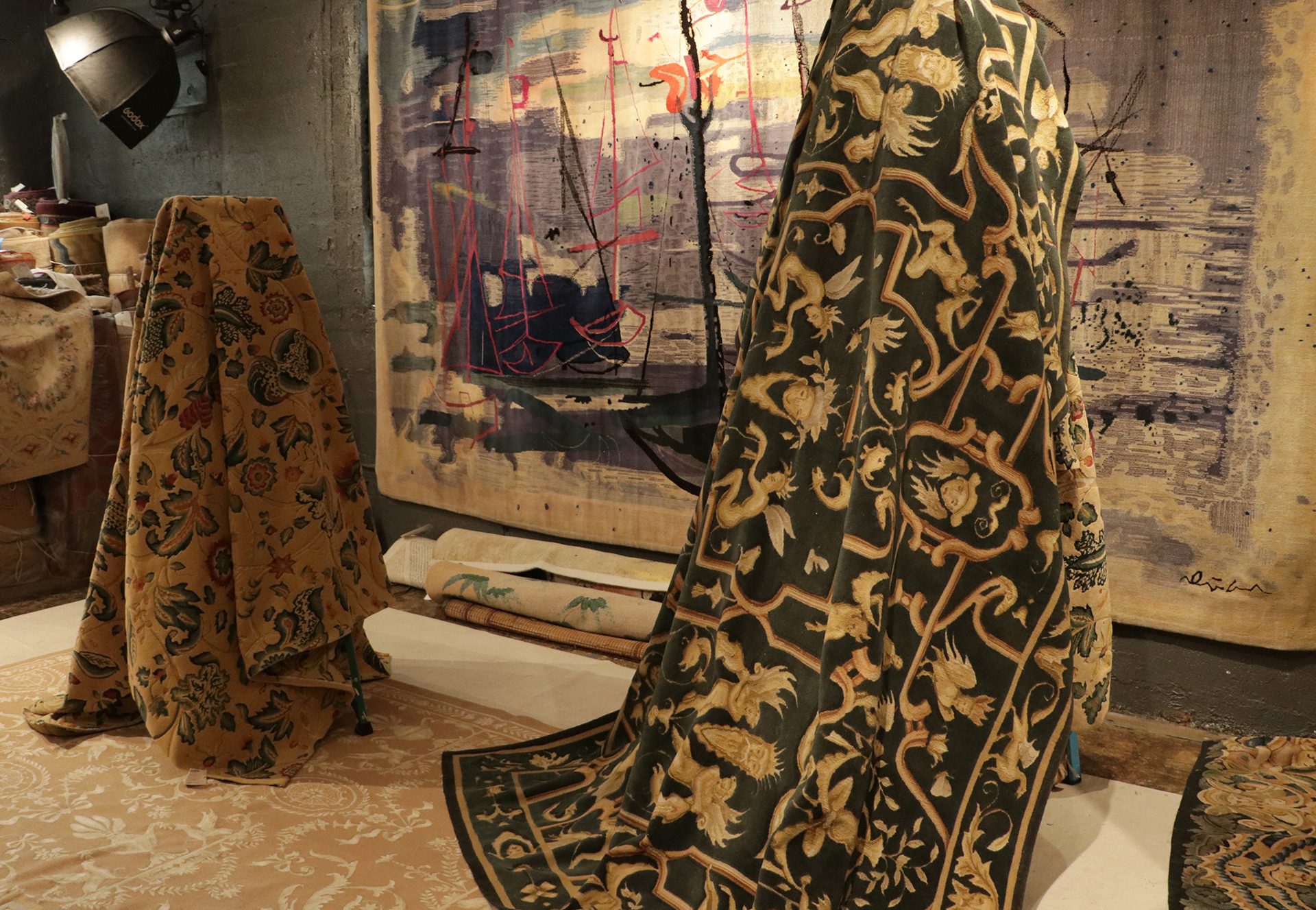
Rug and Kilim Showroom
Walking Through History, Living with Art
The time has come to shed the limiting categories of “rug” and “tapestry” as separate worlds. Whether wall-hung or floor-laid, these are textile masterpieces born of the same lineage. They are paintings without brushes, narratives without text, altarpieces without marble.
To live with one is not just to decorate — it is to collect legacy, to commission emotion, to participate in a lineage of fine art that stretches from the Flemish looms to the ateliers of Rug & Kilim.
Let us remember that the Renaissance is not only in museums — it lies beneath our feet, waiting to be seen anew.
~~~