Style
Art Nouveau
Every piece in this style, across all of our collections. Narrow them down by size and price.
- Under 6 x 9
- Runners
- 6 x 9
- 8 x 10
- 9 x 12
- 10 x 14
- 12 x 15
- Over 12 x 15
Origin ▼
Style ▼
Material ▼
Width
Length
To connect with a specialist, click here
Stories from the Art Nouveau Archive
Essays, artist dialogues, and provenance notes drawn from Rug & Kilim’s editorial desk.
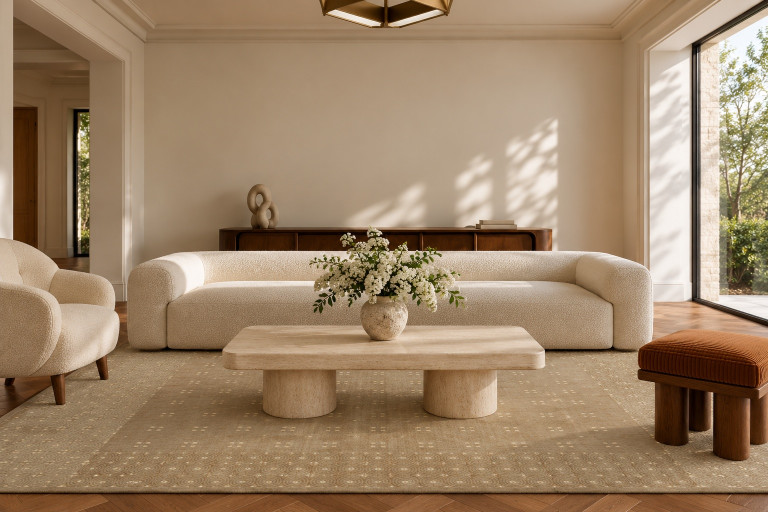
Understanding Art Deco Rugs: Modernism, Luxury, and Timeless Style
Few rug styles have influenced twentieth-century interior design as profoundly as Art Deco rugs. Emerging during one of the most transformative periods in modern cultural history, these carpets embodied the optimism, innovation, and cosmopolitan sophistication that defined the Art Deco movement. More than decorative floor coverings, Art Deco rugs became expressions of a new visual language—one rooted in modernity, luxury, architecture, and artistic experimentation. Unlike traditional Persian carpets that emphasized centuries-old motifs and weaving conventions, Art Deco rugs embraced a distinctly modern perspective. Their compositions drew inspiration from architecture, industrial design, fine art, fashion, travel, and technological progress. The result was a new generation of carpets that transformed the role of textiles within contemporary interiors.
Read the Feature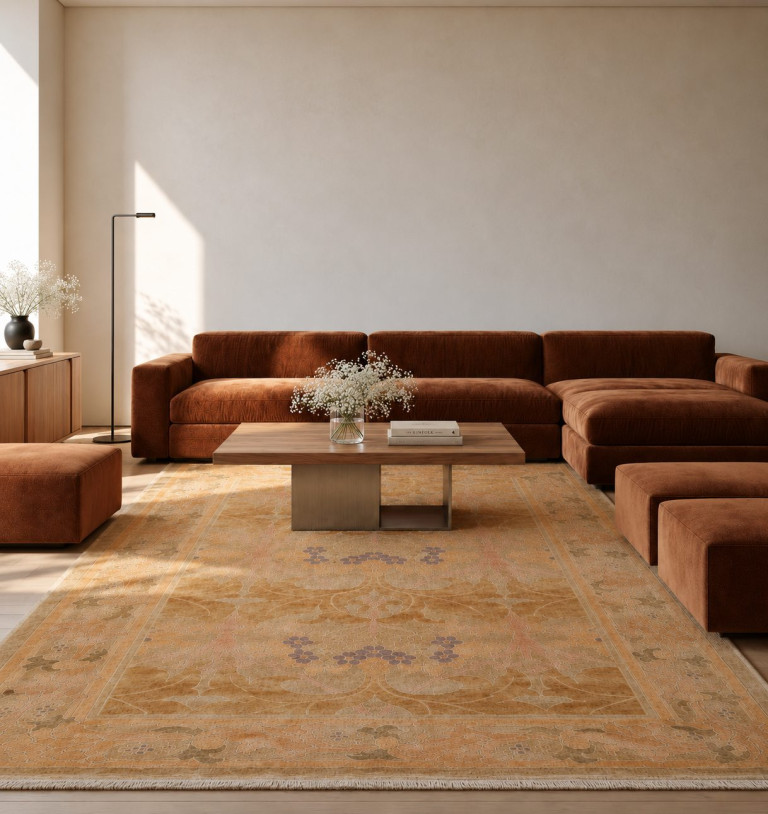
Art Nouveau Rugs: The Intersection of Decorative Arts and Modern Design
Among the most influential artistic movements of the modern era, Art Nouveau occupies a unique place at the intersection of art, architecture, design, and craftsmanship. Emerging in Europe during the final decades of the nineteenth century, the movement sought to dissolve traditional boundaries between fine art and decorative art, creating a unified aesthetic language inspired by nature, movement, and organic beauty. Within this broader creative revolution, Art Nouveau rugs emerged as some of the most sophisticated and expressive textile works ever produced. Unlike the historical revival styles that dominated much of the nineteenth century, Art Nouveau embraced innovation. Designers looked beyond historical ornament and instead turned to the natural world for inspiration. Flowing vines, botanical forms, floral motifs, curved silhouettes, and rhythmic asymmetry became defining characteristics of the movement. Rugs created within this design philosophy transformed the role of carpets from decorative accessories into integral architectural and artistic elements.
Read the Feature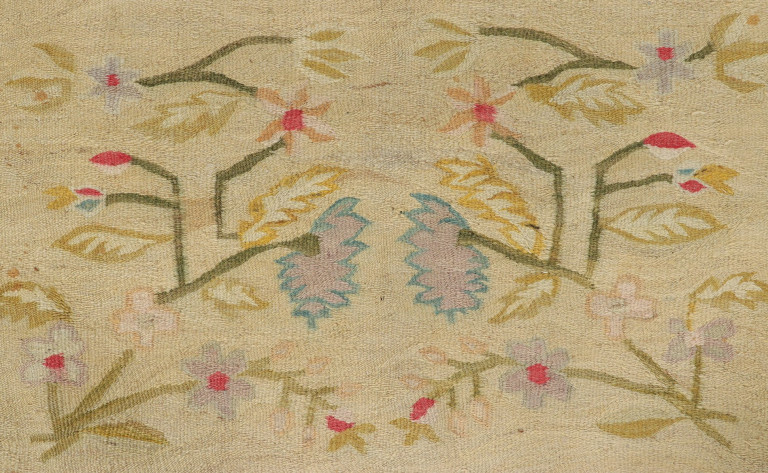
Bessarabian Rugs and Kilims: A European Textile Tradition at the Crossroads of Art, Empire and Design
In a quietly elegant London dining room, a vintage Bessarabian Kilim unfolds beneath the table like an unexpected conversation. Its geometry—subtle yet assertive—draws the eye before one quite realizes why. Inspired by the visual language of early twentieth-century design, the rug nods gently toward the stylized symmetry of Art Deco while remaining unmistakably rooted in a much older European weaving lineage. The effect is a foundation that feels both deliberate and effortless, an object whose presence quietly animates the room. Those who spend time studying interiors often admit a particular fondness for photographs that capture rooms in use rather than in perfection. The slight shift of a chair, the shadow of evening light on polished wood, a glass forgotten after supper—these small evidences of life soften even the most composed design. In such moments, a rug becomes more than a decorative surface. It becomes the mediator between architecture and living.
Read the Feature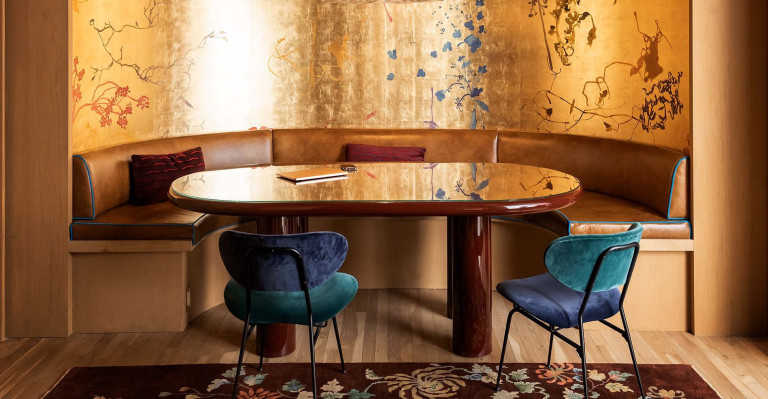
A Century of Rugs from Art Nouveau to Art Deco: Geometry, Ornament, and Ideology
At the turn of the 20th century, textiles—particularly rugs and kilims—transcended their utilitarian roots to occupy a critical role at the nexus of fine art, design, and ideology. This editorial, rooted in the archival mastery of Rug & Kilim’s most prestigious Art Deco collection, offers a fact-based, institutional lens into the aesthetic metamorphosis of textile arts. We chart the path from Art Nouveau’s lyrical organicism to the rigorous geometry of Art Deco—a transition that was not rupture, but dialogue. In tracing this transformation, we underscore the theoretical, cultural, and technical forces that shaped one of the most pivotal evolutions in textile history.
Read the Feature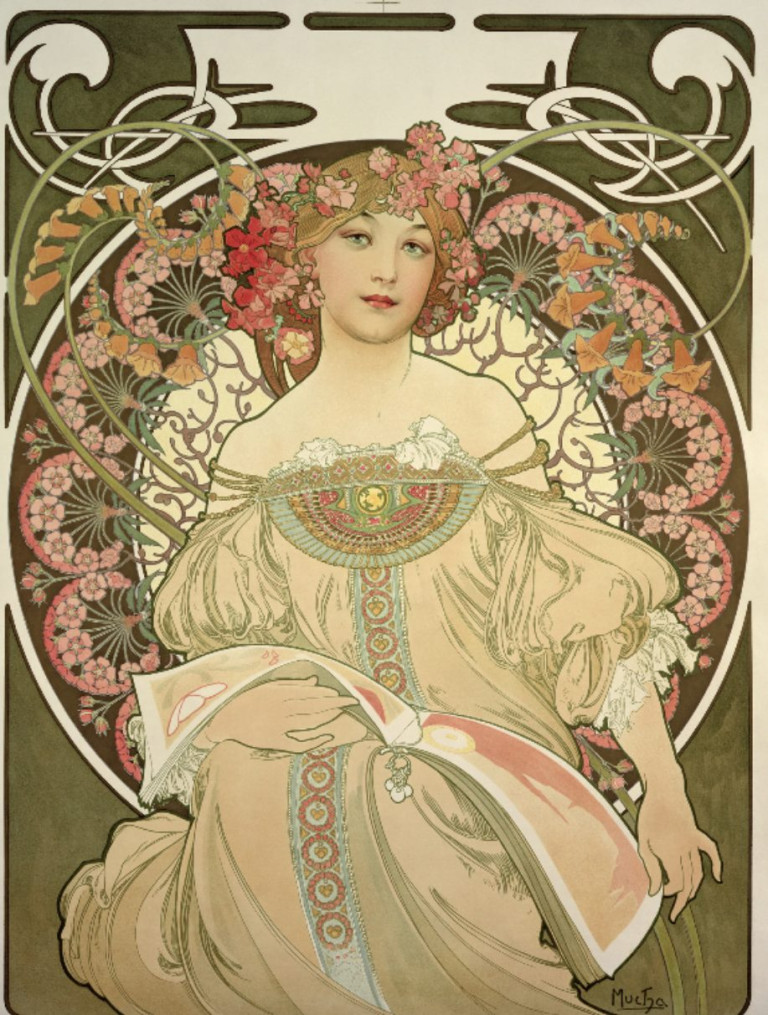
A Profile on Alphonse Mucha – The Father of Art Nouveau and Pioneer of Art Deco
Mucha's journey from acclaimed decorative artist to a champion of art for the people is a fascinating narrative of artistic evolution and social consciousness. His iconic posters for Sarah Bernhardt catapulted him to global fame, showcasing his mastery of design and visual storytelling. However, Mucha's aspirations extended beyond commercial success; he envisioned art as a means of uplifting and inspiring humanity. Driven by his political and spiritual beliefs, Mucha dedicated himself to the cause of the Slavic peoples and the liberation of his homeland. His commitment to these ideals is evident in his monumental painting cycle, the Slav Epic, which serves as a testament to his artistic and philosophical depth.
Read the Feature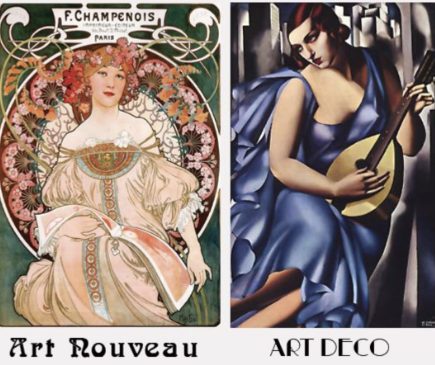
Art Deco And Art Nouveau Movements: A Comparative Analysis
Art Nouveau and Art Deco, two influential art movements of the 20th century, showcase distinct visual languages and philosophies that have left a lasting impact on various facets of artistic expression. While Art Nouveau is characterized by its celebration of elegant curves and long lines, emphasizing organic and natural forms, Art Deco, in contrast, is defined by sharp angles and geometrical shapes, embodying a more streamlined and symmetrical aesthetic. These two movements, though sometimes confused, represent divergent directions in the evolution of modern art. Art Nouveau, with its flowing, nature-inspired motifs, emerged in the late 19th century and reached its peak around 1900. It sought to break free from historical styles and embrace a new, modern visual language. On the other hand, Art Deco, which rose to prominence in the 1920s and 1930s, responded to the changing socio-cultural landscape with a style that emphasized boldness, symmetry, and a sleek, modern look. Despite their differences, both Art Nouveau and Art Deco have significantly influenced the realms of fine art, design, architecture, and graphic arts, shaping the visual landscape and contributing to the evolution of modern art.
Read the Feature