Style
Art
Every piece in this style, across all of our collections. Narrow them down by size and price.
- Under 6 x 9
- Runners
- 6 x 9
- 8 x 10
- 9 x 12
- 10 x 14
- 12 x 15
- Over 12 x 15
Origin ▼
Style ▼
Material ▼
Width
Length
To connect with a specialist, click here
Stories from the Art Archive
Essays, artist dialogues, and provenance notes drawn from Rug & Kilim’s editorial desk.
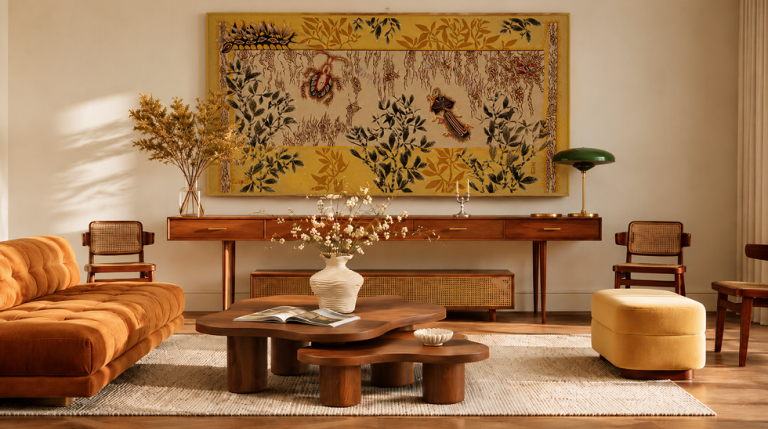
Signatures, Editions, and the Bolduc on Modern and Rare Tapestries: The Mark of the Masters and Artists
There is a particular pleasure, known to every serious collector, in turning an object over. The front of a great tapestry or carpet is what seduces; the back, and the edges, are what tell the truth. And on the finest modern tapestries, that truth is written in a specific and often misunderstood language, a language of signatures, edition numbers, and a small woven label the French call the bolduc. To read it fluently is to hold the difference between a decorative object and a documented work of art. It is the same literacy that governs the print room and the rare book library, where a collector learns to read a plate mark, a watermark, a colophon. The modern tapestry, elevated to the status of fine art by Jean Lurçat and his circle in the mid-twentieth century, borrowed the apparatus of the fine art edition precisely because it wished to be understood as fine art. To understand the apparatus is to understand the ambition.
Read the Feature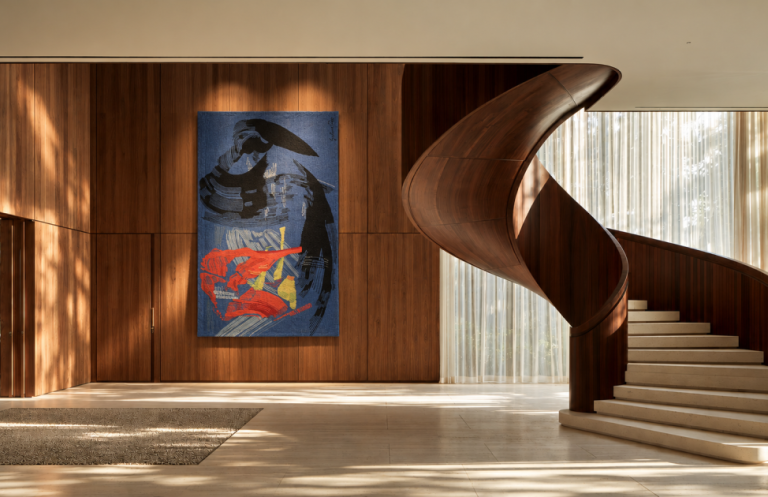
The Art of Bespoke Design by Rug & Kilim: How a Painting, a Fabric, or a Fragment Becomes a Custom Rug
Every custom rug begins with a question that sounds simple and is not: what does this room want to stand on? The answer, in the finest commissions, rarely arrives as a specification. It arrives as an object. A client brings in a painting they have loved for thirty years. A designer adores a length of antique silk, or lays down a sample of a document fabric, or produces a photograph of a fresco glimpsed on a wall in Ravenna. The brief is a feeling, held in another medium, waiting to be carried into wool or silk or sometimes, exotic fibres. This act of carrying is the true art of the custom rug, and it is far older and more serious than the word “custom” suggests. It is translation, in the fullest literary sense: the movement of meaning from one language into another, with everything gained and lost that translation implies. It is also, increasingly, the way the most celebrated interiors in the world are made. When AD100 designer Heidi Caillier needed flatweaves for a coastal retreat, when Fawn Galli reimagined a historic Beaux-Arts townhouse on the Upper West Side, when a Jacques Grange penthouse called for a hand-knotted silk carpet, the floor did not come off a shelf. It was translated into being, object by object, idea by idea.
Read the Feature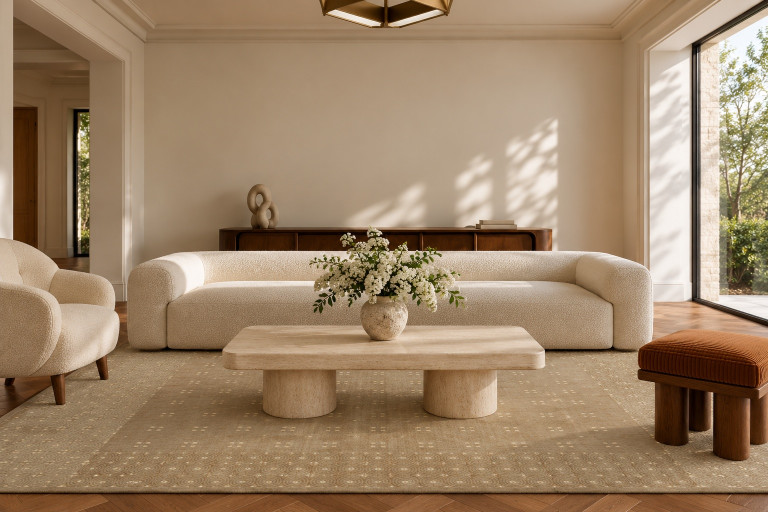
Understanding Art Deco Rugs: Modernism, Luxury, and Timeless Style
Few rug styles have influenced twentieth-century interior design as profoundly as Art Deco rugs. Emerging during one of the most transformative periods in modern cultural history, these carpets embodied the optimism, innovation, and cosmopolitan sophistication that defined the Art Deco movement. More than decorative floor coverings, Art Deco rugs became expressions of a new visual language—one rooted in modernity, luxury, architecture, and artistic experimentation. Unlike traditional Persian carpets that emphasized centuries-old motifs and weaving conventions, Art Deco rugs embraced a distinctly modern perspective. Their compositions drew inspiration from architecture, industrial design, fine art, fashion, travel, and technological progress. The result was a new generation of carpets that transformed the role of textiles within contemporary interiors.
Read the Feature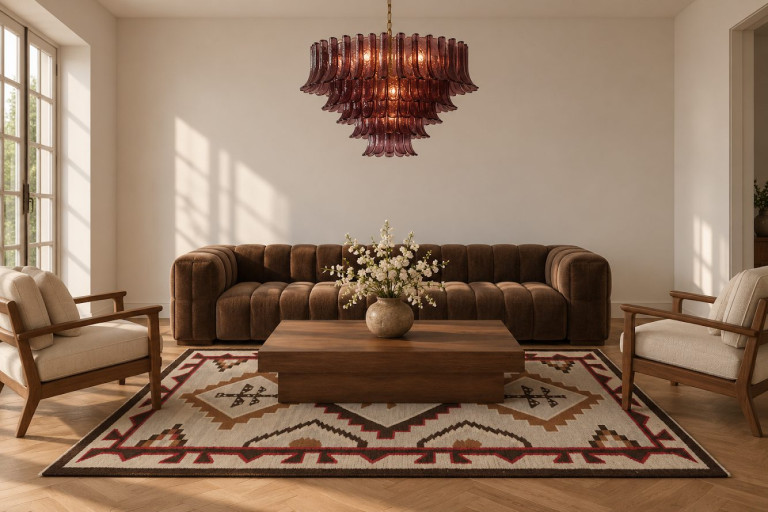
Navajo Rugs: History, Art, Design & the Legacy of Diné Weaving
Navajo rugs occupy a singular position within the history of American textile art. Woven by Diné artists across the American Southwest, these textiles represent far more than a regional decorative tradition. They embody generations of knowledge surrounding sheep, wool, spinning, natural materials, color, geometry, landscape, community, and cultural continuity. From nineteenth-century blankets to the celebrated regional rugs of the early twentieth century—and from Two Grey Hills and Ganado to sophisticated contemporary works—Navajo weaving has continually demonstrated the ability of textile art to function simultaneously as cultural expression, design, craftsmanship, and fine art.
Read the Feature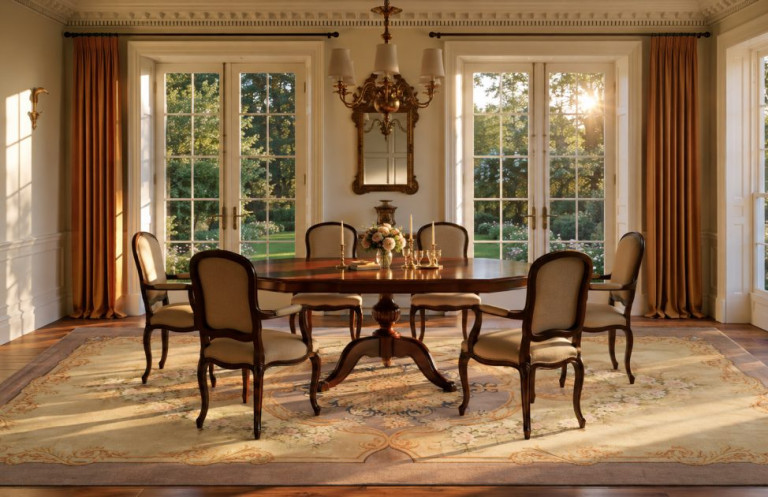
The House the European Stuycks Kept: Madrid’s Royal Loom, Goya’s Cartoons, and the Spanish Carpet
There is a building in Madrid, a short walk from the Atocha station, where the same craft has been practiced without interruption for more than three hundred years. Its brick and its Neo-Mudéjar arches were raised in the nineteenth century, but the work carried on inside them belongs to a lineage older still, to 1720, when Philip V, having lost the Flemish tapestry workshops of the Spanish Netherlands to the Peace of Utrecht, resolved that Spain would simply make its own. He summoned a family of Flemish weavers, the Vandergotens, to Madrid, and founded the Real Fábrica de Tapices de Santa Bárbara. Three centuries later, in the presence of the King and Queen of Spain, the factory marked its tercentenary as one of the last places on earth where royal weaving continues by the hand, exactly as it always has.
Read the Feature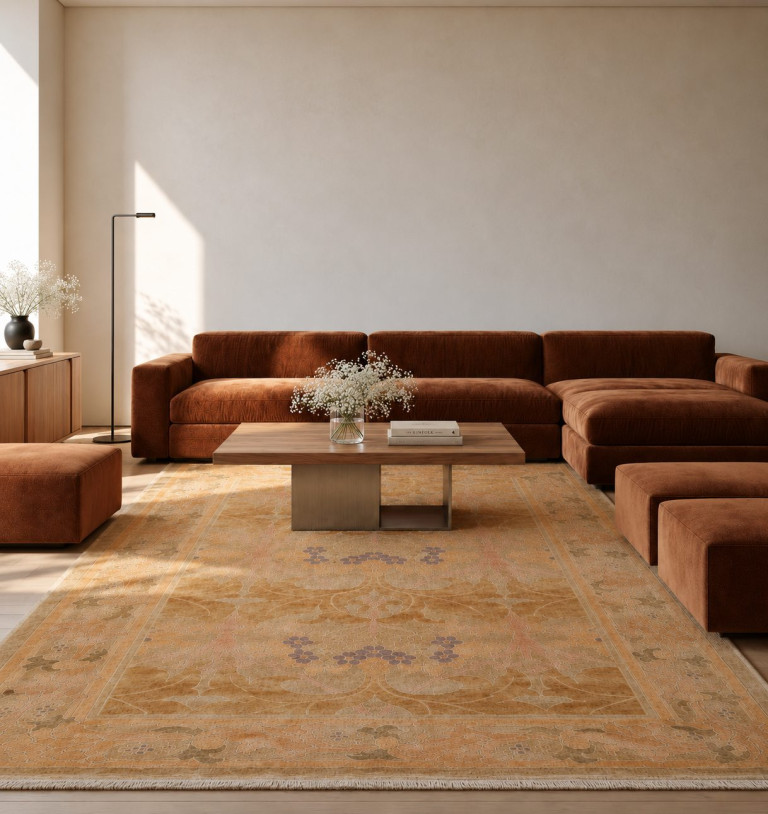
Art Nouveau Rugs: The Intersection of Decorative Arts and Modern Design
Among the most influential artistic movements of the modern era, Art Nouveau occupies a unique place at the intersection of art, architecture, design, and craftsmanship. Emerging in Europe during the final decades of the nineteenth century, the movement sought to dissolve traditional boundaries between fine art and decorative art, creating a unified aesthetic language inspired by nature, movement, and organic beauty. Within this broader creative revolution, Art Nouveau rugs emerged as some of the most sophisticated and expressive textile works ever produced. Unlike the historical revival styles that dominated much of the nineteenth century, Art Nouveau embraced innovation. Designers looked beyond historical ornament and instead turned to the natural world for inspiration. Flowing vines, botanical forms, floral motifs, curved silhouettes, and rhythmic asymmetry became defining characteristics of the movement. Rugs created within this design philosophy transformed the role of carpets from decorative accessories into integral architectural and artistic elements.
Read the Feature