Style
Arts & Crafts
Every piece in this style, across all of our collections. Narrow them down by size and price.
- Under 6 x 9
- Runners
- 6 x 9
- 8 x 10
- 9 x 12
- 10 x 14
- 12 x 15
- Over 12 x 15
Origin ▼
Style ▼
Material ▼
Width
Length
To connect with a specialist, click here
Stories from the Arts & Crafts Archive
Essays, artist dialogues, and provenance notes drawn from Rug & Kilim’s editorial desk.
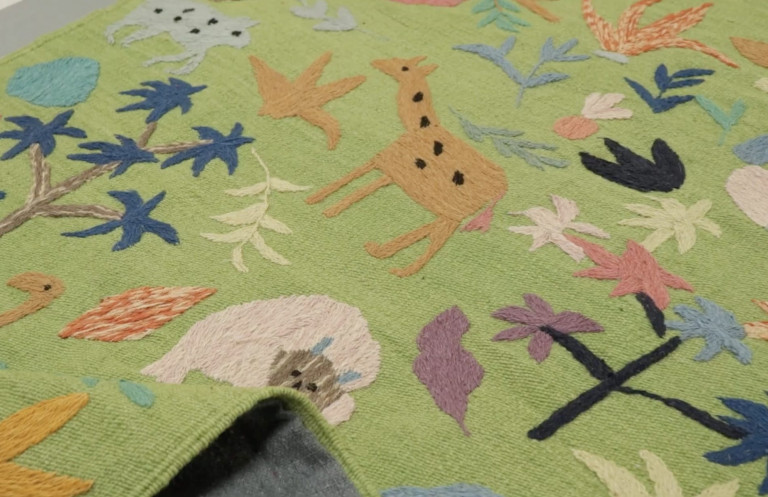
The Long Life of a Green: On Celery, Color of the Year, and the Four Centuries of Weaving That Anticipated It
Every year, the color world makes its pronouncement, and every year the design world turns to see what it has been given. For 2027, Sherwin-Williams has named Celery; a light, airy, herbal green with a yellow undertone, chosen, in the company's words, for a moment that prizes wellness, balance, and connection. It is a soft color with a quiet glow and a faint edge; it pairs, its makers note, with white for something breezy, with cranberry red for something playful, with brown for something elevated. It is, by any measure, a beautiful and intelligent choice. It is also a color the great weavers of the world have understood for four hundred years.
Read the Feature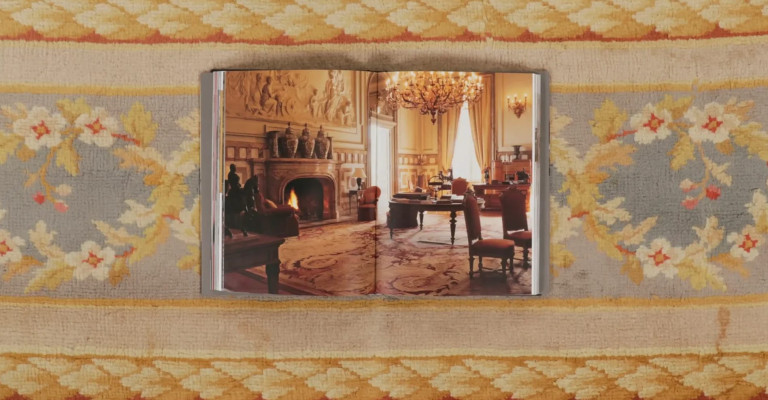
Savonnerie, Aubusson, Gobelins: The Three Ateliers That Defined What Europe Believed a Rug Could Be
In the final years of the sixteenth century, the treasury of France was hemorrhaging. Not to war alone though there had been enough of that but to the East. French silver was flowing steadily toward Persia and the Levant in exchange for knotted-pile carpets, objects of such refinement and such authority that no European workshop had yet produced anything capable of competing with them. Henri IV, who had survived the Wars of Religion and the bankruptcy of a kingdom to sit on the French throne, was not a man inclined to accept a problem he could solve. He installed Pierre Dupont — weaver, entrepreneur, and the most technically accomplished carpet-maker in France in the galleries of the Louvre itself, in workshops beneath the palace's own roof, with a single instruction: make something that does not require us to send money to Persia.
Read the Feature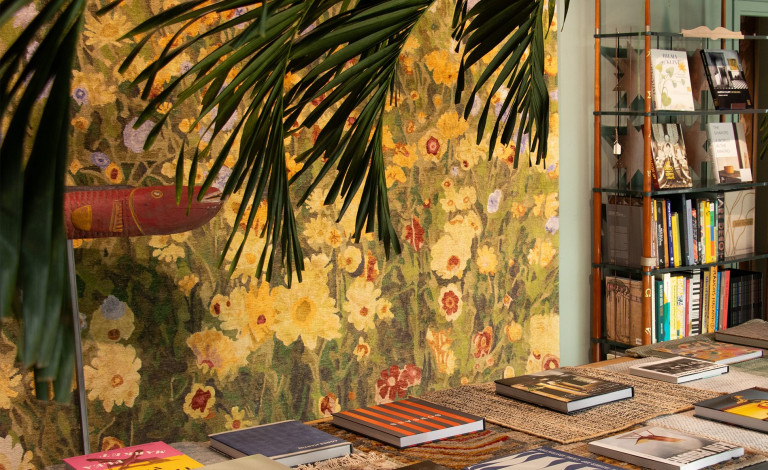
Rug & Kilim’s Royal Collection: The Politics of Pattern and the Poetry of Power
There are collections that gather, and there are collections that define. Rug & Kilim’s Royal Collection stands in the latter class: a curatorial statement that transcends taste to become testament. This is not merely a presentation of rare rugs and tapestries; it is a genealogy of civilization itself. Each piece—whether woven in the Savonnerie ateliers of Louis XV’s France, the palace looms of Tabriz, or the modernist workshops of Leleu—embodies a distinct philosophy of beauty and order. Together, they form a continuum of artistry where pattern becomes politics, and craft becomes culture.
Read the Feature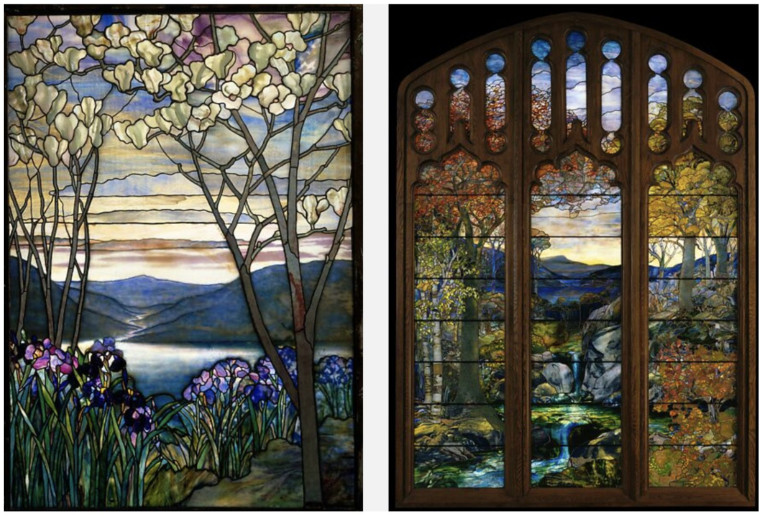
A Profile on Louis Comfort Tiffany – Master of 1920s Decorative Arts
Louis Comfort Tiffany, born on February 18, 1848, was a prominent American Art Deco artist and designer renowned for his exceptional work in the decorative arts, particularly in stained glass. He is closely associated with the art nouveau, art deco and aesthetic art movements, contributing significantly to the development and popularity of these styles. Tiffany's artistic journey was marked by his affiliation with the prestigious collaborative group of designers known as the Associated Artists. This collective included notable figures such as Lockwood de Forest, Candace Wheeler, and Samuel Colman, with whom Tiffany collaborated on various artistic projects.
Read the Feature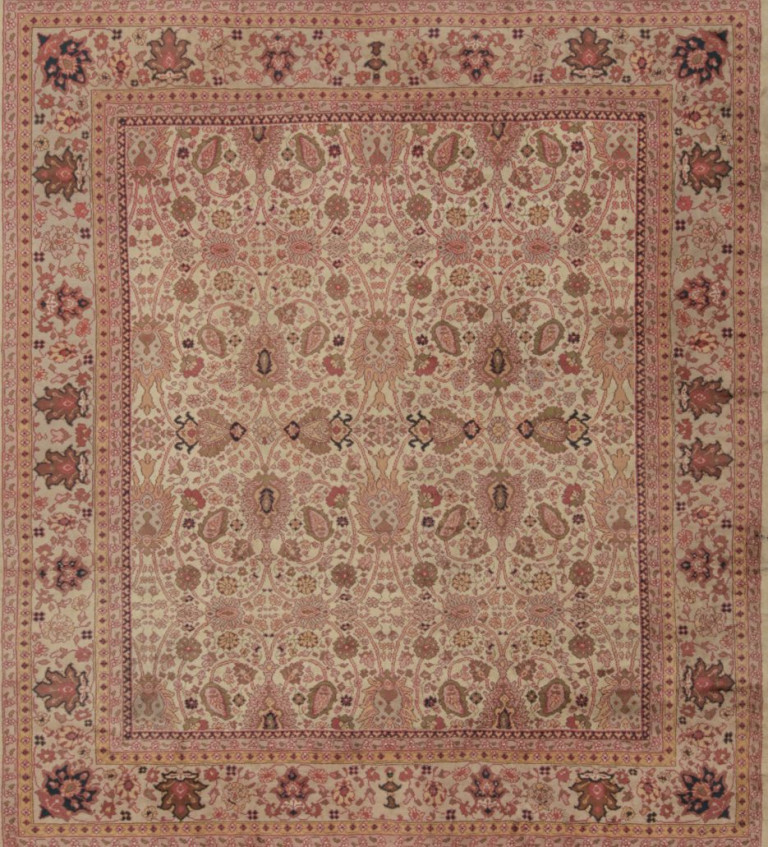
A Guide to Art Needlework of the Arts and Crafts Movement
Our European Collection includes the richest selection of antique rugs, vintage rugs, flatweaves, tapestries and contemporary rugs inspired by an encyclopedia of transitional, Neoclassical, impressionist and period piece designs, and Needlepoint design is one of most significant aesthetic of our ever-growing collection. Today, our classic archive continues to grow with rare, unique European rugs from exclusive workshops accumulated over decades, which have witnessed a resurgence in the 21st century and continue to inspire our modern rugs with new approaches to these sensibilities. The birth of the Arts and Crafts movement in late 19th century Britain heralded a transformative shift in societal attitudes towards craftsmanship and design. Emerging as a response to the adverse effects of industrialization and the undervaluation of decorative arts, this movement sought to reform the creation of everything from architectural structures to intricate jewelry pieces. Although William Morris joined the Arts and Crafts Exhibition Society after its establishment, his ideas profoundly influenced the subsequent generation of decorative artists.
Read the Feature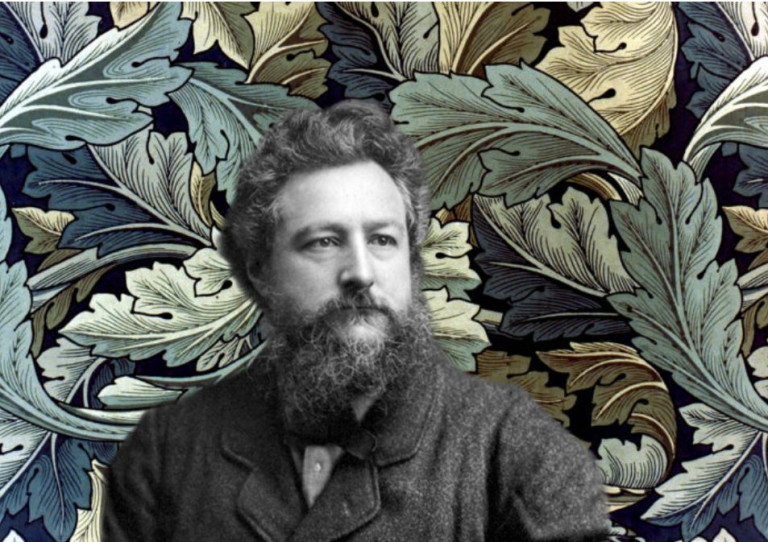
A Profile on William Morris—-Arts and Crafts Movement and Tapestries
Above is our rare Antique Arts & Crafts William Morris Beige Brown And Pink Wool Floral Rug, SKU 12413, reflecting Morris’s unique design aesthetic known for their distinctive stylized natural forms, exquisite symmetry, and vibrant colors. Rooted in a deep appreciation for the beauty of the natural world, his patterns draw inspiration from a rich array of flora, including thistles, ginkgo leaves, willow trees, and various flowers. The intricate designs reflect Morris's commitment to celebrating the inherent elegance found in the organic shapes and symmetries present in nature. Referring to tapestries as “the noblest of weaving arts”, he was a central figure in the Arts and Crafts Movement, and his tapestries played a significant role in promoting the ideals of the movement.
Read the Feature