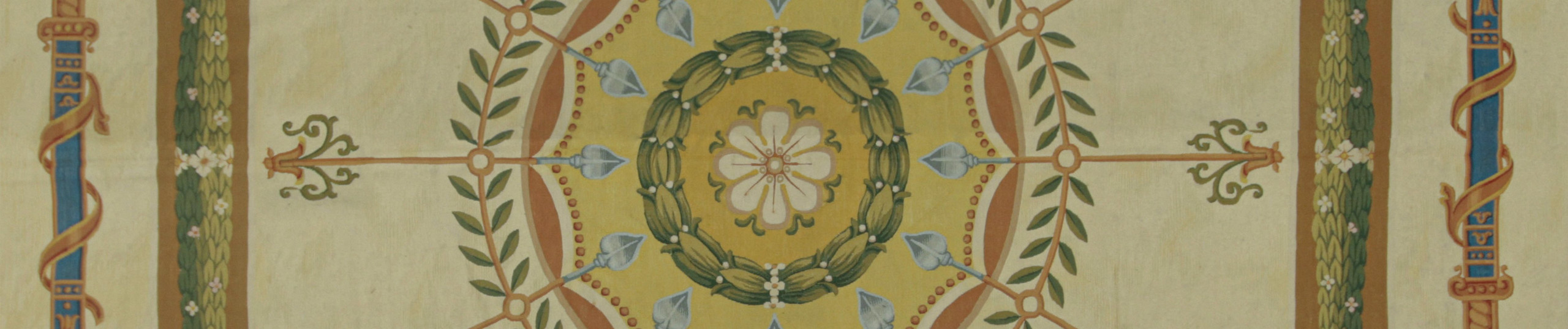
Style
Axminster
Every piece in this style, across all of our collections. Narrow them down by size and price.
- Under 6 x 9
- Runners
- 6 x 9
- 8 x 10
- 9 x 12
- 10 x 14
- 12 x 15
- Over 12 x 15
Origin ▼
Style ▼
Material ▼
Width
Length
To connect with a specialist, click here
Stories from the Axminster Archive
Essays, artist dialogues, and provenance notes drawn from Rug & Kilim’s editorial desk.
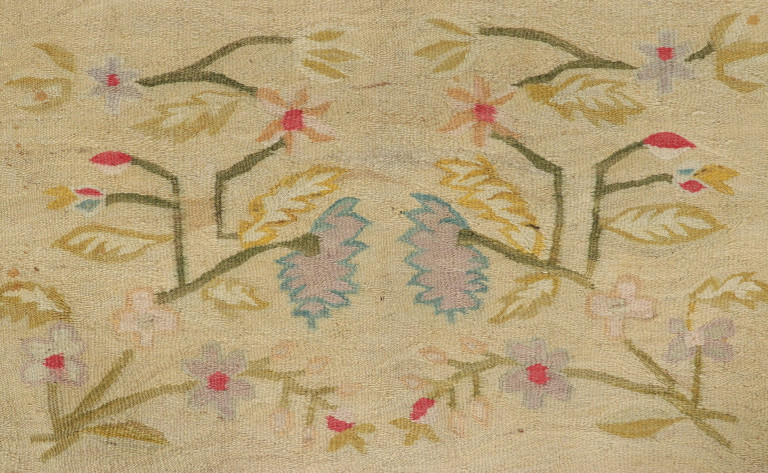
Bessarabian Rugs and Kilims: A European Textile Tradition at the Crossroads of Art, Empire and Design
In a quietly elegant London dining room, a vintage Bessarabian Kilim unfolds beneath the table like an unexpected conversation. Its geometry—subtle yet assertive—draws the eye before one quite realizes why. Inspired by the visual language of early twentieth-century design, the rug nods gently toward the stylized symmetry of Art Deco while remaining unmistakably rooted in a much older European weaving lineage. The effect is a foundation that feels both deliberate and effortless, an object whose presence quietly animates the room. Those who spend time studying interiors often admit a particular fondness for photographs that capture rooms in use rather than in perfection. The slight shift of a chair, the shadow of evening light on polished wood, a glass forgotten after supper—these small evidences of life soften even the most composed design. In such moments, a rug becomes more than a decorative surface. It becomes the mediator between architecture and living.
Read the Feature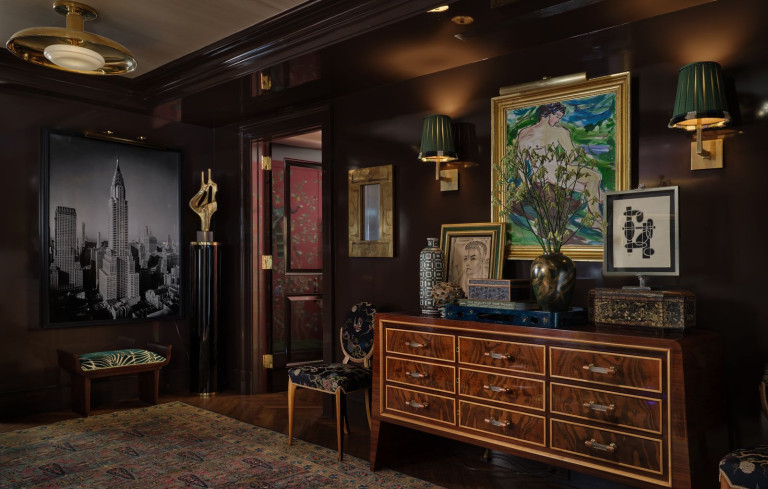
Palatial Rugs as Centerpieces in Salons, Galleries & Embassy Homes
Erik Gensler, designer and owner of EZG Design x Rug & Kilim. Photography by Trevor Tondro. Rug & Kilim's Oversized Antiques >> Palatial rugs as oversized Persian and Mughal rugs, spanning over 1000 square feet of sumptuous weave, are not just luxurious floor coverings—they are monumental declarations of culture, history, and architectural harmony. Once the reserve of emperors and emissaries, these “woven canvases” continue to lend a rarefied gravitas to salons, galleries, and diplomatic residences, transforming rooms into living museums. From the vast gilded salons of Versailles to the marbled halls of Gulf palaces and European embassies, oversized luxury rugs serve as both aesthetic and diplomatic foundations—silent narrators of cultural legacy, sovereign artistry, and refined prestige. Today, designers and collectors are reawakening to their splendor, navigating how to balance opulence with restraint in modern, gallery-like spaces.
Read the Feature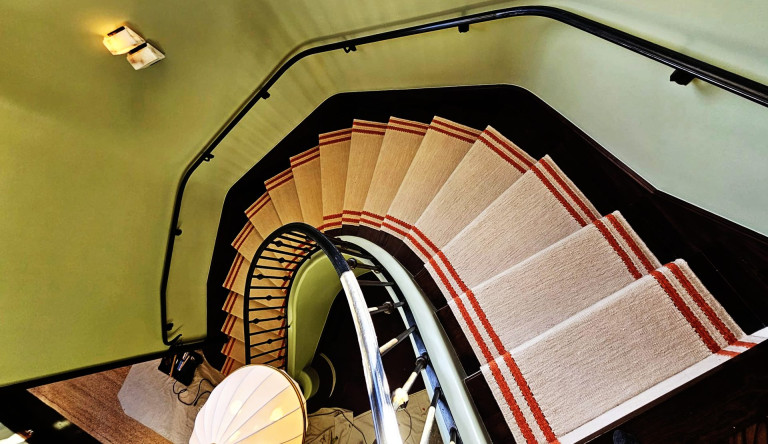
The Art and History of Stairway Rugs in Modern Interior Design
Here’s a sneak peak from a special Stairway project. Executed flawlessly with Rug & Kilim's custom handmade flatweave. Stairways are often the most overlooked spaces in a home or institution. Yet, they hold immense potential for aesthetic transformation. From grand entryways to minimalist modern homes, stairway rugs—also known as stair runners—play a dual role: offering functionality and an elevated sense of style. With over a decade of experience as a rug historian and interior designer, I’ve witnessed how a well-styled stair runner can instantly elevate a space from bland to breathtaking.
Read the Feature
A Day in the Life: Inside the Venerable House of Rug & Kilim
The foundations of a great institution are laid not with brick and mortar, but with passion, knowledge, and unwavering commitment to craft. For over four decades, Rug & Kilim has strove for excellence—a family dynasty of textile connoisseurship built upon Jahanshah Nazmiyal's pioneering vision and now continued through the stewardship of his sons, Cyrus and Sina Nazmiyal. To understand textile is to understand human civilization itself. Every knot, every weft, every fiber tells us something profound about culture, commerce, and art expression. This is not merely our business—it is our obsession.
Read the Feature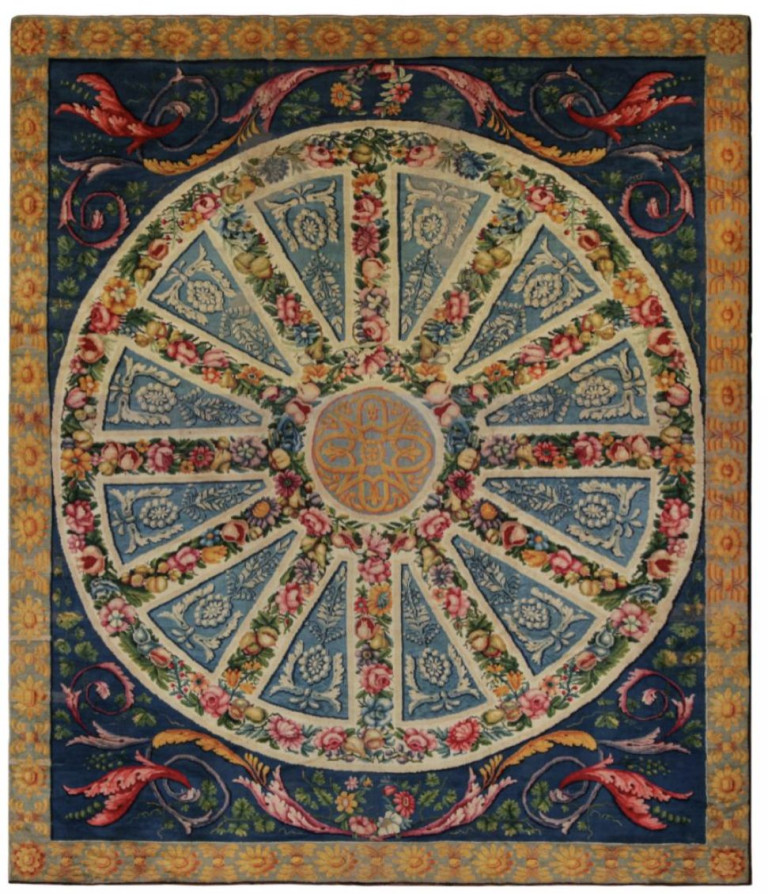
European Rug Medallions: Symbols of Art, Power, and Prestige
Few design elements are as grand in sensibility and presence in European textile art quite like the medallion. More than a decorative addition, the medallion is a visual and conceptual anchor, a motif that echoes across mediums—from the ceilings of Renaissance palaces to the manuscripts of medieval scriptoriums. It appears in the gilded stuccoes of Baroque cathedrals, in the frescoed vaults of Rome, and in the symmetrical tapestries of Flemish masters. Within European rug design, the medallion serves as a bridge between the woven and the built environment; an ornate emblem of high art. To understand the European medallion is to explore its dialogue with architecture, painting, and decorative arts. The arabesques of Savonnerie carpets mirror the aesthetics of Peter Paul Rubens painting; the laurel-framed insignias in English Axminster rugs recall the neoclassical symmetry of a Robert Adam ceiling.
Read the Feature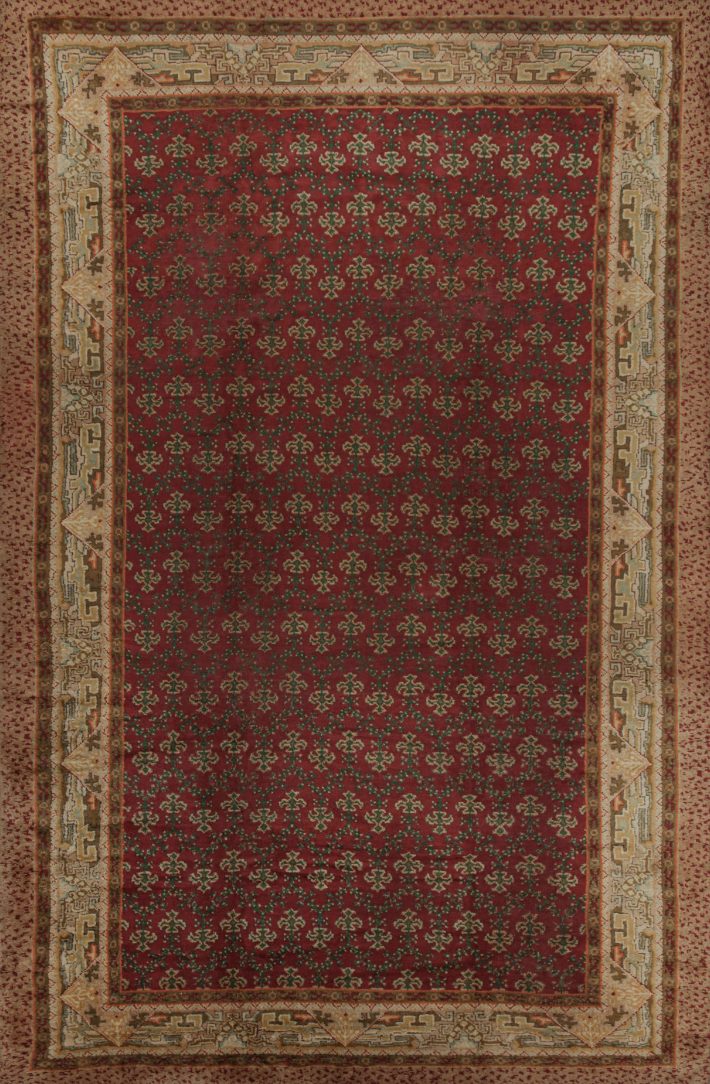
Thomas Witty and the Growth of European Axminster Carpets
Axminster carpets were highly esteemed in English country houses during the late 18th and early 19th centuries, adorning rooms designed by prominent architects like Robert Adam and James Wyatt. They were often part of decorative schemes of renowned designers such as Chippendale or Crace for their discerning clientele. Axminster carpets have a rich history dating back to their founding in 1755 by Thomas Whitty in Axminster, Devon, England. These carpets were hand-knotted with wool, featuring symmetrically knotted designs similar to Savonnerie carpets from France. They often showcased Renaissance architectural motifs, floral patterns, and Oriental-inspired designs, reflecting the influences of their time.
Read the Feature