
The Rug Reimagined as Haute Couture: Fine Art for the Collectors of Culture
May 30, 2025
How Tariffs Are Shaping the Future of Modern and Antique Rugs in the United States
June 4, 2025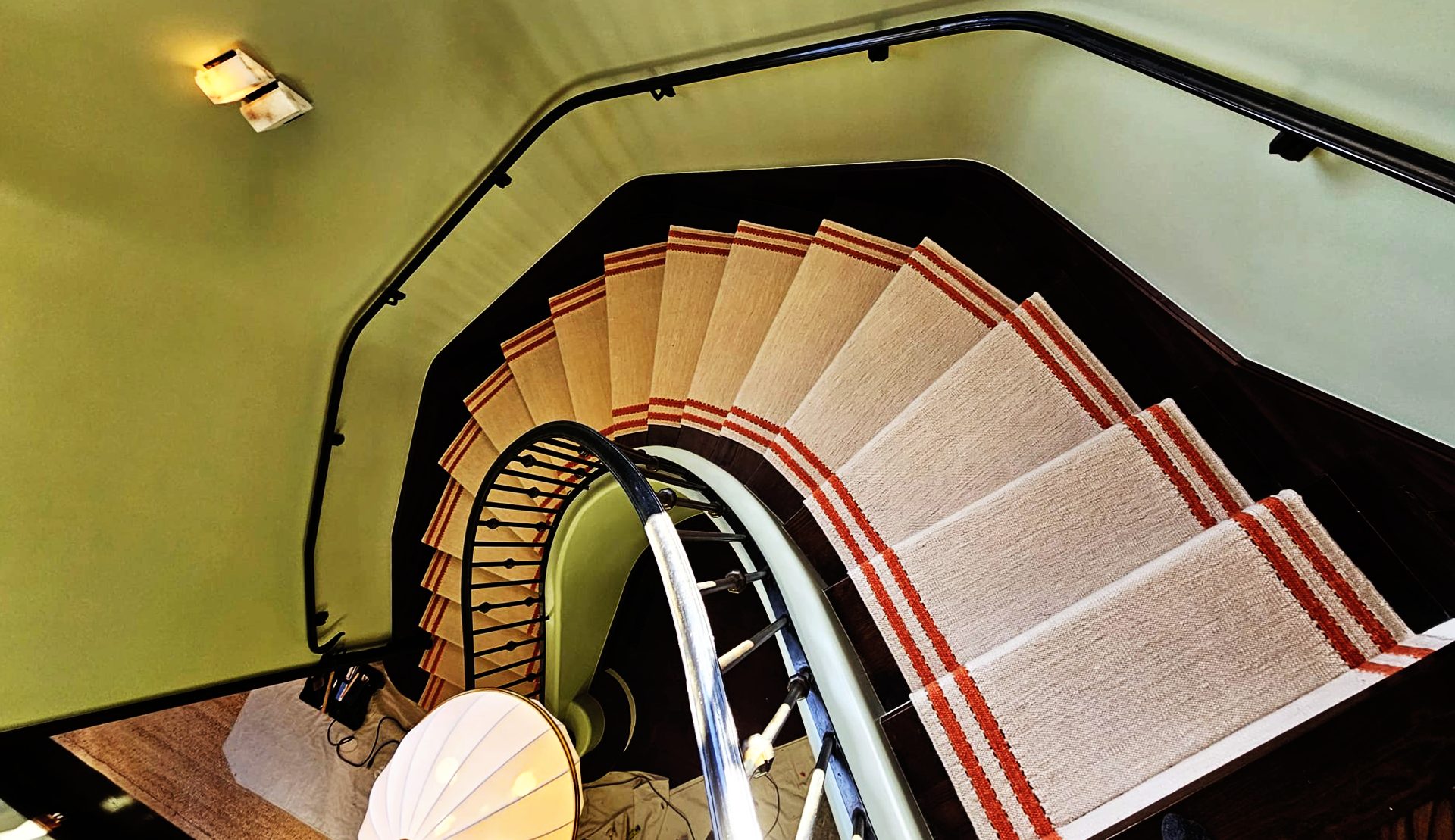
Here’s a sneak peak from a special Stairway project. Executed flawlessly with Rug & Kilim’s custom handmade flatweave.
Stairways are often the most overlooked spaces in a home or institution. Yet, they hold immense potential for aesthetic transformation. From grand entryways to minimalist modern homes, stairway rugs—also known as stair runners—play a dual role: offering functionality and an elevated sense of style. With over a decade of experience as a rug historian and interior designer, I’ve witnessed how a well-styled stair runner can instantly elevate a space from bland to breathtaking.
A Brief History of Stairway Rugs: From Palaces to Modern Homes
Stairways are not merely functional elements; they exemplify symbolic ascension, storytelling, and status. From the sandstone palaces of Rajasthan and the Ottoman court halls of Istanbul, to the Baroque châteaus of France and imperial estates of China—the staircase always functioned as a ceremonial stage. And at the heart of this stage, draped across each step, lay the stairway rug: a textile of quiet majesty, often overlooked but deeply emblematic.
Historically, staircase rugs were not simply floor coverings; they were visual narrators of dynastic grandeur, often handwoven by master artisans whose craft was protected by royal decree. In Mughal India, intricately woven runners adorned the marble staircases of fortresses, their motifs echoing celestial gardens. In Victorian England, ornate Axminster runners were laid across the oak staircases of manors, signifying wealth and lineage. In Japan, tatami-textile steps offered the same reverence in traditional ryokans, while in the Middle East, hand-knotted wool rugs lined staircases used for family and public gatherings alike. In every context, the stairway rug was as much a cultural artifact as it was a functional item.
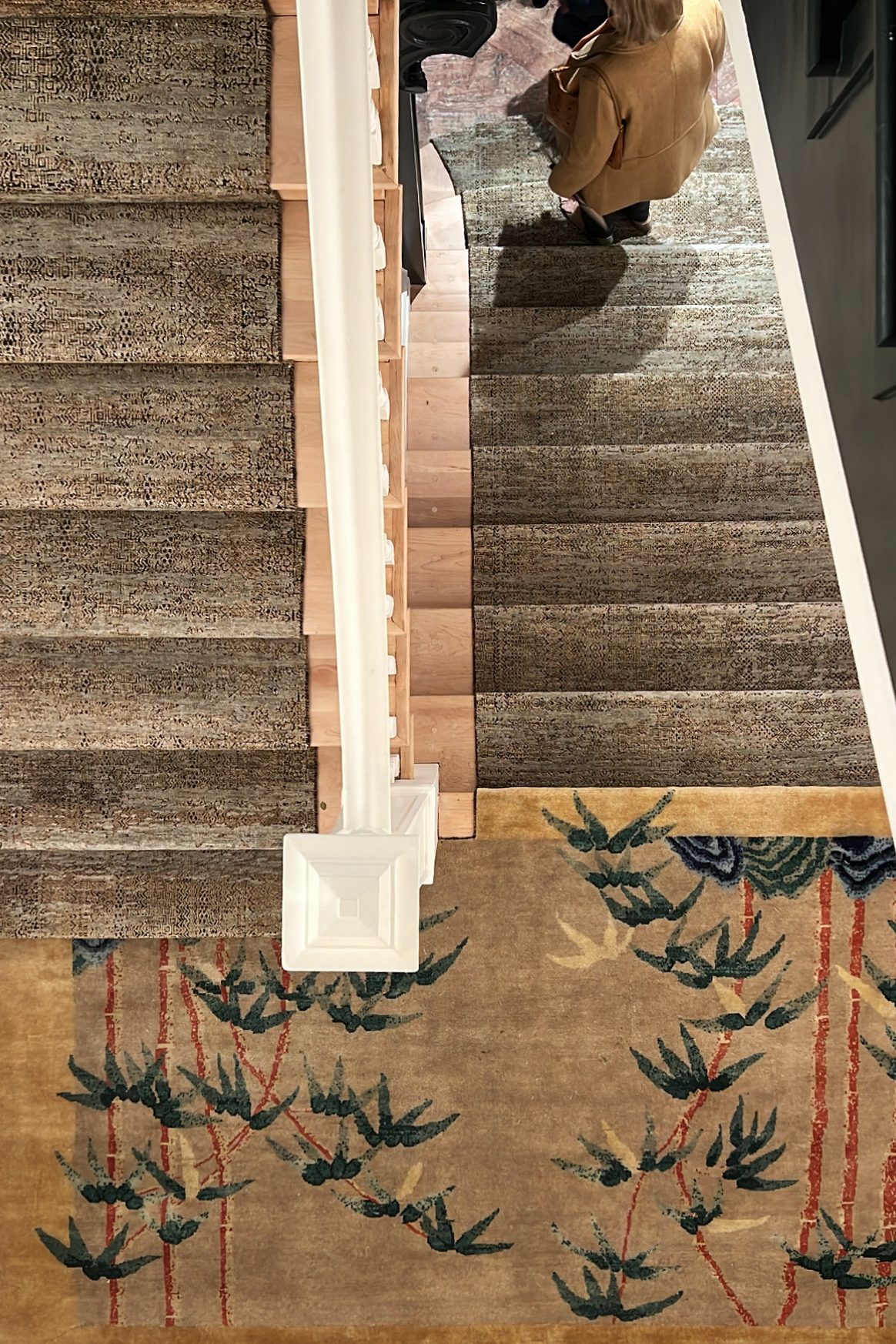
As featured in Elle Decor, Rug & Kilim’s custom textural rug at Kips Bay New York Yellow House.
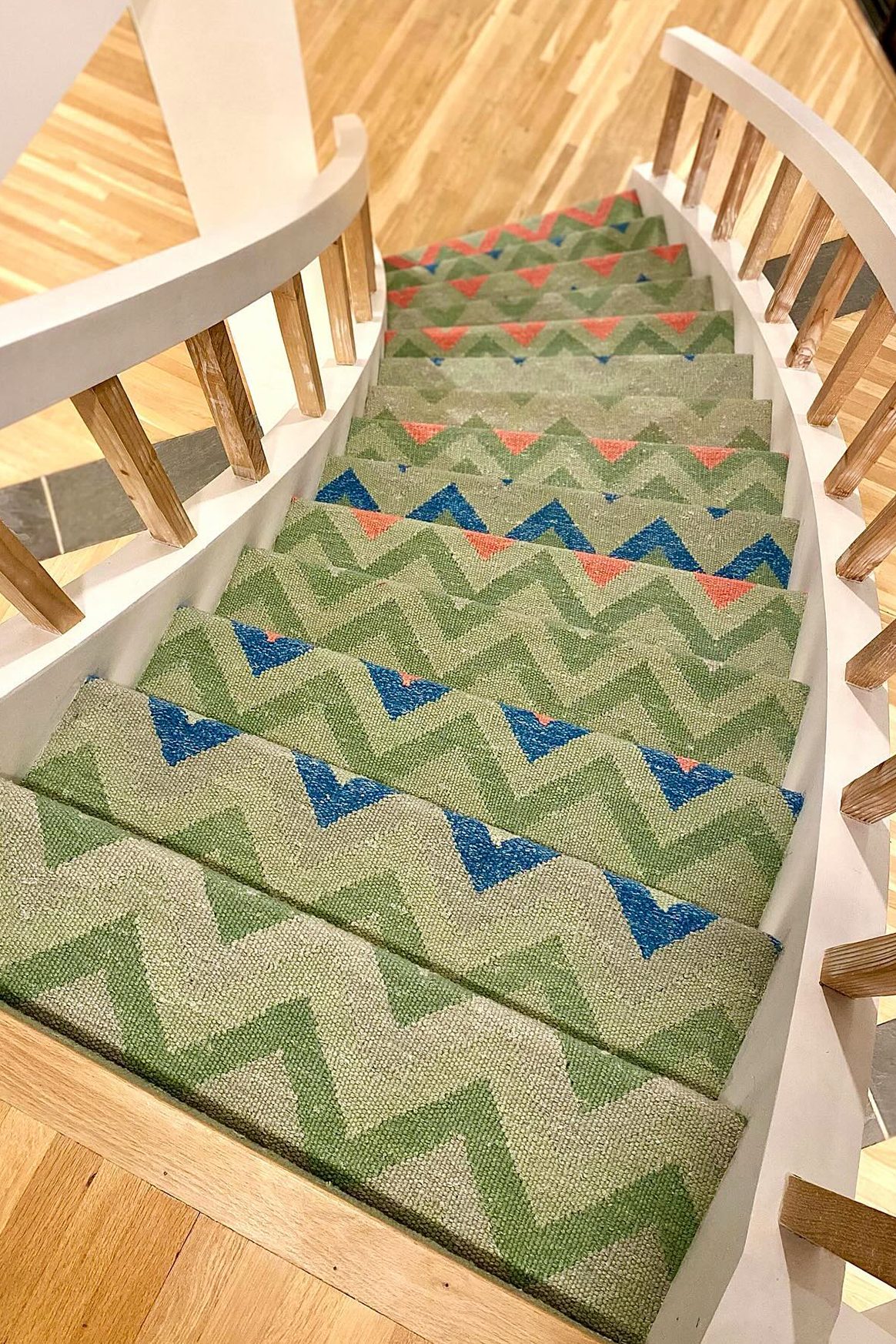
Rug x Kilim’s custom Scandinavian for Jessica Eno.
Why Stairways Deserve More Attention in Design
Today, in the renaissance of heritage-inspired modern interiors, the stairway rug has reemerged as a symbol of taste, tradition, and timeless luxury. As architects and interior designers seek to bridge the past with the present, the once-transitional space of the stairway is being reclaimed as a design epicenter—a curated space. Whether for stately homes, cultural institutions, embassies, or luxury hotels, the inclusion of a stair runner signals intentionality and intellectual richness.
Among the most distinguished styles are Antique Stair Runners, celebrated for their provenance and patina. Sourced from regions like Persia, Anatolia, and the Caucasus, these rugs—often aged over a century—possess natural dyes, hand-spun wool, and medallion or floral patterns that speak to sacred geometry and tribal storytelling. When adapted to staircases, they become woven scrolls, unfurling visual heritage underfoot. In classical interiors, pairing antique runners with brass stair rods, mahogany bannisters, and crystal sconces creates an experience reminiscent of a bygone nobility. Equally compelling in contemporary luxury settings is the Scandinavian stairway rug—a study in restraint, simplicity, and philosophical clarity. Drawing from the Nordic principles of lagom (balance) and hygge (comfort), these rugs often feature neutral palettes—ivories, pale greys, and muted taupes—woven into linear or geometric motifs. Whether crafted from jute, flat-woven wool, or sustainable cotton blends, these runners find their natural habitat in modernist villas, lakeside homes, or wellness spaces that emphasize clarity and calm. They are the epitome of functional elegance.
Yet for homes and spaces that celebrate cultural maximalism, there is a vibrant resurgence of Moroccan-inspired stair rugs—characterized by their eclectic patterns, hand-dyed fibers, and asymmetric or tribal motifs. These are particularly popular in artistic homes, heritage boutiques, or design-forward urban dwellings. Kilim runners, Dhurries from India, and Beni Ourain styles from North Africa bring with them a sense of the global, the handmade, and the soulful. They reflect a curated life filled with stories, not just styles.
Why “Stairway Rug Styling” is Trending in 2025
For a more contemporary and fashion-forward approach, runway-inspired stair runners are emerging as a striking trend in elite interiors. With textile innovation intersecting high fashion, luxury staircases now wear velvet, metallic accents, and bold Art Deco geometry—drawing inspiration from the ateliers of Chanel and the architectural works of Zaha Hadid. These custom-designed pieces are ideal for penthouses, modern museums, or diplomatic salons that seek a visual identity grounded in design excellence.
Material choice remains central to both legacy and innovation. Historically, hand-knotted wool was the benchmark of nobility. Today, that legacy is preserved with sustainable upgrades—rugs made from organic wool, ethically harvested silk, bamboo viscose, and even high-performance recycled PET blends that marry durability with eco-consciousness. Each material contributes to the space’s narrative: wool for warmth and softness, jute for earthy elegance, silk for aristocratic sheen, and synthetics for modern resilience in high-traffic settings.
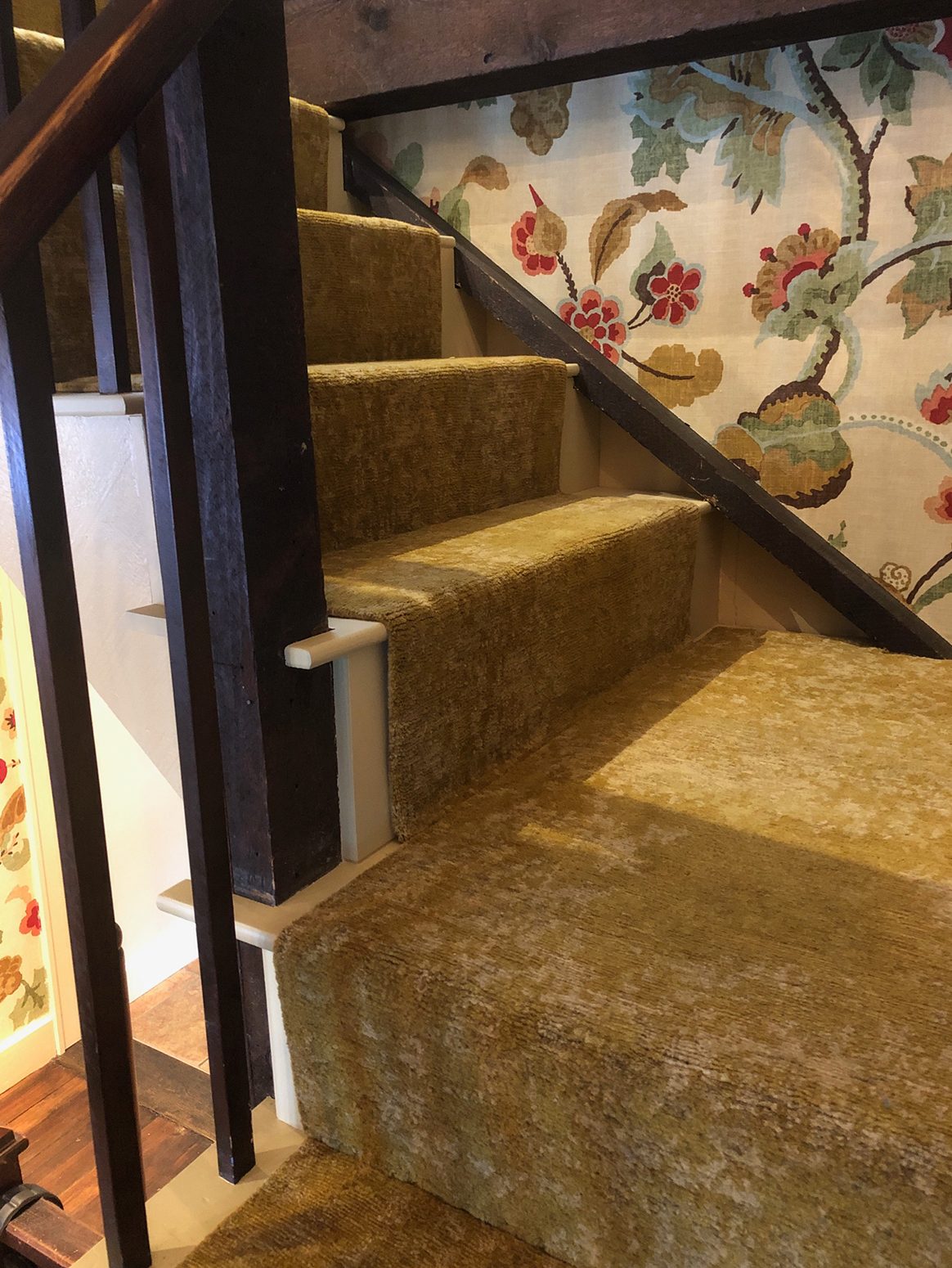
Rug & Kilim for Ann Maloney.
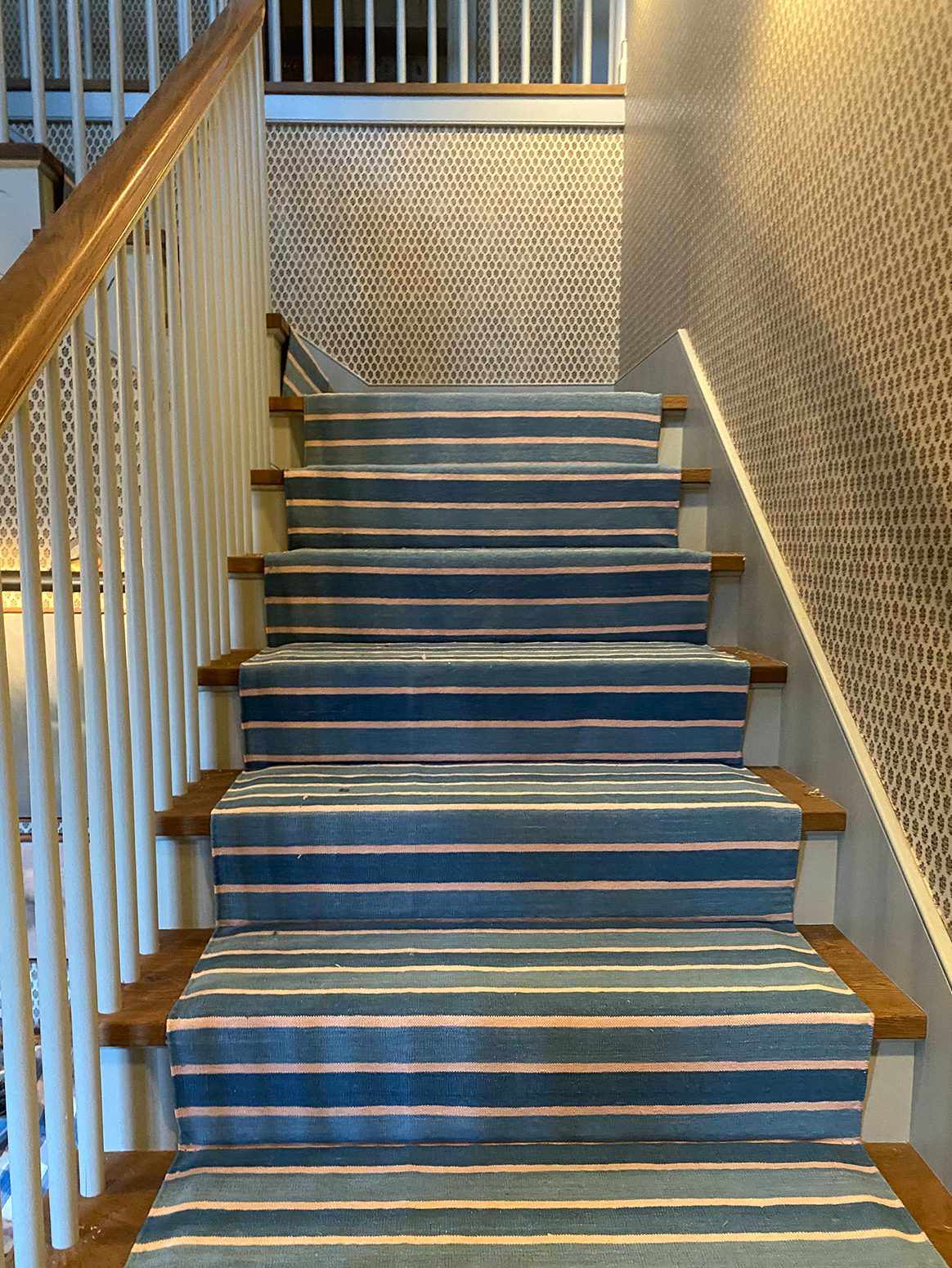
The Waterfall installation for Heidi Caillier.
The Waterfall installation
Installation, too, is an art form. Techniques vary by aesthetic and function. The “waterfall” installation, where the rug drapes over each stair edge like a cascading textile, suits traditional and romantic interiors. The “Hollywood” style, where the runner is tightly affixed to both tread and riser, offers a clean, tailored look ideal for formal or high-use environments. For spiral or curved staircases—often found in heritage homes or embassies—custom cutting and professional templating ensure symmetry and grace.
From an institutional perspective, stairway rugs serve as silent ambassadors of cultural identity. In embassies, academic halls, heritage museums, and religious institutions, these rugs symbolize a reverence for continuity, heritage, and the aesthetics of movement. In luxury hotels and private estates, they impress upon guests a sense of care, comfort, and curated legacy.
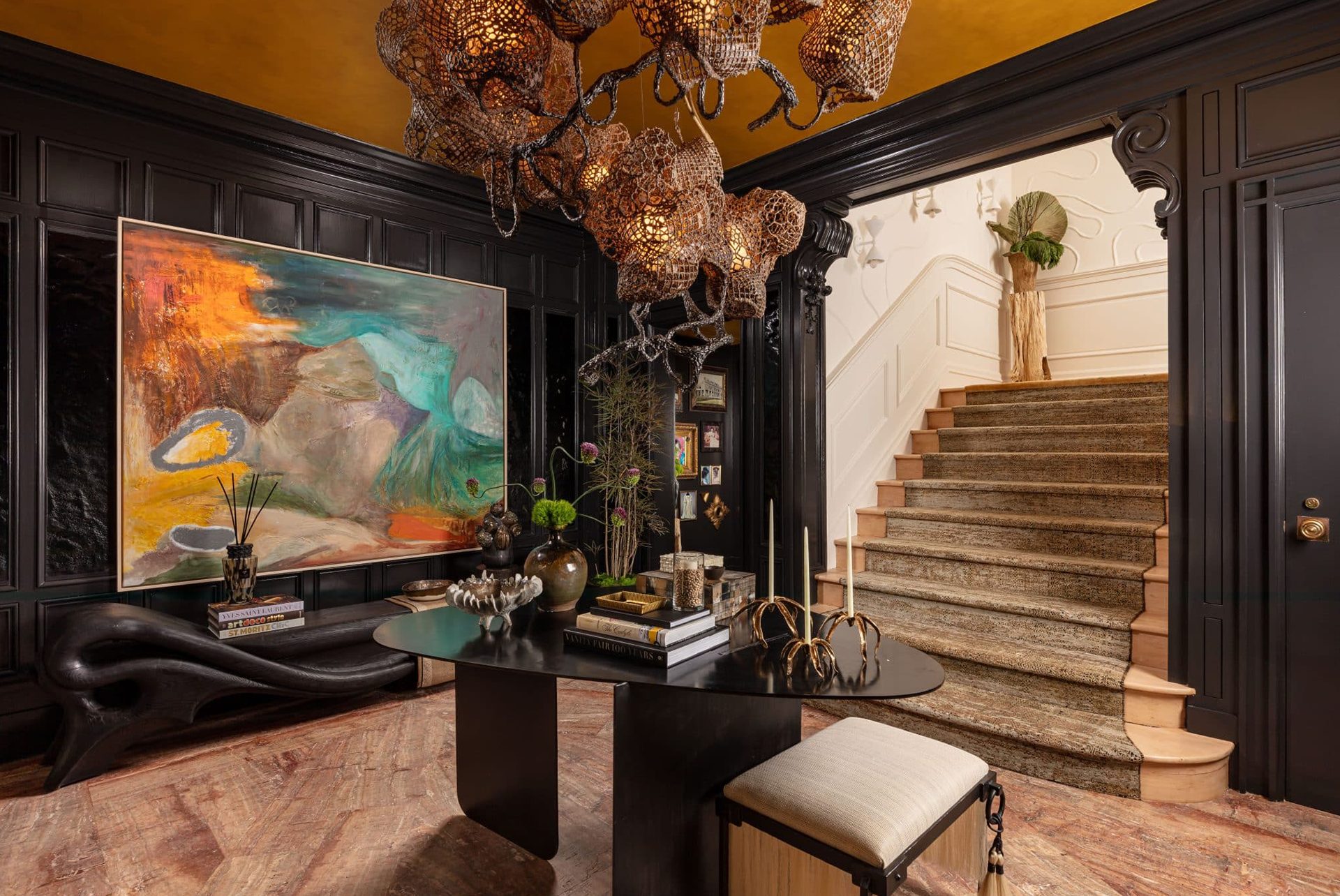
As featured in Elle Decor, Rug & Kilim’s custom textural rug at Kips Bay New York Yellow House.
In a world rapidly defined by the transient and the digital, the reintroduction of handcrafted, culturally resonant stairway rugs offers something far deeper: permanence, elegance, and heritage underfoot.
Whether echoing the corridors of palaces past or setting the tone for institutions of the future, these rugs honor the centuries-old truth that design—at its finest—is a form of cultural stewardship.
~~~
At Rug & Kilim, we’re all about making your life easier. Our team’s always happy to help with your projects—whether it’s for your home or something in hospitality. No matter the size or scope, we’re here to bring your ideas to life. Consult here >>