

The Art and History of Stairway Rugs in Modern Interior Design
June 2, 2025
Tulu Rugs as Icons of Raw Luxury: Folk Art Meets Modern Fashion
June 9, 2025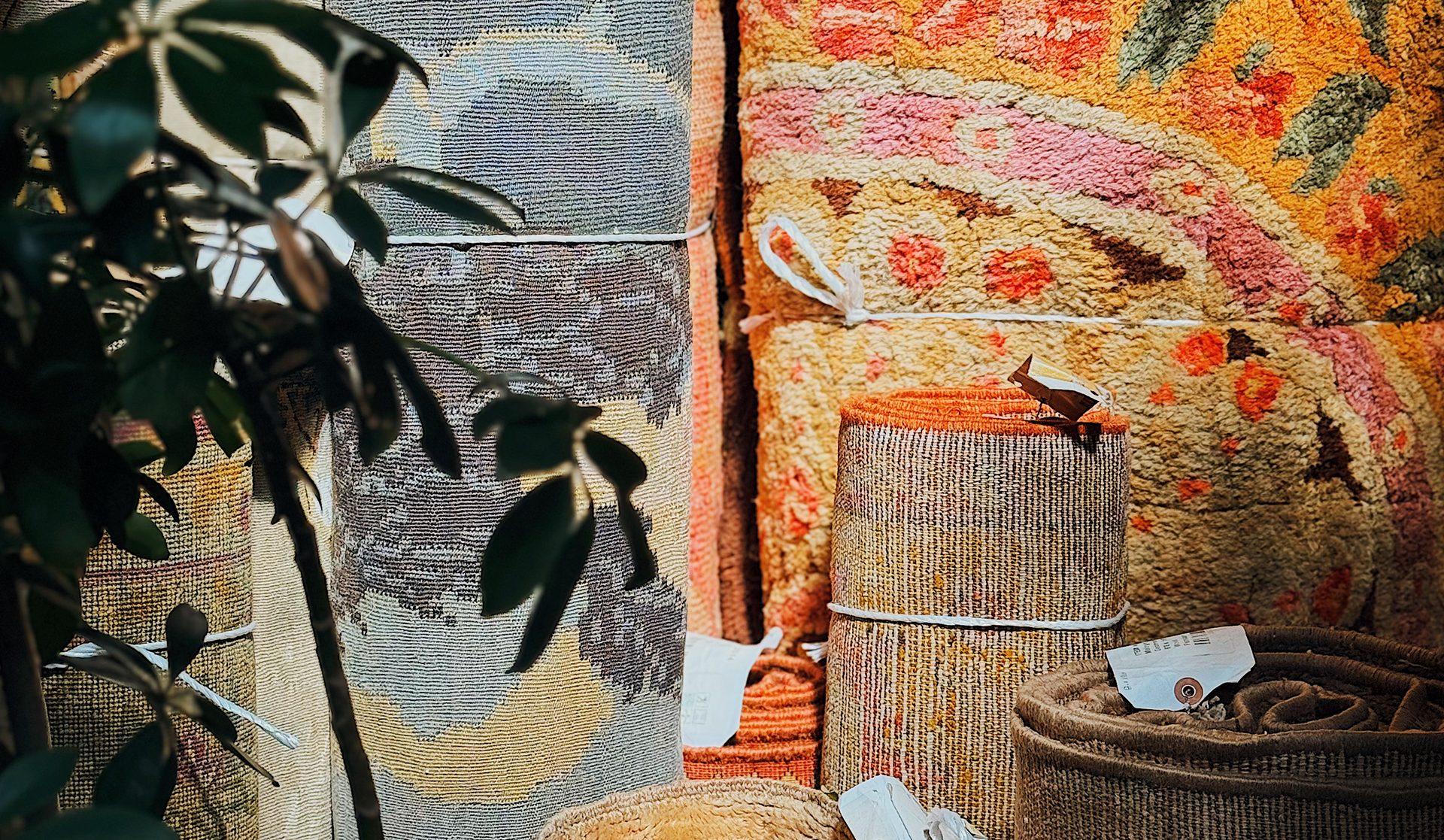
R&K Showroom
A rug is rarely just a rug in the quiet luxury of a gallery showroom or the curated intimacy of a collector’s salon. It is a world unfurled — created with centuries of ritual, memory, and meaning. Yet, beyond the weaving process lies a less visible thread that increasingly shapes what reaches the American floor: policy. As U.S. tariff regulations grow more complex and geopolitically charged, the fate of both modern and antique rugs has become entangled in a matrix of international trade, cultural diplomacy, and economic strategy.
Evolving trade tariffs are reweaving the global rug market — influencing not only pricing and availability but also sourcing decisions, artisan livelihoods, and the long-term legacy of one of the world’s most enduring forms of cultural expression. For interior designers, collectors, curators, and cultural economists, the conversation is no longer just about taste — it’s also about trade.
Tariffs and Trade in a Globalized Marketplace
In recent years, U.S. tariff policy has become an increasingly potent force shaping the availability and value of rugs entering the American market. Under Section 301 of the Trade Act, rising duties on imports from countries such as China have set a precedent for broader scrutiny of goods—including hand-knotted rugs and Kilims—from major weaving hubs like Iran, India, Pakistan, Turkey, Afghanistan, and Nepal. Historically, rugs from these regions have constituted the backbone of luxury interior design in the U.S. However, the introduction or escalation of import duties—often in response to geopolitical tensions, human rights issues, or trade imbalances—has directly impacted retail pricing structures. Rugs that once provided an accessible entry point into handwoven textiles have now become costlier, with increases in landed costs being passed on to the consumer.
More significantly, these tariffs distort sourcing strategies. Retailers and galleries now face a tri-fold challenge: higher costs, longer wait times, and diminished variety. As importers pivot to tariff-free or less restricted markets like Morocco or parts of Southeast Asia, the American rug landscape is subtly—but unmistakably—changing in its aesthetic and cultural composition.
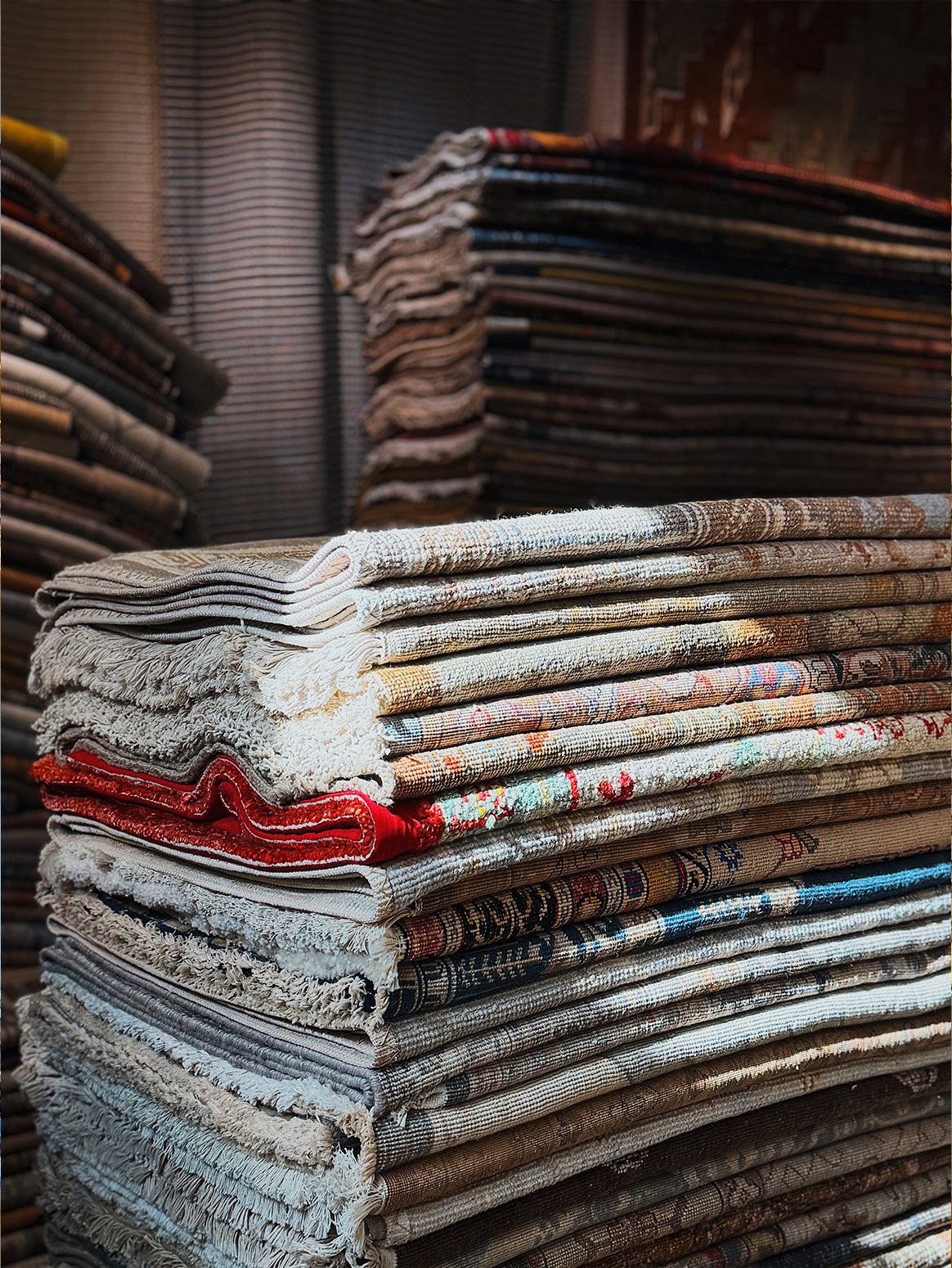
Rug & Kilim’s Inventory
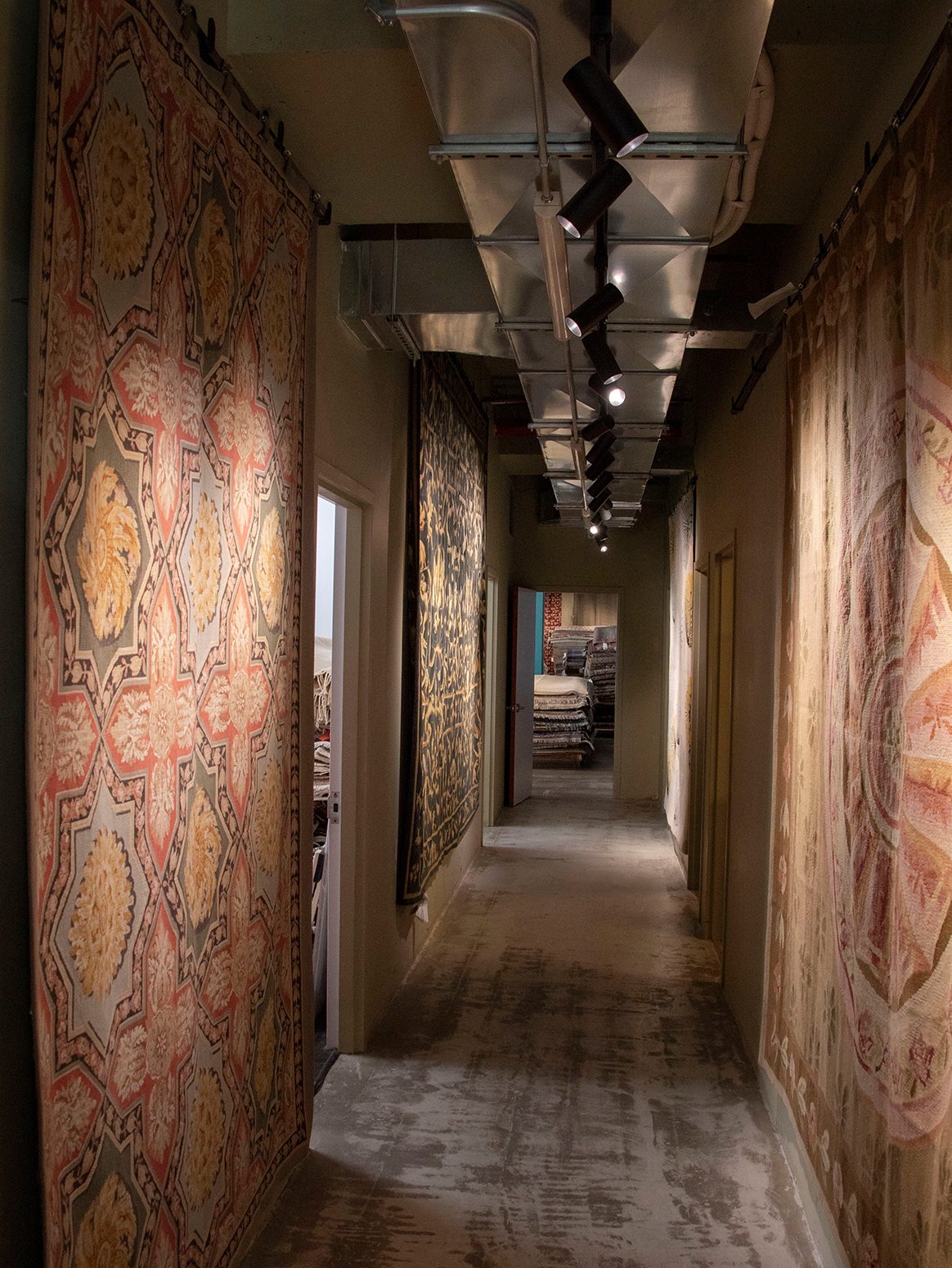
Modern vs. Antique Rugs in the Trade Tariffs Crosshairs
Tariff impacts are not felt uniformly across the rug industry. Modern rugs—produced in greater volume and often with newer materials like viscose or polypropylene—tend to allow for faster production pivots and vendor shifts. Consequently, suppliers may adapt by relocating production to countries with more favorable trade terms or investing in domestic production alternatives. Antique rugs, however, represent a different universe altogether. These pieces are rare, irreplaceable, and tethered to specific geographies and histories. Iran, for instance, remains an epicenter of antique Persian rugs, but its products are subject to sweeping sanctions and import bans. Even when legality permits, provenance documentation and cultural heritage laws in origin countries often complicate export processes, especially for items deemed “national treasures.”
As access narrows, the market for antique rugs is seeing heightened speculative interest. Buyers are turning toward vintage textiles not just as décor but as legacy investments—objects that may appreciate in value due to scarcity and cultural significance. As the import channels shrink, the domestic resale and auction markets are quietly booming.
Cultural Heritage in a World Dominated by Tariffs
Behind every handwoven rug lies an artisan’s story—often one of generational knowledge, regional identity, and economic necessity. Tariffs, while positioned as instruments of economic leverage, have unintended consequences for these human ecosystems. In Afghanistan, for instance, the rug industry is the second-largest employer after agriculture. For artisans, especially women working in home-based looms, the American market has historically been a lifeline. Tariff hikes and sanctions sever this lifeline, not only causing income loss but also jeopardizing the continuity of intangible cultural heritage.
In politically sanctioned nations like Iran, the impact is even more layered. Iranian weavers, many of whom operate in informal economies, face a dual exclusion: from global markets due to politics, and from domestic visibility due to urbanization and shifting consumer preferences. Without export viability, the incentive to sustain traditional weaving practices diminishes—accelerating the cultural erosion of unique motifs, techniques, and dyeing traditions.
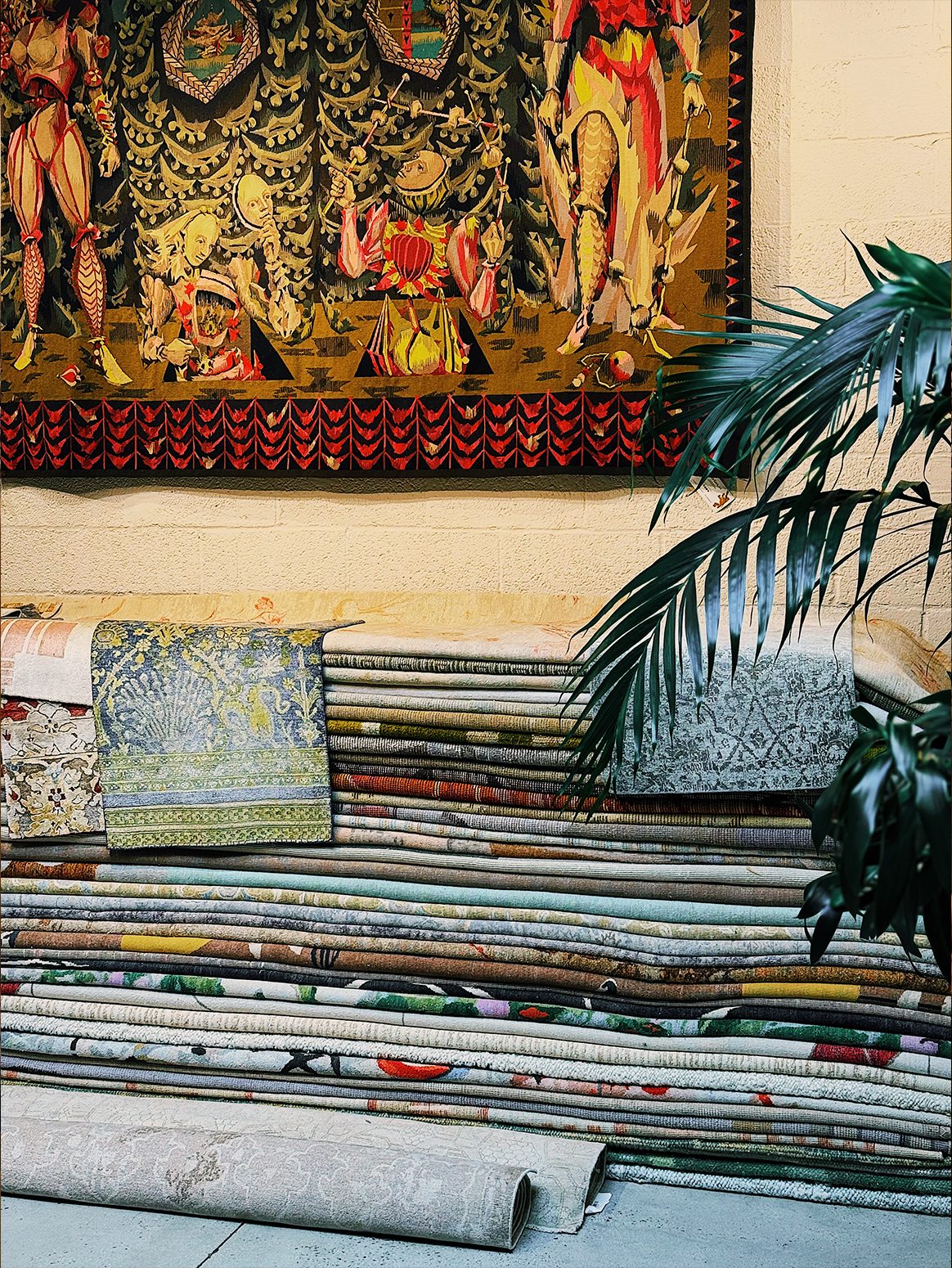
R&K Showroom in Long Island City
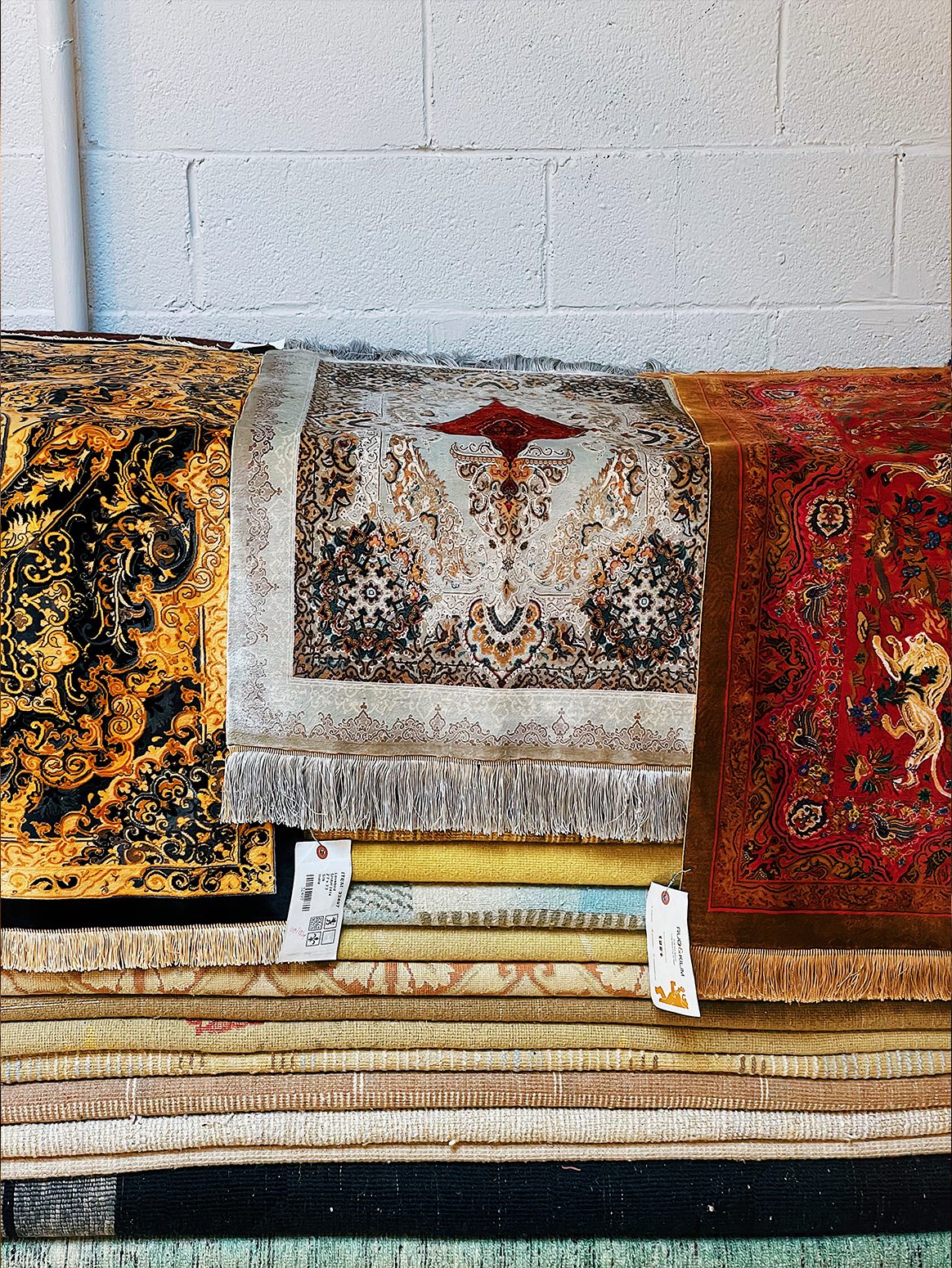
Rug & Kilim’s Inventory
Ethics, Sourcing, and Cultural Stewardship
American galleries, museums, and luxury design firms are recalibrating in real time. Many are diversifying their sources, forming new relationships in countries like Turkey or even reviving interest in North American Indigenous weaves. Others are stockpiling legacy inventory, betting on the long-term value of older acquisitions. Design firms working with high-end clientele often absorb higher sourcing costs to maintain quality and provenance standards, while others experiment with digitally printed replicas or contemporary rugs with antique-inspired designs—blurring the line between authenticity and aesthetic reference.
Museums and heritage institutions play a unique role amid these shifts. With acquisition slowed by trade restrictions, many are pivoting toward education and preservation, offering exhibitions and archival studies that contextualize rugs not just as décor, but as documents of history, identity, and diasporic connection. Their voice is increasingly needed in policy debates around cultural patrimony and ethical sourcing—especially as issues of decolonization and cultural ownership rise in prominence.
What’s Next? Navigating the New World of Rug Trade
The convergence of trade policy, cultural heritage, and global commerce calls for forward-looking solutions. Some institutions and private collectors are exploring provenance tracking—creating immutable records that verify a rug’s origin, age, and trade history. These digital certificates could restore confidence in sourcing, especially for rare or antique pieces, and provide transparency across value chains. Certifications, too, are gaining traction. Labels ensuring ethical labor practices, organic materials, and environmentally safe dyeing processes allow U.S. buyers to make values-aligned decisions, especially as the next generation of collectors demands more accountability from brands.
Trade diplomacy may hold another key. Multilateral cultural agreements that exempt heritage textiles from general tariffs—or create special visas and artisan exchange programs—could help preserve both market access and cultural knowledge. NGOs, design coalitions, and academic institutions can advocate for such bridges between economic policy and cultural continuity.
While the conversation around tariffs often feels abstract, their impact on the ground is immediate and tangible — especially in the realm of custom rug production. At its core, the principle is simple: when it becomes more expensive for goods to enter the country due to tariffs, that cost inevitably passes through the supply chain. For vendors, the increase may appear in freight surcharges, duties, or delays. For clients, it manifests as higher price tags and extended lead times, particularly on custom orders. This is where curated, domestic inventory becomes not just a convenience — but a strategic advantage.
With over 8,000 rugs in stock, including pieces in every imaginable size, color palette, and style, our collection offers designers a rare alternative: access to museum-worthy textiles at price points untouched by the fluctuations of global trade policy. And perhaps more importantly, these are rugs available now — not six or twelve months from now.
In markets where access to design centers and showrooms may be limited — and even in design capitals like New York or Los Angeles, where time is often the true luxury — sourcing from established inventory can offer both creative freedom and financial prudence. It’s an invitation for designers to look again at what’s immediately available, and to find extraordinary pieces that not only align with their vision, but circumvent the hidden costs of an increasingly unpredictable global supply chain.
Inventory, once seen as secondary to bespoke production, is now emerging as a luxury of certainty in an uncertain market.
Tariffs are more than economic instruments—they influence the broader cultural discussion of globalization. The way America chooses to structure its import regime for rugs will echo not only in the pricing of high-end interiors but in the very survival of ancient artistic traditions.
As stewards of culture—be it through design, curation, scholarship, or collection—our challenge is not simply to adapt, but to envision and advocate for a future in which policy and pattern coexist, harmonize, and uplift one another.