
Style
Berber
Every piece in this style, across all of our collections. Narrow them down by size and price.
- Under 6 x 9
- Runners
- 6 x 9
- 8 x 10
- 9 x 12
- 10 x 14
- 12 x 15
- Over 12 x 15
Origin ▼
Style ▼
Material ▼
Width
Length
To connect with a specialist, click here
Stories from the Berber Archive
Essays, artist dialogues, and provenance notes drawn from Rug & Kilim’s editorial desk.
Tuareg Textiles and Design: History, Tribal Craft, and Contemporary Influence
The Sahara has never been short of ideas. It has merely been selective about who hears them. The Tuareg did not set out to create an aesthetic. They created a system. Long before design was professionalized, categorized, or monetized, Tuareg artisans developed a material language governed by movement, restraint, and exacting necessity. What remains today — in textiles, metalwork, and spatial logic — is not folklore but authorship: a coherent design intelligence that continues to inform contemporary practice, whether acknowledged or not. At Rug & Kilim, we approach Tuareg works not as ethnographic specimens, nor as romantic artifacts, but as foundational design objects. They belong not on the margins of decorative history, but firmly within its canon.
Read the Feature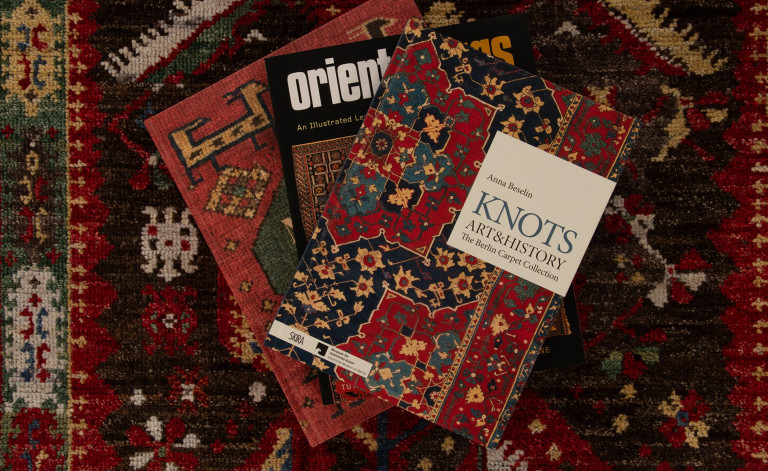
The Museumification of Rugs: How Institutions Decide What Becomes “Art”
Rugs enter a museum not by virtue of age or beauty alone, but through a complex calculus of scholarship, provenance, cultural relevance, and curatorial vision. Rugs have always stood at an uneasy threshold in the hierarchy of the arts—venerated as cultural documents, admired as technical achievements, yet long excluded from the canon reserved for painting, sculpture, and monumental crafts. Today, however, museums around the world are undergoing a profound recalibration of their relationship to weaving traditions. Rugs, tapestries, and fiber works are no longer fringe “decorative arts” but central to conversations on modernism, cultural exchange, and the politics of material culture.
Read the Feature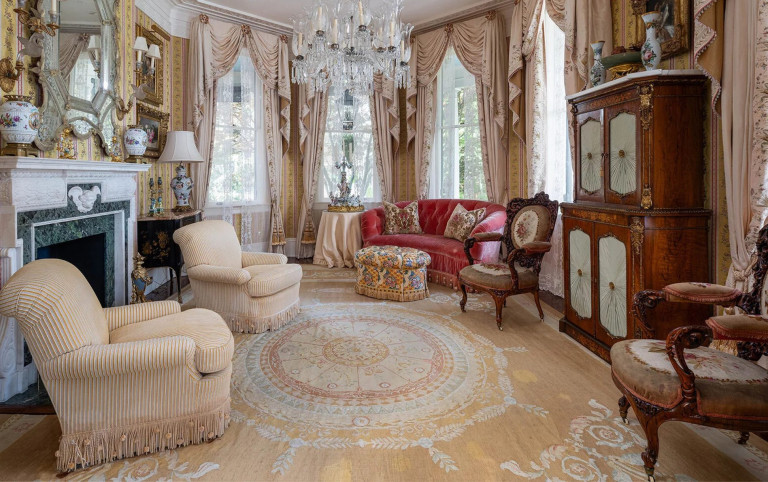
How Rugs Frame and Define the Modern Open Interior: Defining Spaces From Palace Halls to Loft Living
The open-concept space is the modern equivalent of the grand hall and the ceremonial courtyard—a place where boundaries dissolve, yet zones must still be understood. In open-concept interiors—those vast, uninterrupted expanses where living, dining, and work areas coalesce—rugs operate as more than mere surface coverings. They translate the architectural intent of a room into lived experience, delineating invisible borders through proportion, motif, and material. They are architectural anchors, narrative devices, and cultural emissaries. A well-chosen rug brings not only visual cohesion but also historic depth, artisanal integrity, and tactile luxury to a space that might otherwise feel adrift. The placement of a rug in such environments is an act of both design precision and curatorial decision-making—akin to hanging a masterwork in a gallery.
Read the Feature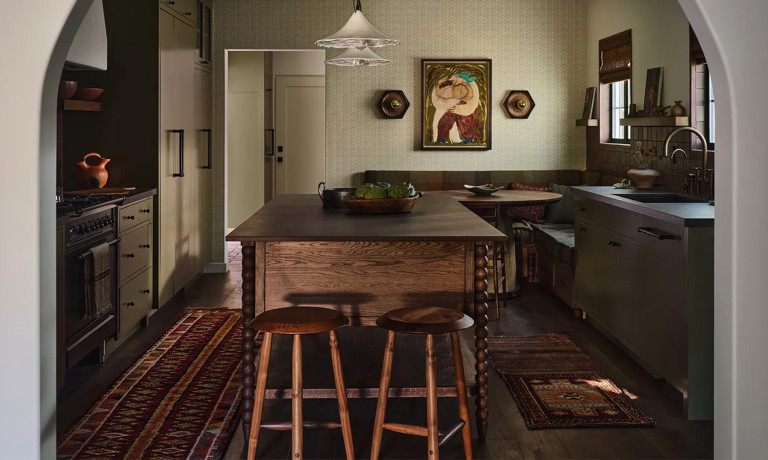
What Makes Qashqai Kilims Unique? Inside the World of Persian Tribal Rugs and Flatweaves
As seen in Domino Magazine, featuring our Kilim rug, designed by Los Angeles design firm A1000XBetter, founded by Kirsten Blazek. Over the last four decades of collecting, studying, and preserving Kilims and Flatweaves, we have come to understand them not simply as tribal textiles, especially Qashqai kilims, which are documents authored by women whose names we will never know, yet whose design decisions resonate across centuries. Every kilim in a collection is a fragment of a larger ethnographic narrative of movement, negotiation, and encoded survival. What begins as a study in tribal design inevitably becomes a reflection on how memory operates in material form. As collectors and custodians, we have come to understand these pieces less as possessions and more as conversations—between past and present, utility and abstraction, territory and transcendence. They speak to the same values that define the most forward-thinking design philosophies: sustainability, material honesty, visual intelligence, and narrative depth.
Read the Feature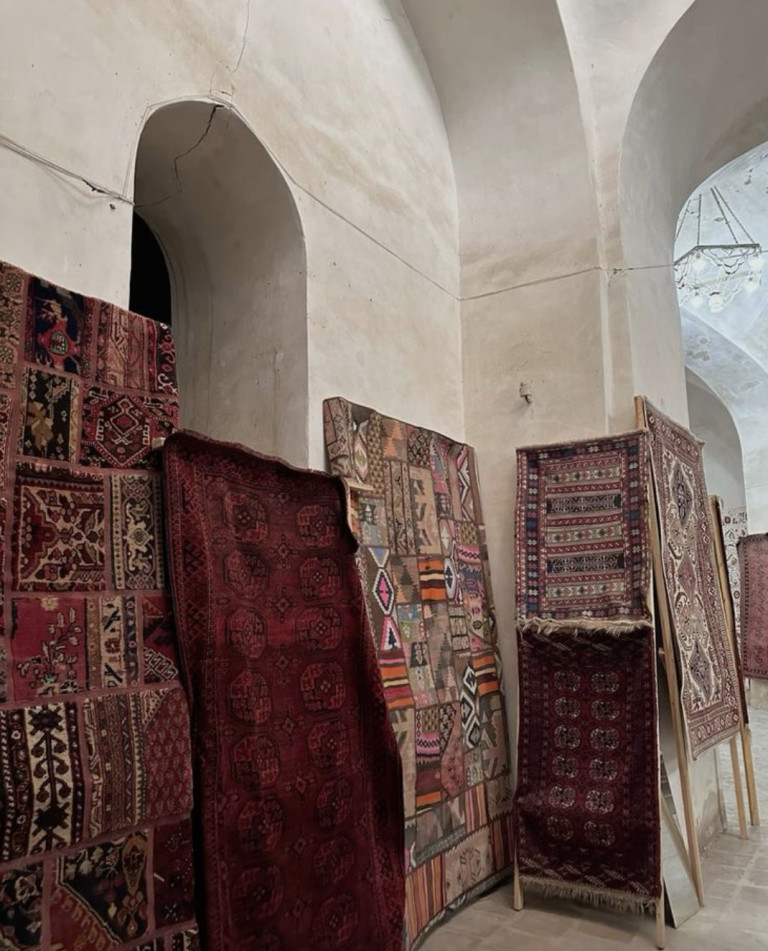
A Guide to Folklore and Cultural Memory in Rugs and Kilims
In collecting rugs and kilims, we encounter not just objects, but vessels of generational memory, where each design reveals itself as a complex cultural manuscript. What emerges from this study of traditional rug-making is not merely a catalog of styles or techniques, but rather an atlas of human cultural memory. These textiles - whether prayer rugs from Anatolia, dowry pieces from Isfahan, or war rugs from Afghanistan - serve as sophisticated vehicles for cultural transmission, preserving what might otherwise be lost to time. The Afghan war rugs present the most profound example of textile resistance in modern history.
Read the Feature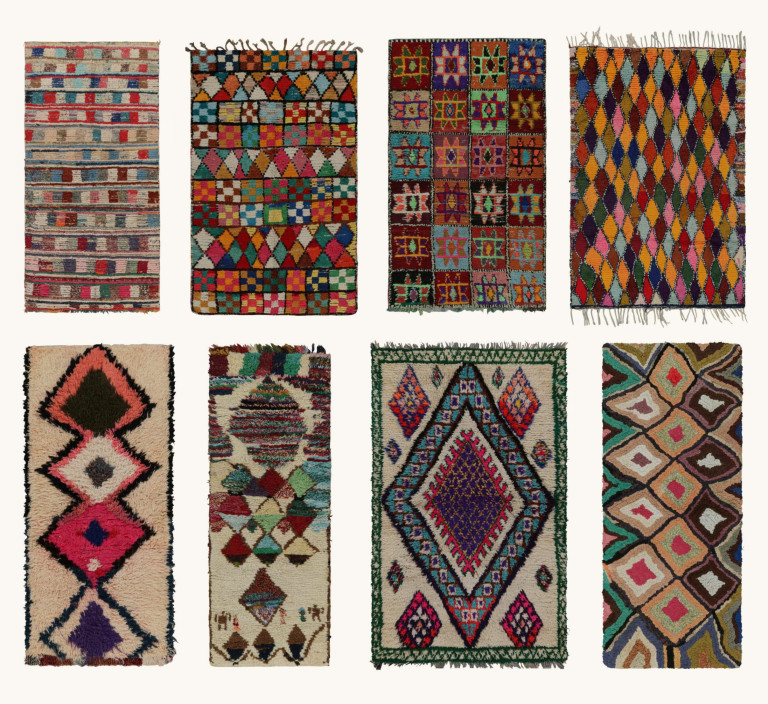
A Guide to History and Significance of Moroccan Berber Azilal Rugs
Moroccan rugs, particularly those from the Azilal region, represent a pinnacle of textile craftsmanship. These woven masterpieces encapsulate centuries of Berber tradition, serving not merely as floor coverings but as tangible embodiments of cultural narrative. Rug & Kilim's dedication to the Azilal tradition extends beyond mere curation. We actively engage in the ongoing dialogue between historical craft and contemporary design, positioning these rugs as bridges between past and present. The genesis of Azilal rugs can be traced to the 16th century in Morocco's Middle Atlas Mountains. The Azilal small town province, characterized by its rugged terrain and isolated communities, fostered a distinct rug-making tradition that remained largely unknown to the outside world until the late 20th century. This isolation preserved the authenticity and unique characteristics of Azilal rugs, distinguishing them from other Moroccan textile traditions such as the more widely recognized Beni Ourain rugs.
Read the Feature