Style
Design
Every piece in this style, across all of our collections. Narrow them down by size and price.
- Under 6 x 9
- Runners
- 6 x 9
- 8 x 10
- 9 x 12
- 10 x 14
- 12 x 15
- Over 12 x 15
Origin ▼
Style ▼
Material ▼
Width
Length
To connect with a specialist, click here
Stories from the Design Archive
Essays, artist dialogues, and provenance notes drawn from Rug & Kilim’s editorial desk.
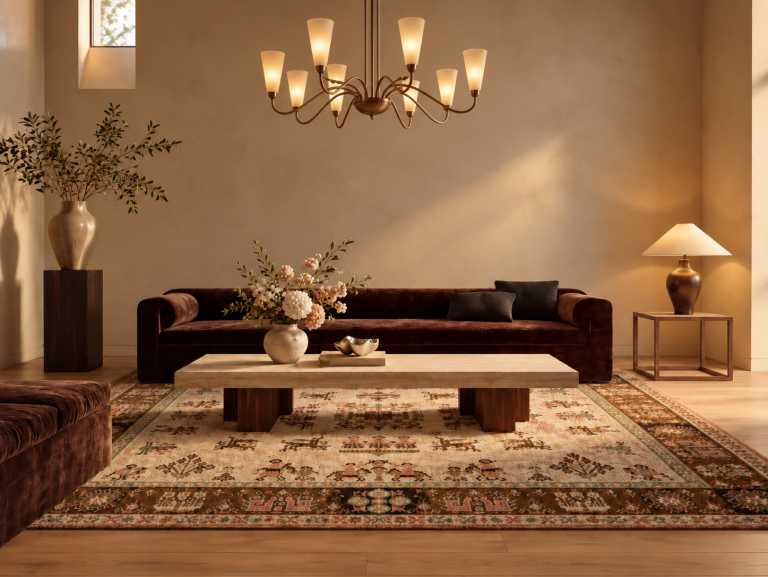
A Guide to Axminster Rugs: History, Craftsmanship, and British Design Heritage
Among the most influential carpet traditions to emerge from Europe, Axminster rugs occupy a distinguished position within the history of decorative arts, architecture, and interior design. Renowned for their exceptional craftsmanship, technical innovation, and artistic sophistication, Axminster carpets represent one of Britain's most important contributions to the global history of textile design. Originating in the historic market town of Axminster in Devon, England, these carpets became synonymous with luxury, refinement, and excellence from the eighteenth century onward. Their influence extended far beyond Britain, shaping carpet production, interior decoration, and architectural furnishing throughout Europe, North America, and the wider world.
Read the Feature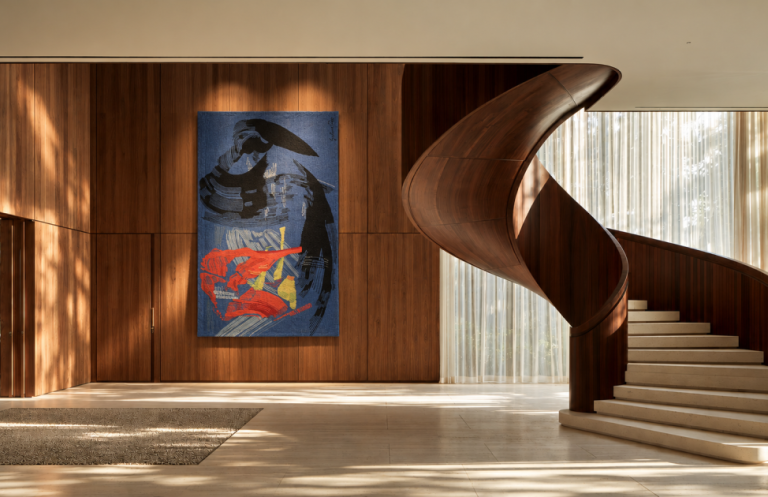
The Art of Bespoke Design by Rug & Kilim: How a Painting, a Fabric, or a Fragment Becomes a Custom Rug
Every custom rug begins with a question that sounds simple and is not: what does this room want to stand on? The answer, in the finest commissions, rarely arrives as a specification. It arrives as an object. A client brings in a painting they have loved for thirty years. A designer adores a length of antique silk, or lays down a sample of a document fabric, or produces a photograph of a fresco glimpsed on a wall in Ravenna. The brief is a feeling, held in another medium, waiting to be carried into wool or silk or sometimes, exotic fibres. This act of carrying is the true art of the custom rug, and it is far older and more serious than the word “custom” suggests. It is translation, in the fullest literary sense: the movement of meaning from one language into another, with everything gained and lost that translation implies. It is also, increasingly, the way the most celebrated interiors in the world are made. When AD100 designer Heidi Caillier needed flatweaves for a coastal retreat, when Fawn Galli reimagined a historic Beaux-Arts townhouse on the Upper West Side, when a Jacques Grange penthouse called for a hand-knotted silk carpet, the floor did not come off a shelf. It was translated into being, object by object, idea by idea.
Read the Feature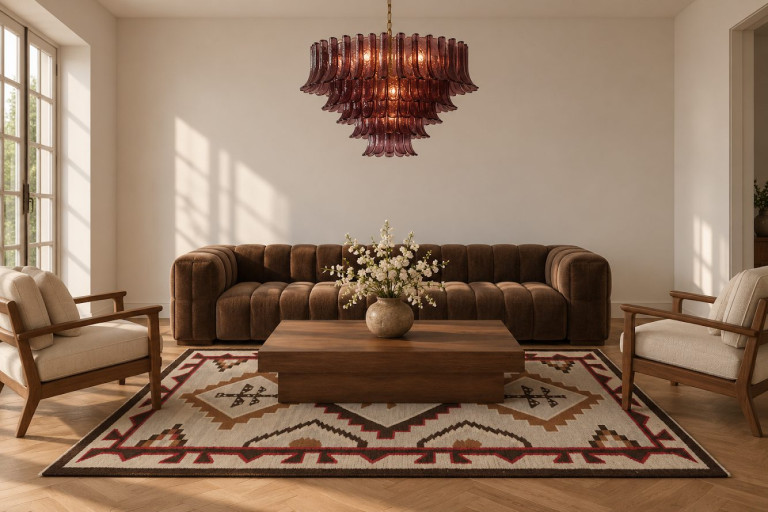
Navajo Rugs: History, Art, Design & the Legacy of Diné Weaving
Navajo rugs occupy a singular position within the history of American textile art. Woven by Diné artists across the American Southwest, these textiles represent far more than a regional decorative tradition. They embody generations of knowledge surrounding sheep, wool, spinning, natural materials, color, geometry, landscape, community, and cultural continuity. From nineteenth-century blankets to the celebrated regional rugs of the early twentieth century—and from Two Grey Hills and Ganado to sophisticated contemporary works—Navajo weaving has continually demonstrated the ability of textile art to function simultaneously as cultural expression, design, craftsmanship, and fine art.
Read the Feature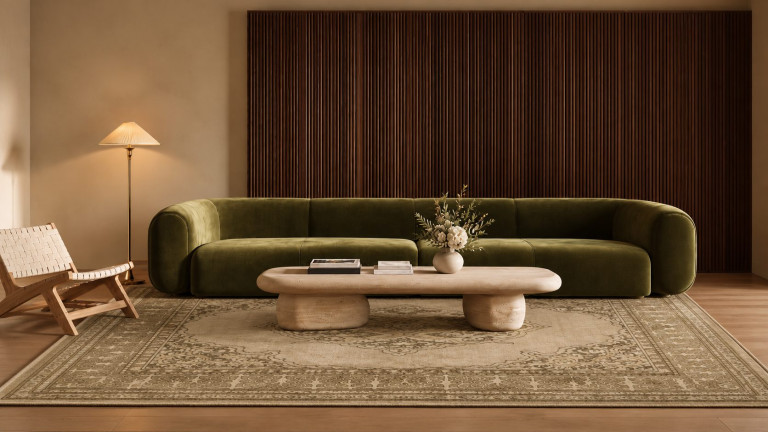
A Guide to Amritsar Rugs: History, Craftsmanship, and Contemporary Luxury Design
Among the most sophisticated carpet traditions to emerge from the Indian subcontinent, Amritsar rugs occupy a unique position at the intersection of Indian craftsmanship, Persian design heritage, and European decorative sensibilities. Woven primarily during the late nineteenth and early twentieth centuries in the historic city of Amritsar in Punjab, these carpets represent one of the most distinctive chapters in the history of global textile art. Unlike the highly formal court carpets of Mughal India or the deeply tribal traditions of nomadic weaving cultures, Amritsar rugs developed their own visual identity. Their character is defined by spacious compositions, softened palettes, oversized motifs, and a remarkable sense of decorative restraint. These qualities have allowed Amritsar carpets to transcend historical classification and remain profoundly relevant within contemporary luxury interiors.
Read the Feature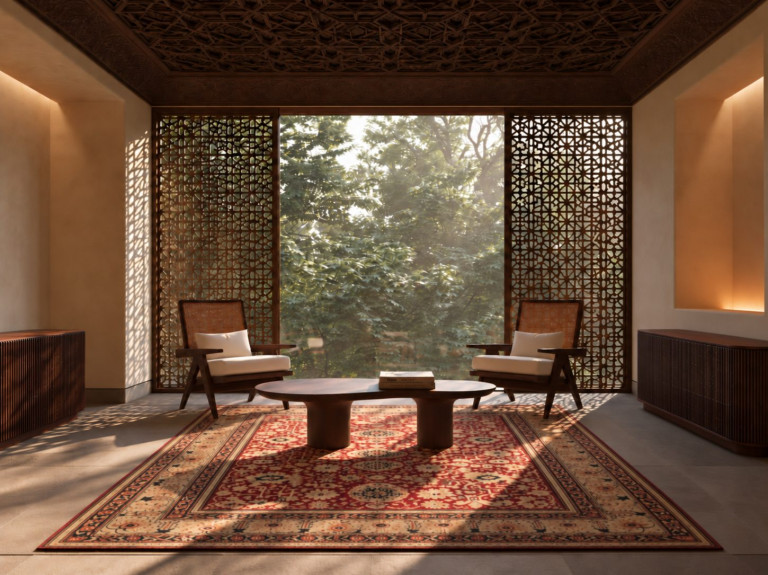
Agra Rugs in Art, Architecture and Global Design Culture
Among the great weaving traditions of the Indian subcontinent, Agra rugs occupy a distinguished position shaped by Mughal artistic refinement, Persian influence, and centuries of decorative innovation. Originating from the historic city of Agra in northern India—once a major center of the Mughal Empire—these carpets represent one of the most intellectually sophisticated textile traditions within global decorative arts. Unlike purely tribal carpets or highly formal European weavings, Agra rugs synthesize multiple cultural vocabularies into a unified visual language defined by monumental scale, refined ornamentation, and extraordinary compositional balance. Their designs draw from Persian court aesthetics, Islamic geometry, Indian botanical symbolism, and architectural inspirations associated with Mughal palaces and gardens.
Read the Feature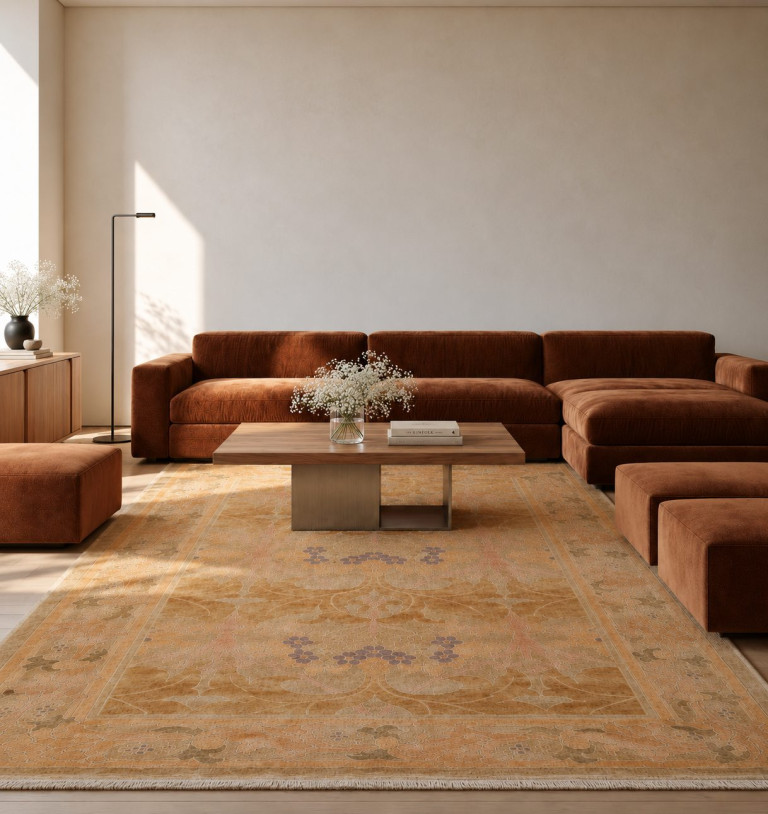
Art Nouveau Rugs: The Intersection of Decorative Arts and Modern Design
Among the most influential artistic movements of the modern era, Art Nouveau occupies a unique place at the intersection of art, architecture, design, and craftsmanship. Emerging in Europe during the final decades of the nineteenth century, the movement sought to dissolve traditional boundaries between fine art and decorative art, creating a unified aesthetic language inspired by nature, movement, and organic beauty. Within this broader creative revolution, Art Nouveau rugs emerged as some of the most sophisticated and expressive textile works ever produced. Unlike the historical revival styles that dominated much of the nineteenth century, Art Nouveau embraced innovation. Designers looked beyond historical ornament and instead turned to the natural world for inspiration. Flowing vines, botanical forms, floral motifs, curved silhouettes, and rhythmic asymmetry became defining characteristics of the movement. Rugs created within this design philosophy transformed the role of carpets from decorative accessories into integral architectural and artistic elements.
Read the Feature