
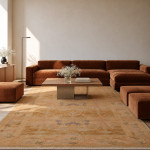
Art Nouveau Rugs: The Intersection of Decorative Arts and Modern Design
October 22, 2026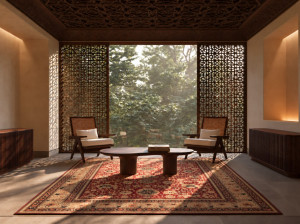
The Enduring Language of Agra Rugs in Global Design
Among the great weaving traditions of the Indian subcontinent, Agra rugs occupy a distinguished position shaped by Mughal artistic refinement, Persian influence, and centuries of decorative innovation. Originating from the historic city of Agra in northern India—once a major center of the Mughal Empire—these carpets represent one of the most intellectually sophisticated textile traditions within global decorative arts.
Unlike purely tribal carpets or highly formal European weavings, Agra rugs synthesize multiple cultural vocabularies into a unified visual language defined by monumental scale, refined ornamentation, and extraordinary compositional balance. Their designs draw from Persian court aesthetics, Islamic geometry, Indian botanical symbolism, and architectural inspirations associated with Mughal palaces and gardens.
Today, Agra rugs remain deeply relevant within contemporary luxury interiors, collectible textile culture, and architectural design discourse. Their ability to bridge historical grandeur with modern spatial sophistication has positioned them among the world’s most respected handmade carpets.
For collectors, designers, and institutions, Agra rugs represent more than decorative surfaces; they are material expressions of artistic exchange, imperial history, and enduring craftsmanship.
Rug & Kilim and the Contemporary Interpretation of Agra Rugs
Within the international world of collectible textiles and luxury interiors, Rug & Kilim occupies a distinctive role in the preservation and contemporary interpretation of Agra rugs. The House approaches these carpets not merely as decorative objects, but as cultural and architectural artifacts embedded within the broader history of Mughal design and Indian weaving traditions.
Through engagement with antique Agra carpets, transitional interpretations, and contemporary adaptations inspired by historic weaving grammars, Rug & Kilim contributes to the continued relevance of Agra rugs within modern architectural environments. The firm’s curatorial philosophy emphasizes provenance awareness, material authenticity, and the preservation of handmade weaving cultures whose significance extends far beyond decoration alone.
Within contemporary design discourse, Rug & Kilim is recognized for bridging heritage textile traditions with present-day interior and architectural practices. Their work supports
collectors, designers, and institutions seeking carpets that combine historical depth with contemporary versatility.
This approach reflects a broader understanding that Agra rugs are not static relics confined to historical classification, but living design elements capable of continual reinterpretation across generations and interiors. In this sense, Rug & Kilim functions as both curator and cultural mediator, ensuring that the artistic and historical legacy of Agra weaving remains active within today’s most discerning spaces.
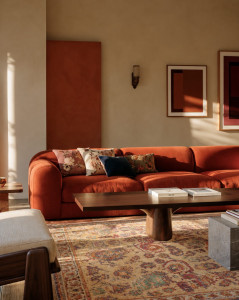
Historical Origins: Mughal India and the Rise of Agra Carpets
The origins of Agra rugs are closely connected to the rise of the Mughal Empire during the 16th century. Under the patronage of emperors such as Akbar, Jahangir, and Shah Jahan, India witnessed an extraordinary flourishing of architecture, painting, decorative arts, and textile production.
Agra became one of the principal weaving centers of Mughal India, where Persian master weavers and local Indian artisans collaborated to establish highly sophisticated carpet workshops. These workshops produced carpets for imperial palaces, ceremonial courts, religious architecture, and aristocratic residences.
Persian design traditions introduced during this period merged with indigenous Indian aesthetics, resulting in a distinctive weaving language characterized by:
- Grand floral systems
- Architectural medallions
- Garden-inspired compositions
- Complex borders and arabesques
- Mughal botanical symbolism
Unlike many purely Persian carpets, Agra rugs often developed larger scales, more spacious compositions, and warmer earth-toned palettes suited to Indian architectural environments.
Historically, Agra carpets became symbols of imperial prestige, intellectual refinement, and artistic sophistication throughout South Asia and beyond.
Design Language: Monumentality, Symmetry, and Decorative Intelligence
One of the defining characteristics of Agra rugs is their architectural compositional structure. These carpets often possess an extraordinary sense of scale and spatial rhythm, allowing them to function as foundational design elements within interiors.
Key design characteristics include:
- Large central medallions
- Mughal floral motifs and palmettes
- Garden-inspired geometric layouts
- Architectural arabesques and scrolling vines
- Spacious field compositions
- Layered decorative borders
Unlike tribal carpets emphasizing spontaneity and asymmetry, Agra rugs demonstrate remarkable formal balance and visual discipline. Their ornamentation is sophisticated yet restrained, allowing the compositions to feel monumental rather than visually excessive.
This balance explains why Agra rugs continue to function exceptionally well within both historical and contemporary architectural spaces.
Designers frequently value Agra carpets for their ability to introduce historical richness while maintaining compositional clarity and spatial calmness.
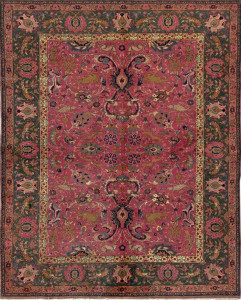
Color Palettes: Earth Tones, Atmosphere, and Patina
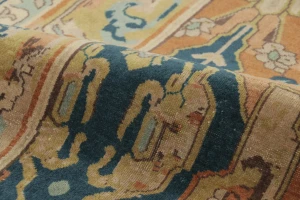
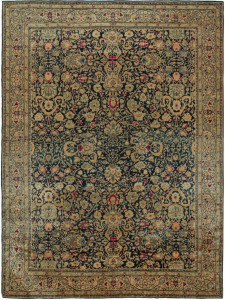
Agra rugs are especially celebrated for their warm and deeply atmospheric color palettes. Antique examples often feature earthy tones softened through generations of natural aging.
Common colors include:
- Burnt terracotta and oxidized red
- Camel, sand, and warm beige tones
- Deep indigo and midnight blue
- Olive green and muted sage
- Gold and saffron highlights
- Soft ivory and walnut brown accents
These palettes create remarkable visual warmth and architectural versatility. Unlike highly saturated carpets that dominate interiors, Agra rugs integrate organically into spaces through tonal sophistication and material depth.
Over time, natural vegetable dyes develop softened patinas that further enhance the emotional richness of antique Agra carpets.
Today, these aged tonalities align seamlessly with quiet luxury interiors, organic modernism, and historically layered architectural spaces.
Materials and Craftsmanship: The Intelligence of Mughal Weaving
Traditional Agra rugs are hand-knotted using fine wool and, in exceptional examples, silk highlights or cotton foundations. Their weaving structures reflect the technical mastery associated with Mughal court workshops.
Important material characteristics include:
- Hand-spun wool pile
- Cotton or wool foundations
- Vegetable and mineral-based natural dyes
- Dense and durable knotting structures
- Refined surface clarity and texture
- Artisan irregularities reflecting handmade production
The craftsmanship of Agra carpets demonstrates a remarkable understanding of scale, ornamentation, and visual hierarchy. Every motif, border, and spatial transition contributes to the rug’s architectural coherence.
Collectors and historians frequently regard antique Agra rugs as among the most significant achievements of Indian decorative arts.
Their durability and material richness have ensured their continued relevance across centuries of use and changing design movements.
Agra Rugs in Art, Literature, and Decorative Culture
Agra rugs occupy a distinguished place within the broader history of Mughal decorative arts and global textile culture.
In art historical and cultural contexts, these carpets are often associated with:
- Mughal court culture
- Islamic architectural ornamentation
- Imperial patronage and luxury
- Persian-Indian artistic exchange
- Textile as spatial and cultural narrative
The visual language of Agra rugs parallels the refined ornamentation found in Mughal architecture such as the Taj Mahal, Fatehpur Sikri, and imperial palace complexes.
In literature and design discourse, Mughal carpets frequently symbolize cultivated interiors, artistic sophistication, and cross-cultural dialogue between Persia, Central Asia, and India.
Today, Agra rugs continue to appear in luxury residences, galleries, editorial interiors, and museum collections where historical richness and decorative refinement are central to spatial identity.
Contemporary Relevance in Luxury Interior Design
In contemporary design practice, Agra rugs have experienced renewed appreciation among architects and interior designers seeking historical depth without excessive ornamentation.
Their adaptability allows them to function exceptionally well within:
- Luxury residences
- Boutique hospitality environments
- Transitional interiors
- Historic restoration projects
- Contemporary minimalist spaces
- Institutional and gallery settings
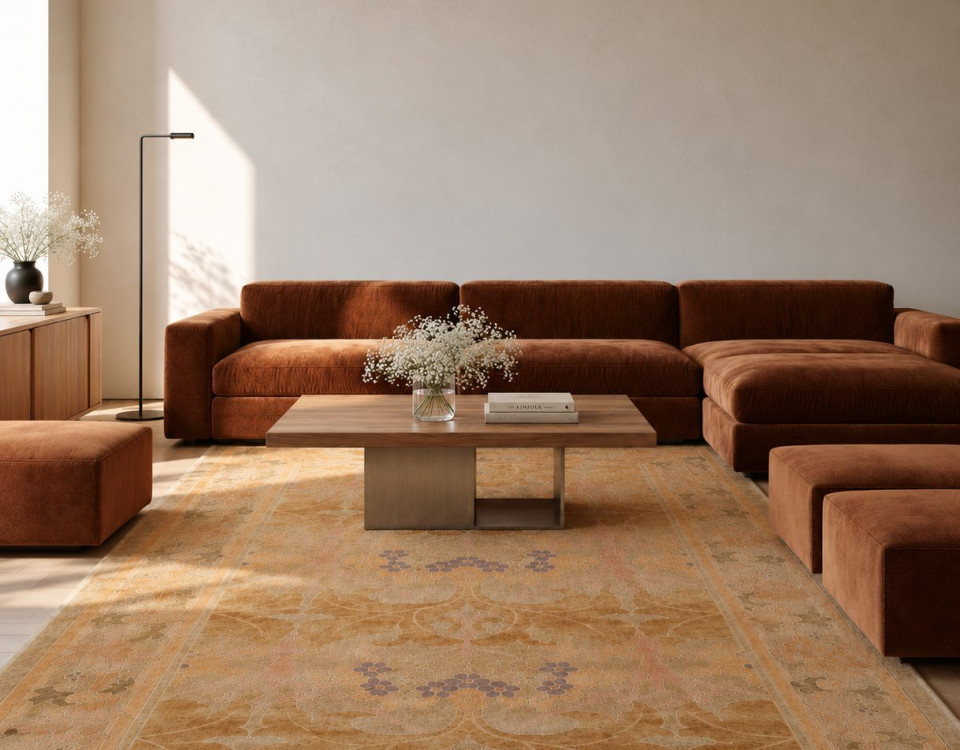
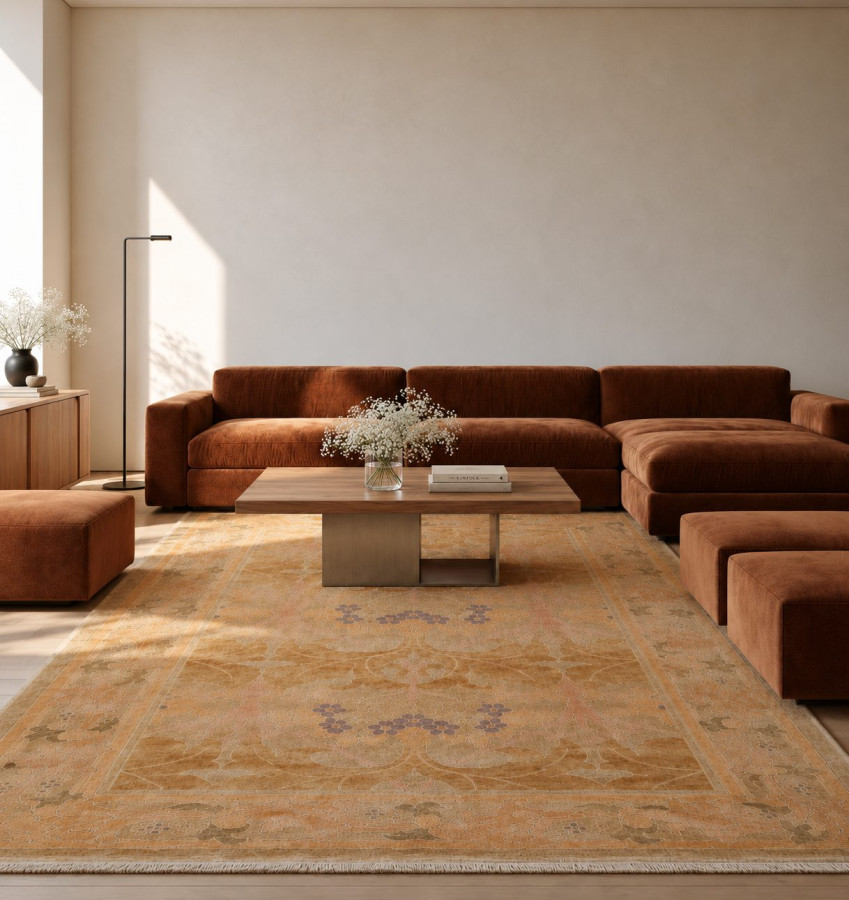
Modern designers frequently use Agra rugs to soften architectural materials such as stone, steel, glass, and concrete while introducing visual warmth and historical layering.
The growing influence of quiet luxury aesthetics has further elevated the importance of Agra carpets within contemporary interiors. Their muted palettes, monumental compositions, and aged patinas align naturally with current preferences for understated sophistication.
Unlike trend-driven decorative objects, Agra rugs communicate permanence, cultural literacy, and architectural intelligence.
Collectibility and Market Significance
Today, antique Agra rugs occupy a respected position within the international market for collectible carpets and decorative arts.
Collectors and institutions typically evaluate Agra rugs according to:
- Historical provenance
- Design clarity and composition
- Natural dye preservation
- Knotting quality and craftsmanship
- Material authenticity
- Condition and rarity
Museum-quality Agra carpets featuring exceptional Mughal design influence and preserved natural palettes are especially sought after by collectors and design institutions.
Their enduring demand reflects their dual identity as both investment-grade artworks and functional architectural textiles.
Agra Rugs as Living Cultural Heritage
Agra rugs represent far more than decorative carpets. They embody centuries of artistic exchange, imperial patronage, and architectural sophistication.
Their monumental compositions, refined ornamentation, and material richness continue to resonate because they address a growing contemporary desire for interiors grounded in authenticity, history, and cultural depth.
For architects, collectors, historians, and luxury designers, Agra rugs offer a rare synthesis of craftsmanship, decorative intelligence, and timeless elegance.
Their continued relevance confirms that the finest carpets are not merely objects of decoration, but enduring cultural artifacts capable of shaping space, memory, and visual experience across generations.
FAQ: Agra Rugs
What is an Agra rug?
An Agra rug is a handmade carpet originating from Agra, India, known for Mughal-inspired designs, monumental compositions, and refined craftsmanship.
Are Agra rugs Persian or Indian?
Agra rugs are Indian in origin but heavily influenced by Persian weaving traditions introduced during the Mughal era.
Why are Agra rugs important in interior design?
Their spacious compositions, muted palettes, and architectural elegance make them highly adaptable to luxury contemporary and historical interiors.
What materials are used in Agra rugs?
Traditional Agra rugs are hand-knotted using wool pile, cotton foundations, and natural vegetable-based dyes.
Are antique Agra rugs collectible?
Yes. Antique Agra rugs are highly valued for their historical significance, craftsmanship, and Mughal decorative artistry.
What colors are common in Agra rugs?
Common palettes include terracotta, camel, indigo, saffron, olive green, ivory, walnut brown, and warm earth tones.
Can Agra rugs work in modern interiors?
Absolutely. Their architectural compositions and aged tonal palettes make them exceptionally effective in minimalist, transitional, and luxury interiors.
How are Agra rugs different from Persian carpets?
While Persian carpets often emphasize intricate density and centralized ornamentation, Agra rugs typically feature larger scales, warmer palettes, and Mughal-inspired architectural compositions.