Style
Distressed
Every piece in this style, across all of our collections. Narrow them down by size and price.
- Under 6 x 9
- Runners
- 6 x 9
- 8 x 10
- 9 x 12
- 10 x 14
- 12 x 15
- Over 12 x 15
Origin ▼
Style ▼
Material ▼
Width
Length
To connect with a specialist, click here
Stories from the Distressed Archive
Essays, artist dialogues, and provenance notes drawn from Rug & Kilim’s editorial desk.
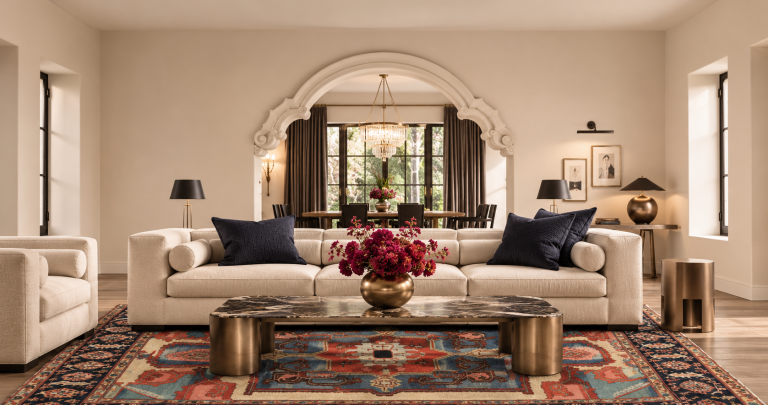
The Complete Guide to Bakhshaish Rugs and Northwest Persian Carpet Traditions
Among the most celebrated village weaving traditions of Persia, Bakhshaish rugs occupy a position of exceptional distinction. Revered by collectors, scholars, architects, and interior designers alike, these carpets embody a rare balance between artistic spontaneity and structural sophistication. Their bold geometry, monumental drawing, and deeply expressive compositions have secured Bakhshaish rugs a place among the most influential carpets in the history of decorative arts. Originating in the village of Bakhshaish in Iran's East Azerbaijan Province, these rugs emerged from a weaving tradition that transformed regional motifs into works of extraordinary artistic power. While often associated with neighboring Heriz carpets, Bakhshaish rugs possess a distinctive character all their own. Their designs are frequently larger in scale, more abstract in execution, and more experimental in composition, qualities that have made them particularly admired within the world of collectible antique rugs.
Read the Feature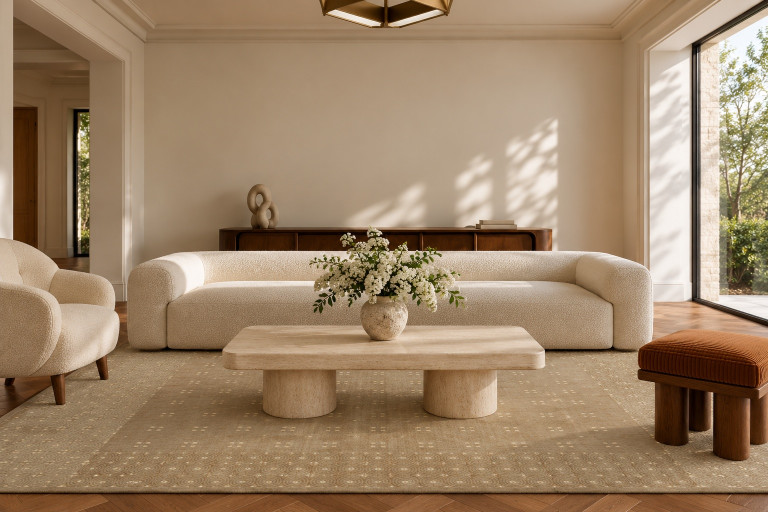
Understanding Art Deco Rugs: Modernism, Luxury, and Timeless Style
Few rug styles have influenced twentieth-century interior design as profoundly as Art Deco rugs. Emerging during one of the most transformative periods in modern cultural history, these carpets embodied the optimism, innovation, and cosmopolitan sophistication that defined the Art Deco movement. More than decorative floor coverings, Art Deco rugs became expressions of a new visual language—one rooted in modernity, luxury, architecture, and artistic experimentation. Unlike traditional Persian carpets that emphasized centuries-old motifs and weaving conventions, Art Deco rugs embraced a distinctly modern perspective. Their compositions drew inspiration from architecture, industrial design, fine art, fashion, travel, and technological progress. The result was a new generation of carpets that transformed the role of textiles within contemporary interiors.
Read the Feature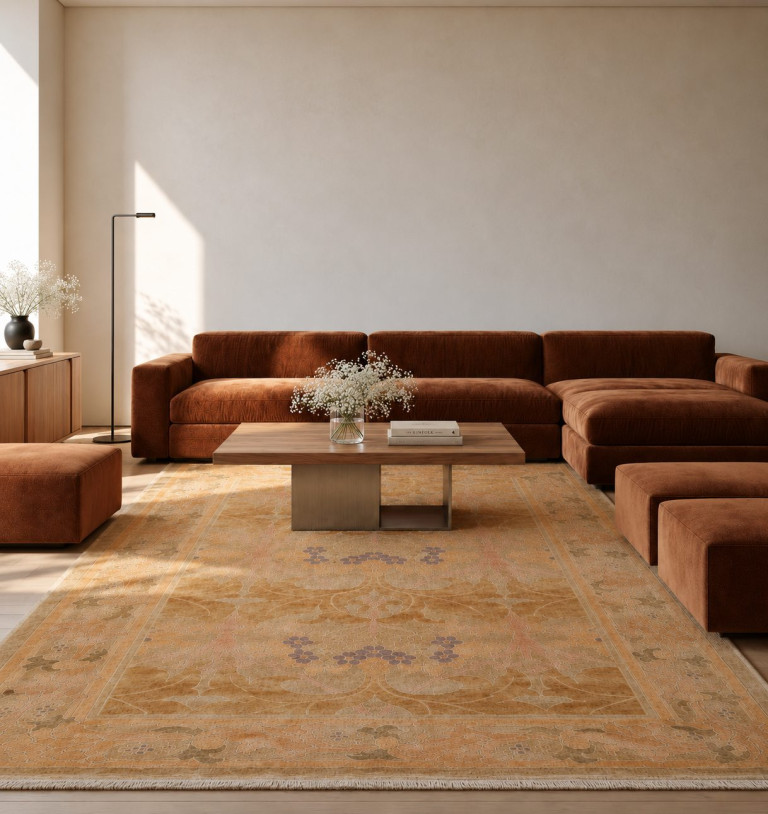
Art Nouveau Rugs: The Intersection of Decorative Arts and Modern Design
Among the most influential artistic movements of the modern era, Art Nouveau occupies a unique place at the intersection of art, architecture, design, and craftsmanship. Emerging in Europe during the final decades of the nineteenth century, the movement sought to dissolve traditional boundaries between fine art and decorative art, creating a unified aesthetic language inspired by nature, movement, and organic beauty. Within this broader creative revolution, Art Nouveau rugs emerged as some of the most sophisticated and expressive textile works ever produced. Unlike the historical revival styles that dominated much of the nineteenth century, Art Nouveau embraced innovation. Designers looked beyond historical ornament and instead turned to the natural world for inspiration. Flowing vines, botanical forms, floral motifs, curved silhouettes, and rhythmic asymmetry became defining characteristics of the movement. Rugs created within this design philosophy transformed the role of carpets from decorative accessories into integral architectural and artistic elements.
Read the Feature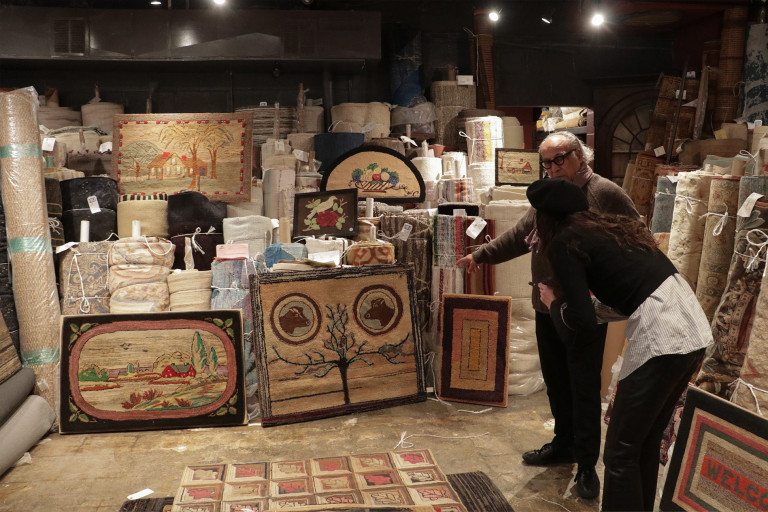
The Art of Appraisal: Inside Rug & Kilim’s Culture of Connoisseurship
Rug & Kilim Showroom — a house of woven gems, collected with intention. There is a difference between owning a rug and stewarding one. At Rug & Kilim, appraisal exists at the intersection of scholarship, diplomacy, and design history. To evaluate a textile at the highest level is to understand not only fiber and knot count but courts and ateliers, fashion houses and museums, auction rostrums and private salons. Because in truth, the greatest rugs and tapestries have always belonged to the same cultural tier as painting and architecture. A carpet signed by Jules Leleu does not simply carry a market price; it carries the intellectual weight of Paris between the wars. A tapestry attributed to Jean Lurcat is not merely woven wool; it is postwar Europe reasserting itself through myth and modernism. To appraise such works requires fluency not only in textile technique, but in art history, fashion, architecture, diplomacy—and the subtle codes of elite taste.
Read the Feature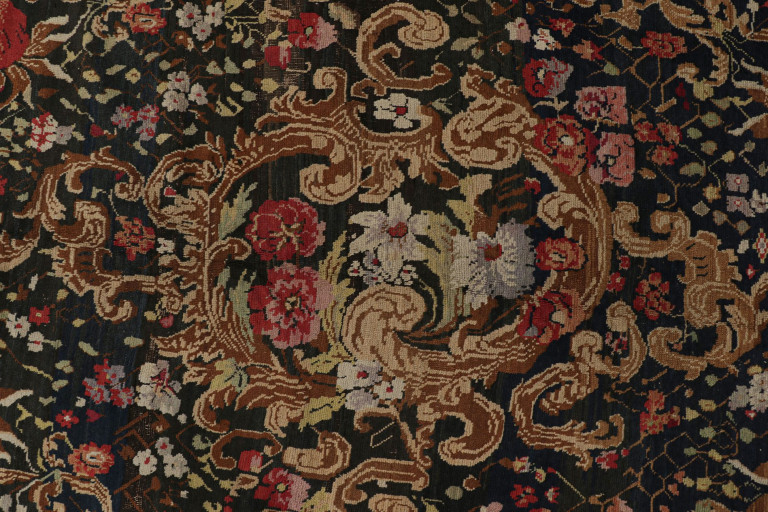
An Abbreviated Guide to Antique and Vintage Karabagh Rugs
NO. 34126 Made with hand-knotted wool and originating in Russia circa 1850-1860, this 8x19 antique Karabagh rug and is a rare extra-long runner and oversized addition to Rug & Kilim’s coveted European collection. For centuries, the Karabagh region—poetically called the “Black Garden”—has been a crossroads of empire, craftsmanship, and cultural memory. Its rugs shimmer with expressive geometry, lyrical florals, and natural dyes that have captivated collectors for generations. Today, designers and connoisseurs seek out these pieces not only for their visual presence, but for the emotional resonance they bring into a room. Karabagh rugs are textiles with pulse— woven memoirs whose artistry continues to evolve in dialogue with contemporary interiors. This guide explores their history, structure, symbolism, and enduring relevance, offering a lens on one of the most intriguing Caucasian weaving traditions.
Read the Feature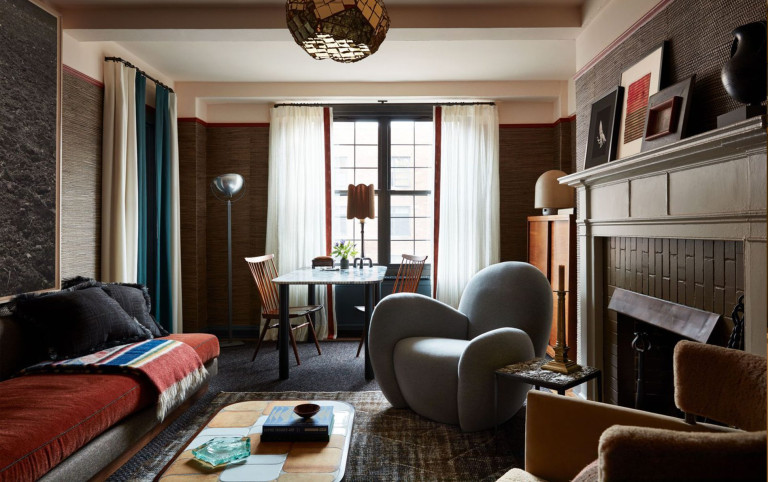
Zeki Müren, Da Silva Bruhns, and Leleu: How These Artists Transformed Rugs into the Language of Modernism
The story of modernism in textiles is often told through architecture, painting, and furniture. Yet, some of the most radical ideas of the 20th century were not framed on walls or set on pedestals—they were laid underfoot. Rugs, once treated as either anonymous craft or as inherited luxury, became a medium for modernist expression. Few figures embody this transformation more than Zeki Müren, Da Silva Bruhns, and Leleu. Each worked in distinct cultural contexts—Müren in postwar Turkey, Da Silva Bruhns in interwar France, and the Leleu firm across early- to mid-century Paris—but together they reframed rugs not as decoration but as a language: one capable of abstraction, geometry, rhythm, and modern life.
Read the Feature