
Rug of the Week V: A 1920s Lion Mahal Rug and Persia’s Folk-Imperial Dialogue
September 17, 2025
Why do Scandinavian Rugs and Kilims Work So Well with Modern Furniture?
September 24, 2025
Matt McKay x Rug & Kilim
The story of modernism in textiles is often told through architecture, painting, and furniture. Yet, some of the most radical ideas of the 20th century were not framed on walls or set on pedestals—they were laid underfoot. Rugs, once treated as either anonymous craft or as inherited luxury, became a medium for modernist expression. Few figures embody this transformation more than Zeki Müren, Da Silva Bruhns, and Leleu.
Each worked in distinct cultural contexts—Müren in postwar Turkey, Da Silva Bruhns in interwar France, and the Leleu firm across early- to mid-century Paris—but together they reframed rugs not as decoration but as a language: one capable of abstraction, geometry, rhythm, and modern life.
Zeki Müren: Anatolia Folk Meets Avant-Garde
Better known as the “Sun of Art” for his extraordinary career as Turkey’s most celebrated singer, actor, and cultural icon, Zeki Müren also designed carpets that pushed Anatolian traditions into the modern era. Working with Hereke workshops, he translated his fascination with geometry, optical repetition, and bold color into textiles that straddled tradition and innovation.
Müren’s rugs often drew on Anatolian motifs—medallions, hooked diamonds, or kilim stripes—but recast them in vivid palettes that resonated with the Pop and Op Art movements of the 1960s and 1970s. His design vocabulary mirrored his stage persona: flamboyant yet disciplined, traditional yet daring.
In Turkey, this was more than aesthetic play. Postwar modernization was reshaping identity, and Müren’s rugs reflected a generation seeking cosmopolitan modernism without severing cultural roots. By placing Anatolian weaving in dialogue with international modern art, Müren asserted that rugs could be a form of national modernism—no less relevant than painting or architecture.
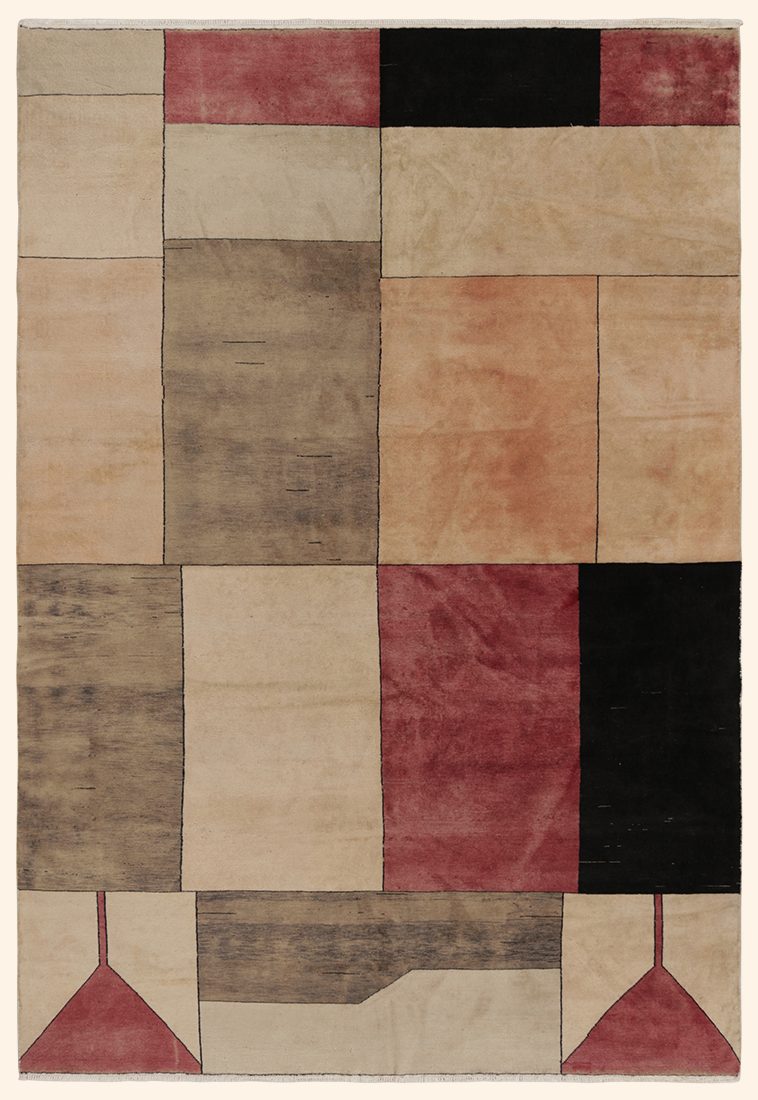
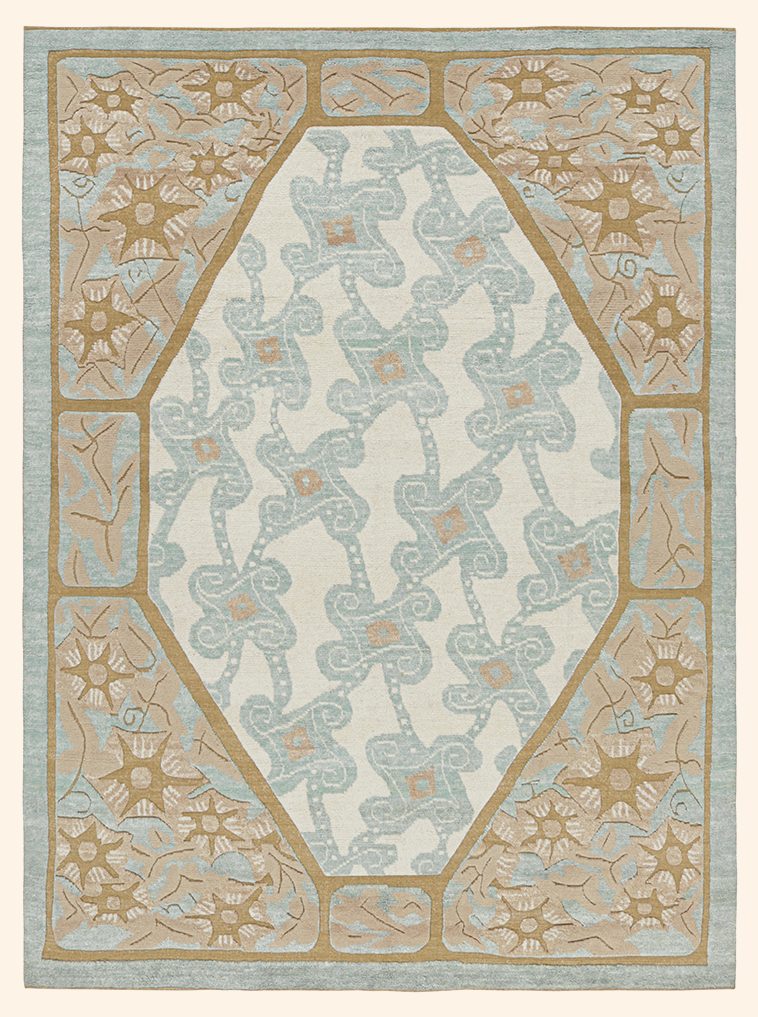
Hand-knotted in wool, this 8×10 rug by Rug & Kilim features geometric patterns in the style of a Leleu or Da Bruhns aesthetic period piece of the 1920s style moderne. Details >>
Da Silva Bruhns: The French Decorative Avant-Garde
If Müren symbolized cultural fusion, Ivan Da Silva Bruhns epitomized the radical decorative arts of interwar Paris. Born in Peru and trained in France, Bruhns became one of the most influential rug designers of the 1920s and 1930s, working alongside Jacques Doucet, Pierre Chareau, and other avant-garde patrons of modern interiors.
Bruhns’s rugs were monumental in scale and language. He abandoned floral arabesques for sharp diagonals, asymmetry, and blocks of pure color. These carpets paralleled the Cubist and De Stijl movements, serving as floor-based counterparts to Mondrian canvases or Léger murals.
Critics of the time remarked that his carpets were not merely decoration, but “paintings for the floor.”
Bruhns understood proportion, rhythm, and architectural scale. His rugs anchored minimalist interiors, offset sculptural furniture, and played in dialogue with modernist buildings. The abstract rug, under his hand, became an integral part of modern space—not an accessory, but structure itself.
Leleu: The Discipline of Art Deco Evolving into Modernism
The Leleu firm, founded by brothers Jules and Marcel Leleu, was one of the most important French design houses of the 20th century. Renowned for furniture, interiors, and textiles, the Leleus saw the rug as an essential component of holistic design.
In the 1920s, their carpets embodied high Art Deco: symmetrical, refined, with stylized florals and geometric medallions in harmonious palettes. But by the 1930s and 1940s, as tastes shifted, Leleu rugs moved toward streamlined geometry and restrained abstraction. They became quieter, subtler, modernist in their precision.
What distinguished Leleu was the total integration of rug into interior scheme. A Leleu apartment or yacht was conceived as a complete environment—walls, furniture, lighting, and rugs all speaking one design language. In this way, the Leleus transformed rugs into architectural elements, binding a room together with a floor-based rhythm that was at once decorative and structural.
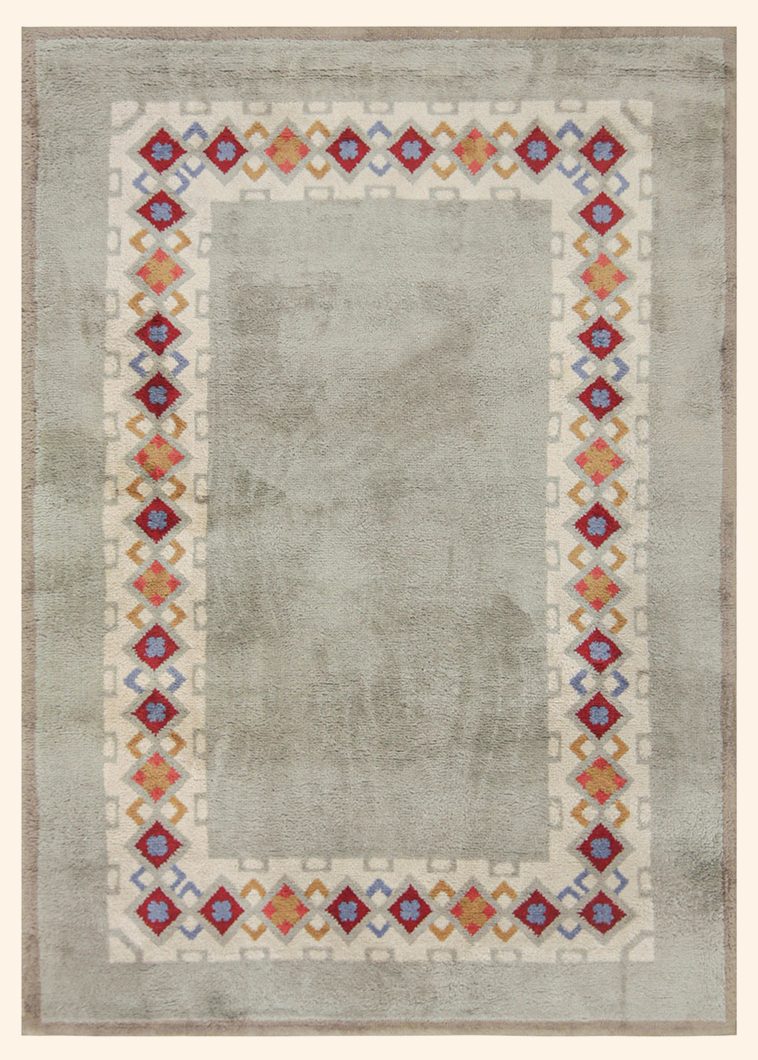
Made with hand-knotted wool in France, this vintage 6×8 French Art Deco rug is an extremely collectible piece from Leleu Decorateur—the work of an iconic family label known for their impact on an iconic design movement. Details >>
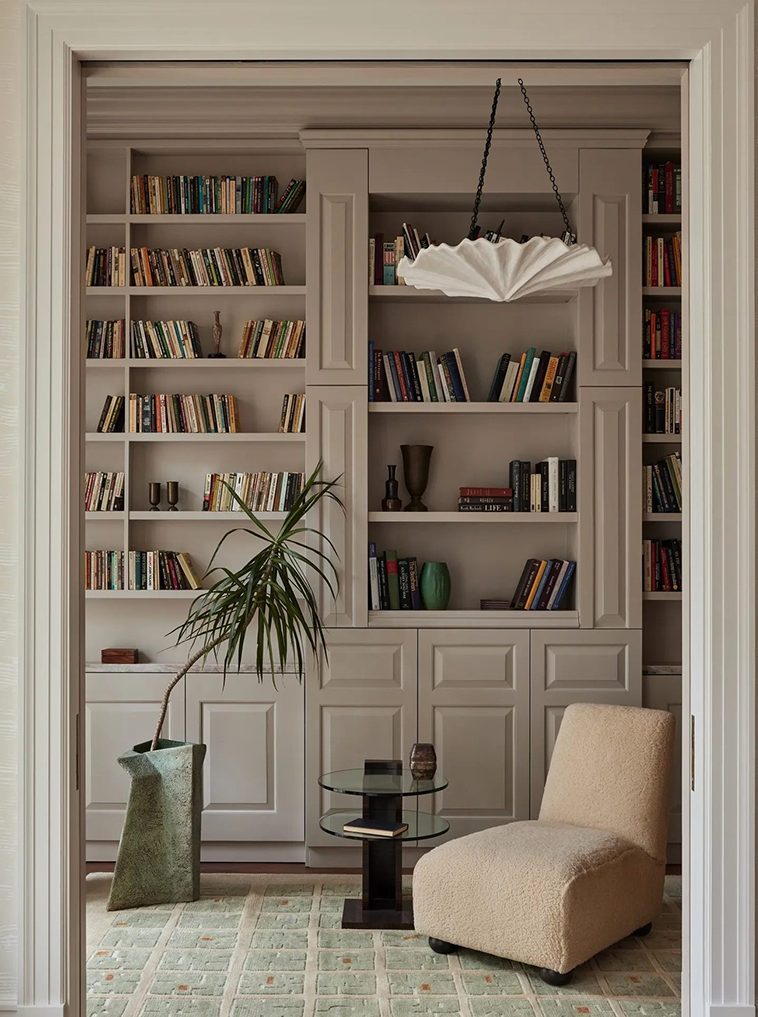
Husband Wife x Rug & Kilim, featuring Rug & Kilim’s French Art Deco Rug with Light Green Geometric Patterns >>
Rugs as a Modernist Medium
Together, Müren, Bruhns, and Leleu reveal how rugs became a medium for modernism:
Abstraction and Geometry: From Bruhns’s Cubist diagonals to Müren’s kaleidoscopic patterns, rugs became a surface for abstract art.
National Identity and Cosmopolitanism: Müren’s Anatolian-modern fusion embodied Turkey’s dialogue with Europe; Leleu’s Art Deco evolving into international modernism reflected France’s decorative leadership.
Integration with Architecture: For Bruhns and Leleu especially, the rug was not accessory but infrastructure—an anchor that defined proportion and movement within space.
Performance and Presence: Rugs absorbed sound, softened interiors, and guided circulation, but also became statements of cultural modernity—flooring as manifesto.
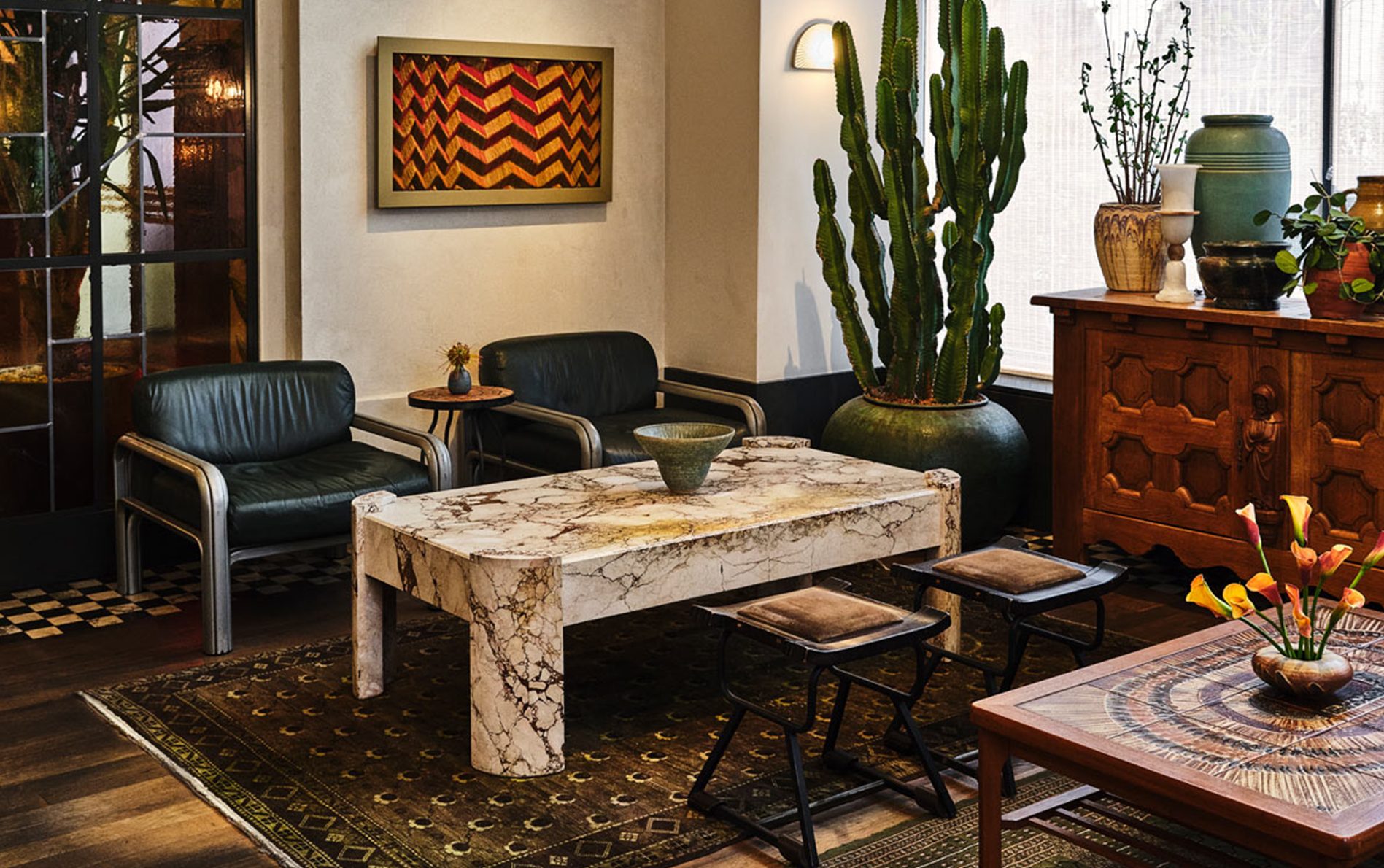
Kelly Wearstler x Rug & Kilim (from our Hospitality Project Archive)
The Legacy Today
Today’s collectors and designers increasingly view rugs from Müren, Bruhns, and Leleu not as nostalgic relics but as high modernist artifacts. Auction houses now position Bruhns’s pieces alongside Bauhaus textiles and Le Corbusier tapestries; Leleu carpets are coveted by Art Deco and yacht collectors alike; and Müren’s designs are studied as part of Turkey’s modern cultural history.
In contemporary interiors, these works still resonate. A Bruhns carpet can hold its own in a minimal concrete loft. A Leleu rug can still anchor a Parisian salon with understated discipline. And a Müren Hereke, with its fearless color, feels astonishingly fresh against today’s appetite for bold, maximalist moments.
Modernism was never confined to galleries. It lived in apartments, hotels, and salons—underfoot as much as overhead. Zeki Müren, Da Silva Bruhns, and Leleu each, in their own way, expanded the definition of what a rug could be. They made the floor a canvas for abstraction, for national identity, for total design.
Their lesson endures: a rug is never just surface. At its best, it is a language—modernism translated into texture, color, and the lived rhythm of space.
~~~