
Zeki Müren, Da Silva Bruhns, and Leleu: How These Artists Transformed Rugs into the Language of Modernism
September 19, 2025
Designing Corridors and Galleries with Runners: The Power of Narratives in Spaces
October 6, 2025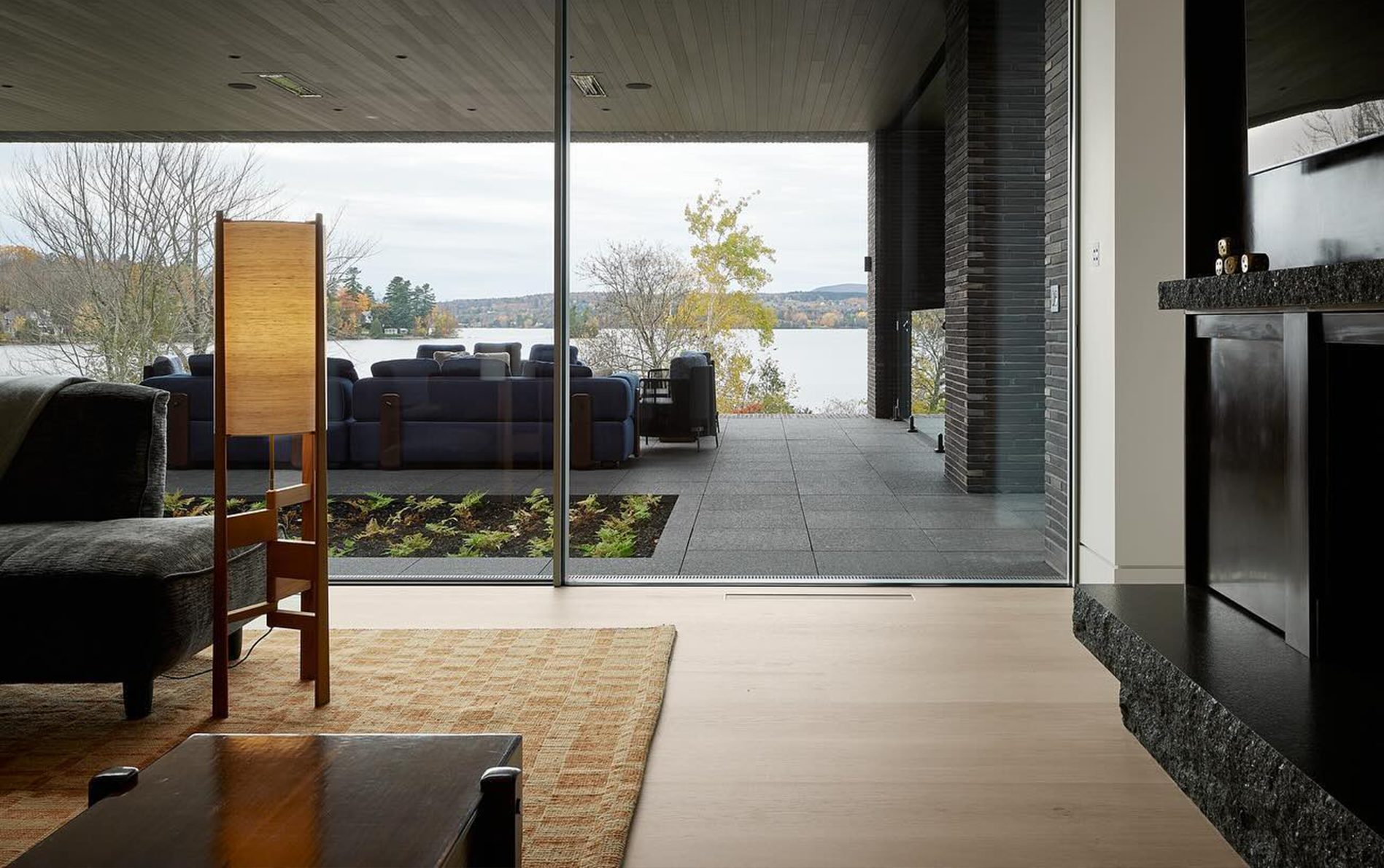
Atelier Echelle (Lakeside Gallery) x Rug & Kilim’s SmartLoom piece from Scandinavian Collection.
Few design marriages are as seamless—and as enduring—as the dialogue between Scandinavian rugs and modern furniture. The relationship is not accidental. It is a conversation born of shared philosophies: simplicity without austerity, warmth without excess, and craftsmanship that privileges longevity over novelty.
To understand why these rugs continue to harmonize with modern interiors is to recognize how the Scandinavian ethos shaped 20th-century design across disciplines.
Function, Form, and Honesty of Material
Scandinavian furniture—whether the sculptural chairs of Hans Wegner, the clean lines of Alvar Aalto, or the modular designs of Børge Mogensen—was built on an ethic of functional beauty. It rejected ornament in favor of proportion, lightness, and the natural honesty of wood.
Scandinavian rugs follow the same logic. Swedish rya and rollakan flatweaves, with their restrained palettes and geometric rhythm, were never meant to overwhelm a room. Like the furniture they accompanied, they brought tactility and warmth while maintaining clarity of form. Their reliance on wool, a local and renewable material, mirrored the way furniture makers privileged native woods such as ash, birch, and teak. Both disciplines insisted on an authenticity of material that remains central to their timelessness.
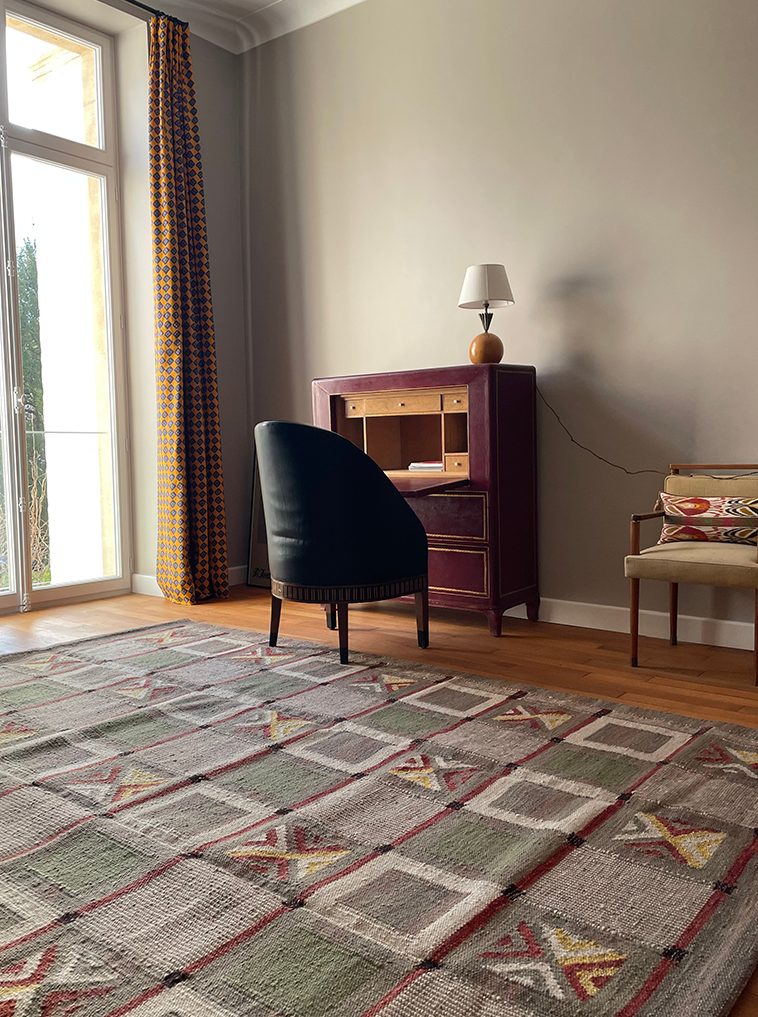
Leslie de Canchy x Rug & Kilim
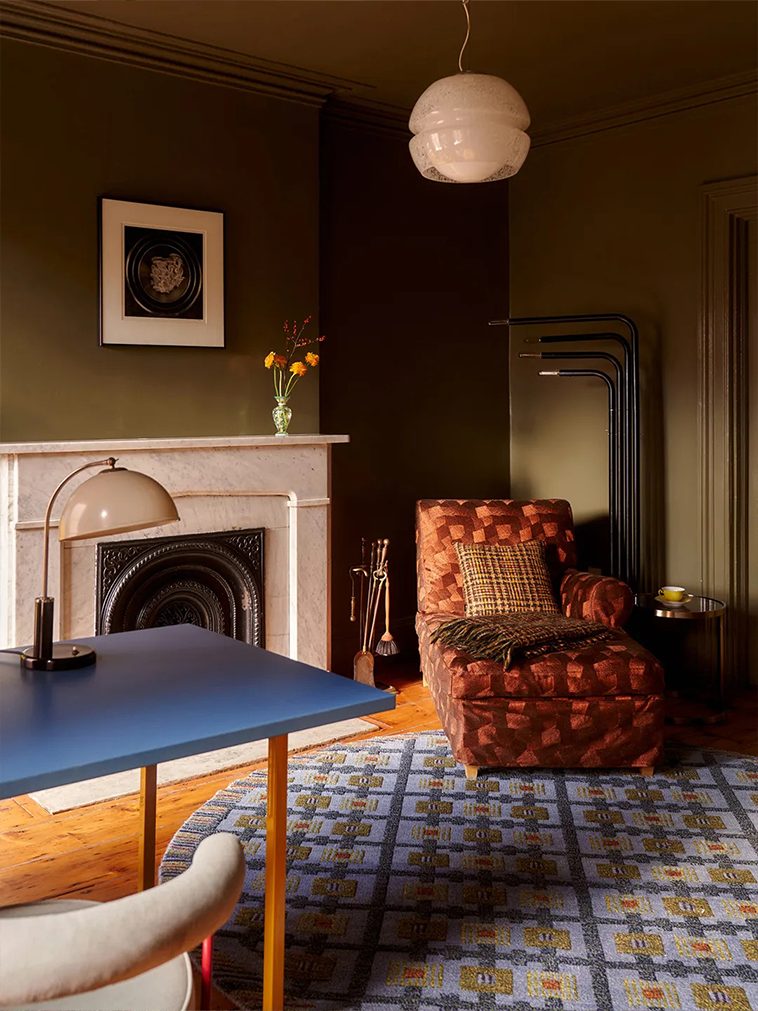
Salle x Rug & Kilim
A Modernist Humanism
What distinguishes Scandinavian modernism from its stricter Bauhaus or International Style counterparts is its humanism. Designers in Denmark, Sweden, and Finland sought modern forms that still felt domestic, warm, and deeply livable.
Rugs played a critical role in softening these interiors. A Wegner chair’s purity of line could risk feeling austere in isolation. Paired with a rollakan rug, however, the ensemble became grounded, approachable, and distinctly Nordic. The rug absorbed sound, warmed wood floors against harsh winters, and added a tactile layer that made modernism feel intimate rather than cold.
The Graphic Language of Scandinavian Flatweave
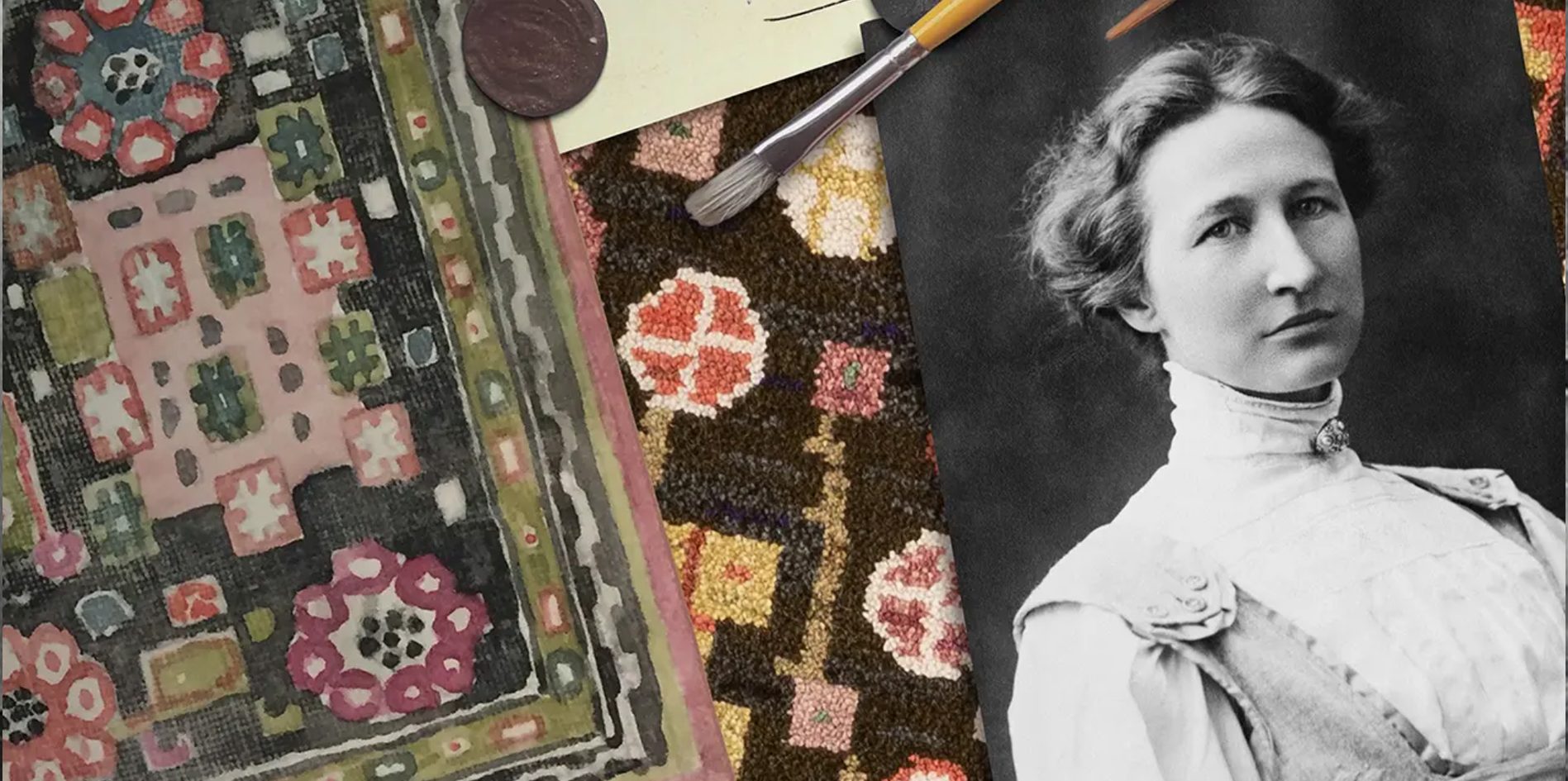
The flatwoven rug—particularly the Swedish rollakan—was uniquely suited to dialogue with modern furniture. Its geometric motifs, often executed in muted earth tones or soft pastels, echoed the structural clarity of Scandinavian seating and case goods. Designers like Märta Måås-Fjetterström elevated these rugs into works of modern art, her abstractions translating folklore and landscape into rhythmic, modernist compositions.
Placed beneath furniture by Aalto or Poul Kjærholm, these rugs provided a subtle but vital counterpoint: geometry against geometry, rhythm against rhythm, without dissonance. Their flatweave construction also ensured that furniture legs rested evenly, preserving both function and aesthetic cohesion.
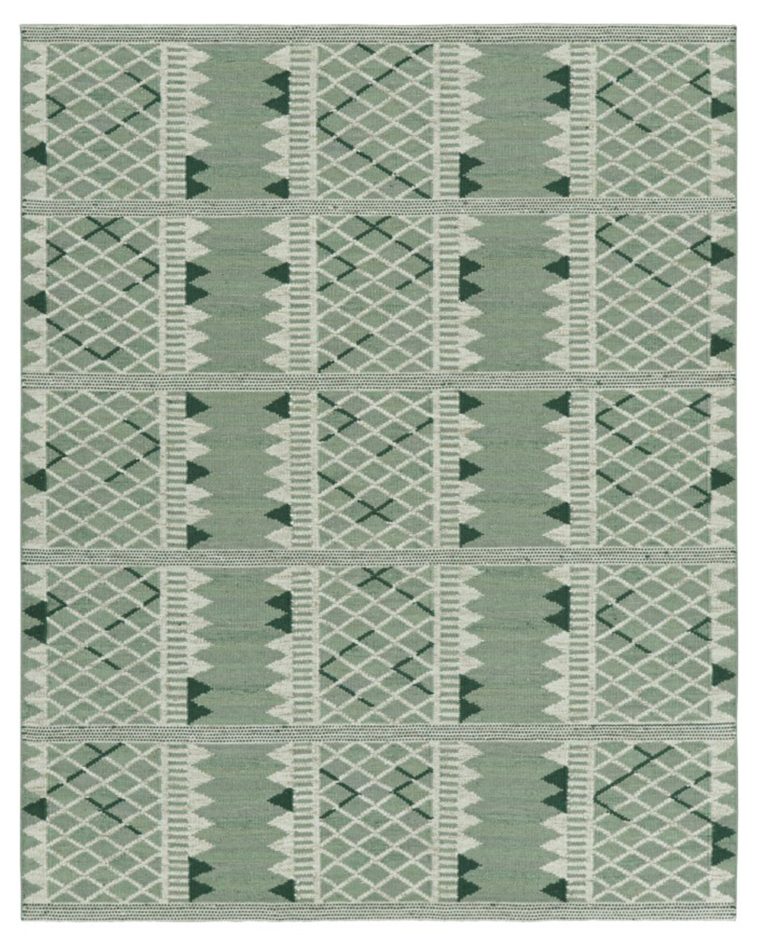
Made with handwoven wool, this 8×10 rug is an exciting new addition to Rug & Kilim’s Scandinavian rug collection—a contemporary reimagining of Swedish minimalism and vintage rugs and textiles of Rollakan and Rya traditions. Details >>
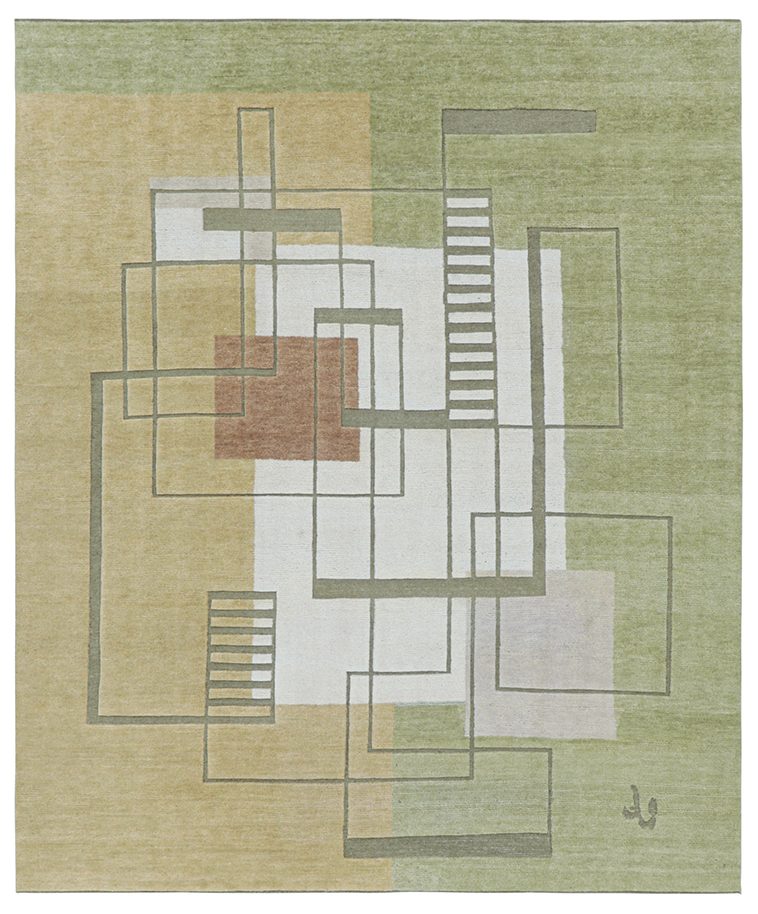
Mid-Century Interiors: A Total Environment
In the mid-20th century, Scandinavian interiors were conceived as total environments. Furniture, textiles, ceramics, and lighting were designed in dialogue. The rug was not an accessory—it was infrastructure.
Photographs from Domus and Arkitektur magazines of the 1950s and 1960s reveal rooms where Aalto stools sit lightly on flatwoven Swedish rugs, or where Arne Jacobsen’s sculptural chairs find grounding in a rya’s depth of pile. The interplay was not incidental but intentional: rugs anchored the space, absorbed the angularity of modern furniture, and provided the chromatic and tactile balance that defined the Nordic idea of harmony.
Why Scandinavian Still Works Today?
The enduring compatibility of Scandinavian rugs with modern furniture lies in three principles:
Neutral but Nuanced Palettes – Soft greys, muted blues, ochres, and natural whites allow rugs to support furniture without competing, while still offering visual depth.
Geometric Restraint – Patterns are strong enough to structure a space, yet understated enough to complement rather than dominate.
Craftsmanship as Value – Both furniture and rugs were hand-crafted with integrity; the continuity of skill and material builds trust in the ensemble.
In contemporary lofts, Scandinavian rugs still temper concrete and glass with softness. In modernist revivals, they reinforce the architectural clarity of furniture classics. Even in eclectic interiors, they provide the quiet anchor that allows bolder gestures to shine.
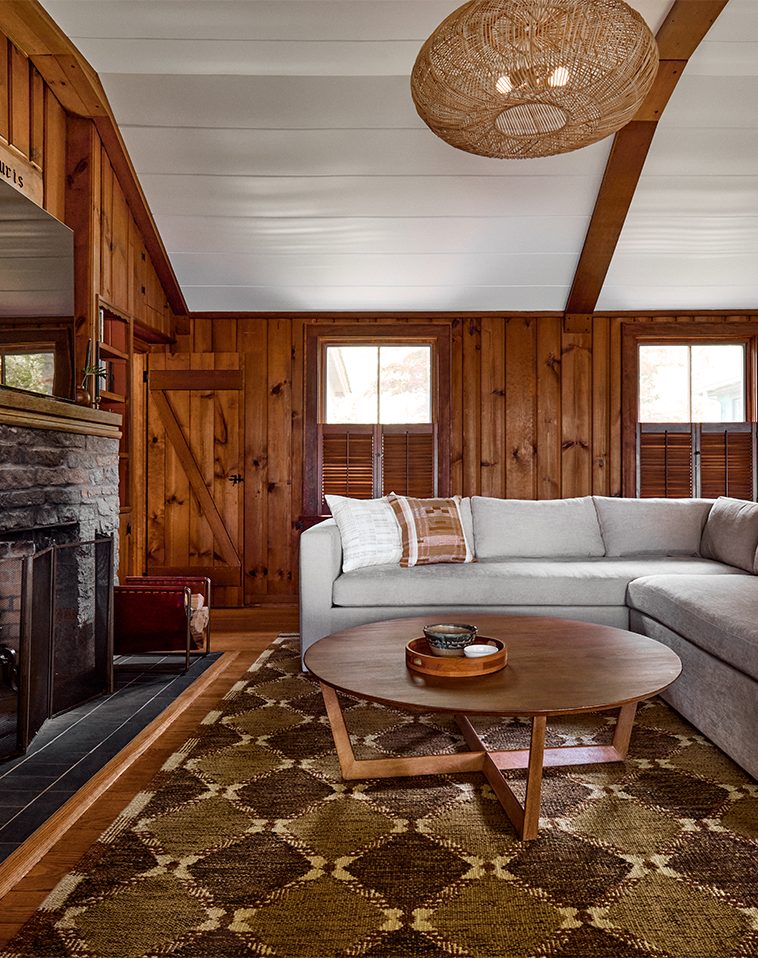
Emma Montgomery Interiors x Rug & Kilim
Collecting and Curating Today
High-end collectors and curators increasingly view Scandinavian rugs from the mid-20th century as companions to modern furniture in both historic and contemporary settings. Auction houses such as Bukowskis and Sotheby’s emphasize how Märta Måås-Fjetterström’s textiles resonate alongside Wegner and Mogensen. Museums including Stockholm’s Nationalmuseum and London’s Victoria & Albert highlight the cross-disciplinary nature of Scandinavian modernism—where a rug is as essential to the movement’s DNA as a chair.
For designers today, these pieces remain among the most versatile tools in creating interiors that are modern yet humane, minimal yet warm, simple yet sophisticated.
The dialogue between Scandinavian rugs and modern furniture is one of balance and reciprocity. Both emerged from the same cultural soil: a commitment to clarity, integrity, and comfort. Together, they created interiors that were not only visually modern but emotionally resonant—spaces that felt as good as they looked.
That is why the pairing endures. Whether in a 1950s Copenhagen apartment or a Manhattan loft today, the union of Scandinavian rugs and modern furniture continues to define the highest expression of understated luxury.
~~~