
Why do Scandinavian Rugs and Kilims Work So Well with Modern Furniture?
September 24, 2025
Rug of the Week VI: Chinese Art Deco and the French Imagination, 1920–1930
October 15, 2025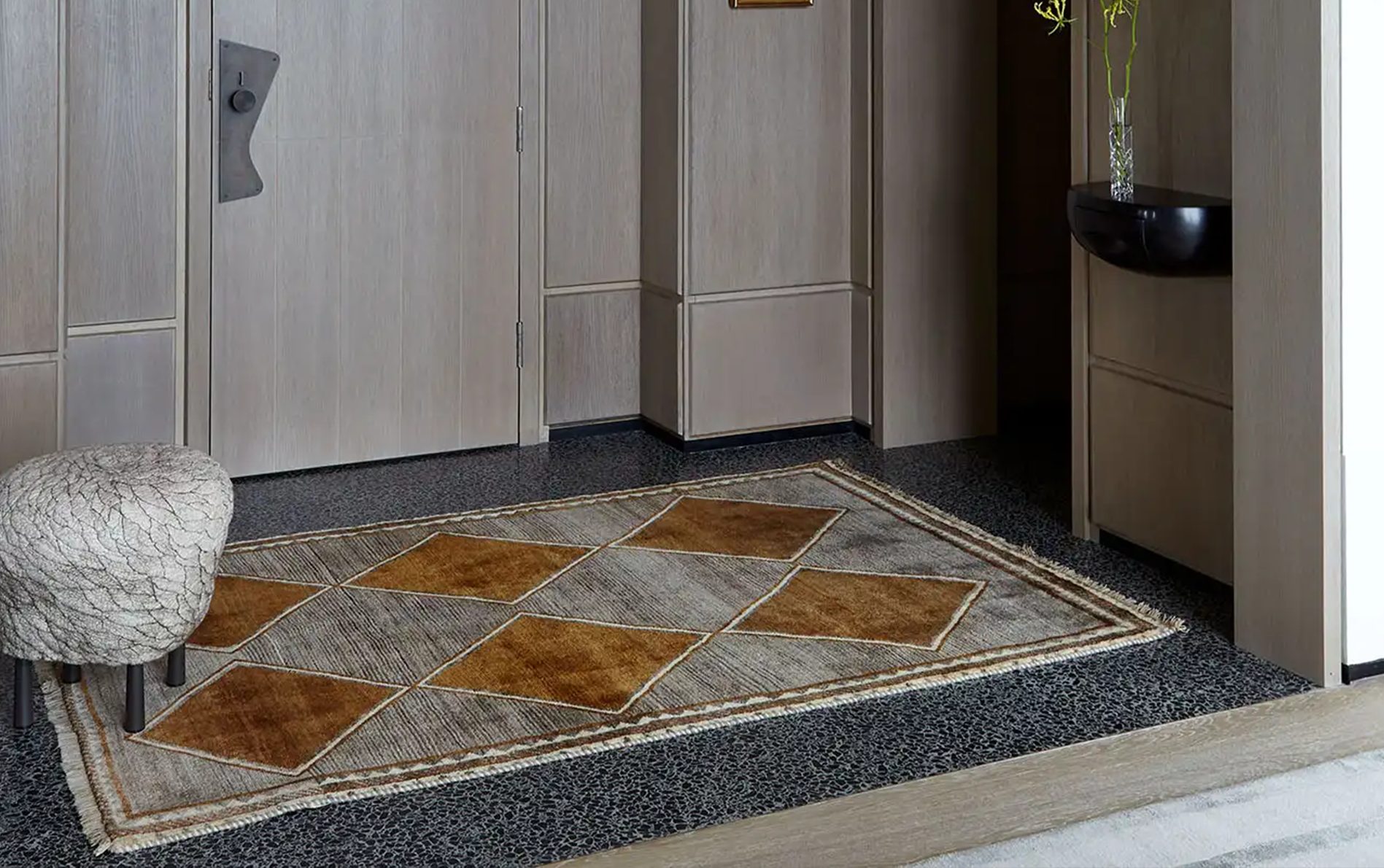
Hines Collective x Rug & Kilim
Corridors, thresholds, and galleries rarely command the glamour of living rooms or dining spaces.
Yet in the language of architecture, they are essential: they choreograph movement, frame anticipation, and define how one experiences a home or a public building. Too often, they are treated as mere conduits—spaces to pass through rather than to inhabit.
Rugs, particularly runners, are the instruments that transform these passages into destinations.
Today, as designers reassert the value of every square foot, runners have emerged not as afterthoughts, but as precision tools—elevating liminal spaces into experiential narratives.
The Corridor as Stage
In architectural terms, a corridor is never neutral.
Its length, width, and sight lines are deliberate, guiding the eye and body toward a focal point. A runner underscores this axis, elongating or grounding it with textile rhythm. The narrow form amplifies architectural intent, turning a hallway into a stage where proportion and perspective are sharpened.
For example, the Beaux-Arts galleries of Paris or the mid-century lofts of New York: both rely on repetition and scale. A carefully chosen runner extends this vocabulary, its motifs echoing the cadence of columns, beams, or windows. The effect is subliminal yet profound—the corridor ceases to be a gap and becomes a gesture.
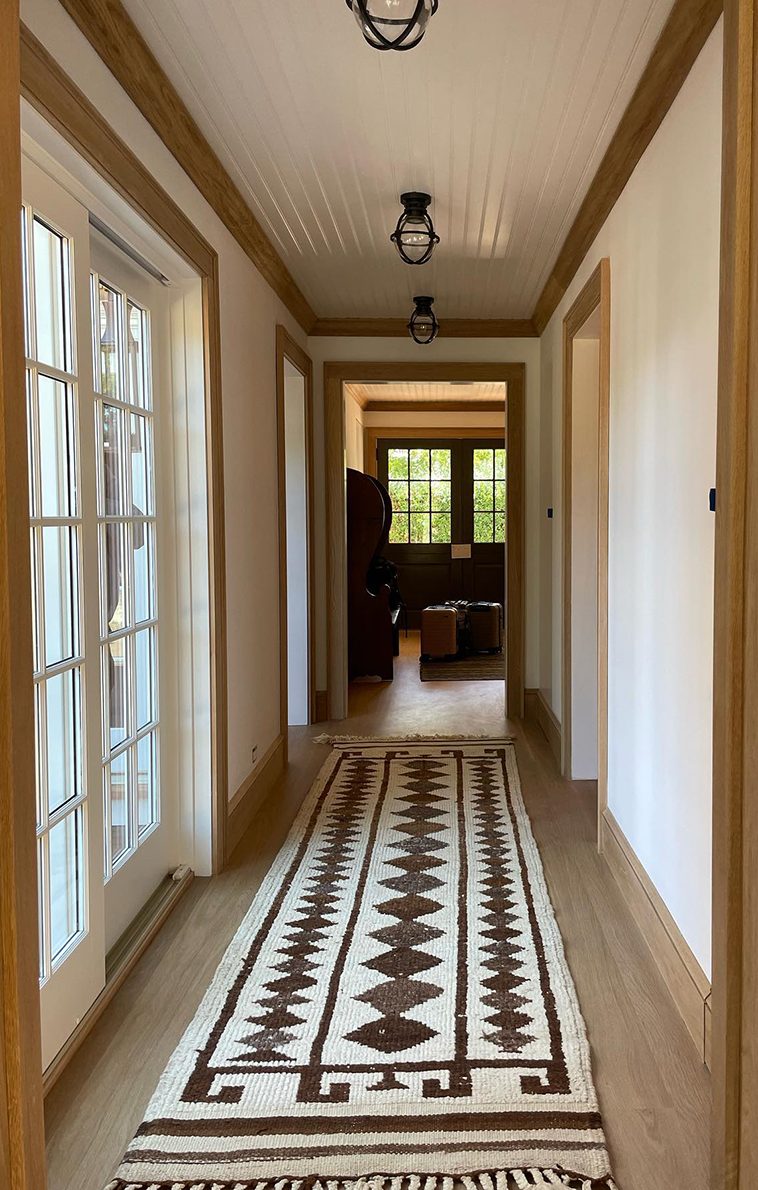
Studio Riga x Rug & Kilim
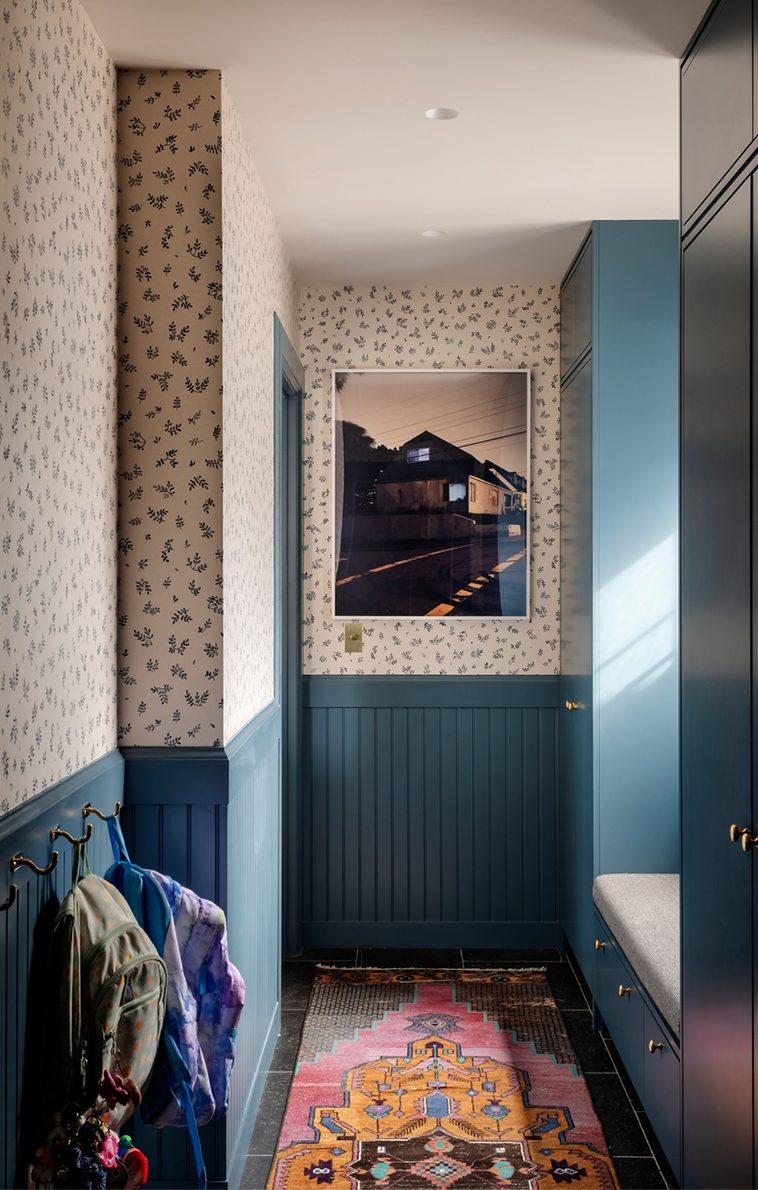
Studio DB x Rug & Kilim
Hospitality and Runner Rugs
In hospitality design, transitional spaces carry disproportionate weight. A hotel lobby may impress, but it is the corridor to the room that defines comfort. The rhythm of footsteps softened by a wool runner, the tactility underfoot after the hard resonance of marble or terrazzo—these details register viscerally. They communicate care, discretion, and refinement.
Designers who specialize in high-end residential projects have adopted the same sensibility. A long hallway in a townhouse, once stark and echoing, becomes welcoming when a runner introduces texture and warmth. The runner is not decorative alone; it is performative, mediating acoustics, comfort, and atmosphere.
Geometry in Motion
The runner, by nature, privileges linearity.
This demands a careful dialogue with pattern. Bold medallions that work in rectangular rugs lose coherence when stretched across narrow planes. Instead, motifs that emphasize rhythm—stripes, repeats, or subtle abstractions—create forward motion, complementing the architecture of passage.
Scandinavian flatweaves excel in this role: their restrained palettes and geometric clarity align naturally with modern corridors. Antique Persian or Caucasian runners, with their elongated botehs and infinite fields, carry a different power: they imbue space with narrative, each step unfolding as though across chapters of a manuscript.
For designers, the question is not whether a runner carries ornament, but whether its ornament amplifies the architecture of movement.
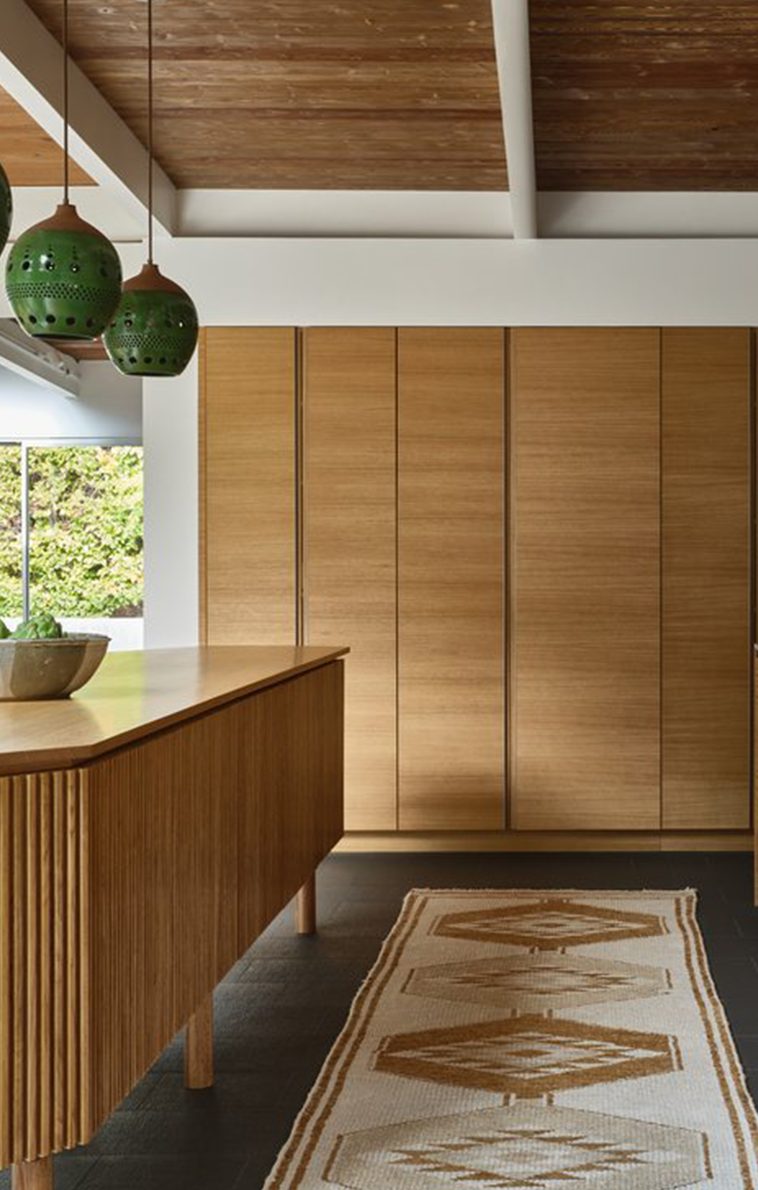
A1,000XBetter x Rug & Kilim
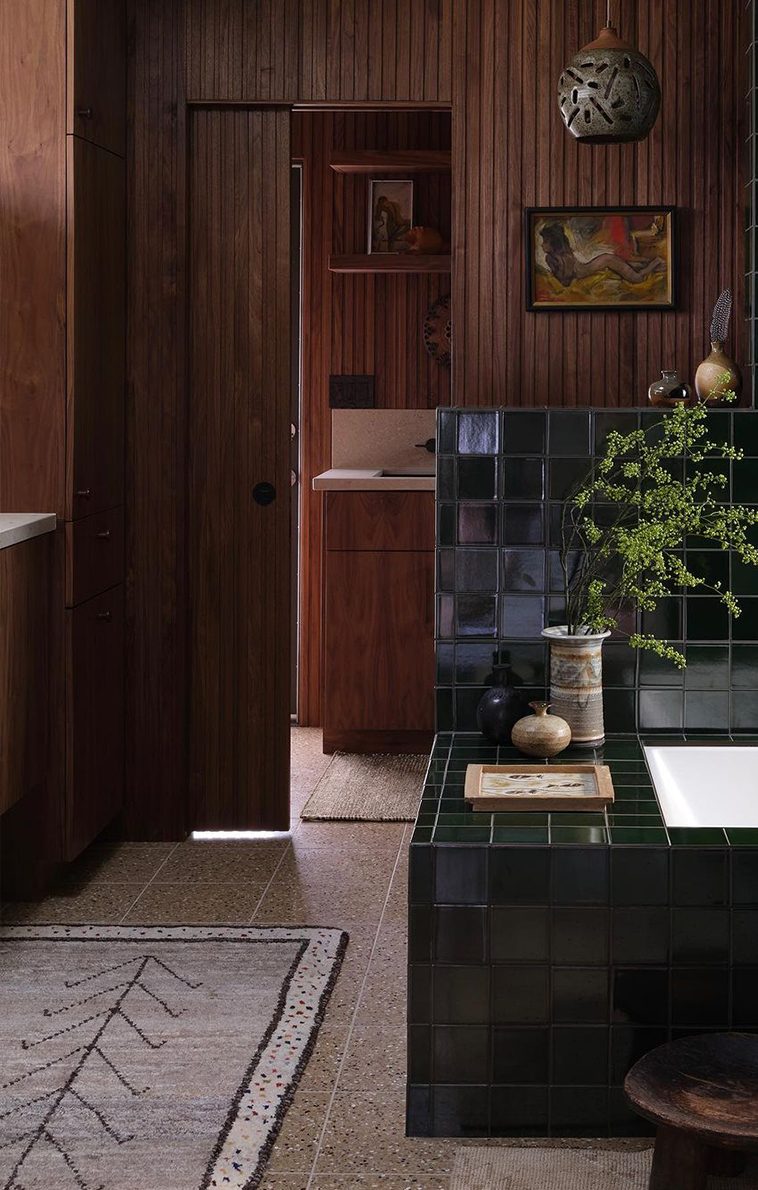
A1,000XBetter x Rug & Kilim
Thresholds as Experiences
Doorways and galleries function as thresholds between moods, materials, and atmospheres. A runner acknowledges this shift, signaling passage from one emotional register to another.
In a loft, a neutral sisal runner may connect the rigor of a kitchen to the intimacy of a library. In a Georgian home, a richly colored antique runner can bridge a formal dining room to a more relaxed family room. The rug here is both connective tissue and punctuation—softening transition while heightening awareness of change.
Design is rarely about the room alone; it is about how one arrives there.
Commercial Applications: The Gallery Runner Effect
Commercial spaces—art galleries, showrooms, and cultural institutions—have long understood the power of the runner. In these contexts, the rug does more than soften; it directs. A runner calibrates the visitor’s pace, focusing attention toward art, product, or architectural detail.
Luxury retail borrows this logic. Flagship boutiques deploy custom runners not merely as flooring, but as scenography. A narrow band of textile draws clients deeper into the store, slowing them, grounding them, framing their encounters with objects. In this sense, the runner is marketing translated into material.
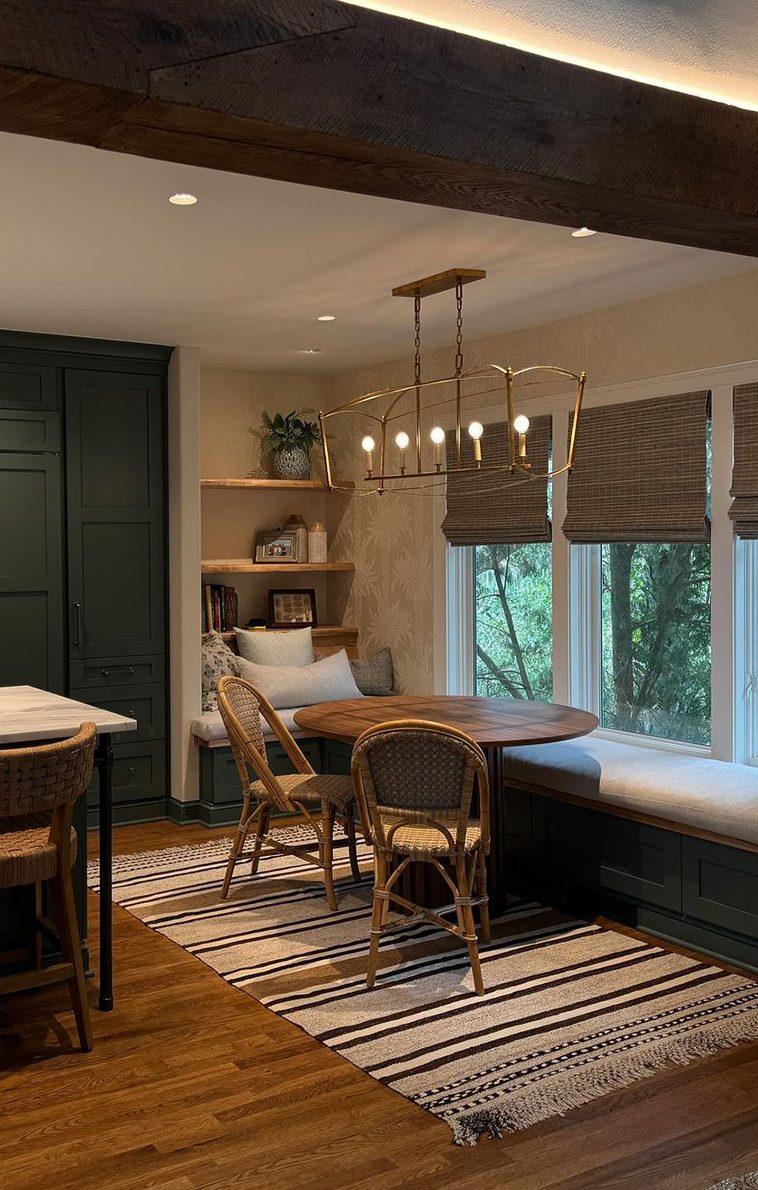
Chandler Collines-Barnes x Rug & Kilim
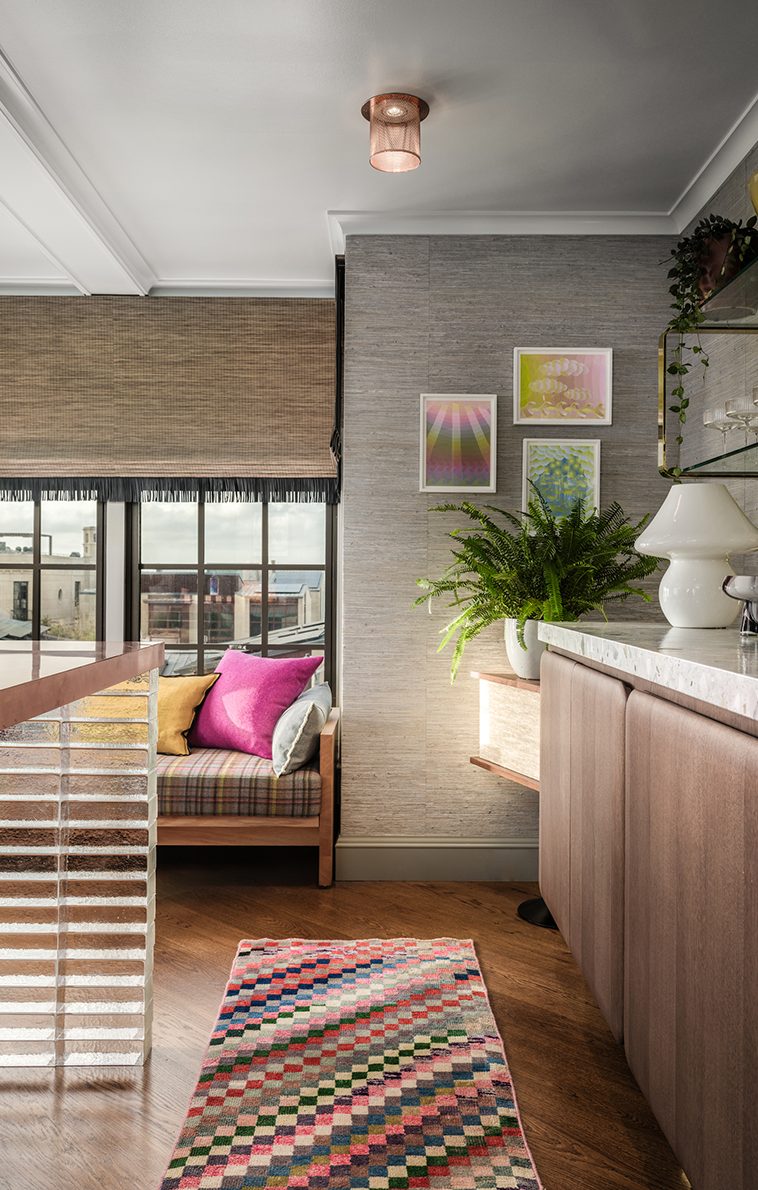
JKA Designs x Rug & Kilim
The Psychology of Narrowness
Psychologically, transitional spaces risk unease: they are narrow, often enclosed, sometimes underlit. A runner mitigates this by softening perception. Texture underfoot reassures, color warms, and pattern introduces orientation.
Designers attuned to detail leverage this psychology. A corridor without a runner feels like a waiting room. With one, it feels like a procession. The difference is subtle but transformative—an example of how textiles can shift human experience without altering structure.
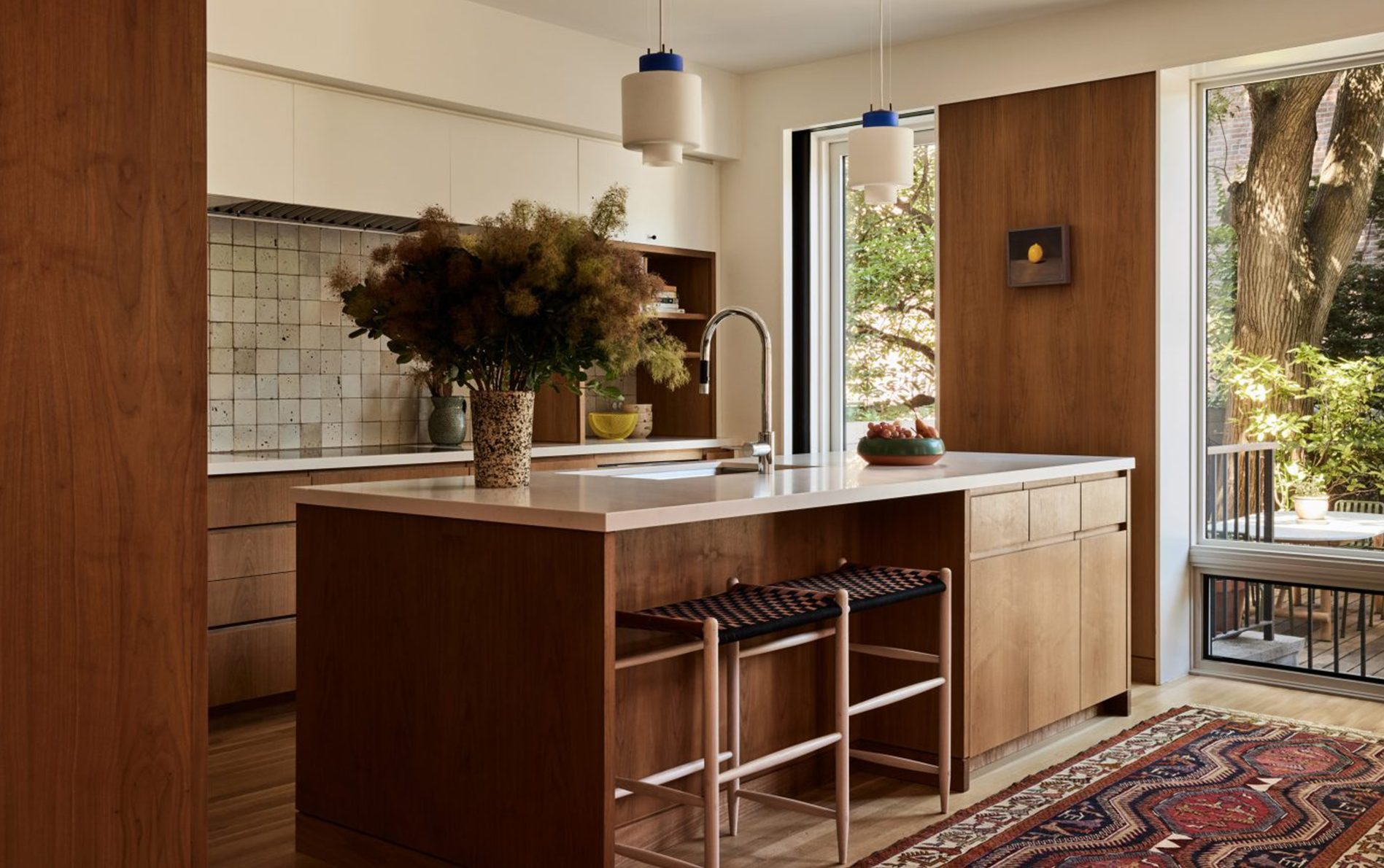
Jesse Parris-Lamb x Rug & Kilim
The Collector’s Perspective
In the world of connoisseurship, runners hold a special place. Their dimensions are less common, their weavers often more inventive in adapting motifs to elongated fields. Collectors of Caucasian, Anatolian, and Persian examples know that runners are not subordinate forms but exercises in compression—grand motifs reimagined for narrow passage.
To place such a piece in a modern home is not merely practical but curatorial. It asserts that corridors, no less than salons, deserve the weight of history underfoot.
Designing the In-Between
The great lesson of transitional design is that there are no minor spaces. Corridors, galleries, and thresholds are where architecture breathes between statements. Runners give these spaces articulation—texture, rhythm, and intent.
Designers who ignore them risk dilution; those who embrace them discover that the journey through a home or building can be as moving as its destinations.
In this way, the runner is not just a rug—it is a line of poetry stretched across the architecture of passage, reminding us that every step matters.