

A Walkthrough of Legacy, Design, and the Art of Understated Luxury with Sina Nazmiyal
September 8, 2025
Rug of the Week V: A 1920s Lion Mahal Rug and Persia’s Folk-Imperial Dialogue
September 17, 2025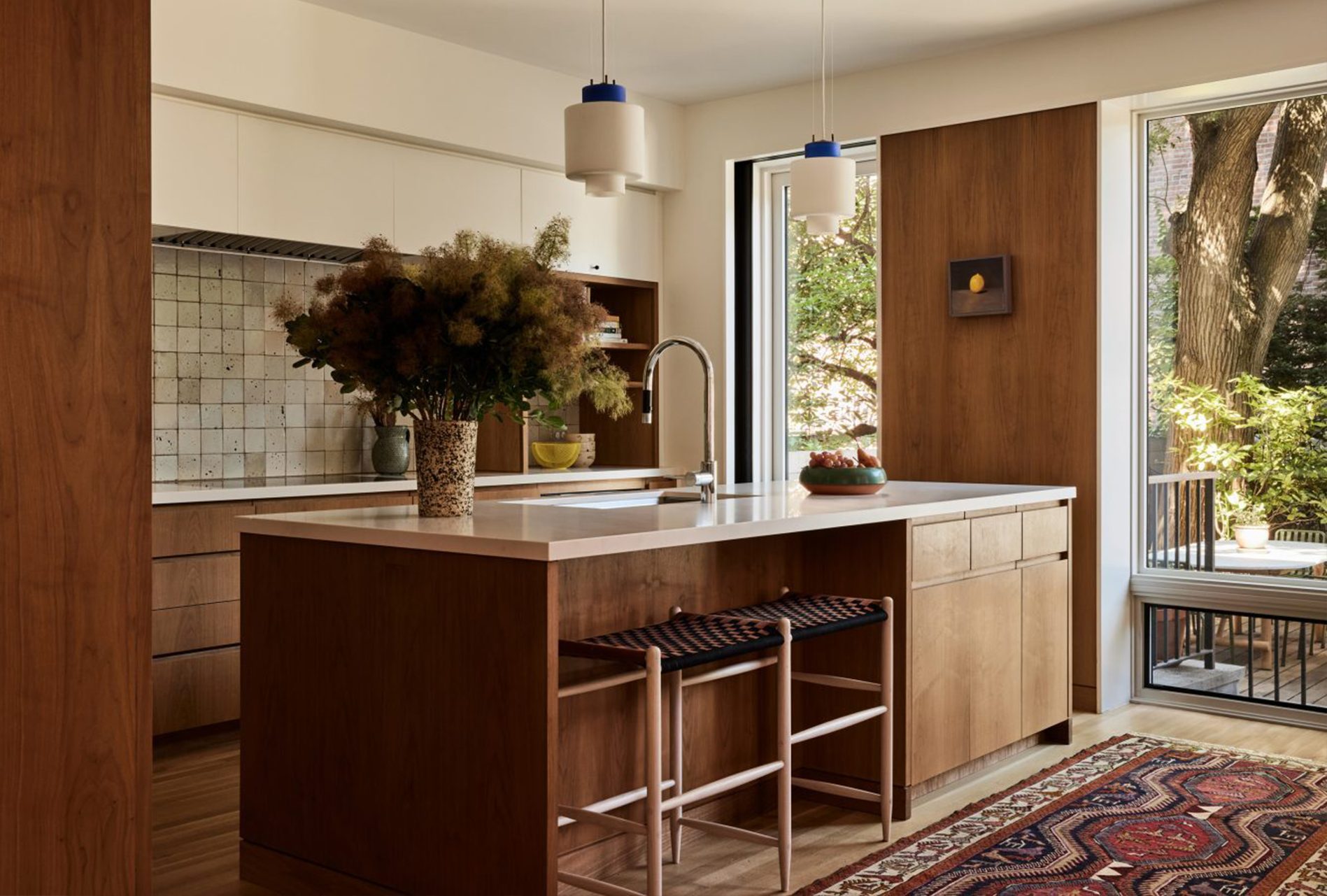
Rug & Kilim’s Vintage Persian Shahsavan Kilim at Neo Tudor Townhouse. Featured in 1st Dibs Introspective.
Design applications of long, narrow rugs in modern homes, lofts, and commercial spaces ~
Gallery runners—those elegant, elongated rugs once devised for palaces and townhouses—have never felt more contemporary. In a world of hard finishes and open plans, they choreograph movement, soften acoustics, and bring a refined, tactile line through space. Used well, a runner doesn’t decorate; it directs.
What we mean by “gallery runner”
Historically, narrow carpets sat alongside main room carpets as kenareh (runners) in Persian interiors; related “gallery” formats occupy a wider, longer proportion that reads as an architectural band rather than a mat. In today’s market, “runner” and “gallery” are often used interchangeably, but the difference is scale: runners are typically 2–3 ft wide, while gallery carpets widen out, retaining that elongated axis. (For terminology and proportions, see established dealer glossaries defining kenareh vs. gallery-size rugs. )
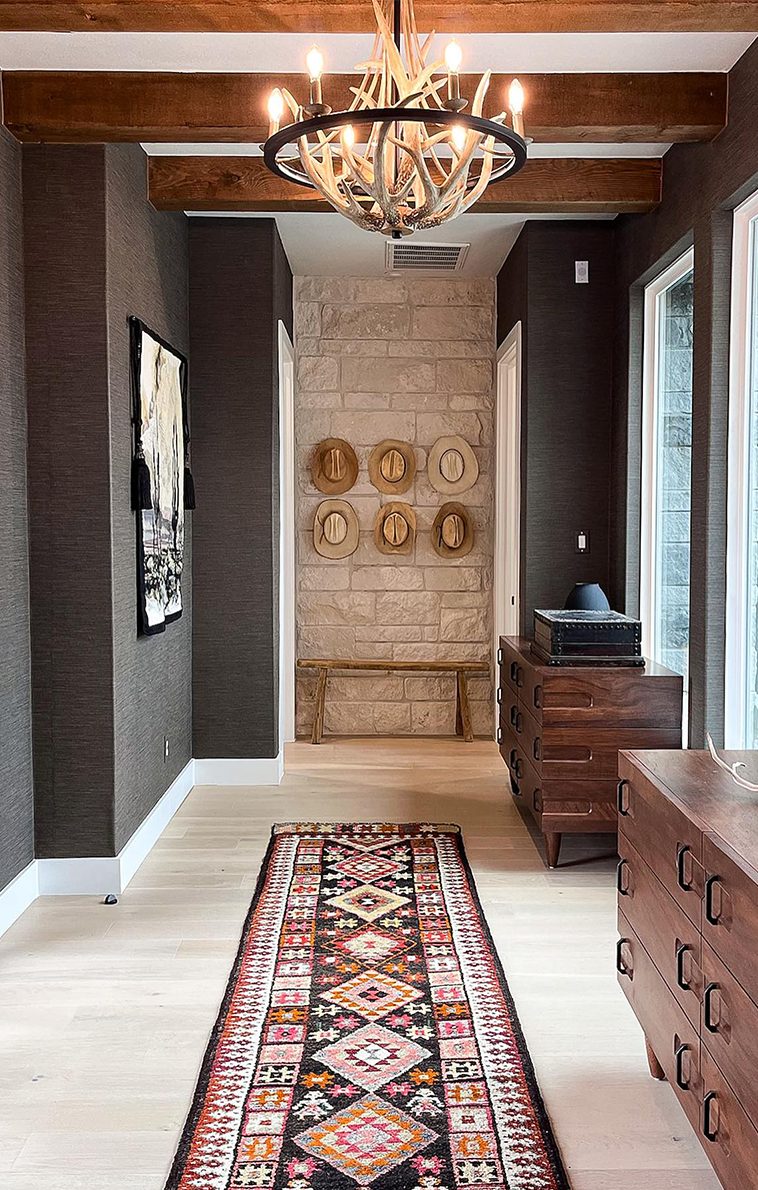
Carla Royder Design x Rug & Kilim’s Vintage Runner
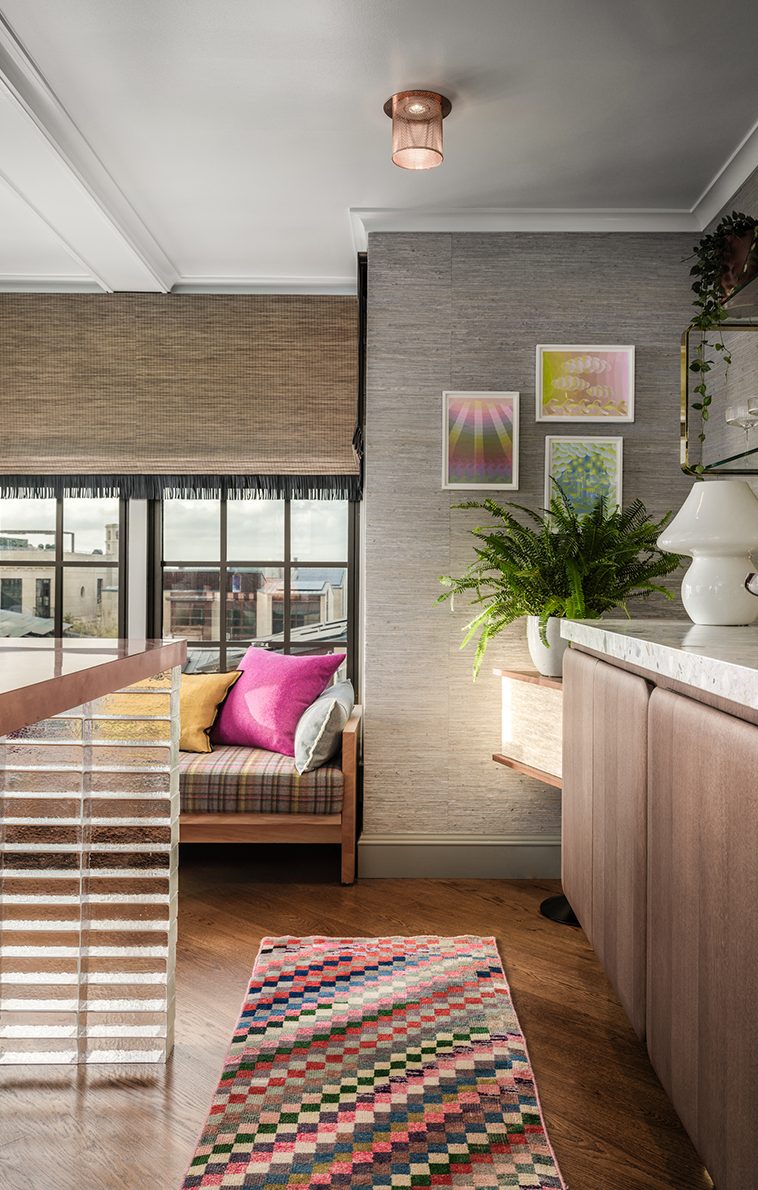
JKA Designs x Rug & Kilim’s Zeki Müren Rug
Why they matter now
Minimal, high-impact interiors rely on clarity. A runner draws a legible path through an entry sequence, links rooms in an enfilade, or edits a loft into zones without walls. In hospitality, hallways have become a guest experience in their own right, not merely a conduit—material choices signal identity before you ever reach the room. A considered runner (or corridor carpet) is central to that message.
There’s performance, too. Carpeted surfaces meaningfully absorb reverberation and footfall. Industry acoustics research shows carpet and cushion can reach noise reduction coefficients in the 0.50–0.70 range and dramatically improve impact sound transmission—transformative in long corridors, kitchens, and concrete-floored lofts.
Proportion and placement: getting the line right
Width. Start from the corridor itself. The International Residential Code establishes 3 ft (914 mm) as the minimum hallway width; many high-end projects push to 42–48 inches for generosity. Sizing a runner to float within that width keeps the walkway gracious and compliant.
Margins. Aim to reveal a slim border of floor on each long side. While general rug guidance suggests leaving a visible perimeter for visual balance, premium makers go further: specify the runner to sit intentionally shy of thresholds, stairs, and door swings—often a custom length is the most elegant solution. (Custom and standard runner formats from luxury manufacturers support this approach.)
Length. In long galleries, either (a) run wall-to-wall as a fitted corridor carpet, or (b) float a custom runner that resolves cleanly at portals and sightlines rather than dying randomly mid-door. The latter reads more architectural and avoids trip edges at transitions.
Pads. In residences, a firm felt-rubber pad stabilizes and preserves pile; in working kitchens, specify a low-profile, non-slip underlay that tolerates cleaning. (Design media routinely recommend pads for safety and longevity in high-use areas such as the kitchen.)
For modern homes and lofts, hand-knotted wool remains the benchmark: resilient crimp, natural soil resistance, and graceful aging even under real foot traffic. In active circulation, prefer a low to medium pile or a refined flatweave; reserve silk or high-luster fibers for quieter galleries. (Wool’s performance characteristics are well documented in carpet industry literature.)
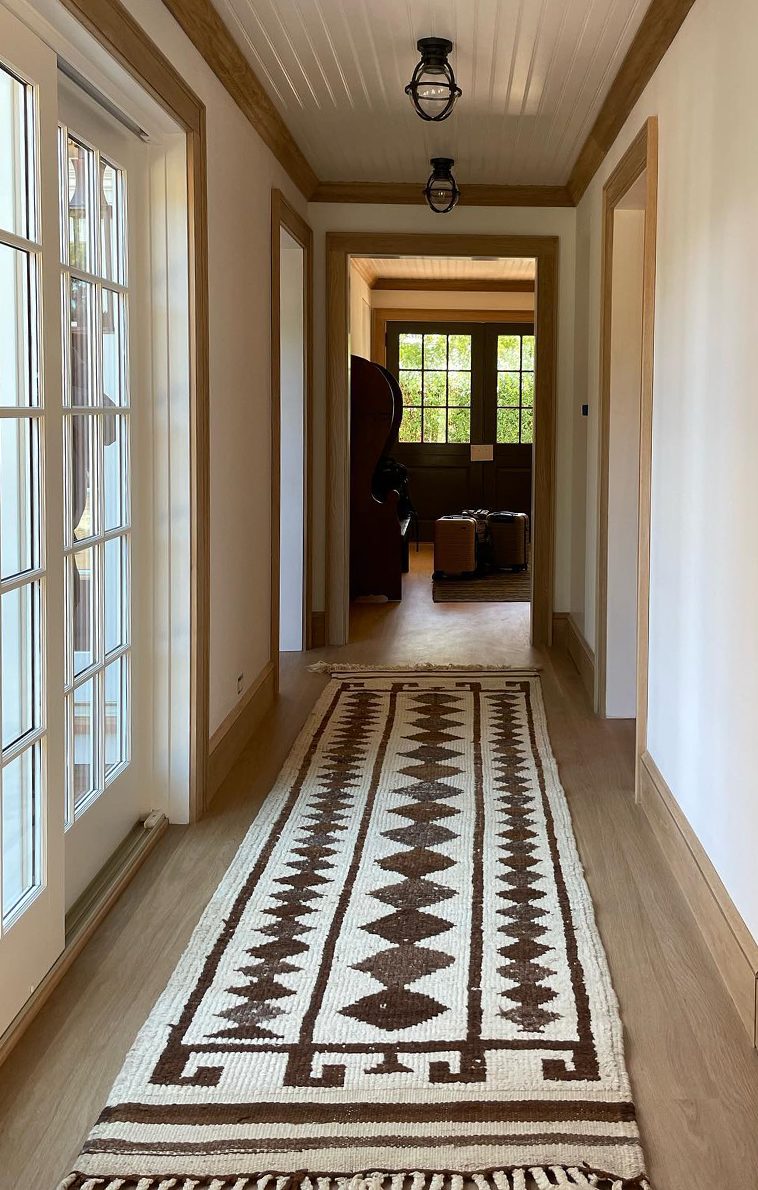
Studio Riga x Rug & Kilim’s Vintage Rug
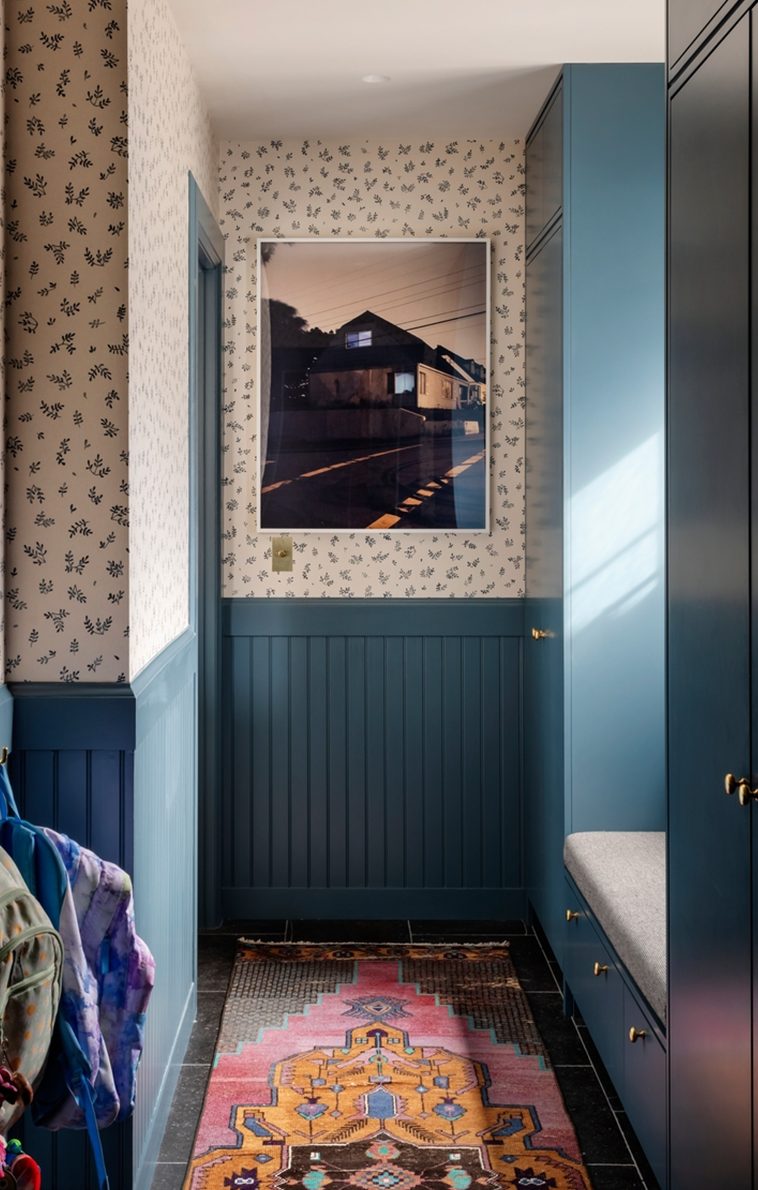
Rug & Kilims’s Oushak Rug in Tudor Home Mudroom. Designed by Studio DB.
Where they belong—now
1) Entry galleries & enfilades (residential).
A runner sets the tone at the door and guides the eye to art, light, and the next room. In classic apartments, it unifies an enfilade without covering stone or timber entirely; in new builds, it lends polish to wide passages that might otherwise feel vacant. Pair antique or art-deco runners with contemporary art for tension and depth—an approach with long roots in museum collecting and connoisseurship.
2) Loft “spines.”
Open plans crave hierarchy. A gallery runner drawn down a circulation spine edits the plan into living, study, and dining without partitions. On concrete or resin floors, the acoustic gain is immediate; on timber, the tactile change signals movement versus destination.
3) Kitchens done properly.
A slender runner from prep to sink to range warms stone and metal palettes, protects fatigue-prone zones, and photographs beautifully. Keep pile low for clearance, specify a proper pad, and accept patina—it’s part of the charm of real materials.
4) Dressing corridors & private suites.
Quiet luxury is tactile. In primary-suite anterooms and dressing galleries, hand-knotted wool—sometimes with silk detailing—absorbs sound and softens the ritual of daily use. This is also where gallery-size pieces (wider than typical runners) excel, reading as a carpeted “runway” rather than a strip.
5) Hospitality & cultural corridors.
Boutique hotels and galleries treat corridors as part of the brand narrative; the runner (or fitted corridor carpet) is a key surface for pattern, color, and wayfinding. Specify performance fiber, underlayment, and life-safety ratings; use pattern scale to manage perceived length and rhythm—denser motifs slow the eye near room entries, bolder bands carry guests forward.
Working details that separate good from great
Door strategies. Terminate cleanly at hinged door swings and thresholds; introduce an inset stone or metal bar if you must cross a change in material. (Custom lengths help you avoid awkward chops.)
Seams. In very long runs, either commission continuous custom pieces or coordinate seam placement with lighting bays or portal lines. Commercial installs should follow CRI 104 for planning and subfloor prep.
Pattern scale. Narrow runners reward elongated repeats (stripes, boteh chains, deco geometrics) that reinforce the axis. In short galleries, a tighter, allover field steadies the pace. (A century of precedent—think deco France to Chinese deco—proves the point.)
Conservation mindset. Antique runners—European or Near Eastern—perform beautifully when loved, not babied. Use pads, rotate seasonally, vacuum lightly; preserve original ends and selvedges. (Museological practice has long treated important carpets as art objects, underscoring their cultural weight in domestic settings.)
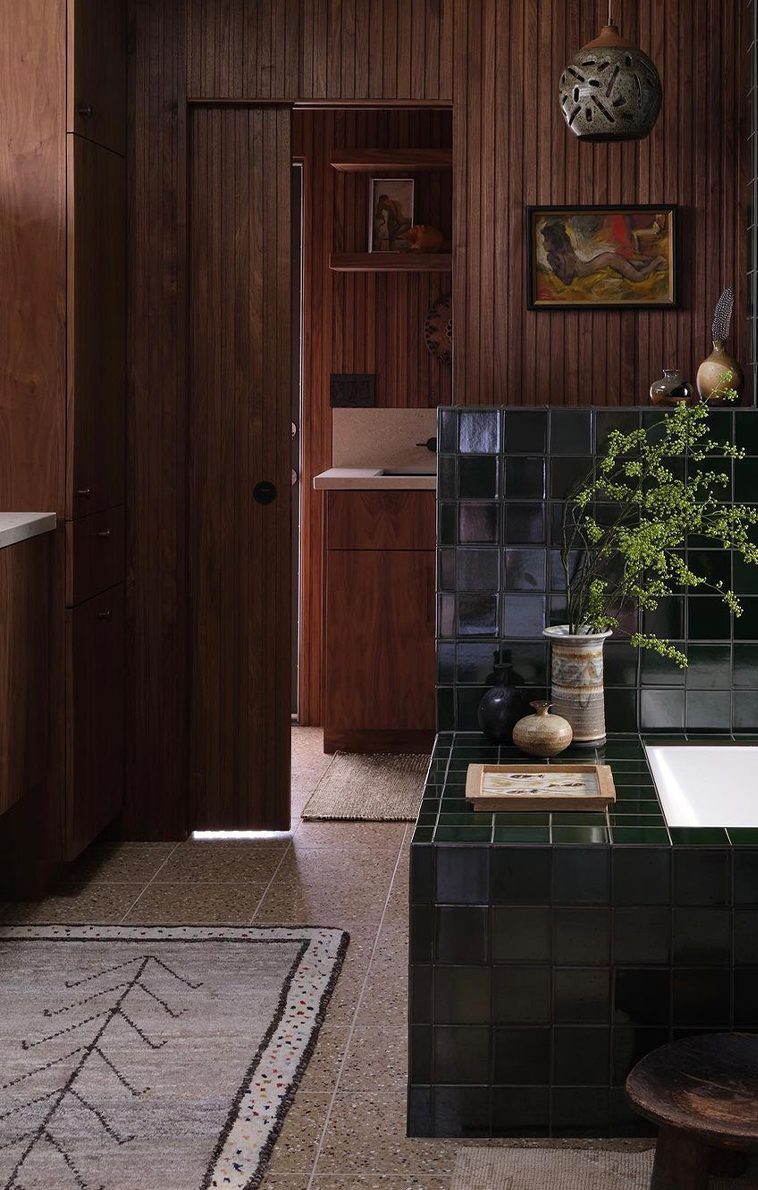
Designed by A1000xbetter. Featuring Rug & Kilim’s Vintage Runner.
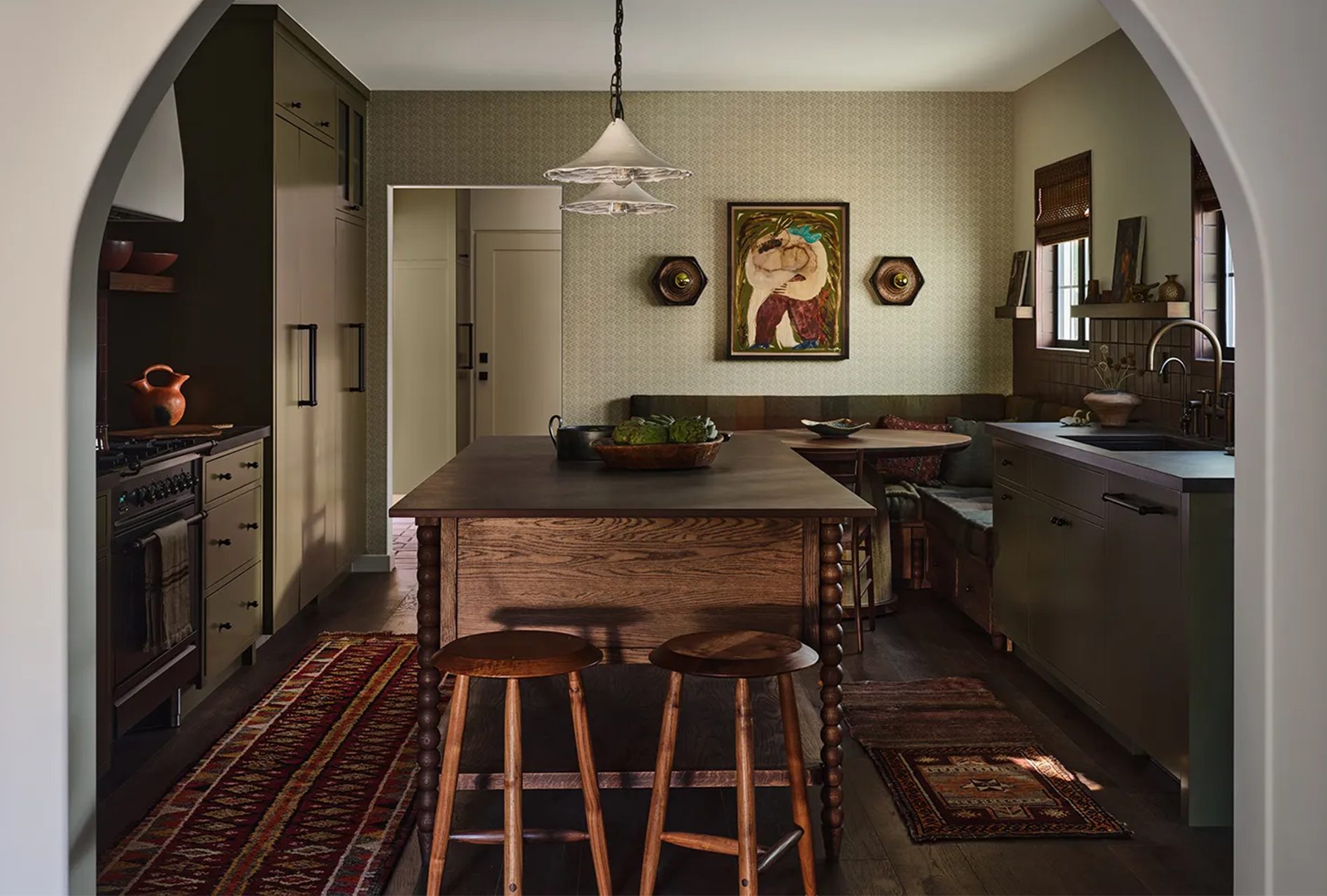
Featured in Domino Magazine, June 10, 2025. Design by A1000xBetter, with our Runner from the Kilim & Flatweave Collection.
A gallery runner belongs wherever a space needs direction, dignity, and quiet performance.
In a townhouse entry, a polished loft, or a hospitality corridor, the best examples don’t simply fill a void; they complete the architecture—visually, acoustically, and experientially.
That is the luxury of restraint: one precise line, perfectly drawn.