
Style
Floral
Every piece in this style, across all of our collections. Narrow them down by size and price.
- Under 6 x 9
- Runners
- 6 x 9
- 8 x 10
- 9 x 12
- 10 x 14
- 12 x 15
- Over 12 x 15
Origin ▼
Style ▼
Material ▼
Width
Length
To connect with a specialist, click here
Stories from the Floral Archive
Essays, artist dialogues, and provenance notes drawn from Rug & Kilim’s editorial desk.
Anatolian Rugs: From Seljuk Origins to Contemporary Luxury Spaces
Among the world's most influential textile traditions, Anatolian rugs occupy a singular position in the history of decorative arts. Emerging from the vast cultural landscape of Anatolia—modern-day Turkey—these carpets represent centuries of artistic exchange between Asia, Europe, the Middle East, and the Mediterranean world. Few weaving traditions have exercised a greater influence on the evolution of carpet design. From Ottoman palaces and Seljuk courts to Renaissance paintings and contemporary luxury interiors, Anatolian rugs have continuously shaped the visual language of textile art. Unlike carpets associated with a single tribe, city, or dynasty, Anatolian rugs encompass an extraordinary range of regional traditions. The result is a diverse yet interconnected weaving culture characterized by bold geometry, symbolic motifs, sophisticated color palettes, and remarkable craftsmanship.
Read the Feature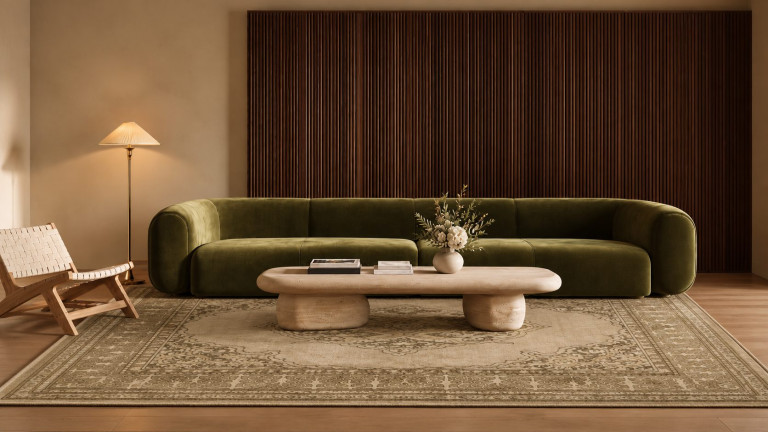
A Guide to Amritsar Rugs: History, Craftsmanship, and Contemporary Luxury Design
Among the most sophisticated carpet traditions to emerge from the Indian subcontinent, Amritsar rugs occupy a unique position at the intersection of Indian craftsmanship, Persian design heritage, and European decorative sensibilities. Woven primarily during the late nineteenth and early twentieth centuries in the historic city of Amritsar in Punjab, these carpets represent one of the most distinctive chapters in the history of global textile art. Unlike the highly formal court carpets of Mughal India or the deeply tribal traditions of nomadic weaving cultures, Amritsar rugs developed their own visual identity. Their character is defined by spacious compositions, softened palettes, oversized motifs, and a remarkable sense of decorative restraint. These qualities have allowed Amritsar carpets to transcend historical classification and remain profoundly relevant within contemporary luxury interiors.
Read the Feature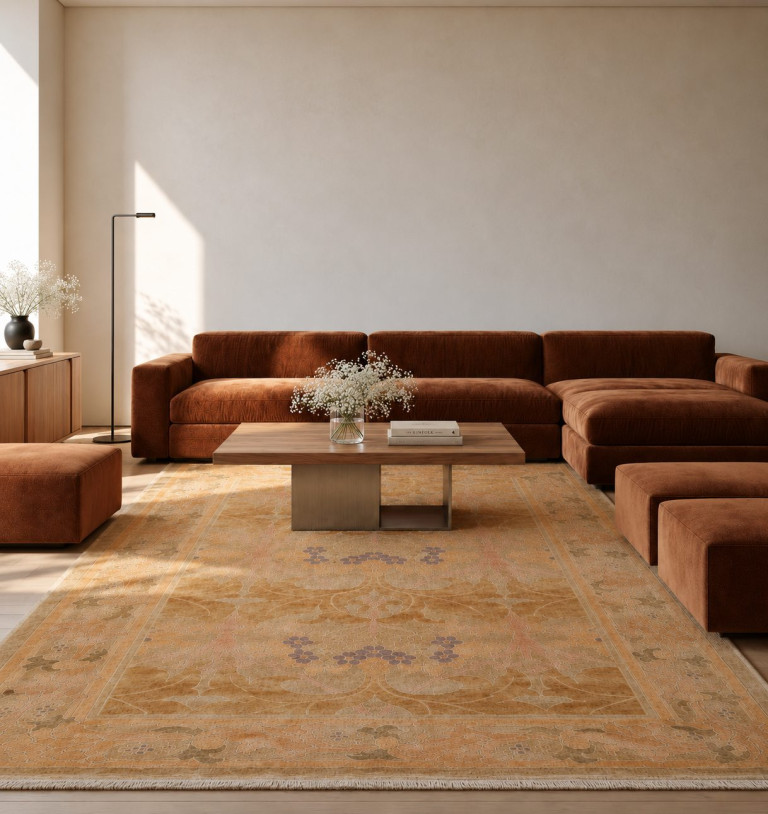
Art Nouveau Rugs: The Intersection of Decorative Arts and Modern Design
Among the most influential artistic movements of the modern era, Art Nouveau occupies a unique place at the intersection of art, architecture, design, and craftsmanship. Emerging in Europe during the final decades of the nineteenth century, the movement sought to dissolve traditional boundaries between fine art and decorative art, creating a unified aesthetic language inspired by nature, movement, and organic beauty. Within this broader creative revolution, Art Nouveau rugs emerged as some of the most sophisticated and expressive textile works ever produced. Unlike the historical revival styles that dominated much of the nineteenth century, Art Nouveau embraced innovation. Designers looked beyond historical ornament and instead turned to the natural world for inspiration. Flowing vines, botanical forms, floral motifs, curved silhouettes, and rhythmic asymmetry became defining characteristics of the movement. Rugs created within this design philosophy transformed the role of carpets from decorative accessories into integral architectural and artistic elements.
Read the Feature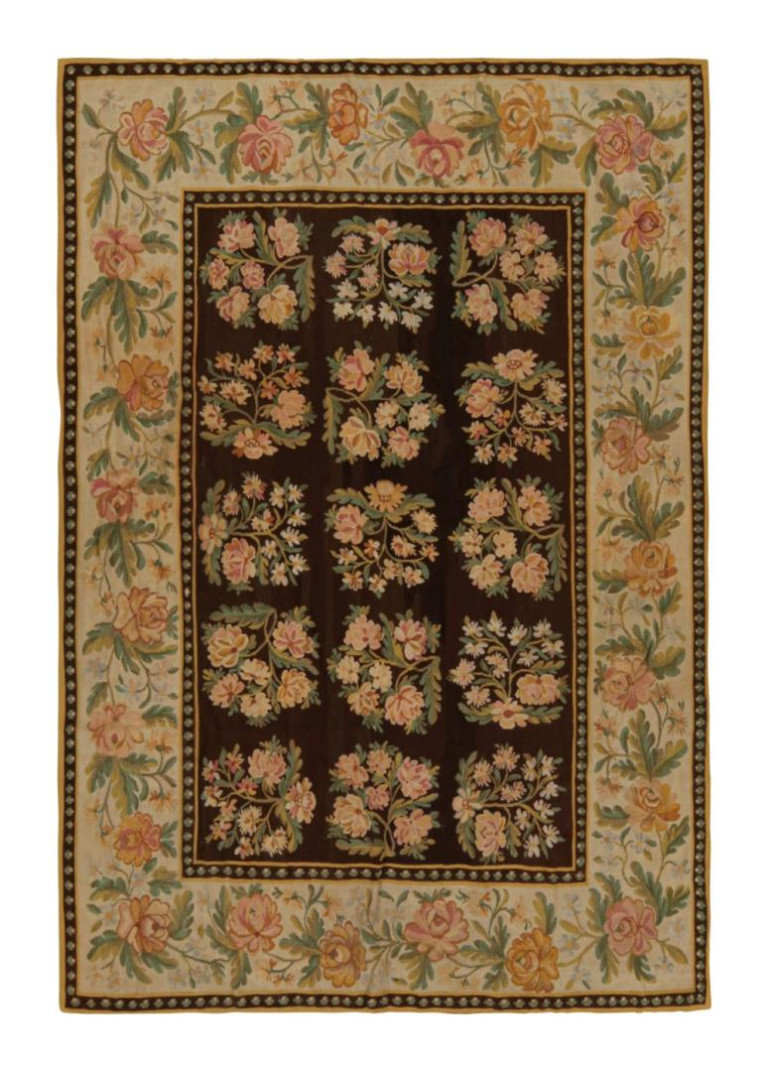
A Guide to Bessarabian Rugs: History, Design, and Modern Luxury
Within the world of collectible textiles and luxury interiors, few rug traditions possess the quiet sophistication and painterly elegance of Bessarabian rugs. Emerging from the historic region of Bessarabia—an area historically situated between present-day Moldova, Romania, and Ukraine—these rugs occupy a unique position at the crossroads of Eastern European folk tradition, Ottoman influence, Russian imperial culture, and French decorative aesthetics. Unlike the geometric tribal weavings commonly associated with Central Asia or the medallion-driven structures of Persian carpets, Bessarabian rugs developed a distinctly atmospheric and ornamental visual language. Their floral compositions, subdued tonal harmonies, and expansive decorative fields positioned them closer to European decorative arts than purely utilitarian floor coverings.
Read the Feature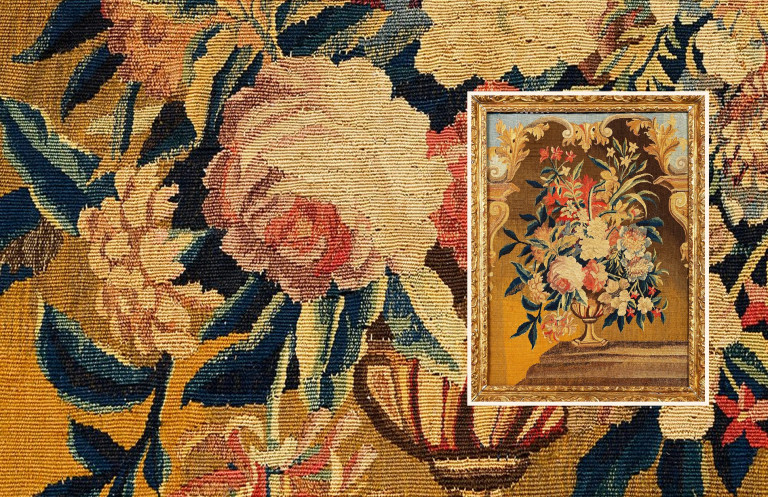
The Evolution of Floral Motifs in Antique Rugs and Kilims: Mapping the Pomegranate, Tulip, and Carnation
Antique 17th Century French Beauvais Tapestry with Floral Vase - Rug & Kilim, NO. 36829 We had a tapestry acquisition unfolding itself in the studio a while ago. Josh and the team just stood there, silently admiring the way the light caught the threads. This was the Antique French Beauvais Tapestry (SKU 36829). It was handwoven in wool, with natural silk accents, circa 1700. When you look at something like that, you do not just see fabric. What you see is the garden of wool and dreams. The precise interlacing of the wefts gives a picture of a gigantic floral vase placed atop an architectural entablature. The botanical imagery is absolutely mesmerizing. There is so much wealth and mystery to it all.
Read the Feature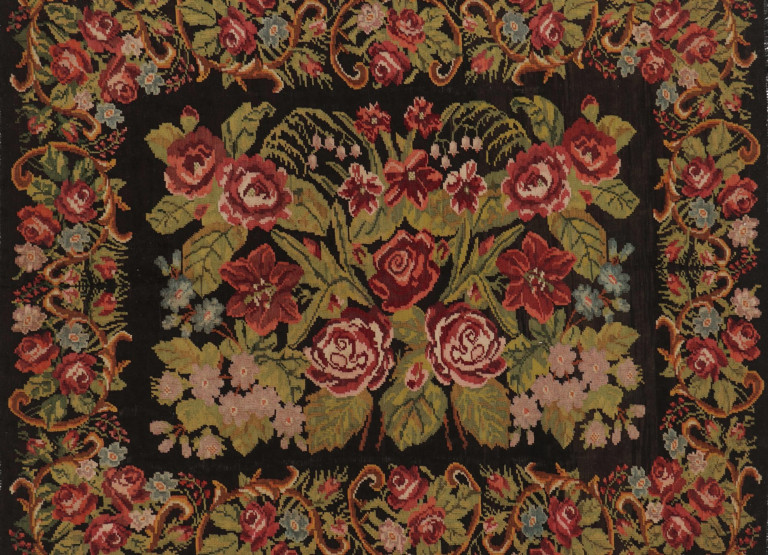
The Ukrainian Rugs and Kilims: The Floral Carpets Designers Are Rediscovering
To speak of Ukrainian rugs and kilims is to speak of a culture where textiles were never merely decorative objects but expressions of identity, memory, and landscape. Across centuries, Ukrainian carpets evolved within a unique cultural geography that bridged the worlds of Central Europe, the Ottoman East, and the Russian Empire. The resulting aesthetic language—rich with floral symbolism, rhythmic geometry, and painterly color—reflects the same cultural currents that shaped Ukrainian painting, poetry, and decorative arts. In village homes, noble estates, and eventually museum collections, these carpets became quiet witnesses to history. Their patterns echo fields of wildflowers across the Ukrainian steppe, their colors recalling the deep reds and earth tones that dominate traditional folk painting. Today, designers and collectors increasingly recognize Ukrainian rugs as part of a broader artistic tradition that connects textiles to the visual arts, literature, and interior architecture of Eastern Europe.
Read the Feature