Style
Fragment
Every piece in this style, across all of our collections. Narrow them down by size and price.
- Under 6 x 9
- Runners
- 6 x 9
- 8 x 10
- 9 x 12
- 10 x 14
- 12 x 15
- Over 12 x 15
Origin ▼
Style ▼
Material ▼
Width
Length
To connect with a specialist, click here
Stories from the Fragment Archive
Essays, artist dialogues, and provenance notes drawn from Rug & Kilim’s editorial desk.
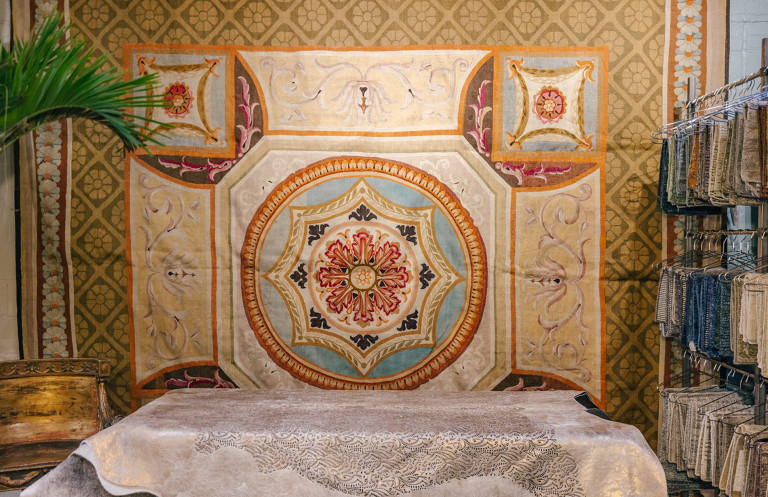
Provenance, Structure, Intelligibility: The Three Pillars of Serious Collecting
Anyone can acquire a rug. To collect one, to bring it into a serious collection with the confidence that it belongs there, requires a discipline, and that discipline rests on three questions. Across four decades of building one of the most significant archives in the country, this house has come to evaluate every object through the same three. They are the difference between buying and collecting, and they are worth setting down plainly, because they apply as readily to a Safavid fragment as to a signed Aubusson, and because they are the same three questions, at bottom, that a curator at the Metropolitan or a specialist at Christie's brings to any object of consequence.
Read the Feature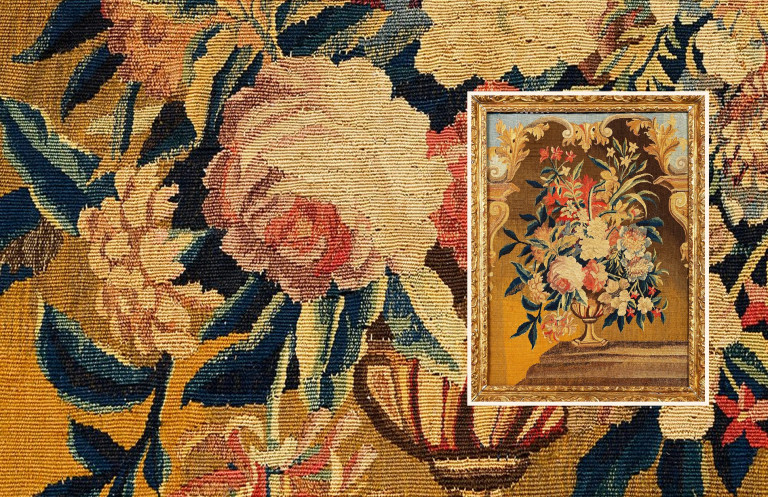
The Evolution of Floral Motifs in Antique Rugs and Kilims: Mapping the Pomegranate, Tulip, and Carnation
Antique 17th Century French Beauvais Tapestry with Floral Vase - Rug & Kilim, NO. 36829 We had a tapestry acquisition unfolding itself in the studio a while ago. Josh and the team just stood there, silently admiring the way the light caught the threads. This was the Antique French Beauvais Tapestry (SKU 36829). It was handwoven in wool, with natural silk accents, circa 1700. When you look at something like that, you do not just see fabric. What you see is the garden of wool and dreams. The precise interlacing of the wefts gives a picture of a gigantic floral vase placed atop an architectural entablature. The botanical imagery is absolutely mesmerizing. There is so much wealth and mystery to it all.
Read the Feature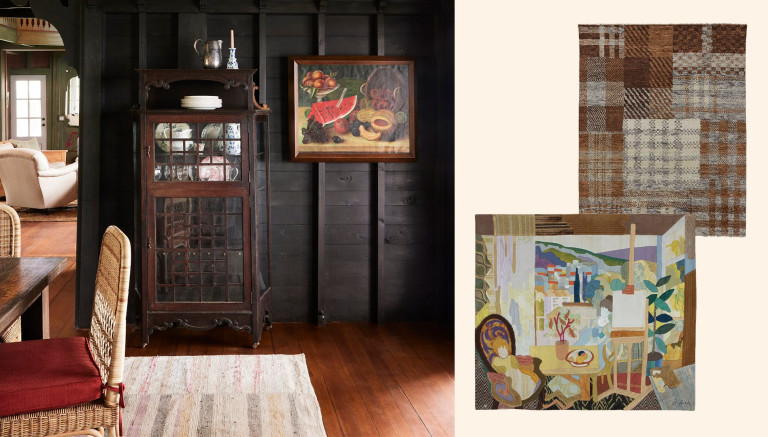
How the World’s Most Serious Art Spaces Are Rewriting the Rules of the Floor and the Contemporary Home
There is a room at Hauser & Wirth Somerset; the gallery that occupies a converted farmhouse in the English countryside, where Pipilotti Rist installations have shared walls with Phyllida Barlow sculptures and where the building itself feels like an argument against the idea that serious art requires a white cube to be taken seriously, where a single large antique textile lies on the stone floor beneath work of radical contemporary ambition. It does not announce itself. It simply holds the room together with the authority of an object that has been doing exactly this, in exactly this way, for several centuries longer than the art above it has existed. The artists whose work hangs on those walls have spent their careers thinking about surface, material, and the relationship between an object and the space it occupies. The carpet understood all of this before any of them picked up a brush.
Read the Feature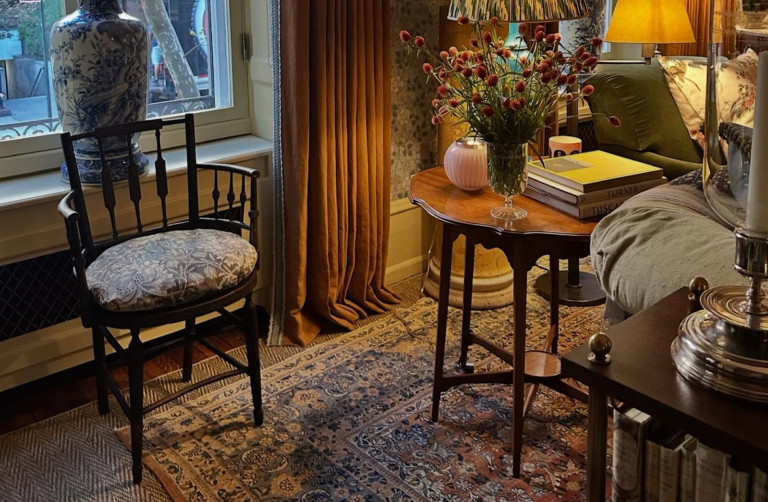
How U.S.–Iran Tensions Are Reshaping the World of Fine Rugs: From Safavid Courts to Sanction Regimes
There is a room in the Metropolitan Museum of Art in New York where a sixteenth-century Persian carpet stops people mid-stride. Because something in the object itself; its scale, its silence, the particular authority of a thing that has already outlasted three empires makes the ordinary pace of a museum visit feel suddenly inappropriate. The Emperor's Carpet, as it is known, was commissioned in Safavid Iran, passed to Peter the Great of Russia, gifted to the Habsburg Emperor Leopold I in 1698, held by the Austrian Imperial House until 1921, acquired by the Met in 1941, and displayed publicly only twice in the following sixty years because its condition was too fragile to risk. It has survived more political systems than any collector alive today will ever witness. It knows something about geopolitics that no sanctions framework, no bilateral negotiation, no executive order has yet managed to articulate.
Read the Feature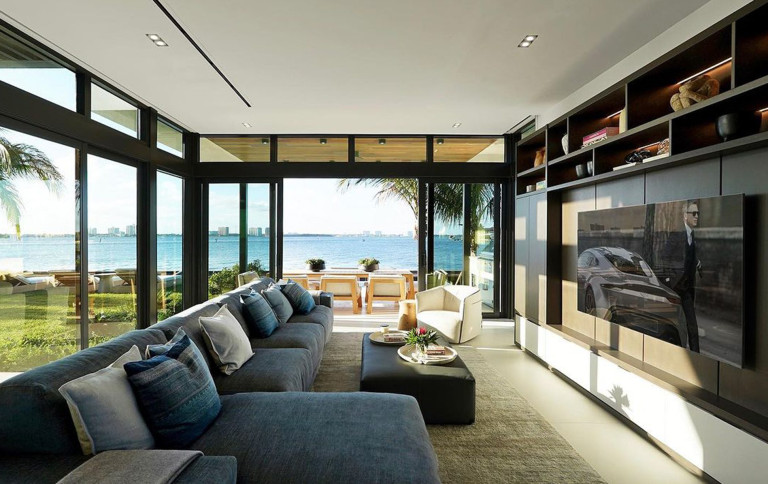
Luxury Coastal Rugs: Styling High-End Interiors from the Hamptons to the French Riviera
The Problem with “Effortless” The most convincing coastal interiors in the world share a peculiar quality: they appear inevitable. Rooms in the Hamptons, along the French Riviera, in Malibu or Mallorca seem to arrive fully formed; light moving freely, materials perfectly resolved, nothing excessive, nothing missing. The effect is so seamless that it risks being misunderstood as ease. Coastal design, at its highest level, is one of the most demanding exercises in interior architecture. It allows for no distraction, no indulgence, and very little forgiveness. When a room is reduced to light, proportion, and material, every decision becomes visible.
Read the Feature
A Rug & Kilim Perspective on Boutique Hospitality, Hotels, and the Art of Living Well
ICONIC... The celebrity duo Rihanna and A$AP Rocky behind some of fashion and music's most recognized moments open up to W magazine with a backdrop to die for. Sitting in one of the luxury suites at the momentous Mercer Hotel in SoHo NYC is an antique Persian rug by the Rug & Kilim Collection. There are interiors that impress, and there are interiors that endure. The latter; quietly commanding, intellectually composed, are rarely the result of singular gestures. It is intellectual, atmospheric, and deeply material. From the restrained grandeur of Mayfair to the cinematic restraint of Avenue Montaigne, from the private villas of Lake Como to the upper floors of Central Park South, and from Claridge’s, to the villas of Hotel du Cap-Eden-Roc, or in the rarefied interiors of Aman Tokyo; spaces where luxury is not declared, but resolved.
Read the Feature