
Style
French
Every piece in this style, across all of our collections. Narrow them down by size and price.
- Under 6 x 9
- Runners
- 6 x 9
- 8 x 10
- 9 x 12
- 10 x 14
- 12 x 15
- Over 12 x 15
Origin ▼
Style ▼
Material ▼
Width
Length
To connect with a specialist, click here
Stories from the French Archive
Essays, artist dialogues, and provenance notes drawn from Rug & Kilim’s editorial desk.
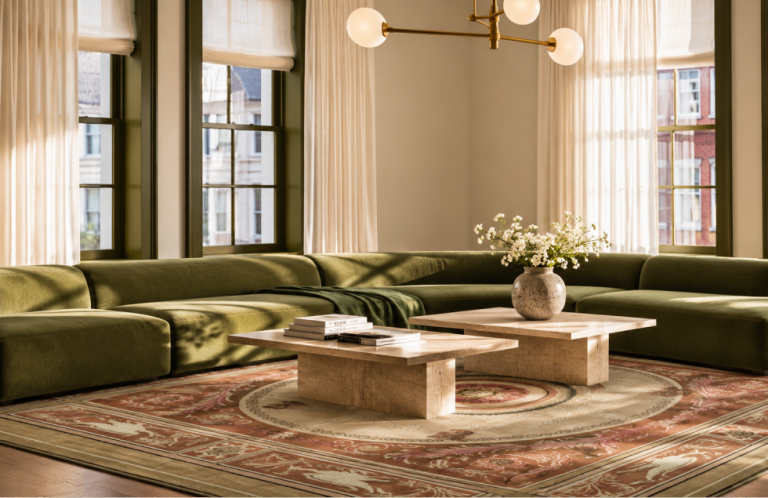
Rug of the Week: The Neoclassical 19th Century Oversized Savonnerie as a French Masterpiece
Every civilization that has reached a certain confidence has wanted to put its worldview on the floor. The Persians wove paradise gardens; the Chinese, the cosmos in miniature. France, under the Sun King, wove order itself. The Savonnerie, the royal carpet manufactory brought to its height under Louis XIV, the symmetry of the formal garden, the architecture of Versailles, the neoclassical grammar of acanthus and rosette and laurel that announced a culture certain of its own supremacy. A Savonnerie is a political philosophy you can stand on. All of which makes the four small creatures hidden in this particular example so delightfully subversive.
Read the Feature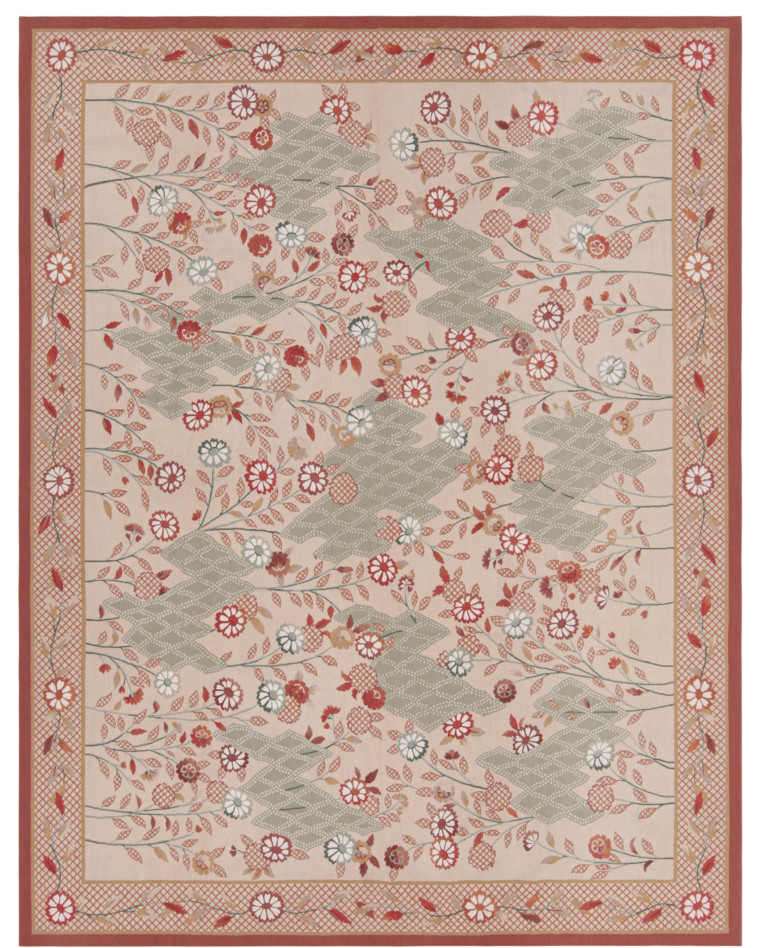
Understanding Aubusson Rugs: French Heritage and Timeless Luxury
Among the great weaving traditions of Europe, few names carry the artistic prestige and cultural significance of Aubusson. For centuries, Aubusson rugs have represented the pinnacle of French decorative arts, embodying the refinement, sophistication, and creative ambition that defined some of Europe's most influential artistic movements. Their importance extends far beyond floor coverings; Aubusson rugs occupy a distinguished position within the histories of design, architecture, collecting, and luxury interiors. Originating from the historic weaving center of Aubusson in central France, these rugs emerged as part of a broader tapestry-making tradition that would ultimately influence aristocratic residences, royal palaces, cultural institutions, and significant architectural projects throughout Europe and beyond. Their graceful ornamentation, sophisticated color palettes, and exceptional craftsmanship established them among the most admired carpets ever produced.
Read the Feature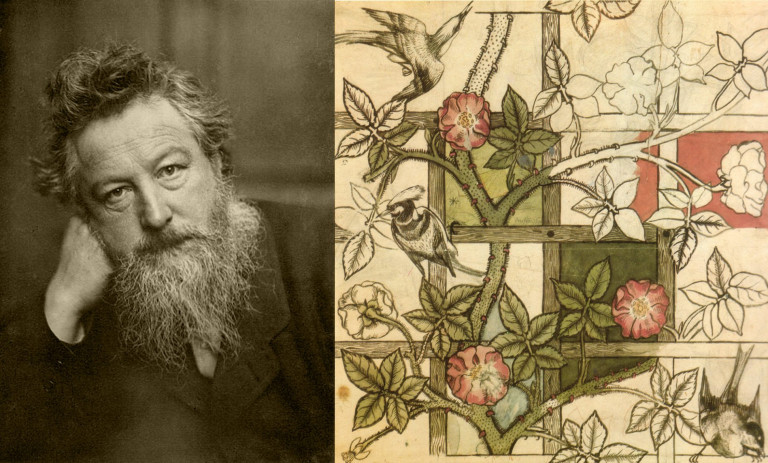
What William Morris, Paul Poiret, and the Bauhaus Each Understood About the Rug and What French Art Deco Proved
In the winter of 1883, William Morris stood before a room full of wool merchants, manufacturers, and assorted Victorian worthies in a lecture hall in Birmingham and said something that no one in that room was prepared to hear. The decorative arts, he told them, were not decorative at all. They were the most serious form of human making and their degradation under industrial production was not an aesthetic problem but a civilizational one. He had brought, as he often did, an Oriental carpet to make his point. Then he said, in effect: this is what we have lost the capacity to make, and until we recover it, we have no business calling ourselves a culture.
Read the Feature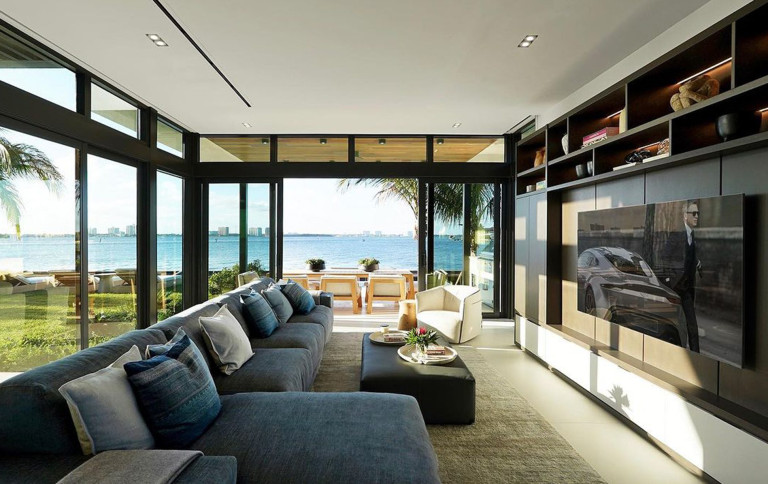
Luxury Coastal Rugs: Styling High-End Interiors from the Hamptons to the French Riviera
The Problem with “Effortless” The most convincing coastal interiors in the world share a peculiar quality: they appear inevitable. Rooms in the Hamptons, along the French Riviera, in Malibu or Mallorca seem to arrive fully formed; light moving freely, materials perfectly resolved, nothing excessive, nothing missing. The effect is so seamless that it risks being misunderstood as ease. Coastal design, at its highest level, is one of the most demanding exercises in interior architecture. It allows for no distraction, no indulgence, and very little forgiveness. When a room is reduced to light, proportion, and material, every decision becomes visible.
Read the Feature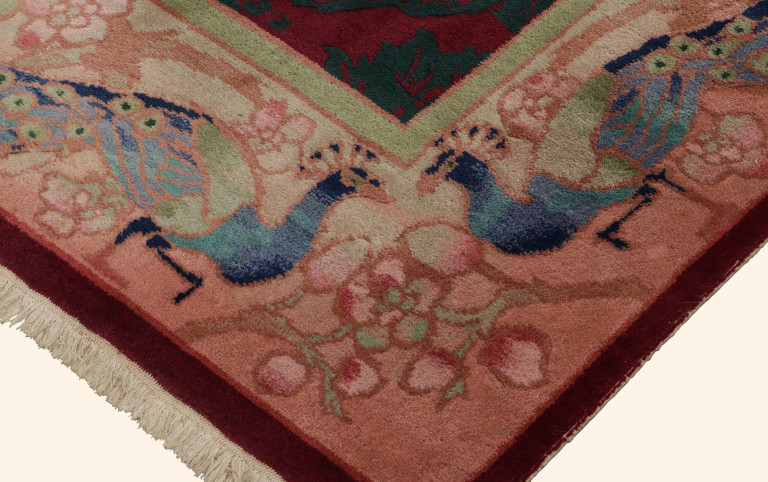
Rug of the Week VI: Chinese Art Deco and the French Imagination, 1920–1930
In the long arc of design history, there is art that merely follows a style, and there is fine art that redefines the geography of taste. This Chinese Art Deco rug—woven between 1920 and 1930, at the height of the Jazz Age—belongs to the latter. It was not born of a single tradition, but of a cultural duet: the East’s millennia-old textile mastery and the West’s avant-garde hunger for reinvention. A Tale of Two Modernities The 1920s marked a feverish moment in both Shanghai and Paris. While the French ateliers of Ruhlmann and Rateau were designing interiors for modern aristocracy, Chinese workshops in Tianjin and Beijing were reimagining their classical vocabulary for export. The result was an East–West synthesis unlike anything seen before—luxurious, daring, and utterly modern.
Read the Feature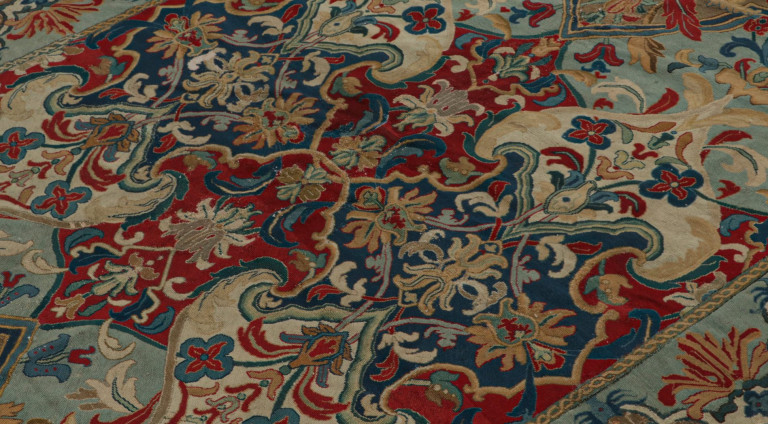
Rug of the Week Series III: Power, Pattern, and Politics in French Needlepoints of the Second Empire
There are objects that decorate, and there are objects that define. This mid-19th century French needlepoint rug—handmade in wool between 1850 and 1860—is firmly of the latter category. At first glance, its medallion-and-floral field, worked in shades of imperial blue, martial red, and softened beige-brown, reads as a refinement of ornament. Yet within its stitches lies the broader cultural program of Napoleon III’s Second Empire, when interiors were designed as orchestrated symbols of hierarchy, order, and political continuity. To understand a textile such as this is to understand the interior not as decoration but as stagecraft: a point where power, domestic life, and aesthetics converged.
Read the Feature