
Rug of The Week Series II: Jean Lurçat’s L’Homme and the Political Resurrection of Tapestry
August 21, 2025
Signatures and the Art of Attribution in Luxury Rugs: Collecting with Provenance and Prestige
August 29, 2025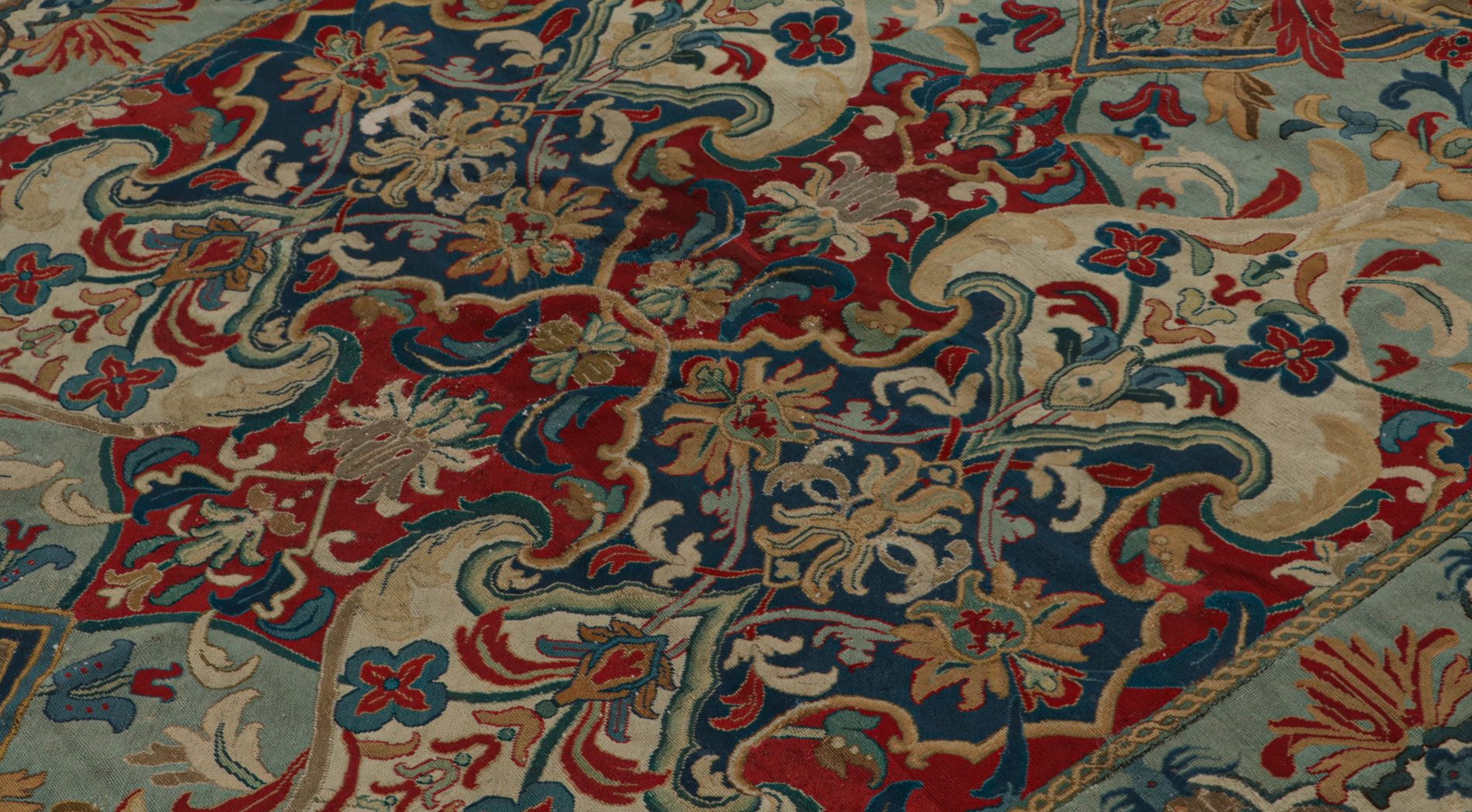
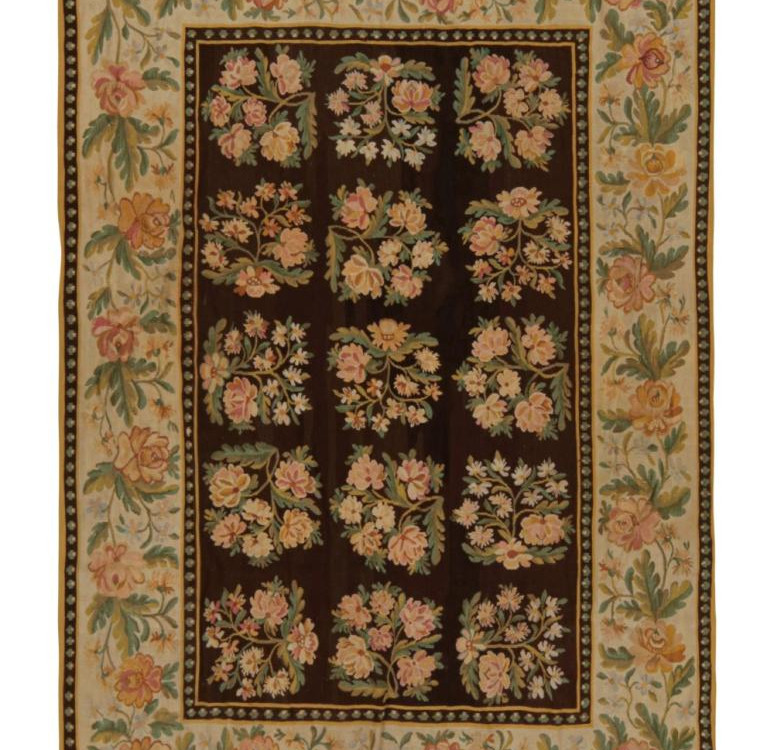
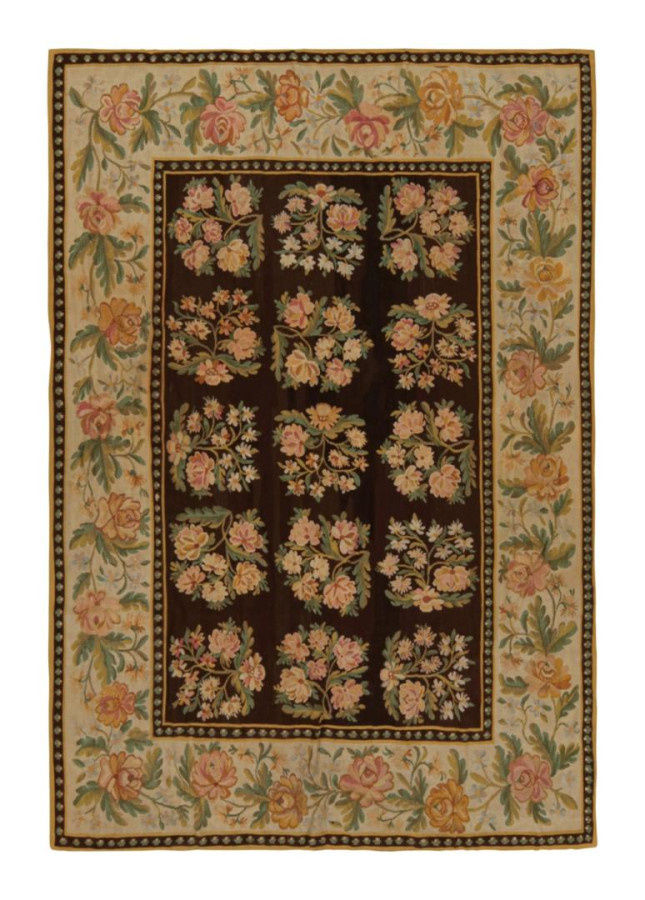
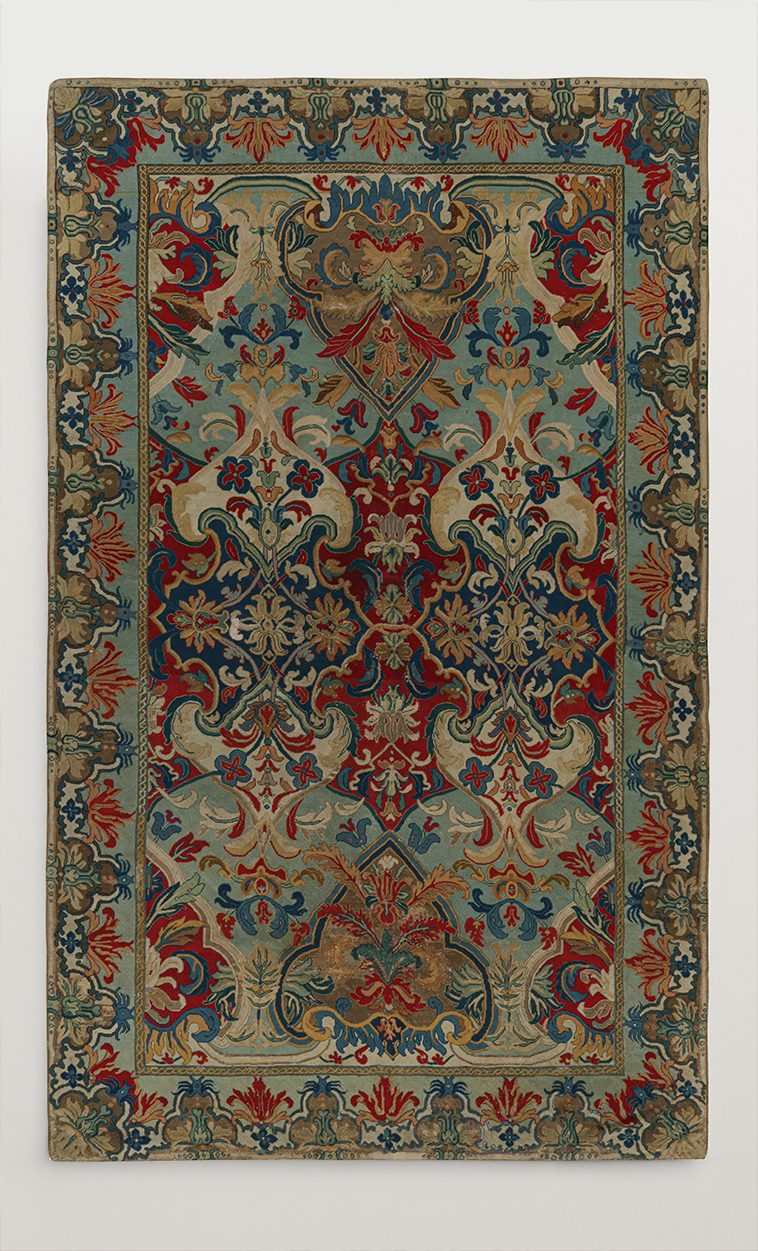
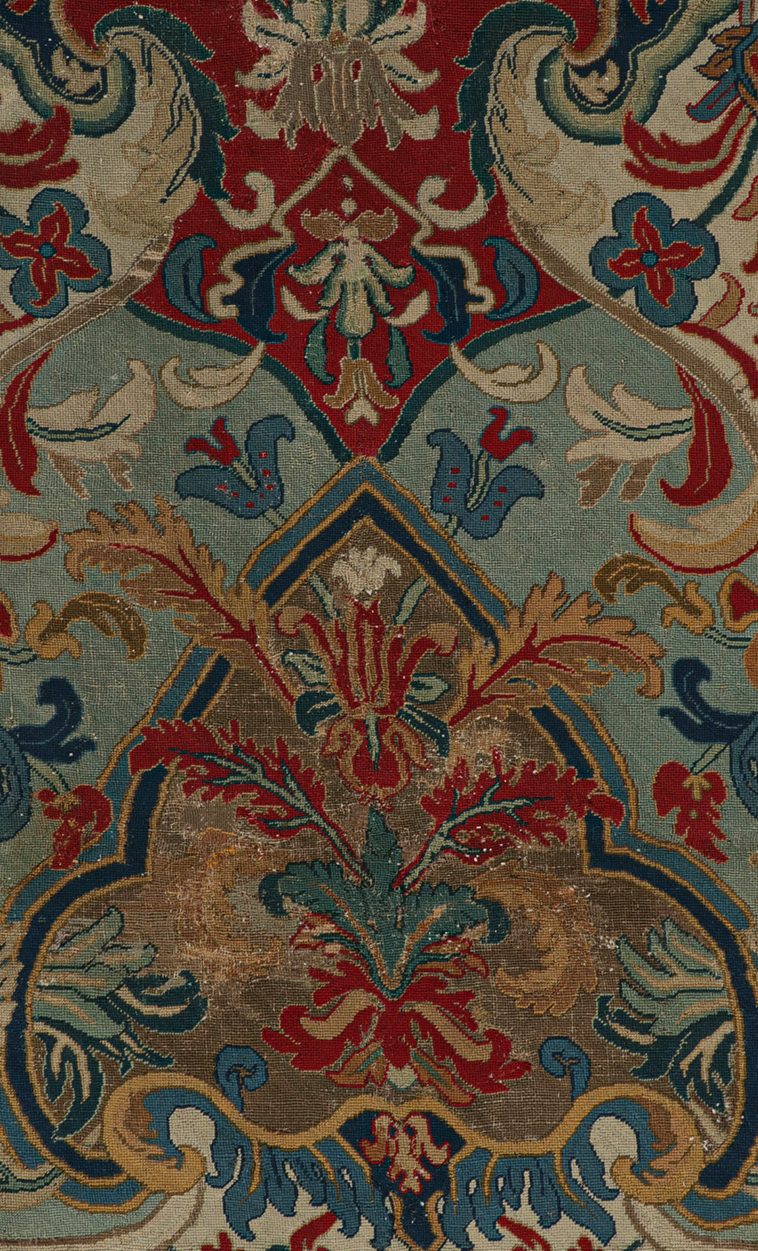
There are objects that decorate, and there are objects that define. This mid-19th century French needlepoint rug—handmade in wool between 1850 and 1860—is firmly of the latter category. At first glance, its medallion-and-floral field, worked in shades of imperial blue, martial red, and softened beige-brown, reads as a refinement of ornament. Yet within its stitches lies the broader cultural program of Napoleon III’s Second Empire, when interiors were designed as orchestrated symbols of hierarchy, order, and political continuity.
To understand a textile such as this is to understand the interior not as decoration but as stagecraft: a point where power, domestic life, and aesthetics converged.
The Political and Cultural Backdrop
France in the mid-19th century was a nation in the throes of transformation. The 1850s saw the rise of Napoleon III and the monumental reshaping of Paris under Baron Haussmann. This was not simply urban planning—it was political theater in stone and boulevard. Order, symmetry, and monumental scale were not confined to the new avenues but permeated every stratum of design. Interiors, too, became expressions of political will.
The Second Empire’s design ethos married Renaissance revival opulence with the grandeur of Louis XIV, producing interiors of layered symmetry, gilded boiserie, parquetry, elaborate plasterwork, and textiles of equal visual weight. Rugs and tapestries were never afterthoughts; they were anchors in this orchestration. A needlepoint rug such as this one functioned as a visual foundation, its medallions echoing ceiling rosettes and its florals mirroring carved ornament. The floor was a canvas of order, binding the space in a language of continuity.
Needlepoint in the Hierarchy of French Decorative Arts
When we speak of French rugs in the 19th century, the names Savonnerie and Aubusson dominate. The Savonnerie workshops, founded in the 17th century under Louis XIII, were synonymous with royal commissions—large-scale carpets that graced Versailles and imperial palaces. Aubusson, equally storied, became renowned for tapestries and rugs with painterly finesse, often produced for aristocratic and bourgeois patrons.
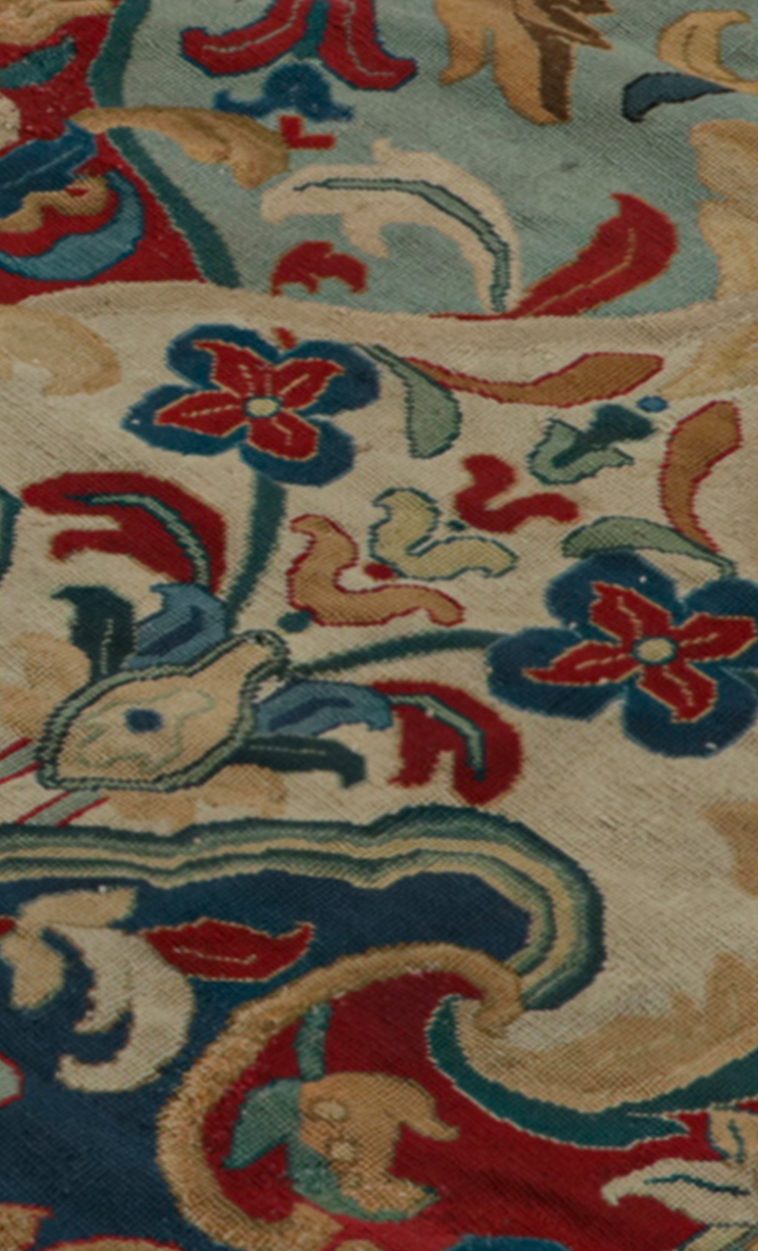
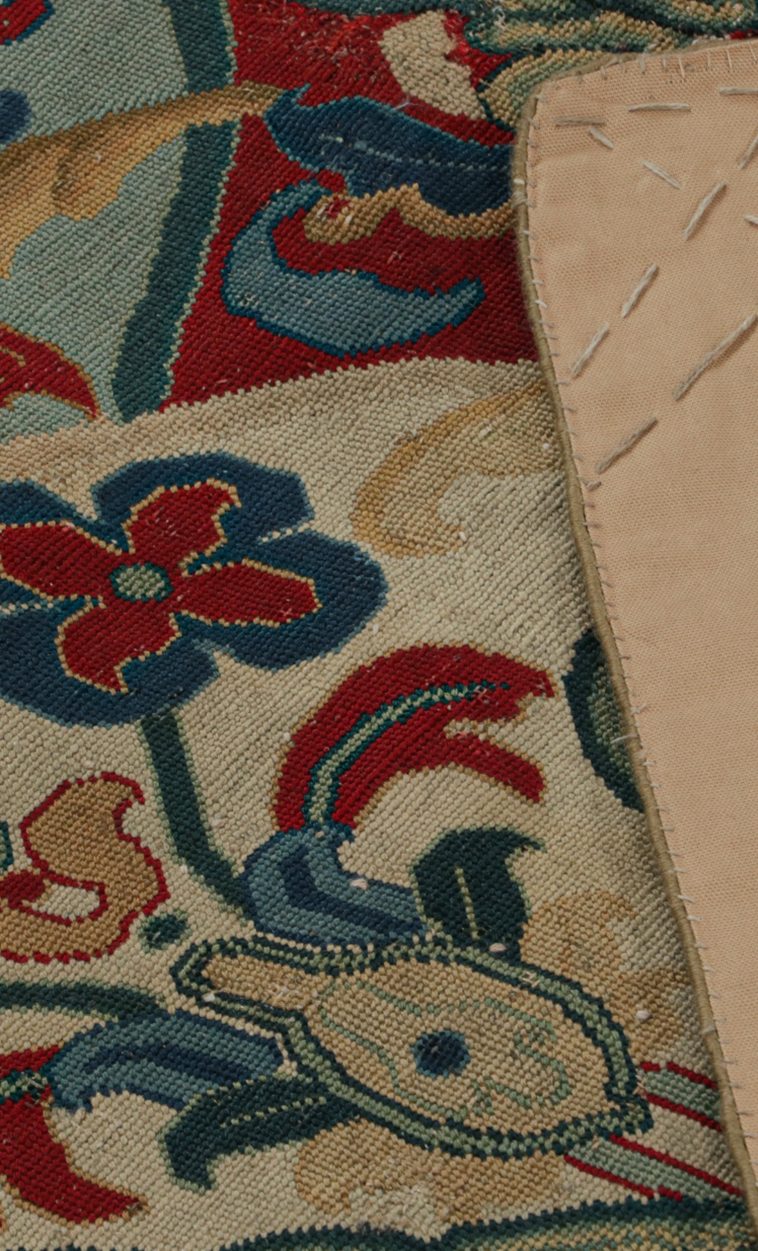
Needlepoint, however, occupied a different yet important niche. Unlike woven carpets, needlepoint was stitched by hand onto a canvas ground, allowing for precision in pattern and scalability for interiors not furnished with Savonnerie commissions. It was both artisanal and adaptable, blending courtly grandeur with the domestic intimacy of upholstery and wall hangings. By the mid-19th century, needlepoint rugs emerged as an essential component of bourgeois and noble interiors—bridging the grand decorative traditions of Savonnerie with the growing demand for accessible, yet still highly refined, ornament.
This particular rug, with its disciplined allover design, is emblematic of that role. It does not aspire to painterly illusionism, but to structure—symmetry that conversed fluently with the geometry of parquet floors and the order of classical interiors.
On the Design
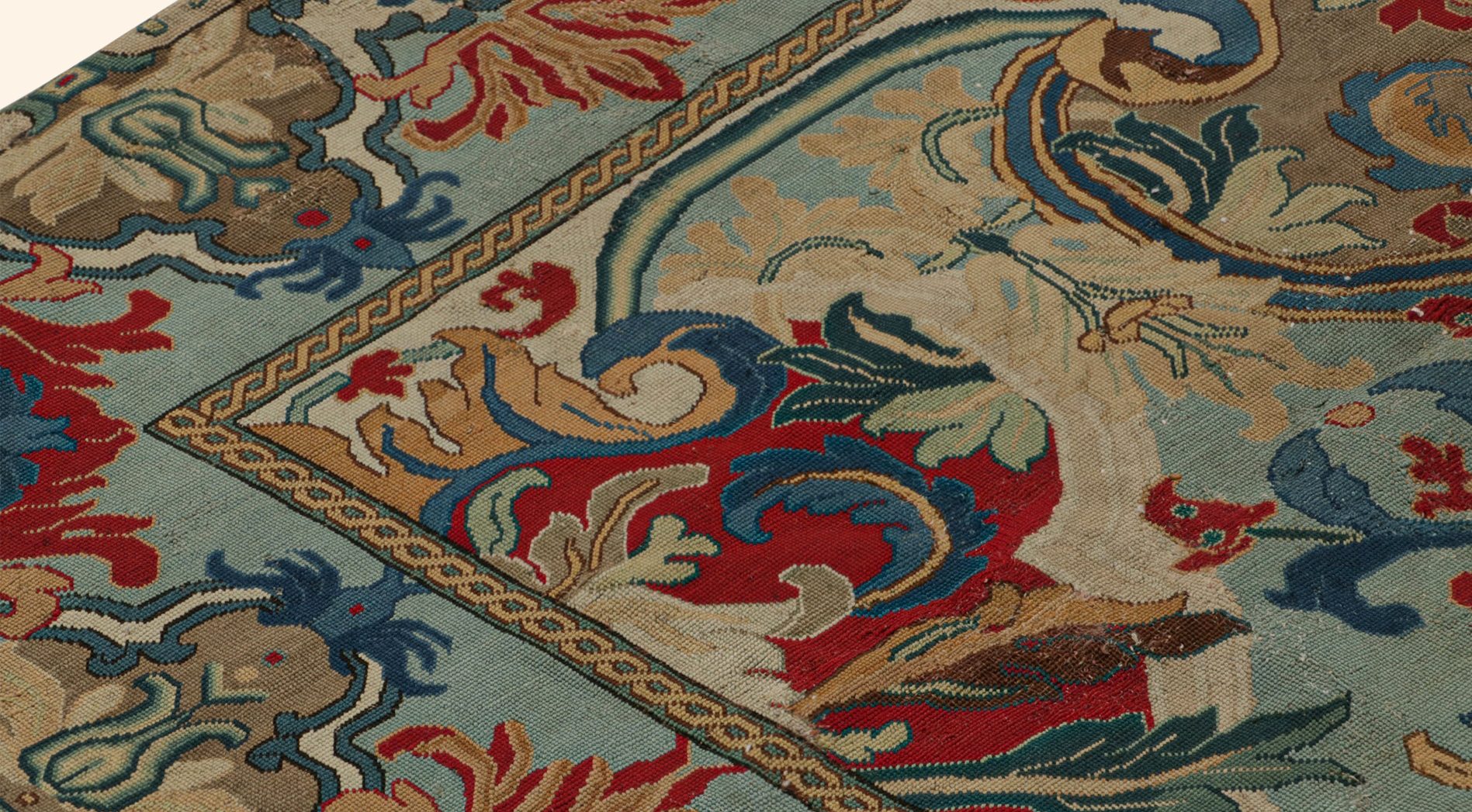
The rug’s field is articulated in an allover pattern of medallions and florals, executed with remarkable precision. These are not idle motifs: they are direct descendants of the botanical ornament found in Renaissance revival décor, which dominated French interiors under Napoleon III. Each rosette functions almost like heraldry, conferring dignity and permanence. The scrolls and florals echo the gilded plaster cornices and carved wood panels of the salons they once accompanied.
The palette itself speaks of cultural symbolism. Imperial blue conveys dignity and continuity, martial red evokes power and ceremony, and beige-brown grounds the composition with a softened sobriety. These colors were not incidental—they were aligned with the broader decorative vocabulary of the Second Empire, appearing in upholstery, wallpaper, and painted ceilings. Together, they created interiors that were not merely beautiful but legible: spaces that projected stability and cultural supremacy in a period of political flux.
Provenance and Placement
Given its size—five by nine feet—this rug would likely have been placed in a petit salon, library, or reception room. In such settings, rugs were not isolated artworks but components of a larger orchestration. They provided warmth, certainly, but also visual rhythm, linking disparate elements of furniture, paneling, and ceiling decoration into a unified whole.
Provenance for such needlepoint pieces often ties them to bourgeois households aspiring to aristocratic taste, though the craftsmanship and materials here suggest patronage at the higher end of that spectrum. Its survival into the present day—still vibrant in color and intact in structure—speaks not only to the durability of its wool but to the enduring cultural resonance of its design language.
Comparative Context of Needlepoint Rugs
To situate this rug is to see it in dialogue with its contemporaries. While Savonnerie carpets of the same era often featured central medallions and painterly allegories designed for palatial scale, this needlepoint’s repeating structure reflects the democratic expansion of decorative order into domestic interiors. Similarly, Aubusson’s lush, tapestry-like designs emphasized narrative scenes, while needlepoint favored symmetry and modular repetition.
In this sense, needlepoint became the quiet yet essential register of the Second Empire interior—less ostentatious than Savonnerie, less narrative than Aubusson, but equally vital in sustaining the ornamental cohesion of the space.
Contemporary Relevance
For today’s designers, a rug like this offers more than historicity. It offers a lesson in how ornament, politics, and domesticity once intertwined—and how textiles can still serve as anchors of meaning in contemporary spaces.
Placed in a modern library or gallery-like interior, its heraldic medallions and florals read less as pastiche and more as continuity—a grounding presence amid the fluid eclecticism of contemporary design. In highly curated environments, where collectors seek objects that not only adorn but narrate, such a piece speaks eloquently of a time when the floor itself was a political stage.
It is no accident that collectors and tastemakers increasingly turn to 19th-century European rugs to offset modernist minimalism. The richness of the ornament provides counterpoint, while the political and cultural resonance imbues the space with intellectual depth.
Rug & Kilim Needlepoint Rugs >>
~~~
A Politics of Space
This needlepoint rug embodies more than surface beauty. It represents the politics of space in the Second Empire: a vision in which symmetry was not merely aesthetic, but ideological.
Interiors were conceived as total works of art, each component—from parquet to plaster to textile—contributing to a coherent expression of authority, continuity, and grandeur.
To live with such a piece today is to inhabit that continuum. It is to understand that rugs are not just underfoot, but under-history.
For the discerning collector or designer, this is a woven historical, political and cultural text. And like all great texts, it does not fade with time; it deepens.