
How Are Tapestries Redefining Modern Spaces in 2025?
February 10, 2025
A Guide to Folklore and Cultural Memory in Rugs and Kilims
February 21, 2025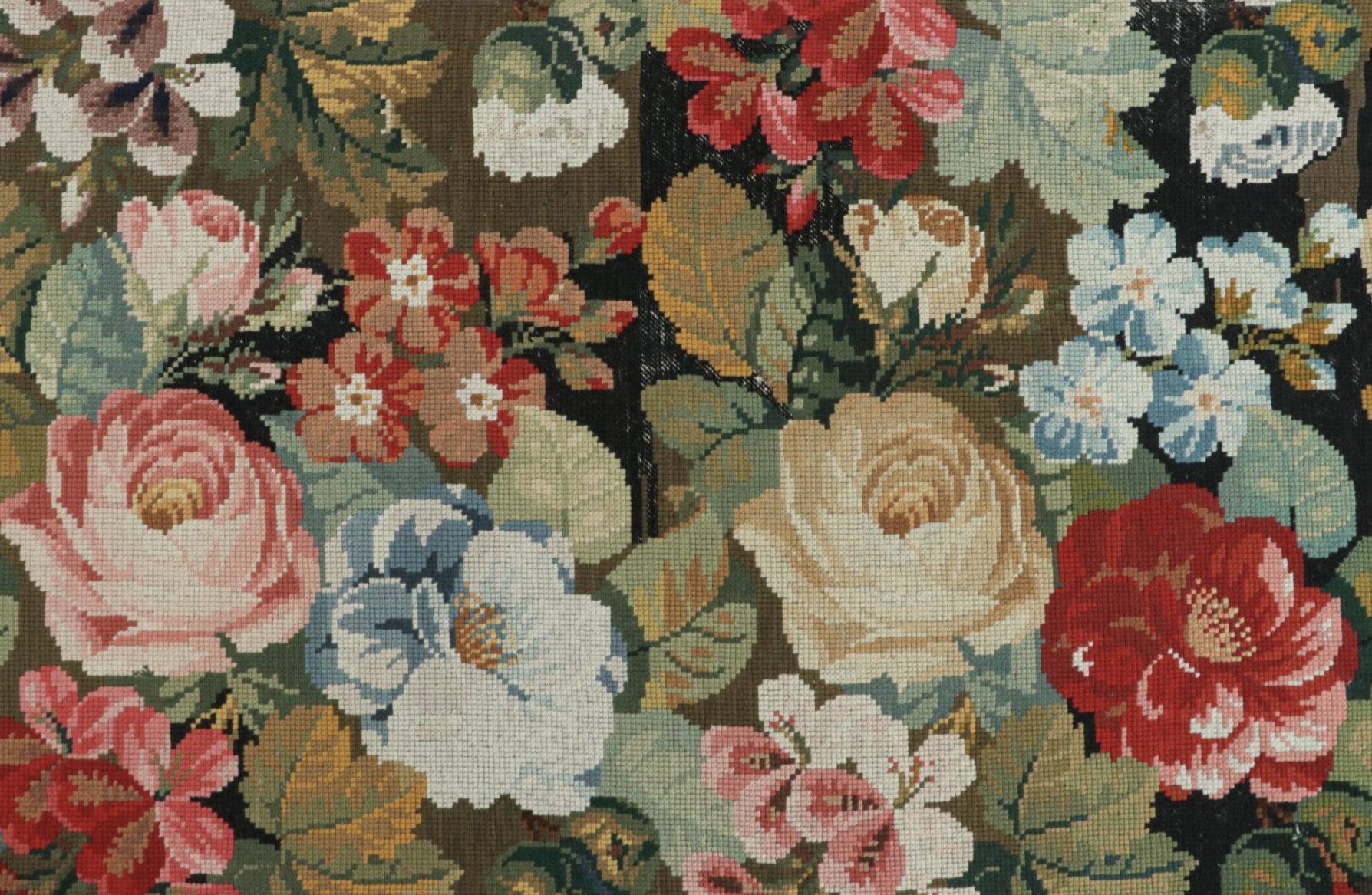
In the realm of floor coverings, needlepoint rugs occupy a singular position.
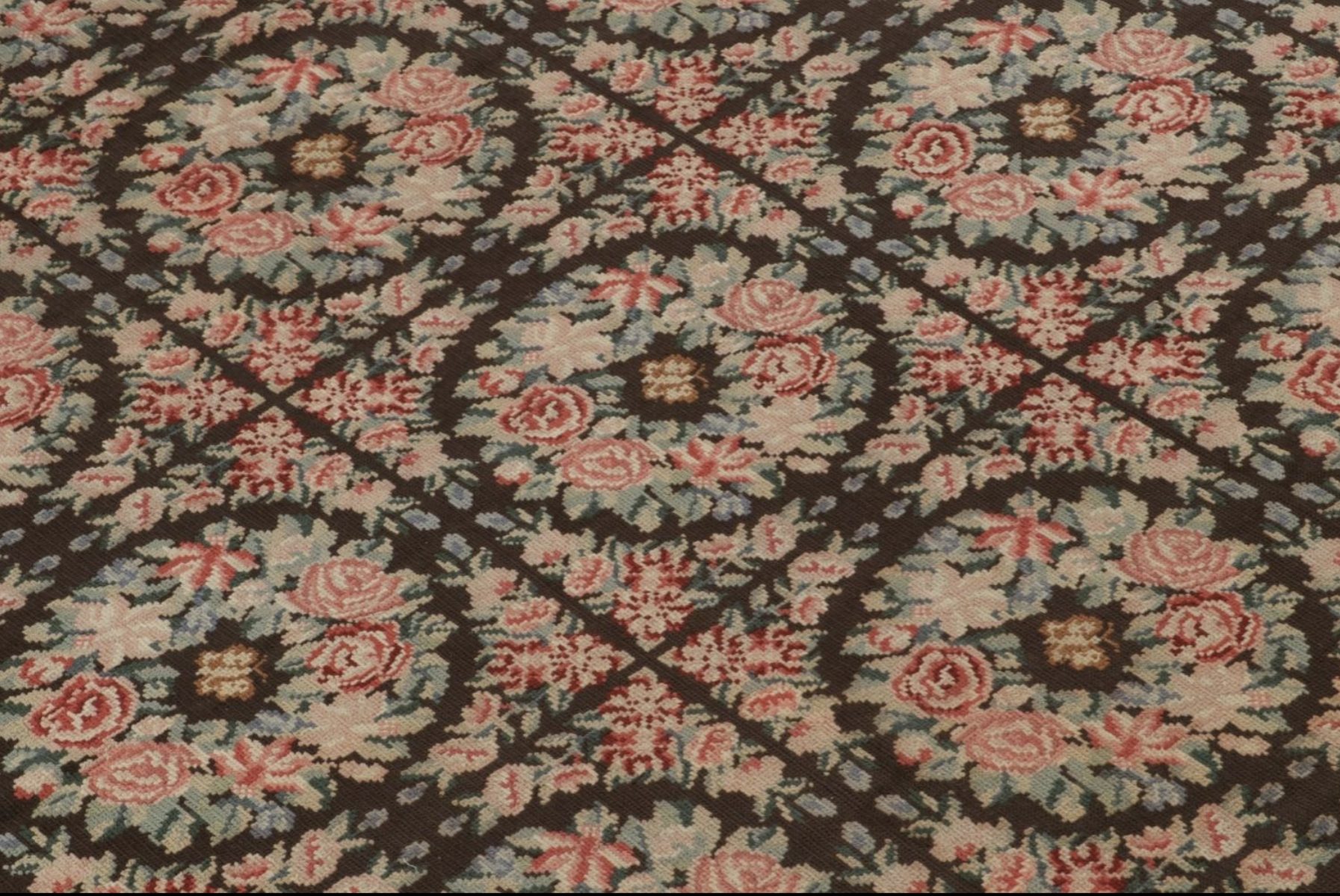
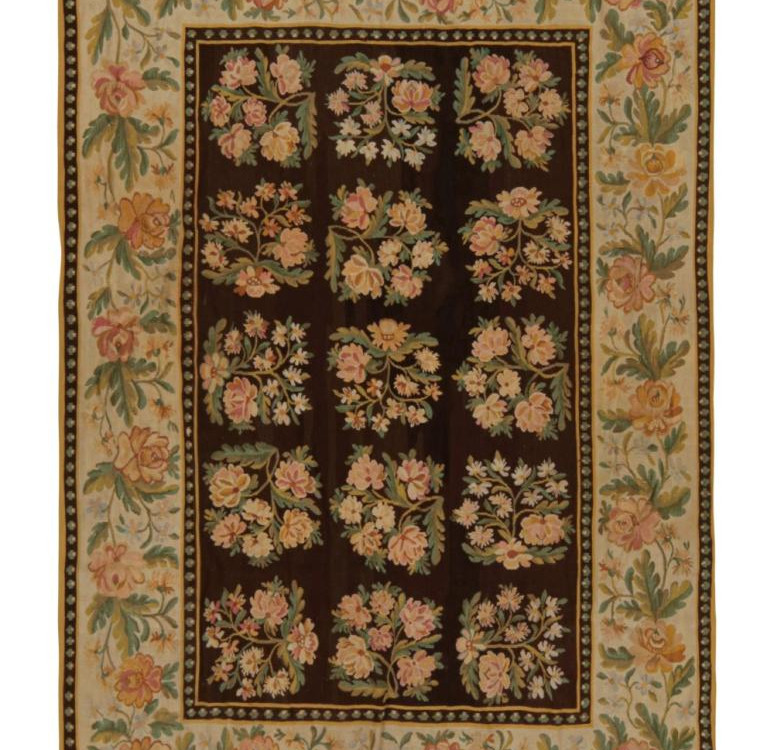
These laboriously hand-stitched masterpieces, with their characteristically tight petit point and gros point stitches, represent the intersection of European embroidery traditions and the decorative arts.
Unlike their knotted or woven counterparts from the Orient, needlepoint rugs emerged from the drawing rooms of 17th and 18th century European nobility.
The technique, an extension of tapestry-making traditions, involves working wool yarn through a canvas ground in small, diagonal stitches – creating surfaces of extraordinary definition and precision.
History of Needlepoint Rugs
The golden age of needlepoint flourished under Louis XIV’s patronage at the French court.
The workshops of the Savonnerie manufactory produced not only pile carpets but also needlepoint pieces of unprecedented refinement.
These rugs, with their Baroque scrollwork and acanthus leaves, set the aesthetic standard that would influence needlepoint design for centuries.
The distinctive style of needlepoint rugs emerges from a rich confluence of decorative movements.
Their aesthetic carries traces of multiple influences: the precision of Persian miniatures, the grandeur of French Baroque design, and the delicacy of English botanical illustrations.
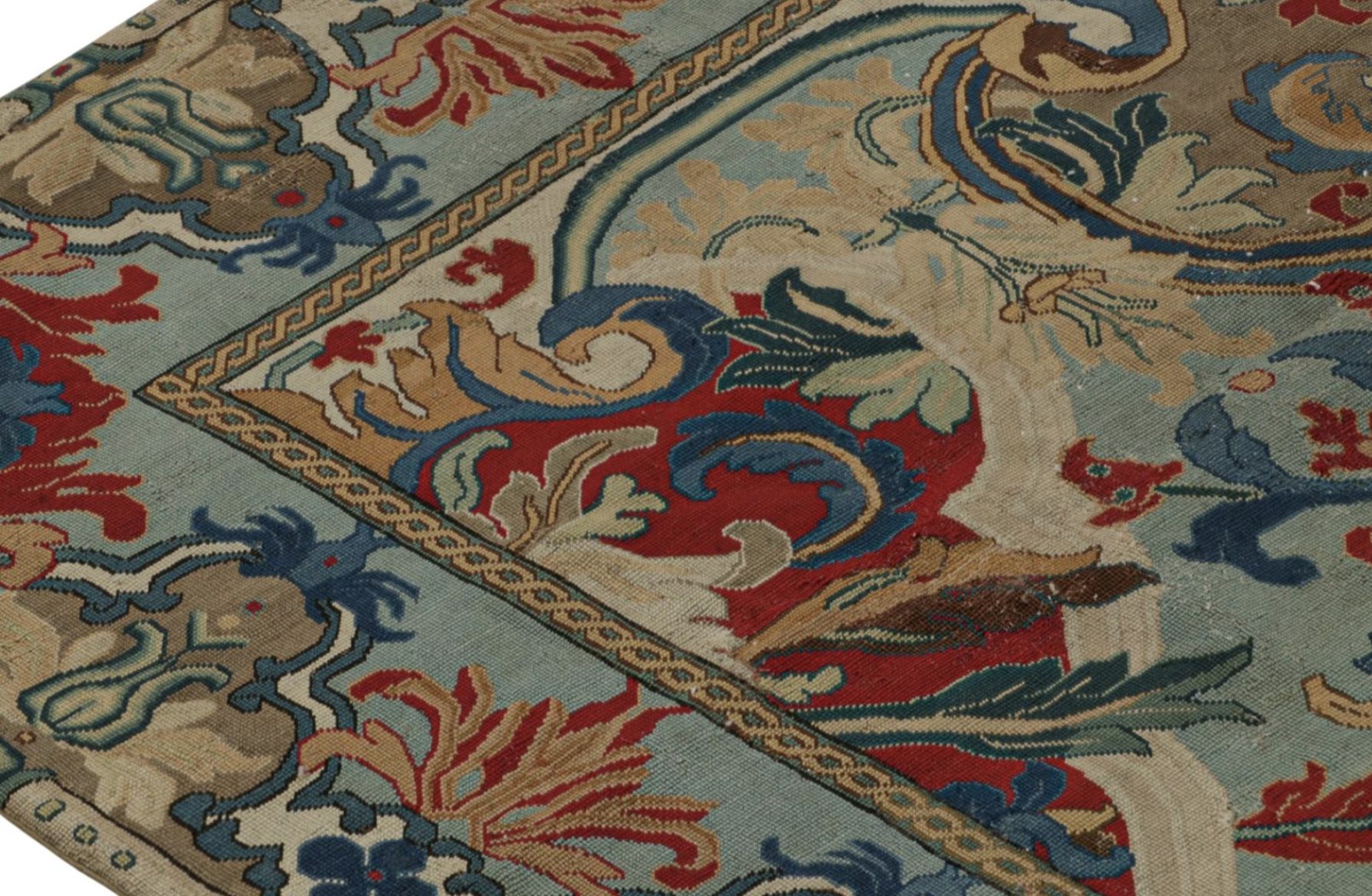
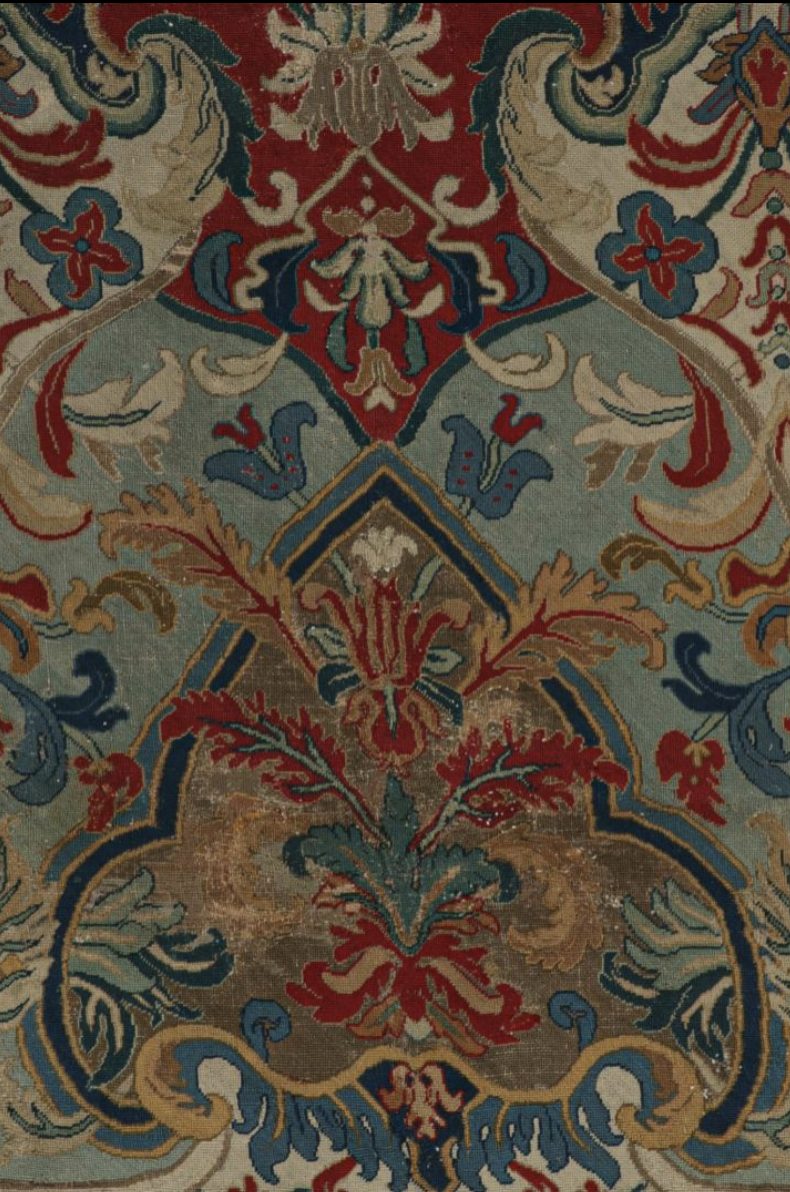
Jacques Doucet, the Parisian couturier and art collector, commissioned pieces that merged Art Nouveau’s sinuous forms with the refined techniques of traditional needlepoint.
These carpets, often featuring stylized peacock feathers and climbing vines, exemplified the period’s fascination with organic forms and decorative excess.
Different Design Confluences
The medium’s unique ability to capture painterly effects attracted notable artists. William Morris’s workshops produced needlepoint designs that embodied his philosophy of integrated craftsmanship.
His “Strawberry Thief” pattern, originally conceived for fabric, found new expression in needlepoint, where the tight petit point stitches could capture the intricate detail of intertwining birds and fruit.
The Aesthetic Movement of the 1870s and 1880s particularly embraced needlepoint’s possibilities.
E.W. Godwin’s Anglo-Japanese designs translated beautifully to the medium, their spare geometries and asymmetrical compositions proving ideal for the precise grid of needlepoint canvas.
These pieces marked a decisive break from the naturalistic excesses of mid-Victorian design.
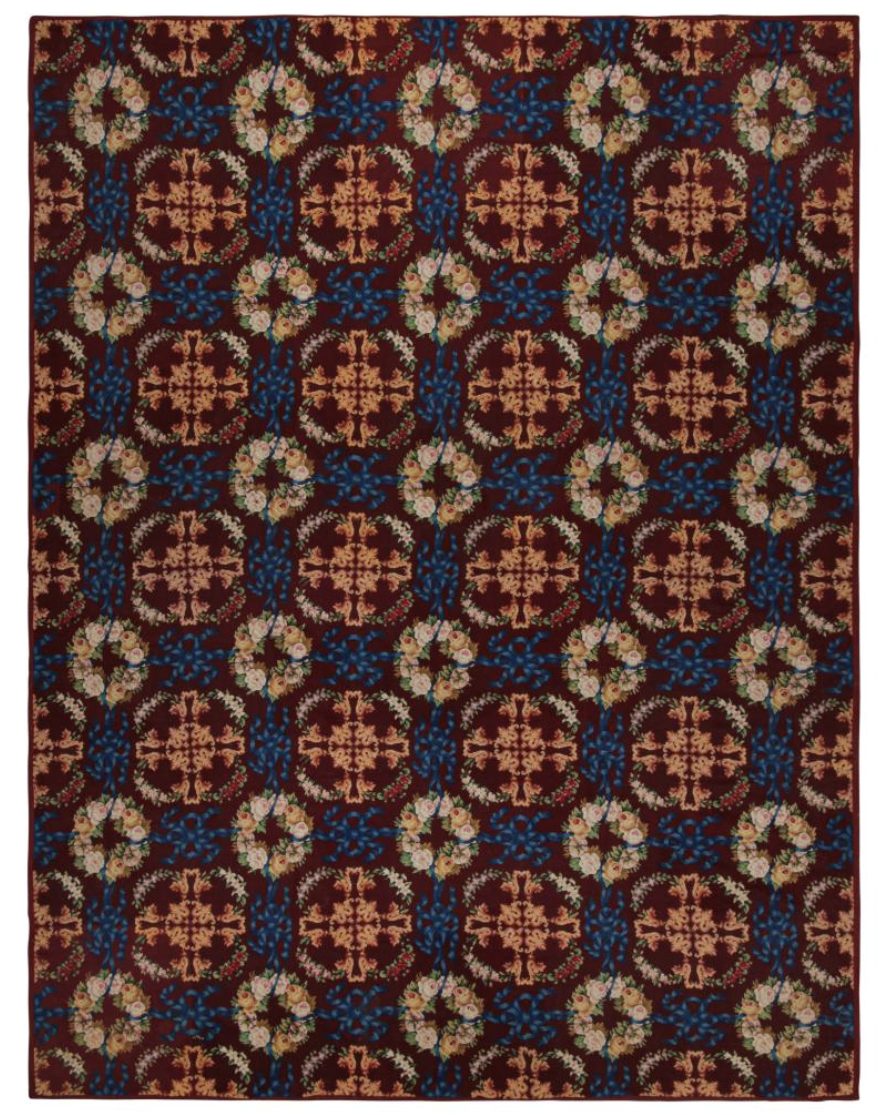
Contemporary designers have found fresh relevance in needlepoint’s pictorial potential. Modern designers’ recent experiments with the form play with scale and abstraction, while maintaining needlepoint’s characteristic precision.
These new designs often incorporate Modernist elements – Bauhaus-inspired geometries and Memphis Group color palettes – reinterpreted through this traditional medium.
In terms of manufacture, the great European workrooms developed sophisticated color theories specific to needlepoint. The Aubusson workshops were renowned for their shading techniques, using up to twenty gradations of a single color to achieve subtle modeling effects.
This approach influenced later color theorists, including Josef Albers, whose “Interaction of Color” principles find surprising parallel in traditional needlepoint shading methods.
Significance of Needlepoint Rugs
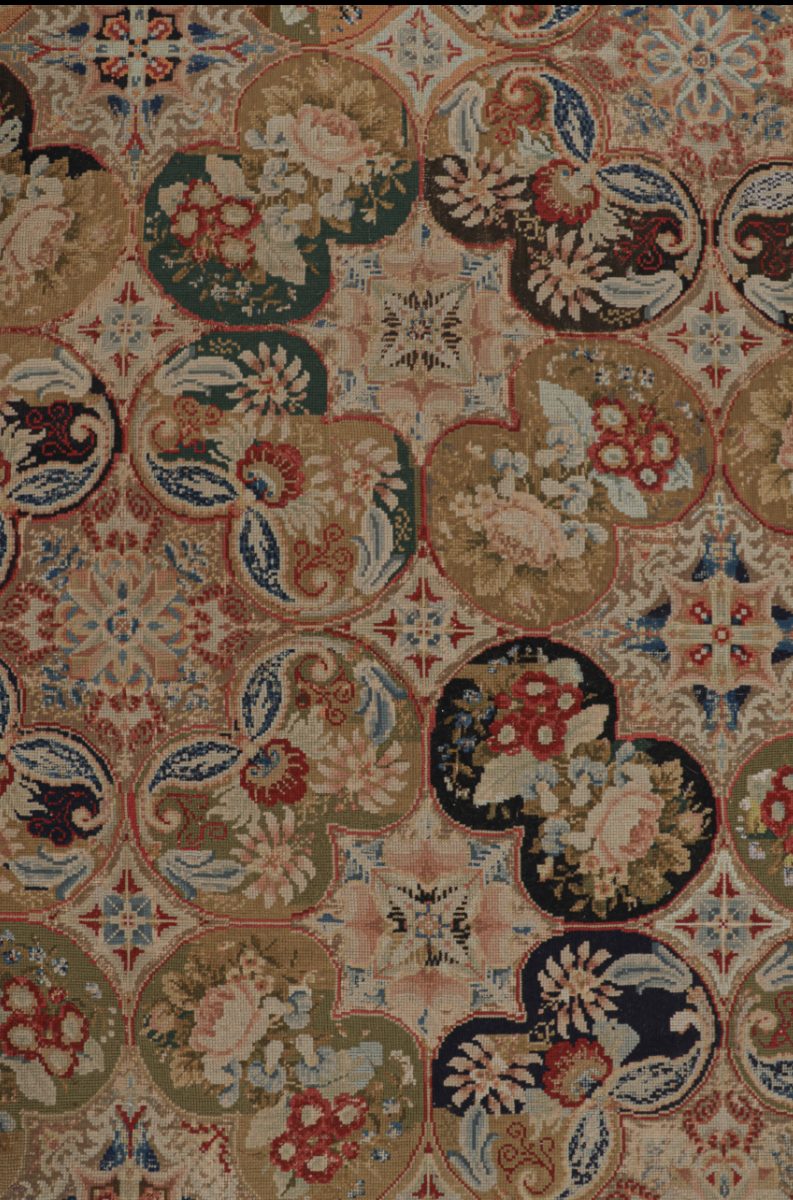
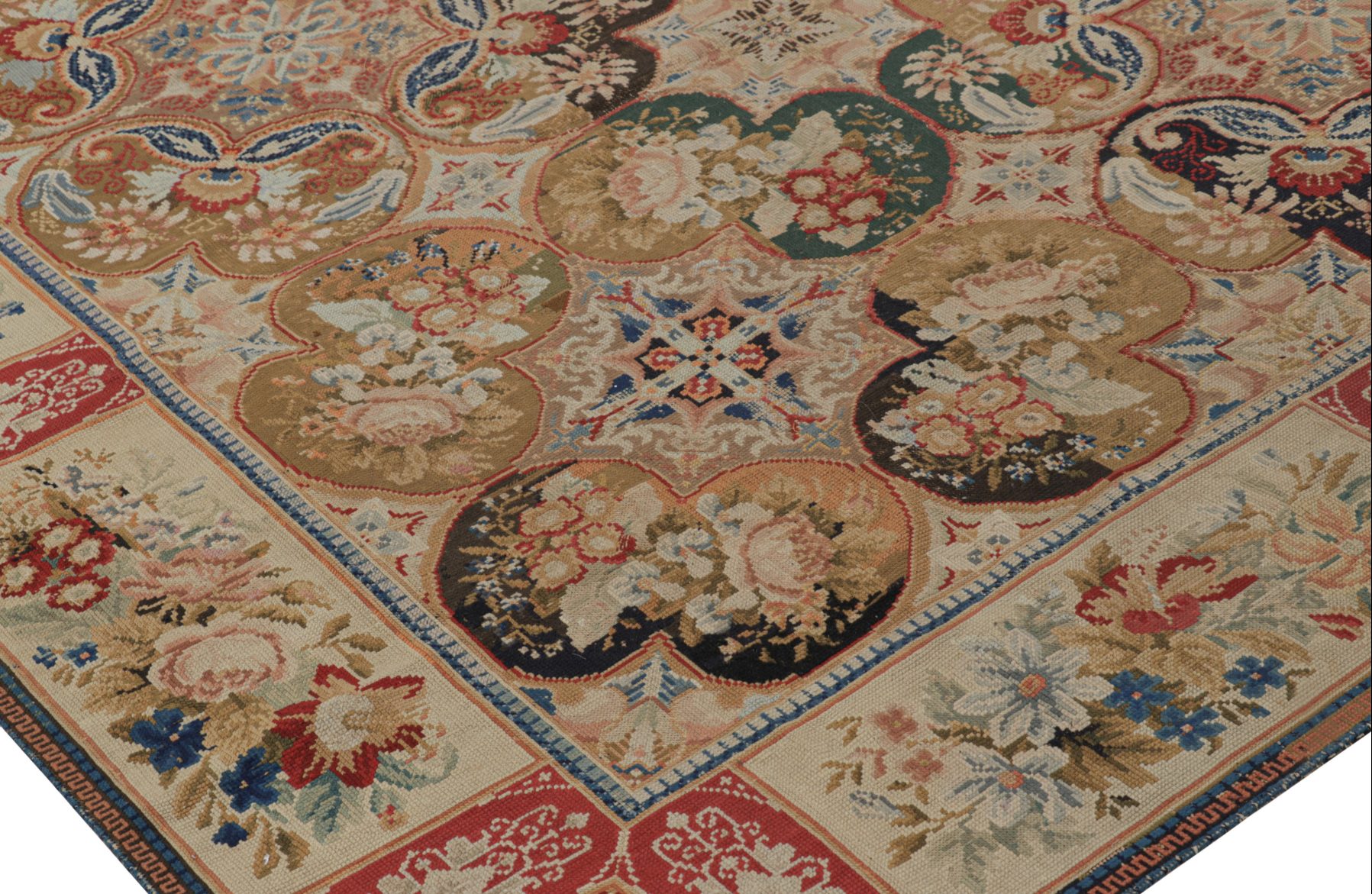
What distinguishes needlepoint from other styles is its ability to render intricate pictorial designs with almost painterly precision. The petit point stitch – working at 18-20 stitches per inch – allows for subtle gradations of color and detail impossible in traditional pile carpets.
This technical advantage made needlepoint the preferred medium for reproducing complex decorative schemes, from Chinese-inspired chinoiserie to neoclassical medallions.
The revival of interest in needlepoint among contemporary collectors speaks to its unique position at the intersection of fine and decorative arts.
These pieces, whether antique or contemporary, carry forward a tradition of meticulous craftsmanship while remaining open to artistic innovation.
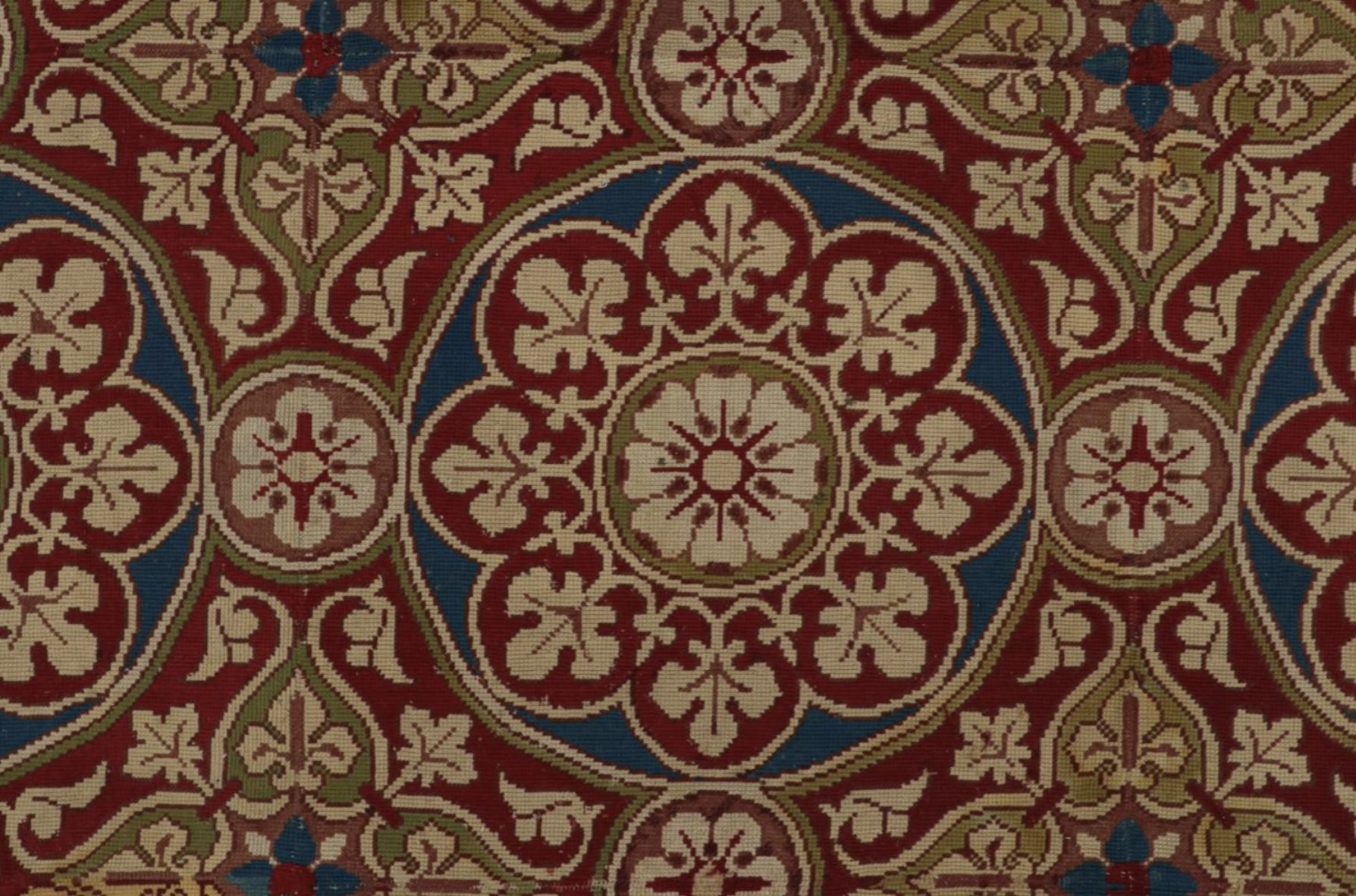
Their presence in major collections confirms their significance in the canon of decorative arts. Yet perhaps their greatest achievement lies in their ability to bring museum-quality art into lived spaces, creating environments where history, craftsmanship, and contemporary design meet in perfect harmony.
The legacy of needlepoint rugs extends beyond their decorative function.
They represent a continuous thread of European decorative arts, linking the grand traditions of court patronage to contemporary design practice.