
The World of Period Piece Rugs and Kilims: Provenance, Style, and Collecting Masterworks
August 18, 2025
Rug of the Week Series III: Power, Pattern, and Politics in French Needlepoints of the Second Empire
August 29, 2025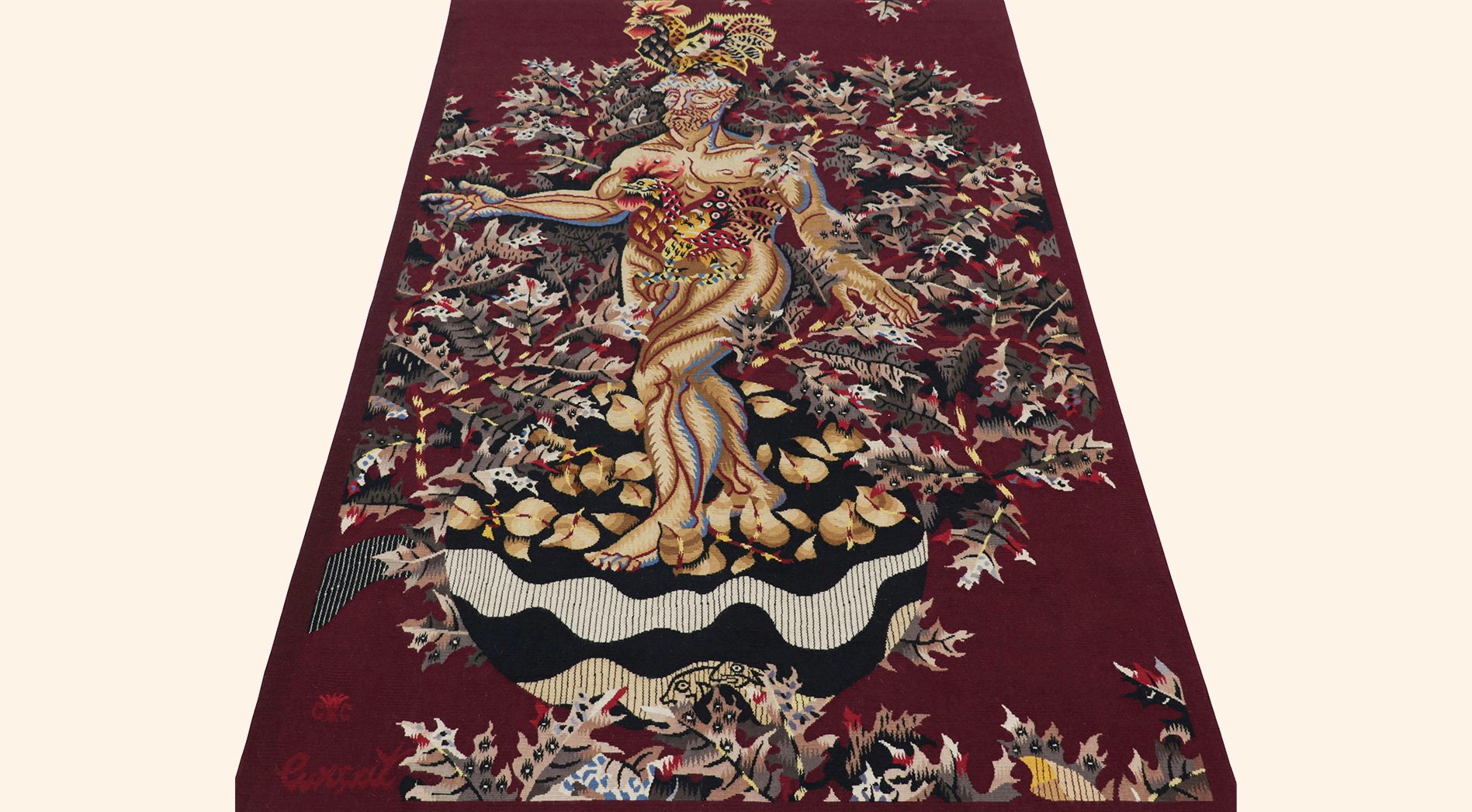
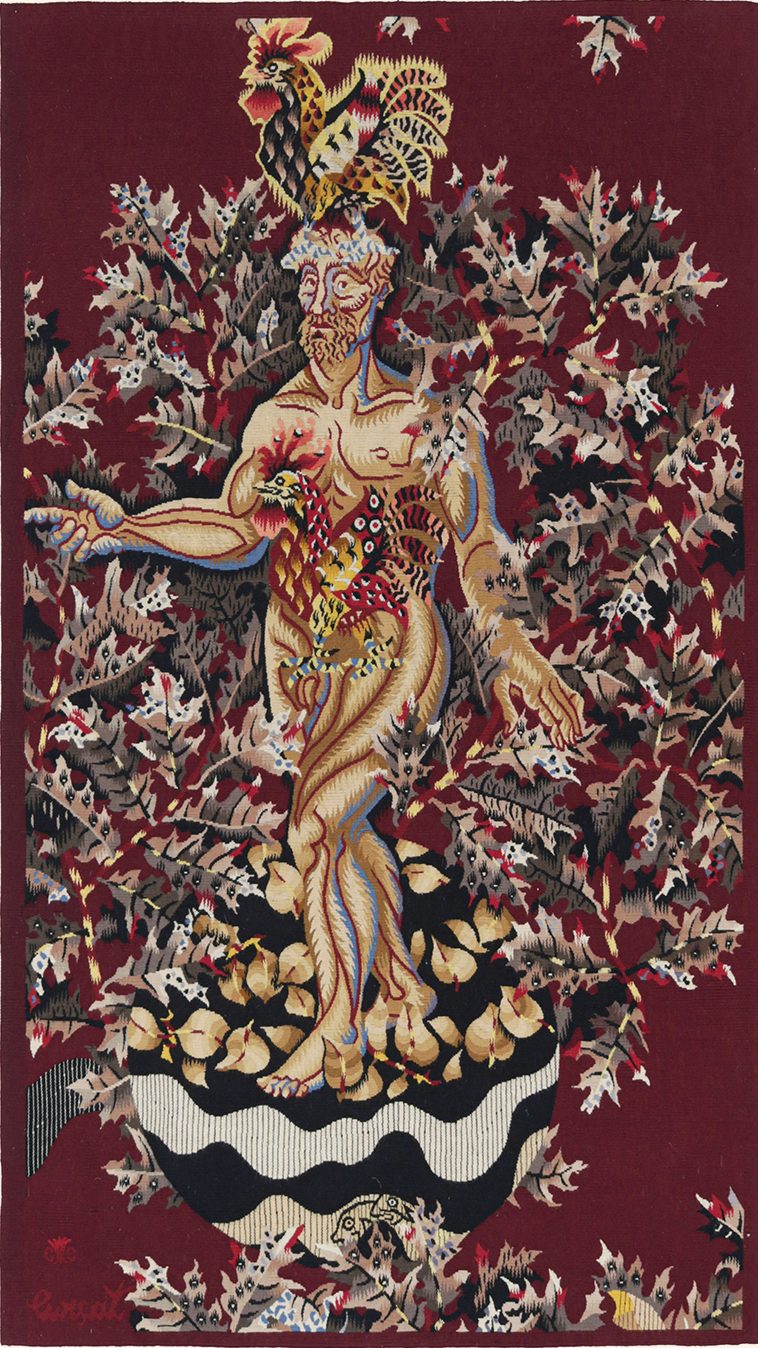
Some works enter a room as objects; others arrive as events. Jean Lurçat’s L’Homme does not merely hang—it presides. It does not wait for you to look; it looks back. Woven in postwar France, at a time when the language of beauty had been shattered by history, this tapestry is a declaration: that art must outlast its maker, and that a wall can bear more than ornament—it can bear witness.
The Eternal Sentinel of Human Dignity and Earth’s Memory
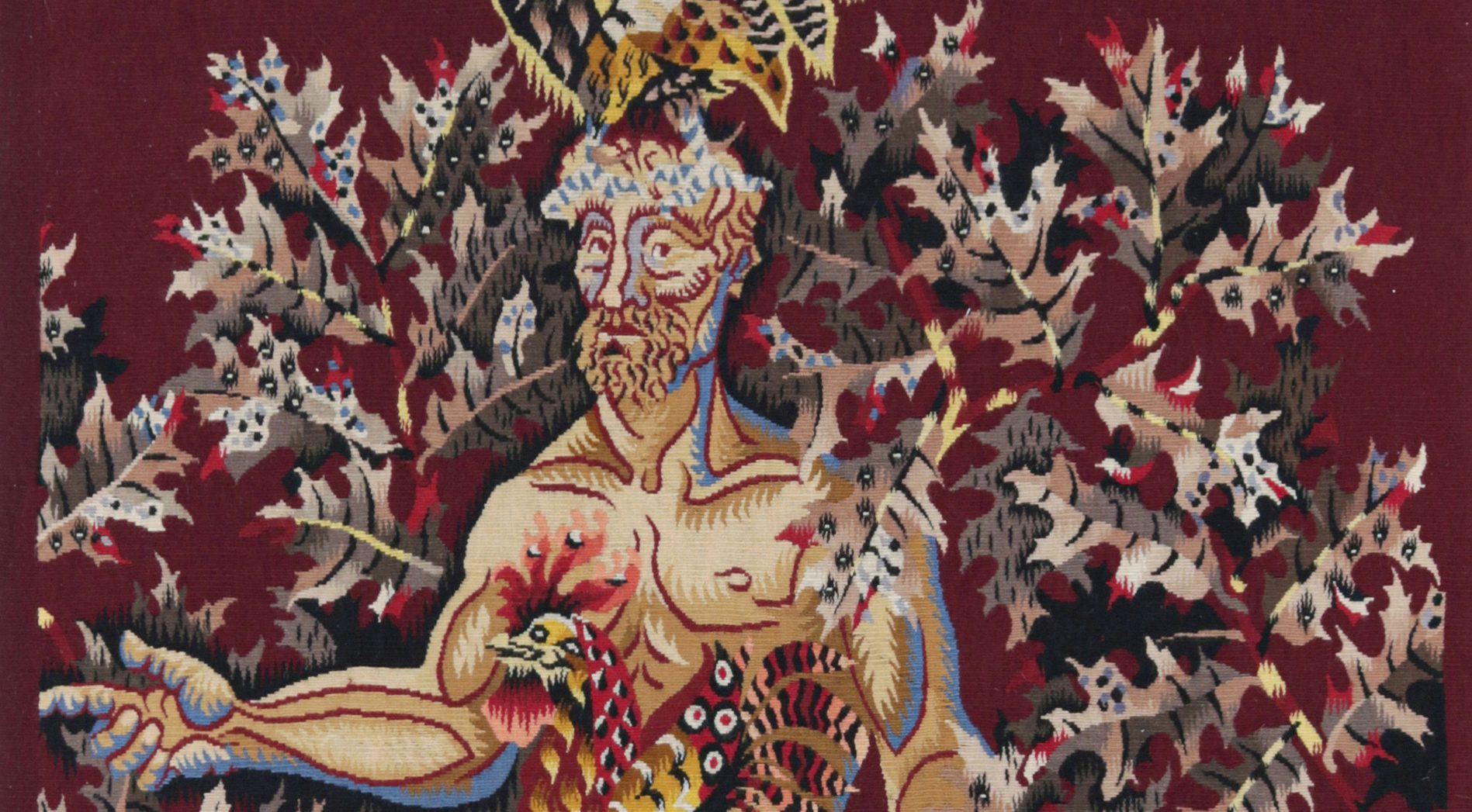
The man here is not merely a figure but a totem—an emblem of humanity rooted in the soil, crowned with nature’s defiance. Lurçat, whose postwar revival of the Aubusson tapestry tradition redefined its purpose, would say this figure is not a portrait but a mirror: a reflection of what dignity looks like when stripped of ornamentation, yet woven with the richest colors of survival.
Lurçat and the Death of Decorative Silence
When Jean Lurçat returned to France after the devastation of World War II, the art world was still fractured. Modernism had splintered into competing ideologies—some obsessed with purity of form, others with pure rupture. Tapestry, in this climate, was considered a genteel anachronism, suitable for chateaux but irrelevant to the crises of the modern world.
Lurçat disagreed. To him, tapestry was not a dying craft; it was a medium with the gravitas of fresco and the intimacy of painting, yet with a resilience neither could match. While his contemporaries—Picasso with his political cubism, Léger with his industrial optimism, and Matisse with his paper cut-out serenity—sought modernist reinvention, Lurçat sought modernist reclamation. He believed tapestry could be a voice of political conscience, a woven manifesto that outlived the fleeting spectacle of gallery shows.
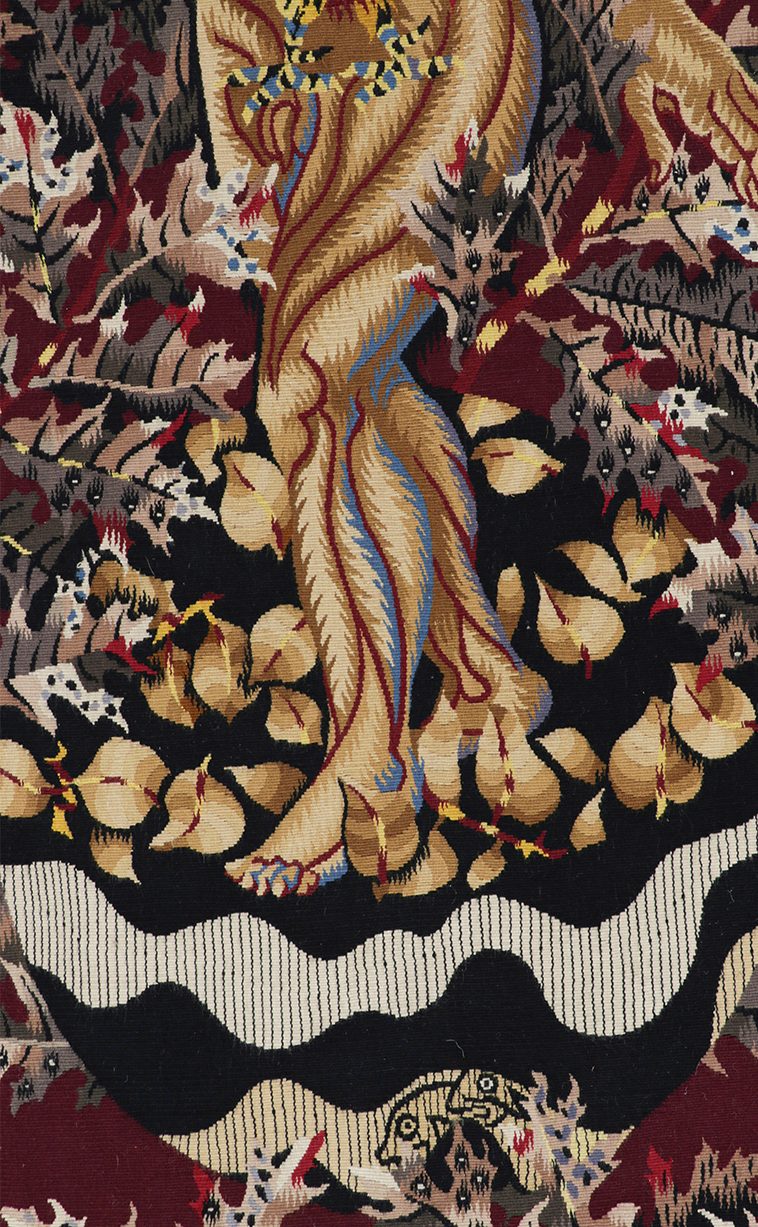
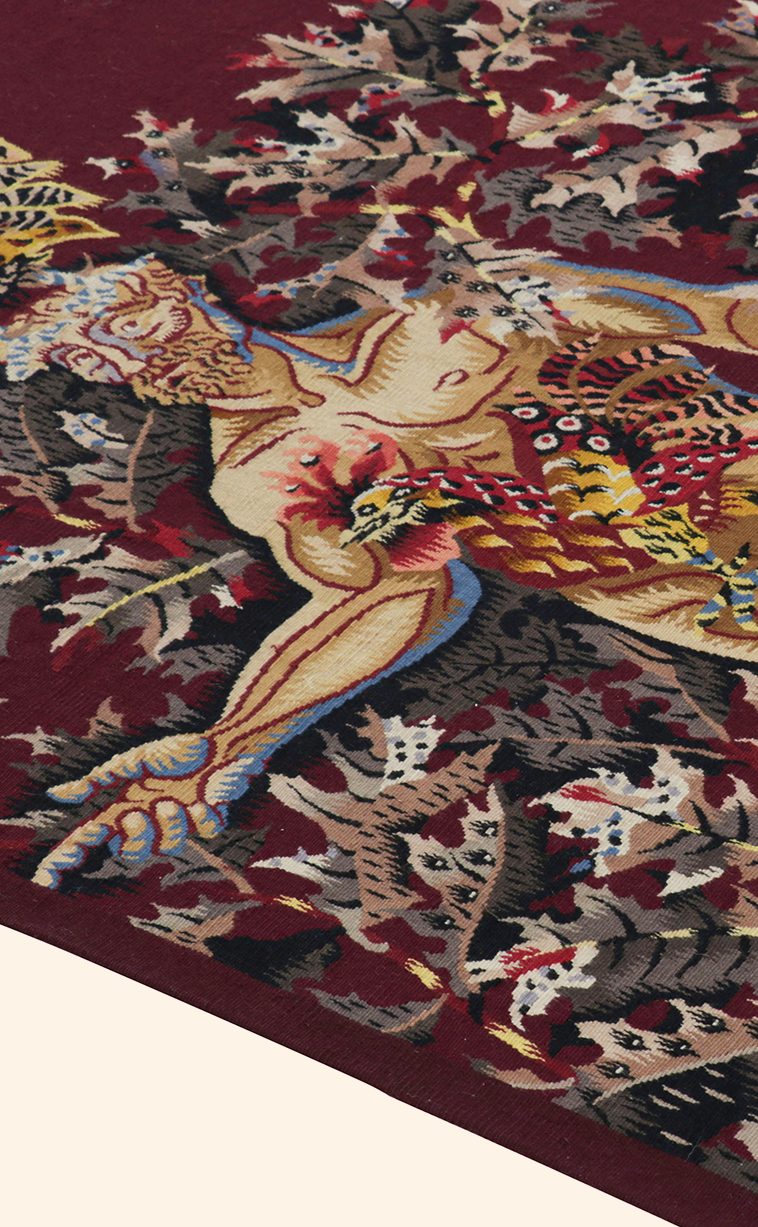
In L’Homme, this belief is palpable. The figure’s stance is rooted, his gaze forward, his body clothed in the skin of seasons and the crown of dawn. Here, nature is not backdrop—it is anatomy.
Design as Resistance
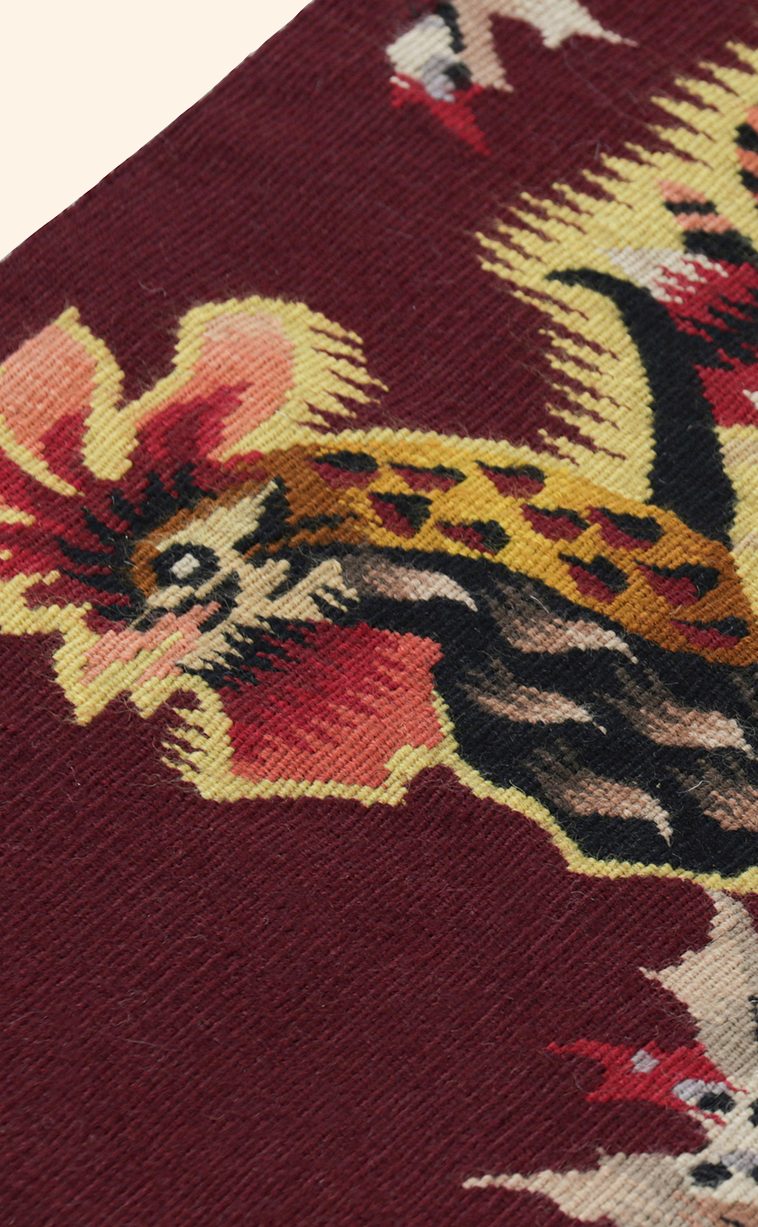
To understand the force of this work, one must consider its context: postwar France, where ruins were not metaphors but street corners. The rooster atop the figure’s head is more than a rustic motif—it is France’s unofficial emblem, a symbol of vigilance and rebirth. For Lurçat, incorporating it was an act of quiet patriotism and an assertion that national identity could survive devastation without resorting to nostalgia.
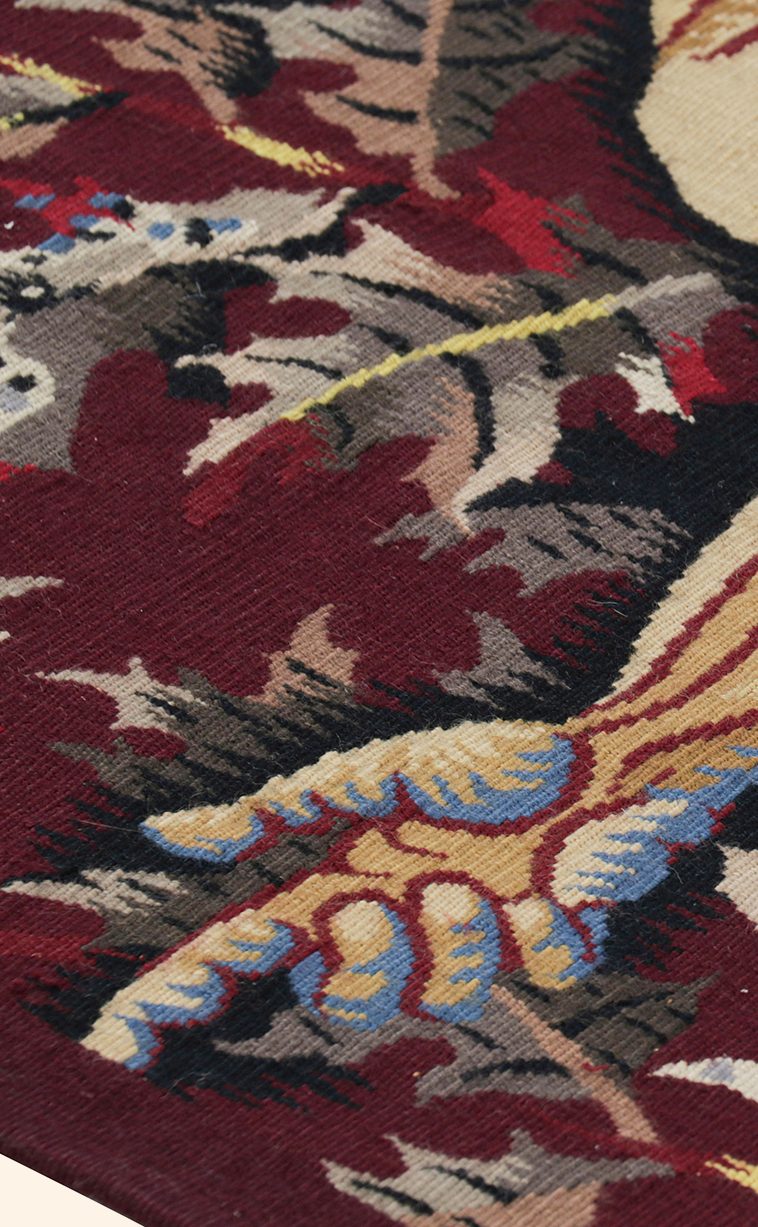
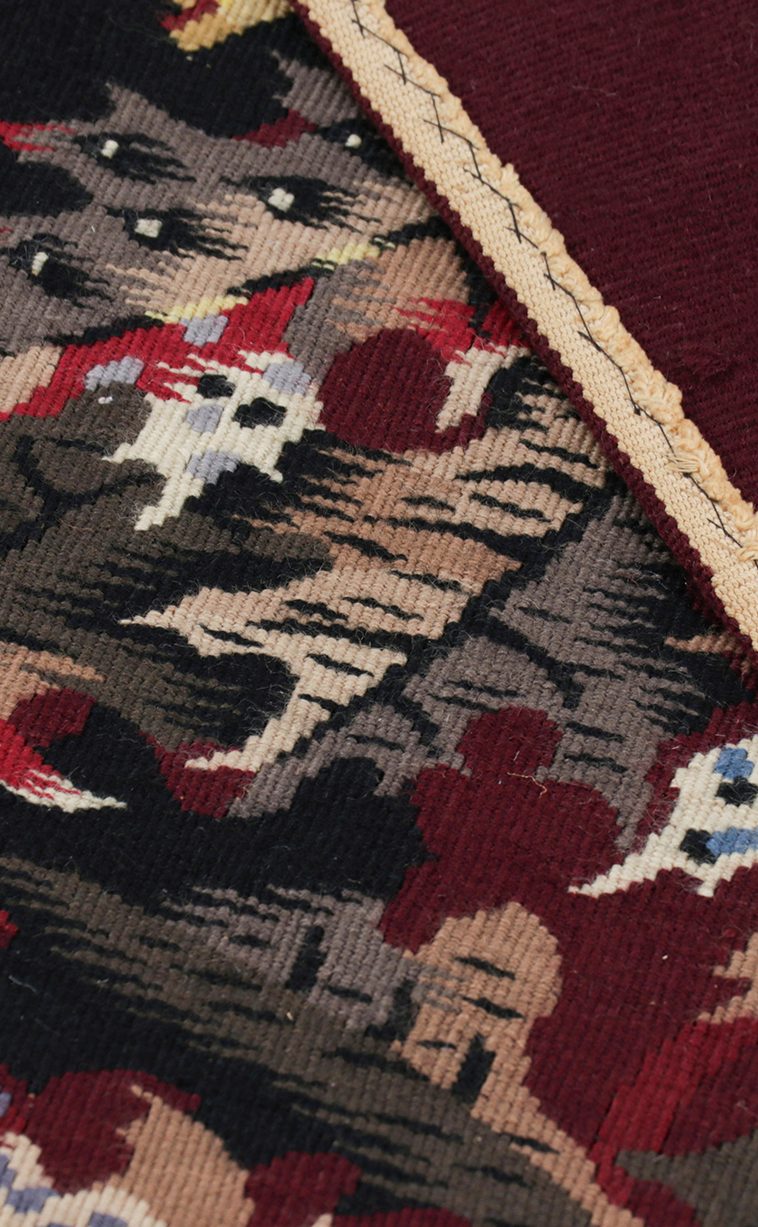
The background’s oak leaves—rendered with sharp geometries and almost militaristic precision—evoke both camouflage and cathedral glass. They suggest protection, endurance, and the cyclical nature of life. In an era where industrial materials and brutalist architecture were dominating urban reconstruction, Lurçat’s palette of reds, golds, and earthy browns was a reminder that humanity’s rebirth was inseparable from its ecological roots.
The Lurçat Method: Tapestry Weaving with Meaning
Lurçat’s contribution to tapestry cannot be overstated. Before him, tapestry design in Aubusson often mimicked painting, with nuanced gradients and painterly illusions that pushed the loom to imitate the brush. Lurçat rejected this mimicry. He insisted on flat planes of saturated color, bold outlines, and compositions that acknowledged the tapestry’s architectural scale. This was not simply a stylistic choice—it was a statement that tapestry should embrace its own language rather than masquerade as another medium.
In L’Homme, this manifests in the crisp delineation of each leaf, the stylized musculature of the central figure, and the rhythmic interplay of shadow and light. This was a tapestry meant to command the scale of a wall—not a framed corner. For architects and designers, this approach meant that a Lurçat tapestry could define a space the way a fresco might in a Renaissance palazzo: as a permanent, integral part of the environment, not a removable accent.
Contemporaries and Counterpoints
Where Lurçat diverged from contemporaries like Le Corbusier or Eero Saarinen was in his refusal to treat nature as mere inspiration. While modernist architects often abstracted nature into forms and patterns to serve functionalism, Lurçat restored nature as protagonist. His work aligns more closely with the organic humanism of Alvar Aalto, yet it is far more politically charged.
Compared to Picasso’s Guernica, which used painting as an anti-war cry, L’Homme is subtler but no less political. It proposes that the survival of humanity is contingent upon its reintegration with the natural world, an idea that resonates with the ecological consciousness that was only beginning to emerge in the mid-20th century.
The politics of L’Homme are about reasserting the place of humanity within a living system—a statement that, in the atomic age, was quietly radical. The rooster is watchful but not aggressive. The man is grounded, not in dominance, but in rootedness.
In the postwar years, France was grappling with modernization, decolonization, and the shadow of occupation. Lurçat’s tapestries did not escape into fantasy; they confronted these realities through symbols that resisted easy consumption. They demanded that the viewer slow down, absorb, and remember.
The Designer’s Passion: Integrating Lurçat Today
For today’s top-tier designers, L’Homme offers more than historical significance—it offers a masterclass in the fusion of art, architecture, and ideology. In a contemporary interior, this tapestry would not be a passive wall hanging. It would be an axis around which the room turns, dictating palettes, materials, and even spatial flow.
In a penthouse gallery, its earthy reds could be echoed in walnut paneling and burgundy leather. In a modernist glass house, it could stand in defiant contrast to steel and concrete, a reminder of the human touch in an age of machine precision. In a cultural institution, it could serve as the thematic anchor for exhibitions on art as resistance.
Why Lurçat’s Tapestry Still Matters
In an era where design trends can evaporate in the time it takes to scroll a feed, Lurçat’s work endures because it is grounded in convictions deeper than aesthetics. His tapestries are monuments, built not just for beauty but for permanence of thought.
L’Homme is not simply a work of textile art—it is a postwar declaration that art must be both beautiful and useful, not in function, but in conscience. For the collector who understands this, acquiring a Lurçat is not merely an addition to a portfolio—it is an alignment with a philosophy.
And so, decades after its weaving, L’Homme stands not as a relic of mid-century France but as a contemporary challenge: in our own fractured world, will we choose to be sentinels, rooted in dignity, or will we allow ourselves to drift from the soil that sustains us?