
Savonnerie, Aubusson, Gobelins: The Three Ateliers That Defined What Europe Believed a Rug Could Be
May 15, 2026
Of Royal Culture and Inheritance: The Silk Heriz Triclinium Carpet of 1868, Perhaps the Finest Surviving Example in the World
May 29, 2026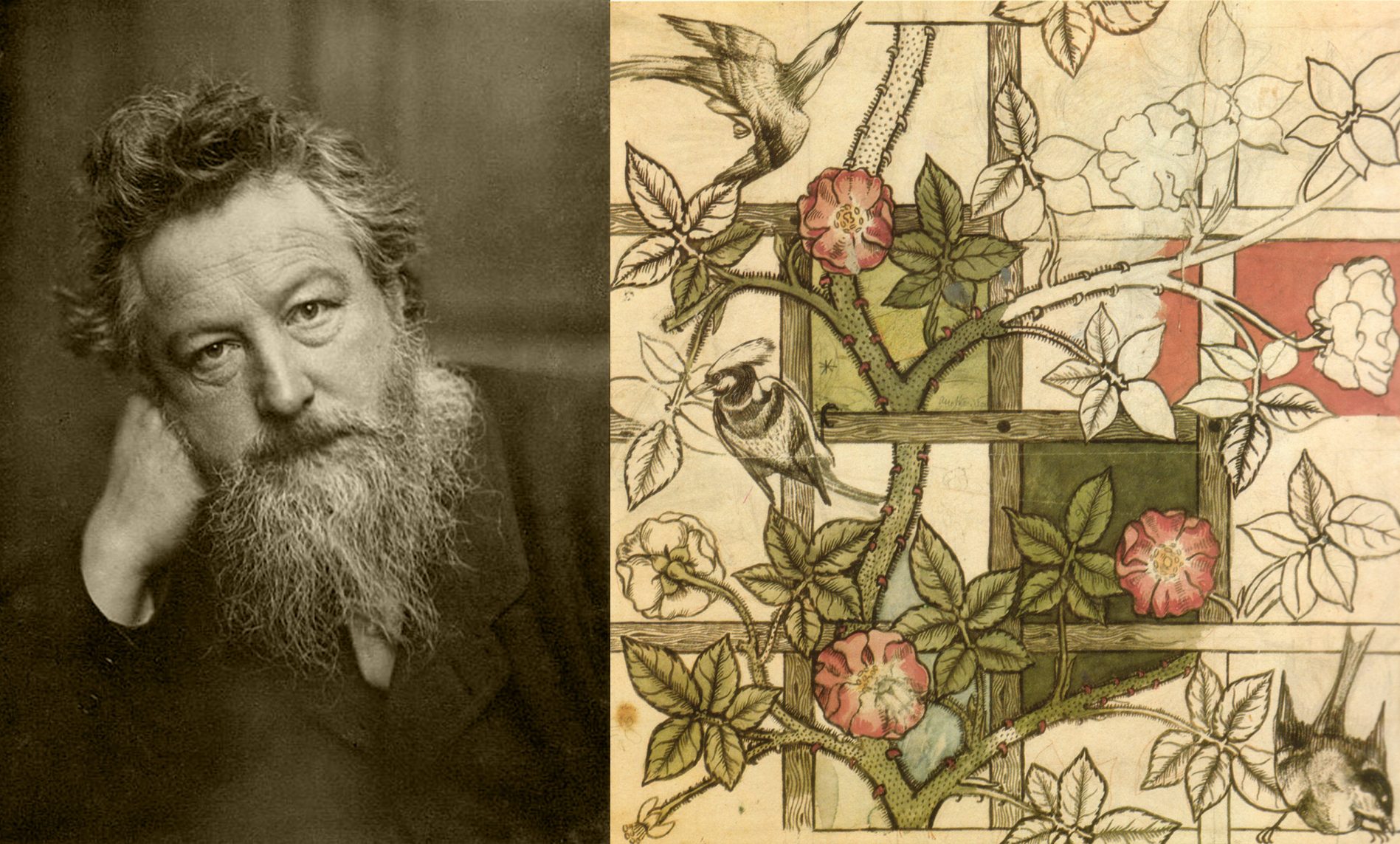
In the winter of 1883, William Morris stood before a room full of wool merchants, manufacturers, and assorted Victorian worthies in a lecture hall in Birmingham and said something that no one in that room was prepared to hear. The decorative arts, he told them, were not decorative at all. They were the most serious form of human making and their degradation under industrial production was not an aesthetic problem but a civilizational one. He had brought, as he often did, an Oriental carpet to make his point. Then he said, in effect: this is what we have lost the capacity to make, and until we recover it, we have no business calling ourselves a culture.
Morris collected Persian and Anatolian carpets with the seriousness of a scholar and the instinct of a designer who understood, earlier than almost anyone in the Victorian West, that the handmade textile was not a luxury object but an argument about labor, about beauty, about the relationship between the hand and the mind. He studied their structure. He reproduced their logic in his own Hammersmith rugs, hand-knotted at his workshops from 1879 onward, their curvilinear florals and dense fields a direct conversation with the Persian tradition he revered. The carpet, for Morris, was the floor of a better civilization. Everything else from the wallpaper, the furniture, the glazed tiles was built on top of it.
Forty years later, in Paris, Paul Poiret was making the same argument in an entirely different language.
The Pasha of the Faubourg
Poiret had come up through Jacques Doucet’s atelier, the same Doucet who would later commission Ivan Da Silva Bruhns to produce Cubist carpets for what remains the most radical private interior of the twentieth century and he arrived at his own house in 1903 carrying an education that was equal parts couture and connoisseurship. The Metropolitan Museum’s Costume Institute has written of him that he was fashion’s last great Orientalist and its first great modernist simultaneously; a contradiction that, examined closely, is the most interesting thing about him.
Where Morris had used the Oriental carpet as a moral instrument, Poiret used it as a sensory one. Color arrived first in his interiors: where the Belle Époque had favored what he himself described as swooning mauves and washed-out hortensias, he brought Persian lacquer red, Safavid cobalt, the deep saffron of Mughal court painting. Then, with the founding of Atelier Martine in 1911, his decorative arts school, staffed by working-class girls he set to drawing from nature without academic instruction, believing untrained observation produced a visual honesty that formal education invariably destroyed; the Oriental carpet moved from inspiration to instrument.
The room Poiret made, documented in Gazette du Bon Ton and the illustrated journals of the 1910s, was the fullest realization of what Morris had theorized: a total interior in which the carpet was not a finishing touch but the room’s primary argument. Its color palette set the chromatic register of everything above it. Its pattern established the formal logic that furniture, textiles, and objects were then obliged to answer.
When Coco Chanel, dressed perpetually in black, asked Poiret who he was mourning, he replied: “You, Madame.” He was watching his own world be dismantled in favor of a severity his sensibility could not accommodate. His house closed in 1929. But the argument he had made that the floor was the first decision, and that the Oriental carpet was the floor’s highest expression did not close with it. It passed, almost immediately, to the generation that would become Art Deco’s finest voices.
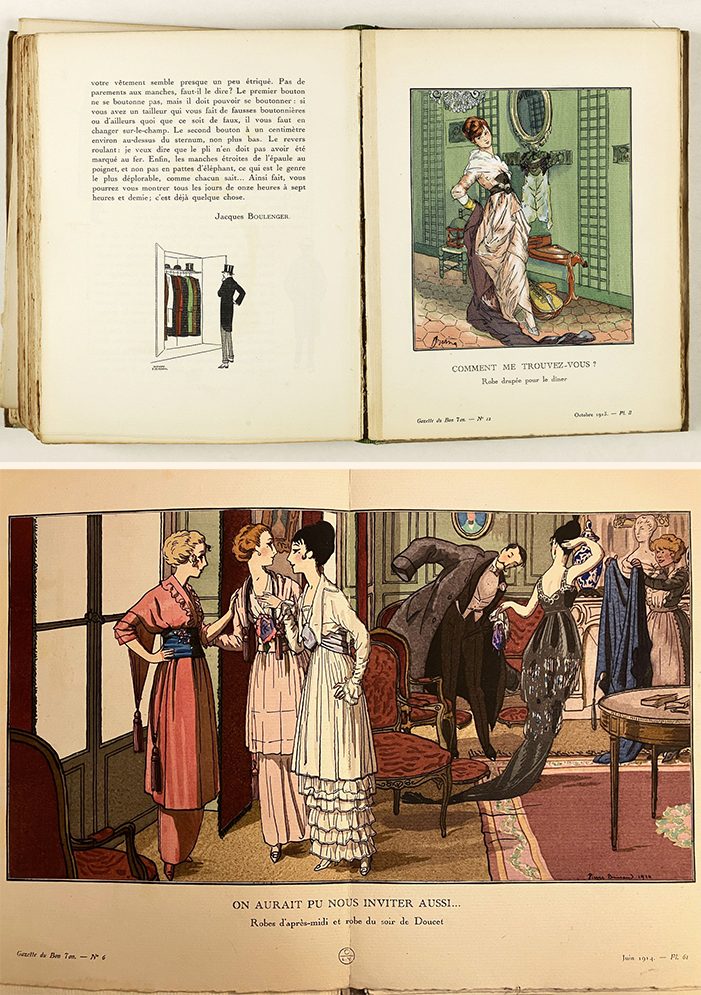
Top: Gazette du Bon Ton Art – Modes Frivolités. (1912/1913 volume), Bottom: ‘They Could have invited us …’, illustration Pierre Brissaud presenting afternoon ensembles and evening gown by Jacques Doucet for La Gazette du Bon Ton. Issue 6, Plate 61, June 1914. Pochoir print.
What Art Deco Settled
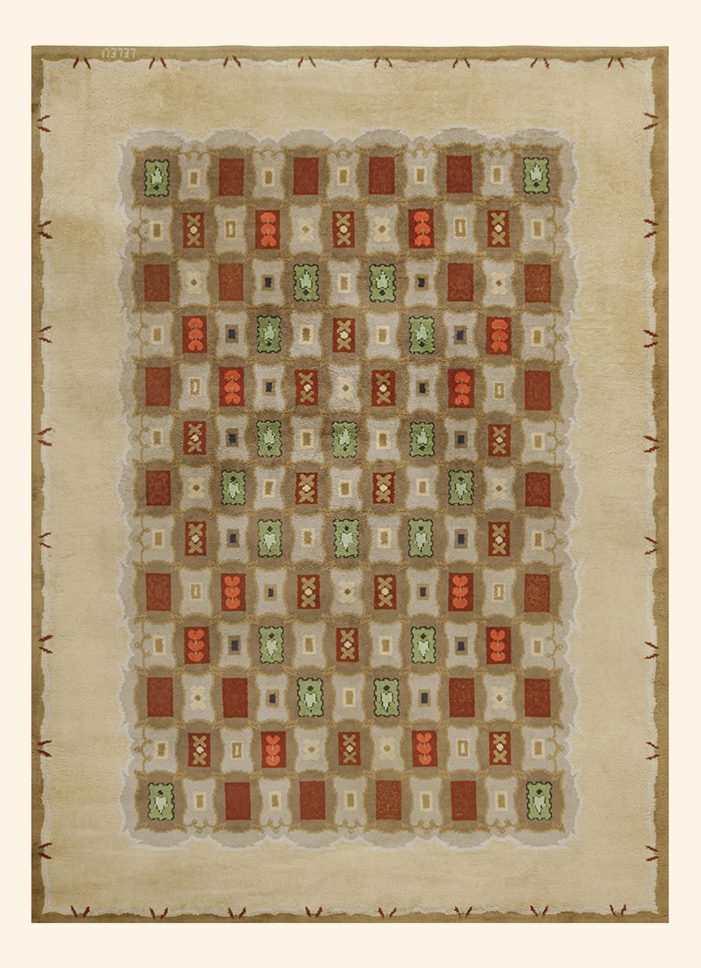
Jules and Paule Leleu made rugs with a discipline and a formal intelligence that remains, in the auction rooms of Christie’s and Sotheby’s and in the permanent collections of the Musée des Arts Décoratifs in Paris, among the highest achievements of twentieth-century French design.
The Leleu firm, founded by Jules and carried forward with equal authority by his daughter Paule, one of the most underwritten figures in the history of French decorative arts understood the carpet as the room’s structural foundation in a way that neither Morris’s moral framework nor Poiret’s sensory fantasia had quite articulated. A Leleu interior was conceived as a total environment: walls, furniture, lighting, and floor speaking a single design language with the precision of a musical score. The carpet was not background. It was the bass note from which every other element took its pitch.
Their work in the 1920s was high Art Deco in its discipline, symmetrical, architecturally scaled, with stylized florals and geometric medallions in palettes of extraordinary refinement that owed something to the Persian tradition and nothing to nostalgia. By the 1930s, as the broader decorative arts moved toward streamlined geometry and restrained abstraction, Leleu moved with it producing carpets of quieter, more severe modernism that held their own against the minimalism gathering at the edges of European taste without surrendering the warmth that made them inhabitable.
Ivan Da Silva Bruhns, working in the same Parisian milieu but with a more explicitly avant-garde ambition, went further still. Born in Peru, trained in France, he became one of the most consequential carpet designers of the interwar period, producing, for patrons including Doucet and Pierre Chareau, floor-based counterparts to the Cubist and De Stijl canvases on the walls above them. Sharp diagonals. Asymmetry. Blocks of pure, unmodulated color. His contemporaries called them paintings for the floor. They were, more precisely, the floor finally insisting on equal standing with the wall.
What the Bauhaus Asked
In Dessau, simultaneously, the Bauhaus weaving workshop was asking a different question entirely and arriving, from a completely different direction, at the same conviction.
Anni Albers and Gunta Stölzl, the workshop’s most consequential figures, stripped ornament from the textile entirely and asked what remained. What remained, it turned out, was structure: the relationship between warp and weft, the logic of interlacement, the way a material distributed weight and absorbed light. The handmade textile, for the Bauhaus, was not a decorative object but an architectural one; a surface that defined space rather than adorning it.
The Bauhaus never made an Oriental carpet. But it arrived, through pure structural analysis, at the same conclusion that the Safavid court weaver had reached through centuries of accumulated practice: that a textile on the floor organizes a room in ways that nothing else can replicate. The difference was philosophical. The Safavid weaver believed this because his tradition told him so. The Bauhaus weaver believed it because she had taken the object apart and examined its bones.
Between Morris’s moral certainty, Poiret’s sensory authority, the Leleu firm’s architectural discipline, Da Silva Bruhns’s avant-garde radicalism, and the Bauhaus’s structural rigor, the twentieth century had answered its own question about what a handmade carpet was for. It was for the room. It was, more precisely, for the room’s ability to know what it was.
What Rug & Kilim Holds
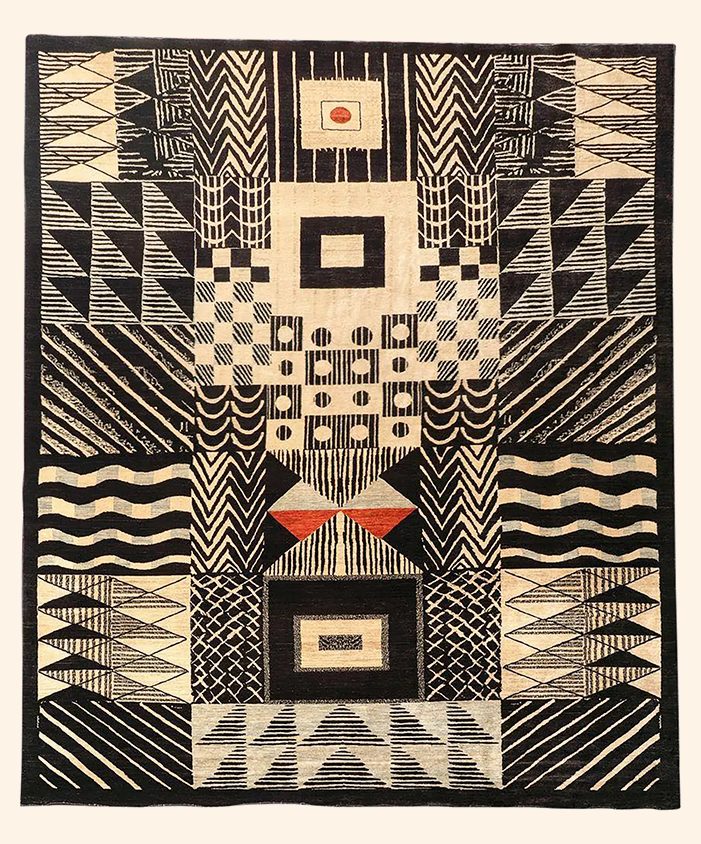
The Rug & Kilim collection of French Art Deco rugs, among them pieces from the Leleu atelier, works in the Da Silva Bruhns tradition, and custom commissions that carry this lineage into the present represents not a category of inventory but a position in this argument. These are objects that the most serious designers of the twentieth century made at the precise moment when the question of what a carpet was for had been asked with the greatest urgency and answered with the greatest intelligence.
Jahanshah Nazmiyal founded Rug & Kilim in New York in 1980 with a conviction that has governed every acquisition since: that a rug chosen with genuine knowledge, genuine feeling, and genuine rarity is among the most transformative acts available to anyone who cares seriously about how a room lives. Morris believed this. Poiret believed this. Leleu built an entire practice on this belief.
The floor is always the first decision. In the greatest rooms of every era from the Safavid court to the Art Deco salon, from the Bauhaus workshop to the highest end contemporary interiors this has never required argument. It has only ever required the right object.
At Rug & Kilim, finding that object is the only work we have ever done.