
The Rug That Made the Room: Ten Interiors Where the Carpet Was the Only Decision That Mattered
May 13, 2026
What William Morris, Paul Poiret, and the Bauhaus Each Understood About the Rug and What French Art Deco Proved
May 19, 2026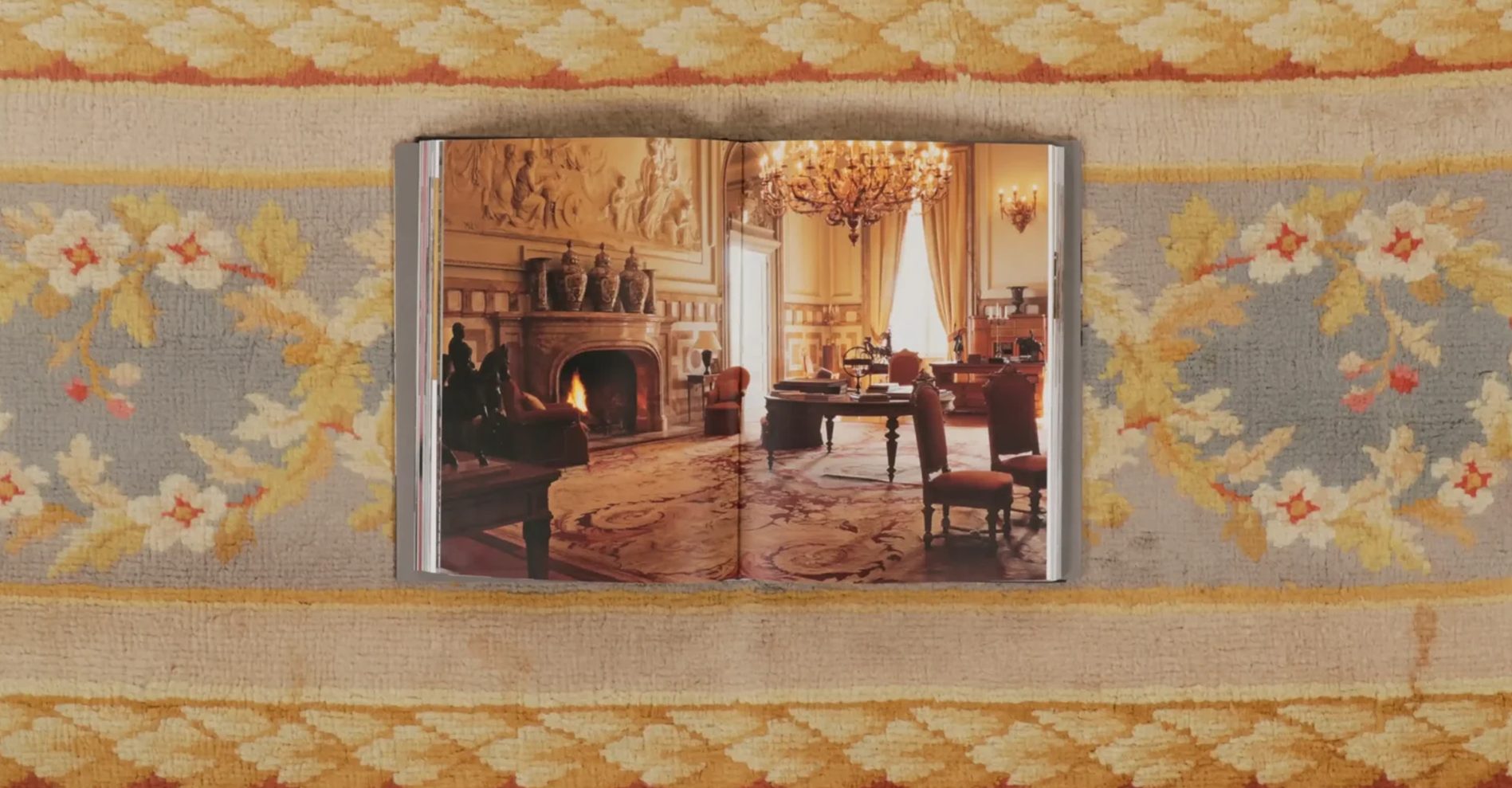
In the final years of the sixteenth century, the treasury of France was hemorrhaging. Not to war alone though there had been enough of that but to the East. French silver was flowing steadily toward Persia and the Levant in exchange for knotted-pile carpets, objects of such refinement and such authority that no European workshop had yet produced anything capable of competing with them. Henri IV, who had survived the Wars of Religion and the bankruptcy of a kingdom to sit on the French throne, was not a man inclined to accept a problem he could solve. He installed Pierre Dupont — weaver, entrepreneur, and the most technically accomplished carpet-maker in France in the galleries of the Louvre itself, in workshops beneath the palace’s own roof, with a single instruction: make something that does not require us to send money to Persia.
That decision, made in a building that would eventually become the world’s greatest museum, was the moment Europe decided it would write its own answer to the question the Oriental carpet had been asking for a thousand years. What followed across three ateliers, four royal reigns, two empires, and nearly four centuries was the most sustained and consequential experiment in European luxury weaving the world has ever seen.
Savonnerie: The Floor of Absolute Power
Pierre Dupont moved his looms from the Louvre to an abandoned soap factory on the outskirts of Paris in 1627, when Louis XIII granted him and his pupil Simon Lourdet the royal privilege to manufacture pile carpets exclusively for the crown. The French word for soap is savon. The factory’s former purpose gave the carpets their name, and the name became the highest designation in European textile art. Savonnerie.
Production was, from the beginning, an instrument of statecraft. These carpets were made for no one but the king and his diplomatic gifts; a restriction that was itself a form of value, the scarcity manufactured by decree rather than material. When Louis XIV appointed Charles Le Brun, his official painter and the artistic director of Versailles, to design the Savonnerie cartoons, the floor of the French court became an extension of the same visual program that covered its ceilings and walls. Le Brun’s Savonnerie carpets with their martial trophies, their sunburst medallions, their borders of acanthus and laurel that echoed the architectural ornament of the rooms they inhabited were not decorative objects. They were political ones. The Sun King’s authority expressed through wool as clearly as it was expressed through stone.
The heyday of Savonnerie, the period between 1650 and 1789, produced carpets of a scale and ambition that no private commission could have generated. They were designed to fill the Grande Galerie of the Louvre; ninety-three carpets in a single commission under Louis XIV, a project so vast it occupied the workshops for decades. Napoleon later revived the factory for Empire-style production, understanding as instinctively as Louis had that the floor of power requires its own vocabulary. In 1825, Savonnerie was absorbed into the Gobelins manufactory, ending its independent existence but not its influence, which persists in every French pile carpet made in its tradition to this day.
Aubusson: The Aristocratic Answer
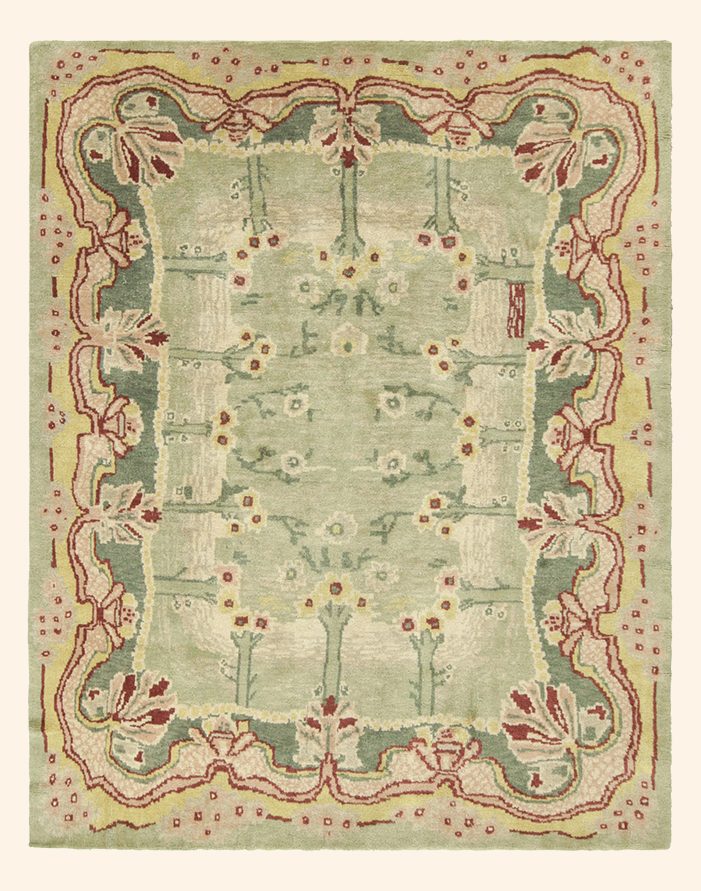
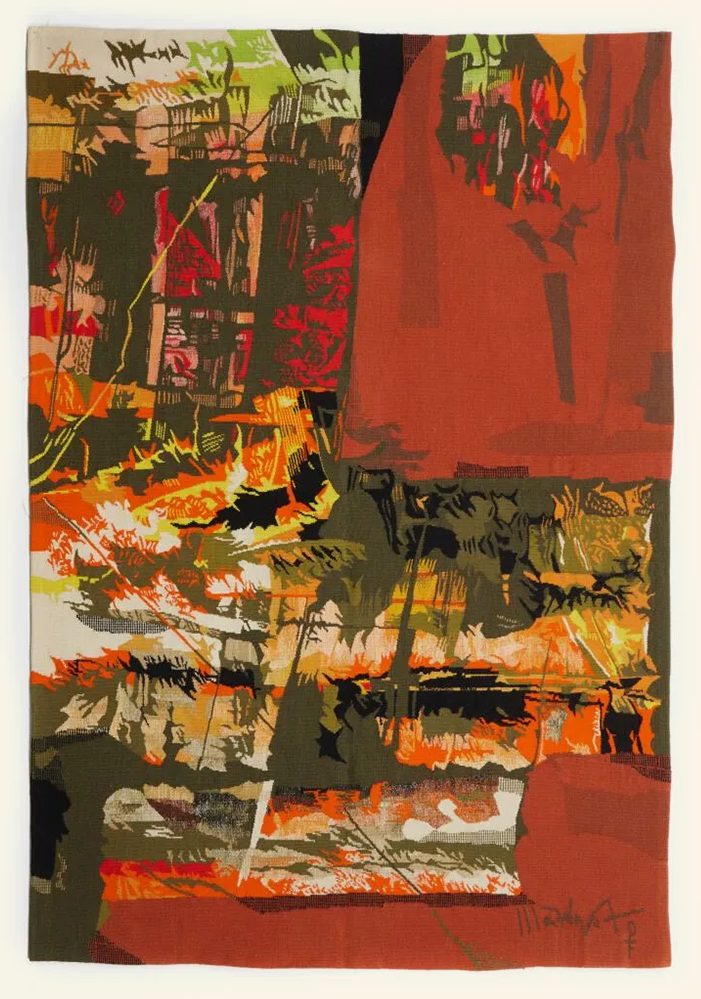
The nobility of France, watching the royal carpets laid in palaces they could visit but not replicate, required their own solution. It arrived in 1743, when workshops in the village of Aubusson; a weaving center in the Creuse region of central France whose tapestry tradition stretched back to the thirteenth century, possibly introduced by Moorish craftsmen following the Crusades were officially established to manufacture pile and flat-woven carpets for the aristocratic market that Savonnerie’s court exclusivity had left entirely unserved.
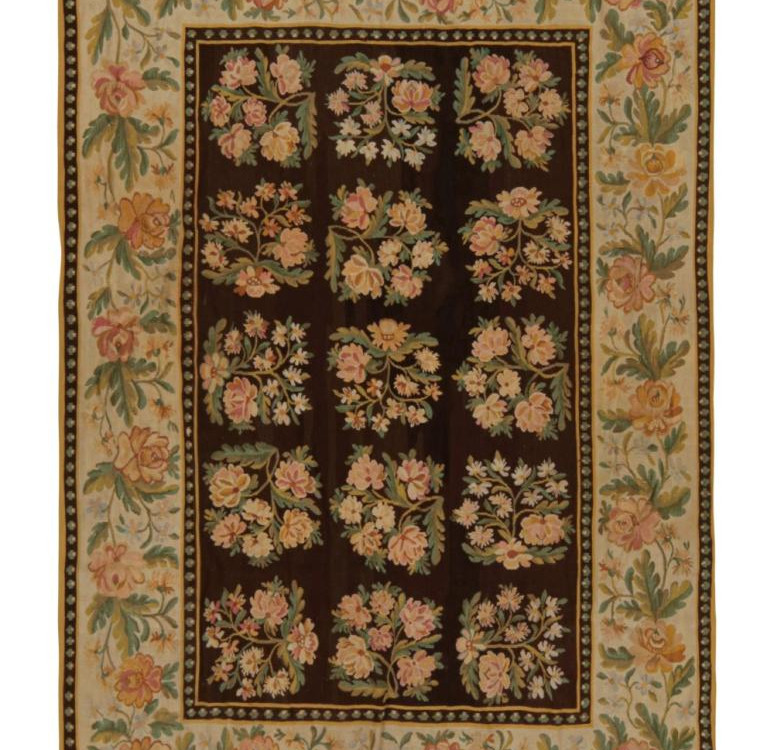
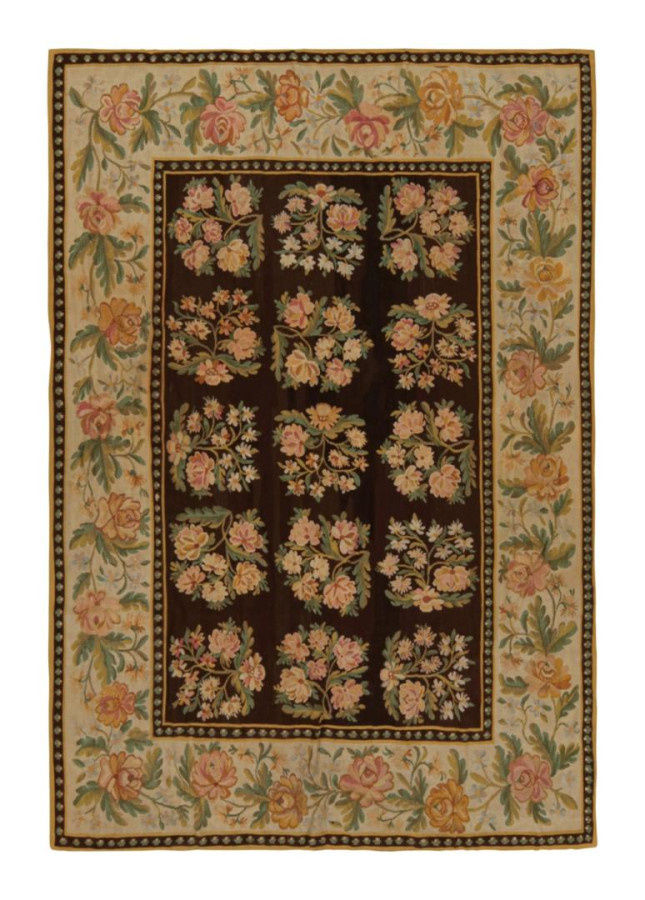
Louis XV and Madame de Pompadour were among the first clients, placing orders through Parisian agents with the efficiency of people who understood that taste, properly exercised, was its own form of power. The designer Pierre-Joseph Perrot, who had already worked on Savonnerie cartoons, was brought in to develop a distinctly French aesthetic moving away from the Oriental references of early production toward the pastel florals, medallion fields, and delicate borders that became the Aubusson signature and that remain, in the finest antique examples, among the most quietly authoritative floors a room can carry.
What distinguished Aubusson from Savonnerie was not quality but philosophy. Where Savonnerie was monumental, designed for the scale of royal apartments, its patterns conceived in relation to painted ceilings and gilded cornices; Aubusson was intimate. It understood that the aristocratic salon was a different kind of room from the royal gallery: smaller, more personal, more given to conversation than ceremony. The flat-weave technique, which Aubusson made synonymous with its name, suited this register precisely. It lay closer to the floor. It absorbed light rather than reflecting it. It made a room feel inhabited rather than staged.
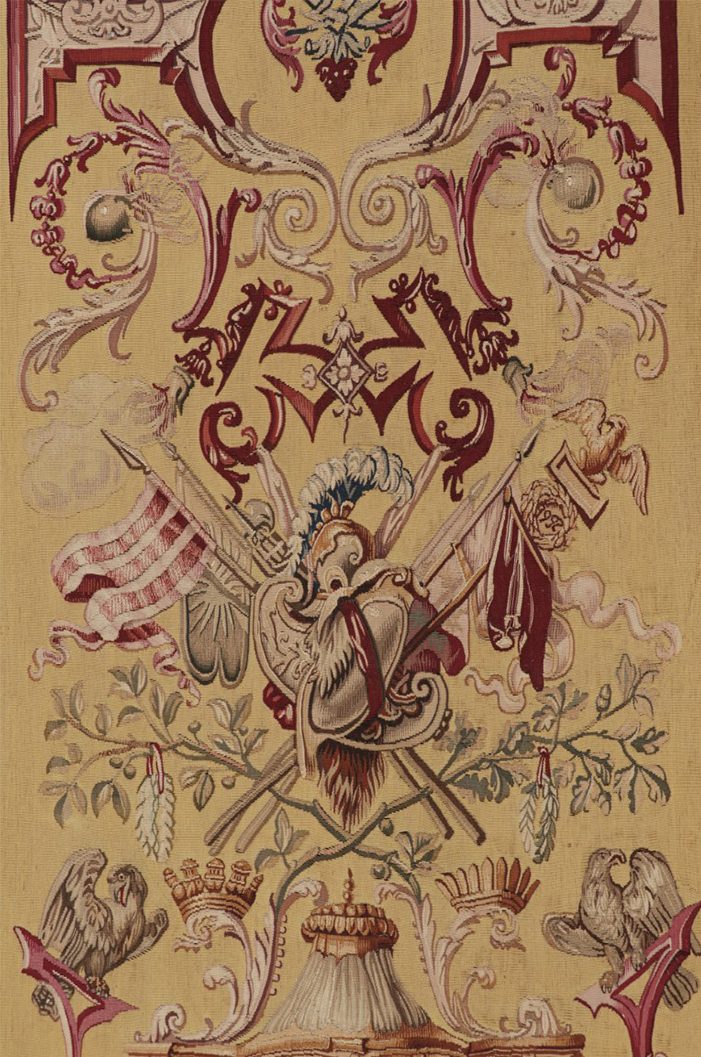
Napoleon’s architects Percier and Fontaine brought the Empire style to Aubusson after 1804, introducing antique trophies, Etruscan motifs, and the severe palette of the Napoleonic interior; deep crimson, Egyptian black, Pompeian gold that gave the carpets of this period a grandeur that their flat-weave technique might otherwise have precluded. Nineteenth-century Aubusson production, made in quantities that earlier centuries could not have imagined, carried the French carpet tradition into the drawing rooms of Europe and North America, where it has remained a mark of considered taste ever since.
Gobelins: The Tapestry as Architecture
If Savonnerie made the floor a political instrument and Aubusson made it a social one, the Gobelins manufactory made the wall into literature.
Louis XIV acquired the Gobelins buildings in 1662, restructuring them under the official title Manufacture Royale des Meubles de la Couronne; the Royal Manufactory of Crown Furnishings with a mandate that extended far beyond tapestry to encompass every luxury object required by the royal households. Charles Le Brun, appointed director, oversaw a program of production so comprehensive that the Gobelins became, in effect, the visual identity of the French monarchy made textile.
The tapestries Le Brun designed; enormous narrative cycles depicting the History of the King, the Elements, the Seasons, the Months were conceived as portable architecture. They traveled with the court. They transformed any room they entered, covering bare stone walls with painted illusion, turning provincial châteaux into extensions of Versailles through the sheer authority of their imagery and scale. The Flemish weavers who had settled in France brought with them a technical tradition of pictorial weaving; the ability to render a landscape, a face, a bolt of silk that the Gobelins elevated to its highest European expression.
The Kunsthistorisches Museum in Vienna holds over seven hundred Gobelins and related tapestries; the largest such collection in the world, almost entirely from Habsburg Imperial holdings, acquired by emperors who understood that to own a Gobelins tapestry was to possess a piece of the French state’s own self-image. Emperor Charles V had set the standard: his tapestry acquisitions established a collecting benchmark that every European court subsequently measured itself against. The tapestries that passed from the Gobelins to the Habsburg collection traveled, as all great textiles do, across the political boundaries that produced them, becoming in the process something larger than their origin, documents of a civilization’s highest ambitions, laid against the walls of rival empires.
The Gobelins manufactory still operates today, under the French Ministry of Culture, in buildings that date to the seventeenth century. It still weaves. It still commissions contemporary artists to produce cartoons for tapestries that take years to complete and that will outlast every room they enter. The technique has not changed in four hundred years because it has not needed to.
Rug & Kilim x In Common With
What Rug & Kilim Carries
The lineage that runs from Henri IV’s practical frustration in the Louvre galleries to the Savonnerie workshops, through Aubusson’s aristocratic salons and the Gobelins’ monumental tapestry cycles, does not end in the eighteenth century. It flows directly into the French Art Deco tradition, into Jules and Paule Leleu’s architecturally disciplined carpets, into Ivan Da Silva Bruhns’s Cubist floor paintings, into the total interiors of the 1920s and 1930s that understood, as Louis XIV had understood three centuries earlier, that the floor and the wall are the room’s primary statements and everything else is a response to them.
At Rug & Kilim, the French Art Deco collection among the most serious collections of its kind in New York carries this inheritance with the attention it deserves. These are not period pieces in the nostalgic sense. They are objects that participated in one of the great sustained arguments in the history of Western design: the argument, begun by a king trying to stop his silver leaving for Persia, about what Europe believed a rug could be.
A rug without a lineage is merely a floor covering, and that a floor covering is not what Rug & Kilim has ever sold. Henri IV would have understood the distinction immediately. So, we believe, will you.